English

Insulin is a hormone produced by special cells within the pancreas in order to do many important jobs, one of which is the transportation of glucose from the bloodstream into the insulin-sensitive cells of the liver, adipose (fat), and skeletal muscle.
When foods high in glucose enter the body, more insulin must be released. Insulin resistance (IR) is a condition where the cells of the body do not respond normally to the hormone, causing many serious health problems.
Insulin resistance can be induced by use of corticosteroid drugs or the hormonal abnormalities associated with Cushing’s disease/PPID. IR may also accompany chronic infections such as Lyme disease.
Pregnancy also triggers or worsens IR, preserving precious glucose supplies for the fetus.
However, most cases of IR are associated with equine metabolic syndrome. There is strong evidence that this is genetic. [1][2][3][4]
Equine Insulin Resistance
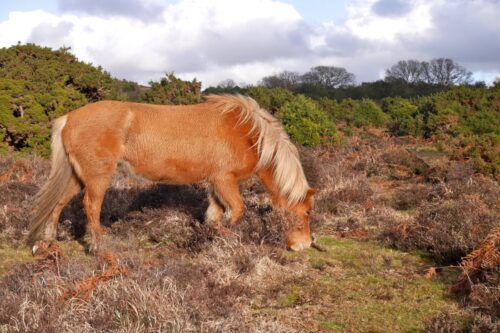
Insulin resistance is a metabolic type that developed to conserve glucose for key organs such as heart and brain when horses were evolving under conditions of sparse vegetation.
Many modern breeds such as Thoroughbreds, Standardbreds, Quarter horses, full size Drafts and Warmbloods no longer have insulin resistance but those that remain true to their ancestral type still do.
If these horses, ponies, donkeys and mules could live a life similar to their ancestors – working all day or covering 20 miles a day to find sufficient food and water – they wouldn’t have any problems. Few domesticated horses get even close to that level of exercise.
On top of that they are eating diets much higher in hydrolyzable carbohydrates, ESC and starch, which are the components of NSC which cause an insulin response.
Symptoms of Equine Insulin Resistance
Equine insulin Resistance can cause several symptoms such as:
- unusual fat deposits
- generalized obesity
- laminitis
Laminitis is a disease that affects the hooves of the horse, causing elongation and weakening of the laminae and lameness.
Testing for blood insulin and glucose levels is a simple way to diagnose a horse with IR. Once diagnosed, several steps must be taken to manage this condition.
What's your top priority with your horse's health?

Enter your email to receive your store credit
Treatments
The most obvious change that needs to be implemented is an improvement in diet. Feeding the horse hay that is low in starch and sugar can help prevent laminitis. Hay for horses with IR/EMS should have less than 10% ESC + starch.
One trick to make the hay healthier is to soak it in water which will lower sugar (ESC). Various soaking times have been used but a common guideline is 30 minutes in hot water or an hour in cold water.
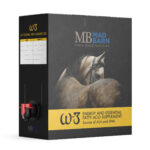
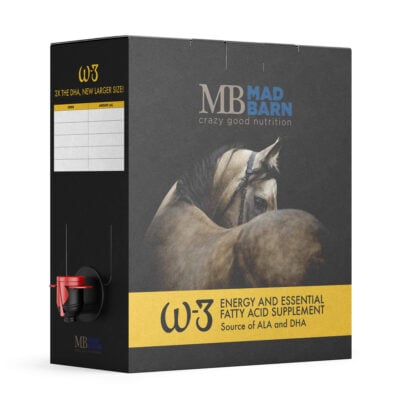
Another important change is cutting down the amount of fat the horse consumes; therefore, food rich in fat such as oils and rice bran are not helpful except for amounts needed to provide essential fatty acids and as a carrier for vitamin E. Mad Barn’s w-3 oil provides 900 mg of the anti-inflammatory omega-3 fatty acid DHA and ~890 IU of natural vitamin E in 60 ml (2 oz).
Specific vitamins and minerals, such as magnesium, can benefit a horse with insulin resistance.
Horses with EMS/IR are also prone to iron overload which is known to worsen IR in other species. [5] Higher intakes of copper and zinc are helpful in counteracting iron’s competition for absorption.
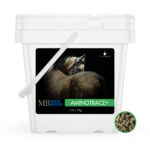
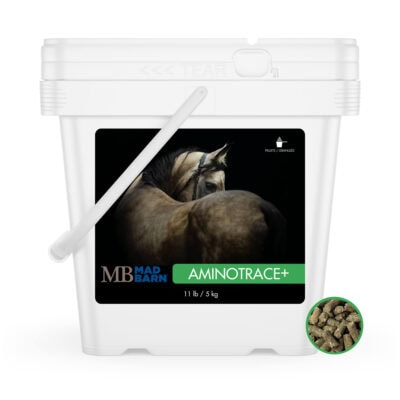
Mad Barn’s AminoTrace+ mineral and vitamin supplement has been specifically formulated to meet the needs of insulin-resistant horses.
Management
Although not all horses with IR are obese, most usually gain weight, so an increase in exercise is very important for the affected horse, as long as it is not laminitic. Exercise is actually an excellent way to increase sensitivity to insulin, better than diet alone. [6][7]
Physical activity cannot be ignored when dealing with insulin resistance; it must be combined with a diet change to help improve the horse’s condition.

Lastly, because laminitis is a serious threat linked to equine insulin resistance, the horse’s hooves must be given proper attention in order to minimize the effects of high insulin.
It has been known since the early days of studying this condition that the laminae are weakened and lengthened even in horses not showing any pain. [8]
Maintaining a trim with a short rounded toe and palmar angle no higher than 5 degrees helps to avoid undue traction and pressure on the laminae.
Equine insulin resistance is a serious condition that is connected with Cushing’s disease and laminitis that must be managed thoroughly and carefully.
Nevertheless, with a balanced diet, good hoof care, and a healthy amount of exercise, horses with insulin resistance can live a normal life.
Submit your horse’s diet for a free diet evaluation by our University-trained nutritionists and veterinarians.
Frequently Asked Questions
Here are some frequently asked questions about Equine Insulin Resistance:
Insulin resistance occurs when the body’s cells no longer respond normally to insulin, preventing glucose from moving efficiently from the bloodstream into tissues such as the liver, fat, and muscle. This condition can be triggered by factors such as corticosteroid use, PPID/Cushing’s disease, chronic infections like Lyme disease, or pregnancy, but most cases are linked to equine metabolic syndrome and often have a genetic basis. [1][2][3][4] When IR develops, glucose remains elevated in the bloodstream, contributing to serious metabolic and hoof-related complications.
Horses, ponies, donkeys, and mules that retain ancestral “easy keeper” traits—meaning they evolved to conserve glucose during periods of sparse forage—are most prone to IR. Modern breeds such as Thoroughbreds, Warmbloods, and Standardbreds are less likely to develop IR, while breeds with more efficient metabolisms often develop the condition when fed high-NSC (sugar and starch) diets or given limited exercise. Sedentary lifestyles combined with carbohydrate-rich feeding practices significantly increase risk.
Common signs of IR include unusual fat deposits (such as a cresty neck or fat pads), generalized obesity, and an increased risk of laminitis. Laminitis is a particularly serious complication in which the laminae of the hoof weaken and elongate, causing pain and lameness. Diagnosis is typically confirmed through blood tests measuring insulin and glucose levels.
Summary
Insulin resistance (IR) occurs when a horse’s cells respond poorly to insulin, leading to elevated blood glucose and insulin that can drive serious health problems.
- IR can be triggered or worsened by corticosteroids, PPID/Cushing’s disease, chronic infections, and pregnancy, but most cases are linked to genetically driven Equine Metabolic Syndrome.
- Easy-keeper types on high-NSC diets with little exercise are at highest risk, and common signs include regional fat deposits, obesity, and a strong association with laminitis.
- Diagnosis is made with blood insulin and glucose testing, and management starts with a low-sugar, low-starch forage program (ESC + starch < 10%), including soaking hay to lower sugars and avoiding unnecessary added fats.
- Targeted nutrition supports IR management, including adequate magnesium, higher copper and zinc to counter iron’s interference, and vigilance for iron overload, alongside a balanced vitamin–mineral supplement.
References
- Weckman, M.J. et al. Genome-wide association study suggests genetic candidate loci of insulin dysregulation in Finnhorses. Vet J. 2024. View Summary
- Stefaniuk-Szmukier, M. et al. Equine Metabolic Syndrome: A Complex Disease Influenced by Multifactorial Genetic Factors. Genes (Basel). 2023. View Summary
- Patterson-Rosa, L. et al. Metabogenomics reveals four candidate regions involved in the pathophysiology of Equine Metabolic Syndrome. Molec Cell Probes. View Summary
- Norton, E. et al. Genome-Wide Association Analyses of Equine Metabolic Syndrome Phenotypes in Welsh Ponies and Morgan Horses. Genes (Basel). 2019. View Summary
- Kellon, E.M., and Gustafson, K.M. Possible dysmetabolic hyperferritinemia in hyperinsulinemic horses. Open Vet J. 2020. View Summary
- Moore, J.L. et al. Effects of Diet Versus Exercise on Morphometric Measurements, Blood Hormone Concentrations, and Oral Sugar Test Response in Obese Horses. J Equine Vet Sci. 2019. View Summary
- Bamford, N.J. et al. Influence of dietary restriction and low-intensity exercise on weight loss and insulin sensitivity in obese equids. J Vet Intern Med. 2018. View Summary
- Johnson, P.J. et al. Endocrinopathic laminitis in the horse. Clin Tech Equine Pract. 2004.