English

A well-designed feed board, or feed chart, is essential for maintaining accurate and consistent feeding routines at facilities where multiple horses are kept. This simple tool guides caretaker decisions and helps ensure every horse at the barn receives the correct diet and medications.
When feed boards are unclear, outdated, or inconsistent, small communication gaps can result in errors. A missed supplement, incorrect portion, or overlooked instruction can affect a horse’s health, performance, and overall condition.
Disorganized systems also increase the risk of avoidable mistakes and slow down daily chores, creating unnecessary friction for staff.
With a clear, standardized approach to your barn’s feed board, you can improve accuracy, streamline workflow, and make it easier for everyone in the barn to ensure their horse receives robust care.
What is a Feed Board at a Horse Barn?
A feed board is a centralized system that outlines what each horse is fed and how that feed is delivered. It typically includes details like forage type, grain or concentrate amounts, supplements, medications, and any special instructions for preparation or timing.
In practice, the feed board acts as the communication bridge between nutrition plans and daily execution. Whether feeding is handled by barn staff, owners, or riders, it ensures everyone involved in managing horses at a facility is working from the same set of instructions.
A well-designed feed board also makes feeding decisions easier to verify at a glance. Clear entries help staff confirm the right horse, ration, timing, and preparation steps before feed is mixed or delivered, reducing reliance on memory or informal instructions.
This consistency is foundational to equine well being. Horses rely on routine, and even small deviations in their diet can have noticeable effects over time. An accurate feed board helps maintain dietary stability, supports health and performance goals, and reduces the risk of preventable feeding errors.
What's your top priority with your horse's health?

What's your top priority with your horse's health?
Common Problems with Feed Boards
Many feed boards start out clear and well-organized, but over time, small changes and quick updates can make them harder to follow. Without clarity and consistency, even well-considered systems can introduce confusion into daily routines and make feeding more time-consuming than it needs to be. [1]
Common issues with feed board use at horse barns include: [2]
- Unclear or inconsistent instructions: Abbreviations, shorthand, or personal notes that aren’t universally understood can lead to misinterpretation, especially with new or rotating staff.
- Missing details: Supplements, medications, soaking instructions, or feeding order may be left off or assumed, resulting in incomplete or incorrect meals.
- Overly complex layouts: Cluttered or disorganized boards slow down feeding, increase the likelihood of errors during busy routines, and add unnecessary time to daily chores.
- Outdated information: Diet changes, new supplements, or health updates aren’t always reflected right away, making the board unreliable.
- Lack of accountability: When it’s unclear who made updates or when updates were made, errors are harder to identify and correct.
If these issues persist, staff may stop using the feed board as a source of truth. This can lead to informal workarounds, missed updates, duplicated instructions, and feeding decisions based on memory rather than the current nutrition plan.
When Feeding Mistakes Affect Horse Health
When feeding instructions are unclear or inconsistently followed, the impact extends beyond workflow inefficiencies and can directly affect horse health. Even small deviations from a planned diet can accumulate over time, particularly for horses with specific nutritional needs. [3]
Inaccurate portions may lead to underfeeding or overfeeding, resulting in changes in body condition or nutrient imbalances. Overfeeding can contribute to equine obesity, which is a growing concern in the industry. Excess body condition is also closely linked with metabolic disorders such as insulin resistance and endocrinopathic laminitis. [4][5]
Missed supplements, medications, or scheduled treatments such as deworming can interfere with recovery, performance, or overall health management. Horses with metabolic disorders or digestive sensitivity are especially vulnerable to inconsistencies. Irregular feeding or unintended diet changes can disrupt gut function, increasing the risk of colic, loose manure, or reduced feed efficiency. [6][7]
Over time, these issues may present as:
- Weight gain or loss
- Declining topline
- Poor coat quality
- Reduced energy levels
- Decreased performance
Maintaining clear, accurate feed communication helps ensure that each horse’s diet is delivered as intended, supporting both short-term stability and long-term health.
How to Design & Use an Effective Feed Board
An effective feed board should be clear, consistent, and complete. Instructions need to be:
- Easy to read at a glance
- Structured the same way for every horse
- Detailed enough to reflect the horse’s full diet, including supplements, medications, and any special preparation
Just as importantly, the board should be organized to match how feeding is carried out, with updates made clearly and immediately as diets change.
Recommended Feed Board Structure
A well-organized feed board follows a consistent structure that makes information easy to find and apply.
When every horse is presented in the same format, staff can move through feeding routines more efficiently, with less need to stop and interpret instructions. This consistency reduces errors, simplifies training, and makes it easier to spot missing or incorrect information.
Each section of the feed board should serve a clear purpose and reflect how feeding is carried out in practice. [2]
Header Section
The header section identifies the horse and highlights any critical information staff need before preparing feed. It typically includes the horse’s name, stall number, and key alerts such as metabolic status, allergies, medication requirements, or restrictions on certain feeds. [2]
This section should be easy to scan so staff can quickly confirm they are feeding the right horse and notice any high-priority instructions before moving into the ration details.
Feeding Instructions
The core of the board outlines what the horse is fed each day. This should be broken down by feeding time and include specific feed types, quantities, and preparation notes when needed. [2]
Using precise measurements for feed, ideally by weight, helps reduce variability between staff members and feeding shifts. Clear meal-by-meal instructions also make it easier to confirm whether a ration change has been applied correctly. [2]
Supplements & Medications
All supplements and medications should be listed with clear dosing and timing instructions. This helps ensure they are consistently included, given at the correct meal, and not mistaken for optional additions. [2]
If a product must be fed separately, mixed with a specific feed, paused before competition, or given only on certain days, those details should be stated directly on the board. [2]
Special Instructions
Any preparatory steps or unique handling requirements should be explained in this section. This may include soaking feeds, splitting meals, wetting hay, separating a horse from others during feeding, or coordinating meals with turnout, exercise, or veterinary care. [2]
These instructions are especially important when the feeding plan depends on timing, texture, or management steps that are not obvious from the ration alone.
Notes & Temporary Updates
This section is used for short-term changes, such as: [2]
- Diet adjustments
- Veterinary instructions
- Medication holds
- Appetite monitoring
- Observations after a feed change
Keeping these updates clearly separated helps prevent them from being overlooked or confused with the standard feeding plan. Temporary notes should also include a date or review point so outdated instructions do not remain on the board after they are no longer relevant. [2]
Table 1. Tips for Optimizing Feed Boards at Horse Facilities
| Feed Board Section | What to Include | Why It Matters |
|---|---|---|
| Header Section |
|
|
| Feeding Instructions |
|
|
| Supplements & Medications |
|
|
| Special Instructions |
|
|
| Notes & Temporary Updates |
|
|
Workflow Optimization Strategies
The layout of a feed board should reflect how feeding is actually carried out in the barn. When it aligns with daily workflow, feeding becomes faster, more consistent, and less prone to error.
Practical ways to improve workflow include:
- Align the board with barn layout: List horses in stall order or by feeding route to reduce backtracking and missed steps.
- Group similar feeding protocols: Position horses with similar diets or schedules together to minimize switching between instructions.
- Reduce decision-making during feeding: Clear, well-placed instructions allow staff to focus on execution rather than interpretation.
- Design for speed and visibility: Information should be easy to scan quickly, especially during busy feeding times.
Small adjustments to layout and organization can have a meaningful impact on daily operations, helping ensure feeding is both accurate and efficient.
Digital vs. Physical Feed Boards
Feed boards can be managed using either physical systems, digital tools, or a combination of both. The right approach depends on barn size, budget, staffing, and how frequently feeding plans change.
Physical feed boards are simple and accessible. They don’t rely on devices or connectivity, and they’re easy for anyone in the barn to reference at a glance. However, they can become cluttered over time and require manual updates, which increases the risk of outdated or inconsistent information.
Digital systems offer more flexibility. Updates can be made in real time, and changes can be communicated instantly across staff. Many digital tools also function as record-keeping systems, allowing barns to track diet changes, supplement use, and feeding history over time. This makes it easier to stay aligned with a horse’s nutrition program and identify when feeding practices begin to drift from the original plan.
The level of tracking provided by digital systems can be especially valuable when working with a nutritionist or managing horses with specific dietary needs, where consistency and accurate implementation are critical.
Table 2. Pros & Cons of Physical vs. Digital Feed Board Systems
| System | Best For | Advantages | Limitations |
|---|---|---|---|
| Physical Feed Board | Barns that need a simple, highly visible system for daily feeding instructions |
|
|
| Digital Feed Board | Barns with frequent ration changes, multiple staff members, or horses with detailed nutrition plans |
|
|
| Hybrid System | Barns that want quick daily visibility plus more reliable record-keeping and update tracking |
|
|
Many barns use a hybrid approach, combining a physical board for quick reference with a digital system for record-keeping and updates. This allows for both accessibility and accuracy, while reducing the limitations of relying on a single system.

Keeping Feed Boards Aligned with Nutrition Plans
A feed board is only effective when it reflects the horse’s current nutrition plan. Over time, small changes such as adjusting feed amounts, adding supplements, or modifying routines can create gaps between what’s written on the feed board and what was originally recommended for the horse.
This type of “drift” is common in busy barns, especially when multiple people are involved in feeding decisions. Without regular oversight, diets can gradually move away from the intended plan, even when each individual change seems minor.
Maintaining alignment requires a consistent approach. Strategies to keep your feed board consistent and up to date include:
- Regularly review the feed board against the current diet
- Ensure all feed, supplements, and medications are up to date
- Clearly record and communicate any changes
- Flag discrepancies early before they impact the horse
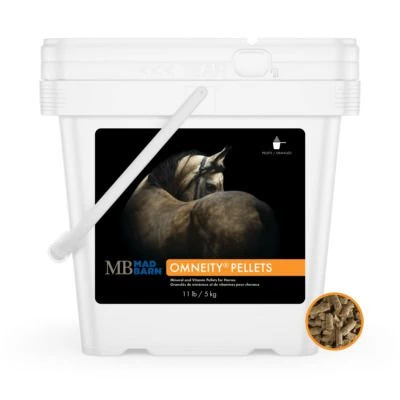
Simplifying the feeding program can also make alignment easier. Using a complete vitamin and mineral product such as Mad Barn’s Omneity® can reduce the number of separate supplements in a diet, making feeding instructions clearer for owners and caretakers.
Staff training also plays a role. When everyone understands how to read and follow the feed board, and knows how to flag inconsistencies, errors are easier to catch before they affect the horse.
By combining accurate record-keeping with consistent review, barns can maintain alignment between nutrition plans and daily feeding, reducing the risk of errors and supporting more consistent outcomes.
Frequently Asked Questions
Here are some frequently asked questions about feed boards in horse barns:
A feed board in a horse barn is a centralized system that outlines what each horse is fed and how their feed should be prepared and delivered. It is also called a feed chart and typically includes forage, grain or concentrate amounts, supplements, medications, feeding times, and special instructions. The feed board acts as the link between each horse's nutrition plan and the daily feeding routine. When multiple people are involved in feeding, it helps everyone work from the same clear instructions.
A feed board is important for horse health because horses rely on consistent feeding routines. Incorrect portions, missed supplements, overlooked medications, or unintended diet changes can affect body condition, digestion, performance, recovery, and overall well-being. These risks are greater for horses with metabolic concerns, digestive sensitivity, or detailed nutrition plans. A clear feed board helps reduce preventable feeding errors and supports more stable daily care.
A horse feed board should include all information needed to prepare and deliver each horse's diet accurately. This usually includes the horse's name, stall number, forage type and amount, grain or concentrate portions, supplements, medications, feeding times, and preparation instructions. It should also include key alerts such as metabolic status, allergies, medication requirements, or feed restrictions. Temporary notes, short-term diet changes, and veterinary instructions should be clearly dated and separated from the horse's regular feeding plan.
A horse feed board should be organized in a consistent format so staff can scan it quickly and follow the same structure for every horse. A practical layout includes a header section, meal-by-meal feeding instructions, supplements and medications, special preparation steps, and a separate area for temporary notes. Listing horses in stall order or feeding-route order can make the board easier to use during chores. The best organization matches the way feeding actually happens in the barn.
A feed board should be updated immediately whenever a horse's diet, supplements, medications, health status, or feeding routine changes. Delayed updates can create a gap between the current nutrition plan and what is actually being fed. Regular reviews are also important because small changes can accumulate over time and cause the feeding program to drift from the intended plan. Every temporary note should include a date or review point so outdated instructions do not remain on the board.
Common feed board mistakes include unclear instructions, missing details, outdated information, cluttered layouts, and inconsistent formatting. Abbreviations, shorthand, or personal notes can be misread, especially by new staff or rotating caregivers. Other mistakes include leaving off supplements, medications, soaking instructions, feeding order, or special handling steps. A feed board can also become unreliable if no one knows who made an update or when the change was made.
A feed board reduces feeding errors by giving staff a clear, standardized reference for each horse's diet. This reduces reliance on memory, guesswork, or informal instructions during busy feeding times. When feed amounts, timing, supplements, medications, and preparation steps are easy to find, staff can prepare meals more consistently. A well-designed board also makes it easier to spot missing or incorrect information before it affects the horse.
Horse feed amounts should be listed by weight whenever possible because weight is more precise than volume-based measures. Scoops can vary depending on the feed type, density, and how full the scoop is, which can lead to inconsistent portions between staff members. Listing feed by weight helps reduce variability across feeding shifts. This is especially useful when managing horses with weight concerns, metabolic conditions, or detailed nutrition plans.
A physical or digital feed board may be better depending on the barn's size, staffing, budget, and how often feeding plans change. Physical boards are easy to see at a glance, do not require a device, and work well in feed rooms or barn aisles. Digital systems are useful for real-time updates, tracking diet changes, and keeping records of supplement use or feeding history. Many barns benefit from using both systems together.
A hybrid feed board system combines a physical board for quick daily reference with a digital system for updates and record-keeping. This approach can work well for barns that need visible feeding instructions while also maintaining a more complete history of diet changes. The physical board helps staff during active feeding, while the digital system supports longer-term management. A hybrid system only works well when both versions are kept aligned and one person is responsible for reviewing changes.
Feed boards can help horses with metabolic conditions by making feeding instructions more consistent and easier to follow. Horses with metabolic concerns may be more sensitive to unintended changes in feed amounts, forage type, supplements, or routine. Clear alerts, precise portions, and updated instructions help staff avoid mistakes that could affect weight, insulin regulation, or laminitis risk. These horses benefit from a feed board that clearly identifies restrictions and special management needs.
Health signs that may suggest feeding mistakes are affecting a horse include weight gain, weight loss, declining topline, poor coat quality, reduced energy, changes in manure, digestive upset, or decreased performance. These signs can have many causes, but inconsistent feeding may contribute when portions, supplements, or preparation steps are not being followed correctly. Horses with digestive sensitivity or metabolic disorders may show problems more quickly. Sudden, severe, or persistent changes should be discussed with a veterinarian.
Barns can keep a feed board from becoming outdated by reviewing it regularly against each horse's current diet and updating it as soon as changes are made. Supplements, medications, feed quantities, temporary notes, and veterinary instructions should all be checked for accuracy. It also helps to assign responsibility for feed board updates so changes are not missed or duplicated. Clear dates and review points make it easier to remove old instructions before they create confusion.
You can simplify a feed board by using clear language, consistent formatting, precise measurements, and a layout that follows the barn's feeding routine. Avoid unclear abbreviations, crowded notes, and instructions that require staff to make decisions during feeding. Simplifying the feeding program itself can also help, especially when many separate supplements make the board harder to follow. A more complete vitamin and mineral product, such as Mad Barn's Omneity, may reduce the number of separate items listed for some horses when it fits the nutrition plan.
Anyone involved in feeding should be trained to use the feed board, including barn staff, owners, riders, temporary helpers, and rotating caregivers. Training should cover how to read the board, where to find critical alerts, how to follow special preparation instructions, and how to flag unclear or outdated information. This is especially important in barns where multiple people handle feeding decisions. Consistent training helps make the feed board a reliable source of truth instead of a passive display.
Summary
A well-designed feed board keeps horse feeding routines accurate and consistent. It gives barn staff clear guidance and helps ensure each horse receives the appropriate diet.
- Poorly organized or outdated boards increase the risk of feeding errors and impact horse health
- Standardization reduces confusion and makes feeding routines easier to follow
- Aligning feed boards with daily workflow helps minimize mistakes and streamline chores
- Regular review and updates are essential to keep feeding programs accurate and consistent
- Simplifying nutrition programs can make feed boards easier to manage and follow
References
- Leppälä. J. et al. Development of a Safety Management Web Tool for Horse Stables. Animals. 2015. View Summary
- Brown. J. H. et al. Horse and Stable Management. John Wiley & Sons. 2013.
- Cipriano-Salazar. M. et al. The Dietary Components and Feeding Management as Options to Offset Digestive Disturbances in Horses. Journal of Equine Veterinary Science. 2019.
- Rendle. D. I. et al. Equine Obesity: Current Perspectives. UK-Vet Equine. 2018.
- Akinniyi. O. O. et al. Definition, Assessment, Health Consequences and Management of Equine Obesity: A Review. Folia Veterinaria. 2023.
- Frank. N. Equine Metabolic Syndrome. Journal of Equine Veterinary Science. 2009.
- Brady. C. M. Introduction to Horse Management. Purdue University Cooperative Extension Service. 2002.