English

The Friesian horse is an iconic horse breed known for their fairytale looks and striking charisma. These horses are often featured in Hollywood productions, contributing to the breed’s growing popularity in recent decades.
Originally from Friesland in the Netherlands, the breed descends from famous war horses once ridden by knights in the Middle Ages. Demand for the breed outside of the Netherlands grew over centuries, and today, these horses are found worldwide.
Rampant crossbreeding almost led to the extinction of the purebred Friesian in the 20th century. Although population numbers have rebounded, inbreeding has contributed to several genetic diseases and health problems in the breed.
This breed profile will discuss the history, characteristics, health problems, and nutritional needs of the Friesian horse breed. Keep reading to learn more about feeding and caring for Friesian horses.
Friesian Horse History
Friesians are an old breed with a long history spanning centuries and recognizable breed type. Their reputation as one of the most desirable horse breeds in the world has persisted throughout their history.
Origin
Illustrations depicting horses recognizable as Friesians date back to the 11th century. But military records indicate that troops from Friesland rode these local native horses much earlier, beginning in the 4th century. [1]
Arabian horses brought to the region by returning crusaders introduced eastern blood to the local Friesian horses in the Middle Ages. Additional outside influences came from Andalusian horses imported from Spain in the 16th and 17th centuries.
Genetic studies reveal the modern Friesian horse is a distinct breed largely isolated from other Dutch horse populations. Unlike many riding horse breeds in Europe, Friesians do not descend from horses with English Thoroughbred blood. [2]
The Friesian horse, as we know it today, has its roots in a landrace that was naturally shaped by the conditions of its native region over a millennia. A landrace is a domesticated animal species that has developed largely through adaptation to its natural and cultural environment, as opposed to selective breeding.
Despite their long history, the official Friesian breed described today was first recognized in 1879. [1]
Historic Use
Early ancestors of Friesians were all-around working and riding horses for the population of Friesland. The breed eventually became famous war mounts for medieval knights. Early illustrations often depict knights riding horses resembling modern Friesians. [1]
Historians believe several famous historical figures rode horses with the Friesian type, including William the Conqueror. Hungarian King Louis II also used Friesians in battle. European Nobility frequently used Friesians as elegant coach horses. [1]
In the 18th and 19th centuries, Friesians were popular trotting and harness horses throughout Europe. However, the population dwindled when the breed fell out of fashion in the late 19th century. By 1902, only 15 approved Friesian stallions remained in Friesland. [3]
Dutch settlers imported large numbers of Friesians to North America, but crossbreeding nearly eliminated purebred Friesians on the continent until their reintroduction in the 1970s. Since then, Friesians have become one of the most in-demand breeds for recreational riding and driving.
Breed Registry
The Friesian Horse Association of North America (FHANA) serves as the exclusive North American affiliate of the Koninklijke Vereniging “Het Friesch Paarden-Stamboek” (KFPS), or the Royal Association of the Friesian Horse Studbook, based in the Netherlands.
The KFPS is the original and authoritative registry for the Friesian horse breed, responsible for maintaining the breed’s purity and standards as established since its formal recognition in 1879.
FHANA’s role is to uphold the standards and practices set by the KFPS for Friesian horses in North America. This includes ensuring that all registered horses are purebred, tracing their lineage directly to the original Dutch studbook.
To be eligible for registration with the KFPS, a Friesian horse must be born from a dam (mother) registered in the main section of the studbook and sired (fathered) by an approved stallion. Approved stallions undergo rigorous evaluation and testing to ensure they meet the high standards of the breed and can contribute positively to the gene pool.
Both FHANA and KFPS conduct regular inspections, during which horses are assessed on a variety of criteria, including:
- Conformation (the horse’s physical structure and appearance)
- Movement
- Overall breed characteristics
The inspections are designed to identify horses that exemplify the breed standard and are therefore suitable for breeding.
| Breed Summary | |
|---|---|
| Breed Name | Friesian |
| Origin | Friesland, Netherlands |
| Breed Registry | Koninklijke Vereniging “Het Friesch Paarden-Stamboek” (KFPS); Friesian Horse Association of North America (FHANA) |
| Average Height | 15.2 – 16 hh |
| Average Weight | 1,300 lb (590 kg) |
| Common Coat Colors | Black |
| Conformation | Expressive head, small ears, large eyes, wide nostrils, high-set arched neck, prominent withers, muscular back, strong loins, sloping croup, long sloping shoulders, strong chest, straight legs, wide hooves, rectangular frame |
| Common Uses | Dressage, driving, harness shows, recreational riding |
| Temperament | Intelligent, hardworking, friendly, easy-going |
| Best For | Riders seeking an elegant dressage or driving horse |
| Common Health Concerns | Dwarfism, hydrocephalus, megaesophagus, aortic rupture, pastern dermatitis, insect bite hypersensitivity, retained placenta, EMS, laminitis |
| Price Range | $9,500 to $72,500 |
| Lifespan | About 16-30 years |
| Weight | 1,200–1,400 lb (544–635 kg) |
| Breed Type | Warmblood; Sport horse |
| Population Status | Stable; over 70,000 estimated worldwide |
What's your top priority with your horse's health?

What's your top priority with your horse's health?
Breed Characteristics
Friesian horses are one of the most easily recognizable breeds in the world. They are best known for their elegant looks, but the breed also shares several other characteristics that allow them to stand out in the show ring.
Conformation
Most Friesians have an average height of 15.2 to 16 hands. Mares and geldings must stand at least 15 hands tall to enter studbooks. Stallions must be at least 15.3 hands at four years old, but some Friesians can approach 17 hands.
The ideal Friesian has an expressive head with small ears, large eyes, and wide nostrils. Heads should attach gracefully to the neck with adequate space for the throat and wide-set jaw bones.
These horses have high-set, arched, large, and well-muscled necks. Prominent withers blend gradually into muscular backs that are moderate in length. Slightly low backs are permitted. Strong loins and sloping croups are broad and muscular.
Shoulders are also long and sloping and form a strong chest that is neither too narrow nor too wide. The ribs should provide ample space for the lungs without being too round. Legs are correct and straight with wide, sound hooves.
Friesians generally have an overall rectangular appearance and well-balanced builds. Their gaits should be light-footed and elevated with good stride length, joint flexion, and power from the hindquarters.
Colours
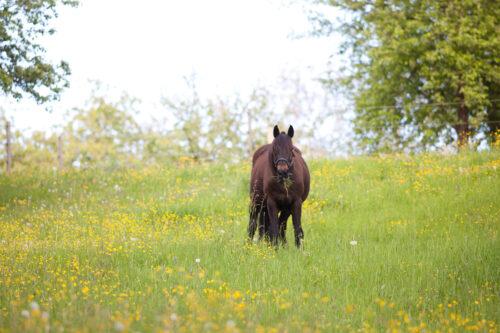
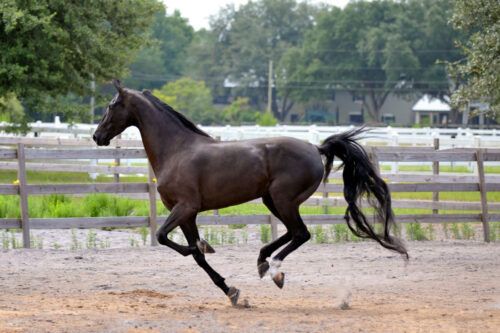
Black is the only recognized coat colour in the modern Friesian breed, although greys and bays occurred in the breed’s early history. A small white star on the forehead is permitted, but no other white markings are allowed on the body or legs.
Long and heavy black manes and tails and thick fetlock feathering are other key characteristics of Friesians.
Temperament
Most Friesians have a genuine character and strong work ethic. These horses should have excellent stamina and energy without being spooky. They are also generally intelligent and learn quickly with good training.
Their friendly and easy-going temperaments are suitable for a wide range of riders. However, individual personalities can vary in all horses.
Disciplines
The breed’s elegant appearance and movement make Friesians popular show horses. Their charisma helps them stand out in a variety of disciplines.
These horses do well in harness shows and driving disciplines, thanks to the high-action trots and powerful pulling ability they inherited from their carriage horse ancestors.
Dressage is the most popular riding discipline for Friesians. While warmbloods are generally more competitive at the elite level of modern dressage, many riders enjoy competing with their Friesians at all levels of the sport.
Friesian Horse Health
Modern purebred Friesian horses descend from a small founding population. This led to significant inbreeding and several genetic health problems in Friesians. But today, good breeding practices and horse management can help keep the breed healthy.
Genetic Diseases
Dwarfism is a well-known autosomal recessive disorder that occurs in Friesians. Affected horses have a broad chest and a shortened stature, with abnormally short limbs relative to their body size.
DNA testing can identify genetic carriers of the dwarfism mutation who don’t exhibit clinical signs of the condition. Breeders should avoid breeding two carriers together to eliminate the chance of producing a foal with dwarfism. [4]
Dwarf Friesians also frequently struggle with tendon laxity and fetlock hyperextension. The increased laxity (hypermobility) can result in gait abnormalities and increased risk of soft tissue injuries. However, these horses can still live average lifespans. [4]
One study found 2.5 out of 1,000 Friesian foals (0.25%) have hydrocephalus, an excessive amount of fluid in the brain. This causes severe head distention and often leads to stillbirth or difficult deliveries, known as dystocia. [5]
Affected foals that are born alive are typically euthanized due to severe neurological issues. DNA testing to guide breeding decisions is available to identify the gene responsible for this autosomal recessive disorder. [5]
Connective Tissue Abnormalities
Many of the disorders that affect Friesian horses are associated with connective tissue abnormalities. Researchers believe these disorders may have become more prevalent due to the selection of horses with high-stepping gaits and increased tendon laxity. [6]
One study found breed-specific differences in collagen breakdown in Friesian horses, indicating these horses are predisposed to a higher rate of collagen degradation. This predisposition could contribute to the prevalence of connective tissue disorders in the breed. [7]

Health Problems
Megaesophagus in Friesian horses is a severe condition characterized by an enlargement and reduced motility of the esophagus, the muscular tube that connects the mouth to the stomach. This condition can lead to difficulties in swallowing, weight loss, choke, and potential aspiration pneumonia due to inhaled food particles entering the lungs. [8]
The risk of megaesophagus in the breed is directly related to the suspected collagen abnormalities in Friesian horses. This results in chronic dilation of the esophagus and a lack of muscle tone.
Aortic rupture is another health problem associated with collagen disorders in Friesians. The aorta is the largest artery in the body that carries blood from the heart to the rest of the body. Aortic rupture results in sudden death.
Some Friesians may show signs of illness before developing this condition, including recurrent colic, increased resting heart rate, peripheral swelling, and higher body temperature. [9] Contact your veterinarian immediately if you observe these signs.
Friesian horses are also affected by high rates of skin disorders. They can develop chronic pastern dermatitis (mud fever) due to their thick feathering, and studies show that 18% of Friesians have insect bite hypersensitivity (sweet itch). [10]
Friesian mares also have a high incidence of retained placenta after foaling. This disorder occurs in up to 54% of Friesian births, compared to rates of less than 10% in the general equine population. [11]
Although formal research on the prevalence is lacking, veterinarians working with horses with metabolic syndrome (EMS) recognize the breed is at risk and there have been reports of hyperinsulinemic Friesians. [21]
The predisposition to EMS likely stems from the harsh weather in the region where the breed evolved, as well as the Arabian and Andalusian influences. The consequences include obesity and laminitis.
Care and Management
Despite the risk of health problems in the breed, Friesian horses can live healthy and fulfilling lives with proper care and management tailored to their specific needs.
Work with your veterinarian, farrier and other equine practitioners to develop a preventative wellness plan that includes:
- Veterinary Check-ups: Schedule regular veterinary visits for early detection and treatment of health issues.
- Vaccines: Follow your veterinarian’s advice on a vaccine schedule to protect your horse from common diseases.
- Dental Care: Schedule yearly dental exams with an equine veterinary dentist to perform teeth floating. Senior horses with dental issues may need more frequent assessments.
- Parasites: Protect your horse from internal parasites with a strategic deworming plan.
- Farrier Care: Ensure that your horse gets frequent farrier visits for proper hoof care and trimming. Poor hoof balance can cause excessive strain on distal limb structures and contribute to musculoskeletal problems.
Most Friesians have good-quality hooves, but their predisposition to connective tissue problems makes quality farrier care especially important. Regular trimming and corrective shoes can help maintain soundness and prevent overloading of tendons, ligaments and joints.
Free exercise during turnout is important for healthy bones and connective tissue. Try to minimize stall confinement and increase your horse’s turnout time. Turnout also helps reduce stress and allows horses to express grazing and social behaviors. [12]
Most Friesian horses require longer and more intense grooming routines to maintain their long, heavy hair. Keeping their fetlock feathers dry and clean is also vital for preventing pastern dermatitis in the breed.
Many Friesians have successful sports careers. However, research suggests these horses may fatigue faster than other breeds. Work with your trainer and veterinarian to develop an appropriate training program for your Friesian. [13]
Owners should regularly monitor Friesians for signs of poor performance or heart problems. Call your veterinarian if your Friesian develops an abnormal heart rate to have them assessed for risk of aortic rupture.
Friesian Horse Nutrition
Feeding a balanced diet is essential for supporting the well-being of your Friesian horse. Nutrition plays a key role in preventing common health conditions and supporting performance in this unique breed.
Weight Maintenance
Due to the breed’s predisposition for connective tissue disorders, weight management is especially important to avoid placing undue stress on the musculoskeletal system.
Most Friesian horses are easy keepers, which means they should easily maintain weight on a balanced diet. However, this trait also makes them susceptible to obesity and related issues, so their diet must be carefully managed to avoid overfeeding.
Friesians with metabolic syndrome will be at high risk for obesity and laminitis. These horses have an abnormal fatty crest sitting on top of the nuchal ligament in the neck rather than their characteristic arched and muscular neck. Fat also often fills in the hollows above the eyes. If metabolic syndrome is suspected, contact your veterinarian for testing.
Body condition scoring, a method that assesses fat accumulation in key areas such as the neck and ribs, is an essential tool for owners to track their horse’s weight and condition over time.
An ideal body condition score is 5 on the 9-point Henneke scale. Excessive fat on the neck or along the ribs indicates a higher body condition score, which is correlated with insulin resistance. [18]
Overweight horses can develop a cresty neck, which should not be mistaken for the breed’s natural arched neck.
Sample Diet
The following sample diet is intended for a mature 590 kg (1,300 lb) Friesian horse with normal body condition at maintenance (not exercising).
This nutrient analysis is based on an average forage sample from North America and the NRC (2007) requirements. For a better estimation, submit your forage for analysis and consult with an equine nutritionist.
| Feed | Amount per day |
|---|---|
| Mid-Quality Hay (8% crude protein) | Free-choice |
| Salt | 30 g (2 tbsps) |
| Omneity® Pellets | 225 g (2.25 scoops) |
| Diet Analysis | |
| Digestible Energy (% of Req) | 105% |
| Protein (% of Req) | 127% |
| HC (ESC + starch; % Diet) | 8.8% |
Most Friesian horses in light work can meet their energy and protein needs from hay alone. However, hay often lacks essential amino acids, vitamins, and minerals. Forage-based diets need to be supplemented with a vitamin and mineral to ensure Friesians get balanced nutrition. [14]
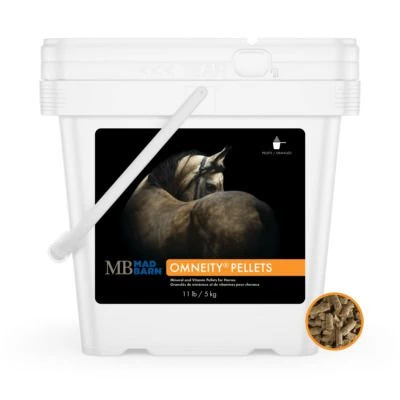
Mad Barn’s Omneity® is a vitamin and mineral supplement designed to fill common nutritional gaps in the equine diet. This formula provides essential nutrients to support hoof health, digestion, coat health, performance and more.
Forage
A balanced equine diet should always start with selecting the appropriate type and quantity of forage. Offering free-choice forage is the best way to support optimal digestive health in Friesians.
Typically, horses in maintenance or light work will consume about 2% of their body weight in forage daily. For horses engaged in heavy work, this requirement increases to 2.5%.
For example, a 590 kg (1,300 lb) Friesian at maintenance would need around 12 kg (26 lb) of hay each day. These easy keepers thrive on mid-maturity, low-starch, low-sugar grass hay. Starch and sugar (ESC) make up the hydrolyzable carbohydrate (HC) fraction of non-structural carbohydrates. These are digestible in the small intestine and contribute to insulin release.
For Friesians in heavy work, higher-quality forages are beneficial to fulfill their increased energy and protein needs. Incorporating soft alfalfa hay into the diet can provide the necessary calories for performance horses.
The high calcium content of alfalfa hay is also beneficial for reducing the risk of gastric ulcers. However, calcium must be balanced with phosphorus to maintain proper mineral ratios. High calcium diets should be avoided in older geldings with bladder stones or “sludge”. These are caused by calcium carbonate.
Friesians that are regularly worked and on forage-based diets are unlikely to show signs of metabolic syndrome. However, if exercise is stopped for any reason, weight gain may be rapid and laminitis is a risk if hay hydrolyzable carbohydrate is over 10%.
If your Friesian is overweight, you may need to limit hay to 1.5% of the horse’s body weight. Use a slow feeder to prolong forage access. Additionally, using a grazing muzzle during turnout can help manage grass consumption while still giving your horse the benefits of pasture turnout.
To ensure your horse’s forage meets their specific requirements, you can submit a forage sample for analysis. Working with an equine nutritionist can help you develop a feeding plan that complements your forage, providing your horse with a balanced diet.
Feeding Recommendations
High-starch grains are common in performance horse diets, but these feeds can increase the risk of digestive problems. Stressful training and competition schedules also predispose Friesians to gut issues. [12]
Instead of using grain-based feeds, you can meet your Friesian’s energy requirements with fat supplement and highly fermentable fibre, such as beet pulp. Forage cubes or pellets can be used as supplement carriers as an alternative to grain. [16]
Fats high in omega-3 fatty acids can provide additional benefits to support joint health, immune function and skin and coat quality in Friesian horses. One study found that omega-3 fatty acid supplementation reduced skin lesions in horses with insect hypersensitivity. [17]
All Friesians need constant access to fresh, clean water and plain loose salt. Salt licks or blocks may not provide enough salt to meet your horse’s sodium requirement. Instead, our nutritionists recommend feeding 1 – 2 ounces of loose salt with your horse’s daily ration and supplementing with electrolytes as-needed.
Nutritional Supplements
When formulating a diet for your Friesian horse, the first priority is to provide a balanced feeding program that corrects for any nutritional deficiencies. After balancing the diet, you can consider adding supplements to address individual needs or performance goals.
- OmegaPrime+ supplies DHA and EPA in a concentrated formula for horses that need targeted support for respiratory function, joint comfort, and normal inflammatory balance.
- W-3 Oil is an omega-3 enriched oil for horses that need additional calories from fat, such as those in heavier work or needing help maintaining condition. It also supports coat quality.
- MSM is an organic sulfur compound that supports comfortable movement and connective tissue health.
- Jiaogulan is an herbal supplement that supports circulation, hoof health, joints, respiratory function, and muscle function. [15][19][20]
Submit your Friesian horse’s diet online for a free evaluation, and consult with our experienced equine nutritionists for help with formulating a balanced diet.
Frequently Asked Questions
Here are some frequently asked questions about Friesian horses:
Friesian horses are an old and highly recognizable horse breed from Friesland in the Netherlands. The Friesian breed are known for their black coats, long flowing manes and tails, feathered lower legs, and elegant, powerful appearance. Once used as war horses and carriage horses, Friesian horses are now popular worldwide for riding, driving, and showing.
Friesian horses originate from Friesland in the Netherlands. The breed has a long history that stretches back many centuries, with ancestors used as working and riding horses in their native region. Friesian horses later became known as war mounts, carriage horses, and trotting horses in Europe.
Friesian horses are used for dressage, driving, harness shows, recreational riding, and exhibition work. Their elegant movement, expressive presence, and strong work ethic make them especially popular in dressage and driving. Friesian horses are also frequently featured in films and public performances because of their striking appearance.
Friesian horses make excellent show horses with their elegant appearance, and they are most commonly involved in dressage, driving, and harness competition. Dressage is the most popular riding discipline for Friesian horses, while driving showcases their high action and pulling ability. Many Friesian horses also compete in pleasure and exhibition classes.
Friesian horses typically stand between 15.2 and 16 hands high, although some individuals may be taller. Studbook requirements also set minimum height standards for breeding horses. Their height, combined with their long necks and elevated movement, gives Friesian horses a tall, impressive look.
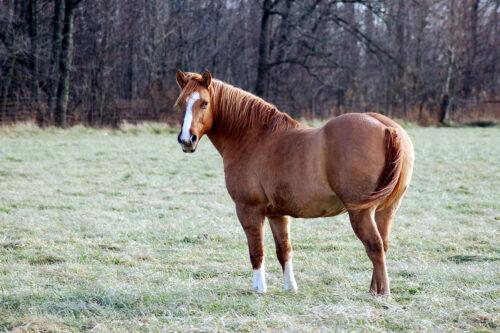
Friesian horses are almost always black, and black is the only recognized coat color in the modern breed. A small white star on the forehead may be allowed, but other white markings are generally not permitted. While chestnut can occur genetically, it is not accepted as a standard color in modern purebred Friesian horses.
Black is the common and recognized coat color in Friesian horses. Modern purebred Friesians are expected to be black, which gives the breed its striking, elegant appearance and helps create the dramatic look the breed is known for. Combined with their heavy mane and tail and feathering on the lower legs, the black coat makes Friesians especially refined and eye-catching. A small star may appear on the forehead, but extensive white markings are not typical, which helps maintain the breed’s uniform, solid-colored appearance.
Friesian horses are generally known for having friendly, hardworking temperaments. They usually have good energy and stamina without being overly spooky, and they tend to learn quickly with consistent training. Friesian horses are often appreciated for their willing attitude and easy-going, intelligent nature.
Friesian horses can be suitable for some beginners because they are often friendly, willing, and easy-going. However, not every Friesian horse is the same, and suitability depends on the horse’s training, temperament, and the rider’s support system. A well-trained Friesian horse may suit a less experienced rider better than a young or highly energetic one.
Friesian horses have a distinctive conformation that includes an expressive head, small ears, large eyes, and a high-set arched neck. They also have prominent withers, a muscular back, strong loins, a sloping croup, and a rectangular frame. Friesian horses are known for straight legs, wide hooves, and elevated, powerful movement with good stride length.
Common health issues in Friesian horses include dwarfism, hydrocephalus, megaesophagus, aortic rupture, pastern dermatitis, insect bite hypersensitivity, and retained placenta in mares. Friesian horses may also be at risk for metabolic problems that can contribute to obesity and laminitis. Their long feathering can increase the need for careful skin care and grooming.
Friesian horses are predisposed to several inherited and management-related health concerns. Some health concerns seen in Friesians are clearly inherited, including dwarfism and hydrocephalus. Others, such as megaesophagus, aortic rupture, insect bite hypersensitivity, and retained placenta, appear to involve breed-related genetic susceptibility or heritable risk. The breed’s heavy feathering can also increase the risk of conditions like pastern dermatitis. Friesians may also be at risk for metabolic problems that can contribute to obesity and laminitis. In addition, their long feathering can increase the need for careful skin care and grooming.
Summary
The Friesian horse is a historic Dutch breed recognized for its distinctive black coat, expressive movement, and calm, willing temperament, making it popular for driving, dressage, and recreational riding.
- The breed originated in Friesland in the Netherlands and descends from ancient war and utility horses, later influenced by Arabian and Andalusian blood while remaining genetically distinct from Thoroughbred-based riding horses.
- Friesians typically stand 15.2–16+ hands and have a rectangular build, arched neck, powerful hindquarters, abundant mane and tail, and feathered lower legs, with black as the only accepted modern coat color.
- The breed is known for a friendly, intelligent, and hardworking temperament, with good stamina and rideability that suit both amateur and professional riders.
- Due to a small founding population and historical inbreeding, Friesians are predisposed to several genetic disorders, including dwarfism, hydrocephalus, megaesophagus, aortic rupture, skin conditions, and a higher risk of metabolic syndrome.
- Friesians perform best on a balanced, forage-based diet, with controlled starch intake to support connective tissue and metabolic health.
References
- Savelkouls, J. The Friesian horse and the Frisian horse: The (re)invention and the historicity of an iconic breed. De Vrije Fries. 2015.
- Schurink, A. et al. Genetic diversity within and relationships among Dutch horse populations. Proceed World Con Genet Appl Livest Prod. 2018.
- Ducro, B. et al. Genetic diversity in the Dutch Friesian horse. Proceed World Con Genet Appl Livest Prod. 2006.
- Leegwater, P. et al. Dwarfism with joint laxity in Friesian horses is associated with a splice site mutation in B4GALT7. BMC Genomics. 2016. View Summary
- Ducro, B. et al. A nonsense mutation in B3GALNT2 is concordant with hydrocephalus in Friesian horses. BMC Genomics. 2015. View Summary
- Boerma, S. et al. The Friesian horse breed: A clinical challenge to the equine veterinarian?. Equine Vet Ed. 2011.
- Saey, V. et al. Elevated urinary excretion of free pyridinoline in Friesian horses suggests a breed-specific increase in collagen degradation. BMC Vet Res. 2018.
- Komine, M. et al. Megaesophagus in Friesian horses associated with muscular hypertrophy of the caudal esophagus. Vet Pathol. 2014. View Summary
- Ploeg, M. et al. Aortic rupture and aorto-pulmonary fistulation in the Friesian horse: Characterisation of the clinical and gross post mortem findings in 24 cases. Equine Vet J. 2012.View Summary
- Schurink, A. et al. Risk factors for insect bite hypersensitivity in Friesian horses and Shetland ponies in The Netherlands. Vet J. 2013. View Summary
- Sevinga, M. et al. Retained placenta in Friesian mares: incidence, and potential risk factors with special emphasis on gestational length. Theriogenology. 2004.View Summary
- Fazio, E. et al. The Potential Role of Training Sessions on the Temporal and Spatial Physiological Patterns in Young Friesian Horses. J Equine Vet Sci. 2016.
- Siegers, E. et al. Longitudinal Training and Workload Assessment in Young Friesian Stallions in Relation to Fitness: Part 1. Animals. 2023.View Summary
- National Research Council. Nutrient Requirements of Horses. National Academies. 2007.
- Bokhari, A.R. and Murrell, G.A.C. The role of nitric oxide in tendon healing. J Shoulder Elbow Surg. 2012.
- Zeyner, A. et al. Effect of feeding exercised horses on high-starch or high-fat diets for 390 days. Equine Vet J. 2010.View Summary
- O'Neill, W. et al. Flaxseed (Linum usitatissimum) supplementation associated with reduced skin test lesional area in horses with Culicoides hypersensitivity. Can J Vet Res. 2002. View Summary
- Durham, A. et al. ECEIM consensus statement on equine metabolic syndrome. J Vet Intern Med. 2019. View Summary
- Murrell, G.A.C. et al. Modulation of tendon healing by nitric oxide. Inflamm Res. 1997.
- Tanner, M.A. et al. The direct release of nitric oxide by gypenosides derived from the herb Gynostemma pentaphyllum. Nitric Oxide. 1999.
- Kellon, E.M. and Gustafson, K.M. Possible dysmetabolic hyperferritinemia in hyperinsulinemic horses. Open Vet J. 2020. View Summary
- Friesian Horse. The Livestock Conservancy. 2024.
- Frequently Asked Questions Registration and Transfer Information. Friesian Horse Association of North America.