English



Gaited horse breeds have the natural ability to perform ambling gaits not observed in other equines. While different breeds have unique gaits, most gaited horses share a common genetic mutation linked to ambling patterns of locomotion.
These breeds gained popularity in certain regions for their smooth gaits, which offer advantages for long-distance travel over rugged terrain. Today, their comfortable ride and distinctive movement make gaited horses popular pleasure and show mounts.
Unfortunately, some breeds also carry a risk of genetic diseases that impact vision, muscle and skin health.
This guide discusses the history, characteristics, health problems, and nutritional needs of gaited horse breeds. Keep reading to learn more about feeding and caring for your gaited horse.
Gaited Horse History
Gaited horses are found worldwide, but research suggests most gaited breeds share a common genetic origin. Selective breeding for ambling gaits in different regions led to a variety of breeds suited to many historical uses.
Origin
A mutation in the DMRT3 gene commonly found in gaited horse breeds affects locomotion patterns. Horses with this mutation, also known as the gait keeper mutation, can perform alternative gaits naturally. [1]
The DMRT3 mutation is also found in horses used for harness racing. Researchers have linked the mutation to the ability to pace faster without transitioning to a canter. [2]
Interestingly, a study analyzing historical horse remains traced the origin of the DMRT3 mutation to Medieval England, around 850 to 900 AD. [3] However, this study only included two horses from southern Europe and none from Asia between 0 and 800 AD. Some researchers believe the mutation may have originated elsewhere. [4]
Research also shows that Icelandic horses have a high frequency of the DMRT3 gene mutation. This suggests that settlers brought ambling horses from the British Isles to Iceland between the 9th and 11th centuries. [3]
Early ambling horses also likely accompanied Norse settlers and Vikings on their journeys to continental Europe and beyond, allowing the DMRT3 mutation to spread. [3]
Historic Use
Ambling gaits allow horses to maintain continuous contact with the ground, reducing the vertical oscillation of their center of mass. As a result, horses with ambling gaits conserve energy while travelling at speed. [5]
Using less energy allowed these horses to travel greater distances at faster speeds without tiring. Ambling gaits are also more comfortable to ride than gaits with a moment of suspension, quickly causing ambling horses to become favored choices for long-distance travel.
Most modern gaited breeds originated in rocky, hilly, sandy, or other challenging types of terrain. [6] Maintaining constant contact with the ground also helps these horses stay balanced over uneven terrain.
Gaited breeds declined in 17th-century Europe with the rise of better roadways and heavy carriages for long-distance transport. But they retained their popularity in North and South America. [6]
List of Gaited Horse Breeds
There are many different breeds of gaited horses around the world. Some of the most popular gaited horse breeds include:
- Icelandic Horse
- Tennessee Walking Horse
- Rocky Mountain Horse
- Paso Fino
- Peruvian Paso
- Missouri Fox Trotter
- American Saddlebred
- Spotted Saddle Horse
- Kentucky Mountain Saddle Horse
- Florida Cracker
- Marwari Horse
- Racking Horse
American Standardbreds that compete as pacers are also considered gaited horses.
While some horse breeds are predominantly non-gaited, individual horses within these breeds can still exhibit gaited abilities, often due to their bloodlines containing gaited breeds. This is observed in breeds such as the Morgan Horse and Appaloosa, where certain horses can perform unique gaits.
What's your top priority with your horse's health?

Enter your email to receive your store credit
Gaited Horse Characteristics
Many gaited breeds exhibit similar characteristics linked to their shared heritage and movement patterns. Conformation directly impacts locomotion, which influences the suitability of gaited breeds for different disciplines.
Conformation
Gaited horses vary in height depending on their breed. For example, most Icelandic horses stand between 13 and 14 hands tall, while Tennessee Walking horses can reach 17 hands.
The breed standards for most gaited breeds aim to produce horses with:
- Long, sloping shoulders and hips
- Short backs
- Strong coupling
- High-held heads and necks
Gaited horses typically have longer hind limbs than non-gaited horses of the same height, enabling long strides during ambling gaits. [7]
Research suggests these horses have several other morphological traits distinguishing them from non-gaited breeds. [7] One study found that gaited horses have smaller jaw and eye widths, proportionally longer front limbs, and thinner lower limb circumferences than non-gaited horses. [7]
Colours
Gaited horses come in a wide variety of colours. Some breeds accept all coat colours, while others are known for specific colours or patterns. For example, the silver dapple coat colour commonly found in Rocky Mountain Horses is relatively rare in the general equine population.
Some breeds, such as the Spotted Saddle Horse, accept horses for registration based on specific colour and gait requirements.
Temperament
Most gaited breeds have easy-going temperaments. These horses were required to have the stamina and work ethic to carry riders for long distances over challenging terrain. This legacy has shaped them into willing and docile equine partners for modern riders.
The combination of their calm demeanor and smooth gaits makes these horses particularly appealing to older riders and beginner equestrians. However, every horse is an individual, and personalities can vary.
Disciplines
Many breed organizations host competitions that allow gaited horses to show off their unique natural gaits. Gaited Saddlebreds commonly compete in five-gaited saddle seat divisions.
Gaited horses that prefer to perform their ambling gaits instead of trotting or cantering under saddle may not be suitable for competitive dressage or other disciplines that judge horses based on standard gaits.
Their smooth gaits also make these breeds comfortable partners for trail riding and endurance racing. Owners typically report that these horses are sure-footed and brave outside the riding arena.
Health Profile
Gaited horses are susceptible to many of the same health conditions commonly found in non-gaited breeds. However, their unique locomotion can make lameness more challenging to assess.
Genetic Diseases
Gaited horses can be predisposed to certain genetic diseases, depending on their breed and parentage. Understanding these potential health issues is important for providing appropriate care, and when deciding to add a new equine member to your family.
Breeders often conduct genetic testing to identify carriers of severe diseases, helping to make informed decisions about breeding to reduce the future incidence of these conditions.
Multiple Congenital Ocular Anomalies
Several inherited eye problems are found in gaited horses, including multiple congenital ocular anomalies (MCOA).
MCOA are a group of inherited eye defects present at birth, affecting various parts of the eye and leading to visual impairment in horses. This condition is associated with dilution genes commonly found in Rocky Mountain Horses. [8]
Congenital Stationary Night Blindness
This genetic condition, identified in Tennessee Walking Horses, Standardbreds, and Missouri Fox Trotters, causes impaired vision in low-light conditions. [9]
Equine Recurrent Uveitis
Recent research has linked genetic risk factors to equine recurrent uveitis (ERU) in Icelandic horses. ERU is the most common cause of blindness in horses. [19]
Junctional Epidermolysis Bullosa
American Saddlebreds can inherit junctional epidermolysis bullosa, a fatal skin disorder. Affected foals develop skin lesions and are susceptible to secondary infections. [10]
Polysaccharide Storage Myopathy (PSSM)
Polysaccharide Storage Myopathy is a muscle disorder that affects how muscle cells handle glycogen, leading to muscle weakness or pain.
Studies have identified the GYS1 gene mutation responsible for Type 1 PSSM in several gaited breeds, including Tennessee Walking Horses. However, this muscle disorder is less common in gaited breeds than in Quarter Horses and draft breeds. [11]

Health Problems
Lameness
Gaited horses, while prone to typical health issues found in non-gaited breeds, face increased challenges in managing lameness.
Lameness may be more difficult to recognize in gaited horses due to their unique locomotion. [12] These movement patterns may also predispose gaited breeds to specific injuries.
Some research suggests hind limb lameness is more common in gaited breeds. Hocks and stifles are the most commonly treated joints in horses. Stifle lameness can also result in compensatory forelimb lameness. [13]
Degenerative Suspensory Ligament Desmitis
Peruvian Pasos, a gaited breed from Peru, have a high incidence of degenerative suspensory ligament desmitis (DSLD). This chronic connective tissue condition causes a progressive weakening of the suspensory ligament, joint hyperextension, and lameness.
Gastric Ulcers
Lifestyle factors can contribute to other common health problems in gaited breeds. Gaited performance horses have an increased risk of gastric ulcers and other digestive problems associated with stress from competition and training. [14]
Metabolic Syndrome
Gaited horses of all breeds may have metabolic syndrome, with the exception of Standardbreds, who are generally not prone to EMS. [15] This includes sugar/starch intolerance, high blood insulin levels, easy weight gain with fatty deposits such as a cresty neck, and risk of laminitis.
Care and Management
Gaited horses need the same basic care as non-gaited horses. Proper management can also help keep these horses sound throughout their riding careers.
Work with your trainer, farrier, and veterinarian to develop a preventative wellness program for your gaited horse that includes:
- Veterinary Exams: Schedule a wellness exam with your veterinarian at least once or twice yearly. Regular lameness exams can help monitor for early signs of problems owners may miss in gaited horses.
- Vaccinations: Follow your veterinarian’s vaccine recommendations to protect your gaited horse against common diseases in your region.
- Deworming: Use dewormers according to your veterinarian’s instructions to protect your gaited horse from internal parasites.
- Dental Care: Annual dental exams and regular teeth floating help keep your gaited horse’s mouth balanced and comfortable.
- Farrier Care: Trimming keeps your gaited horse’s hooves balanced. Farrier care and shoeing should always prioritize soundness over artificially enhancing gaits.
Gaited show horses often live in stalls, but most breeds are hardy enough to live outside if they can access safe shelter. Daily turnout benefits your gaited horse’s mental health and musculoskeletal system.
Gaited horses with congenital night blindness should stay in a well-lit environment at night to reduce their risk of injury.
Nutrition Program
Balanced nutrition is key to supporting the health and performance of all horses. The best feeding program for your gaited horse will depend on their individual breed, lifestyle and workload.
Weight Maintenance
Most gaited breeds are easy keepers, with an efficient metabolism that allowed their ancestors to survive on sparse rations. Unfortunately, their efficient metabolism can predispose gaited breeds to obesity when fed high-starch and high-energy diets.
Horses with equine metabolic syndrome are also at greater risk of obesity and laminitis. [16]
Maintaining your gaited horse at a healthy weight and feeding an appropriate diet can help mitigate health risks. Closely manage their diet, selecting feeds and forages that match their energy needs.
Ideally, healthy gaited horses should have a body condition score of approximately 5 out of 9 on the Henneke scale.
Sample Diet
The following sample diet is intended for a mature 1000 lb (450 kg) gaited horse with normal body condition at maintenance (not exercising).
| Feed | Amount per day |
|---|---|
| Mid-Quality Hay (8% crude protein) | Free-choice |
| Salt | 30 g (2 tbsps) |
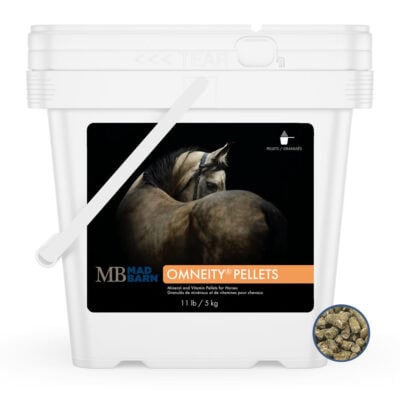
| Omneity® Pellets | 200 g (2 scoops) |
| W-3 Oil | 60 mL |
| Diet Analysis | |
| Digestible Energy (% of Req) | 109% |
| Protein (% of Req) | 127% |
| HC (ESC + starch; % Diet) | 8.7% |
Forage alone should be sufficient to meet the energy and protein requirements of most gaited horses at maintenance or in light work. However, hay and pasture are often deficient in vitamins and minerals that your gaited horse needs in their diet.
Feeding a vitamin and mineral supplement can help fill these gaps to ensure your horse meets their nutritional requirements.
Mad Barn’s Omneity® is a comprehensive vitamin and mineral supplement designed to balance forage-based diets. Omneity® provides essential nutrients that support hoof health, coat quality, athletic performance, immune function, the digestive system and more.
Forage
Selecting the right type and quantity of forage to feed your gaited horse is the first step to formulating a balanced diet. Providing adequate forage supports healthy digestive function and promotes natural grazing behaviours.
Your horse’s needs will vary depending on their body weight. Typically, horses in light work should consume about 2% of their body weight in forage daily. A 1000 lb (450 kg) gaited horse is expected to consume approximately 20 lb (9 kg) of forage per day.
Low-sugar, low-starch average-quality grass hays are recommended for easy-keepers to avoid feeding excess hydrolyzable carbohydrates (HC). For most horses, HC should be less than 10% of the diet; for some it should be even lower.
Submit a forage sample for analysis to determine if your hay is appropriate for your gaited horse. A hay analysis will also help you more accurately formulate a balanced diet.
Overweight gaited horses or those with metabolic health problems may need their forage intake regulated. Slow feeders and grazing muzzles help manage intake while allowing owners to provide free-choice forage.
Feeding Recommendations
While commercial concentrates are commonly fed to show horses, most gaited breeds don’t need high-energy grains to maintain weight. High starch and sugar grains worsen high insulin levels and can precipitate laminitis. [16]
For gaited horses that need additional energy in their diet, choose fiber-based feeds, such as beet pulp or hay cubes. Fat supplements given in controlled amounts are another safe source of concentrated calories. Note: The safety of high fat feeding to horses with metabolic syndrome has not been clearly established.
A study in gaited horses in heavy training showed supplementation with oil enriched with vitamin E and high in essential fatty acids increased antioxidant capacity. [17] Fat sources rich in omega-3 fatty acids also support anti-inflammatory mechanisms and contribute to joint health. [18]
All horses need constant access to clean, fresh water and free-choice loose salt. Most horses also need loose salt added to their daily ration to meet their sodium requirements.
Nutritional Supplements
After balancing your gaited horse’s diet and correcting for any nutrient deficiencies, you can consider additional nutritional supplements to provide targeted support.
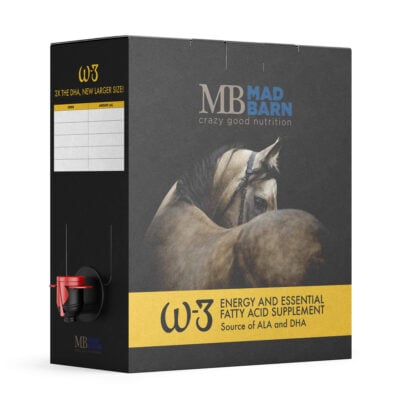
- W-3 Oil is an essential fatty acid supplement that provides a palatable source of DHA, an omega-3 fatty acid, and natural vitamin E not found in plants. DHA helps support joint, skin, muscle, immune, and eye health.
- MSM can help maintain healthy joint, cartilage and connective tissue in your gaited horse. MSM supports the horse’s homeostatic mechanisms regulating inflammation.
- Visceral+® is a comprehensive gut formula that helps maintain stomach and hindgut health in gaited horses. This supplement contains probiotics, herbs, yeast, minerals, and amino acids that support the entire equine gastrointestinal tract.
Have questions about what to feed your gaited horse? Submit their diet online for a free evaluation, and get help from our experienced equine nutritionists to formulate a balanced diet.
Frequently Asked Questions
Here are some frequently asked questions about gaited horse breeds:
Most non-gaited horses lack the DMRT3 “gait keeper” gene mutation that enables a natural four-beat ambling gait. Without this specific mutation, their spinal locomotion circuits are wired to produce the standard walk, trot, and canter sequence instead of the even, ground-contact rhythm of an amble. While some individual horses may show unusual movement due to mixed ancestry, they rarely maintain the smooth, energy-efficient gait seen in true gaited breeds.
Common conformation features emphasized in many gaited breeds include long, sloping shoulders and hips, a short back, strong coupling, and a high-carried head and neck. These traits support long, fluid strides that keep the horse balanced and comfortable while performing ambling gaits. Gaited horses also tend to have proportionally longer hind limbs, which further enhances their ability to sustain smooth, ground-covering movement.
Lameness recognition is more challenging in gaited horses because their unique ambling gaits mask the typical head-bob or stride irregularities seen in trotting horses. The smoother motion and constant ground contact can hide subtle limb discomfort, making visual clues less obvious to owners and trainers. Research also suggests hind-limb lameness is relatively common in these breeds, so regular veterinary exams are important to detect problems before they progress.
Gaited breeds often make dependable workers and versatile sport horses when matched to the right discipline. Their calm temperament and energy-saving ambling gaits suit trail riding, endurance work, and pleasure riding, allowing them to cover long distances with less fatigue for horse and rider. While some excel in show classes that highlight natural gaits, they are generally less suited to competitive dressage or other sports that require the traditional trot and canter for scoring.
Summary
Gaited horse breeds naturally perform smooth ambling gaits linked to a shared DMRT3 “gait-keeper” mutation. Historically prized for comfortable long-distance travel over rough terrain, they remain popular pleasure and show mounts, though some lines carry elevated genetic health risks.
- Selective breeding for ambling gaits spread from Medieval Europe and the North Atlantic to the Americas, creating many regional breeds.
- They have efficient, ground-covering gaits with long sloping shoulders and hips, short backs, strong coupling, and sure-footed trail ability.
- Genetic concerns may include multiple congenital ocular anomalies, congenital stationary night blindness, equine recurrent uveitis, junctional epidermolysis bullosa, and occasional polysaccharide storage myopathy; hind-limb or stifle lameness can be harder to detect.
- Most are easy keepers and do best on forage-first, low-NSC diets with a balanced vitamin–mineral source, free-choice salt, and added fiber or fat calories if extra energy is required.
References
- Andersson, L. et al. Mutations in DMRT3 affect locomotion in horses and spinal circuit function in mice. Nature. 2012. View Summary
- Promerova, M. et al. Worldwide frequency distribution of the ‘Gait keeper’ mutation in the DMRT3 gene. Anim Genet. 2014. View Summary
- Wutke, S. et al. The origin of ambling horses. Curr Biol. 2016. View Summary
- Staiger, E. et al. The evolutionary history of the DMRT3 ‘Gait keeper’ haplotype. Anim Genet. 2017. View Summary
- Schmitt, D. et al. Adaptive value of ambling gaits in primates and other mammals. J Exp Biol. 2006. View Summary
- Vincelette, A. The Characteristics, Distribution, Function, and Origin of Alternative Lateral Horse Gaits. Animals. 2023. View Summary
- Staiger, E. et al. Morphological Variation in Gaited Horse Breeds. J Equine Vet Sci. 2016.
- Segard, E. et al. Ultrasonographic features of PMEL17 (Silver) mutant gene–associated multiple congenital ocular anomalies (MCOA) in Comtois and Rocky Mountain horses. Vet Ophthalmol. 2013. View Summary
- Esdaile, E. et al. Additional evidence supports GRM6 p.Thr178Met as a cause of congenital stationary night blindness in three horse breeds. Vet Ophthalmol. 2023. View Summary
- Graves, K. et al. Partial deletion of the LAMA3 gene is responsible for hereditary junctional epidermolysis bullosa in the American Saddlebred Horse. Anim Genet. 2009. View Summary
- McCue, M. et al. Glycogen Synthase 1 (GYS1) Mutation in Diverse Breeds with Polysaccharide Storage Myopathy. J Vet Intern Med. 2008. View Summary
- Rhodin, M. et al. Timing of Vertical Head, Withers and Pelvis Movements Relative to the Footfalls in Different Equine Gaits and Breeds. Animals. 2022. View Summary
- Maliye, S. et al. Objective assessment of the compensatory effect of clinical hind limb lameness in horses: 37 cases (2011–2014). J Am Vet Med Assoc. 2016. View Summary
- Van den Boom, R. Equine gastric ulcer syndrome in adult horses. The Vet J. 2022. View Summary
- Potter, S.J., et al. Comparison of Feed Digestibility between Ponies, Standardbreds and Andalusian Horses Fed Three Different Diets. Vet Sci. 2021.
- McCue, M. et al. Equine Metabolic Syndrome: A Complex Disease Influenced by Genetics and the Environment. J Equine Vet Sci. 2015.
- Melo, S. et al. Oil Supplementation Produces an Increase in Antioxidant Biomarkers in Four-Beat Gaited Horses. Equine Vet J. 2014.
- Lucia, J. et al. Effect of Omega 3 Polyunsaturated Fatty Acids (PUFAs) on Markers of Inflammation in Young Horses in Training. J Equine Vet Sci. 2009.
- Hack, Y. et al. A genetic investigation of equine recurrent uveitis in the Icelandic horse breed. Anim Genet. 2022. View Summary