English





Friesian horses, originating from the Friesland province in the Netherlands, have a rich lineage that can be traced back over 150 years by the Royal Friesian Horse Studbook.
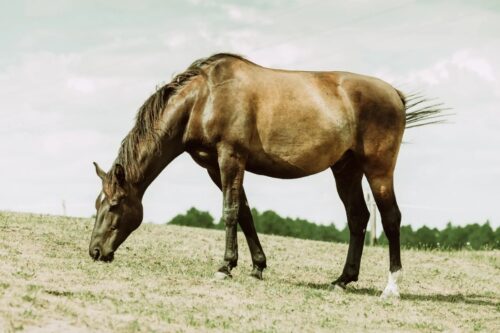
Known for their striking black coats, feathered fetlocks, and balanced physique, Friesians possess a noble demeanor. Beyond their elegant appearance, Friesians are admired for their work ethic, stamina, intelligence and easygoing temperament, qualities that have made them popular in disciplines such as dressage and driving.
However, a history of selective breeding and periods of inbreeding have left the breed susceptible to a number of genetic disorders, such as dwarfism, hydrocephalus, and distichiasis. To address these challenges, the breed registry implemented mandatory genetic testing, aiming to prevent hereditary conditions and enhance genetic diversity.
This article examines the major genetic diseases afflicting Friesians, the inheritance patterns underlying these conditions, and the role of genetic testing in promoting a healthier future for this cherished breed.
Friesian Horses
The Friesian horse bloodline has been meticulously tracked for approximately 150 years, thanks to the efforts of the Royal Friesian Horse Studbook — known in Dutch as the “Koninklijke Friesch Paarden-Stamboek” (KFPS). Established in 1879, the KFPS tracks and registers Friesians in more than 30 countries, including Canada and the United States. [1]
The KFPS studbook upholds strict breeding standards to promote the Friesian breed’s lineage, quality, and distinct characteristics. Registration requires horses to meet rigorous criteria assessed during official inspections, including: [2]
- Verified Pedigree: Both sire and dam must be registered with the KFPS or an approved affiliated studbook
- Conformation Standards: Horses are evaluated for physical traits such as overall body proportions, coat color (typically black with minimal white markings), head shape, neck carriage, and leg structure
- Training and Condition: Horses are assessed for movement, gait, temperament and willingness to work
- Health Documentation: Horses must be microchipped and have up-to-date health certificates including Coggins tests
Breeding KFPS-approved stallions with non-KFPS mares or other breeds is discouraged, and dual registration with other Friesian or crossbreed registries is not permitted. These measures aim to preserve the breed’s purity and prevent crossbreeding, a practice that historically led to the near disappearance of Friesians in North America.
Genetic Bottlenecks
In addition to rigorous conformation and movement inspections, the KFPS requires genetic testing of horses prior to breeding registration. This ensures that known genetic issues are managed to maintain the health and integrity of the Friesian breed.
Throughout their history, Friesians have experienced periods where their population size dwindled, leaving a small breeding pool. This lack of genetic diversity made the breed vulnerable to the founder effect and population bottlenecks, where a limited gene pool amplifies certain traits or genetic mutations over time. [1][3]
To compound the issue, the overuse of high-value stallions for breeding further increased the rate of inbreeding. For example, selective breeding practices often focused on enhancing desirable traits, reducing genetic diversity. [4]
At its peak, the inbreeding rate for Friesians reached 1.5% per generation, exceeding the UN Food and Agriculture Organization’s recommended limit of 1% to maintain genetic variation and minimize adverse effects of inbreeding. [4]
The combination of a small breeding pool and high inbreeding rates led to the emergence of hereditary diseases that are now more prevalent in Friesians compared to other horse breeds. These include:
- Dwarfism: A condition causing abnormal skeletal development and reduced stature.
- Hydrocephalus: A severe and often fatal condition characterized by fluid accumulation in the brain.
- Distichiasis: A disorder where extra eyelashes grow abnormally, potentially causing eye irritation or damage.
Recognizing the need to address these health concerns, in the early 2000s the KFPS introduced mandatory genetic testing to improve breeding practices, prevent amplification of genetic diseases, and increase genetic diversity. [1] Results of the Friesian Health Panel DNA tests are now used to:
- Identify carriers of genetic mutations and prevent breeding combinations that could produce affected offspring
- Monitor and reduce inbreeding rates, promoting greater genetic diversity
- Improve breeding decisions by integrating genetic data with assessments of conformation, movement, and temperament
What's your top priority with your horse's health?

Enter your email to receive your store credit
Genetic Diseases in Friesians
The most notable genetic disorders affecting Friesian horses include dwarfism, hydrocephalus and distichiasis.
Dwarfism
Dwarfism is a developmental disorder in which limbs and other body parts develop at different rates and to varying extents. [3][5][6] It is characterized by disproportionately short stature and skeletal deformities. While dwarfism can occur across breeds, it is more prevalent in Friesians.
Common traits observed in Friesians affected by dwarfism include: [3][5][6]
- Shorter than average height
- Lower than average body weight
- Shorter limbs relative to body size
- Relatively large head
- Broad chest that narrows at the bottom of the ribcage
- Long back
- Hyperextended fetlocks
- Narrow, long-toed hooves
Dwarfism in Friesians is caused by a mutation in the B4GALT7 gene. It is an autosomal recessive disorder, which means that a foal must inherit a copy of the mutated gene (FRDWF/FRDWF) from each parent to be affected. Horses with only one copy of the mutation (FRDWF/n) are carriers but do not exhibit symptoms.
Dwarfism can range in severity from mild to severe. In severe cases, affected foals may not survive infancy due to complications like joint failure, respiratory issues, or systemic health problems. Even in milder cases, the horse may require lifelong care to manage discomfort and mobility challenges.
Hydrocephalus
Hydrocephalus is a severe genetic condition in Friesian horses, characterized by an abnormal accumulation of cerebrospinal fluid in the brain. Affected foals typically do not survive, either being stillborn or euthanized shortly after birth due to the severity of their condition. [5]
Signs and symptoms of hydrocephalus include: [4]
- Enlarged Head: Affected foals may exhibit an abnormally large or swollen head due to fluid buildup
- Difficulty Foaling: If the foal’s head is too large to pass through the birth canal, dystocia (difficulty foaling) can occur
- Stillbirth or Neonatal Death: In severe cases, hydrocephalus may result in stillbirth or the death of the foal shortly after birth
- Neurological Issues: Increased pressure in the brain can cause neurological signs including seizures, difficulty standing, or lack of coordination
- Failure to Thrive: Many affected foals are unable to nurse or gain weight properly
Hydrocephalus in Friesians is caused by a recessive genetic mutation, meaning a foal must inherit a copy of the mutated gene (HDC/HDC) from each parent to be affected. Carriers with one copy of the gene (HDC/n) do not exhibit symptoms but can pass the mutation to their offspring.
Distichiasis
Distichiasis is a genetic condition seen in Friesian horses, characterized by the abnormal growth of eyelashes. Unlike normal lashes that grow neatly along the lash line and curve away from the eye, these extra lashes originate from the meibomian gland, a structure along the edge of the eyelid.
These abnormal eyelashes can grow in various directions, potentially rubbing against the eye and causing irritation or damage. [7] When eyelash hairs come into contact with the surface of the eyeball, they can cause tearing, keratitis, corneal erosions, or corneal ulcers. [7]
While not life-threatening, distichiasis can significantly affect a horse’s quality of life if left untreated. Chronic eye irritation may lead to persistent discomfort, infection, or even partial vision loss.
Distichiasis is believed to be caused by an autosomal recessive mutation, although the exact gene involved has not been confirmed. [7]
Over-Represented Diseases in Friesians
Several other conditions are more common in Friesians than in other breeds, although the specific genes responsible have not yet been identified.
Over-represented conditions in Friesians include: [5][8][9][10][11][12]
- Megaesophagus: This condition is characterized by chronic dilation and loss of muscle tone in the esophagus, resulting in feed getting stuck in the throat. This can lead to aspiration pneumonia and choke.
- Retained Placenta: This condition occurs when a mare fails to expel the fetal membranes within three hours of delivering a foal.
- Insect Bite Hypersensitivity: Also referred to as sweet itch, this condition is characterized by an excessive allergic response to the bites of certain insects. This hypersensitivity may occur due to a weakened immune system and may be linked to chronic dermatitis.
- Neonatal Isoerythrolysis: A rare but serious condition affecting newborn foals. Neonatal isoerythrolysis occurs when the mare’s antibodies, transferred through her colostrum (the first milk), attack and destroy the foal’s red blood cells. This immune reaction can lead to anemia, weakness, and, in severe cases, death if not promptly treated.
- Verrucous Pastern Dermatopathy: A skin condition that affects the lower legs, also known as greasy heel or scratches.
- Chronic Progressive Lymphedema: Chronic inflammation of the lymph system in the lower limbs. This may also be referred to as lymphangitis.
- Ruptures of the Aortic Arch: A tear in the major blood vessel bringing blood out of the heart, which can result in a fatal rupture.
- Tendon/Ligament Laxity: The tendons and ligaments in Friesians are often looser and more elastic than those of other horses, potentially due to abnormal collagen formation.
Friesian horses also exhibit a high prevalence of conformation faults, which can lead to various biomechanical issues, including: [5]
- Hyperextension of the Fetlock: Excessive downward flexion of the fetlock joint, increasing the risk of strain or injury to the tendons and ligaments.
- Poor Hind Limb Propulsion: Reduced efficiency in the forward thrust provided by the hind legs, affecting movement and performance.
- Hyperrotation of the Hind Foot: Excessive inward or outward rotation of the hind hooves, potentially leading to uneven wear or joint stress.
In addition to these breed-specific conditions, Friesians are also susceptible to genetic disorders that can affect horses of all breeds, including Polysaccharide Storage Myopathy (PSSM).
Effects of Genetic Mutations
Understanding the inheritance patterns of genetic disorders enables horse owners and breeders to make informed decisions, helping to safeguard the health of the equine population—especially in genetically vulnerable breeds like Friesians.
Genetic disorders in horses are inherited conditions caused by mutations in their DNA. [13] These disorders can affect various aspects of a horse’s health, including metabolism, musculoskeletal function, immune response, and neurological development.
DNA refers to all the genetic material within a cell and serves as the blueprint for the organism’s development, functioning, and reproduction.
Within the long, coiled strands of DNA, there are distinct segments known as genes. Each gene contains the specific instructions for constructing a particular protein, which performs specific roles in the body.
When the genetic code within a gene is altered — an occurrence known as a gene mutation — the resulting protein may deviate from its intended form or function. Depending on the nature of the change in protein structure, this can lead to several outcomes:
- Loss of function: The protein may not be produced at all or may be rendered inactive, impairing the biological processes it supports.
- Reduced function: The protein may still be produced but with diminished efficiency or effectiveness, potentially leading to suboptimal performance of its functions.
- Amplified function: In some cases, the mutation may cause the protein to be overactive, potentially disrupting normal biological balance and processes.
These mutations can result in noticeable physiological or anatomical differences and may disrupt normal biological functions, potentially leading to a diagnosed genetic disorder. [13]
Genetic mutations can arise spontaneously or be inherited from parents. Spontaneous mutations occur due to errors during DNA replication when cells divide or as a result of damage to DNA caused by environmental factors such as exposure to UV light. However, spontaneous mutations can only be passed on to offspring if they affect the genetic material in reproductive cells, such as eggs (ova) or sperm.

Inheritance Patterns
Genetic mutations present in ova (eggs) or sperm can be passed on to offspring. Whether a genetic mutation affects the offspring depends on its inheritance pattern.
For each gene in a foal’s DNA, one copy is inherited from the dam (mother) and one copy from the sire (father). Certain genetic diseases only occur when the foal inherits two copies of the mutated gene (one from each parent), while others require only a single copy of the mutated gene (from just one parent).
The inheritance patterns most relevant to genetic disorders in Friesians are: [14]
- Autosomal dominant: A single copy of the mutated gene, inherited from either parent, is enough to cause the disorder.
- Autosomal recessive: Two copies of the mutated gene, one from each parent, are required for the disorder to manifest.
Autosomal Dominant
Autosomal dominant traits require only one copy of a mutated gene for the offspring to show the associated changes. If a foal inherits one copy of the gene from either parent, they will develop the physiological or anatomical features associated with the mutation.
Every horse carries two copies of each gene. Depending on the combination, a horse can have:
- Two normal copies (homozygous normal)
- One normal and one mutated copy (heterozygous)
- Two mutated copies (homozygous mutated)
In conditions with autosomal dominant inheritance, even a heterozygous horse (carrying one normal and one mutated gene) will show the associated traits of the mutation.
Breeding Scenarios:
The likelihood of a foal inheriting and expressing the trait depends on the genetic status of the parents.
- Both parents have two normal copies: The foal has a 100% chance of inheriting only normal gene variants and will not express the disease.
- Both parents have two mutated copies: The foal has a 100% chance of inheriting mutated genes and expressing the disease.
- Both parents are heterozygous: The foal has a 75% chance of inheriting at least one mutated gene and expressing the disease, and a 25% chance of being homozygous normal.
The table below shows how autosomal dominant traits are passed down when both parents are heterozygous (X/x), meaning they each carry one copy of the mutated gene (X) and one normal gene (x).
In this case, both parents show the trait or condition and only the foal that inherits two normal genes (x/x) will not be affected.
Table 1. Genetic inheritance of autosomal dominant traits from two heterozygote parents. Dominant genes are expressed as X.
| Dam’s Genes → | X | x |
| Sire’s Genes ↓ | Breeding Outcome | |
| X | X/X | X/x |
| x | X/x | x/x |
To avoid producing foals affected by autosomal dominant conditions, breeders should avoid using horses with the condition (X/x or X/X) for breeding altogether. If even one parent has the mutated gene, there is a risk of producing affected offspring. Breeding two homozygous normal horses (x/x) is the only way to completely eliminate the chance of passing on an autosomal dominant condition.
Autosomal Recessive
Autosomal recessive traits require two copies of the mutated gene for the condition to appear. This means that only offspring who inherit the mutated gene from both parents will develop the associated physiological or anatomical changes.
Offspring with just one mutated gene will not show symptoms but will be carriers of the trait.
Breeding Scenarios:
The chances of producing a foal with the condition depend on the genetic makeup of the parents and can be determined by the following scenarios.
- Both parents have two normal copies: The foal has a 100% chance of inheriting only normal gene variants and will not carry or express the disease.
- Both parents have two mutated copies: The foal has a 100% chance of inheriting two mutated genes and will express the disease.
- Both parents are heterozygous: The foal has
- A 25% chance of inheriting two mutated genes and developing the disease.
- A 25% chance of inheriting two normal genes and being completely free of the disease and the mutation.
- A 50% chance of inheriting one normal gene and one mutated gene, becoming a carrier of the mutation without developing the disease.
The table below illustrates the inheritance of autosomal recessive traits when both parents are heterozygous (X/x). This means each parent carries one copy of the mutated gene (x) and one normal gene (X).
In this scenario, neither parent exhibits the trait or condition but are carriers of the mutated gene. Only a foal that inherits two mutated genes (x/x) will develop the condition.
Table 2. Genetic inheritance of autosomal recessive traits from two heterozygote parents. Recessive genes are expressed as x.
| Dam’s Genes → | X | x |
| Sire’s Genes ↓ | Breeding Outcome | |
| X | X/X | X/x |
| x | X/x | x/x |
To avoid producing foals affected by autosomal recessive conditions, breeders should ensure that both parents are not carriers (X/x). A foal must inherit two copies of the mutated gene (x/x) to develop the condition. The risk of producing affected foals is eliminated by breeding at least one non-carrier parent (X/X) with another non-carrier or a carrier.
Inbreeding Depression
Genetic diseases are more likely to occur in populations founded by a small number of individuals, a phenomenon known as the founder effect. This occurs because the limited genetic diversity in the early population increases the likelihood of individuals being homozygous for specific genes. As a result, certain traits or genetic disorders become more common unless new genetic diversity is introduced. [3]
A similar issue arises in populations that have undergone significant reductions in size, known as a population bottleneck. This also reduces genetic variation, increasing the prevalence of genetic diseases within the group. [3]
When genetic diversity is limited, parents are more likely to pass on identical gene mutations, increasing the risk of offspring inheriting genetic disorders. Over time, if these inherited mutations affect reproductive success, the population size may decline. This phenomenon is referred to as inbreeding depression. [1]
The Friesian breed is particularly vulnerable to heritable diseases due to its restricted breeding population. Although there are approximately 40,000 registered Friesians worldwide, only about 100 stallions are approved for breeding globally. This narrows the gene pool, increasing the risk of genetic disorders. [15]
However, strict genetic testing is required for all Friesian stallions before they are approved for breeding, helping to reduce the risk of major genetic diseases.
Genetic Testing
Genetic testing in horses has become common since the equine genome was first published in 2009. These tests help identify carriers of genetic diseases — horses that carry mutated genes without being affected themselves. [16]
While genetic testing is voluntary for many breeders, some breed organizations have made it mandatory to reduce the risk of producing foals with common inherited conditions. [16]
For Friesians, genetic testing is mandatory for breeding stallions under KFPS regulations and is strongly recommended for broodmares to reduce the risk of passing on harmful mutations. In Canada and the United States, testing is facilitated by the Friesian Horse Association of North America (FHANA) and conducted at the University of Kentucky.
Testing is straightforward and requires collecting 25–30 hair strands with intact root bulbs from the mane or tail. The samples, along with a completed form and a $75 fee, are submitted to FHANA. [17]
The Friesian genetic test currently checks for the presence of gene mutations associated with two specific conditions:
- Hydrocephalus: A genetic test that identifies the exact mutation with 100% reliability.
- Dwarfism: A marker-based test targeting the region of the mutation. While generally accurate, it can occasionally produce false positives or negatives. Research is ongoing to develop a more precise test.
Additional genetic testing options, such as the Friesian Health Panel from UC Davis, are available and include screening for more genetic mutations, such as distichiasis.
Why is Testing Important?
Testing Friesians for genetic diseases such as dwarfism, hydrocephalus and distichiasis is important because it allows owners and breeders to make informed decisions about breeding pairs to reduce the risk of passing genetic mutations to offspring.
For autosomal recessive conditions like dwarfism and hydrocephalus, the risk of affected foals can be eliminated by mating a carrier horse with a non-carrier. [14]
Breeding out these conditions improves the quality of life for both horses and their owners. Healthy offspring are more likely to have better athletic ability, longevity, and overall health, while also being easier and more cost-effective to manage. [10]
Frequently Asked Questions
Here are some frequently asked questions about genetic diseases in Friesian horses:
Friesian horses, originating from Friesland in the Netherlands, are famous for their striking black coats, feathered fetlocks, balanced physique, and even temperament. They excel in activities like dressage, showing, and driving due to their stamina and quick learning abilities. [1][5]
Historical inbreeding and population bottlenecks in Friesians have led to reduced genetic diversity, making them more susceptible to hereditary conditions such as dwarfism, hydrocephalus, and distichiasis. [1][3][5][7]
Key genetic diseases in Friesians include dwarfism (short stature and limb abnormalities), hydrocephalus (fluid accumulation in the brain causing head swelling), and distichiasis (misdirected eyelash growth causing eye irritation). [5][7] Friesians are also prone to a number of conditions that do not have a confirmed genetic link such as megaesophagus, retained placenta, and chronic proliferative lymphangitis.
Mandatory genetic testing identifies carriers of hereditary diseases, allowing breeders to make informed mating decisions. This practice helps reduce the incidence of genetic disorders and increases genetic diversity within the breed. [16]
Summary
Friesians are remarkable horses, but their history of inbreeding and population bottlenecks has left a legacy of genetic conditions in the breed.
- Three autosomal recessive conditions are particularly prevalent in the breed: dwarfism, hydrocephalus, and distichiasis.
- Other conditions, suspected but not yet proven to have genetic causes, are also common in Friesians. These include megaesophagus, retained placenta, insect bite hypersensitivity, skin and elasticity disorders, and neonatal isoerythrolysis.
- Mandatory genetic testing for breeding stallions under KFPS rules and recommended testing for mares helps identify carriers of harmful mutations.
- Testing is simple and involves sending a few plucked hairs, with the root intact, from the horse’s mane or tail to a laboratory for analysis.
- Testing allows breeders to avoid mating two carriers, reducing the risk of producing affected foals and protecting the health of the Friesian breed.
References
- Ducro. B. J. et al., Genetic Diversity and Measures to Reduce Inbreeding in Friesian Horses. 10th World Congress of Genetics Applied to Livestock Production. 2014.
- Inspection Manual. Friesian Horse Association North America. 2024.
- Leegwater. P. A. et al., Dwarfism with Joint Laxity in Friesian Horses Is Associated with a Splice Site Mutation in B4GALT7. BMC Genomics. 2016. View Summary
- Ducro. B. J. et al., A Nonsense Mutation in B3GALNT2 Is Concordant with Hydrocephalus in Friesian Horses. BMC Genomics. 2015. View Summary
- Boerma. S. et al., The Friesian Horse Breed: A Clinical Challenge to the Equine Veterinarian?. Equine Veterinary Education. 2012.
- Schurink. A. et al., Genome-Wide Association Study Leads to a DNA Assay for Dwarfism in the Friesian Horse Population. 10th World Congress of Genetics Applied to Livestock Production. 2014.
- Hisey. E. A. et al., Whole Genome Sequencing Identified a 16 Kilobase Deletion on ECA13 Associated with Distichiasis in Friesian Horses. BMC Genomics. 2020. View Summary
- Ploeg. M. et al., Esophageal Dysfunction in Friesian Horses: Morphological Features. Veterinary Pathology. 2015. View Summary
- Schurink. A. et al., Copy Number Variations in Friesian Horses and Genetic Risk Factors for Insect Bite Hypersensitivity. BMC Genetics. 2018. View Summary
- Komine. M. et al., Megaesophagus in Friesian Horses Associated With Muscular Hypertrophy of the Caudal Esophagus. Veterinary Pathology. 2014. View Summary
- Affolter. V. K. et al., Chronic Progressive Lymphoedema in Friesian Horses: Suggestive Phenotype of Affected Horses and Genome-wide Association Study. Veterinary Dermatology. 2020. View Summary
- Sevinga. M. et al., Effect of Inbreeding on the Incidence of Retained Placenta in Friesian Horses. Journal of Animal Science. 2004.
- Alliance. G. and ScreeningServices. T. N. Y.-M.-A. C. for G. and N., Inheritance Patterns. Understanding Genetics: A New York, Mid-Atlantic Guide for Patients and Health Professionals. Genetic Alliance. 2009.
- Genetic Disorders. CDC. 2024.
- Frequently Asked Questions. Friesian Horse Association North America.
- Campbell. M. L. H. and McNamee. M. J., Ethics, Genetic Technologies and Equine Sports: The Prospect of Regulation of a Modified Therapeutic Use Exemption Policy. Sport, Ethics and Philosophy. 2021.
- Ciosek. J. et al., VM261/VM261: A Primer on Genetic Testing for Horse Owners and Breeders. UF College of Veterinary Medicine. 2024.