English


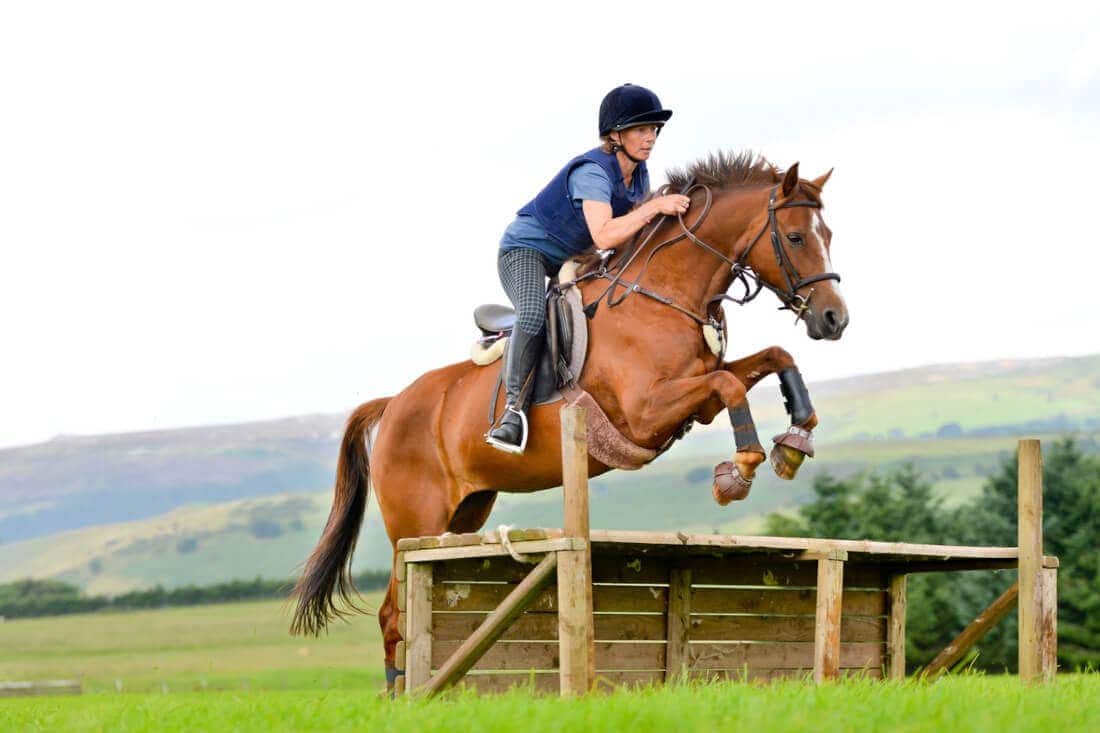
The German Riding Pony, also known as the Deutsche Reitpony, is a pony breed with conformation and movement that resembles a small warmblood horse.
These ponies originated in Germany but do not descend directly from German warmbloods, despite their similarities in type. Their athleticism and elegance make them the ideal sport pony for competitive young riders and petite adults.
German Riding Ponies are prone to health issues often seen in other pony breeds. Competitive lifestyles can also elevate their risk of conditions typically found in performance horses, making proper care and management essential.
Keep reading to learn more about the history, breed characteristics, health problems, and nutritional needs of German Riding Ponies.
German Riding Pony History
The modern German Riding Pony breed is the result of decades of selective breeding to create the ultimate sport horse in a pony-sized package.
Origin
German Riding Pony breeding began in the 1960s when breeders in northern Germany identified a need for large ponies with the athletic capabilities of warmbloods. [1]
Initial efforts to produce sport ponies by crossing Arabians and Thoroughbreds with Haflingers and other local ponies were unsuccessful. A recognizable pony type wasn’t established until the 1970s, when German breeders imported British ponies for foundation stock. [2]
Welsh ponies played the most significant role in the breed’s early development. Other influential pony breeds in early German Riding Pony bloodlines include the New Forest Pony and the Connemara. [1]
Efforts to incorporate more German warmblood influences in the 1990s failed to improve the breed. [1]While crossing with warmbloods is permitted, German Riding Pony breeders primarily rely on distinct pony bloodlines to maintain the breed type and improve athleticism. [3]
Historic Use
German Riding Ponies fulfilled a demand for athletic, small mounts suitable for children to ride and compete in equestrian sports.
Many warmbloods bred to compete in dressage, jumping, and eventing were too large and powerful for children. However, native German pony breeds lacked the athleticism necessary to succeed in the show arena. [2]
The German Riding Pony breed combined the pony type and size with the athletic ability of full-sized riding horses. These ponies helped introduce young riders in Germany to sport with a mount they could have fun and learn on. [2]
While initially developed for children, the modern German Riding Pony is becoming more popular for smaller adults who find them more manageable than large warmbloods.
Breed Registry
The Westfalen and Oldenburg studbooks maintain the largest breed registries for ponies in Germany today. The Westfalen Verband North America is the primary breed registry for German Riding Ponies in the United States and Canada.
These organizations host inspections to evaluate German Riding Ponies for breeding and registration. Foals presented for inspection receive scores for type, conformation, correctness, movement, and impression. Only approved stallions are eligible to breed. [4]
German Riding Ponies have an open studbook, but only certain breeds are eligible for registration. Westfalen Verband North America separates breeds into three groups based on which pairings are allowed in German Riding Ponies. [3]
| Breed Summary | |
|---|---|
| Breed Name | German Riding Pony |
| Also Known As | Deutsche Reitpony |
| Breed Type | Pony |
| Origin | Germany |
| Breed Registry | Westfalen and Oldenburg studbooks; Westfalen Verband North America |
| Average Height | 13.2 – 14.2 hh |
| Common Coat Colors | All colors permitted |
| Conformation | Athletic, elegant, small head, clean throatlatch, long well-set neck, sloping shoulder, pronounced withers, well-muscled back, deep chest, longer croup, clean correct limbs |
| Common Uses | Dressage, jumping, eventing, hunters |
| Temperament | Uncomplicated, friendly, brave, dependable |
| Best For | Competitive youth riders and petite adults |
| Common Health Concerns | Equine metabolic syndrome, laminitis, degenerative joint disease, lameness, gastric ulcers |
What's your top priority with your horse's health?

Enter your email to receive your store credit
German Riding Pony Characteristics
German Riding Ponies have a unique breed type. While they resemble a smaller version of full-size warmbloods, the breed also has distinct pony characteristics.
Conformation
Inspections evaluate the conformation of German Riding Ponies based on the breeding objective of their registry. According to the Westfalen Verband, “The German Riding Pony is an athletic, elegant, and versatile riding pony for leisure and sport.” [4]
This large pony breed stands approximately 13.2 to 14.2 hands tall. Unlike other large ponies, German Riding Ponies have characteristics commonly seen in riding horse type breeds.
Their physique should be harmonious, with a small head, clean throatlatch, long and well-set neck, sloping shoulder, pronounced withers, well-muscled back, sufficiently deep chest, and longer croup. The tail should not be set too high, and limbs should be clean and correct. [4]
Quality basic gaits are essential for German Riding Ponies. Their movement pattern should be rhythmic with actively working hindquarters, loosely swinging back, and free shoulders. Jumping ponies should show a scopey and careful jump. [4]
Colors
All coat colors are permitted in German Riding Ponies.
Ponies with parentage from some color registries, such as Palominos and Pintos, are eligible for registration if they meet height requirements. [4]

Temperament
German Riding Ponies must exhibit desirable temperament traits to meet the breed standard. The ideal German Riding Pony has an uncomplicated, friendly, brave, and dependable character. [4]
Their calm and balanced temperament makes them excellent riding ponies for children. These ponies also have strong work ethics and a willingness to perform for their riders. [4]
Disciplines
German Riding Ponies are known for their ability to perform in the competition arena. Their athleticism and willingness allow them to excel in sports where other pony breeds struggle to compete with larger sport horses.
These ponies are bred primarily for dressage, jumping, and eventing. Children between 12 and 16 can compete in FEI Pony competitions, an international youth division exclusively for riders on ponies that meet official height requirements. [5]
In North America, German Riding Ponies are also gaining popularity in competitive Hunter Pony divisions.
However, German Riding Ponies aren’t just for children. These large riding ponies are also suitable for petite amateur riders who want to downsize mounts without compromising competitive ability.
German Riding Pony Health
German Riding Ponies with performance careers need unique management to stay healthy due to their British pony ancestry and competitive lifestyles.
Genetic Diseases
Like other breeds with an open studbook, the German Riding Pony population has a high genetic diversity. However, they can still inherit a genetic predisposition to certain conditions.
One study identified a novel KIT deletion variant in a German Riding Pony with a sabino-like phenotype. However, this mutation is not linked to any known genetic diseases. [6]
Metabolic problems are the primary health concern in ponies with British pony ancestry. A 2021 study of 354 ponies in the UK reported that equine metabolic syndrome affected 23.3% of the native pony population. [7]
Research in Welsh Ponies, a close relative of German Riding Ponies, found several metabolic traits associated with equine metabolic syndrome are moderately to highly heritable. [8]
Health Problems
Like other pony breeds, German Riding Ponies tend to be easy keepers. As such, they’re prone to weight gain and metabolic disease, particularly when they’re not in a consistent exercise program.
Equine metabolic syndrome is associated with obesity, hyperinsulinemia, and an increased risk of laminitis in ponies. Laminitis is a painful hoof condition characterized by a weakening of the laminae that connect the hoof to the coffin bone. [9]
Severe cases of laminitis may require euthanasia to alleviate suffering. Owners can lower the risk of laminitis in German Riding Ponies with metabolic health concerns by modifying risk factors contributing to the disease. [7]
Older, experienced riders must train young German Riding Ponies before they are suitable for children to ride. However, research suggests the stress of carrying heavy loads early in life may increase the risk of orthopedic disorders. [10]
Like other sport horses, older German Riding Ponies can develop degenerative joint diseases due to the increased wear and tear on their joints. These conditions can lead to lameness without proper management. [11]
The stress of training and competing also increases the risk of gastric ulcers in German Riding Ponies with show careers. Management tailored to mitigate stress can help mitigate gastric ulcer risk in performance ponies. [12]
Care and Management
Quality basic care and management are essential to keeping your German Riding Pony healthy, regardless of their competition schedule.
Work with your veterinarian and other equine professionals to establish an annual wellness program that includes:
- Veterinary Exams: Schedule regular health check-ups and lameness exams to detect problems early and keep your German Riding Pony sound.
- Vaccinations: Follow a veterinarian-recommended vaccination program to protect against common infectious diseases, especially when traveling to shows.
- Dental Care: Schedule routine dental care and floating to maintain proper chewing and digestion.
- Parasite Management: Implement a deworming program to control parasites and keep your pony in top condition.
- Hoof Care: Maintain hoof balance with regular trims by a qualified farrier to prevent lameness. [10]
Prolonged stall confinement can increase stress in performance horses and ponies. Give your German Riding Pony daily turnout to reduce stress and support their mental well-being. Free exercise also promotes a healthy musculoskeletal system. [11]
Unrestricted access to pasture may not be appropriate for ponies predisposed to metabolic dysfunction due to the risk of pasture-associated laminitis. Consider turning out on a dry lot or using a grazing muzzle to keep them safe. [13]
German Riding Pony Nutrition
Nutrition is one of the most important factors for managing metabolic health risks in German Riding Ponies. The best diet for your Deutsche Reitpony depends on their lifestyle and unique health needs.
Weight Maintenance
German Riding Ponies are easy keepers, meaning they require fewer calories to maintain body condition compared to other breeds. This breed inherited an efficient metabolism from their British pony ancestors, allowing them to thrive on forage-based diets.
However, this also makes them prone to weight gain if overfed, so their diet should focus on controlled forage intake, balanced vitamins and minerals, and limited high-calorie concentrates to prevent obesity and related metabolic issues.
Monitoring body condition is critical for ensuring sport ponies get the energy they need from their diet while minimizing the risk of metabolic problems. [7]
Contact your veterinarian if you notice unexplained weight loss in your German Riding Pony. Weight loss on a balanced diet could indicate an underlying gastrointestinal problem, such as gastric ulcers. [12]
Sample Diet
The following sample diet is intended for a mature 800 lb (365 kg) German Riding Pony with normal body condition at maintenance (not exercising).
| Feed | Amount per day |
|---|---|
| Mid-Quality Hay (8% crude protein) | Free-choice |
| Salt | 15 g (1 tbsp) |
| Omneity® Pellets | 100 g (1 scoop) |
| Diet Analysis | |
| Digestible Energy (% of Req) | 107% |
| Protein (% of Req) | 128% |
| HC (ESC + starch; % Diet) | 8.8% |
German Riding Ponies do best on a low-starch, forage-based diet. Forage alone can provide adequate energy and protein for most ponies at maintenance or in light exercise.
German Riding Ponies with sport careers may need additional energy sources in their diet, but they should avoid high-starch concentrate feeds and rich pastures.
While forage meets most calorie and protein requirements, it is lacking in essential vitamins and minerals. To avoid deficiencies, a vitamin and mineral supplement can help fortify the diet without adding excess calories. [14]
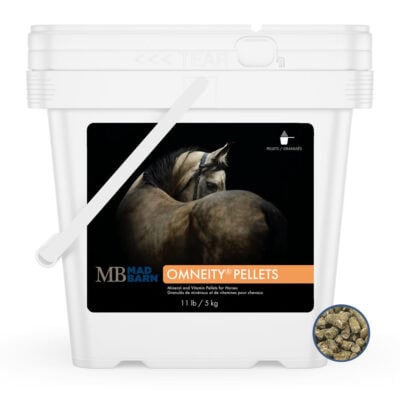
Mad Barn’s Omneity® provides minerals, vitamins, and amino acids to balance forage-based diets. Feeding Omneity® supports hoof health, coat quality, exercise performance, immune function and more in horses and ponies.
This formula uses high-quality organic trace minerals and contains no fillers or added sugars, making it an excellent option for ponies and other easy keepers.
All German Riding Ponies need free access to clean water and salt. Salt licks can help encourage hydration, but our nutritionists recommend feeding loose salt to meet your pony’s sodium requirements. [14]
Forage
The amount of forage your pony needs daily depends on their body weight. German Riding Ponies are large ponies, so they typically weigh more and need more forage than other pony breeds.
Horses and ponies consume around 2% of their body weight in forage per day when it is fed free choice, so an 800 lb (365 kg) German Riding Pony will consume approximately 18 lb (8 kg) of forage daily. [14]
Feeding enough forage supports digestive function and gastric health in German Riding Ponies. Choosing an average-quality grass hay with a low starch and sugar content allows you to feed an adequate volume without adding excess simple carbohydrates to the diet.
Some German Riding Ponies may benefit from supplemental alfalfa hay to increase protein and calcium intake. Adequate protein supports muscle building in performance ponies, while calcium can help buffer stomach acid in ponies prone to gastric ulcers. [15]
Submit your hay for a forage analysis to ensure it is suitable for your German Riding Pony, especially if they have metabolic health concerns.
Feeding Recommendations
Free-choice forage is often recommended to support digestive health and promote natural grazing behavior. If your German Riding Pony consumes their daily ration too quickly with unrestricted access, use a small hole hay net to regulate intake.
Performance horses and ponies are often fed high volumes of energy-dense feeds. However, these feeds can lead to weight gain and increase health risks in German Riding Ponies. [7]
High-fiber feeds, such as soaked hay pellets or beet pulp, are a valuable alternative especially for owners who need to feed a supplement carrier. Split the daily ration into multiple small meals to reduce the risk of digestive upset. [15]
If your German Riding Pony needs additional energy sources in their diet, fat supplements are a safe, energy-dense option instead of high-starch feeds. Supplements rich in omega-3 fatty acids have additional benefits for joint health and anti-inflammatory support in sport ponies. [16][17]
Remember to consult a qualified nutritionist when formulating a new diet for German Riding Ponies with specific health concerns.
Nutritional Supplements
Formulating a balanced diet should be the first step when creating a feeding program for your German Riding Pony. Once the diet meets all basic nutritional needs, targeted supplements can provide additional support for health and performance.
Here are our top recommendations for German Riding Ponies:
- W-3 Oil is a fat supplement that provides high levels of vitamin E and the omega-3 fatty acid DHA, which helps support joint and muscle health in German Riding Ponies
- Visceral+ is a veterinarian-recommended gut supplement that can help maintain gastric and hindgut health in German Riding Ponies
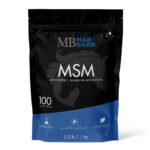
- MSM is a natural joint supplement that can help promote healthy soft tissues in growing and exercising German Riding Ponies
- Spirulina is an equine superfood that supports respiratory function, skin care, metabolic health and the immune system. It is beneficial for ponies with skin irritations or occasional allergies.
Have questions about your feeding program? Submit your German Riding Pony’s diet online for a free evaluation from our qualified equine nutritionists to get help formulating a balanced diet.
Frequently Asked Questions
Here are some frequently asked questions about the German Riding Pony breed:
The German Riding Pony is a sport pony breed developed in Germany to combine pony size with the athleticism and movement of a riding horse. Also known as the Deutsche Reitpony, the breed was created for competitive young riders and is now also popular with petite adults. German Riding Ponies are known for their elegant conformation, trainable temperament, and strong performance in sport.
German Riding Ponies are considered large ponies and typically stand between 13.2 and 14.2 hands high. They are taller and more athletic than many traditional pony breeds, which helps them resemble a small warmblood horse in type and movement. Their size makes them especially suitable for competitive youth riders and petite adults.
German Riding Ponies are athletic, elegant sport ponies with the look and movement of a small warmblood horse. Typical features include a small head, clean throatlatch, long well-set neck, sloping shoulder, pronounced withers, deep chest, well-muscled back, longer croup, and clean, correct limbs. German Riding Ponies are also known for rhythmic gaits, active hindquarters, and a balanced, refined overall appearance.
A German Riding Pony can generally carry up to about 20% of its body weight, though the right load depends on the pony’s size, age, fitness, soundness, and training. Because many German Riding Ponies weigh around 800 pounds, they are usually best suited to children and small adults. Rider balance, tack weight, and conditioning also affect how much weight a German Riding Pony can comfortably carry.
German Riding Ponies are primarily used for dressage, jumping, eventing, and hunter classes. They were developed as sport ponies for children and remain especially popular in youth competition, including FEI Pony divisions. Their athleticism, rideability, and manageable size also make them a good option for smaller adult riders.
The German Riding Pony is known for having a friendly, brave, and uncomplicated temperament. These ponies are typically calm, balanced, and willing to work, which makes them well suited to riding and competition. Their steady, dependable character is one reason German Riding Ponies are so popular with young riders.
German Riding Ponies have elegant, athletic conformation that reflects their purpose as sport ponies. They usually stand between 13.2 and 14.2 hands and are known for their refined, well-proportioned appearance, often resembling a small warmblood. Desired traits include a small head, clean throatlatch, long neck, sloping shoulder, pronounced withers, deep chest, strong back, longer croup, and correct limbs. Their long neck and sloping shoulder contribute to an elegant outline, while the deep chest, strong back, and well-shaped hindquarters create a sturdy yet refined body. German Riding Ponies should also move with rhythm and impulsion, showing active hindquarters, a swinging back, and free-moving shoulders.
German Riding Ponies can be any coat color, because all colors are permitted in the breed. This means there is no single color most associated with the German Riding Pony. As long as the pony meets the breed’s type, height, and registration requirements, coat color does not limit acceptance.
German Riding Ponies can be good for beginners when they are well trained, calm, and appropriately matched to the rider. The breed is known for being friendly and dependable, which makes them a suitable riding horse for children. However, young or green German Riding Ponies should first be trained by experienced riders before being considered beginner-friendly.
German Riding Ponies are commonly prone to weight gain, equine metabolic syndrome, laminitis, degenerative joint disease, lameness, and gastric ulcers. Their pony ancestry contributes to metabolic risk, especially if they are overfed or under-exercised. German Riding Ponies in training and competition may also be more vulnerable to joint wear and stress-related digestive problems, so careful management is important for long-term health.
Summary
The German Riding Pony was developed in the 1960s in northern Germany with the goal of combining a small frame with the athleticism and elegance of warmbloods for young and petite riders.
- Elegant conformation and rhythmic gaits are evaluated through Westfalen and Oldenburg studbook inspections, with strict type and movement criteria
- Like other warmbloods, German Riding ponies are at risk of equine metabolic syndrome, laminitis, developmental orthopedic disorders, and gastric ulcers in performance careers, which can be mitigated with proactive management
- Essential care includes annual veterinary and lameness exams, dental floatation, vaccination, parasite control, regular farrier work, and appropriate turnout
References
- History of the German Riding Pony. German Riding Ponies Australia. 2015.
- Mulcahey. M. The Petite Warmblood. USDF Connection. 2015.
- Westfalen German Riding Pony Breeding Program Eligibility. Westfalen Verband NA. 2024.
- Bylaws. Westfalen Verband NA. 2020.
- FEI General Regulations. Fédération Équestre Internationale. 2025.
- Hug. P. et al. A Novel KIT Deletion Variant in a German Riding Pony with White‐spotting Coat Colour Phenotype. Animal Genetics. 2019. View Summary
- Carslake. H. B. et al. Equine Metabolic Syndrome in UK Native Ponies and Cobs Is Highly Prevalent with Modifiable Risk Factors. Equine Veterinary Journal. 2021. View Summary
- Norton. E. M. et al. Heritability of Metabolic Traits Associated with Equine Metabolic Syndrome in Welsh Ponies and Morgan Horses. Equine Veterinary Journal. 2019. View Summary
- Pollard. D. et al. Incidence and Clinical Signs of Owner‐reported Equine Laminitis in a Cohort of Horses and Ponies in Great Britain. Equine Veterinary Journal. 2019. View Summary
- Dyson. S. et al. The Influence of Rider:Horse Bodyweight Ratio and Rider‐horse‐saddle Fit on Equine Gait and Behaviour: A Pilot Study. Equine Veterinary Education. 2020.
- Dyson. S. Lameness and Poor Performance in the Sport Horse: Dressage, Show Jumping and Horse Trials. Journal of Equine Veterinary Science. 2002.
- Hartmann. A. M. and Frankeny. R. L. A Preliminary Investigation into the Association between Competition and Gastric Ulcer Formation in Non-Racing Performance Horses. Journal of Equine Veterinary Science. 2003.
- Geor. R. J. Pasture-Associated Laminitis. Veterinary Clinics of North America: Equine Practice. 2009. View Summary
- Nutrient Requirements of Horses: Sixth Revised Edition. National Academies Press, Washington, D.C. 2007. View Summary
- Nadeau. J. A. et al. Evaluation of Diet as a Cause of Gastric Ulcers in Horses. American Journal of Veterinary Research. 2000.
- Manhart. D. R. et al. Markers of Inflammation in Arthritic Horses Fed Omega-3 Fatty Acids. The Professional Animal Scientist. American Registry of Professional Animal Scientists. 2009.
- Piccione. G. et al. Influence of Exercise and Dietary Omega-3 Oil Supplementation on Interleukin 1-Ra Serum Concentrations in Standardbred Horses. Animal Production Science. CSIRO Publishing. 2019.