English












The Haflinger is a small horse breed from the Tyrol region of Austria and Italy. Initially developed for traversing the region’s mountainous terrain, this hardy breed is now commonly used as a versatile family horse.
Haflingers have played an essential role in European history since the 19th century. But the breed almost disappeared forever after World War I and II.
Today, these Tyrolean horses are found throughout the world. Easily recognizable by their distinctive flaxen manes and tails, the Haflingers are beloved for their easygoing temperaments. Unfortunately, some Haflingers have an increased risk of certain cancers.
This article will review the origin, history, characteristics, health problems, and nutritional needs of the Haflinger breed. Keep reading to learn more about feeding and caring for Haflinger horses.
Haflinger Horse History
Modern Haflingers have traits inherited from the Tyrolean horses of the Middle Ages, but the breed officially emerged in the late 1800s. All Haflingers today descend from seven foundation stallion lines that trace back to a single famed sire.
Origin
Medieval writings describe horses in the southern Tyrolean mountains that resemble the Haflinger breed of present-day Austria and northern Italy. Villages in the region were only accessible by narrow mountain paths and relied on these horses for transportation.
Artwork from the early 1800s depicts small chestnut horses packing riders and supplies on these mountain trails. But the official history of the breed began in 1874 with the birth of 249 Folie, a stallion produced by crossing a half-Arabian stallion with a refined Tyrolean mare.
Folie went on to become the foundation sire of the Haflinger breed. The stallion produced seven different sire lines through which every modern Haflinger can trace their ancestry. These lineages include the A, B, M, N, S, ST, and W lines. [1]
Historic Use
Villagers in the mountains of Tyrol relied heavily on the Haflinger’s ancestors to transport people and supplies. Breeding programs focused on developing hardy, sure-footed horses that could traverse uneven terrain and steep mountain passes.
Many owners assume Haflingers are cold-blooded horses. However, the breed originated as a light, warm-blooded mountain horse. The mountain geography couldn’t support heavy draft horses, so the breed was primarily developed as a light working horse for hillside farms.
Breeding practices shifted during World War I and II to meet the demand for shorter, sturdier Haflingers that could pack heavy wartime supplies. As a result, the Haflingers of the time developed a draftier body.
These wars almost led to the extinction of Haflingers, and breeders relied on lower-quality stock to preserve the breed. However, increased interest in the postwar period allowed breeders to improve the quality of the Haflinger and produce a more refined type. [2]
Breed Registry
Haflingers were officially recognized as a breed in 1898 by the Ministry of Agriculture of the Austro-Hungarian Empire. The breed is also known as the Avelignese horse in Italy.
A closed studbook was created in 1946 to improve breeding practices and establish a new breed standard.
The American Haflinger Registry (AHR) is the official breed registry of Haflingers in North America. The organization maintains a studbook of purebred Haflingers while promoting the breed’s ownership, breeding, and improvement in the United States and Canada.
The AHR operates under the breed standards set by the World Haflinger Breeding and Sports Federation, the international governing body for the breed.
| Breed Summary | |
|---|---|
| Breed Name | Haflinger |
| Also Known As | Avelignese |
| Breed Type | Warmblood |
| Origin | Tyrol (Austria and Italy) |
| Breed Registry | American Haflinger Registry (AHR) |
| Average Height | 13.2 – 15 hh |
| Common Coat Colors | Chestnut; flaxen mane and tail |
| Conformation | Sturdy, muscular build, medium neck, pronounced withers, sloping shoulders, deep chest, muscular back, long croup, well-muscled hindquarters, shorter legs, broad knees, powerful hocks |
| Common Uses | Light draft, harness work, pleasure riding, therapy |
| Temperament | Quiet, kind, tolerant |
| Best For | Children, beginners, and small adult riders seeking a versatile family horse |
| Common Health Concerns | Ocular squamous cell carcinoma, PSSM, equine metabolic syndrome, laminitis, equine degenerative myeloencephalopathy |
What's your top priority with your horse's health?

Enter your email to receive your store credit
Breed Characteristics
Haflingers are easily recognizable by distinct characteristics that all members of the breed share. Known for their unique chestnut colouring, these horses have gentle dispositions that make them versatile mounts for families.
Conformation
The average Haflinger stands between 13.2 and 15 hands tall. Breeding over the last century has gradually increased the size of this breed, which used to stand an average of 13.3 hands at the end of World War II.
While these horses have grown more refined with modern breeding, they still have sturdy conformations and muscular builds that allow them to carry a variety of riders comfortably.
Haflingers have medium necks, pronounced withers, sloping shoulders, and deep chests. Their backs should be muscular, with long croups and well-muscled hindquarters. They generally have shorter legs with broad knees and powerful hocks.
Colours
All Haflinger horses have chestnut coats with white or flaxen manes and tails. While their colouring may resemble palominos, their coat colour genotype is chestnut. They come in different shades of chestnut ranging from light gold to liver. [3]
Temperament
Temperament was a significant concern during the breed’s development as reliable pack horses in the eighteenth century. As a result, a quiet, kind disposition became integral to the breed standard.
Today, Haflingers are popular mounts for children and beginner riders because of their tolerant temperaments. However, personalities can vary between individuals, and every horse needs proper training and handling to encourage good behaviour.
Disciplines
Haflingers are commonly used for light draft and harness work. But these horses also excel as light-riding horses and pleasure mounts.
Small adult riders often prefer Haflingers to larger breeds because of their manageable size. In addition, their gentle personalities make them popular horses for therapeutic riding and equine therapy programs.
Haflinger Horse Health
While Haflingers were bred as hardy horses that could survive harsh mountain terrain, the breed is susceptible to certain diseases. Thankfully, Haflinger owners can manage some of these health problems with proper care and management.
Eye Cancer
Genetic studies have revealed that some Haflinger bloodlines carry a gene variant associated with an increased risk of ocular squamous cell carcinoma. This disease is the most common type of eye cancer found in horses. [4]
Haflingers with this condition develop tumors in their eyes that can impair vision and become life-threatening. Both genetics and UV light exposure can predispose Haflingers to this type of cancer.
Prognosis improves with early detection and treatment, so owners are encouraged to use DNA testing to identify Haflingers at risk of developing the disease.
Polysaccharide Storage Myopathy
Researchers have also identified genes associated with polysaccharide storage myopathy (PSSM) in Haflingers. PSSM horses are susceptible to an abnormal accumulation of glycogen in the muscles that can cause tying up and need careful nutritional management. [5]

Equine Metabolic Syndrome
Haflingers are also prone to develop metabolic syndrome. Resultant problems include easy weight gain, abnormal fat deposits such as cresty neck and laminitis.
Equine Degenerative Myeloencephalopathy
Haflingers are also one of several breeds in which researchers have identified equine degenerative myeloencephalopathy.
This neurological disease is characterized by progressive ataxia or poor coordination. This condition has also been linked to vitamin E deficiency in horses. [6][14]
Care and Management
Haflingers need the same quality basic care as all other horses. Owners should work with veterinarians to develop an annual wellness program that includes vaccinations, deworming, and dental exams.
These horses also need routine farrier care to support soundness and maintain hoof balance. In addition, regular grooming will help keep their full, light-coloured manes and tails clean.
Consider using a UV-protective fly mask during turnout to protect your Haflinger’s eyes. UV exposure is associated with an increased risk of eye cancer in Haflingers that have the gene variant associated with ocular squamous cell carcinoma. [7]
Haflinger Horse Nutrition
Balanced nutrition is vital for maintaining a healthy weight in Haflingers and supporting overall well-being and performance.
Weight Maintenance
Haflingers are considered easy keepers. They quickly gain weight when overfed or as a result of metabolic disorders and can develop laminitis. [10]
Owners should regularly evaluate their Haflinger’s body condition to ensure they maintain a healthy weight. A body condition score of 5 on the 9-point Henneke scale is considered ideal. [15]
Sample Diet
The following example diet is intended for a mature Haflinger with normal body condition in light work.
| Feed | Maintenance Diet |
|---|---|
| (Amount / Day) | |
| Mid-Quality hay (10% crude protein) | ~ 20 lb |
| Salt | 30 g (2 tbsps) |
| Omneity® Pellets | 200 g (2 scoops) |
| Diet Analysis | |
| Digestible Energy (% of Req) | 100% |
| Protein (% of Req) | 144% |
| NSC (ESC + starch) (% Diet) | 8.8% |
The dietary analysis presented above is based on NRC requirements for a mature horse in light work weighing 1,000 lb (454 kg). [8]
Feeding Recommendations
Hay & Pasture
Haflingers and easy keeper breeds often do well on a forage-based diet with a mature grass hay with ESC + starch less than 10%.
It is always recommended to submit a forage sample for analysis to determine the nutritional composition including the calorie, protein, starch and sugar content of your hay.
Your equine nutritionist can help you decide which hay is best and how to feed it to your horse.
On average, horses consume about 2% of their body weight in forage daily. For a 1,000 lb (454 kg) Haflinger, this is 20 lb of hay per day. However, depending on the quality of your hay, free-choice access to forage may result in weight gain.
If your Haflinger is overweight, consider the following adjustments to their forage intake:
- Ration the hay to 1.5% of their body weight (~ 15 lb per day)
- Use a slow feeder to slow down their intake
- Soak the hay to reduce calorie content
- Restrict pasture access or use a dry lot or grazing muzzle for turnout
Added fat
Research shows that low-starch and high-fat diets can reduce clinical signs of PSSM in affected horses. These horses may benefit from getting up to 20% of their dietary energy from fat. [11]
For horses with higher calorie needs, adding fat is a safer way to increase calories than high-starch grains, which increase the risk of metabolic disorders. [9]
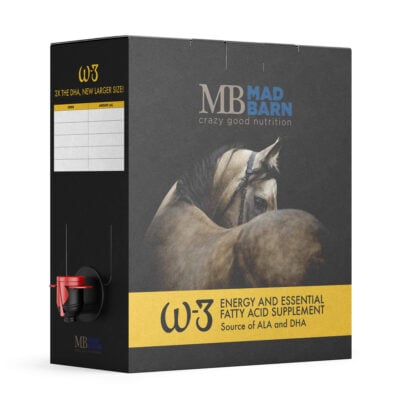
In addition, providing omega-3 fatty acids can offer anti-inflammatory benefits for Haflingers.
However, not all omega-3s are equal. Consider adding DHA and EPA to support eye health and metabolic health. These are found in marine sources such as fish oil and microalgae, but not in plant-based oils such as camelina oil or canola oil. [12]
Vitamins & Minerals
Hay is often deficient in essential nutrients, such as vitamins and minerals. However, high-energy commercial ration balancers and grains can lead to weight gain in Haflinger horses.
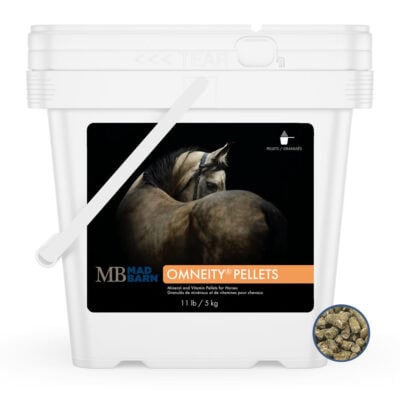
A concentrated vitamin and mineral supplement, such as Mad Barn’s Omneity®, can help fill these gaps without adding excess calories or starch.
If your Haflinger has a metabolic condition such as equine metabolic syndrome or PSSM, they may benefit from higher levels of antioxidants in the diet. For these horses, Mad Barn’s AminoTrace+ provides high levels of zinc, copper, and natural vitamin E.
Some neurological disorders found in Haflingers are associated with vitamin E deficiency. Providing adequate levels of this antioxidant may help support neuromuscular function. [13]
Frequently Asked Questions
Here are answers to common questions horse owners ask about Haflinger horses:
A Haflinger is a small horse breed that originated in the Tyrol region of Austria and Italy. Haflinger horses were developed for travel and work in mountainous terrain and are now best known as versatile family horses. The breed is recognized for its chestnut coat, flaxen mane and tail, sturdy conformation, and gentle temperament. In Italy, the breed is also known as the Avelignese.
Haflinger horses are known for their chestnut coats, flaxen manes and tails, calm temperaments, and versatile family-friendly nature. Originally developed as hardy mountain horses in the Tyrol region of Austria and Italy, Haflingers are now popular for pleasure riding, driving, and general family use. Their sturdy build, manageable size, and willing attitude make them especially appealing to recreational riders and horse owners looking for a dependable horse.
Haflinger horses originated from a cross between native Tyrolean mountain horses and Arabian bloodlines. The breed’s foundation sire, 249 Folie, was born in 1874 from a half-Arabian stallion and a refined Tyrolean mare. All modern purebred Haflingers trace back to this stallion through seven sire lines. This breeding history helped create a horse that combines hardiness, sure-footedness, and refinement.
Haflinger horses are often a good choice for beginners because they are usually calm, tolerant, and a manageable size. Many Haflingers are known for their kind temperaments, which makes them popular with families, children, and novice riders. However, individual temperament, training, and handling still matter. A well-trained Haflinger is generally a better beginner horse than one with limited training or inconsistent management.
Haflinger horses are small to medium-sized horses with a sturdy, muscular build. Most Haflingers stand between 13.2 and 15 hands high and have a build sturdy enough to carry adult riders comfortably. Although they are not tall compared to many riding breeds, their well-muscled bodies and strong hindquarters give them impressive strength and versatility.
Adult Haflinger horses typically weigh about 900 to 1,300 pounds (410 to 590 kg), depending on height, bone, and body condition. Haflingers are naturally sturdy horses, so they often weigh more than their height alone might suggest. Because they are easy keepers, maintaining a moderate body condition is important for long-term health. Excess weight can increase the risk of metabolic problems and laminitis, but their weight can be managed with a forage-based diet that avoids excess calories, regular exercise, and routine body condition monitoring.
Haflinger horses are generally hardy, but they are prone to several health problems, especially metabolic and inherited conditions. Common concerns in Haflingers include equine metabolic syndrome, laminitis, polysaccharide storage myopathy (PSSM), ocular squamous cell carcinoma, and equine degenerative myeloencephalopathy. Some of these risks are linked to genetics, while others are influenced by diet and management. Careful feeding, weight control, routine veterinary care, and early detection are important for keeping Haflinger horses healthy.
The temperament of a Haflinger horse is usually calm and willing. Haflingers were bred to work closely with humans, and that history helped shape their reliable and tolerant nature. Many Haflingers do well as family horses, beginner mounts, and therapy horses because they are steady and approachable. Like all breeds, though, individual horses can vary, and good training remains essential.
Haflinger horses are versatile, all-purpose horses used for riding, driving, and light draft work. They are commonly seen in pleasure riding, trail riding, harness work, and therapeutic riding programs, where their steady temperament and manageable size are especially valued. Their strength and willing nature also make them suitable for farm and utility work in some settings. Because Haflingers are calm, sturdy, and adaptable, they are often chosen as family horses and can be a good fit for children, beginners, and smaller adult riders. Their broad usefulness across many disciplines is one of the reasons the breed remains popular worldwide.
Haflinger horses have a sturdy, muscular conformation with a compact but athletic build. They typically have a medium-length neck, pronounced withers, sloping shoulders, a deep chest, a muscular back, a long croup, and well-muscled hindquarters. Haflingers also tend to have shorter legs, broad knees, and powerful hocks. Their overall conformation reflects the breed’s history as a hardy mountain horse built for strength, balance, and sure-footedness.
Haflinger horses are always chestnut with a white or flaxen mane and tail. Their chestnut coat can range from light golden shades to darker liver chestnut tones. Although some Haflingers may resemble palominos at a glance, the breed standard calls for chestnut coloring rather than cream dilution. Their distinctive coloring is one of the breed’s most recognizable traits.
Summary
The Haflinger is a small, sturdy horse breed originating in the 19th century from the Tyrol region of Austria and northern Italy. Originally developed as a sure-footed mountain horse, Haflingers are now valued worldwide as versatile family and riding horses known for their calm temperament and distinctive appearance.
- Haflingers are characterized by a chestnut coat with flaxen mane and tail, compact conformation, and strong hindquarters
- They are commonly used for light riding, driving, therapeutic programs, and family-oriented disciplines
- Despite their hardy reputation, Haflingers have an increased risk of certain genetic and metabolic conditions, including eye cancer, PSSM, and equine metabolic syndrome
- Effective care includes routine veterinary management, protection from excessive UV exposure, and attention to weight control
References
- Druml, T. et al. Population Networks Associated with Runs of Homozygosity Reveal New Insights into the Breeding History of the Haflinger Horse. J Heredity. 2017. View Summary
- Falaschini, A. et al. Morphological evolution of the Haflinger horse [South Tyrol]. It J Anim Sci. 2003.
- Drumi, T. et al. Pedigree analysis in the Austrian Noriker draught horse: genetic diversity and the impact of breeding for coat colour on population structure. J Anim Breeding Genet. 2009.View Summary
- Singer-Berk, M. et al. Genetic risk for squamous cell carcinoma of the nictitating membrane parallels that of the limbus in Haflinger horses. Anim Genet. 2018. View Summary
- Schwarz, B. et al. Estimated prevalence of the GYS-1 mutation in healthy Austrian Haflingers. Vet Rec. 2011.View Summary
- Miller, M. et al. Equine Degenerative Myeloencephalopathy. Vet Clin North Am Equine Pract. 1997.View Summary
- Chen, L. et al. A novel DDB2 mutation causes defective recognition of UV-induced DNA damages and prevalent equine squamous cell carcinoma. DNA Repair. 2021.View Summary
- National Research Council. Nutrient Requirements of Horses. National Academies Press. 2007.
- Zeyner, A. et al. Effect of feeding exercised horses on high-starch or high-fat diets for 390 days. Equine Vet J. 2010.View Summary
- Johnson, PJ et al. Laminitis and the equine metabolic syndrome. Vet Clin North Am Equine Pract. 2010. View Summary
- Ribeiro, W. et al. The Effect of Varying Dietary Starch and Fat Content on Serum Creatine Kinase Activity and Substrate Availability in Equine Polysaccharide Storage Myopathy. J Vet Intern Med. 2008. View Summary
- Hess, T. et al. Omega-3 fatty acid supplementation in horses. R Bras Zootec. 2014.
- Finno, C. et al. A Comparative Review of Vitamin E and Associated Equine Disorders. J Vet Intern Med. 2012. View Summary
- Baumgartner, W. et al. Neuroaxonal dystrophy associated with vitamin E deficiency in two Haflinger horses. J Comp Pathol. 1990. View Summary
- Henneke, D.R. et al. Relationship between condition score, physical measurements and body fat percentage in mares. Equine Vet J. 1983. View Summary