English










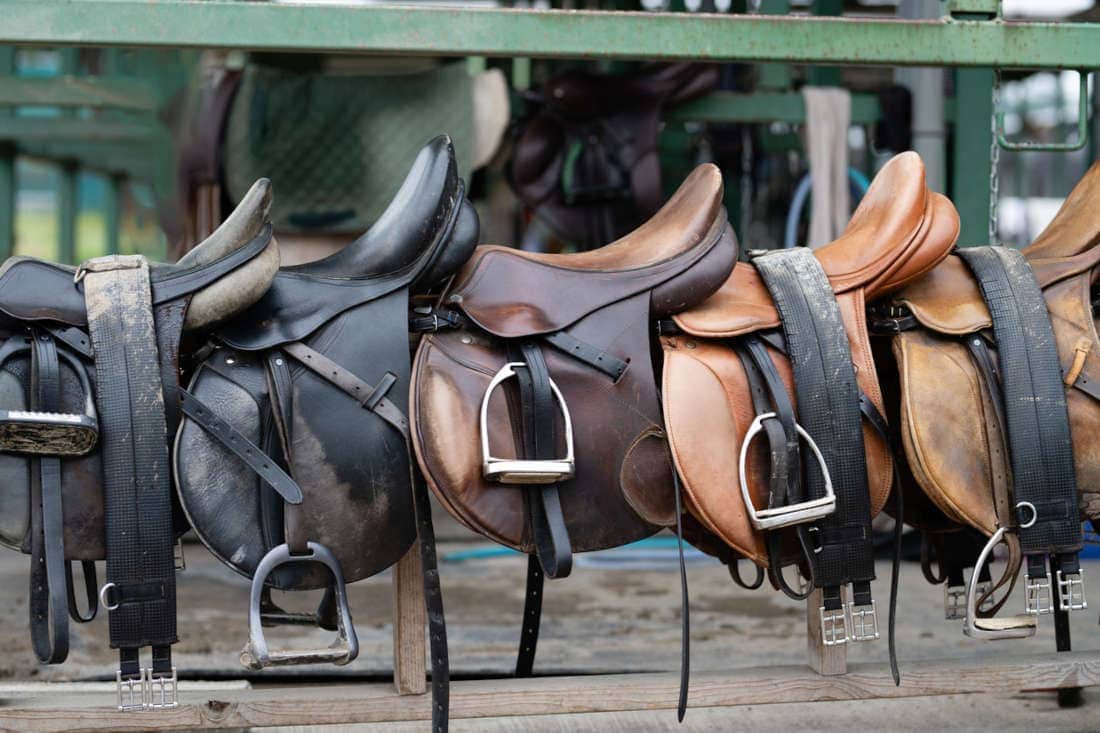
Horse saddles are specialized riding equipment or tack placed on a horse’s back to create a secure seat for the rider. Built around a supportive internal frame called a tree, a saddle distributes the rider’s weight across the horse’s back while protecting the spine and supporting correct rider position.
Saddles are used across all equestrian disciplines, from dressage and jumping to trail riding, Western rodeo events, and ranch work. Although designs vary significantly, every saddle serves the same core purpose: to improve stability, enhance communication through the rider’s aids, and promote comfort and safety for both horse and rider.
Because the saddle directly influences pressure distribution, balance, and movement, proper selection and fit are critical. An ill-fitting saddle can restrict the horse’s motion, create uneven pressure points, and negatively impact performance or long-term soundness. Conversely, a well-fitted saddle supports freedom of movement, rider alignment, and effective biomechanics.
In this guide, we explain what a saddle is, how it works, the key components that determine its function, and the main types used in modern riding. We also examine why saddle fit matters and how different saddle designs are tailored to specific riding disciplines.
What is a Saddle & What Does it Do?
A saddle is a structured piece of tack placed on a horse’s back to provide stability and support for the rider. Its primary purpose is to create a secure riding position while spreading the rider’s weight across a broader surface area, reducing concentrated pressure on the horse’s spine and surrounding muscles. [1][2][3]
When properly fitted, a saddle allows the horse to move comfortably and efficiently while helping the rider maintain balance and alignment. Although saddle designs vary across disciplines, all saddles share the same intended purpose: improving safety, communication, and overall riding effectiveness.
As a central piece of riding tack, the saddle determines how the rider sits, balances, and applies aids. It functions as part of a larger saddle system that includes saddle pads, girths or cinches, and stirrups
Together, these components stabilize the saddle on the horse’s back and help prevent slipping, pressure points, and excess movement during work.
Because the saddle depends on proper padding and secure attachment, fit should always be evaluated within the context of the full tack setup rather than as a piece of standalone equipment. A well-chosen saddle supports correct rider alignment, minimizes strain on the horse’s back, and contributes to long-term comfort and soundness.
What's your top priority with your horse's health?

Enter your email to receive your store credit
Saddle Construction & Materials
A saddle is built in layers, combining internal support structures with external materials that protect both horse and rider. While English and Western saddles differ in appearance and intended use, their underlying construction follows similar principles. Each saddle is designed to maintain shape, distribute pressure, and remain stable during movement.
Construction begins with a rigid or semi-rigid framework that determines the saddle’s overall shape and fit. Padding and weight-bearing surfaces are then added to cushion the horse’s back and help spread pressure more evenly. Finally, the outer covering provides durability, grip, and protection against wear.
Understanding how saddles are constructed helps riders evaluate quality, compare materials, and recognize how design choices influence comfort and performance. From the internal tree to the outer leather or synthetic shell, each layer plays a specific role in overall saddle function.
Core Structural Components
Although English and Western saddles look different, most are built from the same essential parts. Learning these components can help riders better understand saddle fit and function.
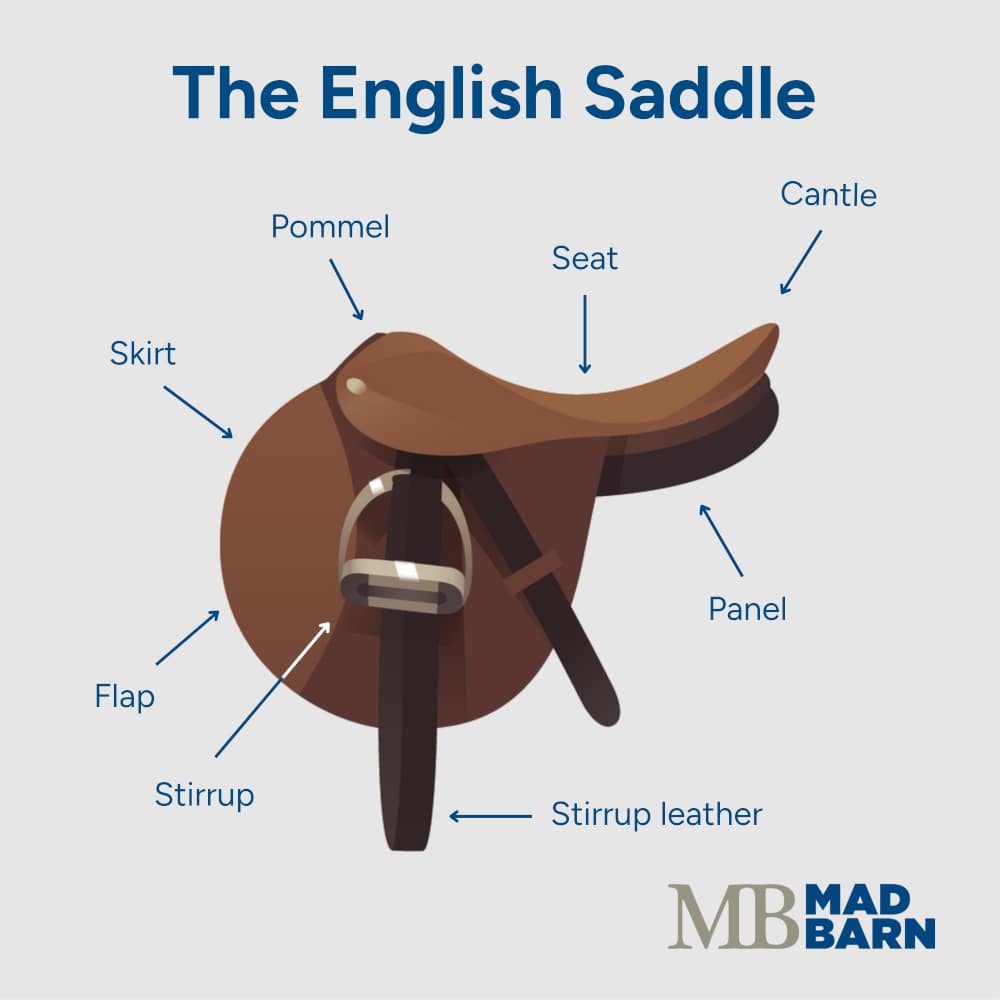
The basic components of any saddle usually include: [4]
- Tree: The internal framework of the saddle that provides structure and helps distribute the rider’s weight evenly across the horse’s back
- Seat: The area where the rider sits, designed to provide balance and support
- Pommel: The front of the saddle, positioned above the horse’s withers
- Cantle: The raised back of the saddle that helps support rider security and alignment
- Stirrups: Foot supports that improve rider stability and control
- Girth or Cinch: The strap system that holds the saddle securely in place
- Panels or Skirts: The weight-bearing surfaces that cushion the horse’s back and help spread pressure evenly
The design and alignment of these parts affect how the saddle fits, functions, and performs in use.
Saddle Materials & Layer Construction
Although saddles vary by discipline, most are built from the same essential structural layers. The materials used in construction influence durability, weight distribution, and overall comfort for both horse and rider.
At the center of the saddle is the tree, a load-bearing internal frame that maintains the saddle’s structural integrity and directs the rider’s weight away from the spine and onto the surrounding musculature.
Trees may be constructed from wood reinforced with rawhide or fiberglass, or from lightweight synthetic composites. The tree’s material, width, angle, and rigidity affect how pressure is distributed along the horse’s back.
Beneath the rider, padding systems help absorb shock and spread weight more evenly. English saddles commonly use wool flocking or foam panels, while Western saddles rely more heavily on tree and skirt design for pressure distribution.
The outer covering also matters. Leather saddles are valued for durability and grip, while synthetic saddles are lighter and often easier to maintain, particularly in humid climates where mold is often a concern.
Types of Saddles
Horse saddles are designed to match different riding disciplines, traditions, and performance goals. While all saddles serve the same basic function, their shape, size, and structural features vary depending on how they are used.
Most modern saddles fall into one of two primary categories: English and Western. These styles form the foundation of the majority of riding disciplines and differ in construction, rider position, and intended workload. Additional variations exist within each category to support specific sports or working roles.
Beyond these two main types, several specialized saddle designs have been developed to meet unique riding demands, including long-distance travel, livestock work, racing, and traditional or historical riding styles.
Understanding the differences between saddle types helps riders select equipment that supports both their discipline and their horse’s comfort.
English vs. Western Saddles: Understanding the Two Main Types
Modern saddle design reflects two distinct riding traditions that developed for different purposes.
English riding evolved from European cavalry training and classical sport disciplines, where precision, balance, and close communication between horse and rider were emphasized.
Western riding developed in North America from cattle ranching and livestock work, where riders spent long hours in the saddle and required stability, durability, and equipment suited for roping and ranch tasks.
These different functional demands led to two primary saddle designs: English and Western, each built to support specific rider positions, workloads, and performance goals. Together, they represent the foundation of most modern riding disciplines in North America. [5]
Although these two categories account for the majority of saddles in use, several specialized designs have evolved to meet more specific riding needs. Most riders begin by choosing between English and Western styles before considering more specialized options.
English Saddles
English saddles are generally lighter and designed to allow closer contact between horse and rider. Their streamlined construction supports disciplines that emphasize balance, precision, and freedom of movement. [6]
Commonly used in dressage, show jumping, eventing, hunt seat, and equitation, English saddles encourage a centered, upright riding position and allow riders to feel subtle changes in the horse’s movement more easily.
Western Saddles
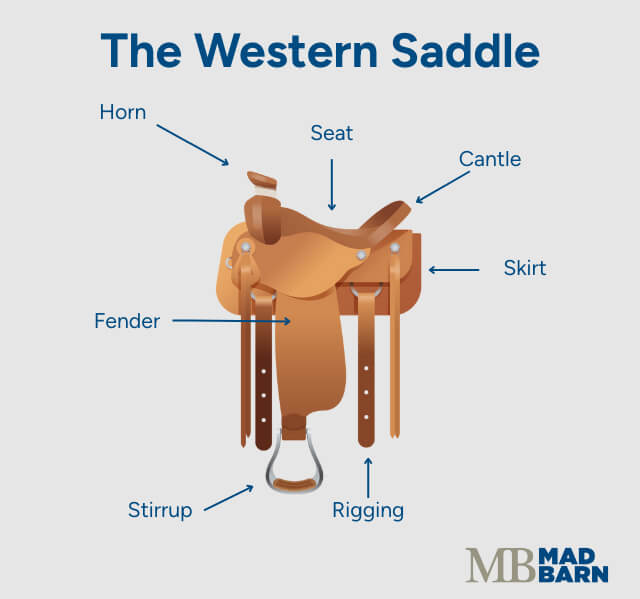
Western saddles are typically larger and built for durability and stability. Originally developed for ranch work and long hours in the saddle over varied terrain, they distribute weight across a broader surface area. [5]
Western saddles are widely used in ranch riding, trail riding, barrel racing, reining, and roping. Features such as the saddle horn reflect their working origins.
Specialized Saddle Types
While English and Western saddles represent the two most widely used riding styles, several other saddle types have been developed to meet specific riding demands. These specialized designs reflect variations in terrain, discipline, and rider preference.
Endurance Saddles
Endurance saddles are designed for long-distance riding, often over varied terrain. Because endurance competitions can last for hours or days, these saddles prioritize lightweight construction and rider comfort. [2]
They typically feature additional padding, multiple attachment points for gear, and designs that allow the horse maximum freedom of movement. Endurance saddles often blend elements of English and Western styles but are optimized for reducing fatigue over extended rides.
Australian Stock Saddles
Australian stock saddles were developed for working cattle across large, rugged landscapes. They combine aspects of English and Western saddle construction, offering a secure seat with added thigh supports or knee pads. [7][8]
This design provides extra stability during long rides and while working livestock, making them popular for trail riding and ranch work in some regions. Stock saddles are known for their durability and rider security while having less bulk than a traditional Western saddle.
Treeless Saddles
Treeless saddles are built without a rigid internal tree. Instead, they rely on flexible materials and padding to conform more closely to the horse’s back. [4][9]
Advocates suggest treeless designs may accommodate certain back shapes more easily, but proper padding and careful fit evaluation remain essential. Even without a tree, weight distribution must still be managed to avoid pressure points.
Treeless saddles are sometimes used for pleasure riding or horses with unique conformational challenges, though they are not universally suitable for all disciplines.
Side Saddles
Side saddles are a traditional style that allows the rider to sit with both legs on one side of the horse. Historically associated with formal riding and equestrian fashion, side saddles are still used today in certain show classes and historical demonstrations. [2][10]
Modern side saddles are carefully engineered to distribute weight safely while maintaining rider balance. Although less common than other saddle types, they remain an important part of equestrian history and culture.
Racing Saddles
Racing saddles are extremely lightweight and minimalist in design. Used in Thoroughbred and Quarter Horse racing, these saddles are built to reduce weight and allow the jockey maximum freedom of movement.
They typically have a very small seat and minimal padding, reflecting the forward, crouched riding position used in racing. Racing saddles are designed specifically for speed and short-duration performance rather than long-term comfort.
How to Choose the Right Saddle for your Horse
Choosing the right saddle involves more than selecting an English or Western style. The ideal saddle should match the rider’s discipline, support correct position, and fit the horse comfortably enough to allow free movement.
Riding goals are often the starting point, since each discipline places unique demands on both horse and rider. Saddles designed for jumping, for example, differ significantly from those intended for trail riding or ranch work.
Horse conformation is equally important. Back length, wither shape, shoulder angle, and overall topline structure all influence which saddle designs will sit correctly.
Even within the same category, saddles vary widely in tree shape, balance, and contact surface, meaning a saddle that fits one horse may not suit another. [2][11][12]
Rider comfort and alignment should also be considered. Seat size, stirrup placement, and overall saddle balance can affect posture and stability, which in turn influences how effectively the rider can communicate through their aids. [13]
Because saddle selection is highly individual, working with an experienced trainer or qualified saddle fitter can be especially helpful when purchasing a new saddle or addressing fit concerns. [12]

The Importance of Saddle Fit for Horse & Rider
Proper saddle fit is essential for both horse comfort and rider performance. A saddle that does not fit correctly can create uneven pressure, restrict movement, and contribute to muscle soreness, back pain, or behavioral issues over time.
When pressure is concentrated in certain areas—particularly along the spine or behind the shoulders—it can lead to inflammation, muscle tension, and ongoing discomfort. In some cases, poorly fitted saddles are associated with chronic back pain that affects a horse’s willingness to move forward, bend, or perform. [3][14][15][16][17]
Saddle fit also affects the rider’s position and biomechanics. A saddle that is too small can restrict hip movement and force the rider into a chair seat, while one that is too large may reduce stability and make it difficult to maintain consistent contact.
Poor alignment caused by an ill-fitting saddle can lead to lower back strain, hip discomfort, knee pain, or fatigue during longer rides. Over time, improper rider balance can also influence how weight is distributed across the horse’s back, compounding fit-related concerns.
A well-fitting saddle distributes weight evenly, provides adequate clearance over the withers and spine, allows free shoulder movement, and remains stable without sliding or pinching.
Because horses can change shape with age, conditioning, and workload, saddle fit should be reassessed regularly. Working with a qualified saddle fitter can help ensure the saddle is properly suited to both the horse and rider, reducing the risk of discomfort or long-term injury. [4][7][11]
Signs a Saddle May Not Fit Properly
Even a well-made saddle can cause discomfort if it does not suit the horse’s shape or the rider’s position and size. Recognizing early signs of poor saddle fit can help prevent back pain and other long-term issues.
Common indicators of poor saddle fit include: [11][14][15][18][19]
- Uneven sweat patterns or dry spots after riding
- White hairs or rub marks along the back
- Resistance when being saddled or mounted
- Hollowing, bucking, or reluctance to move forward
- Soreness or sensitivity when the back is touched
- Saddle slipping, rocking, or shifting during work
Because these signs can have multiple causes, saddle fit concerns are best evaluated with the help of a qualified saddle fitter. If your horse is showing consistent signs of pain, consult your veterinarian to rule out any other underlying issues that may be present.
Saddle Care & Long-Term Use
Saddles are a significant investment, and regular maintenance helps preserve their function and longevity. Routine care not only protects the materials of the saddle but also supports rider safety and horse comfort over time.
Leather saddles benefit from consistent cleaning to remove sweat, dirt, and debris that can cause stiffness or cracking. Conditioning helps maintain flexibility and prevent premature wear, especially in high-contact areas such as billets, latigos, and stirrup leathers. [16][20]
In addition to cleaning, riders should periodically inspect their saddle for signs of damage or uneven wear. Loose stitching, worn straps, or changes in padding can affect both safety and fit.
Proper storage is also important, particularly in humid or damp environments where leather tack is more prone to mold and mildew. Storing saddles in a clean, dry, well-ventilated area can help prevent moisture buildup and protect the saddle’s structure over time. [21]
Saddle fit should also be reassessed as horses change shape with training, age, or seasonal condition. A saddle that once fit well may require adjustment as the horse develops muscle or gains or loses weight. [1][2]
With proper care, regular evaluation, and appropriate storage, saddles can remain supportive and functional for many years.
Frequently Asked Questions
Here are some frequently asked questions about horse saddles:
Common saddle types include English and Western, along with discipline-specific designs such as dressage, jumping, endurance, trail, and raacing saddles. Each is built to support a specific riding style and position.
Select a saddle designed for your primary activity. Dressage saddles promote a long leg position, jumping saddles allow forward balance, and Western saddles provide stability for ranch or trail work.
Saddle size depends on both the rider and saddle style. English saddles are measured by seat length in inches, while Western saddles use a different seat design. Riders should have enough room to sit balanced without feeling cramped or unstable.
A properly fitted saddle distributes the rider’s weight evenly across the horse’s back without creating pressure points. It should provide adequate clearance over the withers and along the spine, with panels that make consistent contact without bridging (gaps in the middle) or rocking. The saddle should sit level from front to back and allow full shoulder movement without pinching at the front. During work, it should remain stable, without excessive slipping or shifting.
Endurance and trail saddles are often considered the most comfortable because they are designed for long periods of riding. They are typically lightweight, well-padded, and shaped to distribute weight evenly while allowing freedom of movement. Many Western saddles are also built to provide stability and support during extended work. However, comfort depends primarily on fit and intended use. Tree width, panel contact, spinal clearance, and overall balance must match the horse’s conformation and the rider’s position. Any saddle style can be comfortable if it fits correctly, and any saddle can cause discomfort if it creates pressure points or restricts movement.
Some saddles may work for horses with similar back shape and build, but saddle fit is highly individual. Even small differences in wither height, shoulder angle, or back width can affect comfort.
Most horse saddles are built on an internal frame called a tree, typically made from wood reinforced with steel, fiberglass, or modern synthetic composites. The outer surface is usually leather or synthetic material. Leather saddles are durable, mold to the rider over time, and require regular conditioning, while synthetic saddles are lighter and lower maintenance. Underneath, saddles contain panels filled with wool flocking, foam, air systems, or gel to cushion the horse’s back and distribute pressure. Additional components include metal stirrup bars, billets or latigos, and hardware such as buckles and D-rings.
Saddle prices range from a few hundred dollars for entry-level models to several thousand dollars for premium or custom designs, depending on materials, craftsmanship, and brand reputation.
There are several factors you should assess to determine if a saddle is good quality. The tree should feel solid and rigid when gently flexed, without creaking or twisting. Panels should be symmetrical on both sides and evenly flocked, with no hard lumps or thin spots. When placed on a flat surface, the saddle should sit level rather than tipping forward or backward. Leather should be thick and supple, not thin, plasticky, or heavily coated to hide imperfections. Stitching should be straight, tight, and evenly spaced, especially around high-stress areas like stirrup bars and billets. Hardware should feel secure and well-set, not loose or lightweight.
A well-maintained leather saddle can last decades. Synthetic saddles are typically lighter and lower maintenance but may have a shorter lifespan.
Warning signs of poor saddle fit include white hairs, dry spots or uneven sweat patterns after work, swelling or soreness along the back, and behavioral changes such as ear pinning, tail swishing, hollowing, or reluctance to move forward. Horses may also show reduced performance, resistance to bending, difficulty maintaining contact, or changes in stride length. Over time, chronic poor saddle fit can contribute to topline muscle loss, uneven muscle development, or visible atrophy behind the shoulders and along the back.
Summary
Saddles are essential horse tack that support the rider, distribute weight, and protect the horse's back during riding.
- A properly fitted saddle improves comfort, movement, and communication, while poor fit can lead to soreness, restricted motion, or behavioral issues
- Saddles typically feature key structural parts, including the tree, seat, pommel, cantle, stirrups, girth/cinch system, and panels or skirts
- English and Western saddles are the two main riding styles, with English saddles emphasizing close contact and sport disciplines, and Western saddles prioritizing stability and long-duration riding
- Specialized saddle types also exist, such as endurance, Australian stock, treeless, side, polo, and racing saddles, each designed for specific purposes or traditions
- Choosing and maintaining the right saddle requires considering discipline, horse conformation, rider fit, and regular care, with professional saddle fitters offering valuable guidance when needed
References
- Greve L, Dyson S. The Horse–Saddle–Rider Interaction. The Veterinary Journal. 2013.
- Dyson S et al. Saddle Fitting, Recognising an Ill-Fitting Saddle and the Consequences of an Ill-Fitting Saddle to Horse and Rider. Equine Veterinary Education. 2015.
- Harman J. Tack and Saddle Fit. Veterinary Clinics of North America: Equine Practice. 1999. View Summary
- Belock B et al. Comparison of Pressure Distribution under a Conventional Saddle and a Treeless Saddle at Sitting Trot. The Veterinary Journal. 2012. View Summary
- Brandon E. Horses: How Saddle Style Defines a Culture and the Skeletal System. Honors Theses. 2015.
- Omar E, Merkies K. Evaluation of Horse Comfort in English and Western Riding Style Saddle. Journal of Student Research. 2023.
- Bondi A et al. Evaluating the Suitability of an English Saddle for a Horse and Rider Combination. Equine Veterinary Education. 2020.
- McLaren G, Cooper W. The Saddle ‐ Horse. Journal of Australian Studies. 1996.
- Latif SN et al. Saddle Pressure Patterns of Three Different Training Saddles (Normal Tree, Flexible Tree, Treeless) in Thoroughbred Racehorses at Trot and Gallop. Equine Veterinary Journal. 2010. View Summary
- Goodrum AL. Riding Dress History, with a Twist: The Side-Saddle Habit and the Horse during the Early Twentieth Century. Domestic Animals and Leisure. Palgrave Macmillan. 2015.
- MacKechnie-Guire R et al. The Role of Equestrian Professionals in Saddle Fit for Horses and Riders in the United Kingdom. Animals. 2024. View Summary
- Becard B et al. Quantification of the Effect of Saddle Fitting on Rider–Horse Biomechanics Using Inertial Measurement Units. Sensors. 2025. View Summary
- Dittmann MT et al. “Feel the Force”—Prevalence of Subjectively Assessed Saddle Fit Problems in Swiss Riding Horses and Their Association With Saddle Pressure Measurements and Back Pain. Journal of Equine Veterinary Science. 2021. View Summary
- Greve L et al. Subjective Analysis of Exercise-Induced Changes in Back Dimensions of the Horse: The Influence of Saddle-Fit, Rider Skill and Work Quality. The Veterinary Journal. 2015.
- Greve L, Dyson SJ. The Interrelationship of Lameness, Saddle Slip and Back Shape in the General Sports Horse Population. Equine Veterinary Journal. 2014.
- Harman J. Western Horse’s Pain-Free Back and Saddle-Fit Book: Soundness and Comfort with Back Analysis and Correct Use of Saddles and Pads. Trafalgar Square Books. 2015.
- de Cocq P et al. Saddle Pressure Measuring: Validity, Reliability and Power to Discriminate between Different Saddle-Fits. The Veterinary Journal. 2006.
- Turner T et al. How to Assess Saddle Fit in Horses. Proceedings of the American Association of Equine Practitioners. 2004.
- Soroko M et al. Assessment of Saddle Fit in Racehorses Using Infrared Thermography. Journal of Equine Veterinary Science. 2018.
- Fedrizzi N. 9 Leather Cleaning Tips Every Horseman Should Know. Horse Network. 2016.
- McQuagge J et al. Saddle and Tack Care in Hot and Humid Environments. EDIS. 2014.