English
![How to Choose the Right Hay for Your Horse [7-Step Guide]](/wp-content/uploads/2021/07/Hay-Selection-for-Horses.jpg)
How do you choose the right hay for your horse? The best hay depends on your horse’s activity level, body condition, metabolic health, and nutrient requirements.
Horses are grazing animals that rely on continuous forage intake. They derive most of their energy from fibre fermentation in the hindgut, which makes forage the foundation of a healthy diet.
Although concentrate feeds are widely available, horses should obtain the majority of their calories and nutrients from forage. In North America, this typically means access to pasture during the growing season and properly harvested and stored hay when pasture is unavailable.
Hay provides digestible fibre, protein, vitamins, and minerals, but not all hay has the same nutritional profile. Hay quality varies based on plant species (grass vs. legume), maturity at harvest, and storage conditions.
For easy keepers or horses with metabolic concerns, select a grass hay with adequate protein and less than 10–12% sugar + starch (NSC).
Horses with higher nutrient demands, including lactating mares, growing horses, hard keepers, and performance horses, require higher digestibility hay and may benefit from controlled inclusion of legume hays.
This guide explains how to evaluate hay quality and match forage type to your horse’s specific needs.
The Importance of Selecting the Right Hay for Your Horse
Horses are designed to consume forage for the majority of the day, typically spending 12–16 hours grazing. Their digestive system relies on a steady intake of fibrous plant material, which is fermented in the hindgut to produce energy.
Because forage is the foundation of the equine diet, the quality of the hay you feed has a direct impact on your horse’s health, body condition, and performance.
Selecting the right hay means choosing a forage that matches your horse’s calorie needs, protein requirements, and metabolic tolerance. Hay varies significantly depending on plant species, stage of maturity at harvest, growing conditions, and storage practices. Two bales that look similar can differ in digestible energy, sugar content, and mineral balance.
A horse in maintenance has very different nutritional requirements than a growing foal, lactating mare, or performance horse. Horses that are growing, breeding, or competing require higher levels of digestible energy and quality protein to support tissue development, milk production, and muscle repair.
In contrast, an easy keeper or a horse with metabolic concerns may require a more mature grass hay with lower energy density and controlled sugar content to prevent excessive weight gain or insulin spikes.
Hay quality also influences digestive stability. Consistent fibre intake supports healthy hindgut fermentation and helps maintain normal manure consistency. Adequate forage availability helps buffer stomach acid and may reduce the risk of gastric ulcers.
Assessing Your Horse’s Hay
When evaluating whether your current hay is appropriate, it’s important assess your horse’s overall health and condition to determine whether the forage is meeting their nutritional needs. Consider the following factors:
- Body condition score (underweight, ideal, overweight)
- Topline and overall muscle development
- Growth rate in young horses
- Manure quality and signs of digestive disturbance
- Energy level and work capacity
- Coat quality and hoof strength
Changes in these areas often reflect whether the forage is meeting the horse’s core nutritional needs. For example, a horse with a weak topline may require hay that provides more quality protein and essential amino acids, while an overweight horse may benefit from a more mature grass hay with lower digestible energy.
Observation alone, however, is not enough. To properly evaluate your hay, weigh how much your horse is actually consuming, obtain a hay analysis, and work with a qualified equine nutritionist.
Comparing the forage’s protein, energy, sugar and mineral levels to your horse’s requirements based on age, workload and physiological status will determine whether the hay is appropriate or whether adjustments are needed.
If deficiencies or excesses are identified, you can modify forage type, adjust intake, incorporate a small amount of legume hay, or add a balanced vitamin-mineral supplement. A nutritionist can help interpret the forage report and ensure the overall ration supports healthy body condition, metabolic function and digestive health.
Types of Hay for Horses
The two main kinds of hay commercially available in North America, are grass and legume hays. These classes of hay differ in plant structure, nutrient density, fibre content, and mineral profile, which affects how and when they should be used in a feeding program.
Grass Hays
Grass hay is made of seeding grasses such as timothy, bermudagrass, or tall fescue. These grasses are thin leafed plant species. The leaves are typically less dense than legume hays and have comparatively lower calories and protein and higher fibre content.
Grass hay can add bulk to your horse’s diet without vastly over-contributing energy density, as long as it is not a very early cut. The fibre from grass hay is fermented in the hindgut to yield energy.
Diets primarily consisting of grass hay are a good choice for:
- Easy keepers – grass hay can be soaked to lower the sugar content, if necessary
- Gut health – the high fibre content supports digestive health
- Horses in stalls – grass hay supports foraging behaviour for stalled horses; it can be offered in hay nets scattered around the stall to provide enrichment and to prolong consumption
Legume Hays
Legume hays such as alfalfa and clover are members of the pea family. These hays are high in energy, protein, and calcium and can be used to boost the nutritional value of a grass-hay-based diet.
It is not recommended to feed horses a diet solely consisting of legume hays. These hays are lower in fibre and do not support hindgut fermentation as well as grass hays. [4]
The very high calcium content can also cause problems for horses by causing calcium carbonate collections in their urinary tract. The calcium: phosphorus ratio needs to be carefully balanced, particularly for pregnant and growing horses.
Alfalfa hay can be used to replace up to 10-20% of the grass hay for:
- Horses in heavy work or intense training
- Lactating mares
- Growing horses
- Horses that need additional gut support
- To help make a diet more palatable
Comparison: Grass vs. Legume Hay
When comparing grass and legume hays, there are a few notable differences and similarities. [5]
- Legume hays have a higher protein content (14 – 26%) compared to grass hays (6 – 18%)
- Early cut legumes are two times more palatable than grass hay, which is an advantage for older horses that are poor grazers
- Grass and legume hays are equally digestible (except for late harvest legume hays which have a higher fibre content)
- Legume hays contain up to three times more calcium, making it suitable for lactating mares, hard keepers, or growing horses with a higher calcium requirement, as long as it is appropriately balanced with adequate phosphorus
It is important to note that overfeeding legume hays can lead to poor gut health. Horses are trickle feeders and need to graze constantly throughout the day. Good quality legume hays are often highly palatable, resulting in rapid consumption and longer periods with no forage to eat.
Feeding a mix of legume and grass hay is a better choice. You can purchase a mixed bale from a multi-species field or layer your horse’s feed by mixing hay in their nets or feeders.
This provides the best of both worlds: you can give your horse legume hay with its denser nutrient profile while still meeting your horse’s fibre and foraging needs with grass hay.
Table 1. Comparison of Grass vs. Legume Hay for Horses
| Characteristic | Grass Hay | Legume Hay |
|---|---|---|
| Plant Type | Seeding grasses (timothy, orchardgrass, bermudagrass, fescue, ryegrass) | Pea family plants (alfalfa, clover) |
| Crude Protein | 6–18% (varies by maturity) |
14–26% (typically higher than grass) |
| Energy Density | Lower to moderate | Moderate to high |
| Fibre Content (NDF) | Often higher, especially later cut | Often lower than mature grass hay |
| Calcium Content | 0.2–0.6% | 1.2–1.8% (2–3× higher) |
| Calcium:Phosphorus Ratio | Typically balanced or moderate | High calcium; requires balancing with phosphorus |
| NSC (Sugar + Starch) | Variable; often lower in mature cuts | Variable; may be similar to grass, testing required |
| Palatability | Moderate | Often higher, especially early cut |
| Rate of Consumption | Typically slower chewing | Often eaten more quickly |
| Best Suited For | Easy keepers, metabolic horses, maintenance diets | Growing horses, lactating mares, hard keepers, heavy work |
| Risks if Overfed | Weight gain if energy density is high | Excess calories, excessive calcium intake, rapid consumption |
| Feeding Strategy | Base forage for the majority of horses | Often fed at 10–20% of total forage to increase nutrient density |
What's your top priority with your horse's health?

Enter your email to receive your store credit
6 Most Common Hays for Horses
Below is an inventory of six common hays fed to horses in North America. Depending on your geographic region, you may have some or all of these hays available to purchase.
1) Timothy Hay
This is by far one of the most popular horse hay feeds in the U.S. and Canada. Timothy hay is hardy and typically grows well in a variety of weather conditions.
The second cutting of Timothy hay is usually better quality than the first. Weeds have thinned out by this stage, and the grass is usually cut at a shorter, younger stage.
For the highest nutritional value, choose a pre-bloom cutting, as it will have a higher protein and lower fibre content than in later stages. A lower-maturity timothy hay will likely be more palatable than hay of later maturity.
On the other hand, when selecting hay for horses with metabolic issues go for more mature cuts with obvious seed heads that have already dropped their seed.
Timothy hay provides adequate protein for most horses, but is often lacking in key minerals such as zinc, copper, iodine, and often selenium. These minerals support healthy joints and help build strong hooves.
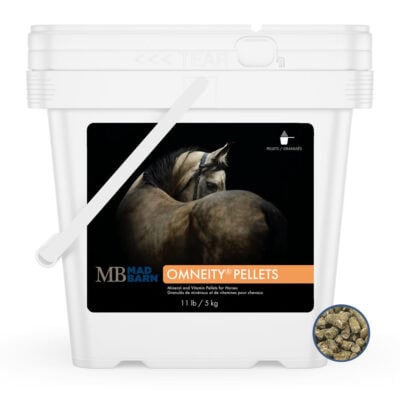
Vitamin and mineral requirements of horses consuming diets high in timothy hay are well met by a low-inclusion, complete vitamin and mineral supplement like Mad Barn’s Omneity®.
Omneity® contains 100% organic trace minerals including high levels of zinc, copper and vitamin E, as well as yeast and digestive enzymes for gut support.
2) Bermudagrass Hay
This perennial grass grows well in the southern United States and is a good choice for pasture grazing and baling.
The shorter variant is typically more suitable for grazing whereas the longer, coastal grass variant is more suitable for baling and making hay. It combines well to make a mixed field when planted with legumes.
Bermudagrass hay has a protein content range between 5 – 15%. It contains sufficient amounts of most amino acids to support equine health, but vitamin supplementation is usually required.
Selenium is often missing from Bermudagrass hay, which can lead to deficiency in horses who only forage on this hay. Other trace minerals such as copper, zinc, and iodine are also typically low.
3) Orchardgrass Hay
Orchardgrass is a cool-season forage that is common in the Midwest and Eastern US. It grows well in shaded areas and moderately dry conditions.
Orchardgrass can grow either as a pure stand or in a mixed field with legumes like alfalfa. Horses in mixed pastures tend to favour grazing on tall fescue, perennial ryegrass, Kentucky bluegrass and timothy grass. They show less preference for orchardgrass. [6]
The moisture content of orchardgrass hay should be carefully assessed; it is prone to moulding and nutrient loss when it has greater than 15% moisture. [7] The same is true of all hays.
Orchardgrass hay can have the same trace mineral deficits as other grass hays.
4) Alfalfa Hay
This protein-rich legume hay is characterized by a deep green colour. At an early stage, the plant resembles clover with a tri-leafed structure. As it matures, it sprouts small purple flowers.
Available with a protein content between 17 – 25%, alfalfa is a dense hay that is both filling and highly nutritious. It is also a good source of calcium, iron, and zinc. It is a good choice for heavily exercised and performance horses.
The high protein and calcium content provides a buffering effect in the stomach which may help decrease the risk of gastric ulcers. Exercising horses can benefit from a meal of alfalfa hay or pellets 30 minutes before exercise to ensure they are not exercising on an empty stomach.
Alfalfa must be fed per your horse’s individual nutritional requirements. Feeding it as mixed hay is the best option for most horses.
Alfalfa is highly palatable, which can lead to horses gorging on it. If your horse eats too much alfalfa hay, it could increase the risk of colic in the long run. Some horses with metabolic syndrome become footsore on alfalfa.
Meals that are higher in alfalfa also tend to get eaten quickly, which can result in longer periods between meals in which your horse does not have access to hay. This type of intermittent feeding can increase the risk of digestive upsets. Horses should not go more than 3-4 hours without consuming forage.
When selecting alfalfa hay, it is best to find a second or third cutting as this will have fewer weeds than the first.
5) Clover Hay
When it comes to clover forage, white and landino types are used mostly for pasture and grazing needs. The other three variants of clover – crimson, alsike, and red clover – are cultivated to make hay.
Clovers are also legumes and provide a high protein content of 14 – 21%. They also provide a rich blend of nutrients such as iron, manganese, and potassium. Like alfalfa, clover is very high in calcium, low in phosphorus.
Clover can be grown easily in a mixed field with grass; it is less common to see pure clover hay. Mixed clover/grass hay is a great choice as it is a balanced forage and eliminates the need to feed different hay types. However, some horses are adept at picking out the highly palatable clover and leaving behind the grass hay.
There are some cautions to note with clover grass and hay. Clover-rich pastures should be avoided, especially following frost conditions. Frost triggers a sugar release in the plant that can exacerbate laminitis in your horse.
Clover hay is prone to growing mould, and its quality should be monitored carefully throughout the year. The moulds on some types of clover can cause bleeding disorders. [8]
Red clovers tend to lead to excessive salivation in horses, but this is a harmless side effect and not permanent. Don’t be worried if your horse gets a case of the “slobbers“ when they start eating clover hay.
As with the other legume hay types like alfalfa, it is essential to balance clover hay with regular grass hay.
6) Grain Hays
Grain hays are made from oats, barley, or rye, cut before the seedheads have formed or ripened. Grain hays tend to be similar to grass hays in protein but may have sugar and starch levels unsuitable for horses with metabolic concerns.
Hays made from grains are typically around 9% protein, but may be as high as 19%. Their overall nutritional value will depend on when and where they are harvested. Grains with developed seedheads should not be used for hay as it will have poor palatability.
These hays may have high concentrations of nitrates if the plants are exposed to stressors such as cold weather or drought before baling. High nitrate levels can pose a toxic risk to horses. When submitting a hay sample for analysis, ask the lab to measure nitrate levels.
Table 2. Summary of 6 Most Common Hays for Horses
| Hay Type | Description | Typical Protein | Best Suited For | Feeding Considerations |
|---|---|---|---|---|
| Timothy |
|
8–14% |
|
|
| Bermudagrass |
|
5–15% |
|
|
| Orchardgrass |
|
8–14% |
|
|
| Alfalfa |
|
17–25% |
|
|
| Clover |
|
14–21% |
|
|
| Grain Hays (Oat, Barley, Rye) |
|
9–19% |
|
|
How to Choose Hay for Your Horse
When you arrive at a feedlot or hay dealer, keep the following considerations in mind to help you select the best hay for your horse.
1) Look for soft, green, leafy hay
The aroma, colour, appearance and texture of the hay can give you some indication of the quality and nutritional value.
Good quality hay has a pleasant, grass-like scent. Off odors often signify molding or bacterial growth even if you cannot see it.
Horses prefer to eat soft things. Hay with fine stems and lots of green leaves will be the easiest to chew. Although horses can eat rough hay, it is best to avoid stalky hay.
For senior horses, rough or stalky hay may be too tough to chew properly. Hay that is not well-chewed can negatively affect your horse’s digestive health and may not be broken down well enough to extract all of the nutrients from it.
Don’t be dissuaded by hay that is slightly discoloured on the outside. This is common, especially for stacked hay. It is important to examine the insides of the hay bales and look for hay that is green and leafy in the interior of the bale.
2) Avoid thickened legume hay or seeded grass hay
Legume hays such as alfalfa become less palatable as they mature. When choosing hay, you want to choose young legumes that are abundant in nutritious leaves and have not yet developed seedpods. [1][2]
For grass hays, thicker stalked hay that has already made seeds will have less overall protein content. Later cuts of grass hay likely have lower sugar and starch levels. As long as it is still green and fresh-smelling it may be ideal for horses with metabolic issues.
Choose an earlier cut, more nutritious hay for hard keepers and horses in heavy exercise. Alternatively, later cuts that are stalkier are more appropriate for easy keepers or laminitis-prone horses.
3) Check for mold, dust, or potential toxins
Choose hay that has a low dust content and avoid hay that has been sitting around for a while where mould may have set in. This is particularly a risk for hay exposed to high moisture levels in hot, humid or damp conditions and hays baled without proper drying.
Hay that has been in storage for a longer period of time will also lose some of its nutrient value. Vitamin levels, including vitamins E, C and A will continue to decrease as hay is stored, with minimal levels remaining after 6 months.
Also look out for debris which can disrupt passage through the gut when ingested. Hay with a lot of dirt is undesirable as it can affect gut function and increase overall iron intake.
Alfalfa hay is prone to blister beetle infestation, particularly in the Midwest and Southwest US during mid to late summer. Find out if the hay’s area of origin has been prone to infestations of blister beetles.
These beetles are bad for hay quality and are extremely toxic to the horse when ingested. Ingestion of the cantharidin toxin from their bodies is highly likely to cause digestive disturbances including colic and diarrhea, along with kidney damage and heart issues.
4) Avoid overly heavy bales
Heavier bales may indicate that the hay wasn’t properly cured or dried before baling. Wet bales of hay will be heavier and they are also at higher risk of mould growth.
Inspect all bales thoroughly by opening a bale or testing the middle of a bale. This can be harder with large round bales. Avoid bales that are warm to the touch as this also indicates high moisture content.
Grass should be baled at a roughly 10% moisture and a maximum of 15 – 20% moisture content. Hays with high moisture will have to undergo a “sweat” in the loft before they can be fed. This is caused by growth of thermophilic molds which will subside as the moisture levels drop.
5) Only buy what you can store and use
Make sure to buy only as much hay as you can safely store in a cool, dry place on your property. Even when it’s on sale, don’t overbuy. Hay quality can deteriorate quickly if left outside in the sun and rain.
Hay exposed to rain has an increased risk of mould growth and mycotoxin production. It will also have lower nutritional value with decreased vitamin and energy content. Sun exposure on hay also affects its quality by accelerating breakdown of key nutrients, such as vitamin E.
The nutrient loss increases after a long period of storage. Hay that has been stored for over a year will have lost more than half the nutrient content. Purchase hay that is this season’s cutting only. [3] Legume hays are most likely to experience large losses as their leaves will crumble. To a lesser extent, there is also some blade loss from grass hays over time.
6) Pick the most appropriate format
Hay can come in a variety of bale types including small square bales, large square bales and round bales. This choice comes down to preference and convenience for how your stable and outdoor feeding areas are arranged.
Small square bales are preferred for their convenience and ease of handling but often come at a higher price. Large square bales and round bales are both good options if you have the storage space and equipment to accommodate them.
Large bales carry a higher risk of contamination with mold or Listeria. Small animals may also be picked up in the baling process and are likely to be missed in large bales. When they die, botulism toxin can be released.
Wrapped bales should be used with caution. Although the nutrient content is better preserved with wrapping, these often have higher moisture content, increasing the risk of spoiling once unwrapped. They may be appropriate for larger herds that quickly consume the unwrapped bales.
7) Submit a hay sample for analysis
Before purchasing hay in bulk, get a forage laboratory to do a hay analysis for you. A hay analysis is relatively inexpensive and will help you design a feeding plan to meet all of your horse’s needs.
The best way to obtain a representative hay sample is to use a bale probe or corer. These are available for purchase or rental from most local feed stores or your local state agricultural extension agent.
Corers should be used in the centre of the small end of a square bale to obtain a good sample. Ideally, sample 10-20 individual bales to get an accurate representation of quality.
If a bale corer is not available to you, stainless steel scissors are an alternative. Open a bale gently and try not to disturb the leaves. Grab a handful of hay from the interior and cut a small sample with a pair of scissors. Place the contents in a ziplock bag.
For a thorough hay analysis, you typically need to submit 100 – 500 grams (up to 1 lb) of hay. Request an equine hay analysis to tell you moisture level, protein, fibre and calculated energy content.
Other important values include the levels of starch and ethanol-soluble sugars. This can help you decide whether the hay is appropriate for a horse with metabolic issues or whether you should soak the hay to remove some sugars.
Comprehensive forage analyses also include macrominerals (calcium, phosphorus, magnesium, potassium, sodium, sulphur) and microminerals (iron, zinc, copper and manganese).
Other nutrients are also important for your horse’s health but may not be included in a standard hay analysis. Selenium, amino acid and vitamin levels are often offered as optional add-ons with an extra fee.
Once you know your horse’s hay composition, you can develop an appropriate ration to meet your horse’s needs. If you invest in the right quality hay, you can cut back on commercial feeds and save money.
We encourage you to consult with an equine nutritionist once you have your hay analysis. You can submit your horse’s diet for free online and our nutritionists can help.
Avoid these Common Hay Selection Mistakes
Some types of hay should generally be avoided for certain horses based on their health status and nutritional needs.
Providing alfalfa hay at levels higher than 20% of the diet will vastly exceed protein requirements for most horses. Extra protein will be eliminated in the urine, causing the horse to drink and urinate more. Ammonia smells from bacterial breakdown of urea in urine will increase which can aggravate the horse’s lungs and airways.
The high calcium content of alfalfa can also interfere with phosphorus absorption and make it difficult to maintain proper mineral balance. It is important to maintain an appropriate ratio of calcium to phosphorus. For mature horses, this ratio should be between 1.2:1 and 4:1 in the total diet.
High calcium is also eliminated in the urine, where calcium carbonate crystals or stones can form. This leads to cystitis and is particularly a problem in older geldings.
Horses that are overweight, prone to laminitis or that have metabolic dysfunction should avoid energy-dense alfalfa hay. These horses do best with low-quality grass hay that is less than 10% hydrolyzable carbohydrates (starch + simple sugars).
Soaking your horse’s hay can help to reduce the sugar content and decrease the digestible energy. Sugar content also varies depending on the time of day the hay is harvested and weather conditions.
Pregnant mares should not be given tall Fescue grass hay because it often contains fungal endophytes that can lead to abortion or stillbirth. Never feed mouldy hay to any horse as it can contain dangerous mycotoxins that could harm your horse.
The best way to know what hay to feed your horse is to obtain a hay analysis. If you have a hay analysis report, our equine nutritionists will provide a complimentary review to help you develop a diet plan that meets your horse’s needs.

Feeding Hay to your Horse
Once you have decided on the type of hay to feed your horse, it is time to decide how to feed your horse. There are two main options for providing hay to your horse: feeding with a low feeder or feeding at chest height.
Low Feeders
You may want to feed your horse from ground level, encouraging a natural head carriage that mimics foraging behaviours in the wild. Low feeders are beneficial for horses that tend to pull down hay racks or play with hay nets.
The downside of feeding hay off the ground is the increased risk of bacterial contamination. If horses are consuming hay near their manure piles, this could also raise the risk of internal parasites.
Leaving hay on the ground outside should be avoided, especially if you live in a sandy area or have soil that is rich in iron. This will help to avoid sand colic and excess iron intake.
Feeding at Chest Height
Hay racks, troughs, and nets are a great way to mix different hay types and slow the consumption of your horse’s forage. Feeding at chest level or lower, instead of from wall mounted racks or highly placed nets, reduces the danger of corneal scratches from small particles of forage or dirt. It also allows for easier mucus drainage.
Using a hay net allows you to easily soak the hay, which is beneficial for horses with allergies. Soaking hay helps cut down on dust, seeds, and other contaminants that can irritate the respiratory tract.
For horses with metabolic concerns, soaking the hay can also decrease sugar content.
It may seem overwhelming to choose the right hay for your horse, but it doesn’t need to be. Submit your horse’s information online and we can help you select the right forage and feeding plan to meet your horse’s needs.
Frequently Asked Questions
Here are some frequently asked questions about selecting hay for horses:
The best hay for horses is one that matches the individual horse’s energy, protein, and metabolic requirements. For most adult horses, a clean, leafy grass hay is appropriate. Horses with insulin resistance or laminitis risk require hay tested below 10–12% NSC. Horses with higher nutrient demands, such as those in heavy work, growth, or lactation, may require higher quality grass hay or a grass/alfalfa blend. A hay analysis is the most reliable way to determine suitability.
Grass hay, such as timothy or bermudagrass, is higher in fibre and lower in protein and calories, making it a good choice for easy keepers or horses in maintenance. Legume hay, like alfalfa and clover, is more nutrient-dense with higher levels of protein, calcium, and energy, and is better suited for horses with higher demands such as lactating mares or performance horses. However, legume hay should be balanced with grass hay to prevent digestive issues and ensure proper mineral ratios. [4]
Grass hays and legume hays are the primary types of hay fed to horses. Grass hays, such as timothy, orchardgrass, bermudagrass, fescue, and ryegrass, are generally higher in fibre and moderate in energy, making them suitable for most adult horses at maintenance. Legume hays, including alfalfa and clover, are more nutrient-dense and provide higher levels of protein, calcium, and energy, which makes them appropriate for growing horses, lactating mares, and performance horses with higher nutrient demands. In some regions, grain hays such as oat or barley hay are also available, but their sugar and nitrate levels should be evaluated before feeding.
Horses with metabolic concerns do best on grass hay that is lower in sugar and starch, ideally less than 10% hydrolyzable carbohydrates. Late-maturity cuts of grass hay are typically lower in non-structural carbohydrates and can be soaked to further reduce sugar content. Legume hays like alfalfa are not ideal for these horses due to their higher energy and calcium content.
Most horses should consume 1.5–2.5% of their body weight per day as forage on a dry matter basis. Easy keepers are typically managed at 1.5–2% to prevent excess weight gain. Performance horses, growing horses, and lactating mares often require 2–2.5% or more, depending on energy demands. Hay should be weighed and adjusted based on body condition, workload, and health status.
When purchasing hay, begin by considering your horse’s energy and protein requirements based on body condition, workload, and health status. At the supplier, examine several bales from the same lot rather than relying on a single sample. Look for hay that is clean, dry, and leafy, with a fresh smell and no visible mold, dust, or excessive stemminess. Open a bale to inspect the interior, as the outer layer may not reflect overall quality. Ask about the cutting, growing conditions, and how the hay was stored. Before committing to a large bulk purchase from a hay supplier, obtain or request a hay analysis to confirm protein, fibre, sugar (NSC), and mineral levels.
The best cutting of hay depends on the horse’s nutritional requirements and body condition. Earlier cut hay, harvested before full bloom, is generally more digestible and higher in protein, making it appropriate for horses with higher energy and protein requirements such as those in heavy work, growth, or lactation. Later cut hay is more mature, higher in fibre, and typically lower in digestible energy and sugar, which can make it more suitable for easy keepers or horses prone to metabolic issues. Visual signs of maturity, such as stem thickness and seed heads, provide general guidance, but a hay analysis offers a more accurate assessment of nutrient content.
Summary
Horses should get most of their nutrition from forage; pasture in summer and good-quality hay in winter support natural foraging and hindgut health.
- Choose hay based on the horse’s age, workload, and health: easy keepers and metabolic horses need grass hay under ~10% sugar + starch, while high-demand horses benefit from adding some legume hay.
- Grass hays are higher in fiber and lower in protein/energy, whereas legume hays (alfalfa, clover) are richer in protein and calcium and are best fed mixed and limited to protect gut and mineral balance.
- Assess hay quality carefully—look for soft, green, leafy hay; avoid mold, dust, overly heavy or wet bales; and watch for hazards such as blister beetles, high nitrates, and endophyte-infected tall fescue for pregnant mares.
- Use a hay analysis to check sugars, starch, protein, energy, and minerals so you can balance the ration (and soak hay when needed to lower sugars).
- Feed management matters: provide ample forage time with nets or appropriate feeders to slow intake, reduce contamination, and support digestive health.
References
- AAEP 10 tips for Choosing the best hay for your horse. AAEP. 2017.
- Oregon State University Define the utilization of legumes in forage-livestock systems.. Oregon State University. 2021.
- University of Minnesota Extension Preserving the value of dry stored hay. University of Minnesota Extension. 2018.
- Sadet-Bourgeteau, S. et al. Effect of concentrate feeding sequence on equine hindgut fermentation parameters. View Summary
- University of Minnesota Extension Selecting and storing hay. University of Minnesota Extension. 2020.
- Martinson, K. et al. Horse Preference, Forage Yield, and Species Persistence of 12 Perennial Cool-Season Grass Mixtures Under Horse Grazing. J Equine Vet Sci. 2016.
- Martinson, K. et al. The Effect of Harvest Moisture and Bale Wrapping on Forage Quality, Temperature, and Mold in Orchardgrass Hay. J Equine Vet Sci. 2011.
- Martinson, K. et al. Feeding clover to your horse. University of Minnesota Extension. 2023.