English





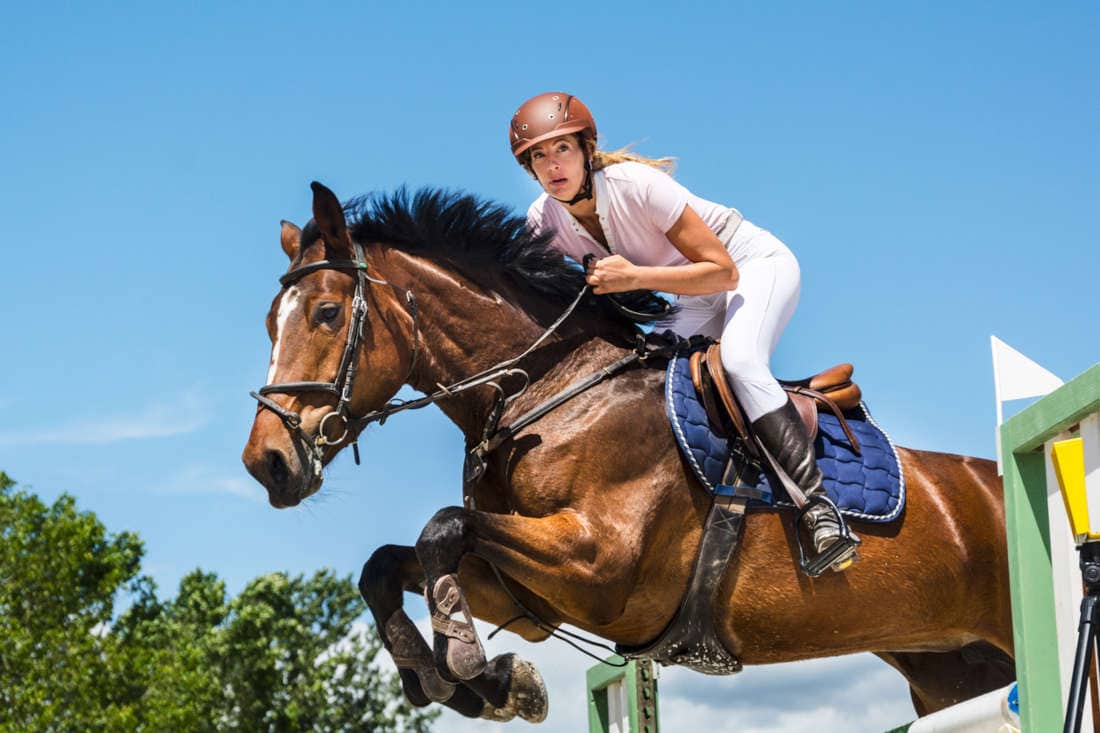
Choosing the right jumping saddle involves more than selecting a popular brand or matching your discipline’s style. The ideal saddle must suit both horse and rider, supporting performance over fences while maintaining comfort and long-term soundness.
Jumping saddles are designed with a forward flap, flatter seat, and specific panel configurations to accommodate a shorter stirrup length and the dynamic biomechanics of riding over fences.
However, differences in tree shape, panel design, flap cut, and seat structure can significantly influence how a saddle feels and performs. Understanding these elements helps riders make informed decisions rather than relying solely on appearance or trend.
When selecting a jumping saddle, it is essential to consider how the design supports both rider position and the horse’s movement. By evaluating key features and fit considerations together, riders can choose a saddle that promotes balance, freedom of motion, and effective communication over every fence.
Jumping Saddle Design & Features
Jumping saddles, also called “close contact” saddles, are a style of English saddle designed for the sports of show jumping, hunting, and eventing.
The term “close contact” refers to the minimal amount of leather between the rider and horse, which maximizes communication. [1] Jumping saddles are specifically designed to support the unique demands of riding over fences, where both horse and rider experience rapid changes in balance, speed, and direction.
Unlike many other pieces of equipment, a saddle must accommodate two moving athletes at once.
For the rider, the saddle should promote a secure, balanced position that supports correct leg alignment and allows the pelvis to follow the horse’s motion without restriction. This design helps the rider stay centered and balanced while giving the horse freedom of movement during takeoff, bascule, and landing.
From the horse’s perspective, jumping saddles must accommodate significant shoulder and back motion. As the horse lifts through the withers and rounds the back over a fence, the saddle needs to remain stable without restricting these movements.
Key features of jumping saddles compared to other types of English saddles include: [1][2]
- Flat seat: Allows the rider freedom of movement within the saddle
- Forward cut saddle flaps: Accommodate the shorter stirrup length that jumping riders use
- Knee and thigh blocks: Help secure the rider’s leg position
- Forward stirrup bars: Hang the stirrups forward on the saddle to stabilize the rider’s jumping position
Panel shape, tree design, and gullet width all influence how well a saddle allows the horse to use its body effectively. A saddle that interferes with shoulder rotation or concentrates pressure in a small area can limit performance and contribute to discomfort or resistance over time.
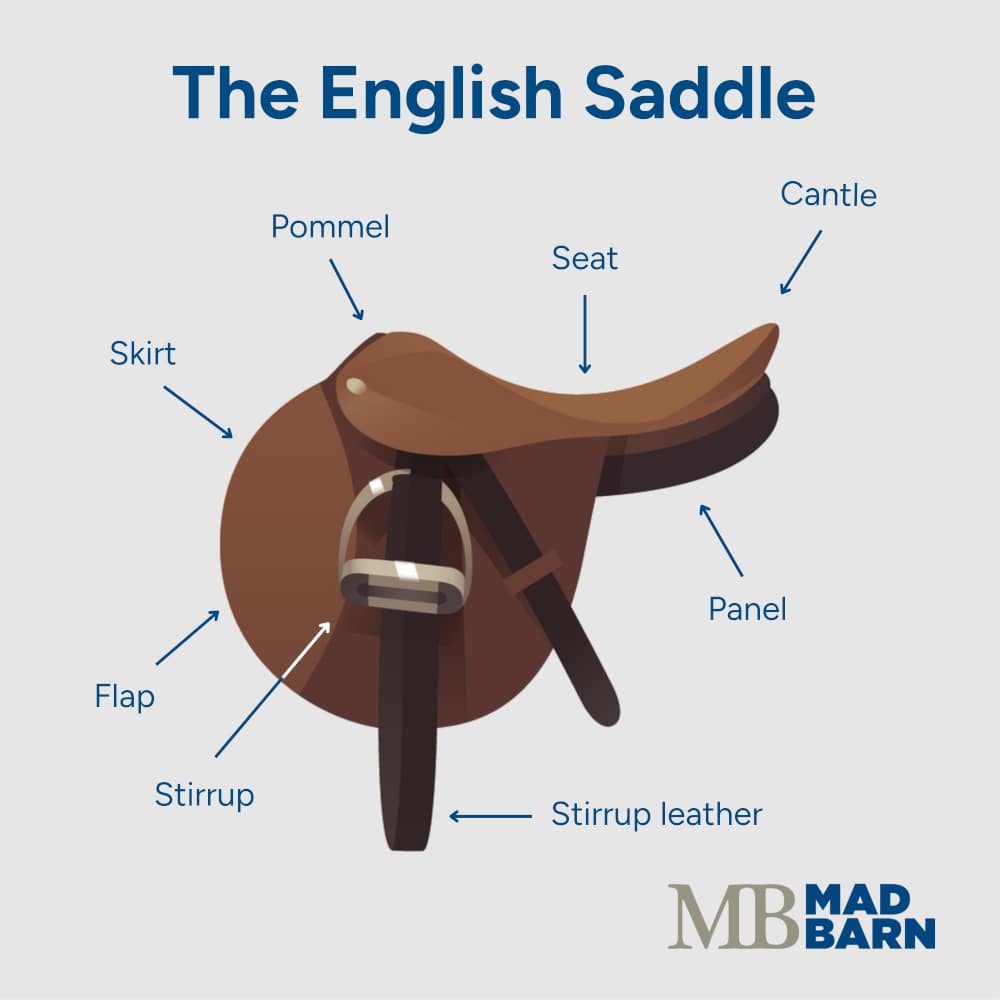
Fitting the Rider
The jumping saddle plays an important role in the rider’s stability and position in the air over fences. Given this, saddle fit for the rider is critical to ensure proper balance. Riders should feel comfortable, safe, and secure in the saddle during all phases of the horse’s jump and when riding on the flat.
Aspects of the saddle to consider include: [3][4]
- Type of flap
- Seat length
- Position and depth of the pocket
- Width of the twist
- Flap length and cut
Flap Types
Jumping saddles come in two main flap types: monoflap and dual-flap (also called “traditional“). Some riders prefer monoflap saddles as they provide closer contact between rider and horse. [5]
Beyond rider preference, saddle construction may also influence biomechanics during riding. For example, one small study found that choosing a monoflap versus a traditional saddle affected the rider’s posture and preferred stirrup length. [5]
Seat Length
The length of the seat in English saddles is measured from the “button” on either side of the pommel to the top of the cantle. [6] Most adult-sized saddles range between 15-17″. [7] Factors like the rider’s height, weight, and femur length can impact which size of seat they prefer. [7]
When the rider is sitting in the saddle, there should be room for about 3-4 finger widths between the rider’s buttocks and the tip of the cantle. [7] Their knees should not go past the front of the saddle flap when using stirrups set to a comfortable length. [7]
Riders with very long femurs (thigh bones) may require a longer seat to compensate for their leg length. [7] Choosing a longer seat length allows the rider to sit slightly further back in the saddle, which prevents their knees from coming forward over the front knee blocks.
An alternative to a longer seat is choosing a more forward-cut saddle flap.
What's your top priority with your horse's health?

Enter your email to receive your store credit
The Pocket
The pocket is the lowest point in the seat where the rider ultimately sits. Flatter saddles, like jumping saddles, tend to have a pocket that is towards the middle or slightly forward. [6] This position helps the rider balance towards the middle of the horse’s center of gravity during motion. [6]
How the pocket interacts with the rider’s seat can also be affected by the height and angle of the cantle. [6] A tall, steep cantle provides less free movement of the rider’s seat, which may not be desirable for jumping. [6]
The Twist
The “twist” of a saddle refers to the width of the saddle just in front of the rider’s seat position. The width of the twist depends on the shape of the saddle tree and the amount and position of the leather between the rider and the tree. [4]
This part of the saddle interacts with the rider’s pelvis and upper thigh. Depending on the shape of the rider’s pelvis and thigh structure, they may prefer a narrower or wider twist to optimize comfort and stability. [4]
Flap Length & Cut
Flap length and cut can also affect a rider’s position. Many jumping saddles have a forward cut flap, which means the flap extends out from the front of the saddle towards the horse’s shoulder. This helps accommodate the shorter stirrup length often used in jumping. [8]
Riders with extra long femurs often select very forward cut flaps to help accommodate their leg length.
The length of the flap can also affect rider position. The flap should not be so long that it interferes with the rider’s ability to apply leg pressure. [8] Similarly, it should not be so short that it ends before the rider’s boots. This could result in rubbing, pinching, or abrasions on the rider’s skin. [8]
Knee & Thigh Blocks
Blocks are padded pieces of leather that help stabilize the rider’s leg position within the saddle. Some riders prefer a well-blocked saddle that restricts their leg movement and provides additional stability. On the other hand, some riders prefer more freedom of movement and may not use blocks at all.
On many saddles, blocks are removable or adjustable to fit the rider’s preferences.
Fitting the Horse
Proper saddle fit is critical for the horse’s soundness and muscle development. A poorly fit saddle may pinch, rub, or produce large pressure points that may cause pain under saddle. [9]
To ensure full functionality and safety, saddle fit should be examined while the horse is standing still, with the rider sitting, and during exercise. [9]
Table 1. Signs of poor saddle fit [9]
| Type of Sign | Signs of Poor Saddle Fit |
|---|---|
| Saddle Movement Issues |
|
| Horse Behavioral Changes |
|
| Physical Indications |
|
Key points of examining saddle fit for the horse include: [9]
- Balance from front to back and side to side
- Panel contact
- Wither clearance
- The length of the saddle
- Width of the tree and gullet
- Type of panel
Saddle Balance
Proper saddle balance helps distribute the rider’s weight evenly and supports correct positioning for both horse and rider.
When assessing whether a jumping saddle is balanced, consider the following: [9]
- The lowest point of the saddle seat should align with the lowest point of the horse’s back
- The saddle should sit level, with the buttons on either side of the cantle aligned with the junction between the cantle and the saddle flocking
- The saddle should sit straight on the horse when viewed from the front and behind
Panel Contact
The panels that sit on the horse’s back should apply even pressure with no gaps or tight spots. The most common pressure points occur on either side of the withers. [9]
Methods to assess panel pressure include: [9]
- Using a flat hand between the horse’s back and the panels to check for changes in pressure.
- Applying chalk powder to the horse prior to saddling, then examining the chalk patterns on the underside of the saddle pad.
- Soaking the horse with water before saddling to assess water distribution after exercise. Alternatively, the “clean white saddle pad” method also works to assess contact.
Wither Clearance
Wither clearance can be assessed by putting fingers between the top of the horse’s withers and the pommel of the saddle. [9]
There should be at least two fingers’ width of clearance during all types of exercise and when the rider is sitting in the saddle. [9]

Saddle Length
The length of the saddle must be appropriate for the size of horse. The saddle should not extend forward onto the horse’s scapula, nor should it extend backwards past the last rib. [9]
Careful consideration is necessary when selecting a saddle for a larger rider, as a smaller horse may not fit a saddle with a long seat length. [9]
Saddle Width
The width and angle of the saddle tree is one of the most significant factors in saddle fit. The saddle tree must run parallel with the horse’s back, otherwise it can cause pinch points. [9]
Saddles that are too wide are prone to sliding forwards and may interfere with the horse’s withers. Narrow saddles create pinch points on either side of the withers that may result in muscle atrophy.
The gullet of the saddle should not contact the horse’s spine in any location. [9] For wide horses, gullet width may be a challenge when fitting saddles.
Type of Panel
Saddle panels are typically stuffed with wool, but newer saddle brands may use alternative materials. There are also saddle brands that use air panels instead of traditional flocking.
Air-flocked saddles may be more “bouncy” than traditional saddles, which can irritate some horses and riders. Regardless of flocking type, it should be symmetrical and not cause gaps or pressure points along the horse’s spine. Air-filled panels should be checked regularly for deflation, which can interfere with proper saddle fit. [9]
How to Choose the Right Jumping Saddle
Selecting a jumping saddle is best approached in a systematic way rather than choosing based on brand reputation or appearance alone. Start by evaluating the horse’s back shape and movement, then assess rider position needs, and finally refine the choice based on performance goals and budget.
Key steps when choosing a jumping saddle include:
- Assess the horse first: Consider back shape, wither height, shoulder rotation, and saddle length limitations
- Confirm tree width and panel compatibility: The saddle must distribute pressure evenly and allow freedom through the shoulders
- Evaluate rider seat and leg support: Seat size, flap cut, and block placement should support stable jumping position
- Test in motion: Always evaluate the saddle at walk, trot, canter, and over fences when possible
- Plan for reassessment: Conditioning changes, workload shifts, and muscle development may alter fit over time
Because a saddle must support two athletes simultaneously, the best choice balances rider security with unrestricted equine movement. Working with a qualified saddle fitter can help confirm that the final selection supports long-term comfort and performance.
Frequently Asked Questions
Here are some frequently asked questions about jumping saddle fit:
A properly fitting jumping saddle should sit level on the horse's back, clear the withers and spine, and distribute pressure evenly through the panels. It should not rock, bridge, or pinch the shoulders, and it should remain stable during movement and over fences.
Saddle fit should be reassessed at least once or twice a year, and any time a horse's workload, conditioning, or body shape changes. Young horses, horses in regular training, or those returning from time off may require more frequent evaluations.
While experienced riders may recognize obvious fit issues, working with a qualified saddle fitter is strongly recommended. A professional can assess both static and dynamic fit, helping ensure the saddle supports your horse's movement and jumping biomechanics.
Yes. A jumping saddle must support the rider’s balance, leg position, and stability over fences. If the saddle does not fit the rider properly, it can affect posture, security, and communication with the horse.
Yes. Even when a saddle fits the horse well, poor rider fit can compromise balance and stability. A rider who is crowded, tipped forward, or sitting too far back may unintentionally create uneven pressure and interfere with the horse’s movement.
Seat size is determined by rider build and pelvis size, not height alone. In general, you should have enough room to sit without crowding the cantle, while still feeling supported. A saddle that is too small may push you behind the motion, while one that is too large can feel unstable.
Summary
Choosing the right jumping saddle is essential for supporting your horse’s comfort, movement, and long-term soundness while helping the rider maintain balance and effectiveness over fences.
- A well-fitting jumping saddle distributes weight evenly and avoids pressure on the withers, spine, and shoulders
- Saddle fit should be evaluated both at rest and in motion, as problems may only appear during work or jumping
- Poor saddle fit can contribute to pain, behavioral resistance, and decreased performance
- Fit can change over time as a horse's conditioning, workload, or body shape changes
- Working with a qualified saddle fitter helps ensure the saddle supports both horse and rider for safe, effective jumping
References
- Types of English Saddles - Discipline, Styles & Purpose. Thinline. 2023.
- The History of the Jump Saddle. Cavaletti Collection.
- Bondi A et al. Evaluating the Suitability of an English Saddle for a Horse and Rider Combination. Equine Veterinary Education. 2020.
- Weninger C. Understanding the Twist in an English Saddle and How It Relates to Rider Comfort. EQ Saddle Science.
- White C, Birkbeck L. A Preliminary Investigation into the Effects of Jumping Saddle Design on Rider Posture. Performance Analysis of Sport IX. Routledge. 2013.
- Evans PA, Depew CG. Selecting a Saddle to Fit the Rider. Utah State University.
- How to Fit and Measure for an English Saddle (Size Chart). Schneiders Saddlery. 2023.
- Hazelton K. Saddle Fit for the Rider. Trumbull Mountain Tack Shop.
- Dyson S et al. Saddle Fitting, Recognising an Ill-Fitting Saddle and the Consequences of an Ill-Fitting Saddle to Horse and Rider. Equine Veterinary Education. 2015.