English









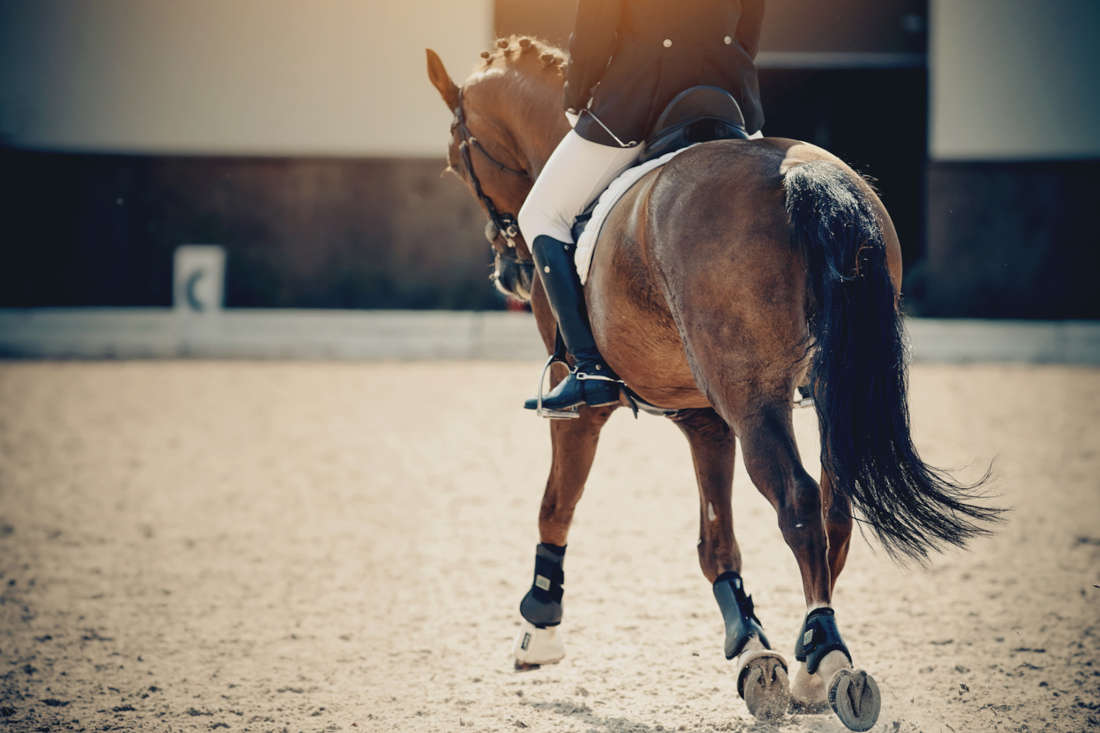
A dressage freestyle is a test in which riders choreograph required movements to music instead of following a fixed pattern. Blending technical precision with artistic interpretation, it allows horse and rider to showcase harmony, creativity, and degree of difficulty within the rules of their level.
Dressage freestyles are a highlight of modern competitions, from local schooling shows to international championships. Judges evaluate both the quality of the movements and the artistic elements, including choreography, musical interpretation, and overall harmony between horse and rider.
While they are often associated with elite riders, freestyles are available at many levels and can be designed to suit the strengths of any partnership.
Understanding how freestyles are structured, how they are judged, and how to select music and build choreography step by step can make the process manageable and rewarding for dressage riders of any level.
What Is a Dressage Freestyle?
A musical freestyle, often called freestyle to music, is a dressage test where the rider designs the choreography and performs it to music. Required movements must be included for the level, but the order, lines, and presentation are at the rider’s discretion. [1]
In practice, this means a freestyle is still judged like a standard dressage test. Rhythm, suppleness, contact, impulsion, straightness, and collection still matter. But you also earn, or lose, points based on how well the choreography and music support what you’re showing. [2]
Riders can enter freestyles classes at many levels and venues, from schooling shows to national championships and FEI competitions. The most important first step is to confirm which rules apply to your class, as requirements can vary. [3]
What's your top priority with your horse's health?

Enter your email to receive your store credit
Dressage Freestyle Rules
Most riders want to start with the fun part: picking music. But before you select a song, you need to understand the requirements for your level, what’s compulsory, and the relevant time rules.
Which Rulebook Applies to Your Freestyle
Your prize list typically indicates the governing rules used for a specific dressage freestyle class. For example, USDF/USEF formats apply for national competitions and FEI formats apply for international competitions. [3]
Start your plan by finding the following information about the class you will be riding in:
- Level and freestyle score sheet
- Arena size (20 x 40m vs. 20 x 60m)
- Maximum time allowed
- Required movements and restrictions
- Music submission format, deadline, and backup expectations
Check publications from relevant governing bodies regularly, as even small updates can change how you plan your ride.
Freestyle Time Limits
Some USEF freestyles are capped at 5 minutes with no minimum time. USDF freestyle rules and score-sheet guidance note that judges may not score movements performed after the time limit, and an artistic deduction can apply for exceeding the time allowed. [1]
Most FEI freestyles require a total performance time of 4.5 to 6 minutes. A Grand Prix freestyle, the level performed at the Olympic Games, falls between 5 minutes 30 seconds and 6 minutes. [4]
Performance time starts when the horse moves forward after the entry halt and ends with the final halt.
Entry Music & Salute Timing
Like standard dressage tests, time limits also apply to when a rider must start their music and enter the ring after the judge rings the bell.
Riders must enter the arena shortly after the music starts, with potential elimination at the judge’s discretion if they do not. Typically, riders have 45 seconds to start their music after the judge rings the bell and 30 seconds to enter the arena after the music starts. [3]
Required Movements & Compulsory Elements
Freestyles may be creative, but each rider’s unique choreography must still contain the compulsory elements.
Each level has compulsory elements that riders must perform during their freestyle. Missing required movements can heavily impact both technical and artistic marks.
USDF educational resources emphasize that omitted compulsory elements receive a 0 for that movement and that this omission can also affect artistic categories such as choreography and difficulty. [2]
When planning choreography, create a checklist of compulsory movements and note:
- Where you plan to ride each movement
- Whether it must be shown in both directions
- What music matches the movement
Performing movements at a level above the current competition level is forbidden and will result in a penalty.
How Dressage Freestyles are Scored
Freestyles are primarily evaluated through two aspects:
- Technical execution: quality and correctness of the movements
- Artistic impression: how well the choreography and music work together
Guidance from USDF and FEI on freestyle judging describes artistic impression as an evaluation of harmony, choreography, degree of difficulty, music, and interpretation. [5] FEI resources similarly outline that difficulty should correlate with technical quality. Difficulty without correct execution is not rewarded. [6]
Freestyles should emphasize correct dressage training enhanced by music, not poor training overwhelmed by complicated choreography. [3]
During competitions, judges use a score sheet that tracks compulsory elements. As in standard dressage tests, technical execution is determined by the scores judges award each movement, from 0 to 10. [2]
Judges also score each artistic impression category from 0 to 10. Some categories have weighted coefficients. The total score for a freestyle is a final percentage that reflects a balanced evaluation of both technical execution and artistic impression. [2]
How to Choose Music for a Dressage Freestyle
A successful freestyle soundtrack does three jobs:
- It matches your horse’s style
- It matches your horse’s tempo
- It creates a coherent arc from entry to final salute
Your freestyle music should enhance your horse’s performance, not distract from it.
1) Select a Musical Style
Many freestyle frustrations arise from music that doesn’t match the horse. For example, cinematic soundtracks may be suitable for a large, expressive horse but overpower a smaller, elegant type.
The music can also help enhance a horse’s natural strengths. A naturally forward, quick horse often looks best with music that has clarity but not frantic energy, while a slower-moving horse may need music with stronger drive to avoid looking behind the beat.
In modern competition, many riders use creative music choices to showcase their own personalities. While classical music once dominated freestyles, current trends feature a wide variety of genres. However, most experts recommend avoiding excessive vocals when selecting music for freestyle. [1]
2) Find Your Horse’s Tempo
BPM (beats per minute) gives you a practical way to match hoofbeats to musical beats so the horse looks like they’re dancing, not chasing the music or dragging behind it.
To measure your horse’s BPM:
- Video your horse in a steady tempo in each gait and movement
- Use a metronome app or audio tool to count beats and convert to BPM
- Take separate BPM measurements for tempo during collection and extension
Find music with a BPM that matches your horse’s tempo for each movement to improve your artistic impression.
3) Build Musical Structure
The best musical dressage freestyles often have a narrative shape:
- Opening: clear theme, confident entry, establish rhythm
- Middle: build momentum and highlight your best gait or movement
- Ending: include an intentional final line with musical climax and decisive salute
A musical arc makes the freestyle more cohesive and leaves a stronger impression on judges and spectators.
4) Consider Editing & Transitions
Different movements often require different music to match their BPM. Without appropriate editing and transitions between tracks, a freestyle can appear disjointed.
Avoid these common mistakes:
- Abrupt cuts between songs
- Big volume jumps
- Transitions that don’t align with gait changes
Aim for clean, predictable transitions and consistent volume. Even a simple musical score can feel professional if the edits are smooth and the theme is cohesive.
Planning Your Dressage Freestyle Choreography
Music isn’t the only aspect of dressage freestyles that makes them exciting to watch. This competition format also allows each rider to create their own unique choreography.
Good choreography allows the rider to show off their horse’s strengths, keep the audience engaged, and perform the compulsory elements in a way that looks balanced and intentional.
Understanding the Judge’s Perspective
Judges score what they can see. When developing your choreography, position elements to set your horse up for success and help judges easily evaluate your performance.
Consider these choreography tips when planning a freestyle:
- Put extensions and lengthenings on long diagonals or long sides
- Use the centerline to showcase straightness
- Perform your horse’s strengths in clear view of the judge’s box
- Position difficult movements strategically
You can’t hide your horse’s weaknesses from the judge, but you can plan your choreography to emphasize their talents.
Prioritize Flow
Complicated choreography and chaotic transitions are among the most common freestyle errors. Some riders mistakenly try to increase the degree of difficulty with a crowded floor plan. But to achieve higher scores, freestyles need flow.
A cleaner ride usually looks more harmonious and earns better artistic marks because it appears planned and confident. USDF judging guidance explicitly ties artistic evaluation to harmony and flowing choreography. [2]
Degree of Difficulty
At the FEI level, the degree of difficulty is a defined scoring component with its own logic and tools for freestyle creators.
The FEI freestyle system emphasizes that the degree of difficulty should reflect more than basic requirements and align with the quality shown. Increased difficulty is not rewarded if not performed with technical correctness. [6]
No matter your level, your choreography should show an appropriate challenge that you and your horse can execute with confidence.
Practicing Your Dressage Freestyle
Most riders need to workshop their freestyle choreography and music with plenty of practice at home before show day. A good freestyle practice plan helps improve consistency.
Practicing in Sections
Although it’s tempting to repeatedly run through your entire freestyle routine, dividing your freestyle into sections is often the most effective approach to preparation. Plus, schooling every movement every day is too physically and mentally demanding for your horse.
Focus on one section at a time to fine-tune your choreography, timing, and music choices. As you progress in the planning process, add occasional run-throughs of the entire freestyle to check time and flow.
Introduce Music Gradually
Some horses become more reactive with loudspeakers, applause, or echo. Research suggests music can influence equine physiological measures, including changes in heart and respiratory rates, under different tempos. However, responses depend on the environment and presence of additional stressors. [7]
Take your time gradually acclimating your horse to your music to build confidence and avoid unexpected challenges on show day. Start with music at low volume at home and get your horse used to different speaker placements around the arena.
Video Your Ride
Video is a valuable tool for planning and evaluating your freestyle. If you work with a freestyle designer, they will likely use video of you riding to create choreography and edit your music.
If you’re designing your freestyle on your own, using video is essential for determining if your music choices fit your horse and choreography. Watching your ride can also help give you insight into the judge’s perspective of your freestyle.
Dressage Freestyle Show-Day Logistics
Many riders worry about the extra stress freestyle logistics add to competition. But you can prevent many common show-day mishaps with the right preparation.
Submitting Your Freestyle Music
Plan ahead to ensure your music is ready and account for human error.
Follow these guidelines to avoid last-minute issues with your music submission:
- Use the show’s required file type and naming conventions
- Check your music file before you leave for the show
- Bring backups, such as a USB drive plus a second copy
- Attend the sound check to confirm the desired volume of your music
- Know your entry plan so you can enter promptly once music starts
The competition prize list usually explains music formats and requirements for individual shows. When in doubt, reach out to the show manager to confirm.
Managing Music or Technical Issues
Even with perfect preparation, mistakes can still happen. If music fails or malfunctions during a ride, stop and inform the judge at C. Judges may allow riders to restart from the beginning or resume from the point of error if there was a musical mistake.
Remember to keep riding correctly and safely, re-establish relaxation, and continue with your freestyle plan as best you can.

Copyright & Livestreaming
Music licensing is a moving target, and livestreaming has increased scrutiny around public performance and broadcast rights. Recent reporting in equestrian media highlights rider concerns and new challenges related to licensing when competitions are streamed online. [8]
Take copyright compliance into consideration:
- Ask the show if classes are livestreamed and what music policies apply
- Keep proof of purchase or license information for your tracks, where possible
- If needed, consider royalty-free libraries and music sources designed for licensing
- Remember to always consult a professional about copyright concerns when creating a freestyle, so music choice doesn’t become a last-minute stressor
Bringing Your Dressage Freestyle Together
A dressage freestyle brings together correct training, thoughtful planning, and creative expression within the structure of required movements.
When you understand the rules, design choreography around compulsory elements, and select music that suits your horse’s natural way of going, the result feels cohesive rather than forced.
Success in a dressage freestyle does not depend on dramatic music or complicated floor plans. Judges reward harmony, clarity, an appropriate degree of difficulty, and confident execution.
A well-ridden, well-structured freestyle that highlights your horse’s strengths will consistently score better than one that attempts movements beyond the partnership’s reliability.
With careful preparation, consistent practice, and attention to show-day logistics, riding to music becomes less intimidating and more strategic. Whether competing at a schooling show or at championship level, a strong freestyle allows you to present technically correct training in a format that reflects both discipline and individuality.
Frequently Asked Questions
Here are some frequently asked questions about musical dressage freestyles:
A dressage freestyle is a test in which the rider choreographs required movements to music rather than following a fixed pattern. The combination of technical execution, choreography, and musical interpretation is evaluated by judges.
Freestyles are scored on both technical and artistic marks. Technical marks evaluate the quality of each required movement, while artistic marks assess choreography, harmony between horse and rider, music suitability, and degree of difficulty.
Freestyle time limits vary by level and governing body. Most tests have minimum and maximum time requirements, and exceeding those limits may result in penalties. Always confirm the specifications in your prize list or rulebook.
Freestyles are commonly offered at First Level and above in many federations, though availability depends on the show and organization. Riders should confirm eligibility and required elements for their specific level.
A theme is not required, but a consistent musical style and clear structure typically improve artistic impression and make the ride feel intentional.
Difficulty should be appropriate for your level and your horse's reliability. Guidance around degree of difficulty emphasizes that increased complexity only improves scores if movements are executed correctly and with quality.
Either approach works. Building choreography first can make it easier to include compulsory elements cleanly, while choosing music first can help inspire freestyle planning.
Freestyle guidance commonly states that omitted required elements receive a zero for that movement and can also reduce artistic marks because the test is no longer complete as designed.
Policies for music choice in dressage freestyle vary by organizer and broadcaster. Confirm your show's requirements early and keep documentation of your music sources and licenses when possible.
The required music format for freestyle dressage depends on the show's sound system and submission process. Your prize list typically specifies file type, naming conventions, deadlines, and backup expectations.
If there is an error with your music during dressage freestyle, stay focused on correct riding. Glitches happen, and judges still evaluate technical quality and overall harmony. If a major error occurs, stop and inform the judge at C.
Summary
A strong dressage freestyle is built on correct training, strategic planning, and music that complements your horse's natural rhythm and way of going.
- Use the current score sheet for your level to map compulsory elements before editing your music
- Understand how technical and artistic marks are awarded so you can design a ride that scores well in both categories
- Measure the BPM of your horse’s gaits and select music that enhances their movement and expression
- Build choreography that reads clearly, flows logically, and highlights your horse's strengths
- Rehearse in sections, practice show-day audio logistics, and plan for contingencies
- Review licensing and livestream policies early to avoid last-minute complications
References
- USDF Freestyle Rules and Guidelines. United States Dressage Federation. 2023.
- Hannon. J. Understanding Freestyle Scoring. USDF Connection. 2012.
- USEF Dressage Rulebook. United States Equestrian Federation. 2026.
- FEI Dressage Rules. Fédération Equestre Internationale. 2026.
- FEI Judging Manual. Fédération Equestre Internationale. 2025.
- The FEI Freestyle System (Degree of Difficulty / DoD). Fédération Équestre Internationale. 2016.
- Oliveira. F.Y.U. et al. Impact of musical rhythm on blood, physiological and welfare parameters in stabled horses. Scientific Reports. 2024.
- Keller. R. Turn Down For What? Freestyle Music Livestream Licensing Presents A New Challenge. The Chronicle of the Horse. 2025.