English

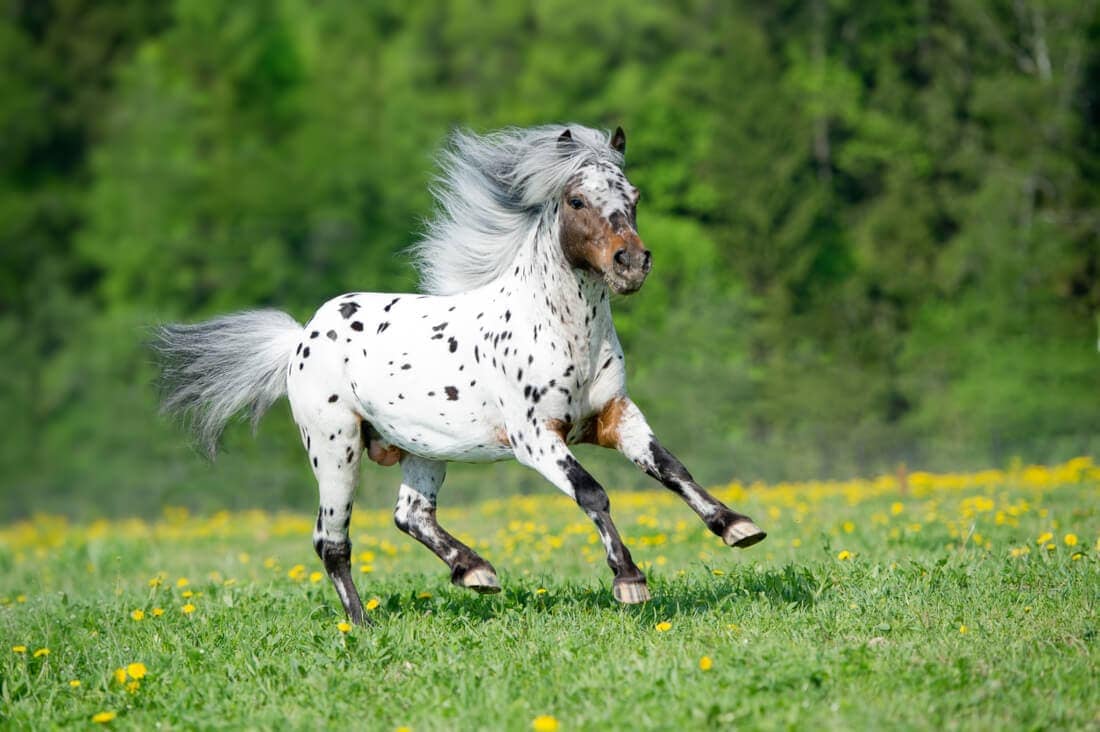
The Pony of the Americas, or POA, is a uniquely American pony breed that originated in the heartland of the United States. Developed in the mid-20th century, this striking and versatile breed was designed to combine the refinement of small horses with the eye-catching coat patterns of the Appaloosa.
These ponies are especially known for their distinctive spotted coloring and their exceptional adaptability across a range of disciplines. While the breed was initially created to serve as the ideal mount for children, POAs have also earned a loyal following among petite adult riders who value their balance, temperament, and trainability.
To qualify for registration, all POAs must meet strict physical and coat pattern criteria. However, their Appaloosa coloring comes with certain health considerations, including a predisposition to specific eye and skin conditions.
Keep reading to explore the breed’s origins, defining traits, potential health concerns, and optimal care and nutritional strategies for keeping your POA healthy and thriving.
Pony of the Americas History
The Pony of the Americas (POA) is a distinct American pony breed developed primarily for young riders. It originated in the United States in the 1950s and quickly became one of the fastest-growing horse breeds in North America.
Origin
In 1954, the Shetland pony breeder Les Boomhower purchased an Arabian-Appaloosa mare and her striking half-Shetland foal. [1]
The colt appeared to have black paint smeared all over his body, which formed the shape of a hand over his flank. Les named the colt Black Hand and invited fellow Shetland breeders to his Iowa ranch to discuss his vision for a new breed inspired by the unique little foal. [1]
These early Pony of the Americas breeders sought to create a small breed that combined the best attributes of Arabians, Quarter Horses, and Appaloosas. [1]
Black Hand received the first registration number with the new breed registry, which grew to 12,500 within the first 15 years. [2]
Although founded by Shetland pony breeders, the modern POA does not have significant Shetland blood. Appaloosa, Arabian, Welsh Pony, and Quarter Horse ancestry are more common. [1]
Historic Use
The original POAs were developed for children to ride and show. State clubs hosted regional shows, which eventually grew into national competitions. The age limit to show a POA under saddle at breed shows increased from 16 to 18 in 1973. [4]
Adults were only allowed to show POAs in halter and driving classes until 1987, when the POA Club added adult riding classes for young POAs in training. The following year, the club hosted its first national convention. [2]
Today, the POA belongs to one of the world’s largest and most active youth-oriented breed registries.
Breed Registry
The Pony of the Americas Club is the official registry for the POA breed. Les Boomhower founded the POA Club in 1954 after the birth of Black Hand. [1]
The organization continues to focus on its mission to create a versatile “using type” pony for youth and encourage young riders to grow as competitors. Their motto is, “Try hard, win humbly, lose gracefully and, if you must… protest with dignity.” [1]
Ponies must have an approved POA coat pattern and at least one POA parent to be eligible for tentative registration. Crosses are permitted with horses registered with an approved crossbreeding registry or identified in the Certified Pedigree Program.
Permanent registration requires inspection and verification of height. Horses outside the height requirements are eligible for pink papers, while horses lacking sufficient color are issued blue papers. [2]
| Breed Summary | |
|---|---|
| Breed Name | Pony of the Americas |
| Also Known As | POA |
| Breed Type | Pony |
| Origin | United States (Iowa) |
| Breed Registry | Pony of the Americas Club |
| Average Height | 11.2 – 14 hh |
| Common Coat Colors | Leopard, blanket, snowflake, frost, snowcap, varnish roan, few spot |
| Conformation | Small horse type, Arab-like head, slightly dished face, deep chest, sloped shoulder, muscular build |
| Common Uses | Western, English, halter, driving, jumping, dressage, eventing, endurance |
| Temperament | Gentle, willing, calm, obedient, confident |
| Best For | Children and petite adults seeking a versatile riding pony |
| Common Health Concerns | Equine recurrent uveitis, congenital stationary night blindness, sunburn, photosensitivity, HYPP-linked bloodlines |
What's your top priority with your horse's health?

What's your top priority with your horse's health?
Breed Characteristics
Appaloosa coat patterns aren’t the only necessary trait for POAs. These ponies have several key characteristics that make them the perfect mounts for young riders.
Conformation
POAs must measure between 46″ to 56″ at the withers, or 11.2 to 14 hands. [2]
Despite their name, POAs should have the physical characteristics of a small horse, not a pony. Their conformation should resemble a well-proportioned stock horse with an overall quality of substance, style, and refinement. [2]
These ponies have Arab-like heads, slightly dished faces, expressive eyes, and delicate ears. However, their bodies are more substantial, with muscular builds, deep chests, and well-sloped shoulders. [2]
Colors
POA color characteristics include all spotted coat patterns found in Appaloosas. Ponies with pinto coloring or excessive white markings extending beyond the legs and head are ineligible for registration.
Spotted coat patterns must be visible 40 feet away. POA coat patterns include: [2]
- Snowflake: Small white spots scattered throughout base coat color
- Blanket: Dark body color with white area and spots over the loin and hips
- Frost: White hairs mixed into base coat over back, loin, and croup
- Snowcap: Blanket pattern without any spots in the white area
- Leopard: White base color with dark spot over entire body
- Varnished Roan: Basic roan body color with dark patches
- Few Spot Leopard: White body color with no or few spots
- White with Black Spots: White body color with dark spots only over hindquarters
- Solid with Dark Spots: Solid body color with dark spots
Some patterns require POAs to display unique secondary characteristics associated with Appaloosa coloring. These characteristics include: [2]
- Mottled Skin: Multi-colored skin around the muzzle, eyes, anus, and genitals
- White Sclera: Visible white area encircling pigmented iris of eye
- Striped Hooves: Light and dark stripes on hooves in the absence of white markings
- Clusters of Spots: Large, concentrated pigmented area of spots
- Feather Marks: Irregular white markings on legs that don’t make contact with the hoof
Temperament
A good temperament is essential to ensure ponies are suitable for children. These ponies are known for their gentle personalities and willing work ethics. The ideal POA is easily trained on basic handling and has a calm, obedient manner. [2]
While good breeding contributes to the characteristic self-assurance, confidence, and quietness often found in POAs, all ponies need good training and handling. Work with a trusted professional if you’re looking for a pony suitable for your child.
Disciplines
In addition to correct conformation, POAs must also have correct gaits. Their free, rhythmic movement makes these ponies easy and enjoyable to ride. [2]
Pony of the Americas breed shows feature Western and English under-saddle classes for children. Adult POA owners can participate in halter and driving classes at these shows.
Outside breed shows, these versatile ponies are often seen in hunter, jumping, dressage, eventing, and endurance competitions. They can make excellent recreational riding mounts for both children and petite adults.
Health Profile
POAs are typically healthy and hardy ponies. However, they can be prone to certain genetic conditions associated with the Appaloosa spotted coat patterns.
Genetic Diseases
The leopard complex (LP) gene controls all the coat color patterns and characteristics of Pony of the Americas. Modifying genes are responsible for the different variations in spotting patterns. [5]
Research in Appaloosas has linked the leopard complex (LP) gene with genetically associated conditions that can cause vision problems in horses, including equine recurrent uveitis (ERU) and congenital stationary night blindness (CSNB). [6]
Equine recurrent uveitis is characterized by conjunctivitis (pink eye) caused by acute inflammation in the uveal tract. Acute episodes can lead to blindness if untreated, but horses may go years between episodes. Clinical signs of an ERU episode include eye twitching, abnormal tear production, and light sensitivity. [7]
POAs with congenital stationary night blindness have impaired eyesight in low-light environments. Affected horses often have normal day vision but struggle at night due to improper nerve signal transmission between the eyes and the brain. [8]

Health Problems
Pink and mottled skin around the eyes can increase the risk of conjunctivitis and eye problems in POAs with specific coat patterns. Pink skin is sensitive to sunburn and photosensitization, so some POAs may need extra UV protection during turnout. [9]
Some stock horse breeds commonly used to develop the POA bloodlines carry genes associated with muscular disorders found in Quarter Horses, such as hyperkalemic periodic paralysis (HYPP). [10]
The Pony of the Americas Club does not permit registration for ponies that test positive for HYPP. Horses that descend from bloodlines linked to HYPP must test negative for the associated gene before being approved for breeding. [2]
Care and Management
POAs thrive as family ponies and enjoy spending quality time bonding with their owners. While POAs are typically hardy, all horses and ponies need quality basic care that supports their physical and mental health.
Work with your veterinarian and other practitioners to develop an annual wellness plan for your pony that includes the following:
- Veterinary Exams: Schedule routine health and lameness exams to catch potential issues early
- Vaccinations: Follow a veterinarian-recommended vaccination program to protect your POA from infectious diseases
- Dental Care: Arrange regular dental check-ups and teeth floating to support proper chewing and digestion
- Parasite Management: Use a targeted deworming plan to control internal parasites and maintain overall health
- Hoof Care: Keep up with consistent trims from a skilled farrier to prevent lameness and support soundness
Sunscreen, fly masks, and sheets with UV protection can help prevent sunburn and photosensitivity in POAs with sensitive skin. Ensure your POA has constant access to shade in their paddock to escape from the sun. [9]
POAs with night blindness should not be turned out overnight. Instead, keep these ponies in a safe, well-lit location to decrease the risk of injury due to impaired vision.
Nutrition
Good nutrition is essential to keeping POAs healthy. The ideal diet depends on your pony’s size, age, activity level, and overall health, but all horses and ponies benefit from a forage-based diet that meets their nutrient requirements.
Weight Maintenance
Most POAs are easy keepers. These ponies descend from stock breeds adapted to limited food supplies during harsh midwestern winters and can quickly gain weight when overfed.
Obesity is linked to metabolic health issues and risk factors for laminitis in ponies. Maintaining a healthy body weight is important for reducing health risks in POAs. [11]
Regularly monitor your POA’s body condition score to determine if dietary changes are necessary.
Consult your veterinarian if your POA experiences unexplained weight loss, which could indicate an underlying health condition or dental problem.
Sample Diet
The following sample feeding program is based on a 800 lb (360 kg) mature Pony of the Americas at maintenance (not exercising).
| Feed | Amount per day |
|---|---|
| Mid-Quality Hay (8% crude protein) | Free-choice |
| Salt | 15 g (1 tbsp) |
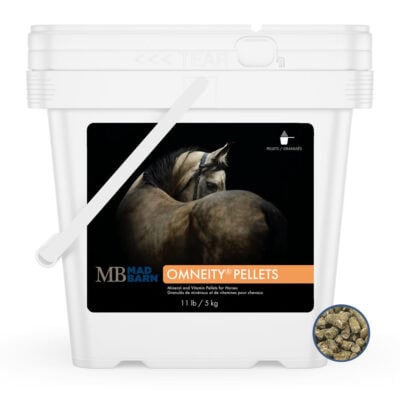
| Omneity® Pellets | 100 g (1 scoop) |
| Diet Analysis | |
| Digestible Energy (% of Req) | 106% |
| Protein (% of Req) | 130% |
| HC (ESC + starch; % Diet) | 8.8% |
Most mature POAs with a normal body condition at maintenance can meet their calorie and protein requirements with a forage-only diet. However, hay alone does not meet all nutrient requirements for horses established by the National Research Council (NRC). [12]
A vitamin and mineral supplement or ration balancer is necessary to ensure your POA gets the nutrition they need. Proper vitamin and mineral intake supports coat quality, hoof health, immune function, and athletic performance, making it a key part of every feeding program.
Mad Barn’s Omneity® is a complete vitamin and mineral supplement for horses and ponies. It contains high-quality ingredients, added yeast, and amino acids in a concentrated, low-calorie formula, making it ideal for easy-keeper pony breeds.
All ponies also require unlimited access to clean, fresh water and free-choice salt. Adding plain loose salt to your POA’s daily ration is an effective way to meet sodium requirements and support proper hydration. [12]
Forage
The amount of forage a horse needs is based on body weight. Because POAs are smaller and lighter than their Appaloosa relatives, they require less forage to meet their daily nutritional needs.
An 800 lb (300 kg) POA pony will eat approximately 16 lb (6 kg) of average-quality, low-starch grass hay daily. POA ponies with intense show careers may need higher quality hay for additional energy and protein. [12]
Alfalfa is a high-protein legume hay often fed to performance horses. However, some research suggests alfalfa can contribute to photosensitivity in horses and may not be suitable for POAs that struggle with photosensitive reactions. [13]
You can request a forage analysis to determine if your hay is suitable for your POA and identify any deficient nutrients that require fortification.
Feeding Recommendations
Most POAs in light work don’t need commercial grain. High volumes of energy-dense feeds can contribute to unwanted weight gain in these ponies.
If you need a supplement carrier, consider using soaked hay pellets, beet pulp, or other high-fiber feeds instead of grain. Swapping ration balancers for concentrated vitamin and mineral supplements can also help eliminate excess calories. [14]
POAs with eye or skin conditions may benefit from adding sources of omega-3 fatty acids to their diet. [15]
Some health conditions found in POAs require specific dietary and forage changes to manage. For example, POAs with metabolic concerns need carefully formulated diets low in hydrolyzable carbohydrates. [12]
If you have specific nutrition concerns for your POA, consult a qualified equine nutritionist to develop a suitable feeding plan.
Nutritional Supplements
After formulating a balanced diet that meets your POA’s basic nutritional needs, you can consider supplements for additional support.
- W-3 Oil is a fat supplement that contains microalgae-synthesized DHA, an omega-3 fatty acid that supports immune health in POAs. Adding healthy fats to your POA’s diet also supports hair and skin health so their spotted coats can shine.
- Natural Vitamin E is a powerful antioxidant that supports immune and muscle health in POAs. Ponies in heavier exercise programs often need higher levels of vitamin E in their diet.
- Spirulina is a freshwater algae rich in fatty acids, antioxidants, vitamins, minerals, and essential amino acids that support a healthy skin and immune system in horses. Supplementing spirulina may benefit POAs with skin irritations and sensitivities.
- MSM is a natural joint supplement that supports mobility and comfort in ponies. It provides bioavailable sulfur, which is important for maintaining cartilage and connective tissue.
Submit your POA’s diet online for a free evaluation from our qualified equine nutritionists to get help formulating a balanced diet.
Frequently Asked Questions
Here are some frequently asked questions about the Pony of the Americas breed:
The Pony of the Americas is an American pony breed developed in the United States in the 1950s. The breed was created to combine the size and usability of a children’s riding pony with the spotted coat patterns and visual appeal of the Appaloosa. The Pony of the Americas breed are known for being versatile, athletic, and well-suited to youth riders. Although they are ponies by height, they are bred to have the balance, substance, and way of going of a small horse.
POA stands for Pony of the Americas. The term refers to a distinct American pony breed that originated in Iowa and was developed primarily for children and youth competition. In horse circles, “POA” is the standard abbreviation used for both the breed and its registry community.
The Pony of the Americas breed is best known for its spotted Appaloosa-style coat pattern and its reputation as an ideal youth riding pony. The breed was specifically developed for children, so it is also known for being versatile, trainable, and suitable for a wide range of disciplines.
The Pony of the Americas typically stands between 11.2 and 14 hands high. Despite that pony-sized height range, the breed is intended to look and move more like a small horse than a traditional pony. This gives the POAs a balanced, athletic build that works well for both showing and recreational riding.
A Pony of the Americas must measure between 46 and 56 inches at the withers, which equals 11.2 to 14 hands high. That height range is part of the breed standard and helps maintain the Pony of the Americas as a practical mount for children and petite riders. The height of a POA must be verified for permanent registration with The Pony of the Americas Club.
The Pony of the Americas breed is used for youth riding, showing, and a wide variety of performance disciplines. They were originally developed as mounts for children to ride and show, but today they compete in Western and English under-saddle classes, halter, driving, hunter, jumping, dressage, eventing, and endurance. Many of these ponies also make dependable recreational riding partners for children and petite adults.
The Pony of the Americas breed is known for having a gentle, willing, and trainable temperament. The ideal Pony of the Americas is calm, obedient, self-assured, and suitable for children, which is one reason the breed became so popular for youth riders. Good breeding helps support these qualities, but proper training and handling are still important for developing a safe, reliable pony.
The Pony of the Americas should have the conformation of a small horse rather than a traditional pony. Most of this breed have a well-proportioned, refined stock horse type with substance, style, and athleticism. Common breed traits include an Arab-like head, a slightly dished face, expressive eyes, delicate ears, a deep chest, sloping shoulders, and a muscular body. Their overall build is designed to combine attractiveness, balance, and usefulness under saddle.
The Pony of the Americas breed is known for Appaloosa-type spotted coat patterns. The patterns must be visible from 40 feet away, and commonly accepted patterns include snowflake, blanket, frost, snowcap, leopard, along with some other spotted variations recognized by the breed standard. In addition to coat pattern, this breed may also show Appaloosa-associated traits such as mottled skin, visible white sclera, and striped hooves.
Yes, the Pony of the Americas is generally considered a good breed for beginners, especially children, because they were developed for youth riders. They are known for being gentle, obedient, and willing to learn, which makes them a strong choice for novice riders when matched with proper training and supervision. As with any pony, individual temperament and handling still matter, so beginners do best with a well-trained Pony of the Americas and guidance from an experienced adult or instructor.
The Pony of the Americas are prone to several health problems linked to Appaloosa coloring. The leopard complex (LP) gene responsible for the POAs coat pattern is associated with equine recurrent uveitis, congenital stationary night blindness, and other eye problems. POAs may also need more UV protection than other breeds, as their pink skin can be sensitive to photosensitization and sunburn. Some bloodlines may also carry risk related to hyperkalemic periodic paralysis, and ponies that test positive for HYPP are not eligible for registration with The Pony of the Americas Club.
Summary
The Pony of the Americas (POA) is a mid-20th-century American horse breed created for youth, combining Arabian/Quarter Horse type with Appaloosa coloring.
- POAs are small horses (11.2–14.0 hands) with refined, stock-horse conformation and distinctive Appaloosa coat patterns that must meet strict registration standards.
- The breed is valued for a calm, trainable temperament and is widely used in youth shows, plus English, Western, driving, trail, and sport disciplines for kids and petite adults.
- Appaloosa coloring (LP gene) brings specific health risks, including equine recurrent uveitis and congenital stationary night blindness, and light skin that is prone to sunburn.
- The registry requires approved color, height verification, and HYPP-negative status from at-risk bloodlines, supporting sound breeding and breed integrity.
- POAs generally thrive on a forage-first, low-calorie diet with balanced vitamins and minerals, routine veterinary and hoof care, ample shade/UV protection, and regular body-condition monitoring to prevent obesity.
References
- POA History. POAC 2022.
- POAC Official Handbook. Pony of the Americas, Inc. 2022.
- Sponenberg. D. P. et al. The Inheritance of the Leopard Complex of Spotting Patterns in Horses. Journal of Heredity. 1990. View Summary
- About. Wisconsin POAC. 2025.
- Holl. H. M. et al. Variant in the RFWD 3 Gene Associated with PATN 1, a Modifier of Leopard Complex Spotting. Animal Genetics. 2016. View Summary
- Rockwell. H. et al. Genetic Investigation of Equine Recurrent Uveitis in Appaloosa Horses. Animal Genetics. 2020.
- Thomasy. S. M. Equine Recurrent Uveitis (Periodic Ophthalmia, Moon Blindness, Equine Uveitis). Merck Veterinary Manual. 2025.
- Bellone. R. R. et al. Differential Gene Expression of TRPM1, the Potential Cause of Congenital Stationary Night Blindness and Coat Spotting Patterns ( LP ) in the Appaloosa Horse ( Equus Caballus ). Genetics. 2008. View Summary
- Stegelmeier. B. L. Equine Photosensitization. Clinical Techniques in Equine Practice. 2002.
- Rudolph. J. A. et al. Periodic Paralysis in Quarter Horses: A Sodium Channel Mutation Disseminated by Selective Breeding. Nature Genetics. 1992. View Summary
- Geor. R. J. Metabolic Predispositions to Laminitis in Horses and Ponies: Obesity, Insulin Resistance and Metabolic Syndromes. Journal of Equine Veterinary Science. 2008.
- Nutrient Requirements of Horses: Sixth Revised Edition. National Academies Press, Washington, D.C. 2007. View Summary
- Puschner. B. et al. Alfalfa Hay Induced Primary Photosensitization in Horses. The Veterinary Journal. 2016. View Summary
- Colombino. E. et al. Gut Health of Horses: Effects of High Fibre vs High Starch Diet on Histological and Morphometrical Parameters. BMC Veterinary Research. 2022. View Summary
- O'Neill. W. et al., Flaxseed (Linum Usitatissimum) Supplementation Associated with Reduced Skin Test Lesional Area in Horses with Culicoides Hypersensitivity. Canadian Journal of Veterinary Research = Revue Canadienne De Recherche Veterinaire. 2002.