

 English

Omneity® Pellets
All-In-One Vitamin & Mineral Pellet

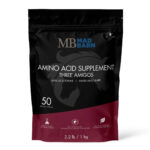
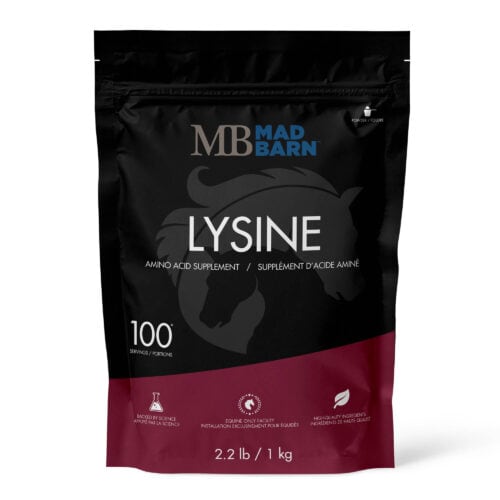
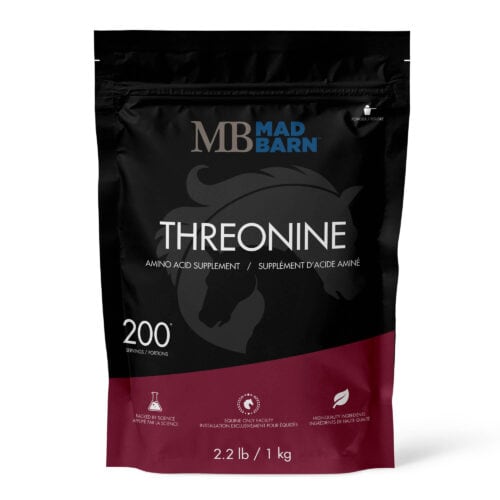
Shop Mad Barn’s amino acid supplements for horses – essential building blocks to optimize protein synthesis, maintain muscle and topline development, and support peak performance.


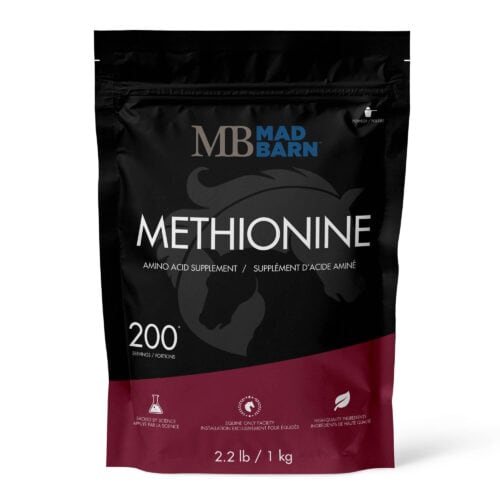
Amino acids are small organic compounds that link together to form proteins, the structural and functional molecules that make up muscle tissue, enzymes, hormones, antibodies, and the keratin in hoof horn.
A diet balanced in essential amino acids supports muscle maintenance, post-exercise recovery, athletic performance, gut health, hoof growth, immune function, skin and coat quality, reproductive health, and sound growth and development.
Although most forages and commercial feeds meet a horse’s overall crude protein requirement, they often fall short on three key amino acids: lysine, methionine, and threonine. When even one is deficient, protein synthesis slows, muscle repair is compromised, and your horse’s health and performance can be affected.
Instead of correcting amino acid imbalances by simply increasing crude protein intake, targeted supplementation with limiting amino acids often provides more effective support for topline development, muscle growth, hoof integrity, and the demands of training and competition.
We offer several targeted options so you can correct amino acid imbalances and support your horse’s overall health. Each product is formulated by our nutritionists and veterinarians to support muscle growth, topline development, and exercise performance.
Ensuring your horse’s diet is appropriately balanced for limiting amino acids supports overall protein synthesis, muscle repair, tissue maintenance, and immune function. Below are some of the specific physiological roles impacted by lysine, methionine, and threonine.
To determine whether your horse's diet is supplying adequate amino acids or could benefit from supplementation, submit your horse's diet for a free evaluation by our qualified nutritionists and veterinarians.
Amino acids are the small nitrogen-containing compounds that join to form proteins. Horses use them to build and repair muscle, synthesize enzymes and hormones, support immune function, and create the keratin that makes up hair and hoof horn. Ten amino acids (including lysine, methionine, and threonine) are essential, meaning the horse cannot make them internally and must obtain them from the diet or supplements.
Each amino acid plays a specific role in the horse’s body, so the benefits of supplementation depend on which amino acid is provided and whether the horse's existing diet meets its needs. Some amino acids are primarily involved in building and repairing muscle, while others support immune function, maintain the gut lining, or contribute to the structure of hooves, skin, and connective tissue.
Although all amino acids are important, protein synthesis depends on having each of the essential amino acids available in the correct proportions. The amino acid present in the shortest supply relative to the horse’s requirement is known as the limiting amino acid. When one essential amino acid is deficient, it limits the body’s ability to form complete proteins, regardless of how much total protein is consumed.
Supplementing your horse’s diet with the specific amino acids that are most often limiting (typically lysine, methionine, and threonine) is the most effective way to improve protein synthesis and overall amino acid utilization. This supports muscle development, tissue repair, and other protein-dependent functions without needing to increase total crude protein intake.
These are the benefits commonly associated with supplementing the three limiting amino acids:
Horses fed a balanced diet that meets energy and crude protein requirements typically get enough of the other amino acids. In those cases, adding more of the other essential or non-essential amino acids (such as valine or arginine) is unlikely to provide additional benefit unless the horse has unusually high demands or an underlying medical condition.
A limiting amino acid is the essential amino acid present in the lowest proportion relative to the horse’s requirement. Once that amino acid is exhausted, protein synthesis slows or stops—even if the others are abundant—because the body cannot finish new protein chains without all required building blocks.
In most North American grass hays, lysine is first-limiting, followed by methionine and threonine. If any one of these falls below the horse’s daily requirement, muscle repair, hoof growth, and immune function become less efficient, even when total crude protein intake is adequate.
Signs of amino acid deficiency can vary depending on the horse’s age, workload, and overall health. Common indicators include a weak or underdeveloped topline, poor muscle tone, delayed recovery after exercise, brittle or slow-growing hooves, a dull or patchy coat, and reduced stamina. Horses may also have difficulty maintaining body condition despite adequate energy intake.
Horses typically require additional amino acids during periods of high demand, such as growth, lactation, heavy training, recovery from injury or illness, and during rehabilitation.
A forage analysis showing low lysine (usually below 0.3% of dry matter) or an imbalanced ratio of lysine, methionine, and threonine can indicate the need for supplementation. Even when total crude protein appears adequate, imbalances in these key amino acids can limit muscle development, hoof quality, and overall performance.
Horses require amino acids to build and maintain muscle, synthesize enzymes and hormones, support immune function, and repair tissues. The dietary requirement depends on factors like age, workload, reproductive status, and health condition.
While horses need all essential amino acids, lysine is the only one with an established requirement in the NRC (2007) guidelines. It is often used as a reference to estimate requirements for other amino acids. For example, horses in light work typically require around 4.3 grams of lysine per 100 kg of body weight per day.
Because most forages do not supply amino acids in ideal proportions, nutritionists often focus on the balance of the three most limiting: lysine, methionine, and threonine. The ideal ratio for supplementing these amino acids in equine diets is roughly 5:3:2 (lysine:methionine:threonine).
Accurately balancing amino acids in your horse’s feeding program starts with a free diet evaluation. Submit your horse’s current feeding plan online and one of our qualified equine nutritionists will help you identify any potential amino acid deficiencies or imbalances.
While feeding more crude protein increases total amino acid intake, it doesn’t guarantee that the horse is receiving the correct balance of essential amino acids, especially the three most likely to be limiting: lysine, methionine, and threonine.
Protein quality depends on its amino acid profile. For a protein source to be considered complete, it must provide all essential amino acids in the correct proportions. Many forages and common feedstuffs fall short in one or more key amino acids, making them incomplete sources.
If even one essential amino acid is deficient, the horse’s ability to build new protein (such as muscle or enzymes) is limited, and the remaining amino acids are wasted. This leads to excess nitrogen excretion without any added benefit to performance or condition.
Supplementing specific amino acids, particularly lysine, methionine, and threonine, allows you to correct deficiencies efficiently, without overfeeding crude protein or calories. This is why we formulated Three Amigos to provide an optimal 5:3:2 ratio of the limiting amino acids to support muscles and overall health.
Feeding excessive protein can lead to inefficient nitrogen use in the body. When amino acids are consumed in excess of what the horse can use for tissue synthesis, the surplus nitrogen is converted to urea and excreted in the urine. This increases the workload on the kidneys and can contribute to elevated water intake and ammonia accumulation in stalls.
While healthy horses can tolerate moderately high protein intakes, overfeeding protein is not without consequence, especially in hot weather or in horses with compromised kidney function. It's also an inefficient and expensive way to correct amino acid deficiencies, since crude protein sources may lack the specific essential amino acids the horse actually needs.
A better approach is to identify and supplement the limiting amino acids (typically lysine, methionine, and threonine) based on the horse’s forage analysis and physiological needs. This ensures efficient protein synthesis without overloading the system. This is why we formulated Three Amigos to provide an optimal 5:3:2 ratio of the limiting amino acids, supporting better outcomes than simply increasing protein intake in horses already meeting their crude protein requirement.
Amino acids are classified as either essential or non-essential based on whether the horse’s body can produce them internally.
Essential amino acids must be supplied in the diet because the horse cannot synthesize them on its own, or cannot produce them in sufficient quantities to meet demand. These include lysine, methionine, and threonine, which are often limiting in forage-based diets.
Non-essential amino acids can be made by the horse from other nutrients, so dietary intake is not strictly required under normal conditions.
Some amino acids are considered conditionally essential, meaning they are normally synthesized by the horse but may need to be supplied in the diet during periods of stress, illness, rapid growth, or intense exercise when the body's demand exceeds its ability to produce them.
For optimal protein synthesis, horses need all essential amino acids in the correct balance. If even one is deficient, the body cannot efficiently synthesize protein molecules to build muscle, enzymes, or hoof keratin, regardless of how many non-essential amino acids are available.
The best dietary sources of amino acids for horses are complete proteins. A complete protein provides all essential amino acids in the proportions required to support maintenance, growth, tissue repair, and overall health. Most forages and cereal grains are not considered complete proteins because they are deficient in one or more key amino acids, such as lysine or methionine.
Examples of more complete protein sources for horses include soybean meal, alfalfa, canola meal, whey protein, and casein. These ingredients have more favorable amino acid profiles and higher lysine content, so they are commonly used to complement low-quality protein in forage-based diets.
However, even diets that include high-quality protein sources may still require additional supplementation to meet the individual horse’s amino acid requirements. Targeted supplementation with essential amino acids, such as Three Amigos, helps achieve the correct balance without overfeeding crude protein.
The best dietary sources of amino acids for horses are complete proteins, which provide all essential amino acids in the correct proportions to support maintenance, growth, and repair. Most forages and cereal grains are not complete proteins, as they are low in key amino acids like lysine or methionine.
Examples of more complete protein sources include soybean meal, alfalfa, canola meal, whey protein, and casein. These ingredients have higher lysine content and are often used to balance forage-based diets.
Even high-quality proteins may not meet all requirements. Targeted supplementation with essential amino acids, such as Three Amigos, helps ensure proper balance without overfeeding crude protein.
Pure amino acid supplements provide nutrients naturally found in the horse’s diet. They are not on FEI or racing prohibited substance lists and are considered safe when used as directed.
As with any supplement, follow label instructions and consult your veterinarian or nutritionist, especially if your horse is on medication or competing under anti-doping rules.
All-In-One Vitamin & Mineral Pellet

Advanced Gut Health Supplement

DHA-Enriched Fat Supplement
All-In-One Vitamin & Mineral Pellet

All-In-One Vitamin & Mineral Powder

Enhanced Vitamin & Mineral Pellet
Advanced Gut Health Supplement

Probiotic & Prebiotic Supplement

High-Potency 5-Strain Probiotic
All-In-One Vitamin & Mineral Pellet
Enhanced Vitamin & Mineral Pellet

Hoof, Skin & Coat Support
DHA-Enriched Fat Supplement
All-In-One Vitamin & Mineral Pellet

Organic Trace Mineral Blend
Enhanced Vitamin & Mineral Pellet

Mood & Hormone Support

Metabolic Health Formula
Mood & Hormone Support

Muscles & Nerve Support
Advanced Gut Health Supplement
Advanced Gut Health Supplement

Respiratory & Performance Supplement
Essential Amino Acid Blend
Essential Amino Acid Blend
Muscles & Nerve Support
Performance & Muscle Support
Respiratory & Performance Supplement
DHA-Enriched Fat Supplement

Immune & Respiratory Support



What's your top priority with your horse's health?
