Copper is an essential trace mineral that plays a key role in maintaining healthy hooves, joints, connective tissues, bones and nerves in horses. Mad Barn’s organic copper powder is a highly bioavailable supplement that is especially beneficial for horses consuming high-iron forages or those experiencing sun-bleaching and dull coat color.
Supports healthy skin and coat quality in horses
Helps maintain immune function and antioxidant defenses
Involved in collagen and elastin formation for joint health
Excellent value and convenience for daily supplementation
Great, palatable copper supplement for picky eaters! And Mad Barn service is also great--excellent prices, rapid order fulfillment and shipping.
Marilee Lawrence
Verified Customer
Very palatable (unlike some other products!) My donkey gets 1/2 tsp. Daily and she’s actually eating it!
Cynthia Minden
Verified Customer
Excellent product. Bringing back the pigment to my horses body
Melissa Gilliland
Verified Customer
Her coat all over is also much softer and silkier. She only gets a tiny amount of copper twice a day, top-dressed on her food.
Leta Worthington
Verified Customer
Amazing customer service and product! Horses look great!
Jennifer Thorson
Verified Customer
Every contact with Mad Barn over the years I’ve bought their products has been exceptional.
Amy Van Court
Verified Customer
Appreciate the individual supplements with no added ingredients, easy dosing instructions and help from their nutritionists.
Ana Larsen
Verified Customer
The customer service of this company is unmatched and their products are reasonably priced and high quality.
Morgan Bourque
Verified Customer
Copper is so important.... My chestnut mares coat seems more even and less flaky likely due to copper for anti parasite action.
Lucy Barrett
Verified Customer
We stand behind our products to provide the best nutrition for your horse. No fillers, just research-backed ingredients. If your horse doesn't love this product, our Customer Happiness team is here to help or give you a refund guaranteed.
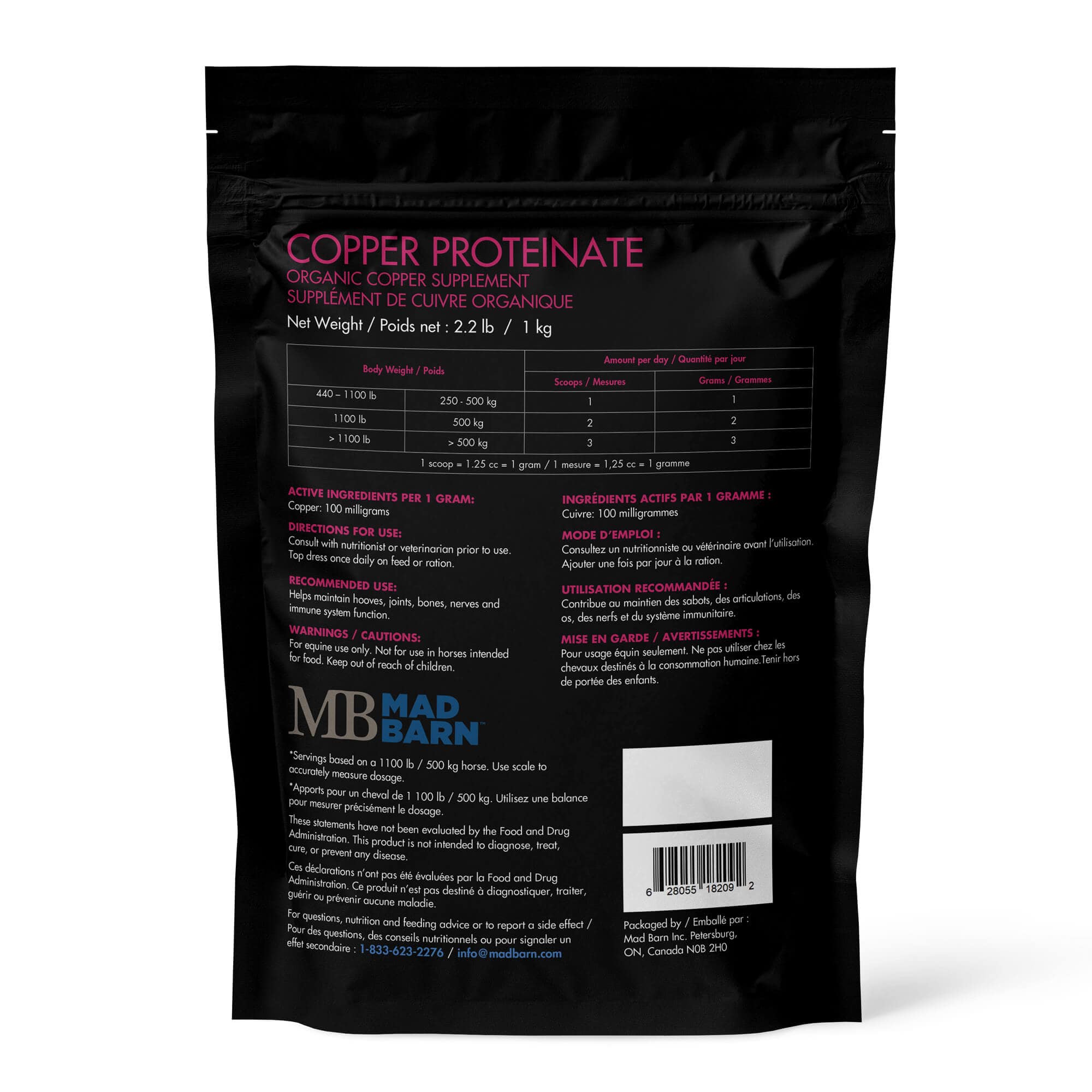
Copper Proteinate
Copper is an essential trace mineral involved in multiple enzymatic processes that support connective tissue formation, antioxidant defense, and energy metabolism. It is a cofactor for lysyl oxidase, an enzyme required for cross-linking collagen and elastin, helping maintain strong tendons, ligaments, and bone matrix integrity. Copper also contributes to melanin synthesis for normal coat pigmentation and supports red blood cell formation through iron metabolism.
In horses, adequate copper status is associated with joint soundness, tissue repair, and optimal hoof and coat condition. Copper also plays a role in antioxidant defense as part of superoxide dismutase, an enzyme that helps neutralize free radicals generated during exercise or stress.
Organic forms such as copper proteinate are more bioavailable than inorganic sources like copper sulfate or oxide, allowing for more efficient absorption and utilization. Supplementing with organic copper helps maintain normal copper levels in horses consuming forages grown in low-copper soils or diets high in competing minerals such as zinc, iron, or manganese.
The feeding rate for Copper varies depending on your horse’s condition and current diet. This product should be used under the supervision of a veterinarian or other qualified equine health professional.
A scale should be used with all individual ingredients to ensure accurate dosing.
For equine use only. Not for use in horses intended for food. Keep out of reach of children.
GUARANTEED ANALYSIS: Per gram serving
Nutrient
Concentration
Per 2 g
Copper (Cu)
100,000 mg/kg
200
mg
Ingredients: Copper Proteinate
Recommended Use: Helps maintain hooves, joints, bones, nerves and immune system function.
Register & manufactured by: Mad Barn Inc., Petersburg, ON, Canada.
Disclaimer: These statements have not been evaluated by Health Canada or the FDA. This product is not intended to diagnose, treat, cure or prevent any disease.
1 kg (2.2 lb): SKU 628055182092
Cost Calculator
Metric (kg)
Imperial (lb)
kg
grams
* Recommended serving size of 0.4 grams per 100 kg (220 lb) of body weight
Servings
Cost Per Day
Disclaimer: Recommended feeding rate varies depending on your horse's condition and current diet. Consult with a nutritionist to determine the appropriate inclusion rate for your horse.
Frequently Asked Questions
Copper is an essential trace mineral involved in numerous physiological processes in the horse’s body, including building and maintaining connective tissue, red blood cell formation, antioxidant defense, pigmentation, and immune function. Adequate copper levels are especially important in growing horses, pregnant mares, and those recovering from injury or illness.
Deficiency may contribute to dull coat color, poor hoof quality, reduced fertility, joint problems or developmental orthopedic issues in foals. Supplementing copper can help prevent deficiency and ensure balanced mineral ratios in the diet, particularly in forages that are high in iron, which can interfere with copper absorption.
Signs of copper deficiency may include a dull or sun-bleached coat, poor hoof quality, slow wound healing, weak tendons or ligaments, anemia, or developmental orthopedic issues in foals. Some horses may also show reduced immune function. However, because these signs are nonspecific, the best way to detect copper deficiency is through forage testing and diet analysis.
The best way to determine if your horse needs additional copper is to evaluate the diet through a full ration analysis and, if available, forage testing. Horses on high-iron diets or with unbalanced trace mineral intake are often at risk of copper deficiency. Signs of deficiency may not appear until imbalances become chronic, so proactive diet balancing is the most effective strategy. If your horse is already on a complete vitamin and mineral supplement, such as Omneity or AminoTrace+, they are already getting enough copper in their diet and only need additional supplementation if addressing a specific medical condition or balancing high iron levels in hay.
Organic copper supplements, such as Mad Barn’s Copper Proteinate, use chelated forms of this trace mineral that are bound to amino acids. This improves stability and enhances absorption in the gastrointestinal tract compared to inorganic forms like copper sulfate or copper oxide.
Organic forms are less likely to interact with other minerals in the digestive tract and are typically more bioavailable, meaning the horse can absorb and utilize more of the copper per dose. For horses with high iron intake or poor coat quality, organic copper is preferred by nutritionists to correct dietary imbalances.
The recommended copper-to-zinc ratio in equine diets is typically between 1:3 and 1:5. Mad Barn’s 3:1 Zinc Copper supplement provides these minerals in a 3:1 ratio, ideal for balancing high-iron forages or correcting common trace mineral imbalances. In contrast, our pure Copper Proteinate supplement is best used for horses that specifically need more copper in their diet to balance zinc. An unbalanced zinc-to-copper ratio can interfere with absorption and increase the risk of issues over time. Submit your horse’s information online for a free diet evaluation and work with our equine nutritionists to ensure your horse’s diet is properly balanced for trace minerals.
Yes, copper is safe and required by horses when fed in appropriate amounts. This trace mineral plays important roles in maintaining coat pigmentation, connective tissue, immune function, and antioxidant defense. However, like all trace minerals, copper can become toxic if overfed consistently over time.
The National Research Council (NRC, 2007) lists the tolerable upper intake level for copper in horses at 250 mg/kg of diet dry matter, which is equivalent to 2.5 grams for a typical adult horse. This is significantly higher than the amounts found in supplements. For example, a typical serving of Mad Barn’s Copper Proteinate supplement provides 200 mg of copper, which is 12.5 times less than the upper tolerable intake. Copper toxicity is rare but may occur with long-term oversupplementation or contamination of feed. Signs of excess copper intake can include liver damage, jaundice, poor appetite, weight loss, or lethargy.
The risk of toxicity is lower when feeding organic copper (such as copper proteinate or copper amino acid complexes), which is more efficiently absorbed and better regulated in the body than inorganic forms. Mad Barn’s copper proteinate supplement is formulated to deliver safe, effective doses well below the thresholds that could cause side effects. Always measure carefully and avoid free-choice feeding.
Single-ingredient copper supplements should only be used under the guidance of an equine nutritionist who has analyzed your horse’s diet and determined that additional copper is needed to properly balance mineral levels. The correct feeding rate will depend on your horse’s nutrient requirements, the specific copper content in your forage, total dietary intake, and the balance with other minerals like zinc and iron.
In most cases, it is better to feed a complete vitamin and mineral supplement that already provides a balanced profile of nutrients. This ensures that all of your horse’s vitamin and mineral requirements are met without risking imbalances. For example, Omneity contains organic copper as part of its comprehensive formulation, while AminoTrace+ provides higher levels of copper and is ideal for metabolic horses and to support hoof health.
Mad Barn’s Copper Proteinate powder contains 10% elemental copper, meaning each 2-gram serving provides 200 mg of copper. The recommended daily amount depends on your horse’s size, current diet, and individual needs. For context, the NRC (2007) recommends a minimum intake of 100 mg of copper per day for a 500 kg horse at maintenance to prevent deficiency. However, optimal intake may be higher depending on factors like workload, age, and dietary imbalances, particularly high iron or zinc, which can interfere with copper absorption.
If you’re unsure how much copper your horse needs, submit a free diet evaluation and our nutrition team can help you assess copper levels and balance your horse’s mineral profile.
Yes. This product uses a highly bioavailable chelated form of copper for maximum absorption and effectiveness. Chelated copper is bound to amino acids, improving stability in the digestive tract and uptake in the small intestine. Inorganic forms such as copper sulfate are less efficient and more reactive, sometimes interfering with the absorption of other nutrients. Chelated copper helps ensure your horse receives the full benefit of supplementation.
No, this is a pure copper supplement and does not contain zinc. If you’re looking for a balanced source of both copper and zinc, we recommend our 3:1 Zinc Copper supplement. Both products use organic chelated minerals in the form of amino acid proteinates for optimal absorption and bioavailability.
Yes, copper and zinc should be supplemented together to maintain the correct balance in your horse’s diet. Feeding copper without zinc can create imbalances, as these two minerals interact closely in the body. If both are needed, we recommend Mad Barn’s 3:1 Zinc Copper, which is specifically formulated to provide these trace minerals in the proper ratio. Always add individual minerals under the guidance of a qualified nutritionist.
Yes, Mad Barn’s Copper Proteinate is safe for use in pregnant and lactating mares. Copper is an essential trace mineral involved in fetal development, bone strength, connective tissue formation, reproduction, milk production, and maternal immune function. This product can also support coat quality and help meet daily copper requirements during all stages of breeding. It should be fed as part of a balanced diet that supplies all essential vitamins, minerals, and amino acids. For specific feeding recommendations, consult your veterinarian or submit a free diet evaluation with our equine nutritionists.
Yes, Copper is safe for horses with Cushing’s (PPID), insulin resistance (IR), EMS, or laminitis. This supplement contains only copper with no sugars or fillers, making it suitable for metabolic horses.
Yes, there are no known interactions between copper and common equine medications.
Yes. Copper is competition-legal and contains no prohibited substances, making it safe for performance horses across all disciplines. Regulations may change, so always confirm with your sport’s governing organization.
Yes, Mad Barn’s pure copper proteinate powder is palatable for horses. Many customers say their horse preferred the taste of this product better compared to other copper supplements. Mad Barn also offers a 100% Customer Happiness Guarantee to ensure your horse loves our product. Keep in mind that horses can be sensitive to changes in flavor or texture in their feed, and some picky eaters may take time to accept the addition of copper. To improve palatability, start with a small dose and gradually increase to the recommended amount. You can also mix the copper powder with soaked feed or a palatable carrier. For additional tips, read our article on How to Introduce a New Supplement to Your Horse.
Mad Barn’s copper proteinate can be safely used in horses, goats, and other livestock species that require additional copper. However, it should not be fed to sheep, as they are highly sensitive to copper and can develop toxicity at low intake levels. Always consult a veterinarian or livestock nutritionist to determine appropriate dosing for non-equine species.
Copper can be top-dressed on feed or mixed into soaked hay pellets, beet pulp, or grains. It can be fed dry or soaked, depending on your horse’s routine. For best results, it should be fed as part of a balanced diet that supplies all essential vitamins, minerals, and amino acids.
Mad Barn’s Copper Proteinate is provided in powdered form for easy mixing. Each container includes a 1 gram scoop for convenient measuring.
No, copper supplements should not be offered free-choice. Horses can overconsume trace minerals if not properly measured, which may lead to toxicity. The typical feeding rate for a 500 kg horse is 3 – 6 grams per day. Always use the provided scoop or a gram scale to accurately measure the dose.
There are no fillers in Mad Barn’s Copper Proteinate supplement. All copper sources used in animal nutrition consist of elemental copper bound to another compound to improve stability and absorption. Our product uses a high-quality organic copper proteinate, which is copper bound to an amino acid complex. This is considered one of the most bioavailable forms of copper for horses. This product does not contain yeast, distillers dried grains, or any other fillers or carriers.
Bloodwork isn’t a reliable measure of copper or zinc status because most of these minerals are stored in tissues like the liver, bones, and muscle. If your horse’s diet is already balanced and includes adequate copper, additional supplementation may not be necessary. However, if your horse’s bloodwork continues to show low copper levels or other signs of copper deficiency are present, we recommend discussing the results with your veterinarian or submitting a free diet evaluation with our equine nutritionists so we can assess her full nutritional profile.
Copper has a guaranteed shelf life of two years from the date of manufacture, which is printed on the label. Store sealed in a cool, dry environment to maintain potency.
Ask A Question
Have a question about this product? Ask below and our nutritionists will be happy to assist.
Copper Supports:
Hoof Strength and Growth
Joints and Connective Tissue
Coat Quality and Skin Health
Metabolic Health
Antioxidant Status
Mineral Balance
Immune Function
Intense Exercise
Resistance to Stress
Overall Well-Being
Mad Barn’s bulk Copper powder is a mineral supplement used to help horses maintain healthy collagen and elastin bonds in connective tissue. It is also used to help offset high iron levels in the equine diet.
This supplement contains organic Copper, which is a highly absorbable form of the trace mineral providing 10% elemental copper per serving. The active ingredient is copper proteinate, which is a chelated form of this mineral complexed with an amino acid (or bound to a protein molecule). It has a higher bioavailability compared to copper sulfate.
Copper is essential for enzymes that produce melanin pigments that determine coat colour. Changes in your horse’s skin and coat condition may be signs of copper deficiency. For example, bays and chestnuts may look washed-out or sun-bleached. Changes in coat colour may also indicate zinc deficiency.
Copper deficiency could also put horses at higher risk for rain scald – also known as rain rot or mud fever. This skin condition occurs in humid conditions that allow bacteria that normally reside on the horse’s skin to multiply and irritate the hair and skin causing scabs. Adequate copper levels support equine immune health to help protect against rain rot.
Anemia in horses may also be a sign of copper deficiency. This is often thought of as an iron deficiency, but iron is usually high in horses’ diets. When horses are copper deficient, they are low in enzymes responsible for mobilizing iron stored in the body to make red blood cells resulting in anemia.
Copper is important for horses with allergies because it helps lower histamine levels to help modulate allergic responses.
Forages such as hay are generally low in copper, therefore forage-only diets are likely to require supplemental copper. Commercial mineral/vitamin premixes such as Mad Barn’s Omneity contain enough copper to meet your horses’ daily copper requirement.
Balanced diets require careful consideration of copper and zinc levels. Zinc should be provided at three- to five- times higher levels than copper.
Consult your veterinarian for assessment of copper or zinc deficiency. You should always consult a qualified nutritionist before altering your feed program. Submit your horse’s diet for analysis online and one of our equine nutritionists will be happy to provide a complementary review.
Is Your Horse's Diet Missing Anything?
Identify gaps in your horse's nutrition program to optimize their well-being.


 English



 3:1 Zinc Copper
  AminoTrace+
  Copper
  Omneity® Pellets
  Omneity® Premix
  Trace Mineral Pak
  Hoof Strength and Growth
 Joints and Connective Tissue
 Coat Quality and Skin Health
 Metabolic Health
 Antioxidant Status
 Mineral Balance
 Immune Function
 Intense Exercise
 Resistance to Stress
 Overall Well-Being



















