English




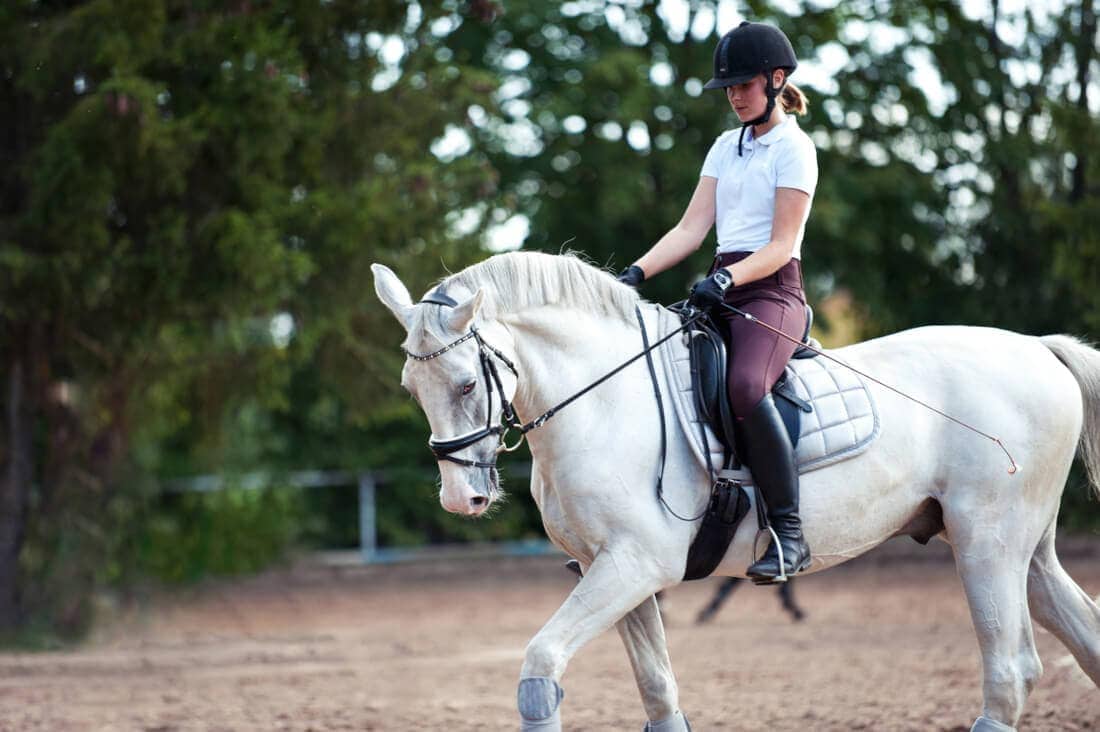
Riding involves more than just passively sitting on a horse — it’s a partnership that relies on clear communication and mutual understanding. Rider’s aids are the tools we use to convey our intentions to the horse, guiding their movements and building trust.
These aids are fundamental to all equestrian disciplines, from dressage to show jumping, trail riding, and more. Whether it’s a subtle shift of weight or a precise rein cue, each aid must be applied with nuance and timing to resonate effectively with the horse.
As riders learn to read and respond to the horse’s feedback, they refine their cues, deepening mutual trust with their equine partner. Understanding and mastering rider aids allow us to create a harmonious connection, ensuring effective and compassionate training.
By selecting the most appropriate aids for your horse’s level of training and your own riding abilities, you can ensure you and your horse have a positive riding experience. Read on to learn more about the types of rider aids, their applications, and how to achieve precision and harmony in using them.
Rider Aids & Learning in Horses
Rider’s aids are the primary means of communication between horse and rider. These aids are the cues or signals riders use to influence the horse’s movement, posture, and behavior — enabling everything from basic movements to advanced maneuvers.
Both natural and artificial riding aids allow riders to guide their horses with precision:
- Natural aids, such as the seat, legs, hands, and voice, are part of the rider’s body and used to influence the horse’s movement, balance, and rhythm.
- Artificial aids, like the bit, spurs, and whips, are tools that reinforce natural aids. When used correctly, they should enhance communication without causing confusion or fear.
For aids to be effective, riders need to understand how horses learn and process information. Horses rely on clear, consistent signals, and their responses are shaped by: [1][2]
- Conditioning: A learning process in which a horse forms an association between a rider’s cue and an outcome, such as pairing leg pressure with forward movement, so that over time the horse responds reliably with minimal prompting.
- Habituation: The gradual decrease in a horse’s reaction to a repeated, non‐threatening stimulus. For example, a horse may become habituated to the sound of a loud tractor driving by at the same time every day.
- Sensitization: An increased responsiveness following exposure to a strong or aversive stimulus.
Each horse is unique, with their learning shaped by temperament, age, past experiences, and the quality of training they have received. A sensitive horse might respond to the lightest touch, while another may require more distinct cues to understand the rider’s intention. [1][2]
Misaligned or conflicting signals can lead to confusion, frustration, resistance or conflict behaviors, emphasizing the importance of delivering aids thoughtfully and harmoniously. [1][2]
Effective use of rider’s aids requires a deep understanding of the horse’s responses. This involves consistently applying aids with precise timing and appropriately reinforcing desired behaviors to create a clear and compassionate connection.
What's your top priority with your horse's health?

What's your top priority with your horse's health?
Natural vs. Artificial Aids
Communication with horses relies on two main types of aids: natural and artificial. Natural aids are the foundation, consisting of the rider’s body parts. These aids require skill, balance, and coordination to deliver clear signals to the horse. [1][3][4]
Artificial aids complement natural aids and should be used responsibly to enhance communication without causing harm. [1][3][4]
Natural Aids
Natural aids are the rider’s primary means of communication with the horse. These aids are subtle, requiring finesse and control. When used effectively, natural aids allow the rider to guide the horse with gentle precision.
Legs
The rider’s legs play a crucial role in driving forward motion (i.e. creating impulsion) and assisting with lateral movements. Riders change leg positions depending on the movement or command being communicated. [1]
Proper positioning ensures clarity in communication, while subtlety prevents overuse. A rider who applies excessive or constant pressure risks habituating the horse to leg pressure, making them less responsive to leg aids over time. [1]
Effective use of the legs requires the rider to maintain balance, avoid clenching, and use varying degrees of pressure appropriate to the horse’s sensitivity and level of training. Types of leg aids include: [1]
- Forward-driving leg aids: Encourage forward movement
- Forward-lateral driving leg aids: Used in lateral movements.
- Guarding leg aids: Prevent the horse’s hindquarters from swaying
Seat (Rider Body Weight)
The seat is one of the most sophisticated and fundamental rider aids in horseback riding. It encompasses the rider’s hips, pelvis, and thighs and plays a critical role in balancing the horse, regulating pace, and executing transitions.
For instance, the seat can act as a restraining aid, where stopping movement of the hips signals the horse to slow down or halt. The seat can also encourage forward movement when the rider engages their core and tilts slightly forward. [1]
The seat’s effectiveness stems from its connection to the rider’s center of gravity, located just above the pelvis. By shifting this center of gravity, the rider can influence the horse’s balance and speed. A slight backward tilt of the pelvis signals the horse to slow down, while a neutral seat absorbs motion without interfering, maintaining harmony. [1]
Mastering the use of the seat requires the rider to stay supple, relaxed, and balanced, ensuring their movements align with the horse’s rhythm. It’s also recommended for riders to maintain a neutral position during moments of rest to avoid inadvertently sending mixed signals.
Types of seat aids vary in relation to how the rider places their weight. There are three seat positions used as aids in horseback riding: [1][3][5]
- Weight placed on both seat bones: this type of pressure is generally used during transitions from one gait to another. Additionally, when combined with a tilt of the pelvis, this position can signal to the horse to halt or slow down.
- Weight placed on one seat bone: this aid is used during lateral turns and movements. When placing weight on one seat bone, it is important to coordinate with other aids.
- Relieving weight aid (light seat): this is used to lighten pressure on the horse’s back, particularly during forward movements or when training young horses.
Hands (Reins)
The rider’s hands communicate with the horse through the reins, primarily influencing the horse’s head, neck and shoulders. This kind of aid should always be used in combination with leg and seat aids. They are used for steering, slowing, and stopping the horse, serving as a yielding, asking, and retaining aid. [1]
The use of rein aids requires the rider to maintain soft and steady contact with the reins, avoiding abrupt or harsh movements that could cause discomfort, pain, confusion or resistance. Skilled rein use demands mindfulness and strength, as the hands should be independent of the seat. [1]
Voice
The voice is an effective natural aid often overlooked by riders. Horses respond to verbal cues, soothing tones to calm anxiety, and encouragement during challenging exercises. The voice is especially helpful in groundwork, and in situations where physical aids are limited. Consistency in tone and word choice enhances understanding, allowing the horse to associate specific sounds with particular actions. [1]
When using voice cues, it is important to remember that these are not inherently meaningful to the horse without prior conditioning. Vocal cues to speed up and slow down should be intentionally paired with other physical aids like seat, rein or leg cues. Eventually this will help the horse associate the vocal cue with the desired response. [1]
Verbal rewards should first be paired with positive experiences like food rewards or wither scratches to help the horse understand your intentions. Once the association has been created, these verbal rewards can be used under saddle or during training. [1]
Riders should be mindful of being consistent in the way cues are delivered and not overuse the voice, as excessive or inconsistent verbal cues may confuse the horse. [1]
Artificial Aids
Artificial aids, when used correctly, can complement natural aids and provide greater precision in communication with a horse. However, riders must ensure these tools are employed responsibly, with a focus on enhancing the horse’s understanding rather than causing discomfort or harm.
Misuse or over-reliance on artificial aids can not only harm the horse physically but also undermine the trust and partnership that effective riding seeks to establish, causing stress, fear and pain.
Bit & Reins
The bit, the most common artificial aid, connects the reins to the horse’s mouth and allows for precise communication. A properly used bit can gently convey signals to the horse about direction, speed, and frame. However, the welfare of the horse must remain a priority while using bits and bridles.
Soft, steady hands are essential to prevent discomfort or resistance, as abrupt or heavy rein movements can cause pain, injury, and behavioral issues. Inconsistent or confusing bit cues can habituate the horse to bit pressure, making them less responsive to light cues, which sets the stage for potential welfare issues. [1][6]
Additionally, a well-fitted bit is crucial. An ill-fitting bit can cause sores, pinching, or long-term damage to the horse’s mouth and jaw. Bit design and mechanics also play a role in maintaining welfare for working horses. Selecting the right bit and using it with sensitivity ensures that it serves as a helpful communication tool rather than a source of distress. [1][6]
Spurs
Spurs, worn on the rider’s boots, are designed to refine leg aids and provide subtle precision in movements. However, spurs are not a substitute for proper training and should not be used to force compliance from the horse. Spurs require a delicate touch to enhance, not overpower, the communication between horse and rider.
Overuse or misuse can cause pain and fear, damaging the horse’s confidence and willingness to respond. Equestrian organizations often regulate the type and length of spurs allowed in competitions to ensure their use remains ethical and humane. [7]
Riders must remember that spurs are a tool to clarify cues, not a shortcut or punishment. Spurs should only be worn by riders with a controlled, independent leg who can control when, how and where the spur is applied. [1][8]
Whip
The whip is used to strengthen the horse’s response to a leg or voice command and should always be used sparingly and thoughtfully.
Ethical guidelines exist to ensure whip use in competition is fair to the horse, emphasizing light, purposeful use rather than force or as a response to frustration or anger. Such guidelines often dictate where the whip can be used on the horse, how strongly it can be used, and how many times. [7]
However, riders should always be mindful of the fact that even light whip use is based on the principles of positive punishment, which may result in stress, fear, confusion or pain. [1][9]
Riders who choose to use a whip should always use the lightest application possible, and ensure that its use is timed correctly so that the horse understands what the rider is communicating.

Combining Aids
The effectiveness of natural and artificial aids lies in the rider’s ability to combine them seamlessly. Each aid supports the others, creating a unified message for the horse. Combining aids effectively requires the rider to develop an independent seat and hands, ensuring one aid does not inadvertently contradict another.
Developing independent and harmonious use of natural aids requires practice, patience, balance, strength and a deep understanding of the horse’s responses.
Effective combinations often involve layering aids to guide the horse toward the correct response: a soft leg aid may prompt forward intent, reinforced by a gentle opening of the hands to maintain rhythm, while a slight shift in seat encourages balance.
Riders should practice drills that isolate two aids at a time, such as leg-to-hand transitions, so they learn to apply and release each cue without overlapping signals. Over time, these drills foster muscle memory and sharpen the rider’s feel, allowing more complex aid sequences to flow naturally and consistently.
Contradicting Aid Cues
Clear, consistent signals help the horse interpret the rider’s intentions without hesitation, fostering trust and understanding. Since timing and coordination are critical in this process, if one aid contradicts another, the horse may become confused, frustrated, or resistant. [1]
When rider aids conflict, the horse receives mixed signals. For example, pulling back on the reins while simultaneously driving forward with the legs can cause the horse to brace or express conflict behavior, while unsteady or overly active hands may disrupt the horse’s rhythm. Such clashes not only impede communication but can also erode the horse’s responses to training cues.
Avoiding these conflicts requires careful attention to the rider’s coordination and body awareness. Independent control of the seat, hands, and legs is critical to ensure each aid complements the others.
Consistency in signals is equally important; erratic or contradictory cues confuse the horse, potentially diminishing responsiveness. Riders must focus on delivering clear, intentional messages that the horse can understand and respond to, fostering a smooth, effective partnership. [1]
It’s important for riders and trainers to remember that a horse’s breed, temperament, and training history can all influence their sensitivity to aids. Riders must adjust their pressure along a spectrum, from light touches for responsive horses to firmer aids for less sensitive ones.
Overuse of forceful cues can desensitize the horse. On the other hand, underuse of light aids may lead to unclear communication.
Riders should always strive to use the lightest pressure possible to effectively generate a response, and release pressure immediately when the horse responds correctly. Keeping timing precise helps maintain the horse’s sensitivity to aids, allowing for rider consistency.
Equine Feedback & Rider Aids
A skilled rider understands that communication with a horse is a two-way process. While aids are used to give instructions, it is equally important for the rider to respond to the horse and adjust techniques based on the animal’s feedback.
A horse’s response to rider cues may vary depending on different factors. For example, if a horse hesitates or resists a certain movement, it may indicate:
- Confusion
- Discomfort
- Physical inability
By observing these responses closely, the rider can identify whether the aids were too strong, poorly timed, or unclear.
Adjusting techniques involves refining the delivery of aids to suit the horse’s sensitivity and level of training. A young or inexperienced horse may require a more gradual introduction to certain cues compared to a seasoned competitor who already understands such a request.
Additionally, factors like fatigue, state of mind, or environmental distractions can influence how a horse reacts to cues and aids. Ultimately, paying attention to signals from the horse ensures the partnership remains respectful and effective, emphasizing equine welfare while achieving better communication and performance.
Frequently Asked Questions
Rider's aids are the tools or cues used by a rider to communicate with a horse. They include both natural aids, such as the rider's seat, legs, hands, and voice, as well as artificial aids like bits, spurs, and whips. These aids are essential for guiding the horse's movements, encouraging responsiveness, and building trust.
Natural aids are the primary means of communication between horse and rider. These aids include the rider's legs, seat, hands, and voice, and they require skill, balance, and coordination to be used effectively.
To avoid confusing the horse, a rider must ensure that their aids are clear, consistent, and well-coordinated. Conflicting aids, such as pulling on the reins while simultaneously applying strong leg pressure, can create confusion and lead to frustration or resistance in the horse. Developing an independent seat, hands, and legs is crucial to delivering precise signals without inadvertently contradicting each other. Riders should also focus on timing, applying aids at the right moment to achieve the desired response. Regular practice, feedback from a trainer, and understanding the horse’s responses can help refine aid application and minimize misunderstandings.
Summary
Rider’s aids form the foundation of communication with horses, enabling us to guide, encourage, and connect with these remarkable animals.
- Natural aids include the rider's seat, legs, hands and voice.
- Artificial aids include bits, reins, spurs, and whips.
- Mastering natural and artificial aids requires patience, skill, and empathy.
- Clear, consistent, and compassionate use of rider's aids is the key to unlocking a horse’s potential while ensuring their welfare and well-being.
References
- Federation. G. N. E., The Principles of Riding: Basic Training for Horse and Rider. Quiller, La Vergne. 2017.
- Waran. N. et al., Training Methods and Horse Welfare. The Welfare of Horses. Springer Netherlands, Dordrecht. 2002.
- Micklem. W., Complete Horse Riding Manual. London : Dorling Kindersley. 2003.
- Goodnight, J., Horseback Riding Basics: Using Your Aids. AQHA. 2018.
- HIGGINS. G., POSTURE AND PERFORMANCE: PRINCIPLES OF TRAINING HORSES FROM THE ANATOMICAL PERPECTIVE. Quiller, La Vergne. 2015.
- Society. B. H., BHS Complete Horsemanship Volume 4. Quiller, La Vergne. 2019.
- FEI Tack, Equipment & Dress. FEI. 2025.
- FEI Code of Conduct for the Welfare of the Horse.Pdf.
- McGreevy. P. et al., Equitation Science. 2nd ed. John Wiley & Sons Ltd., Chichester, West Sussex, UK. 2018.