English




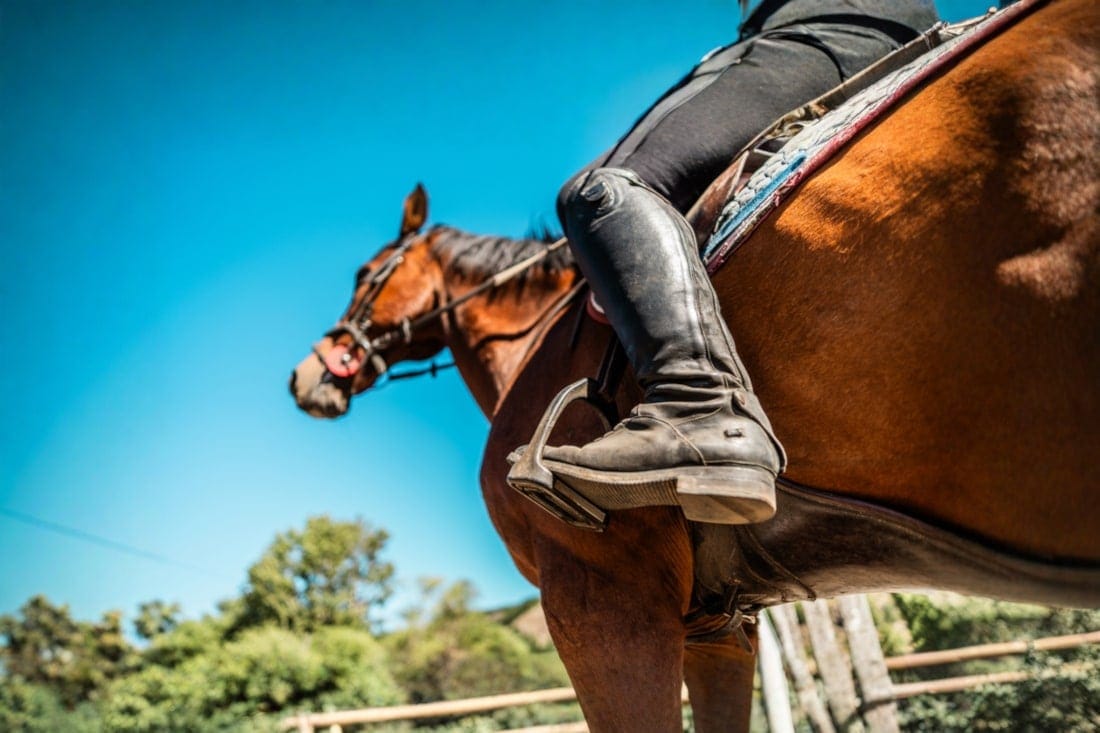
Stirrups are an important yet often underappreciated part of horse tack. These simple loops or frames attached to the saddle provide riders with stability, balance, and control while mounted.
By anchoring the rider’s legs, stirrups form a functional link between horse and rider, allowing for more precise cues, improved posture, and greater security at all gaits.
Stirrups have shaped both riding technique and saddle design throughout history. Their invention transformed not only everyday riding but also military tactics and equestrian sport. From early rope toe loops in Asia to today’s advanced safety and shock-absorbing designs, stirrups continue to evolve alongside our understanding of rider biomechanics and horse comfort.
Stirrups represent a key connection where rider safety, performance, and horse welfare come together. Understanding their history, function, and design can help you choose the most suitable style for your discipline and your horse’s needs.
Stirrups for Horseback Riding
Stirrups are U-shaped devices attached to each side of a saddle, designed to support the rider’s feet while mounted on a horse.
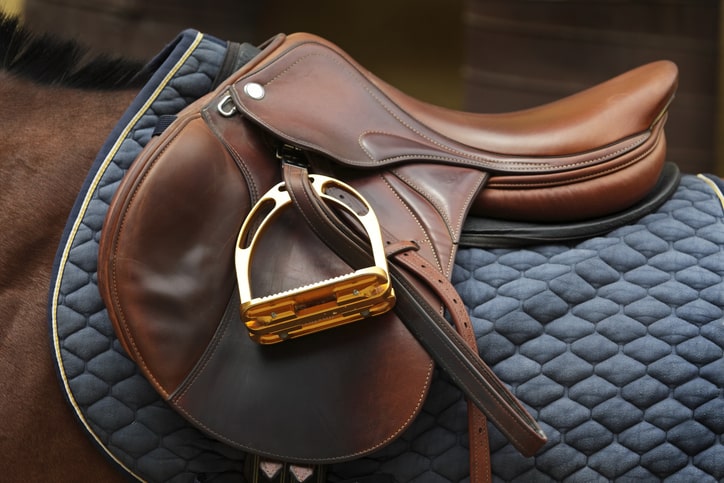
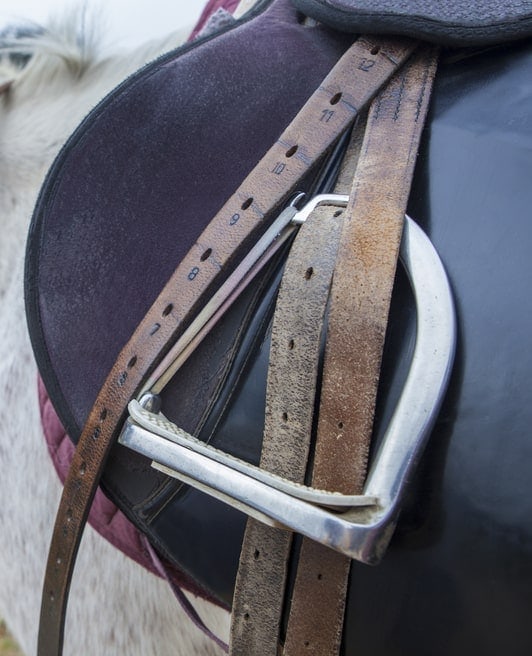
Typically made of metal, though sometimes crafted from synthetic materials or wood, they hang from straps called stirrup leathers (or stirrup latigos in Western saddles), which connect to the saddle tree. [1]
The primary purpose of stirrups is to provide a stable foothold, allowing the rider to maintain balance, absorb movement, and apply subtle cues to the horse through their legs.
They act as an extension of the rider’s body, enabling better control and security during riding. [2]
Each stirrup consists of a flat or slightly curved footrest, sometimes padded or covered with rubber for grip, framed by sides that prevent the foot from slipping through. The stirrup leathers are adjustable, allowing riders to set the length according to their height, riding style, and discipline. [3]
By distributing the rider’s weight more evenly and providing leverage for mounting and dismounting, stirrups are important for rider comfort and safety.
Without stirrups, also known as stirrup-free riding, maintaining stability on a moving horse is far more difficult, especially during fast gaits or jumps.
History of Stirrups
The stirrup, while simple in design, has significantly influenced how people ride and use horses. Its development shows how early civilizations adapted equipment to meet the practical and tactical needs of mounted travel and warfare.
Precursors of the Stirrup
Long before the modern stirrup, riders relied on basic foot supports to improve balance and control. In India around the 2nd century BCE, toe loops made of rope or leather that held the big toe were common, particularly in warm climates where riders went barefoot. [3][4]
By the 1st century CE, parts of Central and Southern Asia had developed hook stirrups, curved metal supports that hung from the saddle to hold the foot.
While these early designs offered some assistance, they lacked the symmetry and stability of the modern paired stirrup. [5]
The Rise of Paired Stirrups
Equestrian tack continued to evolve, eventually leading to the invention of paired stirrups. This design featured two matching supports suspended at equal lengths on either side of the saddle and became the foundation of modern stirrup design.
Paired stirrups were a huge improvement on early foot supports, allowing riders to anchor both legs evenly, maintain a centered seat, and apply more precise cues to the horse.
The earliest evidence of this innovation comes from China during the Jin dynasty in the 4th century CE, where archaeologists discovered a ceramic figurine depicting a rider with paired stirrups, dated to around 322 CE. [4]
By the 5th century, paired stirrups had become widespread in China, coinciding with the rise of heavily armored cavalry. This innovation provided mounted soldiers with greater stability and control, influencing both military tactics and saddle design.
Westward Spread
Paired stirrup technology spread westward across Central Asia, where nomadic groups such as the Huns and Avars quickly adopted its advantages. The Avars played a key role in introducing the stirrup to Europe during the 6th century, and the Byzantine Empire soon followed, as documented in contemporary military texts. [6][7]
By the 10th century, stirrups were firmly established in England, contributing to the rise of the mounted knight and transforming the tactics and effectiveness of European cavalry. [6]
What's your top priority with your horse's health?

Enter your email to receive your store credit
Benefits of Stirrups for Riders
Stirrups are more than footrests for riders. They provide a stable, consistent point of contact that improves the rider’s balance, posture, and control. This stability enhances rider comfort and effectiveness across all disciplines.
Equitation
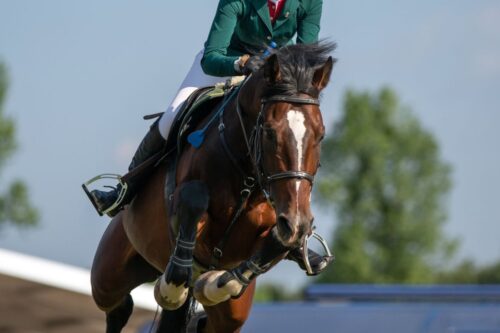
Stirrups provide equestrians with a secure foothold, particularly on uneven terrain or during rapid movement. By supporting both feet evenly, they help maintain a centered, symmetrical seat and enable precise leg aids, essential for effective riding across all disciplines. [8]
Riders can also use stirrup exercises to develop stability, confidence, and proper weight distribution. For example, the “stirrup-stand” is an effective training exercise where the rider stands in the stirrups while maintaining balance.
In this position, the legs act like springs, absorbing the horse’s movement and reducing forces on the horse’s back. This not only protects the horse but also reinforces the rider’s control and coordination. [9]
Complementary training without stirrups strengthens the rider’s core and seat, helping maintain balance even during sudden movements. Although no-stirrup work increases forces on the rider, it highlights how stirrups control vertical motion. [10]
Mounting & Dismounting
A single stirrup can serve as a step to assist with mounting a horse. Once in the saddle, a pair of stirrups becomes essential for foot support, reducing leg fatigue while providing stability during demanding tasks such as roping, jumping, or other high-intensity activities.
After riding, some equestrians also use the support of one stirrup to dismount, following the same movement as mounting, but in reverse.
Rider Performance
Stirrups help distribute the rider’s weight between the saddle and stirrups, counteracting gravity and providing balanced support.
This distribution allows the leg to relax and elongate, with the heel sinking naturally and the ankle remaining free, which promotes correct alignment of the ear, shoulder, hip, and heel. Proper alignment supports a deeper seat, better shock absorption, and more effective aids. [8][11][12]
Beyond static support, stirrups function dynamically, allowing the leg and hip to flex like a spring to absorb the horse’s motion. This improves hip mobility, enhances balance, and enables subtle, precise cues that refine communication with the horse.
Modern designs, such as Winderen stirrups with double shock absorbers, can further reduce muscle fatigue and improve overall stability. [13]
Types of Stirrups
Stirrups come in a wide range of styles tailored to various riding disciplines, safety needs, and personal preferences.
Standard Stirrups
Standard or traditional stirrups are the most common type, used across many disciplines and in everyday riding.
Styles of traditional stirrups include: [1][2]
- Iron or stainless steel: Simple metal loops that support the rider’s foot, used across both English and Western riding
- Fillis: Heavier design with a wide, squared rubber tread for extra stability, popular in dressage
- Prussian: Lightweight, rounded design suitable for general English riding
- Jointed or flex: Feature hinged or flexible branches to reduce strain on knees and ankles, ideal for riders with joint issues
Safety Stirrups
Safety stirrups have additional features designed to reduce the risk of the rider’s foot getting caught during a fall.
There are two main designs for safety stirrups: peacock and breakaway stirrups. [12][14][15]
Peacock Stirrups:
Also referred to as hook-and-loop, this stirrup design releases under pressure using a rubber band and hook.
Peacock stirrups are currently banned by the USEF and USPC due to reports of serious injuries, including cases where riders caught skin or clothing on the hook, sometimes resulting in surgery or permanent harm.
Breakaway Stirrups:
This design features a hinged side, flexible arm, or magnetic release mechanism that allows the rider’s foot to exit quickly under sudden pressure. Breakaway stirrups can help prevent dragging injuries while maintaining stability during riding.
Western Riding Stirrups
Like other elements of Western tack, Western-style stirrups are designed to maximize rider comfort for long hours of ranch work.
The two main styles of Western stirrups are traditional and tapaderos. [1][16]
Traditional Western Stirrups:
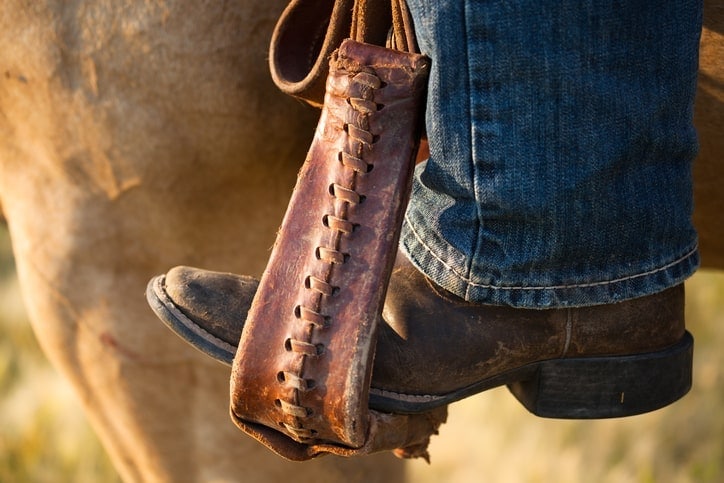
Traditional Western stirrups are typically wider and heavier than English-style stirrups, providing a solid platform for long hours of riding and ranch work. They are often made of wood wrapped in leather, offering both durability and comfort.
The wider base helps distribute the rider’s weight more evenly, which can reduce leg fatigue during extended rides.
Tapaderos:
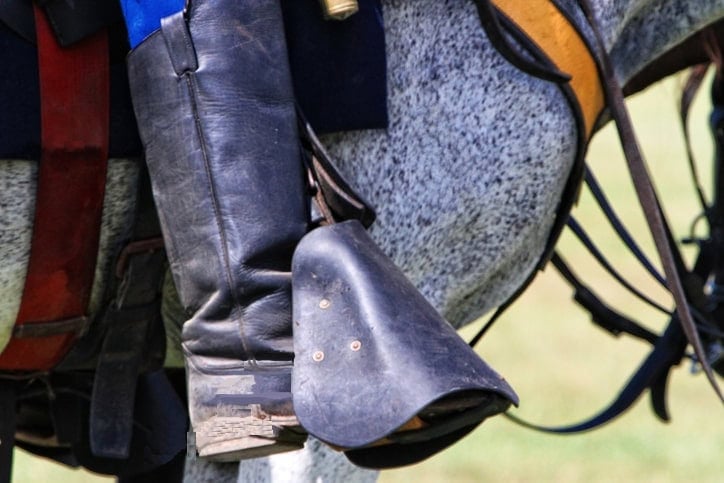
Also known as hooded stirrups, tapaderos feature a protective cover over the front. This design shields the rider’s foot from brush, debris, or accidental snagging, making them especially useful for trail riding, cattle work, and other outdoor disciplines.
Tapaderos also help prevent the foot from sliding through the stirrup during sudden movements, which can enhance rider safety.
Stirrups & Saddle Design
Stirrups are a key component of saddle design, influencing both rider comfort and horse performance. Their placement, length, and attachment method are carefully considered to optimize balance, stability, and communication through leg aids.
Design features for riders to consider when choosing a stirrup and saddle combination include: [1][11]
- Attachment points: Stirrups are typically suspended from stirrup bars located just behind the saddle flap. Proper positioning ensures the rider’s leg remains aligned with the horse’s side, supporting effective posture and control.
- Length adjustment: Adjustable stirrup leathers allow riders to customize the length for different disciplines, gaits, and rider leg lengths. Correct adjustment helps maintain proper alignment and reduces strain on the rider’s joints and muscles.
- Saddle shape: The distribution of weight through the stirrups interacts with the saddle panels and tree, affecting how the saddle sits on the horse’s back. Well-designed stirrup placement ensures even weight distribution, minimizing pressure points and enhancing horse comfort.
- Discipline-specific: Saddle types often dictate stirrup configuration. For example, jumping saddles feature forward-set stirrup bars to allow a shorter leg and two-point position, while dressage saddles have more vertical stirrup placement to encourage a long, straight leg.
The integration of stirrups into saddle design reflects a careful balance between rider biomechanics and horse welfare, ensuring stability, comfort, and efficient communication in every riding discipline.

Safety Considerations
While stirrups are a standard part of most riding disciplines, improper design, fit, or use can create serious safety risks. The most common hazard is a rider’s foot getting caught during a fall, which can result in dragging injuries where the rider is pulled along the ground by the horse.
Poorly maintained or ill-fitting tack, such as worn stirrup leathers, loose girths, or misaligned stirrup bars, can also increase the risk of accidents. [12][17][18]
A thorough pre-ride tack check is a simple way to reduce risk. Riders should confirm that stirrups and leathers are in good condition with intact stitching, the saddle is secure and correctly positioned, and the girth is tightened and rechecked after the horse has moved. [19]
Even when someone else has saddled the horse, the rider should always perform a final inspection to ensure everything is safe. [19]
Key safety practices for stirrups include: [12][20]
- Sizing: Allow 1–2 cm (½–¾ in) clearance on either side of the boot to reduce the chance of entrapment
- Tread and grip: Use non-slip treads for stability, but ensure they allow quick release in an emergency
- Foot position: Place the ball of the foot on the stirrup bar with the heel slightly down to improve balance and minimize sliding through
- Boot choice: Riding boots with a defined heel prevent the foot from slipping too far into the stirrup
Maintenance & Care
Because stirrups and leathers carry the rider’s full weight, even small defects can cause equipment failure. A consistent care routine helps keep them safe and functional. [20]
Routine maintenance for stirrups includes:
- Inspection: Regularly check metal for cracks, rust, or sharp edges; examine leathers for stretching or weak stitching
- Cleaning: Wipe off dirt and moisture after riding, scrub rubber treads if needed
- Leather conditioning: Clean and oil/condition stirrup leathers to prevent drying and cracking
- Replacing worn parts: Swap out damaged treads, leathers, or safety mechanisms promptly
- Storage: Keep tack dry and ventilated to avoid rust, mold, and premature wear
Frequently Asked Questions
Here are some frequently asked questions about stirrups for horseback riding:
Stirrups are part of equestrian tack. They provide a secure foothold for the rider, enhancing balance, stability, and control. They help distribute weight, support proper posture, and allow precise leg aids during riding.
Riding without stirrups strengthens the rider's core, improves seat stability, and enhances balance. It also helps the rider develop independent control over their weight and posture.
Saddles have stirrups to support the rider's feet, making mounting and dismounting easier, reducing fatigue, and improving stability during movement or high-intensity activities.
Stirrups attach to stirrup leathers (or latigos in Western saddles), which are connected to the saddle's stirrup bars. This allows adjustable length and proper positioning for rider comfort and biomechanics.
Summary
Stirrups provide stability, balance, and control, acting as an extension of the rider's body to promote safer and more effective riding.
- Stirrups have shaped the history of horseback riding and influenced saddle design across cultures
- They help support correct posture, absorb movement, assist with mounting and dismounting, and reduce fatigue for both horse and rider
- Different types of stirrups such as traditional, safety, and Western designs are suited to various disciplines and safety requirements
- Proper stirrup placement and adjustment influence rider biomechanics, weight distribution, and the horse's comfort
- Routine maintenance, correct sizing, and mindful use help prevent accidents and extend the lifespan of the equipment
References
- Horse Equipment Safety Tips. UK Ag Equine Programs. 2025.
- Stapley. E. D. et al. The Effect of Stirrup Iron Style on Normal Forces and Rider Position. Journal of Equine Veterinary Science. 2020.
- Hemming. J. Origins of the True Stirrup. Kwantlen Polytechnic University.
- Dien. A. E. The Stirrup and Its Effect on Chinese Military History. Ars Orientalis. 1986.
- Bakos. A. et al. MEDIEVAL TECHNOLOGIES: The Stirrup. Kwantlen Polytechnic University.
- Guilmartin. J. F. Military Technology - Cavalry, Warfare, Tactics. Britannica. 2024.
- Clayton. H. M. et al. Riders' Effects on Horses—Biomechanical Principles with Examples from the Literature. Animals. 2023.
- van Beek. F. E. et al. Stirrup Forces during Horse Riding: A Comparison between Sitting and Rising Trot. The Veterinary Journal. 2012.
- Bye. T. L. and Lewis. V. Saddle and Stirrup Forces of Equestrian Riders in Sitting Trot, Rising Trot, and Trot without Stirrups on a Riding Simulator. Brill. 2020.
- Ceroni. D. et al. The Importance of Proper Shoe Gear and Safety Stirrups in the Prevention of Equestrian Foot Injuries. The Journal of Foot and Ankle Surgery: Official Publication of the American College of Foot and Ankle Surgeons. 2007.
- Camargo. F. et al. Horse-Related Injuries: Causes, Preventability, and Where Educational Efforts Should Be Focused. Cogent Food & Agriculture. Cogent OA. 2018.
- Kulikowaska. M. et al. The Effects of Using a Specially Designed Stirrup on Kinetic Energy Absorption by the Knee Joint of 12 Show Jumping/Eventing Riders. Open Journal of Veterinary Medicine. 2023.
- Ikinger. C.-M. et al. Factors Influencing the Safety Behavior of German Equestrians: Attitudes towards Protective Equipment and Peer Behaviors. Animals. 2016.
- Eventing Rules. US Equestrian. 2025.
- Office. U. N. United States Pony Clubs Announces Safety Updates Related to Helmets, Stirrups, and Body Protection Vests. Pony Club Blog. 2024.
- Tinker. E. L. The Horsemen of the Americas. Hispanic American Historical Review. 1962.
- Elmeua González. M. and Šarabon. N. Effects of Saddle Tilt and Stirrup Length on the Kinetics of Horseback Riders. PeerJ. 2022.
- Altgärde. J. et al. Horse-Related Trauma in Children and Adults during a Two Year Period. Scandinavian Journal of Trauma, Resuscitation and Emergency Medicine. 2014.
- Moffitt. D. 4AF-05MA: Basic Horse Safety Manual. American Youth Horse Council. 1989.
- Jagodzinski. T. and DeMuri. G. P. Horse-Related Injuries in Children: A Review. WMJ: official publication of the State Medical Society of Wisconsin. 2005.