English




Thrush is an infection that develops in the frog of one or more of the horse’s hooves, caused by a mixed fungal and bacterial or solely bacterial pathogen. Fusobacterium necrophorum is the bacterium most often associated with thrush infections. [1]
Hooves with frogs that have deep sulci are prone to becoming infected with pathogens that cause thrush. Wet and dirty environments contribute to the development of this infection as thrush-causing pathogens flourish under these conditions.
Typical signs of a thrush infection include hoof tenderness and a foul-smelling, black discharge from the hoof. The condition is often diagnosed by visually assessing the hoof and checking the health of the frog tissue.
Thrush can progress to cause permanent lameness if it results in extensive damage to hoof tissues. Prompt treatment is necessary to stop the spread of the infection.
Treatment of thrush involves removing necrotic tissue from the hoof, disinfecting it, and keeping it clean during the healing process. Management strategies to prevent thrush and support recovery aim at keeping the horse’s living environment clean.
What is Thrush in Horses?
Thrush, also known as frog rot, is a relatively common bacterial infection of the horse’s hoof that can affect one hoof or all four at once.
Thrush typically affects the center and grooves (central and lateral sulci) of the frog – a triangular structure on the underside of the hoof. It can also occur in the heel of the hoof. Thrush may also develop if there is a deep crack between the heel bulbs.
Several bacterial and/or fungal microorganisms can cause thrush, but the bacterium Fusobacterium necrophorum is most frequently involved.
Thrush infection can cause minor to significant damage to hoof tissues and requires treatment to prevent it from spreading. If left untreated, the infection can damage the sensitive structures of the hoof including the frog and the digital cushion below it. Lameness is unusual with thrush and if present, it is not likely to be permanent. [2]
A common symptom of thrush is a foul-smelling black discharge emanating from infected hooves. Horses with thrush may exhibit tenderness when pressure is applied to their affected hooves.
Damp and dirty environmental conditions are known to promote thrush infections as they create an environment where bacterial and fungal organisms can thrive.
Prevalence
Hoof disorders are common in horses. In one study, 85% of horses observed were found to have at least one form of hoof disorder when examined during regular hoof trimming. [3]
The exact number of horses affected by thrush is unknown. Thrush affects all breeds and ages of horses.
A study conducted in the Netherlands determined that out of 942 randomly selected horses that were assessed, 45% had thrush. [3]
Signs of Thrush
Depending on the severity of the infection, thrush can cause a range of clinical signs including:
- A pungent smelling, tar-like discharge emanating from the infected hoof tissues
- A softened frog
- Necrotic (dead) tissue in the hoof
- Hoof sensitivity or pain
- Swelling in the lower limb if the infection is severe
- Lameness in advanced cases
Pain caused by thrush increases as the infection spreads deeper into the tissues of the hooves.
What's your top priority with your horse's health?

Enter your email to receive your store credit
Causes of Thrush
Thrush is caused by bacterial or mixed bacterial and fungal organisms that enter the hoof tissue. An anaerobic bacterial species, Fusobacterium necrophorum, is the bacterial pathogen most often involved with thrush infection.
The following factors can promote a thrush infection:
Hoof Conformation with a Long Heel
Horses with a long heel conformation that results in deep, narrow frog sulci may be at an increased risk for thrush infection when exposed to damp and unclean environmental conditions.
Hooves with a recessed frog are prone to collecting more mud and dirt compared to those without. Deep and narrow sulci trap moisture and bacteria-laden debris in the hooves and create an ideal environment for infection to develop.
Horses with contracted heels usually have underlying pain in the back of the foot, such as navicular syndrome. These horses land toe first rather than heel first, reducing the self-cleaning ability of the foot.
Environmental Causes
The microorganisms that cause thrush can propagate in conditions including deeply soiled bedding, mud, or very wet pastures. Horses living in these conditions may be at risk of developing thrush.
Management Issues
Not picking your horse’s hooves out daily can increase the risk of thrush infection. Overgrown or poorly trimmed hooves can increase the amount of moisture and mud/dirt that can lodge in the sulci.
Wearing hoof pads continuously may promote thrush-causing bacteria to accumulate in the sulci because they trap moisture against the bottom of the foot.
Diagnosis
If you suspect your horse has thrush, consult with your veterinarian to confirm a diagnosis of the condition. A physical examination of the hoof is necessary to determine if the infection is present in the frog.
Your veterinarian will check for signs of infection such as discharge, odor, and necrotic tissue. They will also check for lameness and assess your horse’s response when pressure is applied to the frog to determine if the hoof is painful.
Prognosis
With appropriate treatment, horses diagnosed with thrush have a good prognosis for full recovery. Treating thrush infection promptly is important to prevent it from spreading deeper into the hoof tissues. However, this is extremely rare and more likely to result from canker.
If thrush infection has progressed to the point of becoming chronic and/or the deeper tissues of the hooves are involved, lameness may result from the condition due to the destruction of tissues.
Treating Horses with Thrush
Mild to moderate thrush infections may take 7 to 14 days to resolve in affected hooves. Horses with advanced infection may require a longer period of treatment to recover fully.
Hoof Care
Removal of Necrotic Tissue:
Treating thrush requires the removal of dead tissue from the hoof by a farrier or veterinarian. Sedation or local anesthetic may be necessary to complete this process.
After any necrotic tissue has been removed, treated hooves should be disinfected with an iodine solution to destroy the microorganisms causing the infection. Daily cleaning is necessary to help treat the infection.
Daily Cleaning and Soaking:
Affected hooves should be cleaned daily using a hoof pick to gently remove debris and dead tissue from them.
A soft brush or cotton swabs soaked in diluted iodine or other antiseptic solution are ideal to use for cleansing the hooves after debris and dead tissue have been removed. Avoid using acidic solutions to cleanse the hooves as they can destroy healthy tissue.
Soaking the hooves for 20 to 30 minutes each day in a solution recommended by your veterinarian or farrier may aid in clearing the infection.
After cleansing/soaking the hooves, they should be thoroughly dried using clean swabs.
Hoof Protection:
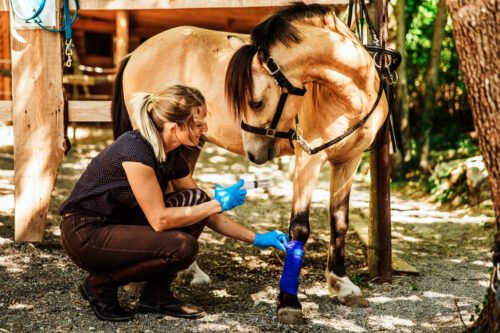
After cleaning the affected hooves daily, they may need to be bandaged between soakings until new and healthy tissue can regrow in the frog. Packing the cleft of the frog with cotton soaked with a disinfectant solution can help to eliminate the infection.
Using a hoof boot can aid in keeping the hooves clean while the inner tissues heal. Hoof boots are available at many tack stores and come in a range of sizes and styles.
Shoeing:
Shoeing the affected hooves may be beneficial if they are imbalanced or have unstable heels. Shoes also improve the flow of air under the hoof.
On the other hand, shoes significantly interfere with the natural cleaning mechanism of the hoof by impeding hoof expansion.
Medications
Topical medication may be used to treat the infected hoof tissue. These applications should only be applied to a clean, dry frog after it has been cleaned.

Tetanus Vaccination
Horses that are not up to date with their tetanus vaccine should be administered one to reduce the risk of this disease developing. Tetanus is a serious disease of the nervous system that can be fatal.
Clostridium tetani is a spore-forming bacterium found in the soil that is responsible for causing tetanus. This microbe can enter the body through compromised hoof tissue.
Management
Because exposure to wet environmental conditions can promote bacterial/fungal growth, horses should be kept in a clean and dry environment as they recover from thrush.
Veterinary Follow-up
Contact your vet if your horse’s thrush is not improving with treatment and if lameness develops or worsens.
Prevention
You can prevent or reduce the risk of thrush in your horse through the following management practices.
1) Maintain a Clean, Dry Environment:
Maintaining the cleanliness of your horse’s turn-out area and stall is essential to prevent thrush. Make sure that the turnout area where your horse spends the most time is dry.
Keep stalls clean by removing wet spots and manure daily. Clean outdoor run-in sheds/shelters as needed to prevent manure from accumulating in areas where your horse stands.
Manage mud in your horse’s turnout area. Eliminate water and mud accumulation in low-lying and high-traffic areas by filling them in with sand, wood bark, sawdust, gravel, or crushed asphalt.
Consider laying down a gravel base and filling it with round, pea-sized gravel to a depth of approximately four inches to create an area in your pasture that can drain away excess moisture.
Consider changing feeding spots in your horse’s turnout each day to help prevent mud from developing in these high-traffic areas.
Establish efficient drainage in paddocks and around the stable to prevent water and mud from accumulating.
Enhance ventilation in the stable to prevent moisture accumulation and dampness. This will also support your horse’s respiratory health and overall immune system.
2) Clean and Inspect Hooves Regularly:
Keeping your horse’s hooves clean is essential for preventing thrush. Remove dirt, debris, and excess moisture by picking your horse’s hooves out daily.
Check the structural integrity and overall health of your horse’s hooves each time you clean them. Check for signs of abscesses and white line disease which are also caused by infectious agents entering the hoof tissues.
3) Provide Regular Farrier Care:
Provide your horse with regular farrier care (every four to six weeks). Hoof issues are more likely to be caught early if farrier sessions occur at shorter intervals.
Ensure the hooves are properly trimmed and balanced to avoid long heels and deep sulci from developing. The frog should be trimmed to remove torn or jagged pieces that provide space for bacteria to propagate.
When the frog is properly trimmed, debris is naturally removed from the hoof more easily as the hoof expands and contracts during exercise.
4) Use Hoof Care Products:
Products such as Keratex or Thrush Buster may be used to help protect the hoof from pathogens. Once it is applied, Thrushbuster forms a barrier that helps to prevent the penetration of dirt and manure into the frog. This barrier may last for several days.
Follow the advice of a veterinarian before using products to treat a case of thrush.
5) Feed a Balanced Diet:
To grow and maintain healthy hooves, horses require a balanced diet that provides adequate amounts of key vitamins and minerals. [4][5][6][7][8][9]
Key nutrients known to support hoof integrity include biotin, copper, selenium, zinc, and methionine. For a 500 kg (1,100 lb) horse at maintenance, optimal amounts of each of these nutrients are as follows:
- Biotin: 20 mg per day
- Zinc: 400 mg per day
- Copper: 100 mg per day
- Selenium: 2 mg per day
- Methionine: 5 to 10 grams per day
Feed a high-quality vitamin and mineral supplement made with organic trace minerals. Organic nutrients are better absorbed and utilized by the body compared to inorganic trace minerals.
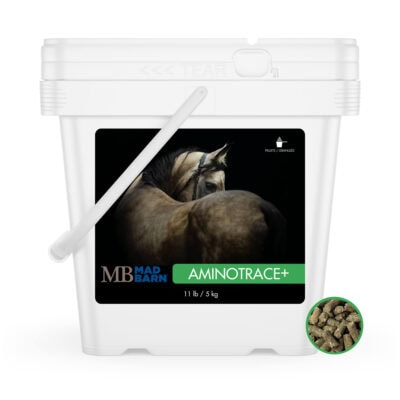
Mad Barn’s Omneity® mineral and vitamin supplement provides all the nutrients required to grow robust, healthy hooves. Omneity® balances most forage and grain-based diets and is designed to correct for the most common nutrient deficiencies that can impair hoof growth.
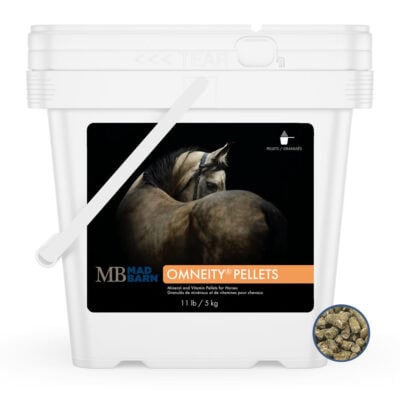
Mad Barn’s Amino Trace + is an ultra high potency vitamin and mineral supplement which also contains generous levels of the key amino acids lysine and methionine.
Is your horse affected by hoof problems? Submit their diet online for a free analysis by our equine nutritionists to identify deficiencies or imbalances that might be impairing hoof growth.
Frequently Asked Questions
Here are some frequently asked questions about Thrush in Horses:
Thrush is an infection in the hoof caused by bacterial or fungal pathogens, most commonly Fusobacterium necrophorum. It results in hoof tenderness and a foul-smelling discharge. Wet, dirty conditions and deep sulci in the hoof increase the risk of infection. Regular cleaning and hoof care can help prevent and treat thrush.
Signs of thrush include a foul-smelling, black discharge, hoof tenderness, and softened or necrotic tissue in the frog. Horses with thrush may also show sensitivity when pressure is applied to the hoof. A veterinarian or farrier can diagnose thrush based on visual examination and hoof assessment.
Thrush is primarily caused by Fusobacterium necrophorum, but fungal pathogens can also contribute. Conditions like wet, muddy environments, poorly maintained hooves, and long heel conformation can promote thrush infections. Horses in dirty or damp environments are more prone to thrush, especially if their hooves are not cleaned regularly.
Managing thrush involves keeping hooves clean and dry. Regular cleaning and inspection, along with using disinfectants, can help prevent infection. Providing a dry environment and proper bedding also aids in prevention. In some cases, topical treatments or antibiotics may be necessary. Regular farrier care and hoof management are key to supporting recovery and preventing future issues.
Summary
Thrush is a hoof infection caused by bacteria or fungi, typically affecting one or more hooves. Fusobacterium necrophorum is the most common bacterium involved. If left untreated, thrush can cause significant tissue damage and lameness.
- Thrush primarily develops in wet, dirty environments where bacteria and fungi thrive.
- Key symptoms of thrush include hoof tenderness, foul-smelling discharge, and necrotic tissue.
- Treatment involves cleaning the hooves, removing necrotic tissue, and disinfecting the affected areas.
- Regular hoof care, a clean environment, and proper management help prevent thrush infections.
- Feeding a balanced diet with key nutrients such as biotin, zinc, and selenium can support healthy hooves.
References
- Petrov, K.K. et al. Fusobacterium necrophorum, and not Dichelobacter nodosus, is associated with equine hoof thrush. Vet Microbiol. 2013. View Summary
- Beasley, B. Thrush in Horses. Merck Veterinary Manual. 2024.
- Holzhauer, M. et al. Cross-sectional study of the prevalence of and risk factors for hoof disorders in horses in The Netherlands. Prev Vet Med. 2017. View Summary
- Comben, N. et al. Clinical observations on the response of equine hoof defects to dietary supplementation with biotin. Vet Rec. 1984. View Summary
- Josseck, H. et al. Hoof horn abnormalities in Lipizzaner horses and the effect of dietary on macroscopic aspects of hoof horn quality. Equine Vet J. 1995. View Summary
- Geyer, H. et al. The long-term influence of biotin supplementation on hoof horn quality in horses. Schweizer Archiv fur Tierheilkunde. 1993. View Summary
- Reilly, J.D., et al. Effect of supplementary dietary biotin on hoof growth and hoof growth rate in ponies: a controlled trial. Equine Vet J. 2010. View Summary
- Buffa, E. et al. Effect of dietary biotin supplement on equine hoof horn growth rate and hardness. Equine Vet J. 1992. View Summary
- Mills, C.F. Dietary interactions involving the trace elements. Annu Rev Nutr. 1985.