English

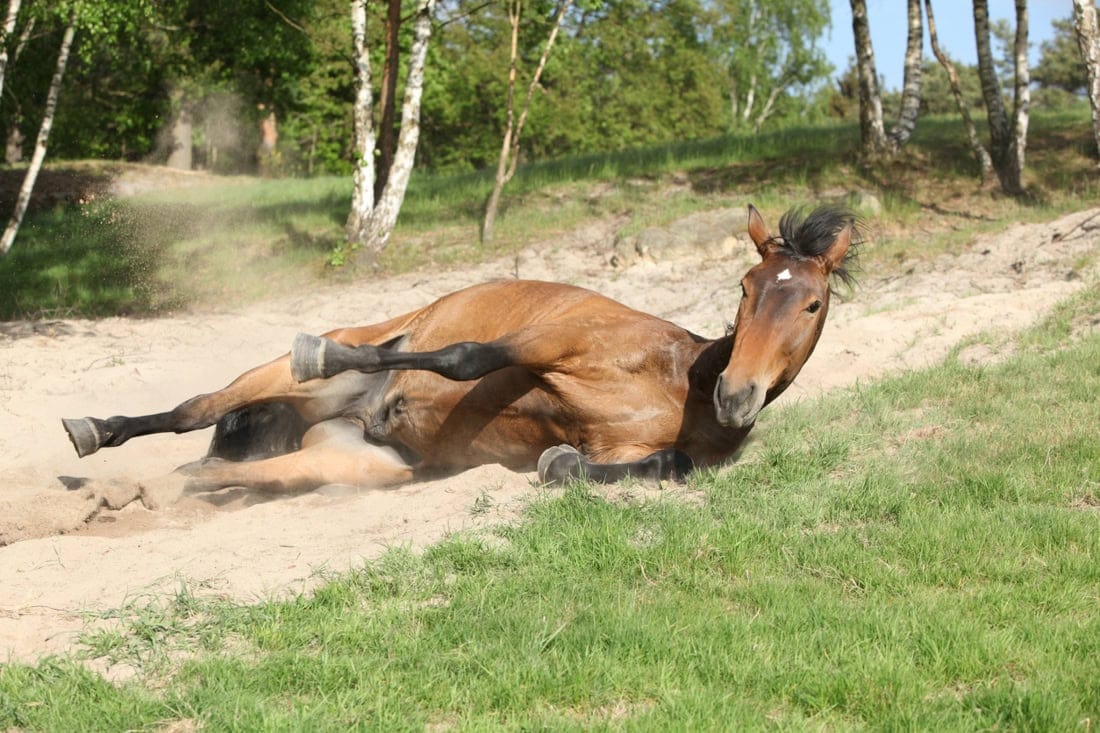
Twisted gut, or intestinal torsion, is a life-threatening condition in horses that requires immediate medical attention. This painful disorder occurs when a section of the horse’s intestine twists on itself, cutting off blood supply and causing severe discomfort.
The horse’s gastrointestinal structures are loosely suspended within the large abdomen, making the digestive tract vulnerable to twisting and knotting around itself. This can disrupt the passage of food and in severe cases, cut off blood flow.
These twists, known as volvuluses or torsions, can happen in the horse’s stomach, small intestine, large colon, or cecum. This condition can quickly become life-threatening for affected horses.
Understanding the signs and risk factors of intestinal torsion in horses is essential for prompt diagnosis and effective treatment. Read on to learn more about the horse’s gastrointestinal anatomy and associated complications, so you are prepared if one of your horses is at risk.
Twisted Gut in Horses
Horses are at particular risk of intestinal torsion due to unique features of their abdominal anatomy. The equine digestive system is essentially a long series of tubes housed in an ample abdominal cavity.
Feed (ingesta) progresses through the digestive tract via rhythmic muscle contractions known as peristalsis. Peristalsis is a dynamic process that causes the digestive tract to change shape and shift position within the abdomen. [1]
In addition, the digestive anatomy shifts within the abdominal cavity to accommodate the horse’s movements during exercise.
As the tract moves around inside the body, it can become twisted and knotted around itself. When this happens, the movement of ingesta can be disrupted causing pain (colic) and may eventually cut off blood supply to affected sections of the tract, which leads to tissue death. [2]
As the digestive tract shifts within the abdomen, it can sometimes become twisted and knotted. When this occurs, the movement of ingesta is disrupted, leading to painful colic symptoms. In severe cases, this twisting can cut off blood supply to affected sections of the tract, resulting in tissue death.
Twists can occur in several structures of the equine digestive system: the small intestine, the large colon (also known as the large intestine), the cecum, or the stomach.
Depending on the structures involved, these twists are classified as follows: [1][2]
- Small intestinal volvulus (also known as small intestine torsion or strangulated intestine)
- Large colon volvulus
- Cecal torsion (also known as cecal volvulus)
- Gastric (stomach) torsion
In many cases, twisting of the structures also involves the mesentery, the fan shaped organ that holds the digestive tract loosely in place and delivers blood and oxygen to the intestines. If the mesentery gets caught up in the twist, the blood and oxygen supply to the area may become disrupted, leading to tissue death. [1][2]
Anatomy
To fully understand the pathology of twisted gut in horses, it’s helpful for owners to familiarize themselves with the anatomy of the structures that may be involved.
Stomach
Gastric torsion occurs when the stomach twists and divides the organ into two compartments. [3] The stomach is a large organ that receives the food from the esophagus and begins digestion. [4]
Gastric torsion in horses is rare since the stomach is held more firmly in place than the lower tract by the gastrosplenic ligament. Gastric torsion is sometimes associated with rupture of this ligament. [3]
Small Intestine
The small intestine is a tube that connects to the stomach on one end and to the cecum on the other. It is long, flexible, and mobile which puts it at risk of twisting. [1] It consists of three segments: the duodenum, the jejunum, and the ileum.
Small intestine volvulus occurs when the intestine twists around itself forming a lasso shape. [2][5][6][7] The rotation at the bottom of the lasso is usually at least 180 degrees, and in severe cases can be as much as 360 degrees. [6][7] As the intestine twists, the root of the mesentery gets pulled in as well.
Volvulus nodosus is an uncommon type of intestinal twist seen mostly in foals between 2 and 7 months old. It occurs when two parts of the small intestine (the ileum and jejunum) twist 360 degrees, creating a pouch in the membrane that holds the intestines. [6]
Part of the jejunum gets trapped in this pouch, and as it swells, it pulls the ileum further into the pouch, creating a tight, knotted loop. [6]
Cecum & Large Colon
The cecum is the first part of the large intestine. It is a comma-shaped structure that is about 1 meter in length. [6]
Cecal torsion occurs when the cecum twists on itself. This is sometimes related to abnormalities in the mesentery or torsion of the large intestine. [6]
The large colon is very long and can hold over 80 L (21 gal) of food and water. [1] It connects to the cecum on one end and the transverse colon on the other. [4]
Large colon volvulus occurs when the whole colon rotates laterally, cutting off the openings that allow the ingesta to enter and exit. [5][8] This is a medical emergency and requires immediate veterinary care. [8]
What's your top priority with your horse's health?

Enter your email to receive your store credit
Symptoms
The primary symptom of each of these conditions is colic, which describes general abdominal pain in horses.
Horses experiencing colic show signs of discomfort and physiological changes, including: [9][10][11][12][13]
- Lethargy
- Lack of appetite
- Biting or looking at the flanks
- Shifting weight
- Pacing
- Getting up and down
- Lying down
- Lying on the back
- Nibbling non-food items
- Circling
- Kicking at the abdomen
- Rolling
- Stretching
- Dog sitting
- Groaning
- Sweating
- Increased heart rate
- Distended stomach
- Diarrhea
- Decreased manure production
- Tooth grinding
- Excessive salivation
- Breathing rapidly
- Tensing the abdomen
- Changes in gum color
- Curling the upper lip (Flehmen Response)
Characterizing Colic in Twisted Gut
Horses with small intestine volvulus typically experience moderate to severe colic along with a distended abdomen. [2][5]
Horses with large colon volvulus can exhibit the signs of colic for a day or more before the pain becomes suddenly severe. Others show sudden uncontrollable pain without any signs of colic first. Pain is sometimes so severe that it does not respond to pain medications. [2][5]
Horses with cecal torsion tend to have sudden severe abdominal pain. [14] Horses with gastric torsion experience severe colic. [8]
Risk Factors
Small intestinal volvulus can affect horses of any sex, breed, or age. [2][5] However, there are some known risk factors that increase the risk of this condition.
For example, horses that participate in endurance riding are more likely to experience this condition, especially shortly after a race. [5] Horses that have recently been swimming are also at an increased risk. [6]
A recent history of gastroscopy also increases the risk of small intestine volvulus. [5][7][15] Additionally, dehydration and feeding large, grain-based meals can affect peristalsis, impairing intestinal function and increasing the risk of small intestine volvulus.
Large colon volvulus can also affect horses of any sex, breed, or age. It is more likely to occur in mares that have recently given birth. [8] Additionally, a history of recent changes to the diet including access to lush pasture is associated with this condition. [2][5]
Cecal torsion is more likely in horses that are experiencing large intestine volvulus, although it can occur on its own. [6] Horses with an underdeveloped or abnormal attachment of the cecum are at a greater risk of this condition, although horses with normal cecal attachments have been known to develop the condition as well. [6]
Gastric torsion is more likely to affect horses that have a ruptured gastrosplenic ligament. [3] Other risk factors include recent rapid changes to the diet and vigorous exercise after a large meal. [12]
Causes
In general, twists in the horse’s gastrointestinal tract occur because these structures are long, flexible, and mobile; shifting to accommodate the body’s movements during exercise. These structures are also impacted by the motility of the intestines (peristalsis). [2]
The exact causes of small intestine volvulus are often unclear, but in some cases, they are related to other dysfunctions in the gastrointestinal system. These include: [2][5][6][7][11]
- Obstruction
- Ileal impaction
- Inguinal hernia
- Persistent Meckel’s diverticulum
- Persistent mesodiverticular band
- Mesenteric rents
- Intestinal distention
- Adhesions
- Intestinal incarceration
- Lipomas
The exact causes of large colon volvulus are not fully understood, although they may be associated with excess gas in the hindgut. Factors that contribute to excess gas build up include: [16]
- Stress
- Dietary changes
- Electrolyte imbalances
The exact causes of gastric torsion are not fully understood. In some instances, the small intestine becomes trapped first, pulling on the surrounding tissue. In other cases, the horse’s movement can cause the gastrosplenic ligament to tear, allowing the stomach to move excessively and twist on itself. [3]
Severity
The severity of these conditions depends on the degree of rotation in the twist and whether the blood and oxygen supply to the affected area is compromised.
Small intestine volvulus is considered severe if it rotates more than 180 degrees, with extremely severe cases involving rotations of up to 360 degrees. [6][7]
Large colon volvulus of 90 to 270 degrees is considered mild. Rotation that exceeds 270 degrees is a very serious condition, particularly if the blood flow to the area is compromised. [8] In these cases, irreversible damage to the horse’s gastrointestinal tract can occur within 3 or 4 hours. [2]
Cecal torsion of 90 degrees or less is considered normal and does not typically cause symptoms. [6]
Gastric torsion is considered mild to moderate if there is less than 180 degrees of rotation, and severe if the rotation exceeds that degree. [6]

Diagnosis & Treatment
Horses showing signs of a twisted gut require immediate veterinary attention. Rapid intervention is essential, as severe twists can quickly lead to tissue death, affecting the likelihood of a successful recovery.
Diagnosis of these conditions usually involves exploratory surgery to identify the location and severity of the twist and assess any damage to the affected tissue. [6]
Prior to that, the veterinarian is likely to rule out other possible causes associated with colic. Diagnostic tools may include: [6]
- Rectal examination
- Abdominocentesis (fluid sample from the abdominal cavity)
- Nasogastric intubation
- Ultrasound
The treatment for all intestinal torsions is surgical. [2][3][6] During surgery, the affected structures are manually untwisted and examined for tissue damage. [2]
If blood and oxygen deprivation have caused irreversible tissue death in any portion of the affected structure, the dead tissue must be removed. [2]
Prognosis
The prognosis for horses with twisted gut depends primarily on the extent of tissue damage. [2][6]
Generally, the prognoses according to location in the tract are as follows: [2][5][6]
- Small Intestine Volvulus: If more than 50% of the intestine is affected, the prognosis is considered grave. In other cases, the prognosis is more favorable, especially with timely surgical intervention.
- Large Colon Volvulus: Prognosis is generally guarded.
- Cecal Torsion: Prognosis ranges from fair to grave, depending on the extent of cecal compromise and whether the mesentery remains intact.
- Gastric Torsion: Prognosis is typically fair to guarded, based on the degree of tissue death.
Prevention
There are no proven measures for preventing intestinal torsion in horses.
Preventing colic in horses involves feeding a forage-based diet, introducing dietary changes gradually over several weeks, and ensuring adequate water intake. These management practices help reduce gas production and support normal gut motility.
If you’re unsure whether your horse is receiving all necessary nutrients from their diet, consult with a qualified equine nutritionist who can analyze your current regimen and provide tailored recommendations based on your horse’s unique needs.
Frequently Asked Questions
Here are some frequently asked questions about twisted gut in horses:
Twisted gut describes a variety of conditions where parts of the horse's digestive system twist, blocking food passage and potentially cutting off blood flow. This can lead to tissue death and intense pain, commonly known as colic. [1][3][5][6]
The main types include small intestine volvulus, large colon volvulus, cecal torsion, and gastric torsion, each affecting different sections of the digestive tract. [1][3][5][6]
Horses with twisted gut typically display symptoms of colic, such as restlessness, loss of appetite, biting or looking at their flank, rolling, kicking at the abdomen, increased heart rate, and changes in gum color. [9][10][11][12][13]
Diagnosis and treatment typically requires exploratory surgery. In this procedure, veterinarians manually untwist the affected area and remove any damaged tissue as necessary. [6]
Summary
A twisted gut in horses describes cases where a section of the digestive tract gets twisted around itself. This can disrupt the flow of ingesta through the gut and compromise the blood and oxygen supply, which can lead to tissue death.
- Conditions associated with twisted gut in horses are small intestine volvulus, large colon volvulus, cecal torsion, and gastric torsion
- The main symptom of these conditions is colic, which is a medical emergency requiring prompt veterinary evaluation
- Diagnosis is based on exploratory surgery and treatment is also surgical to correct any twists and remove damaged tissue
- The prognosis for these conditions is variable and depends on the degree of rotation in the twist and whether the blood and oxygen supply have been compromised
References
- Krunkosky. T. M. et al., Gross and Microscopic Anatomy of the Equine Gastrointestinal Tract. The Equine Acute Abdomen. 1st ed. Wiley. 2017.
- Reed. S. M. et al., Equine Internal Medicine. 3rd ed. Saunders Elsevier, St. Louis, Mo. 2010.
- Dias. D. P. M. et al., Gastric Torsion from an Intestinal Hernia Through a Rent in the Gastrosplenic Ligament in a Horse. Journal of Equine Veterinary Science. 2012.
- Goff. J. P., Digestion Absorption and Metabolism. Dukes’ Physiology of Domestic Animals. 13th ed. Wiley-Blackwell. 2015.
- Blikslager. A. T. et al., Eds., The Equine Acute Abdomen. Third edition. Wiley, Blackwell, Hoboken, NJ. 2017.
- Auer. J. A., Equine Surgery. 5th edition. Elsevier, St. Louis, MO. 2018.
- Stephen. J. O. et al., Small Intestinal Volvulus in 115 Horses: 1988–2000. Veterinary Surgery. 2004. View Summary
- Johnston. J. K. and Freeman. D. E., Diseases and Surgery of the Large Colon. Veterinary Clinics of North America: Equine Practice. 1997. View Summary
- Colic in Horses. American College of Veterinary Surgeons.
- Sutton. G. A. et al., A Behaviour-Based Pain Scale for Horses with Acute Colic: Scale Construction. Veterinary Journal (London, England: 1997). 2013. View Summary
- Gillen. A. and Catherine Archer. D., Epidemiology of Colic: Current Knowledge and Future Directions. Veterinary Clinics of North America: Equine Practice. 2023. View Summary
- Straticò. P. et al., Retrospective Study on Risk Factors and Short-Term Outcome of Horses Referred for Colic from 2016 to 2022. Veterinary Sciences. 2022. View Summary
- Cook. V. L. and Hassel. D. M., Evaluation of the Colic in Horses: Decision for Referral. The Veterinary Clinics of North America. Equine Practice. 2014. View Summary
- Dart. A. et al., Caecal Disease in Equids. Australian Veterinary Journal. 1997. View Summary
- Bonilla. A. G. et al., Small Intestinal Segmental Volvulus in Horses after Gastroscopy: Four Cases (2011–2012). Equine Veterinary Education. 2014.
- Orsini. J. A. and Divers. T. J., Equine Emergencies: Treatment and Procedures. Fourth Edition. Elsevier/Saunders. St. Louis, MO. 2014.