English












The Bashkir Curly Horse is a rare American breed with a unique coat texture and mysterious history. Also known as North American Curlies, the debate continues over the breed’s origins and its connection to curly horse populations globally.
Indigenous tribes on the Great Plains rode Curly horses more than two centuries ago, and feral Curlies still roam alongside Mustangs in the American West. However, not all curly horse breeds share a common ancestry, and multiple genetic mutations can result in the curly hair phenotype.
Though curly coats in some breeds are linked to specific health issues, the Curly horse breed is relatively healthy. Many owners claim these horses are also hypoallergenic, but allergen studies in the breed yield conflicting results.
This breed profile will review the history, characteristics, health problems, and nutritional needs of the American Bashkir Curly breed. Keep reading to learn more about feeding and caring for these unique horses.
American Bashkir Curly Horse History
Despite their name hinting at Russian ancestry, North American Bashkir Curly Horses possess a curly hair gene mutation that is distinct from Curly horses found internationally. Their exact origins remain a mystery, but their history in modern America is well documented.
Origin
Evidence suggests that horses with curly coats have existed throughout the evolution of the equine species. Thick, curly coats were a favourable adaptation for horses in cold climates.
Ancient Chinese art from 161 AD depicts curly horses, and populations of these horses spread across various regions of Asia and Europe over time. [1] Curlies were also reported in South America in the 1700’s, and records from 1801 describe Curly Horses owned by Indigenous peoples of the Great Plains. [1]
Many American Curlies descend from feral horses captured in the Great Basin, including the first members of the breed developed by the Damele family in the early 1900s. The Damele breeding program significantly influenced the modern American Bashkir Curly.
The Bashkir name derives from a picture of a curly-coated Bashkir horse from Russia published by Nature Magazine in 1938 and reproduced in a print cartoon by John Hix. However, a 1990 identification project determined that the Bashkir horse is not a direct ancestor of the American Curlies. [1]
Recent research has identified two distinct genetic mutations responsible for curly coats in horses from different equine populations. This indicates that curly coats can emerge in various breeds, and the presence of curly hair doesn’t necessarily signify a close genetic connection. These results suggest curly coats originated in different breeds, and not all horses with curly hair are genetically related. [3]
Researchers found that North American horses with the dominant-type curly coat share a common mutation, which justifies the American Curly’s classification as a distinct breed. However, modern Curly Horses are also heavily influenced by other breeds. [1]
DNA studies in American Curlies found genetic links to Quarter Horses, Morgans, Saddlebreds, and Standardbreds. These horses crossed with lines descending from the Great Basin feral horses in the 20th century to develop the modern breed. [2]
Historic Use
While Curly Horses are still commonly seen roaming free with feral Mustang bands in the American West, domesticated Curlies have served several purposes for humans in American history.
Indigenous people in North America domesticated feral horses around 300 years ago. These horses, which included Curlies, became integral to these cultures for transportation, hunting, war, and trade. [4]
The Dameles and other Ranchers in the Great Basin admired the hardiness of feral Curlies during harsh winters. These breeders used the Curlies to improve their breeding stock and produce cow horses suited to working long days in difficult conditions. [1]
American Bashkir Curly Horses became an official breed in the late 20th century. Although Curlies are a relatively rare breed today, they have distinguished themselves as versatile pleasure and competition horses.
Breed Registry
Founded in 1971, the American Bashkir Curly Horse Registry (ABCR) is the oldest breed registry for Curly horses in North America. ABCR maintains a closed studbook for Curlies with DNA verification and an open studbook for Curly crosses.
| Breed Summary | |
|---|---|
| Breed Name | American Bashkir Curly |
| Also Known As | North American Curly; American Curly; Curly Horse |
| Origin | United States (Great Basin / American West) |
| Breed Registry | American Bashkir Curly Horse Registry (ABCR); Curly Sporthorse International |
| Population Status | Rare |
| Average Height | 15 hh |
| Common Coat Colors | Chestnut, bay, black, grey, buckskin, roan, grulla, cremello; appaloosa and pinto patterns |
| Conformation | Compact, short back, medium withers, deep heart girth, flat croup, long underline, heavy-boned legs, short cannons, dense round hooves |
| Common Uses | Trail, western pleasure, hunter/jumpers, gymkhana, dressage, Western and English riding |
| Temperament | Even-tempered, hardy, intelligent, willing |
| Common Health Concerns | Hypotrichosis, skin irritation; lineage-dependent CA, HYPP, PSSM risk |
| Breed Type | Light horse type |
| Average Weight | 800–1,000 lb (363–453 kg) |
| Lifespan | About 25–30 years |
| Price Range | $3,500–$25,000 |
| Best For | Riders wanting a calm, trainable, versatile all-around horse |
What's your top priority with your horse's health?

What's your top priority with your horse's health?
Breed Characteristics
American Bashkir Curly Horses can vary in type depending on outside influences from other breeds in their pedigree. While their coats are the breed’s defining feature, the ABCR has also developed a breed standard for purebred American Curlies.
Conformation
Curly Horses come in different sizes, but most stand around 15 hands tall. Their eyes are wide-set with curly eyelashes, and their ears are moderately short with curly hair that doesn’t shed entirely in summer.
Necks are medium in length and deep at their base. They have compact bodies with noticeably short backs, medium withers, deep heart girths, flat croups, and a long underline. Their legs are heavy-boned with short cannons and dense, round hooves.

Curly Coat Types
Curly Horses can have different coat types with curly characteristics. Some horses have fine hair, while others have hair that feels more wiry. Curls can vary from long ringlets to deep waves in the body coat. Others have soft, dense piles of curls in the coat.
The hair on the fetlocks is curly or wavy and maintains its length throughout the year. Kinky manes are preferable, while tails can be wavy or have ringlets of curls. Some Curly horses shed their manes and tails in the summer.
Colours
Curly Horses are found in every solid coat colour, but chestnut is the most common. Appaloosa and pinto patterns are also seen in the breed, as are dilute colours.
The following is a list of some of the most common coat colours seen in the breed:
- Chestnut
- Bay
- Black
- Grey
- Buckskin
- Roan
- Grulla
- Cremello
Temperament
Most American Curly Horses have even-tempered dispositions. The American breeds that heavily influenced the development of modern Curly horses are also known for good temperaments.
Their feral ancestors had to be hardy and intelligent to survive changing conditions in the American West. Most owners find that Curlies have willing work ethics and learn quickly during training.
Disciplines
The breed’s willingness allows them to excel in many disciplines. Curly horses are versatile equine partners suitable for Western and English riding. Popular disciplines for Curlies include competitive trail, western pleasure, hunter/jumpers, and gymkhana.
Their popularity as sport horses led to the formation of Curly Sporthorse International, a registry that promotes using Bashkir Curlies in equestrian sports. Owners of purebred and crossbred Curly Sport Horses can also participate in breed awards programs in dressage.
Curly Horses have a reputation as a hypoallergenic breed suitable for equestrians with horse allergies. An observational study involving 40 horse-allergic riders noted that 37 participants experienced no significant allergic reactions during a 12-month period of riding Curly Horses. [5]
However, a scientific basis for their hypoallergenicity has not yet been established. Hair and air sample analysis found that Curly Horses had similar allergen levels as other horse breeds. [6]
American Bashkir Curly Horse Health
In horses with regular coats, curly hair growth can indicate an underlying health problem, but this trait is normal in American Curlies.
A curly coat is a favourable adaptation that helped the feral ancestors of these horses survive in the wild, but it can increase the risk of certain skin conditions without proper care.
Curly Coat Genetics
Scientists have identified two dominant genetic mutations that produce a curly coat phenotype in American Bashkir Curlies. One affects the KRT25 allele, while the other affects SP6. [3]
The dominant curly hair coat trait typically found in American Bashkir Curly Horses arises from the KRT25 missense mutation. This gene mutation affects the structure and function of keratin proteins in hair follicles, leading to the characteristic curly hair pattern seen in these horses.
Horses with heterozygous or homozygous genotypes, meaning either one or two copies of the gene, display curly hair. However, this gene can also lead to hypotrichosis, which can result in hair loss in Curly Horses. [7]
The SP6 missense mutation is another gene mutation in horses that changes how hair proteins are produced or structured, resulting in curly hair. This mutation is not associated with hypotrichosis and has a higher frequency in other breeds, such as the Missouri Fox Trotter. [3]
Studies show that the KRT25 and SP6 genes have epistatic interactions in American Curlies that inherit both mutations. This means that the combined effect of both the KRT25 and SP6 genes on the curly coat phenotype is different from the sum of their individual effects. These effects explain the variations in curly coat types seen in the breed. [3]
Health Problems
Due to their thick coat, American Curly Horses are sometimes mistakenly thought to have pars pituitary intermedia dysfunction (PPID), also known as Cushing’s disease. PPID is a hormonal disorder in horses that can lead to a long, curly coat among other symptoms. [8]
However, for American Curly Horses, a curly coat is a natural and healthy characteristic, unrelated to any hormonal disorder. While these horses do not have a higher risk of developing PPID, it can be more challenging to diagnose in Curlies. Talk to your veterinarian if you are concerned that your horse is showing signs of PPID.
The risk of genetic diseases in American Bashkir Curly Horses is influenced by their lineage. Those with strong ties to Quarter Horses might benefit from genetic testing to identify prevalent diseases associated with that breed, such as HYPP and PSSM.
One study reported that 2.8% of Bashkir Curly Horses carried the mutation associated with cerebellar abiotrophy (CA), an inherited neurological condition primarily affecting Arabians. These results support genetic testing for CA before breeding Curly Horses. [9]
Care and Management
Like all horses, American Curlies need quality basic care to stay happy and healthy. Your horse’s management needs to consider their physical, behavioural and emotional needs.
Work with a veterinarian and other equine health practitioners to develop a preventative care program that includes:
- Veterinary Wellness Exams: Regular check-ups with a veterinarian are essential for monitoring the health of your American Bashkir Curly Horse and addressing potential issues promptly.
- Vaccinations: Follow a veterinarian-advised vaccination schedule to safeguard your horse against infectious diseases that are prevalent among equines.
- Dental Care: Annual dental examinations and teeth floating are important for preventing dental issues and ensuring your horse can chew their forage.
- Parasite Management: Protect your American Bashkir Curly Horse from internal parasites with a comprehensive deworming strategy.
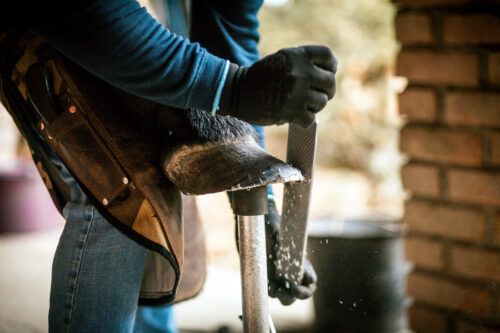
- Hoof Care: Regular farrier visits are crucial for maintaining hoof balance. Some Curlies in regular training may need shoes for extra protection, while others do well barefoot.
Daily grooming is also essential for keeping your horse’s curly coat healthy. Moisture and debris can accumulate in their thick coats and lead to skin irritations. During shedding season, curry combs and shedding blades can help them shed loose hair and stay comfortable.
When these horses shed their tails, they are more vulnerable to biting insects. Use fly control measures and protective gear during summer turnout to shield your horse from pests, particularly if they have areas of exposed skin due to hair loss. [10]
These horses are hardy animals who thrive living natural lifestyles with plenty of turnout. Their coats offer extra protection from the cold, but they still need safe shelter to escape the elements if they live outside.

Nutrition Program
Providing your horse with balanced nutrition is a vital aspect of your Curly Horse’s care and management. Feeding a forage-based diet that mimics the natural grazing behaviours of feral Curlies is the best way to support your horse’s digestive function and overall health.
Weight Maintenance
Most American Bashkir Curly Horses are easy keepers, which means they are susceptible to gaining excess weight if they consume too many calories. Descending from feral horses that survived on sparse forage, these equines are also closely related to breeds known for having an efficient metabolism.
Maintaining an optimal weight is important for the overall health and well-being of your Curly Horse. Because of their propensity for gaining weight, it’s essential to monitor their dietary intake and adjust their feeding program based on their activity levels and health needs.
One effective method to track changes in your horse’s weight is through body condition scoring. Keep in mind that some Curly Horses have stocky types, which can make it difficult for owners to discern between obesity and the horse’s natural build.
Sample Diet
The following sample diet is based on a 1000 lb (450 kg) mature American Curly Horse at maintenance (not exercising).
| Feed | Amount per day |
|---|---|
| Mid-Quality Hay (8% crude protein) | Free-choice |
| Salt | 30 g (2 tbsps) |
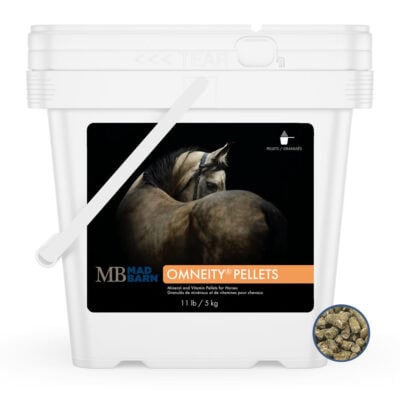
| Omneity® Pellets | 200 g (2 scoops) |
| Diet Analysis | |
| Digestible Energy (% of Req) | 106% |
| Protein (% of Req) | 128% |
| HC (ESC + starch; % Diet) | 8.7% |
Mad Barn’s Omneity® vitamin and mineral supplement is included in this feeding plan to prevent nutrient deficiencies typically observed in forage-only diets. Formulated with higher quality organic trace minerals, Omneity® helps support skin and coat health, hoof growth and immune function.
Forage
Horses evolved to graze on roughage, naturally consuming a near-continuous stream of forage throughout the day. Feeding a forage-based diet not only supports your horse’s digestive health, but also meets their psychological needs to express grazing behaviours.
Horses should consume at least 2% of their body weight in forage daily. However, providing unrationed or free-choice hay is best to ensure your horse never goes long periods without access to forage.
A typical 1,000 pound (450 kg) American Curly needs 20 pounds (9 kg) of hay daily. Average-quality, low-starch, low-sugar grass hay is a good option for Curlies on a maintenance diet. Together, starch and sugar (ESC) are called hydrolyzable carbohydrates (HC) which are digested in the small intestine and trigger insulin secretion. These differ from NSC which contains carbohydrates that do not impact insulin responses. Look for hay with less than 10% HC if your horse has metabolic syndrome.
Sport horses with increased energy requirements might benefit from higher-quality hay, such as immature grass hay or added alfalfa.
To prevent weight gain in your American Curly while still providing access to free-choice forage, consider using a slow feeder or hay net. Slow feeders extend foraging time while regulating how much hay your horse consumes.
Although grazing on pasture has many benefits for these horses, rich pasture grasses can sometimes be too nutrient-dense for these easy keepers. Consuming lush grass, especially during the spring when sugar levels are high, can contribute to laminitis.
A grazing muzzle can help manage grass intake during turnout. Consider using a dry lot and feeding hay during turnout if your horse needs to lose weight or is at risk of Equine Metabolic Syndrome.
Feeding Recommendations
Horses relying exclusively on forage are usually deficient in certain essential nutrients in their diet. Feeding a vitamin and mineral supplement can help to balance the diet without the added sugar and starch found in grain-based feeds. [11]
For horses that require more energy and protein in their diet, opt for forage-based alternatives, such as soaked alfalfa pellets or beet pulp. Fat supplements are another safe calorie source for exercising horses.
Dietary fats also promote the production of natural oils. This supports skin and coat health, which is especially important for Curly Horses. [10][12] Choosing fat sources that provide omega-3 fatty acids have several additional health benefits. [12]
If you feed concentrates, split the daily ration into multiple small meals to reduce the risk of digestive issues, such as colic. [11]
Constant access to fresh, clean water and plain loose salt is also important to prevent dehydration. Salt is a source of sodium and chloride, which are involved in many different physiological functions. Salt also encourages drinking and helps replace electrolytes lost in sweat.
Our nutritionists recommend adding 1 – 2 ounces of plain salt to your Bashkir Curly Horse’s daily feed. This is more effective than depending on a salt block or salt lick to meet your horse’s sodium requirements.
Nutritional Supplements
The first priority when designing a feeding plan for your American Bashkir Curly Horse is to ensure they receive a balanced diet with adequate vitamins and minerals. Once the diet is balanced, you can introduce supplements targeted to their needs and performance goals.
- W-3 Oil is an omega-3 fatty acid supplement that supports skin, hair, and joint health, as well as the immune system and respiratory health. W-3 Oil contains microalgae-synthesized DHA, which provides horses with the benefits of fish oil without the unpalatable taste.
- Visceral+ is a comprehensive gut supplement that is recommended by veterinarians to maintain a healthy stomach and microbiome. Visceral+ is formulated with probiotics, yeast, herbs, minerals, and amino acids to support the horse’s entire digestive tract.
- Spirulina is a nutrient-dense blue-green algae that supports skin and coat health, immune function and antioxidant defenses. This natural supplement is rich in essential amino acids, vitamins, minerals and phytonutrients.
- Vitamin E is an important antioxidant in the equine diet that supports muscles and neurological health. Horses primarily consuming hay are commonly deficient in this vitamin and require supplementation.
A balanced diet impacts every aspect of your American Bashkir Curly Horse’s health. To ensure your horse’s diet is providing everything they need, submit their information online for a complimentary nutrition consultation.
Frequently Asked Questions
Here are some frequently asked questions about Bashkir Curly horses:
A Bashkir Curly horse is a rare American horse breed known for its naturally curly coat, curly eyelashes, and curly or wavy hair in the mane, tail, ears, and fetlocks. Although the breed is sometimes called the American Bashkir Curly, Bashkir Curly horses are not genetically derived from the Russian Bashkir horse. Coat expression of the Bashkir Curly can vary widely, ranging from soft waves to dense curls or ringlets. Research suggests that curly coats can arise from different mutations in separate horse populations, so curly-coated horses around the world do not necessarily share a close ancestry.
Bashkir Curly horses are often described as hypoallergenic, but they should not be considered universally hypoallergenic. Some riders with horse allergies report fewer symptoms around Bashkir Curly horses, and some observational research has suggested they may be better tolerated by certain individuals. However, testing has also found similar allergen levels in Bashkir Curly horses and other breeds. People with horse allergies may tolerate them better in some cases, but individual reactions can still vary.
Bashkir Curly horses benefit from regular grooming to keep their skin and curly coat healthy. Their dense coat can trap moisture, dirt, and debris, which may increase the risk of skin irritation if grooming is neglected. During shedding season, curry combs and shedding tools can help remove loose hair and keep the horse comfortable. Horses that shed part of their mane or tail may also need extra fly protection during summer turnout.
Bashkir Curly horses should be considered for genetic testing before breeding, especially when their pedigree includes other influenced breeds. Genetic testing helps breeders make informed mating decisions and reduce the risk of passing inherited disorders to foals. Modern Bashkir Curly bloodlines may carry inherited conditions associated with breeds such as Quarter Horses and Arabians. Research has also identified a small percentage of Curlies carrying the mutation linked to cerebellar abiotrophy.
Bashkir Curly horses are generally known for being calm, intelligent, and willing horses. They are often described as adaptable, trainable, and cooperative both under saddle and on the ground. Many Bashkir Curly horses are valued for their steady disposition and people-oriented nature. With consistent handling and training, they tend to learn quickly and develop a strong work ethic.
Bashkir Curly horses are used as versatile riding horses in a wide range of Western and English disciplines. Historically, they were used by Indigenous peoples in North America for transportation, hunting, war, and trade, and later by ranchers in the American West for their hardiness and usefulness in tough conditions. Today, Bashkir Curly horses are commonly used for a range of disciplines, including trail riding, western pleasure, dressage, and general pleasure riding. Their versatility makes them suitable for both recreational and competitive use.
Bashkir Curly horses are typically medium-sized horses with a compact, sturdy build. They usually have wide-set eyes with curly eyelashes, moderately short ears with curly hair, and a medium-length neck that is deep at the base. Their bodies often feature a short back, medium withers, a deep heart girth, a flat croup, and a long underline. Bashkir Curly horses are also known for heavy-boned legs, short cannons, and dense, round hooves that reflect the breed’s hardy type.
Bashkir Curly horses come in a wide range of coat colors, with chestnut being the most common. Other frequently seen colors include bay, black, gray, buckskin, roan, grulla, and cremello. Bashkir Curly horses can also display pinto and Appaloosa patterns, along with various dilute colors. Regardless of color, the coat may appear in different curly textures depending on the horse’s genetics.
Most Bashkir Curly horses stand around 15 hands high. Some individuals may be slightly shorter or taller depending on their breeding and outside bloodline influence. Their moderate height makes Bashkir Curly horses practical for a wide range of riders and disciplines. Combined with their compact build, this height contributes to their balanced and sturdy appearance.
Bashkir Curly horses are generally considered a healthy breed, but they do have a few notable health concerns. Their thick curly coats can trap moisture and debris, which may increase the risk of skin irritation if grooming is neglected. Some Bashkir Curly horses with the KRT25 mutation may develop hypotrichosis, which causes hair loss, and certain bloodlines may also carry inherited conditions such as HYPP, PSSM, and cerebellar abiotrophy. Because these risks can depend on pedigree, good management and appropriate genetic testing are important.
Summary
American Bashkir Curly Horses are a rare North American breed recognized for an unusual coat and a development shaped by feral survival and selective breeding. Modern Curlies combine distinctive physical traits with broad versatility, making them appealing to a range of riders and management systems.
- American Bashkir Curly Horses developed primarily from Great Basin feral horses, later influenced by Quarter Horse, Morgan, Saddlebred, and Standardbred bloodlines
- Curly coats arise from specific dominant genetic mutations, explaining why similar coat textures appear across unrelated breeds
- Breed standards describe compact conformation, dense hooves, and varied curly coat types ranging from loose waves to tight ringlets
- Even-tempered dispositions and intelligence support use in both Western and English disciplines
- Curly Horses are generally healthy, though coat density can increase susceptibility to skin irritation without regular grooming
- Many owners report reduced allergy reactions, but scientific studies show mixed results regarding hypoallergenic claims
References
- Thomas, S. The Curly Horse identification project of the CS fund conservancy (a case study). Genet Cons Domest Livest. 1990.
- Bowling, A. Population genetics of curly horses. Genet Cons Domest Livest. 1990.
- Thomer, A. et al. An epistatic effect of KRT25 on SP6 is involved in curly coat in horses. Sci Rep. 2018. View Summary
- Hamalainen, P. The Rise and Fall of Plains Indian Horse Cultures. J American History. 2003.
- Mitlehner, W. et al. Horse Allergy: Curly Horses Allow Horse Allergic Riders To Ride Again. Pneumologie. 2015.
- Zahradnik, E. et al. Lower allergen levels in hypoallergenic Curly Horses? A comparison among breeds by measurements of horse allergens in hair and air samples. PLoS One. 2018. View Summary
- Morgenthaler, C. et al. A missense variant in the coil1A domain of the keratin 25 gene is associated with the dominant curly hair coat trait (Crd) in horse. Genet Select Evol. 2017.View Summary
- Schott, H. Pituitary pars intermedia dysfunction: equine Cushing's disease. Vet Clin Equine Pract. 2002.
- Brault, L. et al. The frequency of the equine cerebellar abiotrophy mutation in non-Arabian horse breeds. Equine Vet J. 2011.View Summary
- Scott, D. Skin of the neck, mane and tail of the curly horse. Equine Vet Ed. 2010.
- Clarke, L. et al. Feeding and Digestive Problems in Horses: Physiologic Responses to a Concentrated Meal. Vet Clin North Am Equine Pract. 1990. View Summary
- O'Neill, W. et al. Flaxseed (Linum usitatissimum) supplementation associated with reduced skin test lesional area in horses with Culicoides hypersensitivity. Can J Vet Res. 2002. View Summary