English


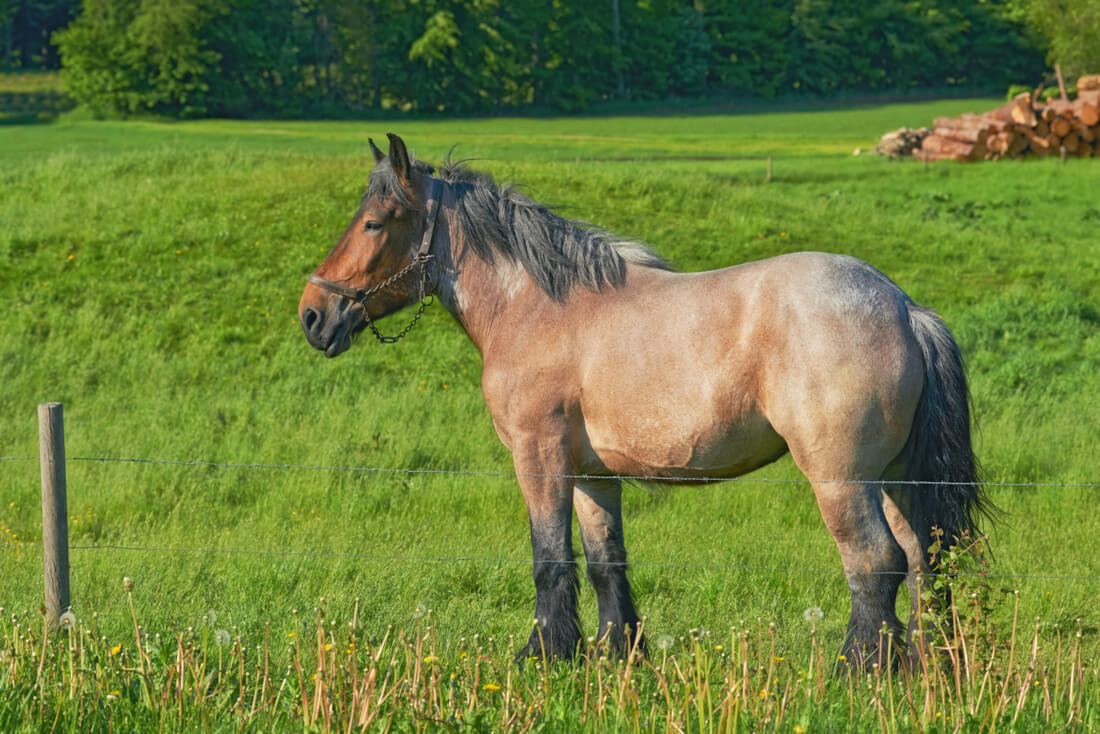
The Auxois horse is a rare draft breed native to the Burgundy region of France.
Developed for strength, stamina, and a calm temperament, the Auxois has long served as a reliable partner in agriculture, forestry, and transportation. Today, the breed is still valued for its gentle nature and muscular build.
As one of the heaviest French draft breeds, the Auxois is known for its broad frame, deep chest, and efficient movement. Despite their size, Auxois horses are remarkably docile and easy to handle. Like many cold-blooded draft horses, the Auxois has unique care requirements, particularly related to weight management and joint support.
Keep reading to learn more about the history, characteristics, health problems, and nutritional needs of Auxois horses.
Auxois Horse History
The history of the Auxois is closely linked to the agricultural heritage of France. Today, the modern Auxois reflects the changing landscape of French farming and continues to play a role in local heritage and traditions.
Origin
The Auxois horse originated in the Côte-d’Or region of Burgundy, France. The breed’s roots trace back to the region’s native Bourguignon horses, who descended from the Great Horses of the Middle Ages. [1]
Early Auxois breeding began in the 19th century with the goal of producing a robust and versatile draft horse suited to heavy pulling in the region’s fertile plains. Genetic research has revealed that Ardennes and Percheron horses significantly influenced the breed. [1]
The resulting horse shared characteristics with its ancestors, but retained a distinctively regional character. Auxois horses were shorter and stockier than the Percheron, but with more size than the Ardennes.
By emphasizing strength, endurance, and a manageable disposition, breeders created a powerful yet compact horse ideal for tilling vineyards, pulling plows, and hauling timber.
Historic Use
During the early 20th century, the Auxois quickly gained popularity across Burgundy and neighboring regions. Known for their ability to work long hours in heavy soil, these horses became essential in farming operations. [2]
Their muscular build and docile temperament made them particularly useful in small-scale farms where tractors were either unavailable or impractical. [2]
However, following World War II, mechanization rapidly replaced draft horses in agriculture across Europe. The Auxois population declined steeply, and by the 1970s, the breed faced the risk of extinction. [2]
Eventually, conservationists and breed enthusiasts began to promote the Auxois as a living part of rural heritage, reintegrating the horse into eco-tourism and leisure pastimes.
Breed Registry
The Auxois was officially recognized as a distinct breed in 1912, when the French Ministry of Agriculture established the Stud-Book du Cheval Auxois, which remains the breed’s primary registry. [3]
Most breeding programs are concentrated in eastern France, and few Auxois horses live outside of their native country. The breed is classified under France’s nine official races de trait, or draft breeds, and benefits from national and regional efforts to preserve its genetic diversity. [4]
Despite its limited global reach, the Auxois is celebrated within France as a symbol of traditional agriculture and rural strength.
| Breed Summary | |
|---|---|
| Breed Name | Auxois |
| Breed Type | Draft |
| Origin | Burgundy, France |
| Breed Registry | Stud-Book du Cheval Auxois |
| Population Status | Rare |
| Average Height | 15.3 – 17 hh |
| Common Coat Colors | Bay, chestnut, roan, gray |
| Conformation | Short, deep, muscular body, broad forehead, straight profile, small alert ears, short thick arched neck, sloping shoulder, deep chest, compact barrel, short strong back, broad slightly sloped croup, short sturdy legs, large hooves |
| Common Uses | Agriculture, forestry, transportation, driving, carriage work, logging, trail riding, recreation |
| Temperament | Gentle, docile, calm, willing |
| Best For | Larger riders; educational programs; carriage rides |
| Common Health Concerns | PSSM1, chronic progressive lymphedema, osteoarthritis, hoof flares, cracks, abscesses, obesity, laminitis, equine metabolic syndrome |
What's your top priority with your horse's health?

Enter your email to receive your store credit
Breed Characteristics
The Auxois is a powerful draft horse breed known for its compact, muscular build, calm temperament, and ability to thrive in agricultural settings. Bred for strength and endurance, this horse is built to perform heavy pulling tasks with minimal exertion.
Today, the breed is recognized for its efficiency in draft work, gentle demeanor, and adaptability to modern uses.
Conformation
While the breed shares ancestry with other French drafts such as the Ardennes and Percheron, the Auxois has distinct traits that reflect its regional development in Burgundy’s fertile plains. [5]
The Auxois has a short, deep, and muscular body typical of cold-blooded draft horses.
An ideal Auxois exhibits the following conformation traits: [3]
- Height between 15.3 and 17 hands
- Broad forehead, straight profile, small, alert ears
- Short, thick, and arched neck set high into a sloping shoulder
- Deep chest, wide and compact barrel, well-sprung ribs
- Short and strong back with a well-muscled loin
- Broad and slightly sloped croup with a low-set tail
- Short, sturdy legs with large joints and clean, low-set hocks
- Large and well-formed hooves, suitable for carrying substantial weight
This conformation allows the Auxois to excel in slow, heavy draft work while also supporting longevity and soundness when properly managed.
Colors
The Auxois breed standard allows a limited range of coat colors, reflecting its traditional aesthetic and breeding practices. Accepted coat colors include:
- Bay
- Chestnut
- Roan
- Gray
Most Auxois horses are bay. [3]
The Auxois typically has minimal white markings and no excessive feathering, which distinguishes it from some other French and British draft breeds.
Temperament
The Auxois is widely praised for its gentle and docile nature. This breed was developed to work alongside farmers in close quarters, and its calm demeanor reflects that history.
Key temperament traits include a willing work ethic, even temperament, and low reactivity to environmental stimuli.
Because of their temperament, Auxois horses are well suited for educational programs, carriage rides, and community outreach where a calm and approachable horse is essential.
Disciplines
Historically bred for draft work, the Auxois remains highly capable in tasks that require pulling strength and stamina. While no longer a staple in modern agriculture, the breed has adapted to a variety of contemporary uses.
Auxois horses can still show off their pulling ability as recreational driving horses. They excel at pulling carriages, wagons, sleighs, and logs. These horses are often seen pulling carriages at heritage events and festivals in their home region.
Though not commonly ridden, some Auxois are trained under saddle for trail or recreational use. Like other draft horses, they are a good fit for larger riders who need stronger mounts to carry their weight.
Auxois Health Profile
Like other heavy draft breeds, Auxois horses have specific health considerations that require attentive management. Their large body size, easy keeper nature, and low activity level in modern environments predispose them to several health conditions.
Genetic Diseases
To date, no breed-specific inherited diseases have been widely documented in Auxois horses. However, as with many rare breeds, the relatively small gene pool presents a risk for reduced genetic diversity.
Genetic studies have confirmed that many draft breeds related to the Auxois horses, such as the Ardennes, are carriers of the GYS1 gene variant responsible for PSSM1. This hereditary muscle disease is characterized by abnormal glycogen accumulation in muscle tissue. [6]
Auxois horses with PSSM1 may experience muscle soreness, exercise intolerance, and tying-up episodes. While there is no cure for this condition, affected horses can live long and healthy lives with effective management changes. [6]
Health Problems
While robust in many ways, the Auxois horse is predisposed to several health concerns typical of large draft breeds.
Chronic Progressive Lymphedema (CPL), a condition involving progressive swelling and fibrosis of the lower limbs, has been documented in related European draft breeds. The condition is believed to involve a genetic component related to lymphatic drainage failure and horses with poor circulation or lack of exercise may have more severe clinical signs. [7]
Due to their size and body mass, Auxois horses are also prone to joint wear and conditions such as osteoarthritis, especially if overworked or inadequately conditioned.
The Auxois’ large and often flat feet can develop flares, cracks, and abscesses if not trimmed regularly. Their weight places increased stress on hooves, particularly in wet or soft footing. [8]
Care and Management
Good management practices are essential for preventing chronic issues and promoting the overall health of Auxois horses, including:
- Veterinary Exams: Regular veterinary appointments are important for monitoring the health of Auxois horses and detecting issues early, particularly concerns related to weight management and joint health.
- Vaccinations: A vaccination schedule recommended by a veterinarian helps protect Auxois horses and their herd mates from infectious diseases.
- Dental Care: Routine dental check-ups and teeth floating help maintain efficient chewing and digestion.
- Parasite Management: A targeted parasite control program based on fecal egg counts can prevent internal parasite infestations and support digestive health in Auxois horses.
- Hoof Care: Consistent farrier visits help maintain proper balance and reduce strain on joints. Auxois horses typically have strong, dense hooves, though those used for heavier work or driven on hard surfaces may benefit from shoeing for added protection.
Regular, low-impact exercise and turnout support lymphatic circulation, prevent obesity, and maintain joint mobility. Groundwork, light driving, and trail riding are all beneficial forms of activity for Auxois horses.

Nutrition
As a cold-blooded draft breed, the Auxois horse is often an easy keeper, prone to weight gain if fed in excess. Proper nutrition for the Auxois involves meeting their needs for maintenance and health without overfeeding calories, starch, or sugar.
Weight Maintenance
Auxois horses are naturally easy keepers, adapted to maintaining body condition on minimal feed.
A calorie-rich diet and lower workload in modern settings increases the risk of obesity in Auxois horses. Obesity is linked to serious health concerns such as insulin dysregulation, laminitis, and equine metabolic syndrome (EMS). [9]
It is important to regularly monitor your horse’s body condition and adjust the diet according to forage quality, workload, and turnout access. Aim to maintain your Auxois at a body condition score of 5 or 6 out of 9 on the Henneke scale.
Owners should avoid overfeeding, particularly with commercial grains or lush pasture. Consult an equine nutritionist for guidance in developing a diet that maintains a healthy body weight.
Sample Diet
Below is a general recommended feeding program for an average 1,800 lb (820 kg) Auxois horse at maintenance (no exercise).
| Feed | Amount per day |
|---|---|
| Mid-Quality hay (10% crude protein) | Free Choice |
| Salt | 45 g (3 tbsp) |
| Omneity® Pellets | 300 g (3 scoops) |
| Diet Analysis | |
| Digestible Energy (% of Req) | 114% |
| Protein (% of Req) | 158% |
| NSC (% Diet) | 8.8% |
A typical diet for an adult Auxois horse in light work or maintenance can often consist entirely of forage paired with a vitamin and mineral balancer. Most draft horses can meet their energy and protein needs without concentrates.
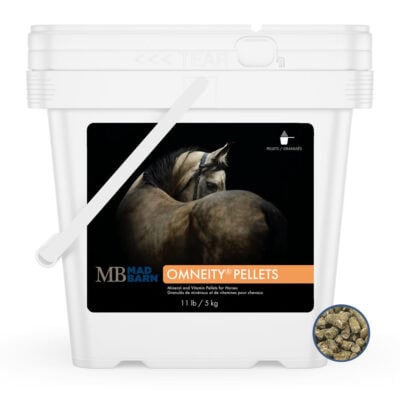
However, hay alone is frequently low in certain vitamins and minerals, which can affect hoof strength, coat condition, and overall health. To fill these gaps, balance the diet with a comprehensive supplement such as Omneity®.
Omneity® provides optimal levels of biotin, zinc, and copper to promote strong hooves, antioxidants like vitamin E and selenium to support immune function, and essential amino acids to maintain muscle and topline. Its concentrated, low-calorie formula makes it ideal for easy-keeping draft breeds by delivering complete nutrition without adding excess sugar or starch [10].
Auxois horses with Polysaccharide Storage Myopathy (PSSM) may benefit from higher levels of dietary fat as a safer alternative to high-starch feeds. [11] Work with an equine nutritionist to formulate a diet that is safe for your PSSM horse.
Draft horses often need more water than other breeds. Clean, fresh water and free-choice salt should always be available, especially during hot weather or periods of increased activity. To meet sodium requirements, add loose salt to the daily ration.
Forage
Forage should be the foundation of your Auxois horse’s diet. Horses willingly consume approximately 2% of their body weight in hay daily, meaning a 1,800-pound Auxois horse will consume around 40 pounds of hay every day. [12]
Average quality, low-starch grass hay is typically the most appropriate option for Auxois horses, as it provides adequate fiber without excess energy.
Whenever possible, hay should be analyzed for nutrient content, particularly to assess levels of protein, sugar, starch, and trace minerals. Testing forage is also essential for Auxois horses with PSSM1 to ensure their hay has safe levels of hydrolyzable carbohydrates (HC; sugar + starch).
Auxois horses with access to pasture may require restricted grazing, especially in the spring and fall when HC levels are highest in pasture grass. Using a muzzle while your Auxois horse is on pasture or limiting their turnout time can help to limit their pasture grass consumption.
Using slow feeders or hay nets can help extend eating time, support digestive health, and mimic natural grazing behavior for horses receiving a restricted hay intake.
Feeding Recommendations
Most Auxois horses do not require commercial concentrates in their diet. High-starch, high-sugar grains can increase the risk of digestive upset and laminitis in this heavy draft breed. [13]
Offering a concentrated vitamin and mineral supplement in place of grains can help reduce excess calorie and starch intake. Soaked hay pellets or beet pulp are excellent fiber-based carriers for supplements in an Auxois horse’s feeding program.
Soaked beet pulp and forage cubes are also useful for senior Auxois horses with dental issues. An equine nutritionist can formulate a plan to meet nutritional requirements while managing fiber length for improved digestion for horses who need additional support.
When additional energy is needed, a fat supplement can provide a safe calorie source. Fats rich in anti-inflammatory omega-3 fatty acids may also support joint function, coat condition, and respiratory health. [14][15][16]
Fresh water and free-choice salt should be available at all times. Providing 1–2 ounces of plain loose salt daily helps meet sodium needs and encourages adequate water consumption.
Nutritional Supplements
A balanced diet should be your priority when feeding your Auxois horse. After the diet is balanced, you can consider adding nutritional supplements for targeted support.
- W-3 Oil is a concentrated source of dietary fat and the omega-3 fatty acid DHA from marine sources, formulated to support a healthy coat, skin, joints, and metabolic function.
- MSM supplies bioavailable sulfur to help maintain joint health, connective tissue integrity, and overall comfort in hardworking or aging Auxois horses.
- Magnesium Oxide provides a source of magnesium that supports normal muscle function, relaxation, and nervous system health.
Submit your Auxois Horse’s information for a free evaluation and consult our qualified equine nutritionists for help formulating a balanced diet.
Frequently Asked Questions
Here are some frequently asked questions about Auxois horses:
The Auxois horse is a rare French draft horse breed from the Burgundy region. Auxois horses were traditionally bred for heavy farm work, forestry, and transport, and they are known for their strength, stamina, and calm temperament. The breed has a broad frame, deep chest, and muscular build that reflect their history as a powerful working horse. Today, the Auxois horse is valued both for practical draft use and as an important part of French rural heritage.
Auxois horses are mainly used today for driving, carriage work, agritourism, and traditional heritage events. Some Auxois horses are also used in light forestry or logging, where their strength and steady temperament remain useful. While the breed once played a major role in agriculture, modern Auxois horses are more often seen in cultural demonstrations and recreational draft work. A small number are still raised for meat production, though many current efforts focus on breed preservation.
Auxois horses are generally easy to care for, but they need careful feeding and weight management. Like many draft horses, Auxois horses are easy keepers and can be prone to obesity, laminitis, and metabolic problems if overfed. Routine hoof trimming, veterinary care, turnout, and regular low-impact exercise are important for keeping them healthy and comfortable. Because of their large size, owners also need to stay proactive about joint support and body condition.
The Auxois horse is considered a rare breed with a small population centered mainly in eastern France. Auxois horse numbers declined sharply after mechanization reduced the need for heavy working draft horses. Modern conservation and breeding programs aim to preserve the breed’s genetic diversity and maintain its role in French agricultural heritage. Even today, Auxois horses remain uncommon outside their native region.
Auxois horses can be ridden, although they were bred primarily for pulling rather than saddle work. Some Auxois horses are used for light riding, trail riding, and recreational riding under saddle, especially for larger riders who want a sturdy mount. Their calm temperament and surefootedness can make them pleasant partners for low-intensity riding. However, they are generally better suited to draft and driving work than to athletic ridden disciplines.
An adult Auxois horse typically eats about 2% of its body weight in forage per day. For an average 1,800 pound (820 kg) Auxois horse, that usually works out to around 40 pounds (18 kg) of hay daily, although the exact amount depends on body condition, forage quality, workload, and pasture access. Most Auxois horses in maintenance or light work do well on a forage-based diet with a vitamin and mineral balancer instead of grain, and as with any equine diet, fresh water and free-choice salt should always be available.
Auxois horses are known for having a gentle, docile, and willing temperament. Auxois horses were bred to work closely with people in agricultural settings, which helped shape their calm and steady nature. Most are even-tempered, making them well suited for driving, educational programs, and public events. Their quiet disposition is one of the breed’s most valued traits.
Auxois horses are heavy draft horses with a short, deep, muscular build. They typically have a broad forehead, straight profile, and small alert ears, along with a short, thick, arched neck and sloped shoulders. Their bodies feature a deep chest, compact barrel, and broad, slightly sloped croup. Auxois horses also have short, sturdy legs, substantial joints, clean low-set hocks, and large well-formed hooves built to support significant weight. Their overall conformation reflects strength, durability, and efficiency in slow, heavy pulling work.
Auxois horses most commonly come in bay, chestnut, roan, and gray. Bay is the most common color seen in Auxois horses, and most have minimal white markings that contribute to the breed’s classic, uniform appearance. Compared to some other draft breeds, Auxois horses usually have little feathering on the lower legs. Their color range is more limited than that of many lighter horse breeds.
Most Auxois horses stand between 15.3 and 17 hands high. Their height, combined with substantial bone and a broad body, gives Auxois horses a very powerful appearance. Although they are not the tallest draft breed, they are considered one of the heaviest French draft horses. Proper nutrition and management in their younger years can support sound growth and skeletal development in Auxois horses.
The Auxois horse’s large size and strength may be intimidating for beginner riders, but this breed is usually calm, docile, and easy to handle. Under supervision and good instruction, they can be suitable for some beginners. Their steady temperament often makes Auxois horses more forgiving than hotter or more reactive breeds, but as with any breed, suitability also depends on the individual horse’s training, manners, and management.
Auxois horses can be prone to several health problems related to their size, metabolism, and draft horse build. Common concerns in Auxois horses may include polysaccharide storage myopathy type 1 (PSSM1), chronic progressive lymphedema, and osteoarthritis. They are also prone to hoof problems such as cracks, flares, and abscesses. As easy keepers, Auxois horses are also at risk for obesity, laminitis, and equine metabolic syndrome if they are overfed or underexercised. Regular hoof care, weight management, turnout, and routine veterinary monitoring are important for long-term health.
Summary
The Auxois horse is one of the oldest French breeds, developed in the Burgundy region. It shares ancestry with other heavy French horses, including the Ardennes and Percheron.
- The Auxois was an integral part of agrarian Burgundy, developed for its powerful pulling and docile temperament
- The modern Auxois is on France's list of 9 protected draft breeds, and conservation efforts have kept adequate numbers in the region
- There are no breed-specific genetic diseases associated with the Auxois breed, but related draft breeds are carriers of PSSM-1
- Like other drafts, the Auxois is an easy keeper, making weight management and regular exercise an important part of management
References
- Jordana. J. et al. Analysis of Genetic Relationships in Horse Breeds. Journal of Equine Veterinary Science. 1995.
- Kander. A. and Warde. P. Energy Availability from Livestock and Agricultural Productivity in Europe, 1815–1913: A New Comparison. The Economic History Review. 2011. View Summary
- Règlement du livre généalogique du cheval Trait Auxois. IFCE. 2023.
- L’Institut français du cheval et de l’équitation. IFCE. 2025.
- Rhoad. A. Relation Between Conformation and Pulling Ability of Draft Horses. Journal of Animal Science. 1929.
- Baird. J. D. et al. Presence of the Glycogen Synthase 1 ( GYS1 ) Mutation Causing Type 1 Polysaccharide Storage Myopathy in Continental European Draught Horse Breeds. Veterinary Record. 2010. View Summary
- Brys. M. et al. Chronic Progressive Lymphedema in Belgian Draft Horses: Understanding and Managing a Challenging Disease. Veterinary Sciences. 2023.
- Thompson. K. N. et al. The Effect of Toe Angle on Tendon, Ligament and Hoof Wall Strains in Vitro. Journal of Equine Veterinary Science. 1993.
- Johnson. P. J. et al. Medical Implications of Obesity in Horses—Lessons for Human Obesity. Journal of Diabetes Science and Technology. 2009. View Summary
- Richards. N. et al. Nutritional and Non-Nutritional Aspects of Forage. Veterinary Clinics of North America: Equine Practice. 2021. View Summary
- Ribeiro. W. P. et al. The Effect of Varying Dietary Starch and Fat Content on Serum Creatine Kinase Activity and Substrate Availability in Equine Polysaccharide Storage Myopathy. Journal of Veterinary Internal Medicine. 2004.
- Nutrient Requirements of Horses: Sixth Revised Edition. National Academies Press, Washington, D.C. 2007.
- Geor. R. J. Metabolic Predispositions to Laminitis in Horses and Ponies: Obesity, Insulin Resistance and Metabolic Syndromes. Journal of Equine Veterinary Science. 2008.
- Manhart. D. R. et al. Markers of Inflammation in Arthritic Horses Fed Omega-3 Fatty Acids. The Professional Animal Scientist. 2009.
- Richards. T. et al. Effects of Dietary Camelina, Flaxseed, and Canola Oil Supplementation on Transepidermal Water Loss, Skin and Coat Health Parameters, and Plasma Prostaglandin E2, Glycosaminoglycan, and Nitric Oxide Concentrations in Healthy Adult Horses. Journal of Animal Science. 2023.
- Nogradi. L. et al. Omega-3 Fatty Acid Supplementation Provides an Additional Benefit to a Low-Dust Diet in the Management of Horses with Chronic Lower Airway Inflammatory Disease. Journal of Veterinary Internal Medicine. 2015.