English










The Belgian Draft is one of the largest horse breeds in the world. With roots tracing back to the heavy horses that carried Medieval knights into battle, the Belgian has an impressive stature and exceptional power.
In North America, Belgian Draft horses outnumber the population of all other draft breeds combined. These American Belgian Drafts became genetically distinct when importations of European horses slowed in the early twentieth century.
Once relied upon for agricultural work, the breed continues to gain popularity thanks to their versatility and good dispositions. While Belgian Drafts are still used for driving, many Belgian owners enjoy riding these gentle giants.
This article will review the origin, history, characteristics, health problems and nutritional needs of the Belgian Draft breed. Keep reading to learn more about caring for and feeding Belgian Draft horses.
Belgian Draft Horse History
Throughout history, Belgian Drafts have helped humans win wars, cultivate fields, and haul heavy loads. Historical evidence suggests this breed is a descendant of the “Great Horse” that dominated battlefields in the Middle Ages. [1]
Origin
The demand for horses with the strength to pull large farm equipment and carry knights with heavy armour led to the development of several heavy draft breeds in Europe.
Fertile soil in the lowlands of Western Europe provided farmers with the pastures necessary to raise large horses. Historians believe the “Great Horses” of Medieval texts originated from Flemish horses bred in the region that is now modern Belgium. [1]
Large, muscled horses were also necessary for cultivating the thick, heavy soil of the region. Unlike other areas of Europe where the trends shifted to lighter riding horses, Belgian breeders focused on the Belgian Heavy Draft, also known as the Brabant.
Records of Belgian draft breeding date back to the 17th century, and the first studbook began in 1886.
Historic Use
Belgian stallions were exported worldwide to produce larger animals for industrial and farming use. Their stocky builds were particularly well-suited for pulling heavy plows, and the breed gained recognition as a powerful working horse. [2]
Belgian breeders organized exhibits to showcase their stallions, including the Great National Show in Brussels. Inspection committees evaluated the stallions, leading to a rapid improvement and establishment of a fixed breed type.
The first Belgian Drafts imported to North America arrived in the 19th century. In 1904, the Belgian government sent an exhibit of Belgian Drafts for the St. Louis World’s Fair and International Livestock Exposition.
The exhibit generated significant interest in the breed, and imports skyrocketed until the First World War suddenly brought them to a halt. After that, American breeders used their existing stock to develop a distinct line of American Belgian Drafts.
While demand for the breed fell after the mechanization of agriculture, the numbers rebounded as Belgian Drafts gained popularity as recreational horses. [3]
Breed Registry
In 1887, breed enthusiasts founded the American Association of Importers and Breeders of Belgian Draft Horses. The organization changed its name to the Belgian Draft Horse Corporation of America in 1937.
The BDCHA maintains the official breed registry for American Belgian Drafts and promotes the preservation of the purebred Belgian Draft in North America.
| Breed Summary | |
|---|---|
| Breed Name | Belgian Draft |
| Also Known As | Belgian Heavy Draft; Brabant |
| Breed Type | Draft |
| Origin | Belgium (Western Europe) |
| Breed Registry | Belgian Draft Horse Corporation of America (BDCHA) |
| Population Status | Popular; outnumber all other draft breeds combined in North America |
| Average Height | 16.2 – 17 hh |
| Average Weight | 1,800 – 2,400 lb |
| Common Coat Colors | Chestnut, sorrel, bay, black, roan, gray; white blaze and four white socks common |
| Conformation | Compact, short wide back, powerful loin, massive hindquarters, muscular shoulders, short strong legs, limited feathering, short neck, proportional head |
| Lifespan | Few live past 20 years |
| Common Uses | Driving, carriages, sleighs, farm work, shrimp fishing, pleasure riding |
| Temperament | Gentle, willing, brave, loyal |
| Best For | Larger riders; experienced handlers |
| Common Health Concerns | Junctional epidermolysis bullosa, PSSM1, shivers, chronic progressive lymphedema, pastern dermatitis, poor hoof quality, mechanical laminitis |
What's your top priority with your horse's health?

Enter your email to receive your store credit
Breed Characteristics
Centuries of selective breeding have reinforced characteristics in the Belgian Draft, making the breed instantly recognizable. These horses are typically gentle giants with massive builds and kind personalities.
Conformation
The Belgian Draft isn’t the tallest breed of draft horse in the world, and most stand between 16.2 and 17 hands. But they can weigh twice as much as light breeds with similar heights at 1800 to 2400 pounds.
American Belgian Drafts are less stocky than the original Belgian Heavy Drafts but have similar proportions. These horses have compact bodies with short, wide backs. Powerful loins connect to massive hindquarters, which add to the pulling power of muscular shoulders.
These draft horses have short, strong legs with limited feathering. They have relatively short necks and proportional heads. Tails are sometimes docked in this breed, but the practice is unnecessary and can have negative welfare implications. [4]
Colours
American breeding has favoured Belgian Drafts with chestnut or sorrel coats, white face stripes, and four white socks. Other colours seen in the breed include bay, black, and roan. Grey coats are possible but rare.
Temperament
Despite their size, most Belgian Drafts have good temperaments that make them easy to handle. However, their strength may not be suitable for beginner riders without guidance.
These horses also have willing work ethics, and many Belgian Draft owners admire the breed for their bravery and loyalty.
Disciplines
Draft breeds like the Belgian have conformations well-suited for pulling. Belgian Drafts are most commonly used for driving disciplines, and many are seen pulling recreational carriages and sleighs.
Some modern Belgian Drafts are still working horses. On the Belgian coast, fishermen use traditional shrimp fishing practices with Belgian Drafts, riding the horses into the water while dragging a net behind them.
Belgian Drafts also make enjoyable pleasure mounts for larger riders. These horses have more whoa than go under saddle and often prefer leisurely rides to faster gaits.
Health Conditions
Unfortunately, large draft breeds often have shorter lifespans than average horses, with few Belgian Drafts living past 20 years. But prioritizing horse health can help Belgian Draft owners make the most of their time with their equine partners.
Genetic Diseases
Junctional epidermolysis bullosa is a fatal inherited disease that causes severe blistering and skin lesions in affected newborn foals. Studies suggest that over 17% of Belgian Drafts in North America carry the gene responsible for this disorder. [5]
Polysaccharide storage myopathy type 1 (PSSM1) is also prevalent in Belgian Draft horses. This muscle disease is characterized by the accumulation of sugars in skeletal muscles, which can lead to tying up.
Researchers believe the PSSM1 variant was under positive selection in the Belgian Horse Breed due to its advantages for workhorses with limited sugar intake. One study of 103 Belgians found that 36% of the horses were positive for PSSM. [6]
Health Problems
Research shows that 16% of Belgian Draft horses are affected by shivers, a progressive neuromuscular disease characterized by gait abnormalities when backing up. Research continues to investigate genes that may be responsible for the disease. [7]
Large draft breeds, including Belgians, are susceptible to chronic progressive lymphedema. CDL is a disease of the lymphatic system characterized by lower leg swelling, lymph buildup, skin folds, and nodules.
The swelling progresses throughout life and eventually causes lameness, secondary infections, and premature death.
Unfortunately, there is no cure for chronic progressive lymphedema. Exercise, regular cleaning, compression bandaging, and certain medications can help manage the disease.
Care and Management
Belgian Draft Horses need quality basic care that includes a veterinary wellness program with regular vaccinations, deworming, and dental exams.
Because of their size, drafts often need larger stalls and turnouts than average horses to feel comfortable and safe.
When grooming your horse, owners should pay extra attention to feathered areas on their Belgian’s lower limbs. These long hairs can collect debris and bacteria that increase the risk of pastern dermatitis. [8]
Quality farrier care is also important to help these horses support their weight on well-balanced feet. Unbalanced hooves can increase loading forces on tendons and ligaments, raising the risk of injury. Some draft horses also struggle with poor hoof quality. [9]
Light exercise during turnout and training are also important to support circulation, lymphatic drainage, and muscle function.

Nutrition Program
Nutrition requirements for horses are calculated based on your horse’s mature body weight. As a result, heavier breeds need more forage and different serving sizes of commercial feeds and supplements than average horses.
You can ensure that you are providing your Belgian with a balanced diet by working with an equine nutritionist to formulate a feeding program tailored to your horse’s individual needs.
Weight Maintenance
Belgian Drafts are easy keepers and have little difficulty maintaining their weight on a balanced diet. Contact your veterinarian to investigate potential medical causes of any unexpected weight loss.
While heavy musculature is a characteristic feature of the breed, it’s important to maintain your Belgian Draft horse at a moderate body condition to reduce the risk of health problems. Obese drafts have an increased risk of mechanical laminitis. Metabolic issues can also be exacerbated if they are fed a diet with excess high-starch feeds. [10]
Sample Diet
A typical horse should consume 2% of their body weight in forage daily. This means that draft horses need significantly more hay on a daily basis than lighter breeds.
For example, a 2000 lb (900 kg) Belgian Draft should get at least 40 pounds (18 kg) of hay on a dry matter basis every day. [11]
The following sample diet is intended for a mature Belgian Draft with normal body condition in light work.
| Feed | Maintenance Diet |
|---|---|
| (Amount / Day) | |
| Mid-Quality hay (10% crude protein) | Free Choice |
| Salt | 45 g (3 tbsps) |
| Omneity® Pellets | 400 g (4 scoops) |
| Diet Analysis | |
| Digestible Energy (% of Req) | 102% |
| Protein (% of Req) | 146% |
| NSC (% Diet) | 8.8% |
Forage
The horse evolved to graze continuously throughout the day, spending little time with an empty stomach. The best way to mimic this is by providing your horse with free-choice access to forage all day long.
Not only does free-choice forage support your horse’s gut health, it also promotes mental well-being, reducing stress and incidence of stereotypic behaviours.
If your easy-keeper Belgian Draft needs to lose weight, consider using a small hole hay net to increase foraging time while reducing hay intake. You can also limit grass intake with a grazing muzzle when your horse is turned out to pasture.
Most Belgian Drafts do well on average-quality, low-starch grass hay, but hard working horses with higher energy requirements may need more energy-dense hay to supply additional calories.
Adding alfalfa hay to the diet can boost protein levels and support muscle development. The high calcium content of alfalfa may lead to mineral imbalances. The calcium to phosphorus ratio can be balanced by adding wheat bran or phosphorus supplements.
You can learn more in our Guide to Choosing the Right Hay for your horse.
Feeding Recommendations
Fresh water and plain loose salt should always be available to your horse. Drafts drink more water than light horses, consuming up to 24 gallons daily, more when working or in hot weather. Adding salt to your horse’s daily ration helps meet sodium requirements and encourages hydration. [11]
Commercial concentrates and complete feeds are often high in sugar and starch, which are not suitable for Belgian Drafts with PSSM.
Fat supplements are a safer energy source for these horses if they need additional calories in their diet. Research suggests PSSM horses can benefit from getting up to 20% of digestible dietary energy from fat sources. [12]
Nutritional Supplements
Belgian Draft horses have higher requirements for vitamins and minerals than average horses. These micronutrients play a crucial role in supporting physiological functions, immune defenses, hoof health, metabolic processes, muscle function and more.
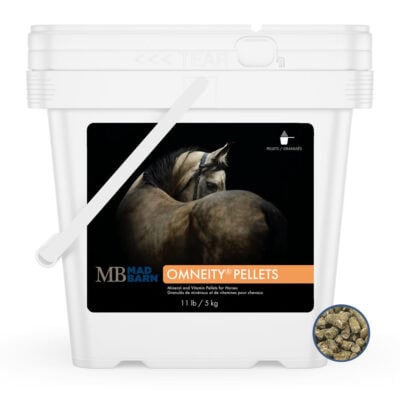
Mad Barn’s Omneity® is a comprehensive vitamin and mineral supplement that contains no fillers or added sugars. This makes it an ideal addition to balance your easy keeper’s forage-based diet.
Omneity® is made with 100% organic trace minerals and contains concentrated amounts of biotin, amino acids, yeast and digestive enzymes to support skin and coat quality, healthy digestion, and overall well-being.
Belgians that need extra calories benefit from a source of omega-3 fatty acids, such as Mad Barn’s W-3 Oil. Omega-3 fatty acids have anti-inflammatory properties that support cardiovascular function, immune health, joint mobility and a gleaming coat. [13]
Vitamin E is an important antioxidant for Belgian horses with neurological or muscular concerns. Belgian drafts in work need additional Vitamin E supplemented in the diet to support muscle function.
Frequently Asked Questions
Here are some frequently asked questions about Belgian Draft horses:
The Belgian Draft is one of the largest and strongest horse breeds in the world. Originating in Belgium, this heavy draft breed descends from the powerful horses once used for farm work, hauling, and warfare in medieval Europe. Belgian Draft horses are known for their massive size, muscular build, and calm, willing nature. In North America, the breed became especially popular and developed into a distinct American line after European imports slowed in the early twentieth century.
Belgian Draft horses are unique for their exceptional size, strength, and gentle temperament. They are among the most popular draft breeds in North America and are especially recognized for their muscular bodies, chestnut or sorrel coats, and steady, reliable nature. Unlike lighter horse breeds, Belgian Draft horses were developed for pulling power rather than speed. Their combination of strength and kindness is one reason they are often called gentle giants.
Belgian Draft horses are used for driving, farm work, hauling, recreational carriage work, and pleasure riding. Historically, Belgian Draft horses were bred to pull heavy plows and move large loads in agricultural and industrial settings. Today, they are commonly seen pulling carriages and sleighs, and some still work in traditional farming roles. Many owners also enjoy Belgian Draft horses as quiet, comfortable riding horses for leisurely trail and pleasure riding.
Belgian Draft horses have a compact, powerfully built body designed for strength and pulling. They typically have a short, wide back, strong loins, massive hindquarters, muscular shoulders, short sturdy legs, and a relatively short neck with a proportional head. Belgian Draft horses are not the tallest draft breed, but they are extremely heavy and muscular for their height. Their overall conformation reflects the breed’s long history as a working horse built for traction and endurance under load.
Belgian Draft horses are most commonly chestnut or sorrel with white facial markings and white socks. In North America, these colors are especially common and are closely associated with the breed’s typical appearance. Belgian Draft horses can also be bay, black, roan, or, more rarely, gray. Their rich coat color and bright white markings make many individuals easy to recognize.
Belgian Draft horses are known for having a gentle, willing, and steady temperament. Despite their size and strength, Belgian Draft horses are often calm, patient, and easy to handle when given consistent training and routine care. They are commonly described as brave, loyal, and people-oriented horses that enjoy work and interaction. Their quiet nature makes them appealing to owners who want a dependable horse with a kind disposition.
Most Belgian Draft horses stand between 16.2 and 17 hands high. This height places Belgian Draft horses among the taller horse breeds, though their body mass often stands out even more than their height. Their broad frame and heavy muscling make them appear even larger than many horses of similar height.
Belgian Draft horses typically weigh between 1,800 and 2,400 pounds, and their exact weight depends on height, frame, sex, age, and body condition. Belgian Draft horses are much heavier than light riding breeds and require management that accounts for their large size, including appropriate nutrition, hoof care, and housing. Maintaining a moderate body condition is important because excess weight can increase strain on the limbs and feet.
Belgian Draft horses can be suitable for beginners in some situations, but their size and strength mean they are usually better matched with a knowledgeable handler. Belgian Draft horses are generally gentle and cooperative, which can make them easier to work with than hotter or more reactive breeds, but inexperienced riders may still need guidance. Managing such a large horse requires confidence, good facilities, and proper training support. For beginners with experienced help, a well-trained Belgian Draft can be a calm and rewarding partner.
Belgian Draft horses are prone to several health problems, shivers, chronic progressive lymphedema, pastern dermatitis, poor hoof quality, and mechanical laminitis. Like many large draft breeds, Belgian Draft horses may also have shorter lifespans than lighter horses. Their heavy body weight can place extra strain on their limbs and feet, especially if they become overweight or have poor hoof balance. Good nutrition, regular exercise, farrier care, and preventive veterinary management all play important roles in supporting long-term health.
Belgian Draft horses are susceptible to several inherited conditions, most notably junctional epidermolysis bullosa and PSSM1. Junctional epidermolysis bullosa is a fatal genetic skin disease that affects newborn foals, while PSSM1 is a muscle disorder linked to abnormal sugar storage in the muscles. Belgian Draft horses may also have inherited risk factors related to shivers and other draft horse health concerns. Responsible breeding and genetic testing help reduce the likelihood of passing these conditions to future foals.
Belgian Draft horses often have shorter lifespans than lighter horse breeds, and many do not live past 20 years. Lifespan varies depending on genetics, body condition, workload, hoof care, and overall health management. Because Belgian Draft horses are large and heavy, long-term soundness and metabolic health are especially important. Preventive care and balanced nutrition can help support better quality of life as these horses age.
Summary
Belgian Draft horses are powerful, gentle giants descended from Medieval warhorses bred in modern-day Belgium. Today’s American Belgians are prized for strength, calm temperaments, and versatility in both work and leisure. Careful management supports their longevity and health.
- Descended from Flemish “Great Horses” used by knights in the Middle Ages
- American Belgian line developed after early 20th-century import restrictions
- Known for chestnut coats, muscular builds, and quiet, cooperative temperaments
- Genetic risks include junctional epidermolysis bullosa and polysaccharide storage myopathy
- Also prone to shivers and chronic progressive lymphedema
- Balanced forage diets, controlled starch intake, and strong hoof care are essential
References
- Ameen, C. et al. In search of the ‘great horse’: A zooarchaeological assessment of horses from England (AD 300–1650). Int J Osteoarchaeol. 2021.
- Andersen, T. et al. The heavy plow and the agricultural revolution in Medieval Europe. J Dev Econ. 2016.
- Olmstead, A. et al. Reshaping the Landscape: The Impact and Diffusion of the Tractor in American Agriculture, 1910-1960. J Econ Hist. 2002.
- Lefebvre, D. et al. Tail docking in horses: a review of the issues. Animal. 2007. View Summary
- Baird, J. et al. Junctional Epidermolysis Bullosa in Belgian Draft Horses. Proceed AAEP. 2003.
- Firshman, A. et al. Prevalences and clinical signs of polysaccharide storage myopathy and shivers in Belgian Draft Horses. J Am Vet Med Assoc. 2005. View Summary
- Baird, H.et al. Shivers (Shivering) in the Horse: A Review. AAEP Proceed. 2006.
- Yu, A. Equine Pastern Dermatitis. Vet Clin Equine Pract. 2013.
- Thompson, K. et al. The effect of toe angle on tendon, ligament and hoof wall strains in vitro. J Equine Vet Sci. 1993.
- Senderska-Plonowska, M. et al. The Differences in Histoarchitecture of Hoof Lamellae between Obese and Lean Draft Horses. Animals. 2022. View Summary
- National Research Council. Nutritional Requirements of Horses. National Academies. 2007.
- Ribeiro, W. et al. The Effect of Varying Dietary Starch and Fat Content on Serum Creatine Kinase Activity and Substrate Availability in Equine Polysaccharide Storage Myopathy. J Vet Intern Med. 2008. View Summary
- Hess, T. et al. Omega-3 fatty acid supplementation in horses. R Bras Zootec. 2014.