English







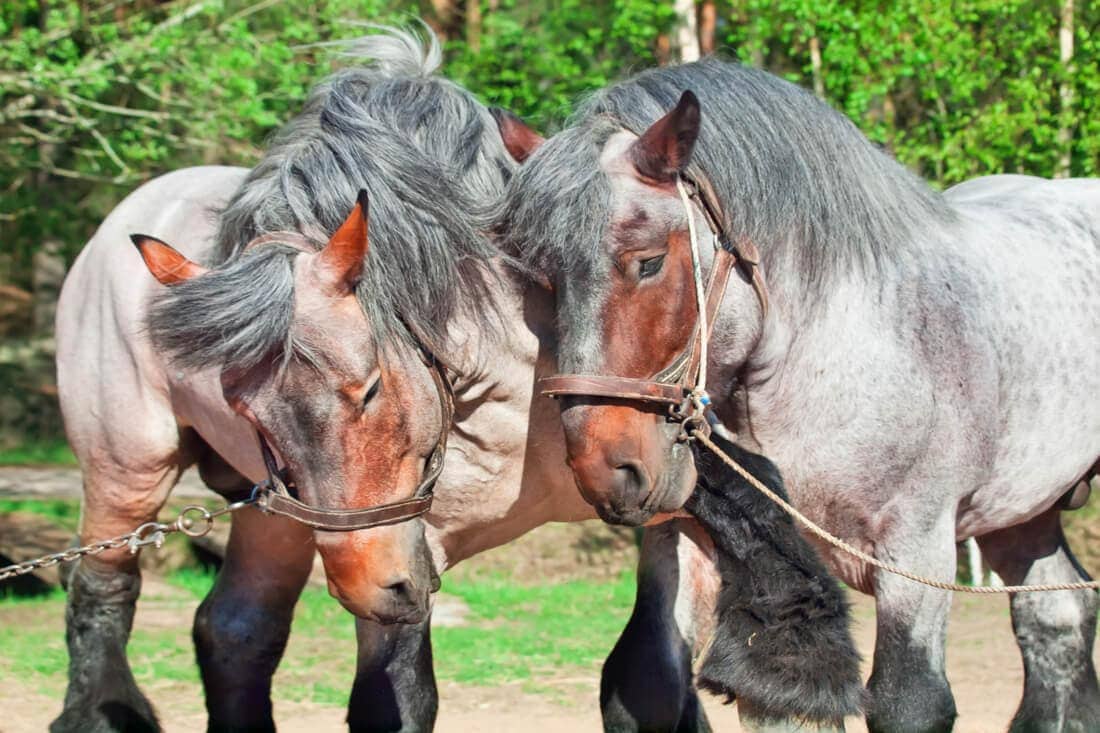
The Brabant horse, also known as the Belgian Heavy Draft, is a powerful draft breed from Belgium.
Renowned for their strength, calm temperament, and distinctive muscular build, Brabants have played a vital role in agriculture and transportation for centuries. Unlike their American Belgian counterparts, modern Brabants still resemble their famous ancestors.
Today, this rare breed is valued not only for its historical significance but also for its versatility as a recreational horse. Though their numbers declined with the rise of mechanization, recent conservation efforts have sparked renewed interest in preserving this heritage breed.
Keep reading to learn more about the history, characteristics, health problems, and nutritional needs of Brabant horses.
Brabant Horse History
The Brabant horse is one of the oldest and most influential draft horse breeds in the world, with roots that trace back over a thousand years. Throughout their history, Brabants were indispensable for farming, transportation, and military use.
Origin
The Brabant horse descends from the Great Horse of medieval Europe, a powerful warhorse used by knights in armor. [1]
These horses originated in the fertile region of Brabant in Belgium, where selective breeding refined the Great Horse into a compact, muscular, and durable draft animal suited for heavy labor.
By the late 19th century, the Brabant had become one of the national horses of Belgium, with formal breeding programs established to standardize the breed. Early Brabants also played a foundational role in shaping other heavy horse breeds. [2]
Brabants imported to America significantly influenced the development of the American Belgian Draft, which was bred for a taller, lighter frame. [3] The breeds are now genetically distinct, with European Brabants retaining their dense, heavily muscled conformation and feathered legs. [2]
Historic Use
For centuries, Brabants served as indispensable farm horses, pulling plows, carts, and heavy loads in Belgium and neighboring regions. They were also widely used in forestry and transportation and gained global recognition at international agricultural exhibitions. [4]
However, the mechanization of agriculture and the devastation of two World Wars led to a sharp decline in overall horse populations in Europe. [5]
Today, the Brabant breed is seeing a resurgence in popularity among small-scale farmers, draft enthusiasts, and conservation breeders who value the Brabant’s calm temperament, work ethic, and historical legacy.
Breed Registry
Efforts to preserve and promote the traditional Brabant horse have led to the formation of several official breed registries. These organizations maintain breed standards, support breeders, and advocate for the preservation of pure Brabant bloodlines.
While the Brabant is rare outside of Europe, North American Brabants are eligible for registration with the European Brabant Registry of America (EBRA) or the American Brabant Association (ABA). [6][7]
Brabant breed registries work collectively to document pedigrees, support breeding programs, and ensure the Brabant remains a distinct and thriving draft horse breed with deep historical roots.
| Breed Summary | |
|---|---|
| Breed Name | Brabant |
| Also Known As | Belgian Heavy Draft |
| Breed Type | Draft |
| Origin | Brabant, Belgium |
| Breed Registry | European Brabant Registry of America (EBRA); American Brabant Association (ABA) |
| Population Status | Rare |
| Average Height | 16 – 17 hh |
| Average Weight | 1,800 – 2,400+ lb |
| Common Coat Colors | Chestnut, bay; blue, red, and strawberry roan |
| Conformation | Compact, muscular, deep chest, broad back, powerful hindquarters, short strong neck, broad shoulders, dense bone, large hooves, feathered legs |
| Common Uses | Farm work, transportation, forestry, driving, parades, weddings, pleasure riding, therapy |
| Temperament | Calm, patient, docile, gentle |
| Best For | Larger riders |
| Common Health Concerns | Chronic progressive lymphedema, obesity, insulin resistance, equine metabolic syndrome, shivers, stringhalt, joint and hoof problems, laminitis |
What's your top priority with your horse's health?

Enter your email to receive your store credit
Breed Characteristics
The Brabant horse is easily recognized thanks to the breed’s immense power and traditional build. While their sheer size is impressive, Brabants are equally valued for their gentle nature and willingness to work, making them suitable for a wide range of recreational uses. [3][8]
Conformation
Brabants have a compact yet muscular build, with a deep chest, broad back, and powerful hindquarters that enable them to excel at pulling heavy loads. They are typically shorter and more heavily built than the American Belgian Draft, with a thicker body and rounded topline. [7]
Desirable conformation traits in a Brabant horse include: [7]
- Height between 16 and 17 hands
- Weight from 1,800 to over 2,400 pounds
- Short, strong neck and broad shoulders
- Dense bone structure and large, well-formed hooves
- Feathering on the lower legs, though typically lighter than in some other draft breeds
The Brabant’s sturdy frame and solid limb structure contribute to its strength and durability, but its heavy-boned conformation can also contribute to health problems.
Colors
The most common coat colors in Brabants include:
- Chestnut
- Bay
Blue, red, and strawberry roan coloring is highly prized in the breed. [7]
White markings on the face and legs are common and acceptable within breed standards. [7]
Temperament
One of the Brabant’s most appealing qualities is its calm, patient, and docile temperament. These horses are known for their reliable nature, high tolerance for pressure, willingness to lean, and gentle dispositions.
This easygoing demeanor makes the Brabant a popular choice not only for traditional work but also for public demonstrations and equine-assisted therapy.
Disciplines
Though initially developed for draft work, Brabants have found success in a variety of modern roles. The physical strength and mental steadiness required for demanding agricultural tasks now allow Brabants to excel as versatile recreational horses.
You will often see Brabants pulling carriages in parades, weddings, and pleasure driving events. Brabants can also be used for light riding, and their size and strength make them ideal mounts for larger riders.
Despite their size, Brabants are surprisingly agile and responsive for a heavy breed, especially when properly conditioned and managed.
While most modern Brabants are beloved family members, some small-scale, sustainable farming and low-impact forestry operations still rely on working Brabants for their horsepower. [9]
Brabant Horse Health Profile
Like many draft breeds, the Brabant horse is generally healthy and long-lived. However, their large size and slow metabolism predispose them to breed-specific health issues.
Genetic Diseases
Chronic Progressive Lymphedema (CPL) is one of the most significant health concerns in Brabant horses. This chronic, incurable condition is commonly seen in heavy draft breeds, including the Brabant. [10]
CPL is believed to have a hereditary component, although no specific gene has been conclusively identified. CPL causes swelling, skin thickening, and fibrosis in the lower limbs due to impaired lymphatic drainage. [10]
Over time, CPL can lead to lameness, secondary infections, and reduced quality of life. Affected horses often show progressive swelling in the legs, skin folds, and the development of wart-like growths and scabs. [10]
While there is no cure, diligent management can slow progression of the disease. Management recommendations include medicated shampoos, regular exercise, compression bandages, and consistent grooming. [10]
Health Problems
Like other draft breeds, Brabants are hardy and may be prone to weight gain, insulin resistance, and equine metabolic syndrome (EMS) if overfed.
These horses generally require fewer calories relative to their body weight than lighter breeds, though their total daily energy needs remain high because of their large size. Careful nutritional management and frequent body condition scoring is essential to keep them healthy.
Neuromuscular conditions such as shivers and stringhalt are occasionally reported in heavy draft horses. These disorders can cause exaggerated hind limb movements, trembling, or difficulty backing up. Although the exact cause is unknown, these conditions may have a neurological basis. [11]
Due to their large size, Brabants place more mechanical stress on joints and hooves than lighter breeds. Poor hoof balance, lack of exercise, or excessive body weight can contribute to joint and hoof problems in this breed.
Care and Management
To keep Brabant horses healthy, owners should implement a preventive care routine that addresses their unique physical needs, including:
- Veterinary Exams: Schedule regular veterinary appointments to detect and address health issues early.
- Vaccinations: Follow a vaccination schedule recommended by your veterinarian to protect against infectious diseases.
- Dental Care: Routine dental check-ups and teeth floating by a qualified dental practitioner help maintain chewing efficiency and digestion. Older Brabants often require more frequent exams due to age-related wear-and-tear, and senior horses with poor dental health may need dietary adjustments to maintain weight.
- Parasite Management: Work with your veterinarian to implement a comprehensive parasite control program tailored to your horse’s needs to protect against internal parasites.
- Hoof Care: Schedule regular farrier visits to maintain hoof balance and overall health. Brabants have strong, thick hooves and often do well barefoot, but horses in heavy work or on abrasive terrain may require shoes for added protection.
In addition, make sure to monitor your Brabant’s lower limbs regularly for signs of CPL or infection. Maintain feathered legs with regular grooming and inspection to reduce the risk of skin infections.
Providing opportunities for light to moderate exercise helps maintain muscle tone and joint health. However, Brabants may be predisposed to overheat in heavy work due to their large muscle mass.
Daily turnout encourages circulation, joint health, and healthy weight maintenance in Brabant horses. However, pasture turnout may not be suitable for Brabants with metabolic health concerns.

Brabant Horse Nutrition Guide
Brabant horses have unique nutritional needs that reflect their large size. While these horses may require more total feed by weight than smaller breeds, they are prone to weight gain, especially when not in heavy work.
Weight Maintenance
Brabants are considered easy keepers and often maintain weight on hay or pasture alone. However, overfeeding or limited activity can quickly lead to obesity, which is associated with an increased risk of laminitis, joint stress, and metabolic disorders. [12]
Monitor your horse’s body condition score (BCS) and adjust their diet as necessary to maintain a healthy weight. Aim for a BCS of 5 – 6 out of 9.
Sample Diet
Below is an example diet for an average 2,200 lb (1,000 kg) Brabant horse at maintenance (not exercising).
| Feed | Amount per day |
|---|---|
| Mid-Quality hay (10% crude protein) | Free Choice |
| Salt | 45 g (3 tbsp) |
| Omneity® Pellets | 400 g (4 scoops) |
| Diet Analysis | |
| Digestible Energy (% of Req) | 110% |
| Protein (% of Req) | 146% |
| NSC (% Diet) | 8.8% |
Most Brabants can meet their energy and protein requirements on a forage-only diet. However, hay is often deficient in several essential nutrients. [13]
To balance the diet, feed a vitamin and mineral supplement that fills nutritional gaps without adding excess sugars or calories.
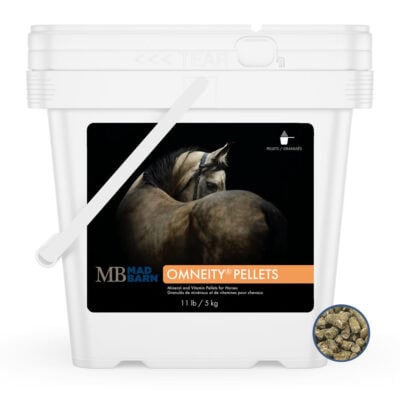
Mad Barn’s Omneity® provides essential nutrients to support strong hooves, a healthy metabolism, muscle development, immune function, and a glossy coat, making it ideal for easy-keeping draft breeds like the Brabant.
All horses need access to clean water at all times. Draft breeds typically drink more water than lighter horses, so pay careful attention to water intake.
While a salt lick can help encourage hydration, many Brabant horses won’t meet their sodium needs from free-choice salt alone. Our nutritionists recommend adding at least 2 tbsp of loose salt directly to the daily ration.
Forage
The amount of forage a Brabant horse requires depends on their body weight and physiological state. Horses generally consume about 2% of their body weight in feed and forage per day. An average 2,200 lb (1,000 kg) Brabant should eat roughly 45 lb (20 kg) of hay daily. [14]
The best hay for a Brabant depends on workload and health status. Mid-maturity or mature grass hay that is low in starch and sugar is often the best choice for easy keepers like draft horses.
Brabants in heavy work may benefit from incorporating higher-calorie forage, such as alfalfa, to help meet increased energy and protein needs. In cases where protein needs are already well met, beet pulp or soy hull pellets can be useful alternatives.
While free-choice forage supports digestive health, Brabants may gain excess weight if hay is offered without restriction. Hay rationing may be necessary to maintain a healthy body condition, and slow feeders are a useful way to extend eating time when forage is limited.
When on pasture, Brabants may require restricted grazing during spring and fall when sugar levels are highest. Grazing muzzles or dry lot turnout may help prevent unwanted weight gain and reduce the risk of pasture laminitis.
A forage analysis can help you determine if your hay is suitable for your Brabant and identify nutritional deficiencies that require supplementation.
Feeding Recommendations
A well-balanced diet can help support healthy hooves, skin, joints, and digestion, reducing the risk of common nutrition-related health problems.
Most Brabant horses do not require commercial concentrates in their diet. This draft breed is prone to weight gain, and feeding high-starch, high-sugar grains can increase the risk of digestive upset, laminitis, and metabolic problems. [15][16]
To minimize your Brabant’s sugar, starch, and calorie intake, consider using a concentrated vitamin and mineral supplement in place of grain. If you need a carrier for supplements, soaked hay pellets or beet pulp are excellent fiber-based alternatives.
For senior horses or those with dental issues, beet pulp and forage cubes can be easier to chew and digest. Horses that are quidding or have trouble breaking down long-stem hay may benefit from easy-to-chew forage options to maintain their condition. Work with an equine nutritionist to develop a feeding plan that meets all nutrient needs while reducing the need for coarse forage.
If your Brabant requires extra calories for work or condition, opt for a fat supplement instead of extra grain. Fats high in omega-3 fatty acids support joint comfort, coat condition, and respiratory health. [17][18][19]
All Brabant horses should have access to fresh water and salt at all times. Our nutritionists recommend feeding 2 tablespoons of plain loose salt daily to meet sodium requirements and encourage optimal hydration.
Nutritional Supplements
A balanced, forage-first diet is the key to supporting your Brabant horse’s health. After balancing the diet, additional supplements may be beneficial to provide targeted support for their unique health needs.
Consider incorporating science-backed options that help promote overall health in large breeds:
- W-3 Oil: An omega-3 fatty acid supplement that provides high levels of DHA and Vitamin E. Ideal for Brabants needing extra support for joint comfort, skin health, and coat quality.
- Natural Vitamin E: A key antioxidant that supports muscle and nerve function, especially for horses on hay-only diets or with limited turnout.
- Magnesium Oxide: Supports proper muscle function and may help Brabants that are prone to neuromuscular tension or excitability.
Submit your Brabant Horse’s information for a free evaluation and consult our qualified equine nutritionists for help formulating a balanced diet.
Frequently Asked Questions
Here are some frequently asked questions about Brabant horses:
The Brabant horse is a powerful draft breed from Belgium known for its heavy muscling, calm temperament, and exceptional strength. Also called the Belgian Heavy Draft, the Brabant horse is one of the oldest and most influential draft breeds in Europe. Modern Brabant horses are valued for their traditional build, steady disposition, and historical importance.
Brabant horses are used primarily for draft work, driving, and other jobs that require strength and a steady temperament. In the past, Brabant horses were bred for heavy agricultural labor, hauling freight, forestry work, and other demanding pulling tasks. They are still used for farm work and logging in some areas today, but they are also popular for carriage driving, parades, weddings, and pleasure driving. Some Brabant horses are also used for light riding, particularly in recreational settings where their calm nature is an advantage.
Brabant horses are known for their calm, patient, and docile temperament. The Brabant horse is typically gentle, reliable, and willing to work, which is one reason the breed remains popular for public demonstrations and recreational use. Their steady nature makes them easier to handle than many lighter, more reactive breeds.
Brabant horses have a compact, muscular conformation with a deep chest, broad back, and powerful hindquarters. A Brabant horse typically has a short, strong neck, broad shoulders, dense bone, large hooves, and some feathering on the lower legs. Compared to lighter draft breeds, Brabant horses are especially thick-bodied and heavily built for pulling power.
Brabant horses are most commonly chestnut and bay. While chestnut is often strongly associated with Brabant horses, the breed appears in several rich, traditional draft horse colors. Brabant horses may also be red roan, blue roan, or strawberry roan, and roan coloring is especially prized in the breed. White markings on the face and legs are also common.
Brabant horses typically stand between 16 and 17 hands high. This height gives the Brabant horse an imposing presence, but the breed is often more compact and heavier-bodied than taller, lighter draft horses. Their height and build make them especially well suited for pulling work.
Brabant horses typically weigh between 1,800 and 2,400 pounds or more. The Brabant horse is one of the heaviest draft breeds, with dense bone and substantial muscle mass. Body weight varies with age, sex, condition, and workload.
Adult Brabant horses typically weigh between 1,800 and 2,400 pounds (815 to 1,090 kg), though some individuals may weigh even more. The Brabant horse is one of the heaviest draft breeds, with dense bone, substantial muscle, and a powerful build developed for pulling heavy loads. Maintaining the Brabant horse’s healthy body condition is important for supporting the soundness, mobility, and long-term health in these large horses.
Common health problems in Brabant horses include chronic progressive lymphedema (CPL), obesity, insulin resistance, equine metabolic syndrome, and joint or hoof stress related to their size. Brabant horses may also be affected by neuromuscular disorders such as shivers or stringhalt. Careful diet management, regular hoof care, routine exercise, and close monitoring of the lower limbs are important for long-term health.
Yes, Brabant horses are considered a rare breed, especially outside Europe. Although the Brabant horse once played a major role in agriculture and transportation, breed numbers declined with mechanization. Conservation breeding and renewed interest in heritage draft horses have helped support preservation efforts.
Yes, Brabant horses can be ridden, although they are primarily bred for driving and draft work. A Brabant horse is most often used for light riding rather than athletic riding disciplines. Because of their size, strength, and broad build, Brabant horses are often especially comfortable mounts for larger riders.
Some Brabant horses can be good for beginners. The breed is generally calm, gentle, and docile, but not every Brabant horse is automatically beginner-friendly. Training, handling, and individual temperament still influence whether a horse is suited to beginner riders. A well-trained Brabant horse with appropriate guidance can be a suitable choice for a novice rider or driver.
A Brabant horse usually eats about 45 pounds of hay per day, depending on body weight, workload, and overall condition. Because Brabant horses are often easy keepers, their diet should be based mainly on forage and managed carefully to avoid obesity and metabolic problems. Many Brabant horses do well on hay or pasture plus a vitamin and mineral supplement, with little or no grain.
The main difference between a Brabant horse and an American Belgian Draft horse is that the Brabant horse is shorter and heavier. Brabant horses retain the dense muscling, compact frame, and feathering associated with the historic Belgian draft horse. American Belgian Draft horses are generally taller, lighter-framed, and bred for a more refined appearance.
Summary
The Brabant horse is one of the oldest European breeds, descending directly from the medieval Great Horse. Also known as the Belgian heavy draft, the Brabant is Belgium's national horse.
- While the Brabant influenced the development of the American Belgian Draft, the breeds are now genetically distinct
- Like other draft horses, Brabants are known for their calm disposition and willing work ethic
- They are often used for pulling carriages and public demonstrations
- The main health concerns for Brabant horses include Chronic Progressive Lymphedema, metabolic concerns, and hoof or joint strain associated with excess weight gain
References
- Ameen. C. et al. In Search of the ‘Great Horse’: A Zooarchaeological Assessment of Horses from England (AD 300–1650). International Journal of Osteoarchaeology. 2021.
- Jordana. J. et al. Analysis of Genetic Relationships in Horse Breeds. Journal of Equine Veterinary Science. 1995.
- Brabant Horse. The Livestock Conservancy. 2025.
- The Brabant horse: Belgium's gentle powerhouse with global appeal. Belga News Agency. 2025.
- Kander. A. and Warde. P. Energy Availability from Livestock and Agricultural Productivity in Europe, 1815–1913: A New Comparison. The Economic History Review. 2011. View Summary
- Registration Designations. European Brabant Association of America. 2021.
- American Brabant Association Handbook. American Brabant Association. 2024.
- Kawsar. I. Brabant Horse: The Most Powerful Belgian Draft Horse. The Vet Expert. 2022.
- About the Belgian Draft Horse, the Brabant Draft. Hengstenhouderij Van Langenhove. 2025.
- Brys. M. et al. Chronic Progressive Lymphedema in Belgian Draft Horses: Understanding and Managing a Challenging Disease. Veterinary Sciences. 2023.
- Firshman. A. M. et al. Prevalences and Clinical Signs of Polysaccharide Storage Myopathy and Shivers in Belgian Draft Horses. Journal of the American Veterinary Medical Association. 2005. View Summary
- Johnson. P. J. et al. Medical Implications of Obesity in Horses—Lessons for Human Obesity. Journal of Diabetes Science and Technology. 2009. View Summary
- Richards. N. et al. Nutritional and Non-Nutritional Aspects of Forage. Veterinary Clinics of North America: Equine Practice. 2021. View Summary
- Nutrient Requirements of Horses: Sixth Revised Edition. National Academies Press, Washington, D.C. 2007.
- Cipriano-Salazar. M. et al. The Dietary Components and Feeding Management as Options to Offset Digestive Disturbances in Horses. J Equine Vet Sci. 2019.
- Geor. R. J. Metabolic Predispositions to Laminitis in Horses and Ponies: Obesity, Insulin Resistance and Metabolic Syndromes. Journal of Equine Veterinary Science. 2008.
- Manhart. D. R. et al. Markers of Inflammation in Arthritic Horses Fed Omega-3 Fatty Acids. The Professional Animal Scientist. 2009.
- Richards. T. et al. Effects of Dietary Camelina, Flaxseed, and Canola Oil Supplementation on Transepidermal Water Loss, Skin and Coat Health Parameters, and Plasma Prostaglandin E2, Glycosaminoglycan, and Nitric Oxide Concentrations in Healthy Adult Horses. Journal of Animal Science. 2023.
- Nogradi. L. et al. Omega-3 Fatty Acid Supplementation Provides an Additional Benefit to a Low-Dust Diet in the Management of Horses with Chronic Lower Airway Inflammatory Disease. Journal of Veterinary Internal Medicine. 2015.