English







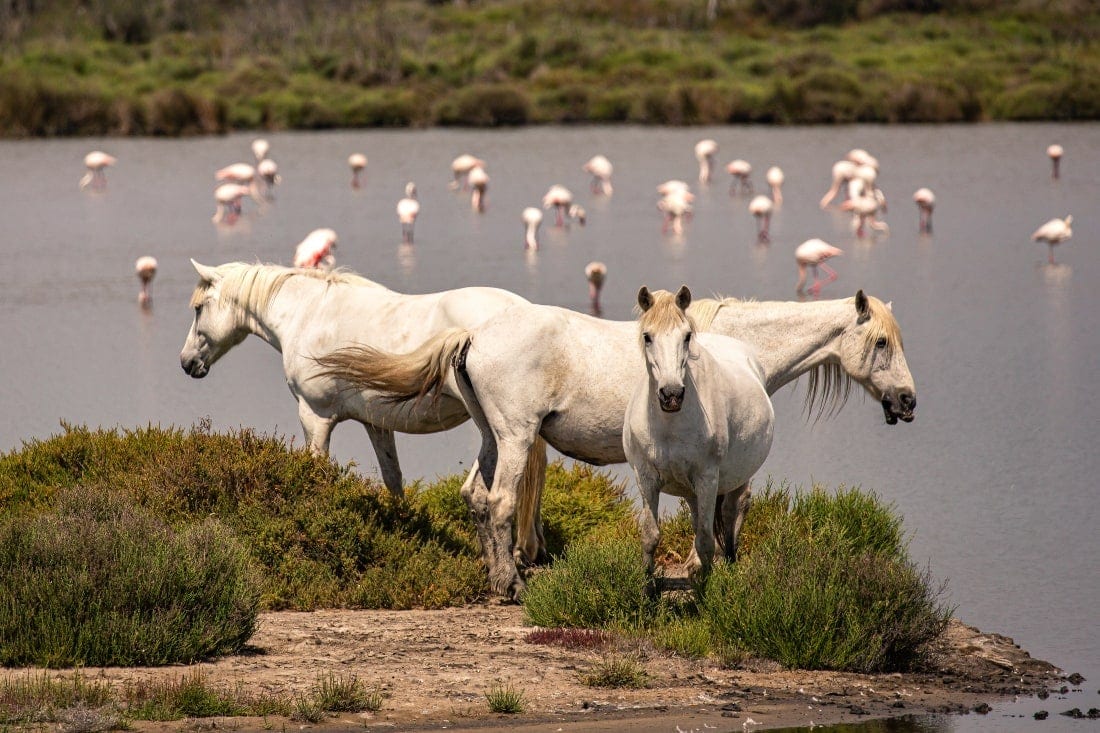
The Camargue Horse is an iconic French horse breed native to the marshy wetlands of southern France.
These small, rugged horses have roamed the Camargue region for centuries, surviving in semi-feral conditions and developing unique adaptations that make them exceptionally resilient.
As the traditional mount of the gardians, the mounted herders of the Camargue, the breed remains closely linked to the region’s heritage. Today, Camargue Horses are also valued in local equestrian tourism, conservation grazing projects, and recreational riding.
Keep reading to learn more about the history, characteristics, health problems, and nutritional needs of Camargue Horses.
Camargue Horse History
The history of the Camargue Horse is deeply intertwined with the cultural identity of the Camargue region and the lives of the gardians, the traditional mounted herders who have relied on these horses to manage cattle and navigate marshy terrain for generations.
Origin
Camargue Horses are regarded as one of the oldest living horse breeds in the world. Archaeological evidence, including Paleolithic cave paintings in Lascaux and Chauvet, suggests ancestors of the modern Camargue have roamed the area for millennia. [1]
Their development was shaped by natural selection in the unique ecosystem of the Camargue, a region of salt marshes, lagoons, and wetlands near the Mediterranean Sea. This unique, rugged environment produced horses with exceptional hardiness, endurance, and intelligence.
The horses of the Camargue lived in semi-feral herds, largely untouched by humans until the Middle Ages when local pastoralists began to manage them for use in livestock work. [2]
Historic Use
Historically, Camargue Horses were used by the gardians, mounted cattle herders responsible for managing the native Camargue bulls. The gardians raised the bulls for meat and bullfighting events. [2]
These horses became essential partners in daily ranch work, capable of navigating deep mud, water channels, and unpredictable terrain with ease.
Their compact size, sure-footedness, and stamina made them ideally suited to this work. Camargue Horses also played a significant role in local festivals and ceremonies, often ridden in traditional attire and celebrated as a symbol of regional pride.
The unique cultural history of this breed makes the Camargue a popular destination for equestrian tourism today. Herds of Camargue Horses are also used for conservation grazing, where their low-impact grazing habits help maintain biodiversity in fragile wetland ecosystems. [3]
What's your top priority with your horse's health?

Enter your email to receive your store credit
Breed Registry
The Camargue Horse was officially recognized as a distinct breed by the French government in 1978, with specific breed standards established to maintain the breed’s purity.
The breed is managed under the supervision of the Association des Eleveurs de Chevaux de Race Camargue (AECRC), which oversees registrations and maintains the official studbook in cooperation with the Institut Français du Cheval et de l’Équitation (IFCE).
To be registered, Camargue Horses must be born and raised in the Camargue region in a manade, a small, semi-feral herd. Foals born outside the Camargue region, or those born within the area but not from a manade, are registered in separate categories as Camargue-type horses.
| Breed Summary | |
|---|---|
| Breed Name | Camargue Horse |
| Origin | Camargue region, southern France |
| Breed Registry | Association des Eleveurs de Chevaux de Race Camargue (AECRC); Institut Français du Cheval et de l’Équitation (IFCE) |
| Average Height | 13.1 – 14.3 hh |
| Average Weight | 900 lb (410 kg) |
| Common Coat Colors | Grey |
| Conformation | Short broad head, straight or slightly concave profile, large eyes, wide nostrils, strong short muscular neck, deep chest, short back, sloped shoulders, powerful hindquarters, short dense legs, broad joints, hard broad hooves |
| Common Uses | Livestock herding, ranch work, working equitation, dressage, trail riding, endurance riding, equestrian tourism, conservation grazing |
| Temperament | Calm, independent, intelligent, loyal, responsive |
| Common Health Concerns | Pastern dermatitis, vector-borne diseases, obesity, equine metabolic syndrome |
Breed Characteristics
Known for their distinctive grey coats, hardy constitutions, and independent dispositions, Camargue Horses possess physical and behavioral traits shaped by the unique environment of their home.
Conformation
The Camargue Horse is a compact breed, typically standing between 13.1 and 14.3 hands high. [4]
Despite their smaller frame, they are strong and sturdy, with well-proportioned bodies adapted to the physical demands of life in the wetlands. [5]
Desirable conformation traits in Camargue Horses include: [4]
- A short, broad head with a straight or slightly concave profile
- Large, expressive eyes and wide nostrils
- A strong, short, muscular neck
- Deep chest and short back
- Sloped shoulders and powerful hindquarters
- Short, dense legs with broad joints
- Hard, broad hooves
Colors
All purebred Camargue horses are grey. Foals are born with dark coats, ranging from black to dark brown or bay, that gradually lighten with age. Most horses reach their mature grey color between 4 and 7 years of age. [4]
The adult coat is often dappled or flecked, with a thick mane and tail that protects from biting insects and weather extremes.
This signature grey coloring is a defining characteristic of the breed and is required for registration with the official studbook in France. [5]
Temperament
Camargue horses are known for their calm, independent, and intelligent nature. Raised in semi-feral conditions, they learn to think for themselves while also developing strong social skills within their herd.
With patience and consistency, Camargue Horses can become loyal, responsive, and willing partners. Their low reactivity can make them safe and steady mounts when well-trained.
However, these independent horses are quick learners and may not be suitable for novice handlers who may inadvertently reinforce undesirable behaviors.
Disciplines
Traditionally, Camargue Horses have been used for livestock herding and ranch work in the wetlands of southern France. They often appear in parades, cultural festivals, and heritage demonstrations, where they represent a living symbol of the Camargue region.
Today, their versatility has made them increasingly popular in a variety of equestrian disciplines. While not commonly seen in high-level competitions, the Camargue’s adaptability makes it an excellent choice for those seeking a hardy, low-maintenance horse with a rich cultural heritage.
Many Camargue Horses thrive in working equitation and dressage, where their balance and responsiveness allow them to shine. The breed also excels in trail and endurance riding, thanks to their stamina and tough hooves.
However, Camargue Horses are still best known for their appeal in ecotourism and mounted excursions in their native habitat. Some also live in semi-feral herds in other areas as part of conservation grazing projects, as their low-impact foraging supports habitat restoration. [3]
Camargue Horse Health
Camargue Horses are generally healthy and hardy, traits developed through centuries of natural selection in one of Europe’s most challenging environments.
While Camargues are often low-maintenance compared to many modern horse breeds, they still require thoughtful care and management when kept in domestic settings.
Genetic Diseases
There are no known breed-specific genetic diseases documented in the Camargue population. This is likely due in part to the natural breeding within the breed’s semi-feral herds, where natural selection favors healthy individuals with strong survival traits.
One genetic study of French horses found that Camargue Horses had limited co-ancestry with other breeds due to their isolated history. As a result, many of the genes responsible for common genetic diseases aren’t present in the Camargue Horse population. [6]
However, their closed breeding population can increase the risk of inbreeding and loss of genetic diversity. Ongoing monitoring is essential to prevent bottlenecks and preserve the health of the breed.
Health Problems
Living in semi-feral herds in the wetlands of southern France, these horses evolved with minimal human intervention, resulting in a breed characterized by hardy dispositions and good health.
Although the Camargue is not predisposed to many health problems, management-related conditions can affect the breed, especially when kept outside their native habitat.
Horses kept in wet, muddy conditions may be prone to pastern dermatitis. While Camargues have adapted to the wet environments of the marsh, they still benefit from clean, dry shelter and daily inspection during wet seasons in domestic environments.
Vector-borne diseases are another concern for Camargue Horses living in marshy regions due to the high density of biting insects. Horses exposed to insects tend to display fly avoidance behaviors, such as stomping, which can loosen shoes and compromise hoof integrity. [7]

Care and Management
To keep Camargue Horses healthy, owners should follow a preventive care routine that includes:
- Veterinary Exams: Schedule regular veterinary check-ups to monitor overall health, update vaccinations, and detect potential issues early.
- Vaccinations: Work with your veterinarian to establish a vaccination schedule suited to your region and exposure risk, especially for vector-borne diseases common in wet environments.
- Dental Care: Arrange annual dental exams to maintain chewing efficiency and comfort. Older horses may require more frequent dental care to address uneven wear or missing teeth.
- Parasite Management: Develop a targeted parasite control program with your veterinarian. Horses living on pasture or in marshy areas may require more frequent fecal testing to manage parasite loads effectively.
- Hoof Care: Maintain consistent farrier care to preserve balance and prevent cracking or infection. Camargue Horses typically have strong, dense hooves and often do well barefoot, though additional protection may be needed for horses in heavy work or rocky terrain.
To support the long-term health of Camargue Horses living in modern stable environments, owners should implement management practices that mirror the breed’s natural lifestyle.
This breed thrives with ample turnout and the ability to move freely, ideally with opportunities for social interaction. Ensure your Camargue horse has constant access to adequate shelter for protection from insects and the sun. [8]
Keep the lower limbs clean and dry, especially in wet climates, to minimize the risk of skin infections such as pastern dermatitis. Regular grooming enables owners to inspect their horse’s skin and coat health for early signs of irritation.
Nutrition
Feeding Camargue horses requires careful attention to forage quality and a balanced diet. When managed in performance settings, they may need targeted support to maintain a healthy weight.
Weight Maintenance
Camargue Horses are easy keepers with efficient metabolisms. The Camargue breed evolved to survive in one of Europe’s most nutrient-sparse environments. As a result, these horses are naturally prone to weight gain, and many can easily maintain body condition on forage alone.
In domestic settings, reduced activity levels and richer feeds can lead to the development of obesity, which is linked to equine metabolic syndrome. [9]
To maintain a healthy weight, monitor body condition score (BCS) monthly, aiming for a BCS of 4–5 on the 9-point Henneke scale.
Sample Diet
Below is a sample diet for a 900 lb (410 kg) Camargue horse in light work with a normal body condition.
| Feed | Maintenance Diet |
|---|---|
| (Amount / Day) | |
| Mid-Quality hay (10% crude protein) | Free Choice |
| Salt | 30 g (2 tbsp) |
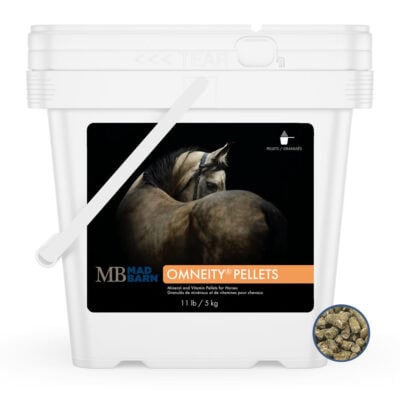
| Omneity® Pellets | 200 g (2 scoops) |
| Diet Analysis | |
| Digestible Energy (% of Req) | 100% |
| Protein (% of Req) | 145% |
| NSC (% Diet) | 8.9% |
Forage should form the foundation of the equine diet. A forage-based diet can provide adequate energy and calories for most Camargue horses in light work. However, hay alone does not meet certain micronutrient requirements.
Most hay is deficient in several essential vitamins and minerals. [10] Feeding a ration balancer or vitamin and mineral supplement can help fill these nutritional gaps. [11]
Mad Barn’s Omneity® is a science-backed, complete vitamin and mineral supplement formulated to balance forage-based diets. This formula provides amino acids, vitamins, minerals, and digestive enzymes that support overall wellness in Camargue horses.
All horses need access to free choice salt and fresh, clean water at all times. However, most horses also need loose salt added to their daily ration to meet their sodium requirements. [11]
Forage
The amount of forage a Camargue Horse requires depends on body weight, activity level, and metabolic rate. Horses are estimated to consume about 2% of their body weight in dry matter daily. An average 900 lb (410 kg) Camargue Horse will eat approximately 20 lb (9 kg) of forage per day on a forage-based diet. [11]
The best hay for a Camargue Horse is a moderate energy, low-starch, and low-sugar grass hay that supports their naturally efficient metabolism. As easy keepers, Camargues typically maintain good condition on modest forage quality, making high-energy hays unnecessary for most individuals.
Camargue Horses in moderate or heavy work may benefit from controlled additions of higher-calorie forage such as alfalfa to support energy and protein needs. If protein levels are adequate, fiber-rich options like beet pulp or soy hulls can provide extra calories without excess starch.
Although free-choice forage supports digestive health, unrestricted hay access may lead to unwanted weight gain in this easy-keeping breed. Using slow feeders or small-mesh hay nets can help extend eating time for horses on a controlled calorie intake.
When turned out on pasture, Camargue Horses may require restricted grazing—especially in spring and fall when grass sugars peak—to prevent obesity and reduce the risk of metabolic issues. [9]
A forage analysis is recommended to determine whether your hay meets your Camargue Horse’s nutritional needs and to identify any deficiencies that may require supplementation.
Feeding Recommendations
A well-balanced diet supports healthy hooves, skin, joints, and digestion in Camargue Horses, helping reduce the risk of nutrition-related health problems.
Most Camargue Horses do not require commercial concentrates in their diet. This breed is naturally efficient and prone to weight gain, so feeding high-starch or high-sugar grains can increase the risk of digestive upset, laminitis, and metabolic disorders. [12][13]
To limit excess calories and starch, use a concentrated vitamin and mineral supplement instead of grain. When a carrier is needed for supplements, soaked hay pellets or beet pulp provide a safe, fiber-based option that complements a forage-first diet.
Senior Camargue Horses or those with dental challenges may benefit from soaked beet pulp or forage cubes, which are easier to chew and digest. Horses that quid or struggle with long-stem hay can maintain condition on these softer fiber sources while still meeting their nutritional needs.
If additional calories are required, opt for fat-based energy sources rather than cereal grains. Fats rich in omega-3 fatty acids support joint comfort, skin and coat health, and immune function. [14][15][16]
All Camargue Horses should have constant access to clean, fresh water and a plain salt source. Providing approximately 2 tablespoons of loose salt daily in meals helps meet sodium requirements and encourages healthy hydration.
Nutritional Supplements
After balancing the diet, adding appropriate supplements can help provide targeted nutritional support for Camargue Horses.
- Magnesium Oxide may support equine muscle and metabolic health. Camargue horses with tight muscles or metabolic concerns may benefit from additional magnesium to support muscle function and insulin sensitivity.
- Natural Vitamin E levels in hay decline rapidly after harvest. Especially when pasture access is limited, supplementation helps maintain muscle function, immune health, and antioxidant status, particularly in active horses.
- Performance XL Electrolytes can help maintain hydration and electrolyte balance when horses are in heavy work or living in hot environments.
Consult with an equine nutritionist before making changes to your horse’s diet to avoid imbalances or over-supplementation. Submit your Camargue Horse’s diet online for a free evaluation from our qualified equine nutritionists.
Frequently Asked Questions
Here are some frequently asked questions about Camargue Horses:
Camargue Horses are a small, hardy horse breed native to the marshy wetlands of southern France. Camargue Horses developed in semi-feral conditions over centuries, which shaped their toughness, sure-footedness, and adaptability. The breed is closely tied to the heritage of the Camargue region, where it has long served as the traditional mount of the gardians, the mounted cattle herders of southern France.
Camargue Horses are traditionally used for cattle herding and ranch work in the wetlands of southern France. Currently, Camargue Horses are also used for equestrian tourism, recreational riding, working equitation, dressage, trail riding, endurance riding, and parades. Their stamina, agility, and calm nature make them versatile horses for both practical work and leisure riding.
Camargue Horses are known for being calm, intelligent, independent, and sure-footed. Because they were shaped by semi-feral living conditions, they tend to be practical thinkers with strong herd instincts and good environmental awareness. With patient, consistent training, Camargue Horses often become loyal, responsive, and willing partners.
Camargue Horses are compact, sturdy horses with conformation suited to wet, uneven terrain. They typically have a short, broad head, a straight or slightly concave profile, large expressive eyes, wide nostrils, a strong muscular neck, a deep chest, a short back, sloping shoulders, powerful hindquarters, short dense legs, broad joints, and hard, durable hooves. Their overall build supports balance, endurance, and sure-footed movement.
Purebred Camargue Horses are grey. Camargue Horse foals are born dark, usually black, bay, or dark brown, and they gradually lighten as they mature. Most Camargue Horses reach their mature grey color between about 4 and 7 years of age, and it is a requirement for registration with the official studbook in France. As adults, the coats also become dappled or flecked, and the breed sports a thick mane and tail.
Camargue Horses typically stand between 13.1 and 14.3 hands high. Their height places them in the small horse range, but they are strong, well-balanced, and capable working horses. Their compact size helps them move efficiently through marshes, mud, and uneven ground.
Camargue Horses are generally healthy and hardy, but they can develop some management-related health problems. Common concerns include pastern dermatitis in wet or muddy conditions and increased exposure to vector-borne diseases in marshy environments with high insect pressure. As easy keepers, Camargue Horses can also be prone to obesity and metabolic issues if fed too richly or kept with limited exercise.
Camargue Horses can be good for beginner riders when they are well-trained, well-managed, and matched with appropriate supervision. Their calm temperament and sure-footedness can make them steady, confidence-building mounts. However, Camargue Horses are also independent and intelligent, so they are usually best suited to beginners working with experienced guidance rather than inexperienced riders handling them alone.
Camargue Horses do not technically turn white; purebred Camargue Horses turn grey as they mature. They are born with dark coats and gradually lighten over several years, often reaching their mature grey color between 4 and 7 years of age. This greying process is a defining trait of the breed.
Camargue Horses can live outside year-round in suitable conditions because they are a hardy breed adapted to outdoor living. They do best when they have access to shelter, dry footing, clean water, and enough forage to maintain body condition. Even though Camargue Horses are tough, domestic management still matters, especially in prolonged wet weather or colder climates.
Camargue Horses are suitable for sports and competition, especially in disciplines that reward stamina, balance, and responsiveness. Camargue Horses are most often seen in working equitation, trail riding, endurance riding, and lower-level dressage rather than top-level international sport. Their versatility makes them appealing to riders who want a practical, athletic horse with strong endurance and a steady mind.
There are still semi-feral herds of Camargue Horses living in their native region. These horses are often described as wild, but many are managed within traditional herd systems connected to the culture and landscape of the Camargue. Their continued presence in the region is an important part of the breed’s identity and cultural significance.
Summary
The Camargue Horse is one of the oldest and most distinctive horse breeds in the world, renowned for its resilience, intelligence, and deep cultural connection to southern France’s wetlands. Shaped by centuries of natural selection, these hardy gray horses exemplify strength and independence while remaining gentle and reliable partners for riders.
- The breed originated in the Camargue region of southern France and was shaped by the region’s harsh wetland environment.
- Camargue Horses developed in semi-feral herds, which contributed to their exceptional endurance, toughness, and self-sufficiency.
- They are known for their compact size, distinctive gray coat, and calm, intelligent temperament.
- Traditionally, Camargue Horses were used by gardians—the cattle herders of the region—for managing livestock, and today they are also valued in ecotourism and conservation work.
- They are best suited to experienced handlers who appreciate and respect their strong, independent nature.
References
- Geneste. J.-M., From Chauvet to Lascaux: 15,000 Years of Cave Art. Archaeology, Ethnology & Anthropology of Eurasia. 2017.
- Abayné Hamar. E. et al., A Camargue Szarvasmarha- És Lófajták Szerepe És Jelentősége Franciaországban. Animal Welfare, Etológia és Tartástechnológia (AWETH). 2021.
- Jouven. M. et al., Horses and Rangelands: Perspectives in Europe Based on a French Case Study. Grass and Forage Science. 2016.
- Breed Profile: The Camargue Horse. FEI. 2022.
- Duncan. P., Horses and Grasses: The Nutritional Ecology of Equids and Their Impact on the Camargue. Springer New York, New York, NY. 1991.
- Pirault. P. et al., Genetic Structure and Gene Flows within Horses: A Genealogical Study at the French Population Scale. PLoS ONE. 2013.
- Fadok. V. A. and Greiner. E. C., Equine Insect Hypersensitivity: Skin Test and Biopsy Results Correlated with Clinical Data. Equine Veterinary Journal. 1990.
- Holcomb. K. E. et al., Physiological, Behavioral, and Serological Responses of Horses to Shaded or Unshaded Pens in a Hot, Sunny Environment1. Journal of Animal Science. 2013.
- Frank. N. et al., Equine Metabolic Syndrome: Equine Metabolic Syndrome. Journal of Veterinary Internal Medicine. 2010.
- Richards. N. et al., Nutritional and Non-Nutritional Aspects of Forage. Veterinary Clinics of North America: Equine Practice. Elsevier BV. 2021.
- Nutrient Requirements of Horses: Sixth Revised Edition. National Academies Press, Washington, D.C. 2007.
- Cipriano-Salazar. M. et al. The Dietary Components and Feeding Management as Options to Offset Digestive Disturbances in Horses. J Equine Vet Sci. 2019.
- Geor. R. J. Metabolic Predispositions to Laminitis in Horses and Ponies: Obesity, Insulin Resistance and Metabolic Syndromes. Journal of Equine Veterinary Science. 2008.
- Manhart. D. R. et al. Markers of Inflammation in Arthritic Horses Fed Omega-3 Fatty Acids. The Professional Animal Scientist. 2009.
- Richards. T. et al. Effects of Dietary Camelina, Flaxseed, and Canola Oil Supplementation on Transepidermal Water Loss, Skin and Coat Health Parameters, and Plasma Prostaglandin E2, Glycosaminoglycan, and Nitric Oxide Concentrations in Healthy Adult Horses. Journal of Animal Science. 2023.
- Nogradi. L. et al. Omega-3 Fatty Acid Supplementation Provides an Additional Benefit to a Low-Dust Diet in the Management of Horses with Chronic Lower Airway Inflammatory Disease. Journal of Veterinary Internal Medicine. 2015.