English

Psyllium is a rich source of soluble fiber that can be incorporated into equine diets to support digestive health. The soluble fiber remains undigested by enzymes in the stomach and passes into the hindgut where it is partially digested by microbes.
Psyllium is commonly fed to horses to facilitate sand clearance, support hindgut function and metabolic health, and to promote hydration and reduce ulcer risk in performance horses.
Psyllium may also be used as part of treatment protocols for sand impaction colic. In this application, a veterinarian administers psyllium with a nasogastric tube directly into the horse’s stomach, usually for three to seven days.
While feeding psyllium to horses offers potential benefits, it’s important to closely follow feeding guidelines to prevent the formation of bezoars, tightly packed masses of psyllium that may cause impaction. To determine the appropriate use of psyllium in your horse’s diet, consult an equine nutritionist or your veterinarian for individualized recommendations.
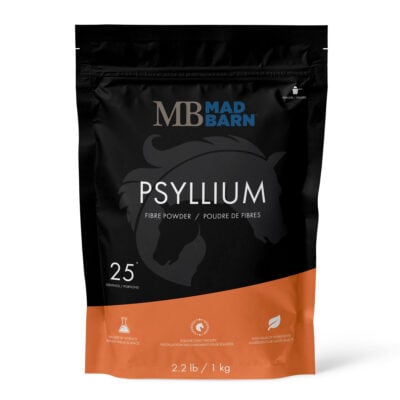
Psyllium for Horses
Psyllium is commonly harvested from the Plantago ovata plant, a member of the Plantaginaceae family. Plantago ovata is grown in regions of India, Asia, the Mediterranean, and North Africa. This plant has been used medicinally for centuries.
Psyllium husk is a fiber-rich supplement that is a byproduct of psyllium seed production. The chemical structure of psyllium husk includes many hydroxyl groups, which enable it to have a high capacity for absorbing water. [1]
When ingested by horses, psyllium absorbs water from the gut and acts as a bulking fiber that promotes the movement of digesta through the intestines. As such, psyllium can support gut motility and the clearance of indigestible material from the gastrointestinal tract.
The soluble fiber in psyllium remains largely undigested by the horse, but can be partially digested by microbes in the hindgut, helping to support microbial diversity. [2]

Benefits of Feeding Psyllium
Feeding psyllium to horses offers several benefits, particularly related to digestive health: [1][3][4][5][6]
- Hindgut Microbiome: As a soluble fiber, psyllium can support the health of the hindgut by providing a substrate for beneficial microbial fermentation, potentially supporting the hindgut microbiome
- Metabolic Concerns: Psyllium may support normal blood glucose regulation by slowing down the absorption of sugar from the gut, helping to maintain metabolic health in horses with insulin resistance (IR)
- Athletic Performance: Feeding psyllium to competition horses has been shown to support hydration during endurance races and may help reduce the risk of gastric ulcers
- Sand Accumulation: Psyllium helps to promote sand clearance in the intestines, potentially reducing the risk of blockages and impaction colic
Psyllium Supplements
There are a number of psyllium-based equine digestive supplements on the market. These supplements should be administered according to manufacturer guidelines to avoid complications related to gut health.
Horse owners also sometimes feed generic psyllium husk products or supplements not designed for equine use. When feeding products that are not formulated specifically for horses, it’s important to consult with your veterinarian or a nutritionist to make sure the product is safe and formulate an appropriate feeding plan.
If feeding a powdered form of psyllium husk, it can be helpful to wet down your horse’s meal to improve palatability and ensure proper hydration.
What's your top priority with your horse's health?

What's your top priority with your horse's health?
Sand Accumulation & Colic
In areas with sandy soil, it’s easy for horses to ingest sand through foraging and other behaviors. Ingested sand can accumulate in the large colon and potentially cause digestive blockages or irritation, putting the horse at risk of sand colic.
The risk of sand colic is greater in horses that are fed on the ground, as well as those that are housed on over-grazed pastures in regions with sandy soils.
Standard treatments for horses with sand accumulation include: [1]
- Removing the horse from sandy areas
- Promoting gut motility through adequate hydration
- Administering laxatives
Psyllium is commonly used as a natural laxative in horses affected by sand accumulation and colic. Psyllium is thought to form a gel-like mixture in the digestive tract, encapsulating sand and facilitating its excretion in feces.
Despite the popularity of psyllium husk for sand elimination, research has shown mixed results regarding efficacy. Studies show that the efficacy of psyllium appears to depend on the route of administration and whether it is used in combination with other interventions.
Nasogastric Administration
For horses with sand accumulation, nasogastric intubation of psyllium appears to be the most effective route of administration. This procedure involves your veterinarian inserting a tube through the horse’s nose, down the esophagus, and into the stomach to directly deliver a solution of psyllium into the digestive tract. [7]
In research studies that involve nasogastric tubing, the duration of psyllium treatment typically lasts between 3 – 7 days with 1 – 2 treatments administered per day. Dosages of psyllium are typically 1 gram per kilogram (1 g/kg) of the horse’s body weight, equal to 500 grams per day for an average horse weighing 500 kg (1,100 lb).
Research suggests psyllium is most effective in clearing sand impaction when combined with other laxatives. Nasogastric intubation of psyllium in combination with magnesium sulfate (epsom salt) is most effective, fully clearing sand from up to 75% of horses. [7][8]
Administering psyllium and/or magnesium sulfate daily via nasogastric tubing for 3 – 7 days also appears to be more effective than a single intubation treatment or home feeding psyllium for ten days. [9]
Further, ponies fed or intubated with psyllium alone showed no improvement in sand clearance compared to control horses not treated with psyllium at all. [10][11]
This suggests combination with a laxative such as magnesium sulfate or mineral oil is important to achieve optimal results.
Feeding Directions
Although intubation is a commonly studied method of administration for sand clearance, some data suggests feeding psyllium to horses may encourage sand clearance as part of routine management.
In healthy horses, feeding a supplement containing psyllium, probiotics, and prebiotics for 35 days resulted in increased sand clearance from the digestive tract. [12] This effective dose established in this study was 200 grams of psyllium product per day for 35 days. [12]
However, since the study did not separate the effects of psyllium from those of the probiotic, it’s unclear whether the improvement was due to psyllium alone or the combination of both treatments. [”13″]
While gut microbes can adapt to new fiber sources and begin fermenting psyllium over time, there is currently no research showing that feeding psyllium for longer periods makes it less effective than feeding it for short, seven-day intervals. In fact, it is the fermentation of psyllium that contributes to its prebiotic potential.
However, these results warrant further investigation, as a more recent study of a psyllium, prebiotic, and probiotic supplementation showed no differences in sand clearance compared to the placebo group. [14] In another study of horses fed psyllium for 29 days, sand clearance was not increased with psyllium treatment alone. [15]
In another study, horses were first fed water and later psyllium, and sand clearance was greater during the water-feeding phase than during psyllium feeding. [11]
A further study examined the effects of mineral oil intubation combined with psyllium feeding for sand clearance. Following five days of combined treatment, horses on mineral oil and psyllium cleared 51% of ingested sand, whereas horses receiving only mineral oil cleared 26% of the sand. [16]
While at least one study shows that feeding psyllium can promote clearing sand from the digestive tract, other studies provide mixed results. Available research suggests it may be beneficial to supplement probiotics and prebiotics as well and that nasogastric intubation is still a more effective method of administration.
Hindgut Support
Psyllium is commonly used in human medicine to support digestive health and promote regular bowel movements. When ingested by humans, psyllium fiber is not degraded in the small or large intestine and traverses the entire digestive tract. [1] This makes it effective for improving stool quality, particularly in cases of constipation, diarrhea, and irritable bowel syndrome (IBS). [17]
These results have led to interest in using psyllium for potential digestive benefits in horses. Unlike in humans, psyllium use in horses is broken down by microbes in the hindgut. As such, it may serve as a useful substrate for microbial fermentation in the hindgut, meaning it may enhance the growth and activity of beneficial gut bacteria. [2]
Research in horses shows that psyllium can increase microbial diversity, which is associated with improved hindgut health. Moreover, supplementing with psyllium has been found to boost the production of microbial mycothiol (an antioxidant) and indicators of urea utilization by microbes (a sign of microbial growth). [3]
In an in vitro study using horse feces to simulate hindgut fermentation, digesting horse feeds with added psyllium resulted in lower total gas and methane production. This suggests psyllium may have the potential to reduce methane gas production during digestion. [18]
Feeding Directions
Positive effects on hindgut microbial fermentation have been observed when feeding horses psyllium supplements at doses between 50 – 400 grams per day for a period of 1 – 2 weeks.
Psyllium is commonly cited as a component of feeding protocols to support hindgut issues, such as free fecal water syndrome (FFWS) in horses. [19][20] While there are anecdotal case reports of its use, it’s important to note that the use of psyllium for FFWS has not been investigated.
Always consult with your veterinarian or an equine nutritionist before adding psyllium to your horse’s diet to support specific hindgut concerns.

Metabolic Health
The positive effects of psyllium on metabolic health in humans are well-documented and include: [17]
- Improving blood sugar control in patients with metabolic syndrome and diabetes
- Reducing high cholesterol levels
- Supporting satiety (appetite control), leading to lower caloric intake and weight loss
These benefits are attributed to increased viscosity (thickness) of food passing through the gastrointestinal tract, slowing the rate of digestion and absorption of glucose (sugar). This has spurred interest in psyllium as a supportive supplement for horses with metabolic issues.
Research shows horses receiving psyllium for 60 days had lower blood glucose and insulin levels following a meal compared to horses in a control group. In addition, horses receiving psyllium showed lower peak glucose concentrations in their blood after receiving a glucose infusion. [4]
Similarly, in a study of horses grazing rapidly growing, cool-season grasses known to be high in sugar, those supplemented with psyllium daily showed reduced glucose responsiveness. [21] This means that the horses fed psyllium had a more moderated blood sugar response when grazing on high-sugar grasses, potentially reducing the risk of metabolic issues.
Additional research in healthy horses showed lower protein and triglyceride levels in the blood after 29 days of supplementation with psyllium. Reduced triglyceride levels suggest a metabolic benefit to feeding psyllium, but lower serum protein concentrations suggest that psyllium also alters protein digestion and absorption in horses. More research is needed to understand the effects of psyllium supplementation on protein metabolism. [22]
While some studies suggest benefits for blood sugar regulation from psyllium, other researchers have found no difference in glucose concentrations in response to 42 days of psyllium supplementation. [23] The researchers in this study also observed higher peak insulin levels and an increase in neck circumference in horses fed psyllium, but no differences in body weight or tailhead fat deposits.
Conversely, another study conducted by the same researchers with a larger number of horses revealed lower glucose, insulin, and adiponectin levels in horses supplemented with psyllium. [24] These differing results indicate more research is needed to determine if there is a metabolic benefit to feeding psyllium in horses.
Feeding Directions
In research studies, psyllium supplementation has produced benefits for metabolic health when fed to horses at a dosage between 90 – 270 grams per day for 30 – 60 days.
To confirm whether this supplement is effective for your horse, it can be helpful to have your veterinarian review your horse’s bloodwork before and after adding psyllium to their diet.
Athletic Performance
There’s growing interest in using psyllium as a performance supplement for horses due to its ability to absorb and retain water as it moves through the gastrointestinal tract. This may help support hydration status in working horses.
In a study of competing endurance horses, psyllium supplementation was shown to limit the increase in hematocrit (an indicator of hydration status) following a 120 km (75 mile) ride. [5]
Current research suggests that increased hematocrit stability in horses supplemented with psyllium may be due to increased water holding capacity in the large colon. Feeding psyllium to horses prior to endurance races may provide a means of maintaining hydration during competition, reducing the risk of dehydration and heat stress. [5]
In addition to supporting hydration, the use of psyllium may reduce the severity of gastric ulcers in competition horses. Research shows that feeding a supplement containing psyllium, minerals, prebiotics, and yeast to horses with gastric ulcers resulted in reduced ulcer scores in stock-type and performance horses. [6]
Feeding Directions
To support hydration in performance horses, it is recommended to feed psyllium at a dose of 150 grams per day for eight days preceding endurance competitions. [5] These dosage recommendations are based on an average 500 kg (1,100 lb) horse and should be adjusted based on your horse’s body weight.
To support gut health in working horses prone to gastric ulcers, feeding a 300 gram combination supplement with psyllium, minerals, prebiotics, and yeast for four weeks has been found effective. [6]
If your horse has a history of stomach issues, there are a number of additional feeding strategies and nutritional supplements that can help. Consult with an equine nutritionist for help determining the best feeding program to optimize your horse’s performance.
Is Psyllium Safe for Horses?
Feeding psyllium to horses is generally considered safe, but it’s important to follow manufacturer’s guidelines based on the product you are feeding. Before feeding high dosages or long-term use, consult with a veterinarian to ensure your horse’s safety.
Overfeeding this supplement has been shown to result in the formation of psyllium bezoars, which are compacted balls of digesta in the gastrointestinal tract. In one case, psyllium bezoars caused gastric rupture in a horse. [25]
Veterinarians determined that the rupture was a result of the horse ingesting psyllium at a rate four times higher than the suggested daily dosage. [25] For this reason, it’s important to closely follow manufacturer guidelines and use psyllium as directed by a veterinarian or nutritionist.
Frequently Asked Questions
Here are some frequently asked questions about psyllium for horses:
Psyllium may benefit horses with regular sand exposure, hindgut support needs, metabolic concerns, or heavy athletic workloads. Horses fed on sandy ground or overgrazed pasture are more likely to ingest sand, while endurance and performance horses may benefit from psyllium’s water-holding properties. Horses with insulin resistance may also need targeted support, but diet changes should be reviewed with a veterinarian or equine nutritionist.
Psyllium supports equine digestive health by absorbing water and adding bulk as it moves through the intestines. This gel-like fiber may help carry sand and indigestible material through the gut, support hindgut microbial activity, and promote regular movement of digesta. Some research also suggests psyllium may help with hydration, metabolic control, and ulcer risk in performance horses.
Psyllium may help clear sand from a horse’s gut, but research on home feeding has produced mixed results. Studies suggest the best sand clearance occurs when a veterinarian gives psyllium by nasogastric tube, especially with magnesium sulfate or mineral oil. Feeding psyllium may still be useful as part of routine management for horses living on sandy soil.
Psyllium is often used for sand colic as part of a veterinary treatment plan rather than as a home remedy. Research studies commonly use nasogastric administration for 3 to 7 days at about 1 gram per kilogram of body weight, equal to 500 grams daily for a 500 kg (1,100 lb) horse. Intubation should only be performed by a veterinarian.
Human psyllium husk can sometimes be fed to horses when the product is plain and free from sweeteners, flavorings, medications, or added ingredients that may be unsafe. Generic products are not formulated for equine diets, so dosage and feeding method should be reviewed with a veterinarian or nutritionist. Wetting the meal can improve palatability and support proper hydration.
Psyllium dosage for horses depends on the reason for feeding, the product, and body weight. Research has used 50 to 400 grams daily for hindgut support, 90 to 270 grams daily for metabolic studies, and 150 grams daily before endurance competition for a 500 kg (1,100 lb) horse. Follow label directions and get individualized advice before using high dosages.
Psyllium can support hindgut health by providing soluble fiber that microbes can ferment in the large intestine. Research suggests psyllium may increase microbial diversity and support beneficial fermentation activity. Some owners use psyllium for hindgut concerns such as free fecal water syndrome, but this specific use has not been well studied in horses.
Psyllium may help some horses with metabolic issues by slowing sugar absorption from the gut and moderating blood glucose responses. Several studies found lower glucose or insulin measures in supplemented horses, while other results were less consistent. Bloodwork before and after supplementation can help your veterinarian assess whether psyllium is useful for an individual horse.
Psyllium may help performance horses maintain hydration by holding water in the large colon during work. In endurance horses, supplementation before a 120 km (75 mile) ride helped limit the rise in hematocrit, a marker linked with hydration status. This suggests psyllium may be useful before demanding competitions, especially in hot or stressful conditions.
Psyllium may help reduce ulcer severity when included in a broader digestive support supplement. Research in stock-type and performance horses found lower ulcer scores after feeding a combination product containing psyllium, minerals, prebiotics, and yeast for four weeks. Psyllium alone should not be treated as a complete ulcer prevention plan.
Psyllium is generally safe for horses when fed according to product directions and appropriate veterinary guidance. Problems can occur when very large amounts are fed, since psyllium can form compacted masses called bezoars in the digestive tract. One reported case involved gastric rupture after a horse consumed four times the suggested daily amount.
Psyllium can cause impaction problems if it is overfed or used without proper attention to water intake and product directions. Excess psyllium may form bezoars, which are tightly packed masses that obstruct the gut. Colic signs after feeding psyllium should be treated as urgent, especially if the horse received more than the recommended amount.
Summary
Psyllium supplements are rich in soluble fiber, which may support benefits for digestive and metabolic health in horses.
- Psyllium appears to be most effective for sand clearance when administered nasogastrically with other laxatives.
- Psyllium can be digested by microbes in the horse's hindgut, which may have positive impacts on hindgut microbial diversity.
- Feeding psyllium may also be beneficial for horses with metabolic concerns and help promote hydration in competition horses.
- Following veterinarian or nutritionist dosage recommendations can prevent negative health outcomes associated with overfeeding psyllium.
While psyllium may support gut health in horses, it should always be used as part of a comprehensive management plan that includes adequate hydration, a balanced diet, regular turnout and routine veterinary check-ups to monitor for health problems.
References
- Loschelder. J. & Gehlen. H. Sand Colic in the Horse-Review and Case Examples. Pferdeheilkunde. 2017.
- Po. B. T. et al. Effect of Psyllium Husk Supplementation on Equine Fecal Nutrient Composition and in Vitro Fermentation. Journal of Equine Veterinary Science. 2023.
- Mienaltowski. et al. Psyllium Supplementation Is Associated with Changes in the Fecal Microbiota of Horses. View Summary
- Moreaux. S. J. J. et al. Psyllium Lowers Blood Glucose and Insulin Concentrations in Horses. Journal of Equine Veterinary Science. 2011.
- Cinotti. S. et al. The Effect of Psyllium on Some Haematological and Biochemical Variables in the Plasma of Horses during an Endurance Ride: Preliminary Results. Pferdeheilkunde. 1997.
- Wagner. A. L. et al. Impacts of Gastro-Well on Gastric Ulcer Prevalence of Competition Horses in Canada. Journal of Equine Veterinary Science. 2019.
- Niinistö. K. E. et al. Investigation of the Treatment of Sand Accumulations in the Equine Large Colon with Psyllium and Magnesium Sulphate. The Veterinary Journal. 2018. View Summary
- Niinistö. K. et al. Comparison of the Effects of Enteral Psyllium, Magnesium Sulphate and Their Combination for Removal of Sand from the Large Colon of Horses. The Veterinary Journal. 2014. View Summary
- Kaikkonen. R. et al. Comparison of Psyllium Feeding at Home and Nasogastric Intubation of Psyllium and Magnesium Sulfate in the Hospital as a Treatment for Naturally Occurring Colonic Sand (Geosediment) Accumulations in Horses: A Retrospective Study. Acta Veterinaria Scandinavica. 2016. View Summary
- Hammock. P. D. et al. Failure of Psyllium Mucilloid to Hasten Evacuation of Sand from the Equine Large Intestine. Veterinary Surgery. 1998. View Summary
- Alonso. J. M. et al., Carboxymethylcellulose and Psyllium Effects in Sand Output of Horses with Asymptomatic Sand Accumulation. Arquivo Brasileiro de Medicina Veterinária e Zootecnia. 2020.
- Landes. A. D. et al. Fecal Sand Clearance Is Enhanced with a Product Combining Probiotics, Prebiotics, and Psyllium in Clinically Normal Horses. Journal of Equine Veterinary Science. 2008.
- Schoster. A. et al. Probiotic Use in Horses – What Is the Evidence for Their Clinical Efficacy?. Journal of Veterinary Internal Medicine. 2014.
- Hassel. D. M. et al. Evaluation of Fecal Sand Clearance in Horses with Naturally Acquired Colonic Sand Accumulation with a Product Containing Probiotics, Prebiotics, and Psyllium. Journal of Equine Veterinary Science. 2020. View Summary
- Mienaltowski. M. J. et al. Psyllium Supplementation Is Associated with Changes in the Fecal Microbiota of Horses. BMC Research Notes. View Summary
- Hotwagner. K. and Iben. C. Evacuation of Sand from the Equine Intestine with Mineral Oil, with and without Psyllium. Journal of Animal Physiology and Animal Nutrition. 2008. View Summary
- McRorie. J. W. et al. Psyllium: The Gel-Forming Nonfermented Isolated Fiber That Delivers Multiple Fiber-Related Health Benefits. Nutrition Today. 2021.
- Kanber. K. and Baytok. E. Effect of Different Level of Psyllium Supplementation to Horse Diet on in Vitro Fermentation Parameters and Methane Emission. İstanbul Üniversitesi Veteriner Fakültesi Dergisi. 2017.
- Theelen. M. et al. Free Faecal Water: What Do We Know and Can Equine Faecal Microbiota Transplantation Be Used to Manage This Issue? In Small Things: European Equine Health & Nutrion Congress. 2019. View Summary
- Lindroth. K. M. et al. Feeding and Management of Horses with and without Free Faecal Liquid: A Case–Control Study. Animals. 2021. View Summary
- Rohrs. J. L. Metabolic and Morphometric Effects of Psyllium Supplementation in Horses Grazing Rapidly Growing Cool Season Grasses. Montana State University-Bozeman, College of Agriculture. 2013.
- Helmecke. P. Effects of Psyllium Supplementation on Serum Protein, Triglycerides, Electrolytes and Packed Cell Volume in Horses Grazing Rapidly Growing Cool Season Grasses. Montana State University-Bozeman, College of Agriculture. 2013.
- Peterson. J. L. et al. Metabolic and Physical Effects of Psyllium Supplementation on Quarter Horses. American Society of Animal Science. 2009.
- Peterson. J. L. Psyllium Lowers Blood Glucose and Insulin Concentrations in Horses. Montana State University-Bozeman, College of Agriculture. 2010.
- Bergstrom. T. C. et al. Catastrophic Gastric Rupture in a Horse Secondary to Psyllium Pharmacobezoars. The Canadian Veterinary Journal. 2018. View Summary