English



In March 2024, a diet evaluation was requested for Mojo, a 19-year-old, running-bred Quarter Horse gelding from Mississippi, USA. Weighing approximately 1,000 lb (454 kg), Mojo was considered underweight. In addition to low body condition, reported concerns included topline development, joint health, and respiratory health.
The owner’s primary goal was to support Mojo’s digestive health and promote healthy weight gain.
Presentation Prior to Diet Intervention
Mojo was described as underweight in his submission, and he was reported to be in moderate exercise.
He also presented with the following special care needs:
- Poor topline muscling
- A history of ulcer symptoms
- Joint issues
- Respiratory issues
Although Mojo had not been scoped to confirm ulcers, his owner was advised by a veterinarian to pursue ulcer treatment based on his symptoms- behavioral concerns, weight loss, and loose stools.
The following photo was provided of Mojo from March 2024:
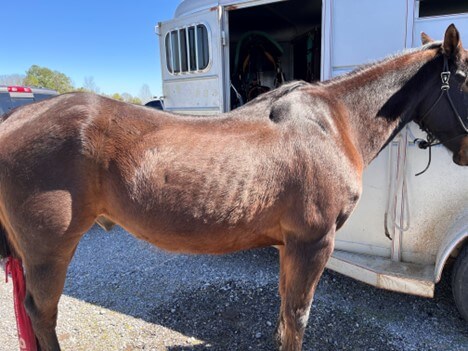 Mojo March 2024
From this photo, our nutritionists estimate that his body condition score was 3.5 – 4 on the 9-point Henneke scale.
Horse History
Mojo’s owner acquired him in November of 2023. After transitioning to his new home, he started showing signs of appetite loss, refusing his meals. His owner spent months rotating feeds trying to find one he was willing to eat.
Although they eventually found a feed he liked, his owner believed that frequent feed changes may have contributed to his digestive issues.
At his new home, Mojo was turned out 24/7 during the summer and received approximately 12 lb (5.5 kg) of Bermuda hay daily. A forage analysis was not available, so estimates for Mojo’s nutrient intake were made based on average-quality grass hay and pasture.
Mojo was also listed as being in a moderate exercise program competing in barrel racing.
Table 1. Mojo’s exercise regimen
| Type of Exercise | Days per Week | Details |
|---|---|---|
| Light Exercise | 3 | 30-45 minutes per day of trotting with frequent walk breaks |
| Intense Exercise | 2 | Trailered to a local arena; up to 1 hour of speed drills and other work |
| Competition | 1 | Trailered to barrel racing competitions |
| Rest Day | 1 | Full day of rest, no exercise |
Feeding an Underweight Horse
Health concerns such as dental issues, digestive disorders, or other underlying medical conditions can lead to weight loss in horses even though the diet is meeting energy requirements.
Horses are continuous grazers, so increasing forage quantity or quality is often the easiest and most effective way to encourage weight gain. Forages with a high energy density, like alfalfa, can help increase calorie intake if grass hay intake is already maximized.
In cases where calorie intake from forage is maximized, additional calories can be added in the form of other energy-dense feeds.
Complete feeds typically supply calories from some combination of sugar, starch, fat, and protein. When considering grain-based complete feeds, it’s important to note excessive hydrolyzable carbohydrate (HC; sugar + starch) intakes can lend to digestive issues that can hinder weight gain. [1][2][3]
While there is no target HC level for metabolically healthy horses, those with persistent digestive issues, such as ulcers, may benefit from a reduction in dietary HC content. In cases like these, replacing a portion of their energy supply with fat and highly digestible fiber can help support digestive health and encourage weight gain.
In the present case, transitioning Mojo to a lower HC, energy-dense diet was recommended to facilitate healthy weight gain without negative digestive impacts.
What's your top priority with your horse's health?

Enter your email to receive your store credit
Topline Health
Aging in humans, horses, and many other animals is often accompanied by loss of muscle mass. [4] This natural decline may be somewhat unavoidable, but ensuring the diet is well-fortified with protein, essential amino acids, vitamins, and minerals can help to support muscle maintenance.
Meeting nutritional requirements is critical to maintaining muscle mass. Key nutrients for supporting muscle health include: [5][6][7][8]
- Zinc, copper, manganese, and selenium: aid in the function of antioxidant enzymes and other proteins
- Vitamin E: a key antioxidant that protects muscle cells from oxidative damage
- Calcium and magnesium: facilitate muscle contraction and neuromuscular function
For horses at a normal or low body weight, additional weight loss can result from muscle breakdown, as the body mobilizes muscle tissue to meet energy demands.
Prior to dietary adjustments, Mojo displayed signs of topline muscle loss, likely due to a combination of aging, lack of condition, and potential digestive issues.
Digestive Issues
Gastric ulcers are lesions in a horse’s stomach that can cause discomfort and impaired nutrient absorption. Horses with ulcers often exhibit other symptoms including exercise intolerance, behavioral changes, and weight loss.
Exercise can exacerbate gastric ulcers as physical activity compresses the stomach, exposing the non-glandular region to stomach acid. This often causes pain and makes horses less willing to perform. Research shows that equine gastric ulcer syndrome (EGUS) in Thoroughbred race horses is associated with poor performance. [9]
Horses with ulcers also frequently exhibit behavioral changes, such as: [10]
- An increase in stereotypic behavior
- Nervousness
- Aggression
- Self-mutilation
In racehorses in training, high gastric ulcer lesion scores have been linked to poor body condition. The exact mechanism is not clearly defined, but it may be related to poor nutrient absorption, appetite loss, or other digestive health issues (i.e. loose stools). [10][11]
Combining reduced performance, appetite loss, and digestive complications, it’s possible that these factors may indirectly contribute to muscle loss in some horses with ulcers. However, a direct link between ulcers and muscle atrophy has yet to be confirmed.
In Mojo’s case, while veterinary interventions initially led to short-term improvements in ulcer symptoms, he ultimately declined back to a low body weight with topline muscling issues.
Joint Health
Joint problems are common in horses, particularly older horses. Age-related joint damage is caused by changes in the synovial fluid, imbalances in synthesis and degradation of cartilage and other joint tissues, or repetitive strain on the joints. [12]
Given the low blood and nutrient supply to many joint tissues, severe joint damage from wear and tear is typically irreversible. For this reason, supporting joint health is crucial for performance horses of all ages, especially for senior horses.
Feeding a balanced diet, providing supportive supplements when needed, and engaging in regular light exercise can help maintain joint health in aging performance horses.
Essential nutrients that are important for supporting joint health include: [13][14]
These nutrients play vital roles in enzyme function, helping to maintain connective tissue and providing antioxidant support to protect joints from oxidative stress. [13][14]
Nutritional supplements with research-backed ingredients can also support joint function and overall mobility in horses.
The Omega-3 fatty acids eicosapentaenoic acid (EPA) and docosahexaenoic acid (DHA) have been shown to support joint health in both healthy horses and those with joint conditions like arthritis. These essential fatty acids help maintain a balanced inflammatory response in joints, which may contribute to improved comfort and mobility. [15]
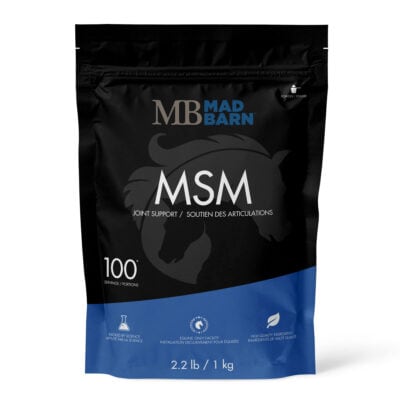
Methylsulfonylmethane (MSM) is a natural sulfur-containing compound often included in joint supplements. Sulfur is a trace mineral that is essential for the structural integrity of cartilage and connective tissues that support joint function. Additionally, MSM provides antioxidant support, helping to protect joint tissues from oxidative stress that may arise from daily activity or natural aging. [16]
Respiratory Health
Respiratory issues in horses can arise from a variety of causes, including non-infectious conditions and environmental triggers as well as infectious agents. Common non-infectious issues include heaves, often triggered by allergens such as dust, and roaring, a condition that impairs airflow due to partial paralysis of the larynx.
Infectious respiratory conditions in horses, including viral, bacterial, and fungal infections, can also severely impact respiratory health. Common examples include Equine Influenza, Strangles, and reactions to respiratory irritants. [17]
Common signs of respiratory issues in horses include: [17]
- Abnormal breathing noises
- Increased respiratory effort
- Nasal discharge
- Coughing
- Appetite loss
- Poor performance
You can support your horse’s respiratory health by:
- Feeding a balanced, low-dust diet
- Ensuring adequate ventilation where horses are housed
- Checking for and eliminating moldy hay
- Soaking hay prior to feeding
- Maintaining a clean barn environment
Initial Diet
At the time of the nutrition consultation, Mojo’s daily ration consisted of:
- Free choice pasture and 12 lb (5.5 kg) Bermuda hay
- 9 lb (4 kg) Freely’s Equine Formula (ADM)
- 1 scoop Hoof RX (CEP)
- 1 oz (30 mL) Vitality flax oil (CEP)
- 10 cc Gut-Check (CEP)
Overall, this diet provided adequate vitamins and minerals to meet Mojo’s nutrient requirements. The estimated HC (sugar and starch) content of the diet was 13.5%.
Based on the nutritional composition of typical forages, the energy and protein content were likely adequate for maintenance of his current body weight. However, since Mojo was underweight, his diet may not have been providing enough energy for weight gain.
Intervention
As part of the consultation, a revised diet plan was proposed to specifically address the owner’s concerns for the horse.
Table 2. Summary of Diet Intervention
| Horse Issue | Intervention |
|---|---|
| Underweight |
|
| Topline Muscle Loss |
|
| Ulcers |
|
| Joint and Respiratory Health |
|
Horses consuming the manufacturer’s recommended amount of fortified grain generally meet their vitamin and mineral requirements. However, many commercial grains are high in HC content, which can contribute to the development and perpetuation of gastric ulcers.
Increasing calorie intake while reducing HC intake can help support weight gain and prevent digestive issues. To achieve this, alfalfa and Mad Barn’s W-3 Oil were added as concentrated sources of calories.
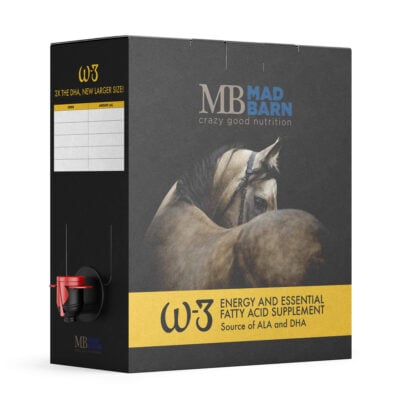
In addition to being a rich source of cool calories, W-3 Oil provides DHA and natural vitamin E for joint health and antioxidant support.
Balancing the Diet
The primary goal of the diet intervention was to promote weight gain and support digestive health. Since Mojo was underweight, it was important to increase his calorie intake strategically while reducing the hydrolyzable carbohydrate (HC) content to support digestive health.
Incorporating w-3 Oil increased Mojo’s calorie intake and provided targeted omega-3 fatty acid support for his joint and respiratory health.

Updated Diet
After the consultation, the owner reduced Mojo’s grain intake and added alfalfa and W-3 Oil.
His updated daily diet consisted of:
- Free-choice hay and pasture
- 6 lb (2.7 kg) Freely’s Grain (ADM)
- 6 lb (2.7 kg) alfalfa pellets
- 1 oz (30 mL) Vitality flax oil (CEP)
- 10 cc Gut-Check (CEP)
- 4 oz (120 mL) W-3 Oil
Overall, the updated diet increased Mojo’s energy, fat, and protein intake while reducing his starch intake.
Table 3. Summary of Estimated Energy Intake (presented as megacalories (Mcal) per day or as a % of the diet’s dry matter content)
| Nutrient | Initial Diet | Updated Diet |
|---|---|---|
| Energy (Mcal / day) | 22.9 | 24.9 |
| Protein (% Diet DM) | 12.6 | 13.8 |
| Starch (% Diet DM) | 7.4 | 4.3 |
| Sugar (% Diet DM) | 6.1 | 6.7 |
| Fat (% Diet DM) | 3.8 | 5.4 |
Outcome
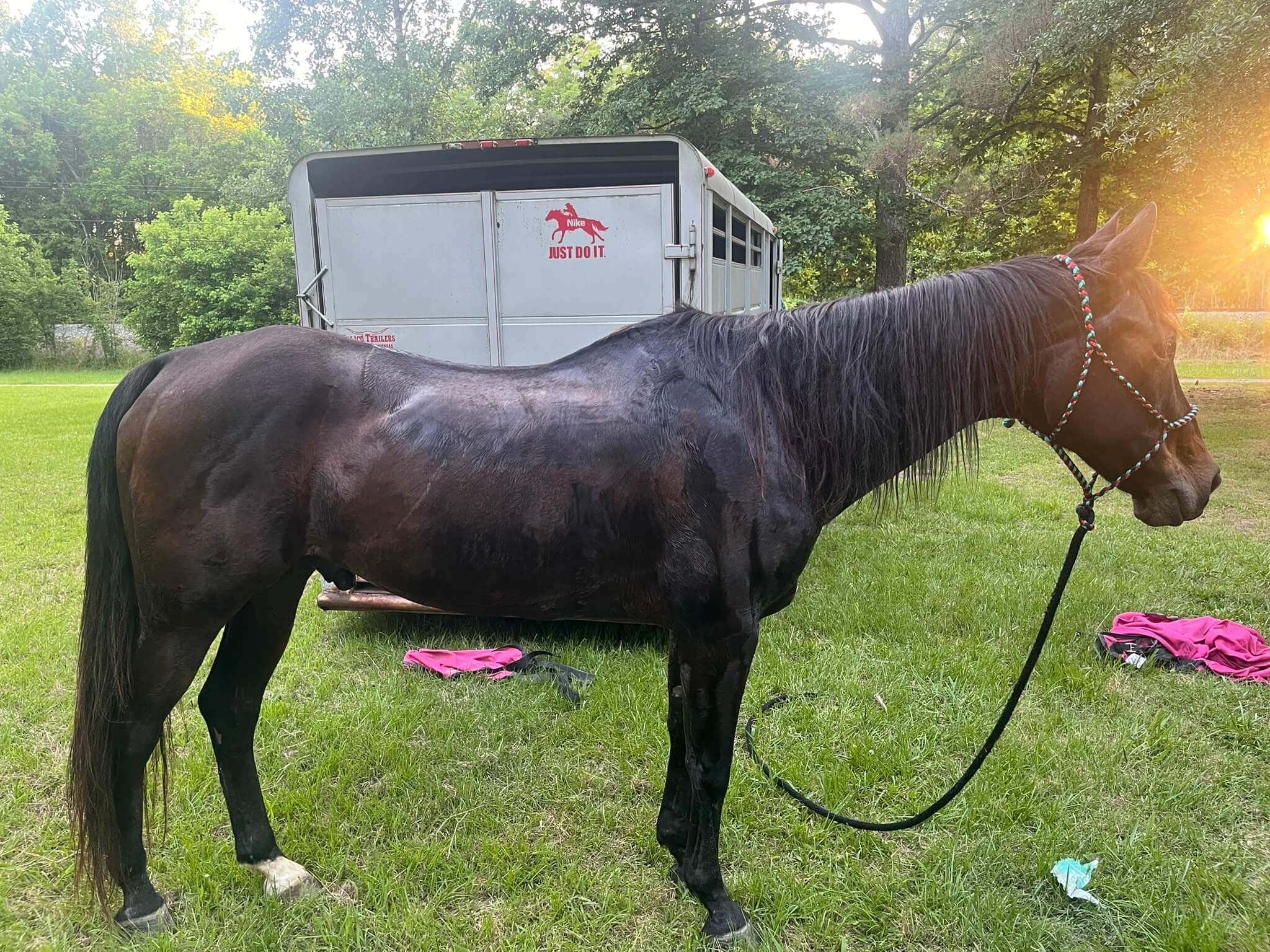
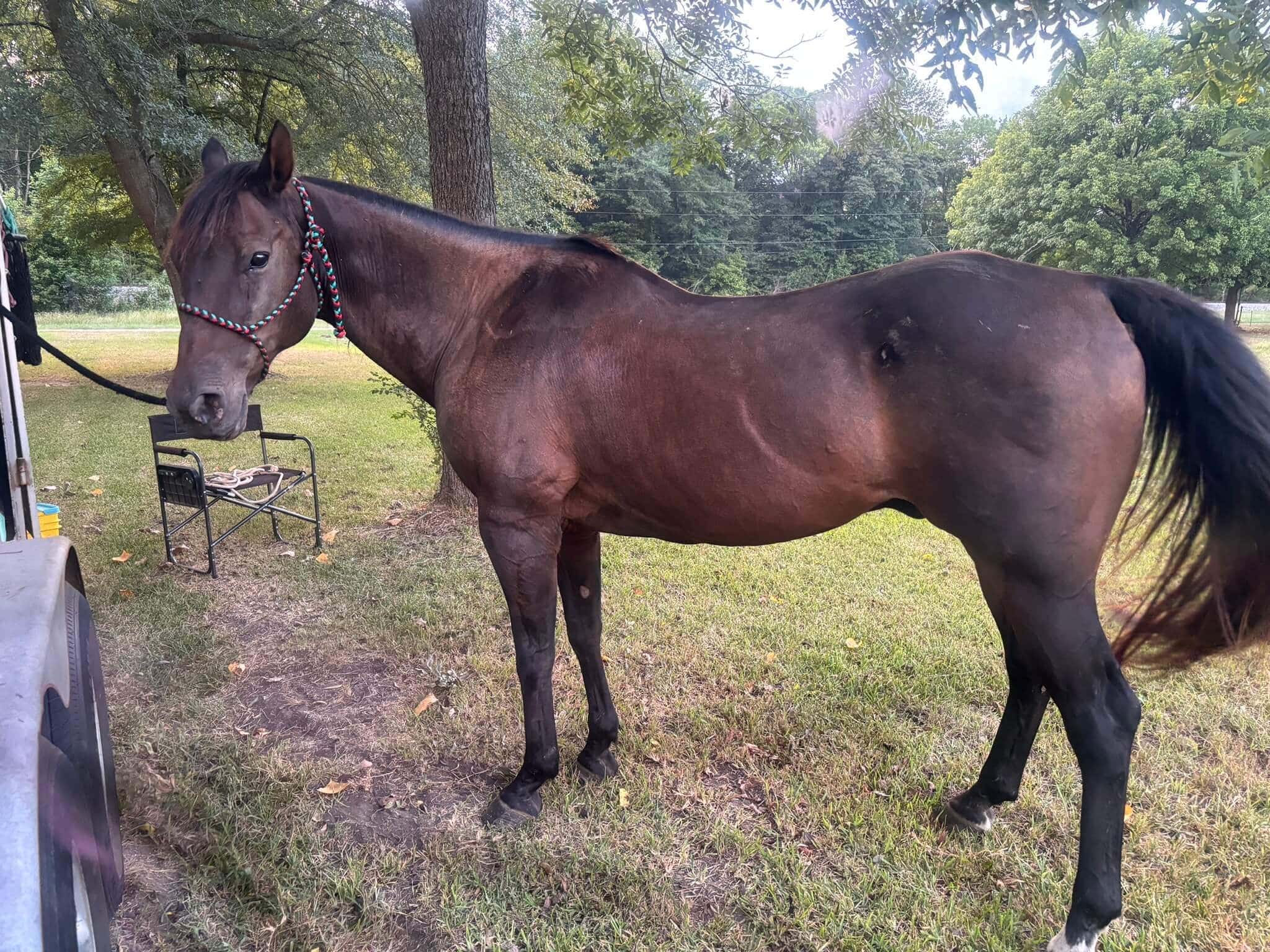
The dietary adjustments resulted in a significant improvement in topline health and body condition. Additionally, Mojo’s owner observed a positive change in his attitude and noted that his recent ulcer treatment seemed more effective compared to the previous treatment conducted while he was on his prior diet.
The following photos show the differences in Mojo’s condition two and five months after implementing the diet changes:
 Mojo May 2024
 Mojo August 2024
Based on the August 2024 photo, our nutritionists estimate that Mojo’s body condition score is now the ideal score of 5 on a 9-point scale.
Discussion
Issues with weight maintenance, digestive health, and topline muscle development are often observed together in horses. Poor digestive health can impair nutrient absorption and cause discomfort, making horses less willing to engage in exercise, which is essential for building topline muscle.
Since Mojo showed ongoing signs of compromised digestive health along with difficulty in maintaining weight and muscle mass, it is likely that these issues were closely related.
Because Mojo was underweight and needed to gain body condition, increasing his caloric intake while tailoring the diet to support digestive health was a priority.
“His overall attitude has improved as well and ulcer treatment seems to be more effective this go round than before.”
— Feedback from OwnerAdding alfalfa and W-3 Oil to the diet increased calorie intake while supporting joint and respiratory health. Additionally, reducing Mojo’s grain intake further aided in his recovery from gastric issues. Overall, the combination of increased calories, enhanced digestive health, and regular exercise encouraged muscle development.
By May 2024, approximately two months after these dietary changes, Mojo’s owner observed an improvement in fat coverage over his ribs and increased muscle development in his hindquarters, topline, and neck.
By August 2024, five months after the diet adjustment, his owner noted that Mojo looked healthy and was “feeling so much better!”
References
- Raspa. F. et al., A High-Starch vs. High-Fibre Diet: Effects on the Gut Environment of the Different Intestinal Compartments of the Horse Digestive Tract. BMC Veterinary Research. 2022. View Summary
- Raspa. F. et al., Microbiota Characterization throughout the Digestive Tract of Horses Fed a High-Fiber vs. a High-Starch Diet. Frontiers in Veterinary Science. Frontiers Media SA. 2024.
- Colombino. E. et al., Gut Health of Horses: Effects of High Fibre vs High Starch Diet on Histological and Morphometrical Parameters. BMC Veterinary Research. 2022. View Summary
- Siciliano. P. D., Nutrition and Feeding of the Geriatric Horse. Veterinary Clinics of North America: Equine Practice. 2002. View Summary
- Latham. C. M. et al., Complexed Trace Mineral Supplementation Alters Antioxidant Activities and Expression in Response to Trailer Stress in Yearling Horses in Training. Scientific reports. Nature Publishing Group UK London. 2021. View Summary
- Chung. E. et al., Potential Roles of Vitamin E in Age-Related Changes in Skeletal Muscle Health. Nutrition Research. Elsevier. 2018.
- Berchtold. M. W. et al., Calcium Ion in Skeletal Muscle: Its Crucial Role for Muscle Function, Plasticity, and Disease. Physiological Reviews. 2000.
- Carvil. P. and Cronin. J., Magnesium and Implications on Muscle Function. Strength & Conditioning Journal. LWW. 2010.
- Vatistas. N. J. et al., Cross‐sectional Study of Gastric Ulcers of the Squamous Mucosa in Thoroughbred Racehorses. Equine Veterinary Journal. 1999. View Summary
- Sykes. B. W. et al., European College of Equine Internal Medicine Consensus Statement—Equine Gastric Ulcer Syndrome in Adult Horses. Journal of Veterinary Internal Medicine. Wiley. 2015. View Summary
- Dionne. R. M. et al., Gastric Ulcers in Standardbred Racehorses: Prevalence, Lesion Description, and Risk Factors. Journal of Veterinary Internal Medicine. 2003. View Summary
- Hinchcliff, K. W., et al., Equine Exercise Physiology the Science of Exercise in the Athletic Horse.. Saunders/Elsevier, Edinburgh New York. 2008.
- Vidal. G. H. et al., Effects of Copper and Zinc on Cathepsin B Activity in Equine Articular Chondrocytes.. Journal of Animal and Veterinary Advances. 2009.
- Malone. E. D., Managing Chronic Arthritis. Veterinary Clinics: Equine Practice. Elsevier. 2002. View Summary
- Manhart. D. R. et al., Markers of Inflammation in Arthritic Horses Fed Omega-3 Fatty Acids. The Professional Animal Scientist. Elsevier. 2009.
- Marañón. G. et al., The Effect of Methyl Sulphonyl Methane Supplementation on Biomarkers of Oxidative Stress in Sport Horses Following Jumping Exercise. Acta Veterinaria Scandinavica. 2008. View Summary
- Lascola. K. M., Overview of Respiratory Diseases of Horses. Merck Veterinary Manual. 2023.