English

In July 2024, a diet evaluation was requested for Sawyer, a three-year-old Haflinger gelding in British Columbia, Canada. At 1,097 lb (500 kg), he was reported to be overweight, despite a rationed forage intake and a low-calorie diet.
The owner’s primary goal was to promote weight loss and minimize the potential health risks associated with his excess body condition.
Presentation Prior to Diet Intervention
Sawyer was characterized as overweight in his submission, despite having a highly restricted diet and being in a light exercise program. His body condition was estimated at an 8 on the 9-point Henneke scale.
His diet consisted of limited pasture access with a grazing muzzle, and rationed, tested hay. He was also being supplemented with Mad Barn’s Omneity®, a vitamin and mineral supplement, and salt.
The following photos were provided of Sawyer from July 2024:
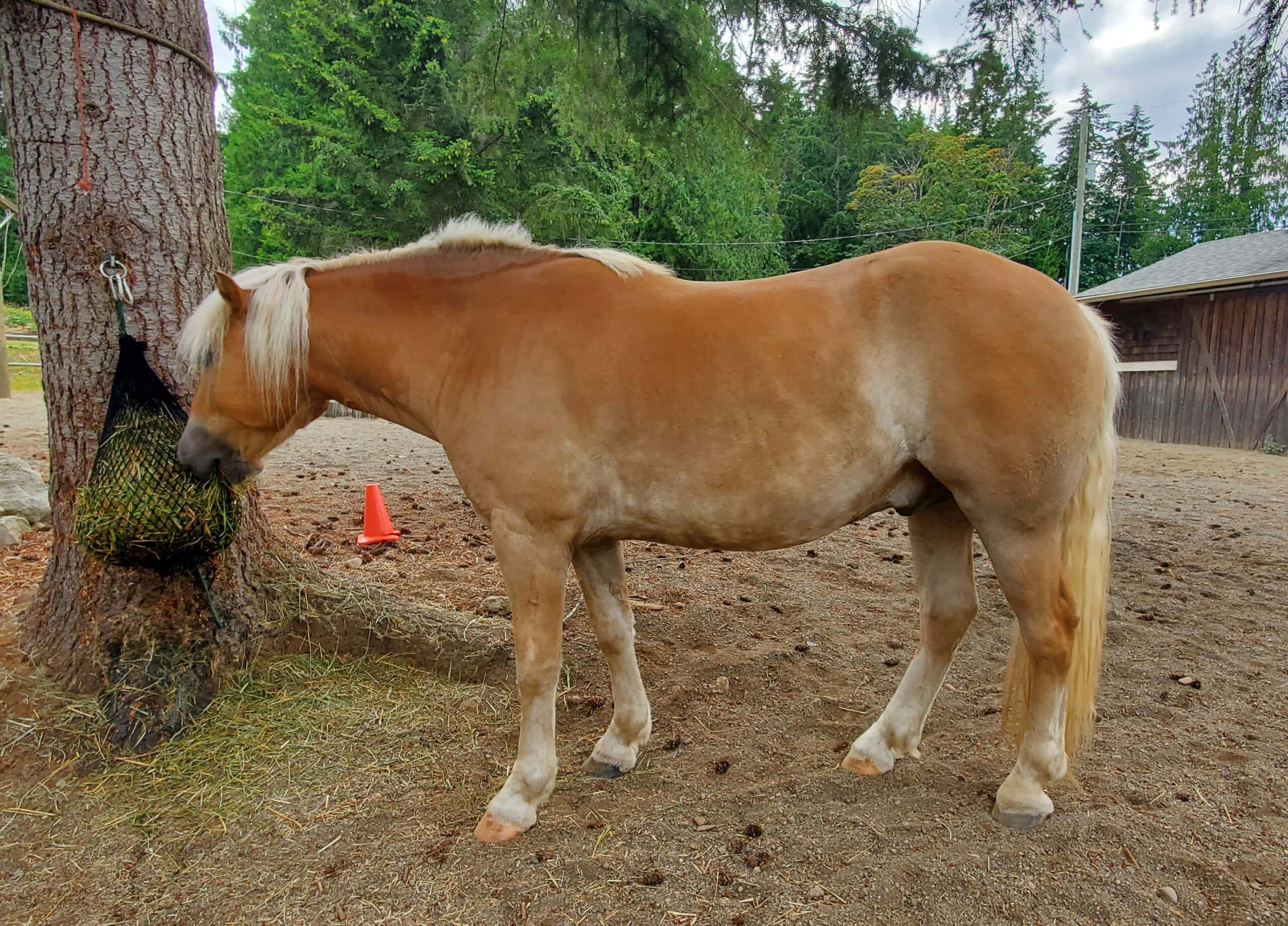 Sawyer July 2024
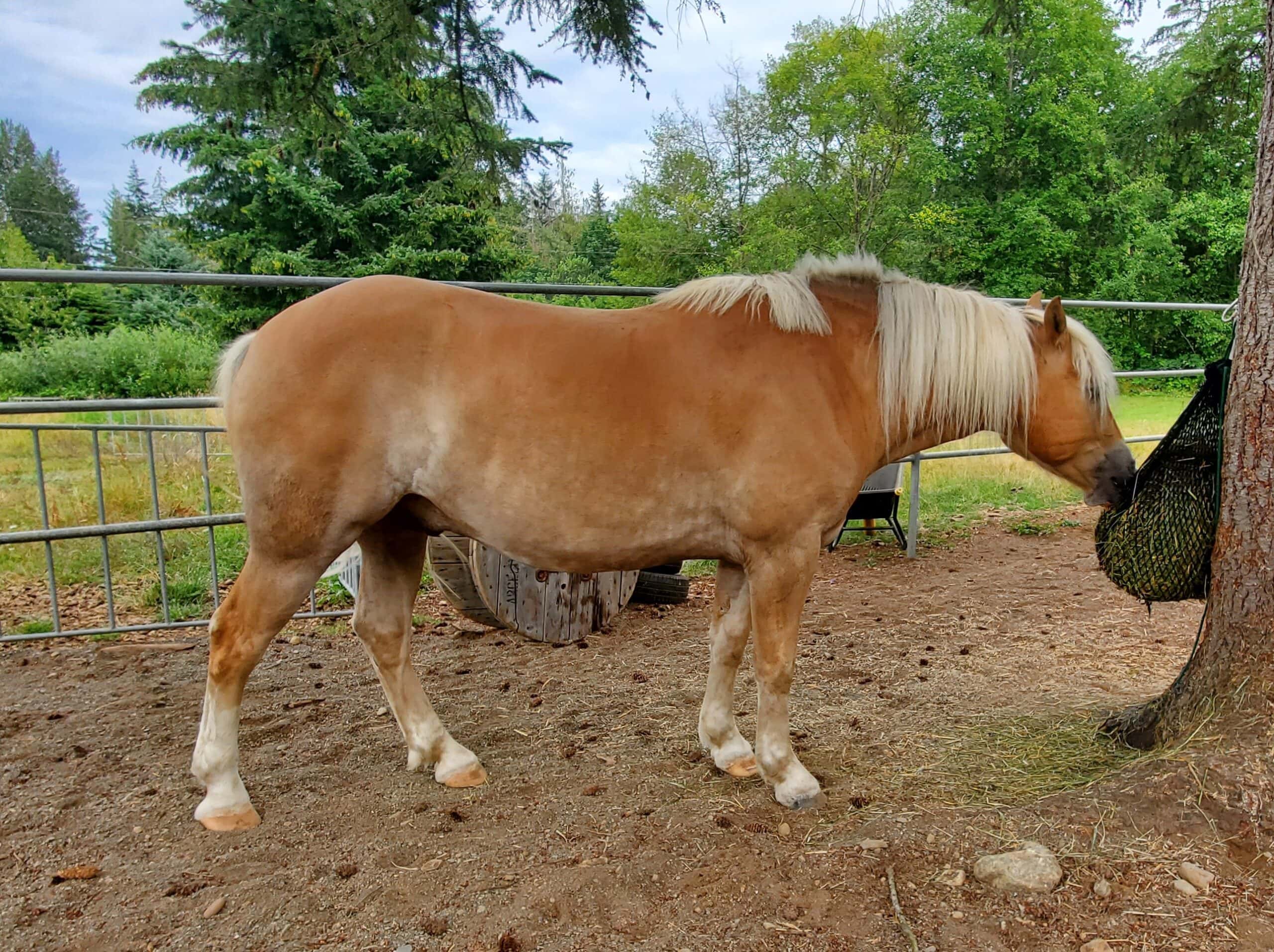 Sawyer July 2024
Horse History
At the time of his diet evaluation, Sawyer was turned out to pasture in the morning every other day with a grazing muzzle. He was also fed 22 lb (10 kg) of timothy hay per day, analyzed for its nutritional content, and provided in a 1″-hole hay net to slow intake.
Sawyer was also listed as being in a light exercise program, as he was being started under saddle. His exercise routine consists of:
- Easy 1 hour trail rides, once a week
- Non-strenuous lunging
- Hand walks
Sawyer’s owner introduced Visceral+ to his diet after noticing signs of girthiness and reluctance to be brushed, behaviors she suspected could indicate ulcers.
Visceral+ is a digestive health supplement formulated to support both gastric and hindgut health in horses.
However, a veterinarian did not diagnose Sawyer with ulcers, so the owner discontinued the supplement after completing the first container.
What's your top priority with your horse's health?

What's your top priority with your horse's health?
Feeding Overweight Horses
It is estimated that 50% of horses in North America are overweight, with up to 8% classified as obese. [1][2][3]
Overweight horses are prone to a number of health and performance concerns, such as: [4][5]
- Arthritis
- Hyperlipidemia
- Strangulating lipomas
- Difficulty thermoregulating (maintaining normal body temperature)
- Exercise intolerance
Equine Metabolic Syndrome is also more prevalent in obese horses and weight loss may have a metabolically protective effect. [6][7]
Common interventions to encourage weight loss in horses include:
- Limit or eliminate pasture access: Pasture is typically more energy-dense than hay, so restricting access—either by using a grazing muzzle or reducing grazing time—can help control calorie intake. In some cases, completely eliminating pasture and increasing hay intake may be the best approach to managing forage consumption.
- Ration hay intake: Feeding hay at 1.5–2% of body weight daily can help regulate calorie consumption. To prevent long periods without forage, divide the daily hay allowance into multiple smaller meals and use a slow-feed hay net.
- Soak the hay: Soaking hay can reduce its soluble carbohydrate and calorie content. A 30-minute soak in warm water or 60 minutes in cold water effectively lowers sugar levels while maintaining fiber content.
- Encourage regular exercise: Light to moderate exercise helps burn calories and supports weight loss. In horses on restricted hay intake, exercise may also allow for slightly increased forage consumption without contributing to weight gain.
In Sawyer’s case, he was estimated to have a body condition score of 8 on the 9-point scale before dietary changes, despite his owner’s efforts to limit pasture access, ration hay, and maintain a regular exercise routine.
Initial Diet
At the time of the nutrition consultation, Sawyer’s daily ration consisted of:
- Muzzled pasture in the morning, every other day
- 22 lb (10 kg) of timothy hay, fed in a 1″-hole hay net
- 0.25 lb (115 grams) beet pulp
- 150 grams of Omneity® Premix
- 18 grams of iodized salt
- 1 scoop of Visceral+
Sawyer was initially consuming low-sugar timothy hay at the time of his diet submission but was transitioned to a new batch of local hay in late July.
Table 1: Nutrient content of local grass hay (dry matter basis)
| Nutrient | Analysis (dry matter basis) |
|---|---|
| Digestible Energy | 1.98 Mcal/kg |
| Crude Protein | 7.8% |
| Acid Detergent Fiber | 35.6% |
| Neutral Detergent Fiber | 59.6% |
| Starch | 4.9% |
| Sugar (ESC) | 9.7% |
Sawyer’s diet was meeting baseline energy, protein, vitamin, and mineral requirements. However, it was high in hydrolyzable carbohydrate (HC; starch + sugar) content at 14% of the total diet on a dry matter basis. The high HC content of his diet was due to the high sugar and starch content of his new local hay, which he had been consuming for a couple of weeks.

Intervention
Based on Sawyer’s diet analysis and condition, an updated diet plan was proposed to address his weight and the high HC content of his new hay.
Table 2. Summary of Diet Intervention
| Horse Issue | Intervention |
|---|---|
| Overweight |
|
| High HC Intake |
|
Due to the relatively low protein and high HC content of the local hay, Sawyer’s owner needed to source new hay that would better meet his dietary needs.
In the interim, Sawyer’s hay was soaked before feeding to limit his HC intake and reduce the calorie content. An amino acid supplement was also added to his diet temporarily.
After sourcing new hay, his owner gradually introduced a mix of Teff hay and the existing local hay until the remaining local hay was used up. This transition eliminated the need for soaking hay and supplementing additional protein and amino acids, reducing the time and effort required for feeding.
Table 3: Nutrient content of Teff grass hay (dry matter basis)
| Nutrient | Analysis (dry matter basis) |
|---|---|
| Digestible Energy | 2.31 Mcal/kg |
| Crude Protein | 15.7% |
| Acid Detergent Fiber | 33.6% |
| Neutral Detergent Fiber | 53.7% |
| Starch | 0.9% |
| Sugar (ESC) | 6.7% |
A forage-based diet meets the energy needs of most horses at maintenance or in lighter exercise levels. However, easy keepers may need restricted forage intake to prevent weight gain and maintain a healthy body condition.
High HC intake can contribute to metabolic issues, making it harder to maintain a healthy weight. For easy keepers, controlling HC intake is important to support overall health and facilitate successful weight management.
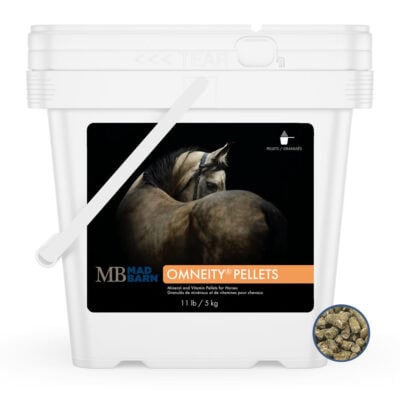
To ensure a balanced diet, Omneity® Premix and salt were continued as concentrated sources of essential vitamins and minerals. Omneity® contains 100% complexed trace minerals, a full serving of biotin, and other essential nutrients while adding minimal calories. This makes it an excellent choice for horses on a low-calorie, forage-based diet to support a healthy body condition.
Adequate sodium intake from salt is also critical for promoting proper hydration in all horses.
Balancing the Diet
The primary focus of this diet evaluation was addressing Sawyer’s excess body condition. Given that his protein, vitamin, and mineral requirements were met, it was important to rebalance the diet to reduce his calorie and HC intake while still supplying adequate nutrients.
Eliminating pasture, reducing hay provisions, and soaking hay helped lower Sawyer’s calorie and HC intake on his new local hay.
However, these changes also left him deficient in protein and the amino acid lysine. Additionally, soaking hay reduces its soluble protein content, further contributing to a protein shortfall. [8][9]
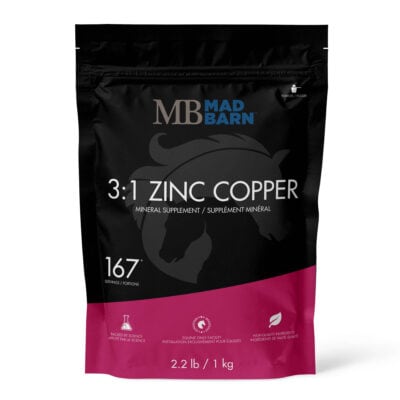
To ensure Sawyer’s protein requirements were met, his owner sourced a new hay with a higher protein content and lower HC content. She also opted to add Mad Barn’s 3:1 Zinc Copper at her discretion, based on the results of a mineral panel she requested in September 2024.
Updated Diet
After the nutrition consultation, Sawyer’s owner implemented the recommended dietary adjustments. Additionally, she opted to add a small amount of beet pulp and flax to his diet to provide easily digestible fiber and a source of omega-3 fatty acids.
His updated daily diet consisted of:
- 19 lb (8.6 kg) of low-HC Teff hay, fed in a 1″-hole hay net, split over 4 feedings
- 4 cups soaked and rinsed beet pulp
- 200 grams of Omneity® Pellets
- 2 oz ground flax
- 2 tbsp of table salt
- 4000 IU vitamin E
- 1 scoop 3:1 Zinc Copper
Outcome
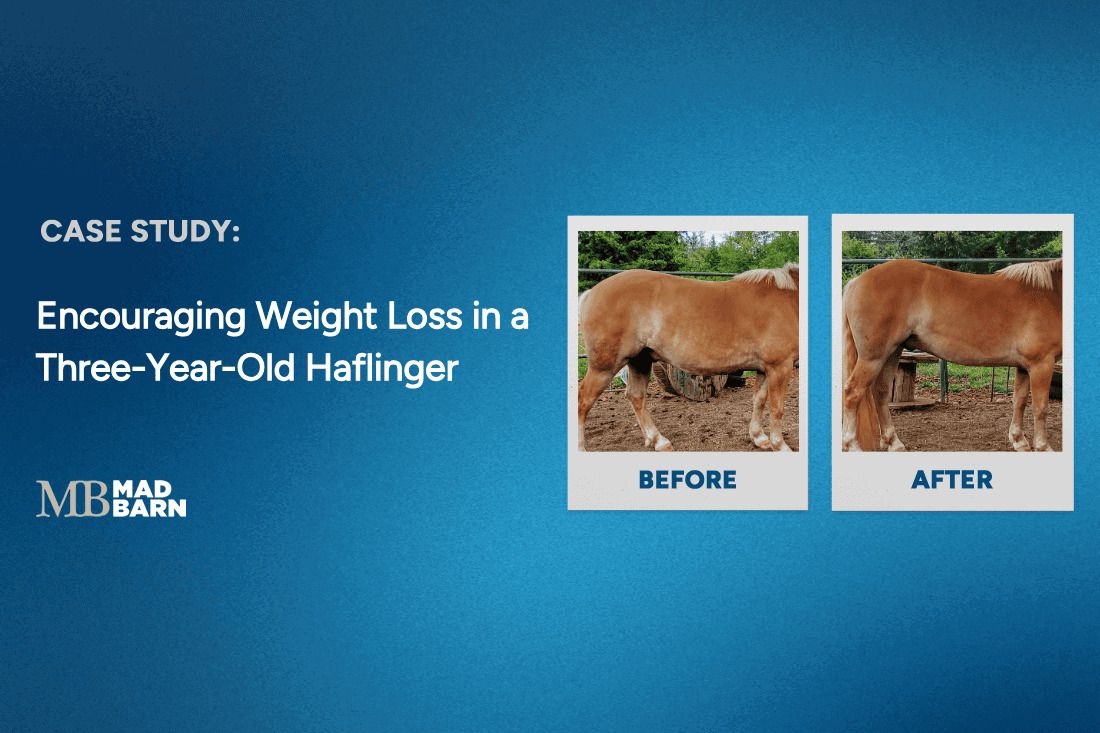
The recommended dietary adjustments resulted in a significant improvement in Sawyer’s body condition, reducing his body condition score from an 8 to a 6 on the 9-point Henneke scale.
Additionally, he lost approximately 90 lb (41 kg), dropping from 1097 lb (500 kg) to 1009 lb (458 kg), as estimated using a weight tape.
The following photos show differences in his body condition after two months on the recommended diet:
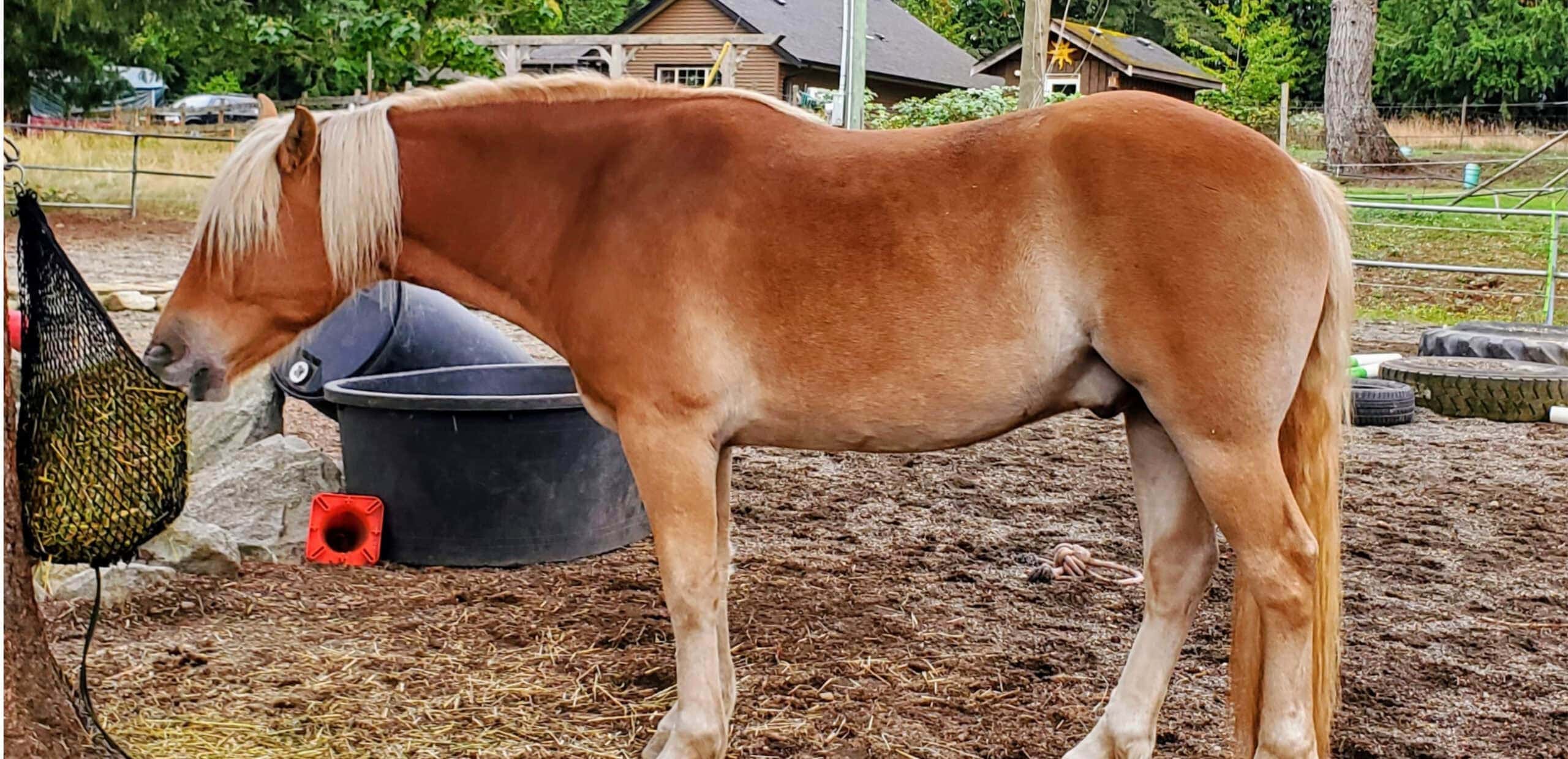 Sawyer October 2024
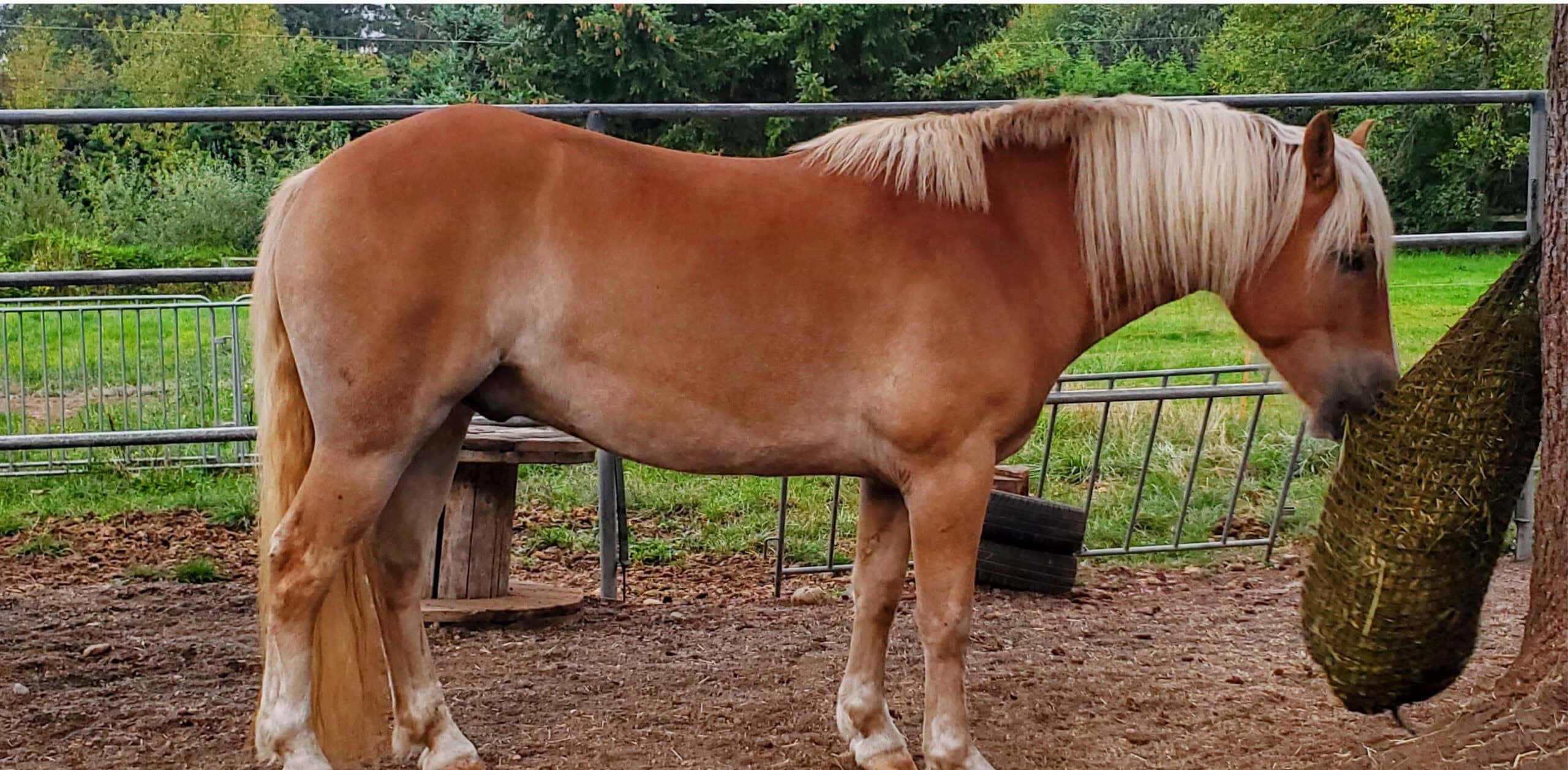 Sawyer October 2024
Discussion
Easy keepers like Haflingers have relatively low calorie needs, making them prone to weight gain if their diet is not carefully managed. Since Sawyer was only lightly exercised due to being at the beginning of his training program, it was not surprising that he struggled to maintain a healthy weight.
With his diet already well-balanced in terms of vitamins and minerals, the primary focus of the updated feeding program was reducing his caloric intake while ensuring adequate protein intake. Additionally, given the potential impact of elevated hydrolyzable carbohydrate (HC) intake on digestive health, lowering the HC content of his diet was also a key priority.
“I think he's made fantastic progress since the end of July with the help of Mad Barn!”
— Sawyer's OwnerMaintaining Omneity® and salt ensured that his vitamin and mineral requirements were met. Switching to a hay with adequate protein and a low HC content streamlined the diet to meet his nutritional needs while maintaining a controlled, yet adjustable, calorie intake.
Overall, these dietary changes helped Sawyer achieve a healthy body condition within a couple of months.
References
- Kosolofski. H. R. et al., Prevalence of Obesity in the Equine Population of Saskatoon and Surrounding Area. The Canadian Veterinary Journal. Canadian Veterinary Medical Association. 2017.
- Durham. A. E. et al., ECEIM Consensus Statement on Equine Metabolic Syndrome. Journal of Veterinary Internal Medicine. 2019. View Summary
- Christie. J. L. et al., Demographics, Management, and Welfare of Nonracing Horses in Prince Edward Island. The Canadian Veterinary Journal. Canadian Veterinary Medical Association. 2004. View Summary
- Johnson. P. J. et al., Medical Implications of Obesity in Horses—Lessons for Human Obesity. Journal of Diabetes Science and Technology. 2009. View Summary
- Chapman. S. J., Obesity and the Health and Welfare of the Leisure Horse. The Veterinary Nurse. 2014.
- Giles. S. L. et al., Obesity Prevalence and Associated Risk Factors in Outdoor Living Domestic Horses and Ponies. PeerJ. PeerJ Inc. 2014. View Summary
- Ungru. J. et al., Effects of Body Weight Reduction on Blood Adipokines and Subcutaneous Adipose Tissue Adipokine mRNA Expression Profiles in Obese Ponies. Veterinary Record. 2012. View Summary
- Bochnia. M. et al., Effect of Hay Soaking Duration on Metabolizable Energy, Total and Prececal Digestible Crude Protein and Amino Acids, Non-Starch Carbohydrates, Macronutrients and Trace Elements. Journal of Equine Veterinary Science. Elsevier. 2021.
- Owens. T. G. et al., Nutrient Content Changes from Steaming or Soaking Timothy-Alfalfa Hay: Effects on Feed Preferences and Acute Glycemic Response in Standardbred Racehorses. Journal of Animal Science. Oxford University Press US. 2019.