English



Cobs are small draft-type horses known for their hardiness and versatility as recreational riding mounts. However, the cob isn’t a distinct breed. The term refers to a common body type in several popular horse breeds.
These hardy horses are popular in the UK, where they’re defined as short-legged horses capable of carrying substantial weight. Their size and body type are ideal for riders of all ages who prefer shorter equine partners.
All cobs share physical and temperamental characteristics that contribute to their enduring popularity. However, this breed type is also susceptible to specific health issues associated with their metabolism and conformation.
This guide will discuss the history, characteristics, health problems, and nutritional needs of cob-type horse breeds. Keep reading to learn more about feeding and caring for your cob.
Cob Horse History
Cob-type horses have a long history in the UK and Ireland. Today, many of the most popular cob breeds originate from the British Isles, where they developed the characteristics that make them tough, versatile equine partners.
Origin
A study of horse bones in England from the Middle Ages suggests most English Medieval horses stood under 15 hands tall. The same study found increased robustness in the metatarsal bones of horses beginning in the high medieval period. [1]
The post-medieval period saw the largest and most robust bone specimens, revealing breeding trends towards heavier-boned horses. These findings suggest that most horses in post-Medieval England likely had a cob type. [1]
DNA studies revealed genetic links between British cob and draft breeds, including the Clydesdale. These results suggest cob horses descend from native ponies crossed with draft horses to produce a more muscular, robust build. [2]
Historic Use
Medieval farmers used cob-type horses for draft work, riding, and driving. They remained the primary all-around working animals in the UK until the Industrial Revolution increased demand for larger draft horses that could pull heavier loads. [3]
Cobs eventually shifted to pulling carts and carriages. The Romanichal Travelers of Great Britain bred cobs to pull their caravans. Romani cobs are the ancestors of the modern Gypsy Vanner, also known as the Irish Cob.
The early 20th century saw cobs surge in popularity as riding and showing horses. Modern cob breeds gradually became more refined than their working ancestors, but their versatility remained.
Cob Horse Breeds
The Gypsy Vanner is one of the most popular cob breeds worldwide. Welsh Ponies can also have a cob type, the Welsh Cob or Welsh Section D.
Cob types are also found in some horses and ponies from the following breeds:
- Dales Pony
- Fell Pony
- Haflinger
- Fjord
- Norman Cob
Some cobs have unknown breeding and are classified as cob types based on physical characteristics alone.
| Breed Summary | |
|---|---|
| Breed Name | Cob |
| Also Known As | Coloured cob; maxi cob |
| Breed Type | Draft-type |
| Origin | United Kingdom and Ireland |
| Average Height | 14.2 – 15.1 hh |
| Common Coat Colors | Grey, bay, black, chestnut, pinto |
| Conformation | Short-legged, stocky build, generous bone, short back, deep body, broad chest, attractive head, proportional neck, powerful hindquarters, little wither definition |
| Common Uses | Therapy, beginner riding, trail riding, pleasure riding, fox hunting, showing, hunter, equitation, low-level show jumping, dressage |
| Temperament | Calm, laid-back, kind, well-mannered |
| Best For | Riders of all levels |
| Common Health Concerns | PSSM, FIS, equine metabolic syndrome, chronic progressive lymphedema, pastern dermatitis, ringbone, sidebone, laminitis, obesity |
What's your top priority with your horse's health?

Enter your email to receive your store credit
Cob Horse Characteristics
Cobs have unique characteristics that distinguish them from other ponies and horses. Although not a breed, cobs can compete in exclusive classes that evaluate horses based on established standards for the cob type.
Conformation
The British Show Horse Association’s (BSHA) official height range for showing cobs is 14.2 to 15.1 hands. However, some horses and ponies outside this height range can have cob types. Cobs standing over 15.1 can participate in BSHA maxi cob classes.
Most cobs are larger than ponies but still relatively compact. They have short legs with generous bone and a stocky build that makes them strong for their size. While well-defined withers are desirable, many cobs have very little wither definition.
Other conformational cob traits include short backs, deep bodies, and broad chests. The ideal show cob has an attractive head, a proportional neck, and powerful hindquarters. They are often described as, “having the head of a duchess and the backside of a cook.”
Colours
Cobs come in many different colours depending on the breed. Welsh Cobs are commonly grey, bay, black, or chestnut. Pinto patterns are common in Gypsy Vanners, and pinto cobs with unknown ancestry are often called coloured cobs.
Most cobs have naturally thick, long manes and tails. Several cob breeds have leg feathering. Some show cobs compete with hogged manes, known as roached manes in North America.
Temperament
Many cob breeds have reputations for a calm temperament and laid-back personality that suits riders of all levels. Character can vary between individuals and breeds, but most cobs are kind and well-mannered.
Disciplines
Their reliable temperaments make cobs popular therapy and beginner horses. Their small size is less intimidating to nervous riders and is convenient for equine therapy techniques. Unlike light breeds of the same size, cobs are strong enough to carry adult riders.
Many owners use their cobs as recreational trail and pleasure mounts. Thanks to their bravery and hardiness, fox hunting is a popular discipline for this breed type on both sides of the Atlantic.
Some cobs compete in BSHA showing classes. Cobs are divided into lightweight, heavyweight, and maxi cob divisions depending on their size and carrying capacity. They typically have a smooth gait ideal for hunter and equitation disciplines in North America.
Heavier cobs may not have the agility for jumping, but lighter types can do well at the lower levels of show jumping and dressage.
Health Overview
Some cob conformation and movement traits can predispose horses with this type to specific lameness issues. These horses are also susceptible to metabolic and muscle conditions commonly found in the British ponies and draft breeds they descend from.
Genetic Diseases
Polysaccharide storage myopathy (PSSM) is a genetic muscle disorder that is prevalent in draft breeds related to cob horses. Researchers have identified the GYS1 gene mutation responsible for PSSM type 1 in cob breeds. [4]
Cobs with PSSM have abnormal glycogen storage in the muscles, low mitochondrial numbers and altered energy metabolism which can cause muscle pain, weakness, cramping, and tying up. Strategic exercise and dietary management can help minimize clinical signs. [4]
Other risks for genetic diseases depend on your cob’s ancestry. Cob breeds related to Fell and Dales ponies, including Gypsy Vanners, can inherit foal immunodeficiency syndrome (FIS). Cobs need one copy of the FIS mutation from each parent to develop the disease. [5]
FIS causes fatal anemia and a compromised immune system. Affected foals cannot produce antibodies and often die from infections by four months of age. Foals appear clinically normal for the first few weeks due to acquired immunity from their dam’s colostrum. [5]
Many cob types are predisposed to equine metabolic syndrome, which is a genetic trait.
Health Problems
Some cob breeds are predisposed to chronic progressive lymphedema (CPL). This disease is common in draft breeds and is characterized by a build-up of lymph fluid in the horse’s lower limbs. [6]
Good management can slow the progression of CPL, but the condition often leads to lameness, secondary infections, and severe disability as the swelling worsens. [6]
Minor skin irritations are also common on the lower legs of cob horses with heavy feathering. This extra hair can trap debris and moisture against the fetlock and pastern, increasing the risk of pastern dermatitis. [7]
Cob-type horses have a higher incidence of ringbone and sidebone, two conditions that can lead to lameness and discomfort. Ringbone refers to osteoarthritis within the pastern or coffin joint. Sidebone is characterized by the ossification of the cartilage wings projecting from the coffin bone. [8]
Researchers have linked both of these disorders in horses to conformation and concussive forces, which refers to the impact exerted on the horse’s limbs. Cob horses have short, upright pasterns and rounded action, increasing concussive forces on the coffin and pastern joints. [8]
Care and Management
Proper management is essential for keeping cob horses sound and healthy. All cobs need quality basic care that supports their physical and mental well-being.
Work with your veterinarian, farrier, trainer, and other members of your equine care team to implement a preventative wellness program for your cob that includes:
- Veterinary Exams: Schedule a routine check-up with your veterinarian at least once or twice yearly to monitor for signs of health issues.
- Vaccinations: Administer vaccines recommended by your veterinarian to protect your cob against common diseases.
- Deworming: Follow an appropriate deworming program to manage internal parasites in your cob.
- Dental Care: Schedule annual dental check-ups and teeth floating to keep your cob’s teeth balanced. Senior cobs need more frequent exams.
- Farrier Care: Routine trimming from a qualified farrier balances your cob’s hoof and pastern angles and helps reduce concussive forces. Some cobs with existing ringbone or sidebone may benefit from corrective shoeing.
Cobs are hardy horses that thrive living outside as long as they can access safe, secure shelter. Maximizing free exercise and turnout time is essential for promoting healthy circulation in cobs with PSSM or CPL.
Healthy, unclipped cobs grow thick winter coats and often don’t need blankets in cold climates. Daily grooming routines can help keep your cob’s thick hair in good condition and his skin healthy.

Nutrition Program
Cob horses require a nutrition program tailored to their unique body type and needs. The ideal feeding program is a forage-based diet with balanced vitamins and minerals targeted to your horse’s individual requirements, activity level, and health status.
Weight Maintenance
Cob horses are notoriously easy keepers, meaning they can maintain or gain weight easily. Their efficient metabolism allowed their ancestors to maintain stocky, muscular builds on sparse vegetation.
However, overfeeding and high-starch diets can lead to obesity in these breeds. Cobs require careful management of their diet to avoid gaining excess weight and associated health problems.
Equine metabolic syndrome (EMS) is highly prevalent in native British pony and cob breeds, increasing the risk of obesity and laminitis. Research shows that exercise and maintaining a healthy weight can reduce the risk of laminitis in cobs. [9]
To determine if your cob is at a healthy weight, conduct regular body condition scoring (BCS). A cob should have a BCS of 5 out of 9 on the Henneke scale for optimal health.
Sample Diet
The following sample diet is intended for a mature 1000 lb (450 kg) cob horse at maintenance (not exercising).
| Feed | Amount per day |
|---|---|
| Mid-Quality Hay (8% crude protein) | Free-choice |
| Salt | 30 g (2 tbsps) |
| Omneity® Pellets | 200 g (2 scoops) |
| Diet Analysis | |
| Digestible Energy (% of Req) | 126% |
| Protein (% of Req) | 118% |
| HC (ESC + starch; % Diet) | 8% |
Forage should be the foundation of your cob’s feeding program. Forage typically provides enough energy and protein for most cob horses in light work, but hay and pasture are deficient in essential nutrients required in the equine diet.
Including a vitamin and mineral supplement in your forage-based feeding program will ensure your horse’s diet meets all their nutritional needs. Avoid grain-based feeds and ration balancers that add excess energy to the diet, and instead choose a concentrated vitamin and mineral with no added sugars.
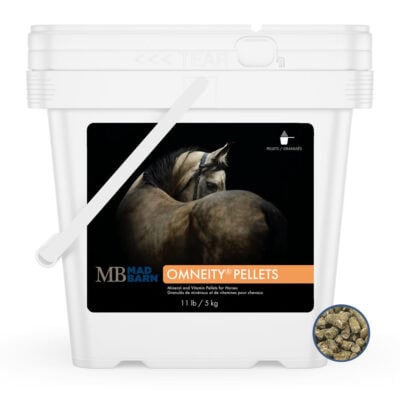
Mad Barn’s Omneity® is a comprehensive vitamin and mineral supplement that provides key nutrients needed to balance your cob horse’s diet. This low-feeding rate supplement will not add excess calories to your horse’s diet and is designed to support hoof health, coat quality, joint health and more.
Forage
Horses evolved as grazing animals, naturally adapted to consume a diet primarily consisting of grasses and forage throughout the day. Providing your cob horse with adequate forage enables them to express natural grazing behaviours and supports digestive function.
The amount of forage your cob needs depends on his body weight, which can be significantly heavier than lighter breeds of the same height. Most horses in light work consume about 2% of their body weight in forage daily. This equates to 20 lb (9 kg) of forage per day for a 1000 lb (450 kg) cob horse.
Mid-maturity, low-starch grass hays are typically recommended for easy keepers to maximize forage intake without adding excess calories or sugar to the diet.
Hydrolyzable carbohydrate (HC) refers to the components of non-structural carbohydrates (NSC), namely ESC + starch, which are digested in the small intestine and contribute to the insulin response. Horses prone to metabolic syndrome should be fed diets that contain less than 10% HC to support metabolic health.
A hay analysis is the best way to determine if your hay is appropriate for your horse and develop an accurate feeding program. Submit a forage sample for analysis, and our equine nutritionists can help you formulate a balanced diet based on your hay.
Overweight cobs may need forage restriction to promote safe and gradual weight loss. Feeding hay in a slow feeder provides extended access to forage while reducing hay intake. These cobs may also need to wear grazing muzzles or get dry lot turnout to restrict pasture intake.
Feeding Recommendations
Most cobs should avoid high-energy grains or commercial concentrates in their diet. These feeds often have high levels of HC, which can trigger excessive insulin production in cob-type horses and contribute to the development of equine metabolic syndrome. [9]
If your cob needs additional energy sources in their diet, choose fibre-based forage alternatives such as hay pellets or soaked beet pulp. You can also replace grains with fat supplements, which provide concentrated calories for horses that need a low-sugar diet, but very high fat diets should be avoided. [10]
Fat sources rich in omega-3 fatty acids are beneficial for supporting the homeostatic regulation of inflammation in horses. Omega-3s also support skin and coat condition, immune function, and joint health. [11]
All cobs need free access to water and salt. Free-choice salt encourages hydration in cobs, but most horses won’t consume enough sodium from a salt lick alone. Add loose salt to the daily ration to ensure your cob gets adequate sodium.
Nutritional Supplements
Selecting the right forage and preventing nutrient deficiencies is the first priority when developing a feeding program for your cob-type horse. Once you have addressed any nutritional imbalances, you can consider adding supplements to target individual needs and goals.
- W-3 Oil is an essential fatty acid ideal for cob horses that need additional sources of healthy fats in their diet. This oil provides a palatable source of DHA and high levels of vitamin E to support skin, muscle, immune, and joint health.
- MSM is a natural supplement commonly used to support the body’s own homeostatic mechanisms to moderate inflammation.
- Acetyl-L-Carnitine: This antioxidant supplement can be an alternative to a high fat diet. It assists by redirecting glucose away from the formation of glycogen and into energy pathways. ALCar also supports production of mitochondria.
- Visceral+® is a comprehensive gut support formula with probiotics, prebiotics, yeast, herbs and phospholipids. Show cobs with stressful competition careers may benefit from ongoing support to maintain stomach and hindgut health.
- Jiaogulan is an herbal supplement commonly used to support hoof health in horses with metabolic problems. This herb supports circulation, muscle function, respiratory health, and joints in cobs.
For a personalized approach to your cob horse’s nutrition, submit their diet online for a free evaluation. You’ll receive expert guidance from our professional equine nutritionists on formulating a balanced diet.
Frequently Asked Questions
Here are some frequently asked questions about cob horses:
A cob horse is a type of horse and pony rather than a distinct breed. Cob horses are small draft-type horses known for their compact build, hardiness, and versatility. The term “cob” describes a body type with short legs, a deep body, ample bone, and the ability to carry substantial weight for the horse’s size. Several breeds, such as Fjords, Haflingers, and Fell ponies, can produce cob horses when they have these physical characteristics.
Cob horses are a body type, not a single closed breed. The cob horse type is defined by conformation rather than pedigree, so horses from several breeds may be considered cob horses if they have the typical compact, strong, draft-influenced build. Common examples include Welsh Cobs, Gypsy Vanners, and other horses with similar substance and proportions.
Cob horses are used for pleasure riding, trail riding, therapy work, showing, and low-level sport disciplines. Cob horses were used for draft work, riding, and driving in the past because they were tough, versatile horses. In modern day, their calm temperament, strength, and manageable size make them popular for fox hunting, equitation, hunter classes, dressage, and lower-level show jumping as well.
Cob horses are generally known for being calm, kind, and laid-back. Many cob horses have steady temperaments that make them suitable for riders of different ages and experience levels. Their sensible nature is one reason they are often chosen for beginner riders and therapy programs. However, temperament can still vary depending on the individual horse and its breed background.
Cob horses are typically compact, stocky, and short-legged, with plenty of bone and a strong body for their size. Most cob horses have a short back, deep body, broad chest, powerful hindquarters, and a proportional neck. Many also have little wither definition, which contributes to their distinctive outline. Overall, the cob horse type is built for strength, carrying capacity, and versatility.
Cob horses can come in many different coat colors because the cob horse is a type rather than a single breed. Common colors seen in cob horses include gray, bay, black, chestnut, and pinto patterns. Color often depends on the breed behind the horse, with Welsh Cobs commonly appearing in solid colors and Gypsy Vanners often showing more white markings and pinto patterns.
Cob horses are usually between 14.2 and 15.1 hands high in British showing classes. That range is commonly used for traditional show cobs, although some cob horses may fall outside it. Taller cob horses over 15.1 hands are often shown in the British Show Horse Association’s maxi cob classes. Even when they are not especially tall, cob horses are known for being sturdy and substantial for their height.
The British Show Horse Association defines show cobs as horses standing from 14.2 to 15.1 hands high. Horses that exceed 15.1 hands can compete in maxi cob classes if they still fit the cob type. This standard focuses on the horse’s height and overall build rather than its breed registry. It helps preserve the traditional compact, weight-carrying cob horse look in the show ring.
Cob horses are often good for beginners because many have calm temperaments. Their smaller height can also make them feel less intimidating than larger horses, while their sturdy build allows them to carry many adult riders comfortably. Cob horses are especially popular for therapy riding, pleasure riding, and novice riders. That said, suitability still depends on the training and temperament of the individual horse.
Cob horses are commonly affected by metabolic, skin, and soundness problems linked to their build and ancestry. Common concerns in cob horses include obesity, equine metabolic syndrome, laminitis, pastern dermatitis, ringbone, sidebone, and chronic progressive lymphedema in heavily feathered types. Some cob horses are also predisposed to muscle disorders such as PSSM1. Good weight management, regular hoof care, and attentive skin care are important for reducing these risks.
Some cob horses are at risk for inherited conditions such as PSSM1 and, in certain lines, foal immunodeficiency syndrome (FIS). PSSM1 is a muscle disorder that affects how glycogen is stored in the muscles and can lead to stiffness, weakness, and tying-up episodes. FIS is a fatal genetic disease seen in some breeds associated with cob ancestry, especially those related to Fell and Dales ponies. Genetic testing can help breeders reduce the risk of producing affected foals.
Cob horses at risk of PSSM or chronic progressive lymphedema need consistent exercise, careful weight management, and attentive daily care. Regular turnout and movement help support circulation and muscle health, while balanced nutrition helps prevent excess weight gain and metabolic stress. Cob horses with heavy feathering also benefit from routine grooming and close inspection of the lower legs to reduce moisture, debris buildup, and skin infections. Ongoing veterinary and farrier care is important for managing these conditions and supporting long-term soundness.
Summary
Cobs are sturdy, draft-type horses prized for their strength, calm temperament, and versatility as riding and driving mounts, though “cob” refers to a body type rather than a single breed. They remain popular for riders seeking a compact, dependable partner.
- Originated in the UK from native ponies crossed with draft horses and once served as all-purpose farm and carriage horses
- Stocky and strong with short legs and deep bodies, found in breeds such as Welsh Cob, Gypsy Vanner, Dales, and Fell
- Typically gentle and beginner-friendly, well suited for therapy, trail riding, and showing
- Prone to metabolic syndrome, polysaccharide storage myopathy, chronic progressive lymphedema, and joint issues like ringbone and sidebone
- Do best on a forage-based diet with balanced vitamins and minerals, with careful weight management and minimal high-starch feeds
References
- Ameen, C. et al. In search of the ‘great horse’: A zooarchaeological assessment of horses from England (AD 300–1650). Int J Osteoarchaeology. 2021.
- Winton, C. et al. Genetic diversity within and between British and Irish breeds: The maternal and paternal history of native ponies. Ecol and Evol. 2020.View Summary
- Moore-Colyer, R. et al. Horses and Equine Improvement in the Economy of Modern Wales. Ag Hist Rev. 1991.
- Herszberg, B. et al. A GYS1 gene mutation is highly associated with polysaccharide storage myopathy in Cob Normand draught horses. Anim Genet. 2009. View Summary
- Fox-Clipsham, L. et al. Identification of a Mutation Associated with Fatal Foal Immunodeficiency Syndrome in the Fell and Dales Pony. PLoS Genet. 2011. View Summary
- Brys, M. et al. Chronic Progressive Lymphedema in Belgian Draft Horses: Understanding and Managing a Challenging Disease. Vet Sci. 2023.View Summary
- Gerber, V. et al. Equine pastern dermatitis: a narrative review on clinical presentation, diagnosis, risk factors, prevention, and therapeutic approaches. J Am Vet Med Assoc. 2023.
- Down, S. et al. Ossification of the cartilages of the foot. Equine Vet Ed. 2010.
- Bailey, S. et al. Metabolic responses of horses and ponies to high and low glycaemic feeds: implications for laminitis. Anim Prod Sci. 2013.
- Ribeiro, W. et al. The Effect of Varying Dietary Starch and Fat Content on Serum Creatine Kinase Activity and Substrate Availability in Equine Polysaccharide Storage Myopathy. J Vet Intern Med. 2008. View Summary
- Manhart, D. et al. Markers of Inflammation in Arthritic Horses Fed Omega-3 Fatty Acids. Prof Anim Scient. 2009.