English



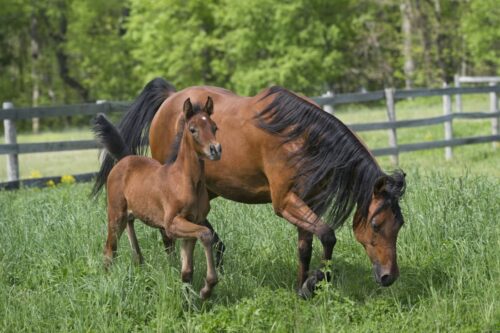
Colostrum is the first milk that a mare produces after foaling. It is particularly rich in antibodies, which provide immunity for newborn foals.
Foals are born without a fully developed immune system and rely on a passive transfer of antibodies from their dam to help build their immune defenses. Consuming enough high-quality colostrum in the first 6 – 12 hours of life is critical for the foal’s health and survival.
Colostrum contains antibody proteins called immunoglobulins and other factors, which help combat diseases that could otherwise be deadly for foals.
Foals that do not get enough high-quality colostrum are at greater risk of infections, such as diarrhea, joint sepsis, and umbilical infections caused by pathogens. If your foal cannot be nursed for any reason, donor colostrum should be fed to support immunity. Another option is to infuse immunoglobulin-rich plasma directly into the circulation to deliver antibodies.
You can determine whether your foal has consumed adequate colostrum with an IgG test from your veterinarian to measure the immunoglobulin concentration in your foal’s blood.
Importance of Colostrum for Foals
Foals are born with naive immune defenses. They do not receive any immunity from their dam while in the uterus. [1]
When a foal is born, it relies on colostrum from the mother to obtain protection from common diseases and start to develop an immune system. [2]
Colostrum is rich in several components including hormones, growth factors and antibodies. Many of these components support immunity and gut health, such as insulin-like growth factor, lysozymes, lactoperoxidase and lactoferrin. [5]
This first milk also contains high levels of vitamins and minerals, especially vitamin A.
Colostrum is also a source of oligosaccharides and essential fatty acids, which have been shown to promote gut development and improve thermoregulation (the ability to maintain a stable body temperature). [3][4]
Antibodies
The antibody levels in colostrum are 100 times higher than in regular milk. These antibodies provide newborn foals with early protection from harmful bacteria and contagious diseases.
Immunoglobulins are the main antibodies in milk. They are large bioactive molecules composed of short and long polypeptide chains. The three most abundant types are:
- Immunoglobulin G (IgG)
- Immunoglobulin A (IgA)
- Immunoglobulin M (IgM)
Newborn foals have specialized cells in their digestive tract to accommodate these large molecules, allowing them to absorb the immunoglobulins in colostrum. However, the gut is only “open” to absorb immunoglobulins from colostrum during the first 24 hours post-partum. [1]
Once absorbed, the immunoglobulins travel to the circulatory system and bind to foreign invaders, helping to destroy them. [2] Foals will encounter many new and potentially damaging pathogens as they mature and this immune transfer is vital to their survival.
The ingestion of colostrum confers passive transfer of protective antibodies, which will last for 4-6 months. As the foal matures, so does its own immune system.
This is why routine vaccination is recommended for foals starting around the time of weaning – around 6 months of age – when passive immunity begins to wane. At this stage, the aim is to stimulate an active immune response to pathogens.
Failure of Passive Transfer (FPT)
If a foal does not receive adequate immunoglobulins from the dam’s colostrum, this results in a failure of transfer of passive immunity.
These foals have low IgG levels in their blood and are more susceptible to harmful and potentially life-threatening diseases, such as: [2][7][8]
What's your top priority with your horse's health?

Enter your email to receive your store credit
Composition of Colostrum
Compared to milk, colostrum is thick, sticky, and light yellow in colour. The consistency of a mare’s colostrum changes within 24 hours of giving birth as the mare transitions to making milk.
Over this initial 24-hour period, the protein content decreases and lactose content significantly increases. By three weeks post-partum, the mare’s milk composition is fairly stable and remains similar for the rest of the lactation. [6]
Table 1: Composition of equine colostrum and mature milk. [9]
| Component | Colostrum | Milk |
|---|---|---|
| Fat | 1.7% | 1.2% |
| Protein | 18% | 1.7% |
| Lactose | 1.5% | 6.6% |
| Immunoglobulins* | 27% | 0 |
*Using brix refractometer
This table reflects the average composition of colostrum and milk. Colostrum composition could be affected by characteristics of the mare including: [9][10]
- Breed
- Parity
- Diet
- Season
Ensuring Adequate Passive Transfer
There are a few factors that influence adequate passive transfer of antibodies in the newborn foal. The two main parties involved in passive transfer are the mare and the foal – the mare has to produce colostrum for the foal and the foal has to be able to ingest it. If something goes wrong with either party, then adequate passive transfer will not take place.
Factors related to the dam include the quantity and quality of the colostrum produced. If the mare does not produce enough high quality colostrum, then passive transfer to the foal will be inadequate.
Factors related to the foal include the foal’s ability, or lack thereof, to consume enough colostrum during the necessary window. Since the gut is only “open” to absorb the antibodies from colostrum during the first 24 hours post-partum and most absorption occurs within the first 12 hours, foals that fail to meet their benchmarks in the post-foaling period are at risk of FPT.
Mare Factors: Quantity Produced
A healthy mare should produce an adequate volume of colostrum for her newborn foal. However, individual variation does occur and some mares are less productive than others during lactation.
Additionally, the mare’s body condition, age, and parity (i.e. the number of times she has foaled previously) can all affect colostrum and milk yield. Mares that are in poor body condition at the time of foaling, or those that do not receive adequate nutrition during lactation, generally produce less milk. [11]
Additionally, young, maiden mares produce less milk compared to older or multiparous mares (those that have had more than one foal previously). [11]
Further, there are several medical conditions that can negatively affect mammary development, lactation, and colostrum availability if they occur late in gestation. Common examples include fescue toxicosis and placentitis.
Fescue toxicosis is the most common cause of agalactia (lack of milk production) in mares in North America. Agalactia can occur in mares grazing on endophyte-infected fescue pasture during late-pregnancy. Affected mares exhibit little to no mammary development and fail to produce colostrum and milk. [12]
Another common issue is premature lactation due to placentitis (i.e. inflammation and/or infection of the placenta). Not only is this condition harmful to the developing fetus, it can also result in premature udder development and lactation during late-pregnancy. Mares with placentitis often begin leaking milk well in advance of foaling. In some cases, all the colostrum is wasted before the foal is born. [13]
These medical impacts on lactation underscore the importance of monitoring mares towards the end of gestation for udder development and evidence of premature lactation. It is normal for mares to “bag up” or develop an udder in the last 2 weeks of foaling, and milky secretions can be expressed when palpating the teat in the final days leading up to foaling.
Both the failure to develop an udder and premature udder development can be signs that there is an issue with the pregnancy.

Mare Factors: Quality
Colostrum quality is determined by immunoglobulin content. This can be measured in the barn by assessing levels of IgG, which is the most abundant immunoglobulin.
IgG concentration is measured using a Brix refractometer – a small instrument that provides immediate results. A brix reading of 23% or above indicates good quality colostrum. [14]
Transfer of passive immunity to the foal can be assessed by testing the foal’s blood for serum IgG levels. This blood test is performed by your veterinarian.
Foals with IgG concentrations greater than 800 mg per 100 mL of blood have received adequate immunity. IgG levels below 800 mg per 100 mL indicate a failure of passive immunity. [2]
Vaccinations
A vaccinated dam will transfer immunoglobulins induced from immune response to the vaccine to her foal through colostrum. The diseases horses are vaccinated against are typically high morbidity (common) and/or high mortality (fatal), so it’s important that foals are also protected against these pathogens.
To maximize the transfer of vaccine-related antibodies in colostrum, it is recommended to vaccinate the mare one month prior to her due date. This allows adequate time for the mare to develop antibodies against the targeted pathogen and produce colostrum containing these specific antibodies in high concentrations. [2]
These are called “pre-foaling vaccines” and include all the normal core vaccines recommended for horses in North America:
- Rabies
- Tetanus
- West Nile Virus (WNV)
- Eastern Encephalitis Virus (EEE)
- Western Encephalitis Virus (WEE)
Several risk-based vaccines can be given to the mare to provide immunity to the foal, depending on the situation. Examples include: [15][16][17]
- Rhodococcus equi: Vaccination of broodmares reduces pneumonia in foals
- Clostridium difficile: Vaccination of the mare produces antibodies in colostrum that could protect against enterocolitis
- Equine Herpesvirus 1 or rhinopneumonitis: Vaccination of the mare increases antibodies in the foal that may protect against respiratory disease
- Botulism
- Streptococcus equi equi or “strangles“
- Equine influenza
- Rotavirus
Consult with your veterinarian about which vaccines to give your gestating mare.
Foal Factors: Quantity Consumed
Foals need to consume enough colostrum to ensure they are getting adequate levels of immunoglobulins.
A foal should receive 2-3 L of colostrum within the first 6 to 8 hours of life over an average of 4 feedings. [4]
As they get older, healthy foals can consume as much as 27% of their body weight in milk daily, equivalent to 13 L for a 50 kg foal.
Sick foals may only tolerate 5-10% of their body weight in milk daily (equivalent to 2.5 – 5 L per day). This amount can be slowly increased as the foal recovers. [18]
Assessing Colostrum Intake
The quantity and quality of the dam’s colostrum, the timeliness of consumption and the quantity that the foal consumes all affect the immunity and development of the newborn foal.
Even healthy foals should undergo a wellness exam by a veterinarian once they’re about 24 hours old. At this visit, the vet can draw blood to test the IgG concentration and confirm that enough colostrum was consumed. Testing earlier than about 20 hours may not accurately reflect the foal’s IgG levels. [2]
Of course, if you are aware of any mare or foal factors that may impact passive transfer of immunity, it is best to reach out to your veterinarian right away. Prompt intervention can be the difference between a healthy foal and a foal that does not survive.
The most common causes of inadequate colostrum intake include: [19]
- Premature birth
- Delayed suckling
- Death of the mare
- Premature leaking of colostrum prior to foaling
- Small intestinal malabsorption
If failure of transfer of passive immunity is identified, your veterinarian can recommend safe and effective ways to increase IgG concentration. Both oral and intravenous routes can be used to provide supplemental IgG. [20]
Post-Foaling: 1-2-3-4 Benchmarks
Most horse-owners that have experience foaling out mares are familiar with the normal newborn foal benchmarks – or the 1-2-3-4 Rule.
The 1-2-3-4 Rule describes the time points at which a foal should stand, suckle, and pass meconium (the first manure). After birth, a foal should stand by 1 hour, successfully and independently nurse by 2 hours, and pass meconium by around 4 hours. Number 3 is reserved for the mare, who should pass her placenta within 3 hours.
For many healthy foals, they meet all of their benchmarks quickly, even within hour one. If one or more of these benchmarks is not met within the expected timeframe, you should contact your veterinarian for prompt assessment.
The foal’s gut is “open” to absorb the immunoglobulins from colostrum for only about 24 hours, though most of this absorption occurs within the first 12 hours after birth. After 12 hours, absorption rates decrease by approximately 80%. [2]
Given this, a foal that is slow to stand and nurse is at risk for failure of passive transfer. This is why monitoring the late-gestation mare is so important – owners or caretakers should be present for the foaling and monitor the newborn foal closely after birth.
Poor Suckle Reflex
Some foals are born with a weak suckle-swallow reflex, impairing their consumption of colostrum. This is known as poor suckle reflex and it can be caused by cleft palate, muscle weakness, neurological disorders or trauma/injury. [18]
Signs of poor suckle reflex include:
- Milk in one or both nostrils
- Coughing during or after ingesting milk
- Drooling milk from the mouth
Additionally, a poor suckle reflex can result from Neonatal Maladjustment Syndrome (NMS) or “Dummy Foal Syndrome“. These foals are often slow to stand and lack the instinct to seek out the udder and suckle. If they are helped to the teat, they may be unable to latch or remain latched due to their uncoordinated suckle-swallow reflex. As a result, it is very common for these foals to suffer from failure of passive transfer. [21]
Monitor your foal closely within the first few hours. If the foal fails to consume colostrum, rapid intervention and veterinary care is necessary.
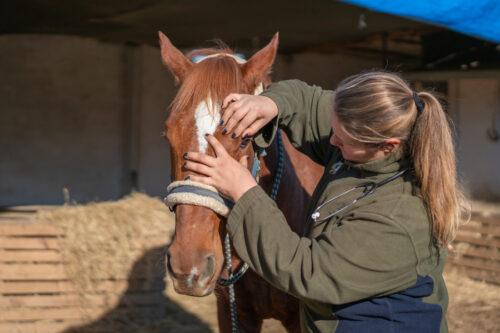
Your veterinarian will assess your foal to determine the cause of poor suckle reflex, hydration status, blood glucose levels, electrolyte balance, pain level and ability to regulate body temperature. [18]
Depending on this evaluation, your veterinarian will decide to provide nutrients into the gut via a nasogastric feeding tube or directly into the blood by IV infusion.
Feeding Orphaned Foals
A foal’s dam may not be able to provide colostrum in cases of illness, death or foal rejection.
In these cases, a suitable colostrum replacement should be used to ensure adequate intake.
Fresh or Frozen Colostrum
If you are caring for an orphaned foal, it may be possible to acquire colostrum from a donor mare or colostrum bank. At least 1 litre of colostrum should be given within 8 hours of birth. [21]
Up to 250 mL of colostrum can be collected from a donor mare at a single sampling time without reducing milk supply for her own foal.
Fostering the foal to another dam may also be a suitable option. Several organizations match foals with mares who have recently lost a foal to enable fostering. [22]
Additionally, colostrum can be collected and frozen for future use. To collect and use frozen banked colostrum, follow these steps:
- Test the quality of the colostrum before collection. A brix refractometer reading of 23% or above is suitable.
- Ensure collection of colostrum is sanitary. Clean your hands, the mares’ teats and the holding pail before milking.
- Thaw the frozen colostrum in a warm or hot water bath. Do not microwave the colostrum, as this will destroy the immunoglobulins.
- Feed the colostrum from a bottle at a temperature of 38oC / 100oF to match the temperature of colostrum in the mare’s udder. Alternatively, the veterinarian can administer the colostrum via nasogastric tube, which may be warranted if the foal’s suckle reflex is weak or absent.
Be sure to test the foal’s serum IgG concentrations after the first day of life to assess the transfer of passive immunity. Remember, passive transfer from colostrum is only effective in foals <12 hours old. After 24 hours of age, the gut is fully “closed”.
Antibody-Enriched Plasma
If donor colostrum is not available, the best alternative is a transfusion of equine blood plasma rich in IgG. [27]
A blood transfusion from a donor horse will introduce IgG directly into the foal’s circulatory system, bypassing the need for intestinal absorption. This is the only viable option for foals >12 hours old due to gut “closure”.
Transfusions must be given promptly or else the foal will remain susceptible to disease.
Bovine Colostrum
Bovine colostrum (from cows) can be used as an alternative to equine colostrum, though it is not the most ideal substitute. It is abundantly available and inexpensive.
Colostrum from cows is well-tolerated by foals and growth rates for foals consuming bovine and equine colostrum are similar. [28]
Antibodies in cow’s colostrum are well-absorbed by foals, but these antibodies appear to have a shorter half-life compared to antibodies found in equine colostrum.
Half-life is a way to measure how long a substance remains in the body before its level is reduced by half. Immunoglobulins from equine colostrum have a half-life of approximately 26 days whereas immunoglobulins from bovine colostrum have a half-life of approximately 7 days.
This means that foals given bovine colostrum may not be protected for as long as foals given equine colostrum, potentially increasing susceptibility to disease. The foal’s own production of immunoglobulins does not start until 40 – 50 days of age. [28]
In addition, cows might not be exposed to the same pathogens as mares so their colostrum may be lacking in specific antibodies that the foal needs.
Foals given bovine colostrum are at greater risk of diseases that are more common in horses than cows. For example, they have a higher risk of sepsis caused by Actinobacillus equuii, which is a common pathogen encountered by horses but not cows. [28]
Consult with your veterinarian about using bovine colostrum for your foal. Quality can vary greatly between batches. Be sure to keep it frozen and use it within 18 months. [28]
Milk Replacers
After the first day of life, an orphaned foal can be given equine milk replacers, which are specifically formulated to meet the foals’ nutritional needs.
It is not recommended to use other substitutes without consulting with your veterinarian.
Equine milk replacers should be given in small meals every 2 hours for the first two weeks of life. After two weeks have passed, gradually increase meal size and decrease feeding frequency.
Foals gain approximately 1 kg of body weight per day and milk intake must increase to support this growth. [4] By one month of age, a foal should be drinking once every 6 hours. [4]
Once an orphaned foal is weaned off milk, feeding will be less labour-intensive. Consult with your equine nutritionist to develop a feeding program to meet your foal’s nutritional requirements.
Feeding the Mare to Support Colostrum Quality
The mare needs a balanced diet during gestation and lactation to provide high-quality colostrum to her foal and to support sustained milk production.
Make sure that your mare’s weight and body condition are carefully managed during pregnancy. Both weight loss and excessive weight gain can affect the transfer of passive immunity and the health of the foal. [29]
Your mare’s feeding program must supply adequate energy and protein without over-supplying these macronutrients.
Energy requirements increase from 16.7 mcal per day in early gestation to 20 mcal per day in late gestation. Protein requirements increase from 630 grams per day in early gestation to 840 grams per day in late gestation. [30]
Consult with an equine nutritionist to design a feed program that supports appropriate weight gain while meeting the mare’s nutrient needs.
Vitamins and Minerals
In addition to providing appropriate calories to support weight gain and fetal growth, the mare’s diet must also supply vitamins and minerals to meet her needs and the needs of the growing foal.
Pregnant mares have a higher requirement for phosphorus, calcium, copper, iodine and vitamin E.
Vitamin E is an important antioxidant for both mare and foal. Mares supplemented with 160 IU of vitamin E per kg of feed produced colostrum with higher levels of IgG than those supplemented with 80 IU vitamin E per kg of feed.
Feeding mares 160 IU of vitamin E per kg of feed also resulted in foals with higher vitamin E status and higher circulating IgG. [27][34]
When supplementing your mare’s diet with minerals choose organic trace minerals, which are chelated and better absorbed and utilized by the body.
Foals born to mares supplemented with organic trace minerals had higher zinc and copper status compared to foals born to mares given inorganic trace minerals. [32]
Supplementing mares with organic selenium resulted in improved immune function in foals at 1 month of age, compared to supplementing with inorganic selenium. [33]
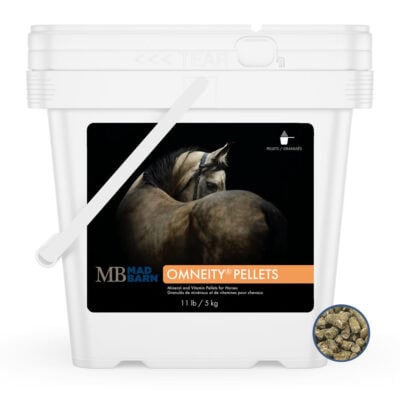
Mad Barn’s Omneity® contains 100% organic trace minerals with adequate levels of zinc, copper, selenium and vitamin E to meet the needs of broodmares.
Probiotics
Additional supplements, such as probiotics, have been shown to improve colostrum quality and the transfer of passive immunity.
Supplementing with live cultures of yeast and bacteria supports the mare’s digestive tract and can influence colostrum quality. In several studies, foals born to mares supplemented with yeast during pregnancy and lactation were found to:[31][32]
- Have higher levels of certain types of IgG by 60 days of age
- Greater absorption and retention of nutrients from the milk
- Benefit from higher milk production by their dam
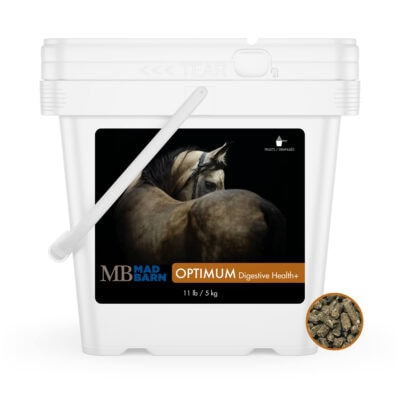
Mad Barn’s Optimum Digestive Health contains high levels of yeast, prebiotics and probiotics to support hindgut function. Supplementing mares will support fibre digestion in the hindgut and can support increased milk production and immunoglobulin supply to the foal.
DHA
Docosahexaenoic acid (DHA) is an omega-3 fatty acid found only in marine sources, such as fish oil or algae. It has greater anti-inflammatory effects compared to plant-derived omega-3 fatty acids, such as arachidonic acid (ALA) from flax or camelina oil.
Supplementing DHA during late gestation and early lactation has been shown to improve social behaviour prior to weaning and memory and learning at two years of age. Reproductive health is also improved in broodmares given DHA as seen by faster uterine involution after parturition (birth). [34]
Studies show that supplementing the pregnant mare with microalgal increases the foal’s plasma DHA. Supplementing with plant-based omega-3’s from flax oil does not affect the mare or foal’s circulating DHA and will not provide the same benefits. [33]
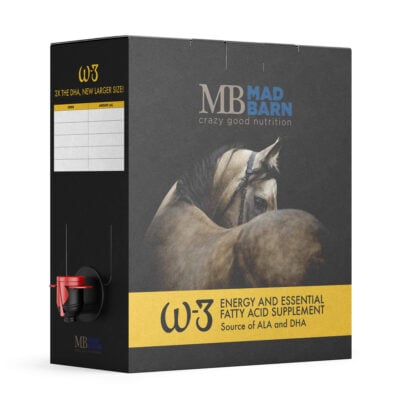
Mad Barn’s w-3 oil contains microalgal DHA to provide anti-inflammatory benefits to the mare and foal. It also contains high levels of natural vitamin E for antioxidant support.
Frequently Asked Questions
Here are some frequently asked questions about colostrum for foals:
Colostrum is the first milk a mare produces immediately after foaling. It is thick, slightly yellow, and packed with antibodies (immunoglobulins), growth factors, vitamins, and minerals that support a foal’s immune system and gut development.
A healthy foal should ingest about 2–3 litres of good‑quality colostrum within the first 6–8 hours of life, taken in several small nursings. Absorption of antibodies drops sharply after 12 hours and the gut “closes” by 24 hours, so early intake is critical.
Colostrum provides high levels of disease‑fighting immunoglobulins that protect the foal for 4–6 months; delivers hormones and growth factors that accelerate gut maturation and nutrient absorption; supplies fat‑soluble vitamins — especially vitamin A — and essential minerals that support early growth and temperature regulation.
If the mare’s colostrum is unavailable or inadequate, you can use fresh or frozen donor mare colostrum; commercial equine colostrum replacers in powdered or liquid form; antibody‑rich plasma given intravenously (especially useful after 12 hours of age); or, in emergencies, bovine colostrum, though its antibodies are shorter‑lived and less horse‑specific.
A Brix refractometer reading of 23 percent or higher indicates adequate antibody levels; you can also have a veterinarian measure the foal’s serum IgG at 12–24 hours to confirm successful passive transfer.
Foals with low serum IgG face a much higher risk of diarrhea, joint or umbilical infections, pneumonia, and sepsis; prompt veterinary treatment with oral or intravenous IgG, plasma transfusion, and supportive care is essential.
Yes, you can freeze colostrum to store it. Collect up to 250 millilitres from a donor mare using clean technique, test its quality, freeze it in small portions, and thaw it gently in warm water (never microwave); properly frozen colostrum remains viable for about 18 months.
Summary
Ensuring a newborn foal receives adequate colostrum in the first hours of life is critical to their health and survival. Colostrum is rich in immunoglobulins that protect the foal's naive immune system from dangerous pathogens.
- Passive transfer of immunity can only happen if the foal successfully ingests adequate amounts of good quality colostrum within the first 12 hours of life
- There are numerous factors that can negatively impact colostrum quality, quantity, and intake by the foal
- Failure of passive transfer underscores the importance of monitoring broodmares in late pregnancy
- Signs to watch for include unusual udder development or premature lactation
- Assessing post-foaling benchmarks after birth provide the best chance of detecting lactation or nursing issues in time to seek veterinary intervention
- If a newborn foal is unable to successfully ingest colostrum, prompt veterinary assessment is required
References
- Aoki, T. et al. Colostral and foal serum immunoglobulin G levels and associations with perinatal abnormalities in heavy draft horses in Japan. J Equine Sci. 2020. View Summary
- Watt, B. and Wright, B. The importance of Colostrum to Foals. Equine Guelph. 2008.
- Blum, J. and Hammon, H. Colostrum effects on the gastrointestinal tract, and on nutritional, endocine and metabolic parameters in neonatal calves. Livest Prod Sci. 2000.
- Fischer-Tlustos, A.J. et al. Oligosaccharide concentration in colostrum, transition milk, and mature milk of primi- and multiparous Holstein cows during the first week of lactation. J Dairy Sci. 2020.
- Pakkanen, R. and Alto, J. Growth factors and antimicrobial factors of bovine colostrum. Intern Dairy J. 1997.
- Rouse, B.T. and Ingram, D.G. The total protein and immunoglobulin profile of equine colostrum and milk. Immunology. 1970. View Summary
- Nervo, T. et al. Analysis of factors influencing the transfer of passive immunity in the donkey foal. Ital J Anim Sci. 2021.
- Chong, Y.C. et al. The raising of equine colostrum-deprived foals: maintenance and assessment of specific pathogen (EHV-1/4) free status Equine Vet J. 1991. View Summary
- Barreto, I.M.L.G. et al. Chemical composition and lipid profile of mare colostrum and milk of the quarter horse breed. PLoS One. 2020. View Summary
- Markiewicz-Kexzycka, M. et al. Influence of stage of lactation and year season on composition of mares' colostrum and milk and method and time of storage on vitamin C content in mares' milk. J Sci Food Agric. 2015. View Summary
- Auclair-Ronzaud, F. et al. Estimation of milk production in suckling mares and factors influencing their milk yield. Animal. 2022. View Summary
- Reiter, A. S. and Reed, S. A. Lactation in horses. Animal Frontiers. 2023. View Summary
- Cummins, C. et al. Ascending placentitis in the mare: A review. Irish Veterinary Journal. 2008.
- Schneider, F. and Wehrend, A. Quality Assessment of Bovine and Equine Colostrum - An Overview. Schweizer Archiv fur Tierheilkunde. 2019. View Summary
- Cauchard, J. et al. Foal IgG opsonizing anti-Rhodococcus equi antibodies after immunization of pregnant mares with a protective VapA candidate vaccine. Vet Microbiol. 2004.
- Artiushin, S. et al. Immunisation of mares with binding domains of toxins A and B of Clostridium difficile elicits serum and colostral antibodies that block toxin binding. Equine Vet J. 2013. View Summary
- Sasa, L. Presence of main serum protein fraction content, immunoglobulin G and titers of antibodies against herpesvirus 1 in newborn foals originating from vaccinated and unvaccinated mares. University of Belgrade. 2013.
- Buechner-Maxwell, V. Practical Approach to Nutritional Support of the Dysphagic Foal. AAEP. 2012.
- Frape, D. Feeding the Breeding Mare, Foal and Stallion. Equine Nutrition and Feeding. 2013.
- Franz, L.C. et al. Oral and intravenous immunoglobulin therapy in neonatal foals. J Equine Vet Sci. 1998.
- Abraham, M. Practical management and treatment of foals with neonatal encephalopathy/neonatal maladjustment syndrome in an ICU setting. Equine Veterinary Education. 2022.
- Zurek, U. and Danek, J. Foal Rejection - Characteristics and Therapy of Inadequate Maternal Behaviour in Mares. Annals of Anim Sci. 2012.
- Grogan, E.H. and McDonnell, S.M. Mare and Foal Bonding and Problems. Clin Tech Equine Pract. 2005.
- Leblanc, M.M. and Pritchard, E.L. Effects of bovine colostrum, foal serum immunoglobulin concentration and intravenous plasma transfusion on chemiluminescence response of foal neutrophils. Anim Genet. 1988. View Summary
- Leblanc, M.M. Is bovine colostrum a suitable alternative source of immunoglobulins for newborn foals?. Equine Vet J. 1991.
- Peugnet, P. et al. Management of the pregnant mare and long-term consequences on the offspring. Theriogen. 2016.View Summary
- National Research Council Nutrient Requirements of Horses. NRC. 2007.
- Kane, E.D. Vitamin E: An essential nutrient for horses? Advances in Equine Nutrition IV. 2009.
- Ott, E.A. and Asquith, R.L. Trace Mineral supplementation of broodmares. J Equine Vet Sci. 1994.
- Montgomery, J.B. et al. The Effects of Selenium Source on Measures of Selenium Status of Mares and Selenium Status and Immune Function of Their Foals. J Equine Vet Sci. 2012.
- Leimbach, R. Influence of a Maternal Dietary Yeast Supplement on Immunoglobulin Concentrations in Quarter Horse Foals from Birth to Four Months of Age. Ohio State University. 2015.
- Glade, M.J. Effects of dietary yeast culture supplementation of lactating mares on the digestibility and retention of the nutrients delivered to nursing foals via milk. J Equine Vet Sci. 1991.
- Snyder, E.A. Evaluating Sources Of Omega-3 Fatty Acids For Their Benefits On Late Gestation Mares And Neonatal Foals. Sam Houston State University. 2020.
- Chavette-Palmer, P. and Robles, M. Developmental programming: Can nutrition of the mare influence the foal's health? CBRA. 2019.
- Bondo, T. and Jensen, S.K. Administration of RRR-?-tocopherol to pregnant mares stimulates maternal IgG and IgM production in colostrum and enhances vitamin E and IgM status in foals.Journal of animal physiology and animal nutrition. 2010.View Summary