English










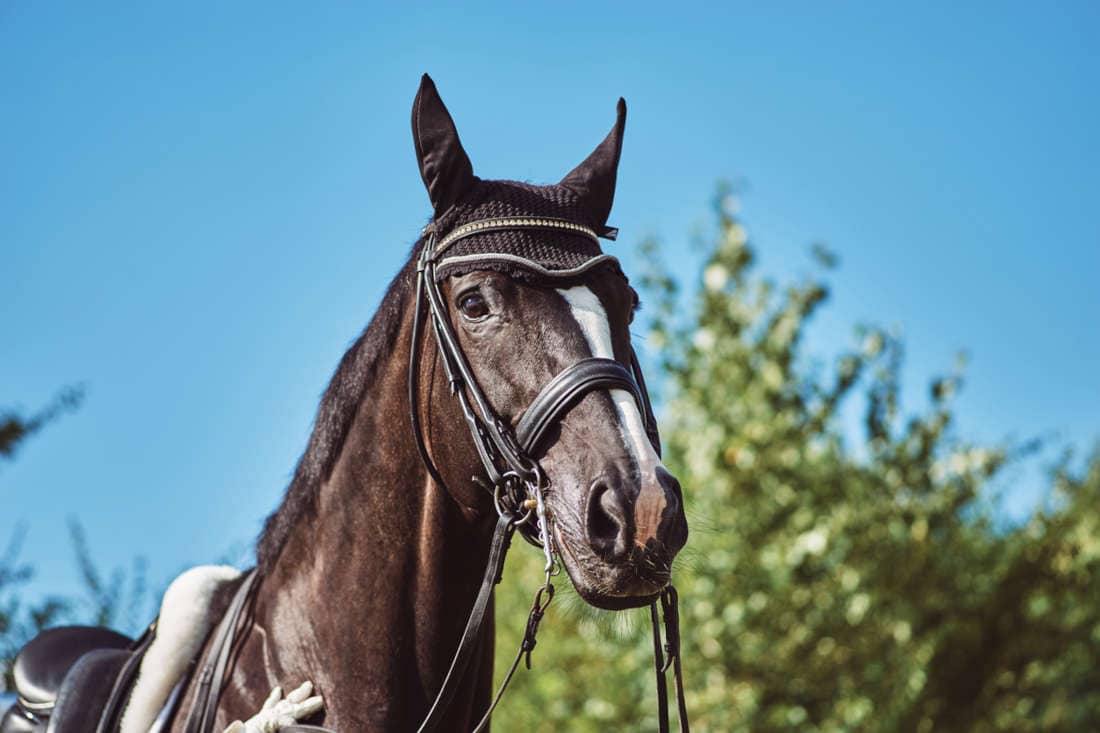
A double bridle is a piece of English tack that uses a bridoon (snaffle) and a Weymouth (curb) bit at the same time. Each bit is connected to its own set of reins, allowing for refined, independent aids.
This style of bride is most commonly introduced at the upper levels of dressage, where greater collection, balance, and subtle communication are required.
While the double bridle can enhance precision, it does not replace correct training, elastic contact, or rider skill. Proper fit, thoughtful bit selection, and a confirmed foundation in the snaffle are essential before making the transition.
For many riders, introducing a double bridle marks an important step in a horse’s progression. Understanding how it works, how it differs from a snaffle bridle, and how to fit and use it correctly ensures it remains a tool for refinement rather than force.
What Is a Double Bridle?
A double bridle is an advanced dressage bridle that makes use of two bits at the same time. Unlike a standard snaffle bridle, which relies on a single mouthpiece and rein, the double bridle also uses a curb bit that allows the rider to apply aids through two distinct mechanisms.
A curb bit is a type of bit that works through leverage. It has shanks and a curb chain that tighten under the chin groove when the rein is applied, creating pressure on the mouth and poll in addition to the bars and tongue.
This setup is designed to support greater refinement, particularly in horses that are already confirmed in balance, self-carriage, and responsiveness to subtle cues.
In dressage, the double bridle is most commonly introduced at the upper levels, where movements require increased collection, elevation, and precision. When used correctly, it allows the rider to make nuanced adjustments to flexion, balance, and engagement without relying on stronger rein pressure.
However, its effectiveness depends on correct training and independent rein control rather than leverage alone.
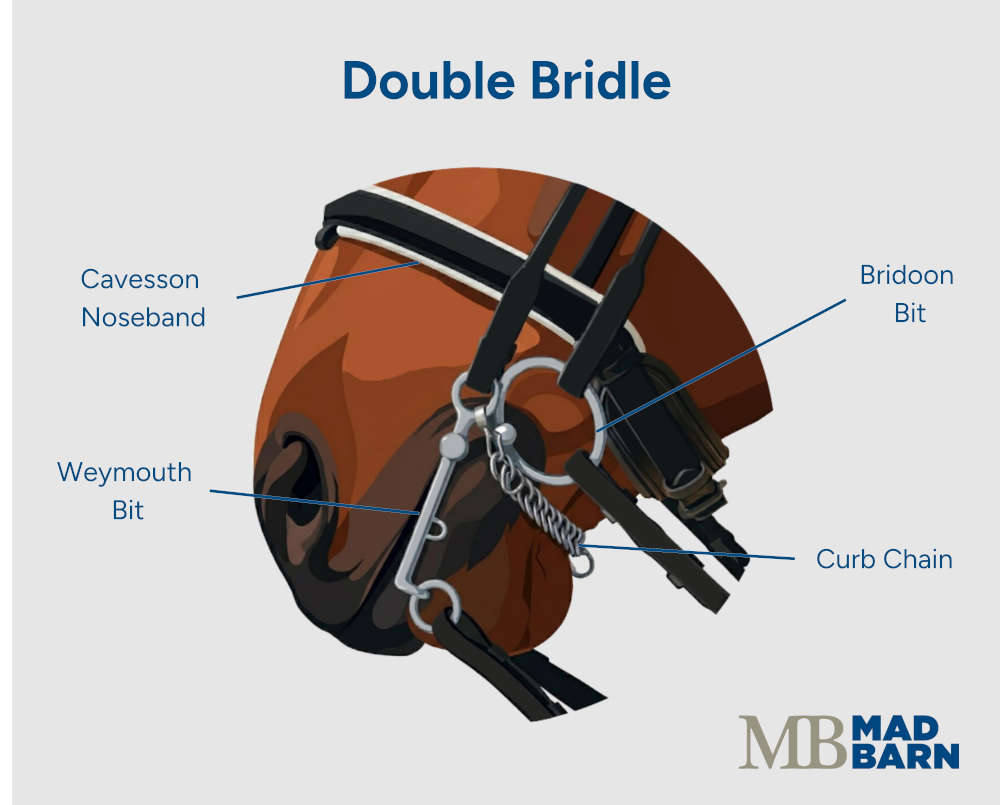
Double Bridle Parts & Terminology
Double bridle terminology can be confusing, as there are multiple spellings and names for the different bits and reins. [1]
- A bridoon bit is the type of small snaffle bit used in the double bridle, sometimes spelled bradoon, and often simply referred to as the snaffle. The rein attached to the bridoon bit is called the bridoon rein or snaffle rein.
- A Weymouth bit is the specific type of curb bit used in the double bridle, though it is often simply called the curb. The rein attached to the Weymouth bit is called the Weymouth rein or curb rein.
- A curb chain attached to the Weymouth engages under the chin groove and creates leverage when the bit rotates. This chain also prevents the Weymouth from over-rotating. Some horses prefer a chain with a cover or padding.
- A cavesson noseband is a simple noseband without a flash. A flash is not permitted on a double bridle in competition.
Double Bridle vs. Snaffle Bridle Differences
Use of the curb bit in double bridles has led to the assumption that double bridles are always harsher than snaffles, but the reality is more nuanced.
In a 2025 study comparing elite dressage horses ridden in a snaffle bridle versus a double bridle, researchers measured rein tension and pressure beneath the noseband and headpiece.
They found that total rein forces were similar between the snaffle and double setups during ridden work, which indicates the double bridle is not necessarily harsher than the snaffle. [2]
However, the double bridle showed higher poll pressure beneath the headpiece, likely due to increased weight and the way forces distribute across the bridle. These findings suggest that the fit around the poll is just as important as bitting when using a double bridle. [2]
Ultimately, the rider is the most important factor in determining the welfare impacts of different bridles. Horses ridden in a double by riders with quiet hands are likely subject to significantly less rein forces than horses ridden in a snaffle bridle by riders with a stronger hand.
What's your top priority with your horse's health?

Enter your email to receive your store credit
How a Double Bridle Works
A double bridle is not a shortcut to a certain frame. In correct dressage training, the horse’s posture and balance come from gymnastic development, straightness, engagement, and a supple connection. [3]
Bits are tools for communication, and how they feel to the horse depends on design, fit, the rider’s hands, and the horse’s training history. The fundamentals do not change when a rider transitions from a simple snaffle to a double bridle.
The role of the bridoon bit is to cue:
- Steady contact
- Straightness and positioning
- A baseline connection that the horse can confidently seek
The connection with the curb rein refines the connection with the snaffle rein, it does not replace or overtake it. With a curb bit, riders can introduce leverage and the more precise aids used at the advanced levels of dressage.
The Weymouth bit can influence:
- The mouth via the mouthpiece
- The chin groove via the curb chain
- The poll through leverage
Because leverage can magnify rein inputs, the Weymouth bit is used primarily with subtle aids.
Riding With Two Reins
There are multiple correct ways to hold double bridle reins. What matters is that the rider can maintain steady, elastic contact and keep the curb rein quiet unless intentionally used. The curb rein should feel like a refinement tool rather than a steering or balancing tool.
A common method of holding the reins of a double bridle is to hold the bridoon rein between your ring finger and pinky, just like a normal snaffle, and the curb rein between your middle finger and ring finger. [4]
When to Use a Double Bridle
A double bridle is typically introduced when horse and rider are ready for more refined communication. This communication is especially useful as collection, self-carriage, and precision demands increase.
Horse Readiness Requirements
Before introducing the double bridle, the horse should consistently:
- Accept a steady, elastic contact without fussing
- Maintain rhythm and relaxation through transitions
- Stay straight and connected in lateral work
- Respond to half-halts without bracing or dropping behind the contact
- Maintain balance without the rider holding them together
If the horse is showing resistance, the double bridle often makes the symptoms more obvious without actually solving the underlying training problem. It’s not a tool to cover up ongoing issues.
Some behaviors when using the double bridle may be a sign of discomfort, including:
- Open mouth
- Head tossing
- Tongue evasions
- Inconsistent connection
If your horse does not respond well to increased training demands or changes in tack, work with your veterinarian to rule out any medical concerns before changing tactics.
Rider Skill Requirements
Before using a double bridle for the first time, the rider should have:
- An independent seat
- Consistently quiet hands
- The coordination to manage two reins
- A clear understanding of what each rein is doing and why
A double bridle can sharpen communication, but it also sharpens feedback. If the rider’s contact is inconsistent, the curb can become unintentionally active.
Double Bridle Competition Rules
Double bridles are not permitted at the lower levels of dressage. Young horses and horses schooling second level and below are not ready for a double bridle.
At the national shows, USEF permits double bridles in competition at third level and above. However, they are optional. Many riders train and compete through the upper levels in a snaffle bridle due to their horse’s preferences. [3]
The FEI requires double bridles at certain levels of international competition to standardize tack rules. For example, Grand Prix dressage horses must wear a double bridle when competing in the Olympic Games or World Championships. [5]
Rules change over time and may vary by organization, level, and test. Always confirm current regulations for the competitions you plan to enter.
Selecting Bits for a Double Bridle
Choosing the right bits is essential for successfully using a double bridle. The best bit combinations enable clear communication with minimal interference, while supporting comfort and stability.
Consider working with a qualified bit fitter to ensure your bits are the right choice for your horse.
Evaluating Your Current Snaffle
If your horse is already confident in a snaffle, that bit is often a useful starting point for the bridoon. Ring size is the biggest difference between bridoons and standard snaffle bits. Bridoons have smaller rings, so they are less likely to interfere with the Weymouth.
Bridoons are also sometimes thinner than standard snaffles to take up less space. Warmbloods and other breeds commonly used for dressage often have small mouths for their size. Choosing a bit that is too thick is a common mistake when moving to a double bridle.
Choosing a Bridoon
When selecting a bridoon, consider:
- Thickness: Too thick can crowd the mouth, but too thin can concentrate pressure. Choose what fits your horse’s oral conformation.
- Stability: A stable bit often improves confidence during the transition to two bits.
- Simplicity: Simple designs are often easier for the horse to interpret during early double bridle sessions.
Choosing a Weymouth
The Weymouth introduces leverage and curb chain engagement, so keep early choices straightforward.
Factors to consider when selecting the Weymouth include:
- Shank length: Longer shanks increase leverage, so shorter shanks are often a more conservative starting point.
- Mouthpiece design: Port height, shape, and tongue relief change how pressure is distributed across the tongue and bars.
- Balance: A well-balanced Weymouth can feel steadier and more predictable, which the horse may adjust to more easily.
Double Bridle Sizing Considerations
Because the Weymouth sits lower, where the jaw is often slightly narrower, it may be sized slightly differently than the bridoon.
The goal is to avoid pinching, crowding, and excessive lateral movement. If you are unsure, a qualified bit fitter or experienced dressage professional can help you measure and trial options safely.
How to Fit a Double Bridle
Poor fit is where many double bridle problems begin, but getting the fit right can help set you and your horse up for success. Follow these steps to ensure a safe, comfortable transition for your horse.
1) Correct Bit Position
The position of each bit determines how pressure is distributed in the mouth and how clearly your aids are received.
To position the bits of the double bridle correctly:
- The bridoon sits in the normal snaffle position
- The Weymouth sits slightly lower
- Both bits should sit comfortably without crowding the corners of the mouth or pressing into each other
2) Adjust Bit Height
Bit height affects stability, comfort, and how consistently each rein aid is delivered. Rules of thumb like “one wrinkle” or “two wrinkles” can be misleading. Instead, look for:
- Quiet, stable placement
- No pinching at the corners
- No excessive movement that causes rubbing
- A position where the horse can comfortably close their lips
A well-fitting curb bit or bridoon bit with fixed cheeks should sit snugly against the mouth when positioned at the correct height. Loose-ring bradoons need more space to prevent pinching.
3) Adjust the Curb Chain
A curb chain that is too loose delays engagement and can create an abrupt sensation when it finally tightens. A chain that is too tight can engage immediately, creating constant pressure.
When the Weymouth rotates, the curb chain should engage smoothly rather than instantly. The chain should also lie flat against the chin groove. If you use a curb chain cover, ensure it doesn’t create bulk that prevents the chain from lying smoothly.
4) Fit the Noseband
Noseband tightness is a welfare topic that deserves direct attention. Nosebands help stabilize the bits and encourage connection. But if the horse cannot comfortably chew, swallow, or relax their jaw, the fit is likely too tight and may mask issues rather than solve them.
Research measuring noseband pressures has shown that tighter nosebands increase pressure in the nasal and mandibular areas. Very tight adjustments are associated with significantly higher pressures than looser fits. [6]
The International Society for Equitation Science (ISES) has also raised concerns about restrictive nosebands, highlighting potential welfare risks. They define a restrictive noseband as one that is tight enough to prevent placement of two stacked adult fingers under the noseband at the nasal midline. [7]
The goal is to have a noseband that provides stability without restricting natural jaw movement or compromising the horse’s comfort and welfare.
5) Ensure Poll Comfort
Because double bridles can increase pressure beneath the headpiece in the poll area compared with snaffle bridles, take extra care with headpiece design, padding, sizing, and adjustment.
Anatomical double bridles with padded head pieces may help evenly distribute pressure. [8]

Using a Double Bridle Correctly
A double bridle in dressage is designed to refine communication, not replace correct training. When introduced at the appropriate stage of a horse’s development, it allows for more subtle adjustments in balance, collection, and self-carriage through independent rein aids.
However, the effectiveness of a double bridle depends on preparation. A horse must be steady in contact, responsive to seat and leg, and confident in a snaffle before transitioning.
Careful bit selection, correct fit, and thoughtful rein use ensure the equipment supports clarity rather than tension.
Used responsibly, a double bridle becomes a tool for refinement at the upper levels of dressage. It should enhance harmony between horse and rider, reinforcing precision and lightness rather than increasing pressure.
Frequently Asked Questions
Here are some frequently asked questions about double bridles:
A double bridle is a bridle used in advanced dressage that uses two bits: a small snaffle called a bridoon and a curb bit called a Weymouth. Each bit has its own rein, allowing the rider to use separate and combined aids for more refined communication.
Double bridles are most commonly used in upper-level dressage to allow subtle adjustments of collection, balance, and frame. They are intended for horses that are already confirmed in self-carriage and responsive to light aids.
A double bridle is not necessarily harsher than a snaffle. A double bridle introduces leverage through the Weymouth, which can magnify rein input. However, research in elite dressage horses has found similar total rein forces between snaffle and double bridles. The effect depends largely on rider skill and horse training.
A horse should only be introduced to a double bridle once it is steady in contact, responsive to the seat and leg, and comfortable in a snaffle. Premature use can create tension or confusion rather than refinement.
The bridoon is a small snaffle-style bit used with the snaffle rein of the double bridle. The Weymouth is a curb bit used with a curb chain and curb rein, creating leverage and enabling more refined aids.
Riders hold two reins in each hand. There are different accepted rein-holding methods, but both reins should remain independently adjustable so the rider can use the bridoon and Weymouth aids separately or together.
The curb chain should be adjusted so it engages smoothly when the Weymouth rotates, but not so tight that it is constantly engaged. It should lie flat against the chin groove without twisting.
Avoid restrictive noseband tightness. Research shows pressures rise significantly as nosebands are tightened, particularly at very tight settings. The goal is stability without forcing the mouth shut or restricting jaw movement. The guideline is there should be enough room for two stacked, adult fingers between the noseband and the horse's face.
Rules vary by organization, level, and year. FEI and USEF resources describe tack requirements for different levels of dressage. Always check the current rules for your specific competition and test before entering the ring.
Summary
A double bridle uses two bits and two reins to allow more refined communication in advanced dressage work. It should be introduced only once the horse is balanced, connected, and responsive to light aids.
- The two-bit design allows the rider to use separate snaffle and curb reins for more precise and nuanced communication
- A double bridle is best suited for horses that demonstrate confirmed self-carriage, steady rhythm, and elastic contact
- Careful bit selection and precise fitting are essential to ensure clarity of aids while maintaining the horse's comfort
- Restrictive nosebands increase pressure on the nasal and mandibular areas and may compromise comfort and welfare
- A gradual introduction helps the horse adapt to the feel of two bits and reduces the risk of tension or resistance
- Regular monitoring for signs of discomfort ensures the double bridle supports correct training rather than masking underlying issues
References
- USEF Dressage Rulebook. United States Equestrian Federation. 2026.
- MacKechnie-Guire. R. et al. Comparison of Rein Forces and Pressure Beneath the Noseband and Headpiece of a Snaffle Bridle and a Double Bridle. Animals. 2025. View Summary
- Dressage Attire & Equipment Booklet. United States Equestrian Federation. 2016.
- Schofler. P. Snaffle or Double?. USDF Connection. 2016.
- FEI Tack and Equipment Requirements – Dressage. Fédération Équestre Internationale. 2026.
- MacKechnie-Guire. R. et al. Noseband type and tightness level affect pressure on the horse’s face at trot. Equine Veterinary Journal. 2024.
- Position Statement on Restrictive Nosebands. International Society for Equitation Science (ISES). 2019.
- Gertz. E. et al. The Effects of the Quantum and Finesse Bridles on Equine M. Brachiocephalicus and M. Splenius Function at Three Different Speeds. Open Journal of Veterinary Medicine. 2020.