English


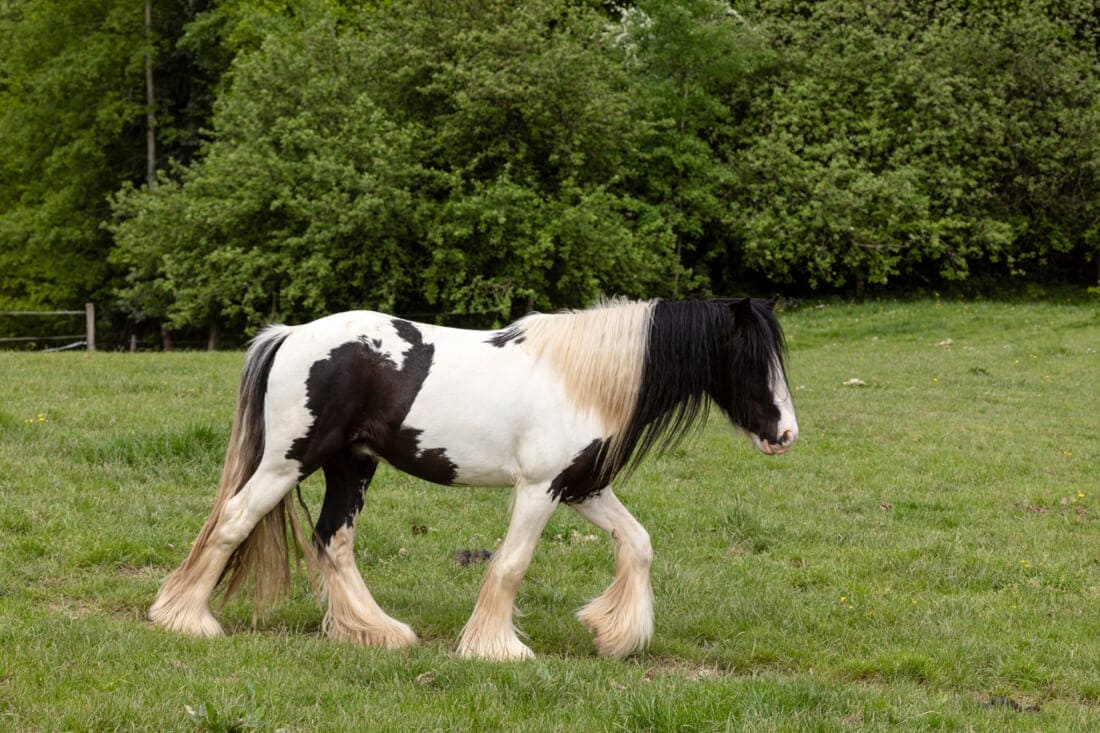
The Drum Horse is an eye-catching, heavy horse breed known for its impressive size, strength, and gentle disposition. Originally bred to carry ceremonial kettledrums in British royal parades, it blends Shire, Clydesdale, and Gypsy Horse bloodlines into a versatile modern sport and leisure horse.
A relatively new breed, the Drum Horse excels in disciplines ranging from driving and parades to dressage and trail riding. With their striking feathered legs, bold pinto coloring, and calm temperament, these horses turn heads wherever they go.
Though not as widely known as their foundation breeds, Drum Horses are steadily gaining popularity worldwide for their beauty, versatility, and amiable personality.
Whether performing in the show ring or carrying a rider through varied terrain, the Drum Horse brings a unique blend of power and elegance to any equestrian activity.
Drum Horse History
The Drum Horse is a modern breed that combines the best attributes of the Clydesdale, Shire, and Gypsy Vanner Horses. [1] Designed as a versatile heavy riding and driving horse, today’s Drum Horse exhibits natural athletic ability, a steady temperament, and a capacity to succeed across a wide range of disciplines. [2]
The breed’s development intentionally blends the size and strength of British draft breeds with the agility, color, and charisma of the Gypsy Horse, creating what many refer to as a hybrid draft horse type.
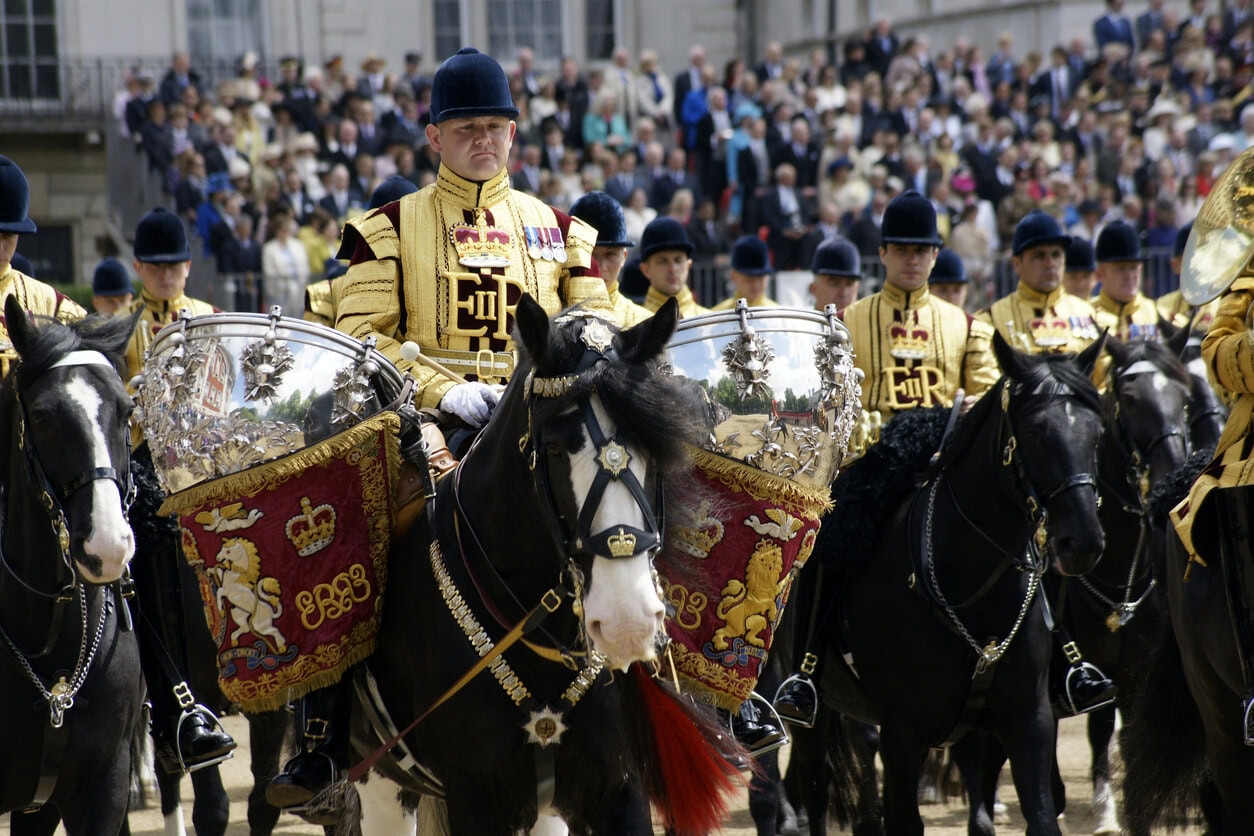
The Drum Horse derives its name from its historic role as a mount for military musicians in the English Band of the King’s Life Guards. Each horse carried a rider and two large ceremonial kettle drums.
To serve in the royal guard, Drum Horses not only needed exceptional strength and composure, but also a dignified presence suited to noble pageantry. [2][3] To this day, all military Drum Horses carry the honorary rank of Major. [3]
While Drum Horses have long played a role in British military ceremonies, efforts to recognize them as a distinct breed began more recently. In the early 2000s, the American Drum Horse Association was founded by a group of dedicated breeders aiming to develop a large, athletic heavy horse capable of excelling in modern performance disciplines.
Their work established the early foundation for today’s breed standards, with emphasis on athleticism, agility, and a versatile disposition. [4]
The International Drum Horse Association (IDHA) was officially established in 2012. The IDHA solidified breed standards and introduced comprehensive breeding guidelines, helping to promote and refine the Drum Horse on an international scale.
Today, many global Drum Horse associations follow the IDHA’s standards, and the IDHA maintains an extensive studbook of registered Drum Horses and international members. [4]
Modern Breed
Drum Horses are no longer limited to royal pageantry. The breed has transitioned into a versatile sport and pleasure horse, well-suited to a variety of modern disciplines.
Breeders continue to select for the conformation, movement, and calm temperament that once made the Drum Horse ideal for ceremonial duties, while also enhancing athleticism to meet the demands of performance and recreation.
Breeders focus on a blend of foundation breed traits: the bone and size of the Shire and Clydesdale, combined with the agility, color, and hair quality of the Gypsy Horse.
The ideal Drum Horse stands at least 16 hands tall, exhibits a balanced and proportional frame, and displays abundant feathering with a pleasing, animated trot. [1]
While Drum Horses still appear in ceremonial parades in Britain and beyond, many now compete in modern disciplines, including:
- Driving
- Dressage
- Pleasure riding
- Working equitation
The Drum Horse combines strength and trainability, making it a suitable partner for both amateur and professional riders. The striking pinto coloring, commonly seen in modern lines, adds visual appeal in the show ring and at public events.
Drum Horses have also gained popularity in the United States, where enthusiasts appreciate their beauty, versatility, and kind nature. Breeders continue to refine the Drum Horse, promoting soundness, longevity, and genetic diversity to ensure the breed’s ongoing success in equestrian disciplines.
Breed Registry
Drum Horses are formally registered through dedicated organizations. The two primary registries are the International Drum Horse Association (IDHA) and the Gypsy Cob and Drum Horse Association (GCDHA), both of which maintain studbooks and establish breed standards.
To qualify for registration with the IDHA, Drum Horses must combine Shire and/or Clydesdale ancestry with a minimum of 6.25% and up to 50% Gypsy Horse blood. This balance preserves the substantial size and movement of traditional draft horses while incorporating the coloring, hair quality, and trainability contributed by the Gypsy Horse. [1]
Drum Horses are further classified within the IDHA registry as follows: [1]
| Classification | Genetic Balance |
|---|---|
| F1 Drum Horse | 50% Gypsy Horse and 50% Shire and/or Clydesdale |
| F2 Drum Horse | 25% to 49.99% Gypsy Horse |
| F3 Drum Horse | 6.25% to 24.99% Gypsy Horse |
In addition, horses of any classification may earn the designation of Premium Drum Horse if they reach a minimum height of 16 hands by their seventh birthday. This premium status highlights individuals that exemplify the breed’s ideal type and stature. [1]
The Drum Horse registries emphasize: [1]
- Substantial bone mass
- Correct draft horse conformation
- Abundant feathering
- Strong topline and shoulder
- Quality movement, particularly at the walk and trot
Pinto coloring is common and encouraged, though solid colors are accepted if the horse meets conformation standards. Breeding programs aim to produce sound, versatile horses that excel in modern disciplines while retaining the charisma and strength of their parade ancestors.
The IDHA also actively promotes performance by offering awards and recognition for Drum Horses competing in disciplines such as driving, dressage, trail riding, and western performance. [4]
| Breed Summary | |
|---|---|
| Breed Name | Drum Horse |
| Breed Type | Draft |
| Origin | United Kingdom |
| Breed Registry | International Drum Horse Association (IDHA); Gypsy Cob and Drum Horse Association (GCDHA) |
| Average Height | 16 hh+ |
| Common Coat Colors | Black and white, bay and white, brown and white, tri-color; black, bay, brown, gray, chestnut |
| Conformation | Large, athletic, muscular, broad forehead, square muzzle, long neck, defined withers, sloping shoulder, deep chest, short back, powerful loins, muscular croup, straight substantial legs, abundant feathering, large hooves |
| Common Uses | Driving, dressage, trail riding, parades, exhibition, therapeutic riding, pleasure riding |
| Temperament | Calm, gentle, steady, trainable, sociable |
| Best For | Riders seeking a calm heavy horse for riding, driving, or therapy |
| Common Health Concerns | PSSM1, chronic progressive lymphedema, pastern dermatitis, mite infestations, joint stress, obesity |
What's your top priority with your horse's health?

Enter your email to receive your store credit
Breed Characteristics
The Drum Horse embodies a blend of draft power, agility, and beauty. Built for both strength and elegance, these horses are known for their substantial size, bold coloring, abundant feathering, and quiet, willing disposition.
Their adaptability makes them equally suited for ceremonial work, competition, and pleasure riding.
Conformation
The Drum Horse is a large, athletic heavy riding horse. The ideal Drum Horse displays substantial bone and muscle, balanced by correct proportions, fluid movement, and an abundance of hair. The Drum Horse presents an impression of great power and presence, with a well-muscled, medium to heavy build. [1]
While substantial, the body remains athletic, supporting versatility across a range of ridden and driven disciplines. A kind expression and willing disposition are essential breed traits. [1]
Drum Horses typically stand 16 hands or taller, giving them the size and presence suited for both performance and traditional driving. Their build reflects a balance of power and elegance, with two general types — some exhibiting a more refined sporthorse influence, others showing heavier draft characteristics. [1]
These horses have well-proportioned heads with broad foreheads, square muzzles, and large, expressive eyes. Their profiles are typically straight or slightly convex, with naturally wide-set ears and a clean throatlatch. [1]
They possess long, muscular necks that blend smoothly into defined withers and sloping shoulders. The chest is deep and broad, contributing to a strong front end. Backs are short and sturdy with powerful loins and a slightly sloped, muscular croup. [1]
Legs are straight and substantial, with broad joints, strong cannon bones, and well-angled pasterns. Hind legs may show slight outward toe rotation, typical of draft ancestry, with hocks set directly under the point of the buttock. [1]
Drum Horses are known for their abundant hair. Thick manes and tails are left natural, and feathering on the lower legs is a defining feature, ideally beginning above the fetlock and extending to cover the entire hoof.
Hooves are large, open-heeled, and well-formed to support their substantial frame. [1]
While some draft breeds have historically been altered, tail docking is not allowed for Drum Horses registered in the United States or with the IDHA.
Colors
Color is one of the Drum Horse’s most visually striking features. While the breed allows a variety of coat colors, pinto patterns (especially tobiano) are particularly prized for their eye-catching presence.
Common Drum Horse colors include: [1]
- Black and white
- Bay and white
- Brown and white
- Tri-color (black, bay, and white)
- Solid colors: Black, bay, brown, gray, chestnut (accepted but less common in show circles)
Pinto coloring stems largely from the Gypsy Horse influence, which introduced bold coat patterns to the breed. In parades and public appearances, such coloring increases the horse’s visibility and esthetic appeal.
Feathering, regardless of coat color, should be full and silky, with ample hair adorning the lower legs. The mane and tail are typically thick and long, contributing to the breed’s dramatic appearance. [1]
Temperament
Drum Horses are renowned for their calm, gentle, and people-oriented temperament. Originally bred to perform amid noise, crowds, and commotion, they naturally possess an unflappable nature and high tolerance for distraction.
Drum Horses are known for their steady-minded disposition, often remaining composed and attentive even in unfamiliar environments. This dependable nature makes them an excellent choice for a variety of settings, including parades, shows, and busy barn atmospheres. [2]
They are also highly cooperative and trainable, responding well to consistent, positive handling. Their willingness to learn and work with people contributes to their reputation as an easygoing, adaptable breed. [2]
In addition, Drum Horses are notably sociable animals. They tend to form close bonds with their handlers and often seek out human interaction, making them not only reliable partners but also affectionate companions. [2]
Their patient and tolerant nature, inherited from their draft horse lineage, makes them especially suitable for novice riders or therapeutic riding programs. These temperament traits combine to make the Drum Horse a gentle giant with a strong affinity for people.
They respond well to positive reinforcement and clear, consistent training. Their natural curiosity and cooperative mindset make them adaptable to a wide variety of equestrian pursuits. [5]
Disciplines
Modern Drum Horses are versatile athletes with an expanding presence in multiple equestrian disciplines. Their size, movement, and temperament allow them to succeed in multiple modern equestrian sports, including: [3][6][7]
- Driving: Both pleasure and competitive driving, including single and pair classes. Their eye-catching movement and strength make them standout carriage horses
- Dressage: Increasingly popular in low to mid-level dressage, where their rhythmic gaits and willingness to work suit the demands of the discipline
- Trail riding: Their calm demeanor and surefootedness make Drum Horses excellent trail companions, particularly for riders seeking a steady, reliable mount
- Parade and exhibition: Many Drum Horses still participate in parades and ceremonial displays, continuing the breed’s historical tradition
- Therapeutic riding: Their size and gentleness make them well-suited for adaptive riding and equine-assisted therapy
Drum Horse Health Profile
Drum Horses are generally hardy and sound, thanks to the strong constitutions of their foundation breeds. However, their large size and heavy feathering come with specific health considerations that require preventive care, proper management, and routine veterinary attention.
Genetic Diseases
As a crossbred type, Drum Horses may benefit from hybrid vigor, particularly in early-generation crosses. However, this advantage can diminish over successive generations, and inherited conditions from the foundation breeds remain a concern. Breeders continue to monitor for genetic disorders found in Shire, Clydesdale, and Gypsy Horse lines, including: [8][9]
- Polysaccharide Storage Myopathy (PSSM-1): Seen in some draft breeds; genetic testing is recommended for breeding stock
- Chronic Progressive Lymphedema (CPL): A concern in heavily feathered horses; breeders select for clean legs and skin health
Genetic testing and conscientious breeding practices help reduce the risk of inherited conditions.
Health Problems
Drum Horses, like many large breeds, may be susceptible to several health concerns that require proactive management.
One common issue involves feather-related skin conditions. The heavy feathering on their lower legs can trap moisture and debris, predisposing them to skin infections such as scratches (pastern dermatitis) and mite infestations. Regular grooming and close attention to hygiene are critical to prevent these problems from becoming chronic. [10] These issues are distinct from Chronic Progressive Lymphedema (CPL), a progressive lymphatic disorder that also affects heavily feathered breeds. CPL is not caused by poor hygiene, though careful skin and leg care may help manage its progression in predisposed horses.
Joint stress is another consideration due to the breed’s substantial size. Large horses like the Drum Horse may be prone to joint issues, particularly if they are working on hard surfaces or carrying excessive weight. [11]
Their size also makes weight management more challenging. It can be difficult to accurately estimate a Drum Horse’s body weight by eye, which increases the risk of overfeeding and obesity.
Owners should routinely assess body condition score (BCS) and adjust feeding programs accordingly to maintain a healthy weight.
With routine monitoring and thoughtful management, most of these issues can be prevented or effectively controlled, helping Drum Horses enjoy long, productive lives.
Care & Management
Drum Horses thrive with attentive, well-rounded care that supports their physical health, mental well-being, and natural behaviors. Due to their size and feathered limbs, they may have some unique management needs compared to lighter breeds.

“Drum horses do best in clean, dry, well-ventilated stalls with their heavy feathers trimmed and checked regularly to prevent skin and hoof problems. A balanced diet suited to their workload, routine farrier care, and daily turnout help support joint health, hoof strength, and overall soundness.”
— Dr. Jennifer Skaggs, DVMEquine Veterinarian
Partner with your veterinarian and other equine professionals to create a proactive wellness plan that includes: [7]
- Grooming: Routine attention to the legs and feathers prevents skin problems. Many owners wash and dry feathers weekly, especially in wet conditions.
- Exercise: Regular, moderate exercise supports joint health and can help prevent weight gain.
- Hoof care: Large, strong hooves require consistent trimming from an experienced farrier to prevent lameness.
- Housing: Drum Horses should be kept in clean, dry environments with ample space to move freely. This also helps prevent skin conditions on their lower legs, such as scratches and infections, which can be aggravated by damp or dirty footing.
- Veterinary care: Schedule regular veterinary check-ups at least once or twice a year, to identify health issues early. Large breeds like the Drum Horse also benefit from periodic joint assessments.
- Dental care: Regular dental exams and floating help prevent sharp points and uneven wear, supporting proper chewing and digestion.
- Vaccination: Following a veterinarian-recommended vaccination schedule helps protect against infectious diseases common to equine populations.
- Parasite control: Strategic deworming based on fecal egg counts and pasture management helps reduce parasite loads and minimize resistance.
Additionally, due to their substantial size and weight, Drum Horses require careful management of exercise surfaces to minimize joint strain. They may also need specially designed or oversized trailers to ensure safe and comfortable transport.

Drum Horse Nutrition
Drum Horses need a balanced nutrition plan customized to their size, activity level, and unique caloric needs. The draft influence in their breed means they are often easy keepers, requiring controlled calories, carefully selected forage, and a closely monitored concentrate intake to maintain a healthy weight and prevent metabolic issues.
The foundation of your feeding plan should be carefully selected forage, with low-starch concentrates added only when necessary. Regularly monitor body condition to prevent obesity and reduce the risk of health issues.
Weight Maintenance
Drum Horses are prone to weight gain due to their draft heritage, especially if overfed or not exercised regularly. To prevent this, routinely assess their body condition score and adjust their diet and exercise accordingly.
A forage-based diet with little or no concentrate feed is usually enough to maintain a healthy weight in horses that aren’t in regular work. If your Drum Horse isn’t exercising consistently, they may need calorie restriction to avoid weight gain.
On the other hand, Drum Horses in active training may require additional calories to support muscle development and maintain energy levels.
Sample Diet
This sample diet is intended for a mature 636 kg (1,400 lb) Drum Horse with normal body condition at maintenance (not exercising).
| Feed | Amount per day |
|---|---|
| Mid-Quality Hay (8% crude protein) | Free-choice |
| Salt | 45 g (3 tbsp) |
| Omneity® Pellets | 250 g (2.5 scoops) |
| Diet Analysis | |
| Digestible Energy (% of Req) | 106% |
| Protein (% of Req) | 127% |
| HC (starch + ESC; % Diet) | 8.8% |
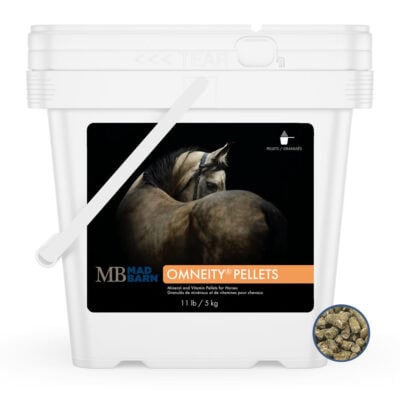
Mad Barn’s Omneity® vitamin and mineral supplement is included in this diet to provide essential nutrients often missing from forage-based feeding programs. Feeding Omneity® ensures your horse meets their vitamin and mineral requirements to support hoof health, coat quality, metabolic function, the immune system, and more. [12]
Formulated without added grains, sugars, or starches, Omneity® is a concentrated, low-calorie option. This makes it especially well-suited for easy keepers like the Drum Horse.
Water & Salt
Drum Horses need constant access to clean, fresh water to stay properly hydrated. Most consume between 5 and 15 gallons (20–60 L) per day, depending on workload, weather, and moisture content in their feed.
Monitor your horse’s water intake daily, particularly in hot or humid conditions when the risk of dehydration increases. Being familiar with the signs of dehydration is especially important for horses in regular work.
Salt plays a key role in maintaining electrolyte balance, muscle function, and promoting adequate water intake.
Our nutritionists recommend offering free-choice plain loose salt in the stall or pasture and adding a minimum of 3 tablespoons of salt to your Drum Horse’s daily ration.
Forage
Forage should be the foundation of every equine diet. The average horse consumes approximately 2% of their body weight in forage each day, though horses in heavy work may consume up to 2.5% per day.
Drum Horses are lighter than some traditional draft breeds but still have substantial size. A typical 636 kg (1,400 lb) Drum Horse will consume approximately 13 kg (28 lb) of hay daily, though intake may increase depending on climate, forage quality, and activity level.
Choosing the right type and quality of hay is important to match your horse’s energy and protein requirements. For Drum Horses at maintenance (not in work), mature grass hay is often suitable.
Horses in heavier work require higher quality hay that provides more digestible energy and protein. Good forage sources for exercising horses include alfalfa hay and early growth grass hay. [13]
Providing free-choice hay in a slow feeder helps ensure your horse always has forage available while regulating intake. If your Drum Horse is overweight and turned out on grass, consider using a grazing muzzle to restrict pasture consumption.
Nutrient requirements depend on your horse’s age, body condition, activity level, and health status. Work with a qualified equine nutritionist to determine the right feeding plan for your Drum Horse.
You can submit a hay sample for analysis to ensure your forage is appropriate for your Drum Horse. The report will include the digestible energy, protein, starch, sugar, and mineral content of your hay, helping you decide what to feed your horse so their diet is balanced.
Feeding Recommendations
A forage-based diet is typically sufficient to meet the energy and protein requirements of most Drum Horses. However, those in heavy work may require additional feeds to meet their caloric demands.
Diets that contain excess high-starch grains can increase the risk of digestive upset in horses. [12] Instead of feeding commercial grains or concentrates, Drum Horses in intense training benefit from fiber-rich feeds and fat-based energy sources.
Restricting dietary starch is especially important for managing horses with PSSM. Under the guidance of a nutritionist or veterinarian, fat can be fed at up to 20% of total caloric intake. However, it may take several months of consistent feeding to see noticeable benefits. [14]
Oils can be top-dressed on hay pellets or mixed with beet pulp to improve palatability. Using a fat supplement rich in omega-3 fatty acids offers added support for joint health and skin condition. [15]
Feeding a balanced diet is especially important for growing horses to support healthy bone development. Young horses are at increased risk of developmental orthopedic disorders when fed excess calories or diets with imbalanced mineral levels. [16]
Nutritional Supplements
A well-balanced diet that provides the right amounts of energy, protein, vitamins, and minerals is key to maintaining your Drum Horse’s health and performance. Once these core nutritional needs are met, additional supplements can be introduced to support specific health concerns or performance goals.
- Natural Vitamin E: Horses in intense training or with muscle disorders benefit from added vitamin E to support antioxidant status, the immune system, muscle function, and exercise adaptation. While pasture offers high levels of vitamin E, this nutrient declines significantly in stored hay, making supplementation necessary for hay-fed horses.
- W-3 Oil: Mad Barn’s best-selling fat supplement provides a rich source of DHA from microalgae along with natural Vitamin E. This omega-3 supplement supports healthy joints, cardiovascular function, immune function, and a shiny coat
- Visceral+: A comprehensive digestive support supplement that helps maintain a healthy stomach lining, supports hindgut function, and promotes overall gut integrity. Contains probiotics, yeast, amino acids, herbs, and minerals to aid digestion, nutrient absorption, and gastrointestinal balance.
- MSM Powder: MSM (methylsulfonylmethane) is a bioavailable source of sulfur that helps maintain healthy joints by supporting the structure of connective tissue and cartilage. It also reduces oxidative stress associated with exercise, promoting comfort and mobility in active horses.
- Acetyl-L-Carnitine: Helps support healthy muscle function and energy production, especially in horses with PSSM. It influences how the body uses glucose for fuel, supports muscle care after exercise, and helps maintain overall metabolic health.
Frequently Asked Questions
Here are some frequently asked questions about the Drum Horse breed:
Drum Horses are a modern heavy horse breed developed from Shire, Clydesdale, and Gypsy Horse bloodlines. The Drum Horse originated in the United Kingdom and takes its name from the horses historically used to carry ceremonial kettle drums in British royal parades. Modern Drum Horses were developed as versatile riding and driving horses that combine draft size and strength with agility, presence, and a calm temperament.
Drum Horses are known for having a calm, gentle, and people-oriented temperament. They are typically steady, willing, and sensible horses that handle noise, activity, and unfamiliar settings well. Because of their trainable and cooperative nature, Drum Horses are often suitable for a wide range of riders and handlers when they receive consistent training and proper management.
Drum Horses are large, powerful horses with substantial bone, a muscular frame, and abundant feathering on the lower legs. Most Drum Horses stand 16 hands or taller and have a strong neck, broad chest, well-sloped shoulder, sturdy back, and large hooves suited to carrying a heavy body. They are also known for their bold coloring, thick mane and tail, and a balanced build that combines draft power with athletic movement.
Drum Horses are used for parades, driving, dressage, trail riding, pleasure riding, and therapeutic riding programs. Their combination of strength, trainability, and calm temperament makes Drum Horses versatile horses for both recreational and public-facing roles. While the breed is rooted in ceremonial tradition, modern Drum Horses are also valued as dependable partners in sport and leisure settings.
Drum Horses commonly appear in black and white, bay and white, brown and white, and tri-color coat patterns. Drum Horses can also be solid black, bay, brown, gray, or chestnut, although pinto patterns are especially popular and visually associated with the breed. Tobiano and other bold white markings are particularly prized because they enhance the Drum Horse’s striking appearance in the show ring and in parades.
Drum Horses typically stand 16 hands or taller. Many Drum Horses fall within the 16 to 18 hand range, giving the breed the size and presence expected of a heavy riding and driving horse. In some registries, Drum Horses may also earn Premium status if they meet the minimum height requirement by maturity.
Drum Horses can be good for beginners because they are generally calm, gentle, and tolerant horses. Their steady disposition and willingness to work with people make Drum Horses appealing for novice riders and handlers. However, Drum Horses are still very large horses, so beginners benefit most from working with a well-trained individual and receiving guidance from an experienced instructor or handler.
Drum Horses can be prone to several health problems related to their draft ancestry, heavy feathering, and large size. Common concerns in Drum Horses include polysaccharide storage myopathy type 1 (PSSM1), chronic progressive lymphedema, feather-related skin issues such as scratches and mite infestations, joint stress, and obesity. Regular grooming, weight management, appropriate exercise, and careful breeding practices help reduce the risk of these problems and support long-term soundness.
Summary
The Drum Horse is a modern heavy riding and driving breed developed from Shire, Clydesdale, and Gypsy Horse bloodlines.
- The breed is named for its historic role carrying kettledrums in British royal parades, which selected for strength, steadiness, and presence.
- Today Drum Horses are versatile athletes that excel in driving, dressage, trail, parades, and therapeutic riding.
- Registries such as the IDHA set standards and blood‐percentage classes (F1–F3) and require substantial size, correct draft conformation, quality movement, and abundant feathering.
- Typical traits include 16+ hands height, bold pinto coloring (solids allowed), heavy feather, a powerful yet balanced build, and a calm, people-oriented temperament.
- Care priorities include diligent leg and feather hygiene, weight and joint management, routine farriery and veterinary care, and a forage-first diet balanced with appropriate vitamins and minerals.
References
- Breed Standard. International Drum Horse Association. 2022.
- History. International Drum Horse Association. 2022.
- Skinner. G., A Guide To The Drum Horse Breed. Strathorn Farm Stables. 2023.
- Home. International Drum Horse Association. 2022.
- Hyman. S. S., Gentle Giants - Draft Horse Diseases. Total Equine Veterinary Associates' TEVApedia. 2011.
- Queen Camilla Makes Welsh Mare First Female Royal Drum Horse. 2023.
- American Drum Horse: A Majestic Blend of Strength and Beauty. - Horse Breeds 2024.
- Young. A., Polysaccharide Storage Myopathy (PSSM). UC Davis School of Veterinary Medicine. 2020.
- Young. A., Chronic Progressive Lymphedema (CPL). UC Davis School of Veterinary Medicine. 2019.
- Young. A., Pastern Dermatitis (Scratches). UC Davis School of Veterinary Medicine. 2022.
- Senderska-Płonowska. M. et al., The Differences in Histoarchitecture of Hoof Lamellae between Obese and Lean Draft Horses. Animals. 2022.
- Cipriano-Salazar, M. et al. The Dietary Components and Feeding Management as Options to Offset Digestive Disturbances in Horses. J Equine Vet Sci. 2019.
- Lybbert, T. et al. Feeding alfalfa hay to exercising horses reduces the severity of gastric squamous mucosal ulceration. Proceed AAEP. 2007.
- Valentine, B.A. et al. Role of dietary carbohydrate and fat in horses with equine polysaccharide storage myopathy. J Am Vet Med Assoc. 2001. View Summary
- Ribeiro, W. et al. The Effect of Varying Dietary Starch and Fat Content on Serum Creatine Kinase Activity and Substrate Availability in Equine Polysaccharide Storage Myopathy. J Vet Intern Med. 2008. View Summary
- Kronfeld, D. et al. Dietary Aspects of Developmental Orthopedic Disease in Young Horses. Vet Clin North Am Equine Pract. 1990. View Summary