English




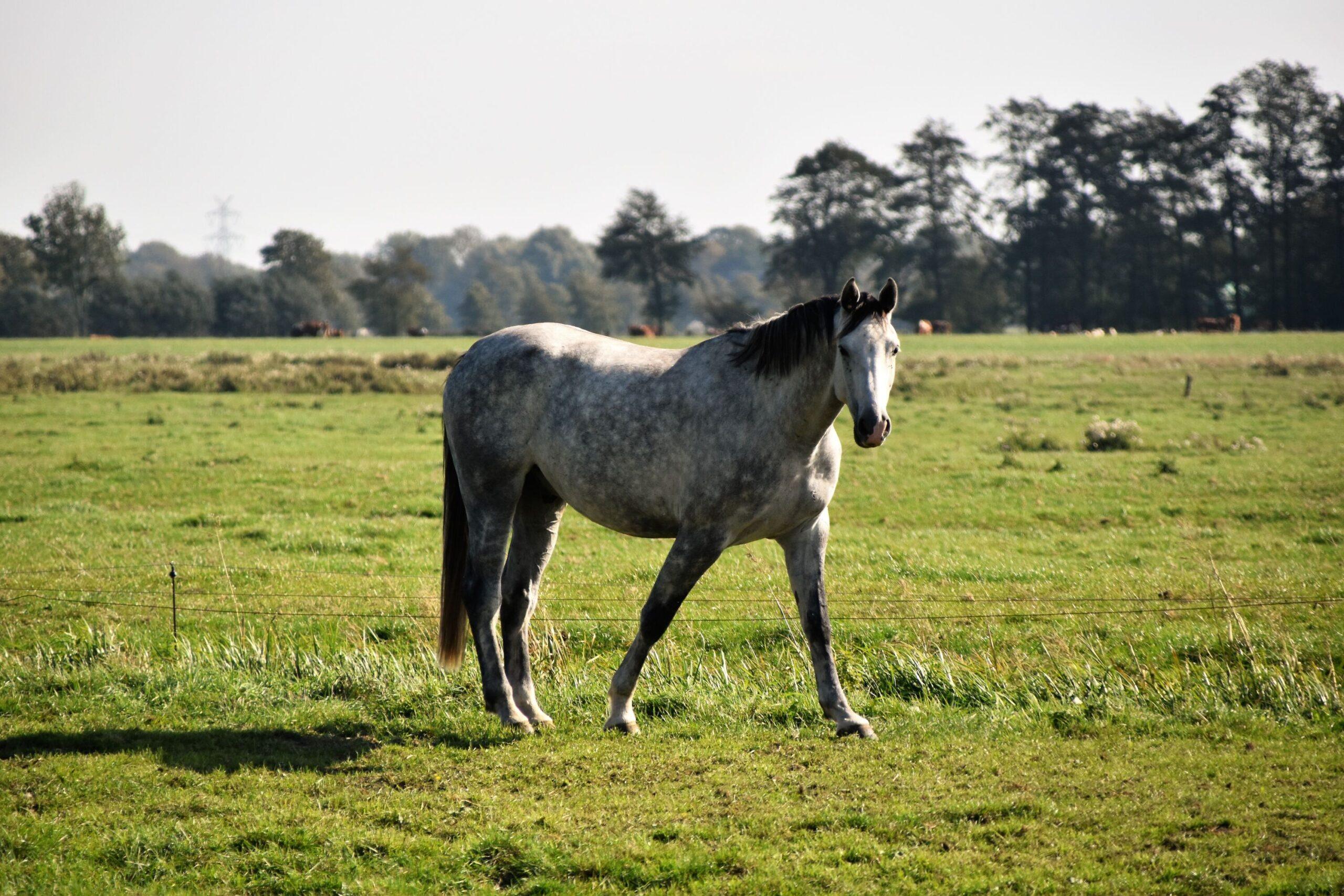
Let’s save the boring stats that every article discussing equine gastric ulcers quotes. If you keep your horse in a stall and/or do any level of training and you are still reading this article, there is an extremely high probability your horse has ulcers.
Why? Murray (1994) demonstrated that alternating periods of feeding and withholding hay resulted in progressive erosion and ulceration of the gastric squamous epithelial mucosa (upper portion of the stomach). [1]
Further to this, concentrate (grain feeding) has been implicated in the development and progression of ulcers. [2]
Confinement in stalls is implicated as well but confounded by the above-mentioned factors of grain feeding and anything less than constant feeding/grazing of forages. [3]
There is a good chance if your horse is in training, it is going through some level of feed deprivation, grain feeding and/or being housed in a stall and is likely to develop or has already developed ulcers.
Not to oversimplify this complicated issue, but the literature constantly points to two root causes of ulcers: 1) stress and 2) feed deprivation. You cannot overlook stress; as the smallest change in environment and routine will cause a horse stress.

Diagnosing Ulcers
Determining if your horse definitively has ulcers is no easy task. Clinical signs of ulcers are non-specific and include lack of appetite, weight loss/poor body condition, mild or recurrent colic and loose feces. [4]
No hematological or biochemical markers are currently available to diagnose ulcers. [5]
Shall we repeat this point together? There are no markers available from a blood or fecal sample to diagnose gastric ulcers!
Endoscopic evaluation is the only way to be certain, but even then, degree of ulceration does not always correlate to symptoms.
Treatment for Horse Ulcers
Management and diet is the first place to start for treatment of ulcers, but sometimes other interventions are necessary based on the horse’s profession/activities. Proton pump inhibitors, like Omeprazole, are one of the most common treatments.
Less common are the H2 receptor antagonists, such as Cimetidine. They both attempt to do the same thing, limit acid production in the stomach and increase pH of the stomach.
This is great for treating ulcers, but not so great for digestion, as that is the stomach’s main purpose, to acidify food and activate local enzymes.
These drugs have been used quite successfully to help alleviate symptoms and treat ulcers, but as with all classes of drugs, continued use is not without concern and cost to most horse owners.
What's your top priority with your horse's health?

Enter your email to receive your store credit
Supporting Gastric Health
Most horse owners want to search for natural alternatives. The market is overrun with supplements claiming to aid the treatment of ulcers, but few if any have more than anecdotal evidence of efficacy.
This leaves most horse owners at crossroads, stick with chronic drug treatment or try to navigate through the sea of claims in the supplement marketplace and hope the dollars spent will provide their competitive companion with more than a placebo for the owner.
Alternatively, horse owners can look for a clinically tested alternative to drugs that utilizes the latest nutraceutical ingredients to alleviate the pain of ulcers and promote healing.
Visceral+ was developed and tested in conjunction with veterinarians to support gastric and hindgut health. It also supports the immune system.
How Long Does it Take to Treat Ulcers in Horses?
An oft-asked question, but one difficult to answer is: “how long will it take before the ulcers heal?” Murray et al (1994) found that superficial lesions may take as little as 7 days to heal, but with deeper wounds, it may take up to 3 months to heal. That is a wide range. Not only was degree of ulceration important, but location impacted healing time. [1]
Furr and Murray (1999) indicated that lesions along the margo plicatus took the longest time to heal. Furthermore, the cause must be removed for complete healing to occur. [6]

Without removing the root cause, one can expect to deal with complications from ulcers or to at least have to maintain their horse on treatments for ulcers until such time as the root causal agent can be removed.
Gastric ulcers are a frustrating reality of competitive horses that costs both performance and welfare. Providing an optimal diet and environment is obviously the best solution, but when this can’t always be the case, at least suitable treatments are available to maintain your equine companion’s health, welfare, and performance.
Frequently Asked Questions
Here are some frequently asked questions about equine gastric ulcer syndrome:
Gastric ulcers are extremely common in horses, especially those that are stalled, in training, or fed concentrated grain diets. Research shows that alternating periods of feeding and withholding hay leads to progressive ulceration in the squamous region of the stomach, and grain feeding further contributes to ulcer development. [1][2] Confinement, stress, and inconsistent forage access are key risk factors. [3]
The two root causes of equine gastric ulcers are stress and feed deprivation. Stress can result from even minor changes in environment or routine, while long periods without forage allow gastric acid to damage the stomach lining. Horses in stalls, those on high-grain diets, or in regular training are particularly vulnerable to these factors. [1][2][3]
Signs of ulcers are often vague and include reduced appetite, weight loss, recurring mild colic, poor body condition, and loose manure. [4] There are currently no reliable blood or fecal tests for diagnosis. [5] The only definitive method is endoscopy, although even then, the severity of ulcers does not always align with visible symptoms.
Summary
Gastric ulcers in horses are largely driven by two root causes—stress and feed deprivation—and risk is especially high with stall confinement, grain feeding, and any level of training.
- Alternating feeding and fasting, as well as concentrate (grain) intake, promote squamous gastric ulceration, making continuous access to forage a key preventive strategy.
- Clinical signs are non-specific, there are no reliable blood or fecal markers, and gastroscopy is the only definitive diagnostic tool even though lesion severity may not match symptoms.
- First-line management focuses on diet and environment—maximizing forage access, minimizing stressors, and limiting grain—because ulcers persist if the underlying causes are not removed.
- Medications such as proton pump inhibitors (omeprazole) and H2 blockers (cimetidine) can raise gastric pH and aid healing, but long-term use has costs and may affect normal digestion.
- Healing time ranges from about one week for superficial lesions to up to three months for deeper or margo plicatus lesions, and evidence-based nutraceutical support may be considered when drugs are not ideal.
References
- Murray MJ. Equine model of inducing ulceration in alimentary squamous epithelial mucosa. Digestive Diseases and Sciences. 1994. View Summary
- Nadeau JA, et al. Evaluation of diet as a cause of gastric ulcers in horses. American Journal of Veterinary Research. 2000. View Summary
- Murray MJ, and Eichorn ES. Effects of intermittent feed deprivation, intermittent feed deprivation with ranitidine administration, and stall confinement with ad libitum access to hay on gastric ulceration in horses. American Journal of Veterinary Research. 1996. View Summary
- RJW Bell , et al. Equine gastric ulcer syndrome in adult horses: A review. New Zealand Veterinary Journal. 2007. View Summary
- Vatistas NJ, e tal. Cross-sectional study of gastric ulcers of the squamous mucosa in Thoroughbred racehorses. Equine Veterinary Journal (Supplement 29). 1999. View Summary
- Furr MO and Murray MJ. Treatment of gastric ulcers in horses with histamine type-2 receptor antagonists. Equine Veterinary Journal (Supplement 7). 1989. View Summary