English

Electrolytes are ions found in the horse’s body that are derived from minerals. Electrolytes are important for a range of functions, including nerve signalling, muscle contraction and fluid balance.
Key electrolytes include sodium, chloride, potassium, magnesium, calcium and bicarbonate. [1][2][3][4] Ensuring your horse has balanced electrolyte levels can support optimal performance, recovery after exercise, and promote hydration.
Your horse needs to obtain electrolytes from their diet to replenish the electrolytes lost in sweat, urine, and other bodily functions.
Horses at maintenance or in cool climates typically get adequate levels of electrolytes from their forage, except sodium. For these horses, adding plain salt is typically sufficient to balance electrolyte requirements.
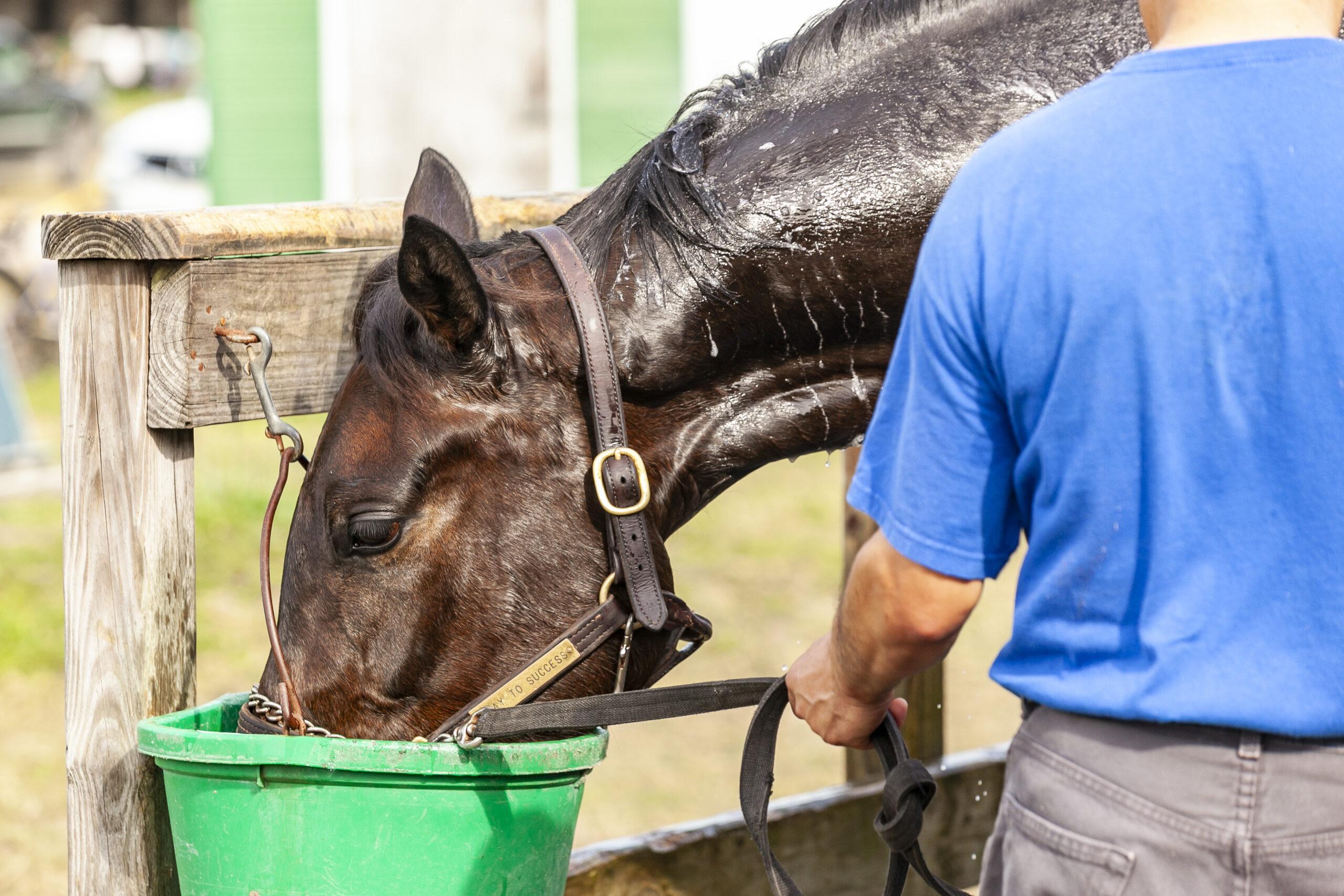
Horses in heavy exercise or horses in hot climates can sweat profusely and lose large amounts of electrolytes. If these electrolytes are not replaced through supplementation, these horses can experience exercise intolerance, muscle weakness, and dehydration.
This article will review the function of electrolytes in the horse’s body, the effects on dehydration and performance and how to best supplement electrolytes in the equine diet.
Why Electrolytes Are Important for your Horse
Electrolytes are minerals that become ions in the body, meaning they carry an electric charge when dissolved in water. Electrolytes are found in blood, within cells and in the fluid surrounding cells (interstitial fluid).
These minerals are vital for most bodily functions, including nerve transmission, the movement of muscles, and regulating blood pH and fluid balance.
Horses lose electrolytes through drooling, respiration, urinating, defecating, and sweating. These minerals must be replaced by dietary sources to maintain overall health and prevent dehydration.
In severe cases, deficiencies or imbalances in electrolytes can lead to death. This is a risk for horses competing in endurance events, foals with diarrhea, and for emaciated horses.
Electrolyte loss via sweating during prolonged exercise may not be adequately replaced through feeds. [5] In these cases, supplementing your horse with an electrolyte formulated for equine athletes is recommended.
What's your top priority with your horse's health?

What's your top priority with your horse's health?
Key Electrolyte Minerals for Horses
The most important electrolytes in mammals, including horses, are: [1][2][3][4]
- Sodium (Na+): The most abundant electrolyte in the blood serum, sodium maintains hydration and fluid volume within the body. In horses, sodium is necessary for regulating thirst.
- Chloride (Cl-): The second most prevalent electrolyte in the blood serum, chloride regulates fluid and pH balance in the body.
- Potassium (K+): Plays a key role in maintaining cell function and is required for muscle contraction and relaxation.
- Magnesium (Mg2+): Necessary for muscle relaxation and nerve function.
- Calcium (Ca2+): Essential for muscle contraction and nerve function.
- Bicarbonate (CO3-): Plays a key role in maintaining acid-base balance in the body. pH affects all functional proteins, enzymes, and biochemical reactions in the body. As such, the body maintains a very narrow pH range compatible with life (7.35-7.45).
Electrolyte Loss in Horses
The most significant loss of electrolytes occurs during sweating. However, illness can also lead to electrolyte loss that needs to be addressed through supplementation or infusion.
Sweating
Sweating is the primary mechanism by which horses regulate their body temperature. A significant amount of water and electrolytes are removed from their body via sweating during exercise and in hot weather.
Horses can produce up to 15 L of sweat per hour during moderate exercise. Sweat volume and composition will vary according to the intensity of exercise, ambient temperature, humidity, diet, and adaptive response to the environment. [8]
Based on one study, an hour of sweating at a rate of 15L per hour produces the following electrolyte losses: [7]
- 105 grams of chloride
- 60 grams of sodium
- 30 grams of potassium
- 4.5 grams of calcium
- 1.5 grams of magnesium
When sweating is excessive, heat exhaustion and dehydration can result in fatigue and poor performance. In severe cases, dehydration can be fatal.
Illness
Illness such as diarrhea or other conditions that cause excessive or prolonged fluid loss can disrupt electrolyte balance.
A study of horses with induced diarrhea determined that sodium loss primarily occurs in the feces, whereas urine is the main route for potassium loss. [9]
Horses with acute and severe gastrointestinal disease, such as enteritis or colitis, should be evaluated by a veterinarian promptly. Intravenous fluids and electrolyte supplementation may be necessary to keep up with ongoing losses.
Horses with low-grade chronic gastrointestinal disease, such as free fecal water syndrome or leaky gut, are generally able to compensate and do not present with dehydration or electrolyte imbalances. However, if you are unsure if your horse’s diarrhea is manageable, it’s always best to consult with your veterinarian.
Electrolytes and Dehydration
Equine sweat is composed of water and electrolytes. Your horse’s sweat is hypertonic, meaning it contains a higher concentration of electrolytes than their blood. [10]
Sweat allows the body to thermoregulate via evaporative cooling, or the evaporation of sweat from the skin surface. As that sweat evaporates, it takes some body heat with it.
Electrolytes are used by the body’s sweating mechanism to draw water to the skin’s surface. As the water travels, it takes some of the electrolytes with it. This is why certain electrolytes are lost in sweat.
With prolonged sweating, horses are vulnerable to both dehydration (loss of fluid) and electrolyte imbalance. [11]
In hot weather, mild dehydration can occur after only a short bout of moderate-intensity exercise and continue for up to 30 minutes into recovery. [12]
Excessive loss of electrolytes and water decreases the concentration of electrolytes in the blood and other bodily fluids. Counterintuitively, this can decrease their thirst.
Sodium is an important part of triggering a thirst response in the brain. However, if sodium concentration is too low, thirst may not be adequately stimulated to increase water intake and the risk for dehydration increases.
Mild dehydration can result in a range of physiological problems, including poor performance and poor recovery.
As little as 1% dehydration from excessive sweating can negatively impact your horse’s performance. Horses are considered clinically dehydrated when they lose 5% of total body fluid (approximately 20-25 L for the average horse). [6]
Signs of Dehydration in Horses
The signs of dehydration can be subtle but can escalate rapidly if fluid and electrolyte balance is not restored.
Common signs that your horse is dehydrated include:
- Loss of skin elasticity
- Dry or tacky mucous membranes
- Fatigue and weakness
- Slower recovery time after exercise (a prolonged elevated heart rate and rapid breathing)
- Slower capillary refill time
- Lethargy or dullness
- Concentrated (dark-coloured urine) and infrequent urination
- Muscular fasciculations or muscle cramping
- Decreased gut sounds or the production of dry manure
- Sunken eyes
- Tucked up flank
In hot weather, dehydration makes your horse more susceptible to heat stress which can result in colic, kidney failure, and death.

Can Electrolytes Improve Performance?
Preloading horses with electrolytes one hour before strenuous exercise has been shown to improve performance, including: [13]
- Improved hydration levels
- Preventing fluid loss around cells
- Increasing exercise duration
- Increasing fluid and electrolyte loss in sweat when not exercising at peak exertion
Improved hydration levels and enhanced sweating help to lower the core body temperature of horses during exercise.
Horses that receive electrolytes in advance of exercise may be able to exercise for longer than those provided with water alone. [13]
If your horse is dehydrated and not able to sweat to cool themselves down, they will stop voluntary exercise when their core body temperature exceeds 42oC / 107oF. [11]
After prolonged sweating, it takes longer for horses to recover a normal hydration status when fed feed and water alone compared to horses provided with electrolyte replenishment.
One study found that horses provided with their normal meals and access to water had an incomplete hydration status 24 h after exercise. [14]
To fully rehydrate during exercise recovery, your horse should drink the equivalent of 150% of the volume of body weight lost through sweating.
Does my Horse need an Electrolyte Supplement?
Whether your horse needs an electrolyte supplement depends on factors including health status, activity level, and environment.
Feeding a balanced forage-based diet will supply high levels of minerals including potassium, magnesium, calcium, and phosphorus.
However, forage does not usually provide adequate levels of sodium and up to 70% of horses are deficient in sodium. All horses should be provided with salt in their diet and given access to free-choice loose salt to meet their daily sodium needs.
Research in athletic horses has shown that while many horses are good at self-regulating their salt intake, some horses will not consume enough salt to meet their requirements on their own. [15]
Providing one to two ounces of salt in the feed as well as free-choice loose salt will meet the needs of most horses.
In addition to the electrolytes found in your horse’s feed, a commercial electrolyte supplement can be beneficial when your horse is:
- Sweating heavily
- Working in hot or humid conditions
- Under high-stress conditions, such as long trailer rides
- Working harder and/or longer than they are accustomed to
- Experiencing abnormal fluid loss due to illness
When and How to Use Electrolytes
There is a wide range of commercially formulated electrolyte supplements available. Check product labels and follow the manufacturer’s directions for proper dosing and administration for the product you are using.
Powdered electrolytes can be mixed with water or top-dressed on feed. If mixing in water, provide two buckets: one with electrolytes and the other with fresh clean water.
Experiment with different options to figure out which delivery method works best for your particular horse.
Once ingested, most electrolytes are absorbed in the first segment of the small intestine (duodenum). This means oral electrolytes can quickly replenish body levels. [6]
Paste Electrolytes
Some electrolyte products are available in a paste format that can be administered via syringing directly into the mouth. However, the use of concentrated (hypertonic) pastes has been shown to exacerbate gastric irritation in horses with gastric ulcers already present, particularly with repeat administration. [16] Since gastric ulcers are common in performance horses, caution should be used with hypertonic pastes.
Further, the high dose of concentrated electrolytes reaching the gut can worsen dehydration in the short term. This is because there will be a temporary draw of water into the gut, pulling water away from other body compartments (inside and outside of cells).
To minimize the risk of gastric irritation, do not administer hypertonic pastes on an empty stomach and allow the horse to eat freely after administration. Additionally, to combat any temporary worsening of dehydration, ensure that your horse has access to water when receiving electrolytes so that they can drink freely.
Flavours
Training your horse to drink electrolytes in water may take time and patience, but it can help to promote water intake in new environments.
Some electrolytes add flavour to the water. This means you can make any water taste the same as their home water if using a flavoured electrolyte product.
Timing & Dosage
The best timing of electrolyte supplementation depends on the stressor that is taking place.
The benefits of electrolyte administration prior to exercise (preloading) are most apparent in sports such as thoroughbred and harness racing, endurance trials, and three-day eventing.
Preloading with 8 litres (2.1 gallons) of water containing balanced electrolytes results in these minerals being present in muscle cells one hour later. [13]
Administering electrolytes in even 3 L of water one hour before lengthy travel, competition, or any strenuous exercise can support hydration and performance when sweating is prolonged. [13]
If your horse is sweating while being exercised for under one hour, you can provide electrolytes in their water afterwards or top-dress their ration.
Too Much Electrolytes
Electrolytes are typically underfed as opposed to being over-supplemented. When following the manufacturer’s directions, feeding too much electrolytes is unlikely.
However, excessive drinking and urination can be signs of over-supplementing electrolytes. Excess electrolytes will be cleared from the body through urine.
Safe Electrolyte Replenishment in Horses
Dehydrated horses must be rehydrated with an appropriate balance of water and electrolytes. Isotonic solutions are ideal as they contain water and electrolytes in the same concentrations as sweat or plasma and thus are already balanced. [17][18]
Hypertonic solutions contain a higher concentration of electrolytes than bodily fluids and promote fluid to be drawn out of circulation and moved into the intestine. Administering hypertonic solutions containing concentrated electrolytes (without sufficient water) to a dehydrated horse can worsen dehydration.
Giving only a hypotonic solution (such as water without electrolytes) to a dehydrated horse can also worsen dehydration as it contains a lower concentration of electrolytes than what is normally present within the body fluid.
These solutions dilute the body’s fluids, decreasing the concentration of sodium in the blood and inhibiting the thirst response.
Further, when the kidneys detect lower electrolytes concentration, they increase urine production, potentially leading to dehydration. [6]
Choosing an electrolyte supplement
Salt
To replenish your horse’s sodium levels, plain table salt from the grocery store or feed-grade salt from the feed store is best. Trace mineralized salts can throw off balance in the rest of the diet, and are not required if the horse is already receiving a balanced diet.
Performance horses consume anywhere between 0 to 62 mg of sodium per kg of bodyweight per day, ie up to 31 grams of sodium for a 500 kg / 1,100 lb horse. This equates to ~ 80 grams of salt (NaCl) per day. [15]
Salt consumption increases when free choice salt is accessible. [19] In addition, horses drink more water when given access to free-choice, loose salt than a salt block.
Best Electrolyte Supplements for Horses
For horses that are sweating heavily or require electrolyte supplementation due to illness, choose a supplement that is:
- Balanced for horses: Use an electrolyte supplement that is formulated for the needs of horses. Avoid using products designed for humans as horses produce sweat that contains a greater concentration of electrolytes than humans.
- Easily dissolved in water: Electrolyte supplements should easily dissolve in water. If the product is not readily dissolvable, it may not be consumed at adequate levels and may take longer to absorb in the gut.
- Formulated with dextrose or fructose: Electrolyte supplements containing carbohydrate sources such as dextrose or fructose improve the speed at which water and electrolytes are absorbed in the digestive tract. Fructose may serve a similar role in promoting the absorption of potassium (K+). [20]
Dextrose, a source of glucose, can also replenish energy stores (glycogen) in the body, helping to support exercise recovery.
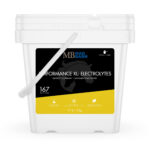
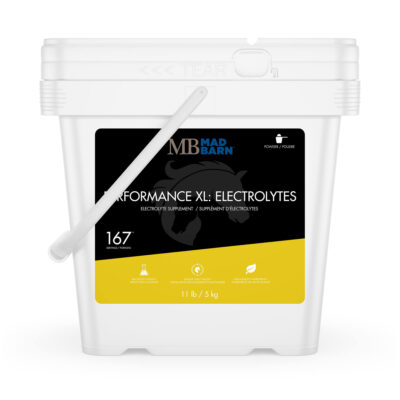
Mad Barn’s Performance XL: Electrolytes has been scientifically formulated to replace exactly what the horse loses through sweat during heat stress or strenuous exercise. It contains a precise blend of electrolytes, dextrose and vitamins to support high performance and workout recovery.
Performance XL also contains vitamin E and vitamin C, which are important antioxidants that support muscle recovery in exercising horses.
Frequently Asked Questions
Here are some frequently asked questions about electrolytes in horses:
Electrolytes are vital minerals that help regulate various bodily functions, including nerve transmission, muscle contraction, and fluid balance. They are essential for maintaining hydration, supporting muscle function, and regulating the body's pH and blood volume. Without balanced electrolytes, horses may experience performance issues, muscle weakness, and dehydration.
Signs of electrolyte imbalances in horses include fatigue, weakness, slower recovery after exercise, and muscle cramping. Dehydration may also be evident, with symptoms such as loss of skin elasticity, dry or tacky mucous membranes, and dark-colored, infrequent urine. In severe cases, electrolyte imbalances can lead to heat stress, kidney failure, or even death.
Dehydration and electrolyte imbalances can severely impact a horse's performance by reducing muscle function and causing fatigue. When electrolytes are lost through sweat without proper replacement, horses may experience poor recovery times, decreased exercise endurance, and increased risk of heat exhaustion. This can result in premature fatigue or the inability to continue exercising.
Horses in maintenance or those in cool climates often get sufficient electrolytes from their forage, except for sodium. However, horses in heavy exercise or hot climates may sweat excessively, losing large amounts of electrolytes that are not replenished by diet alone. In these cases, electrolyte supplementation is necessary to prevent dehydration and support performance.
Summary
Electrolytes are essential minerals that regulate various bodily functions in horses, including muscle contraction and fluid balance. Ensuring proper electrolyte intake supports hydration, performance, and recovery.
- Key electrolytes for horses include sodium, chloride, potassium, magnesium, calcium, and bicarbonate, each with specific roles in body function.
- Horses lose electrolytes primarily through sweat, and excessive loss during exercise or heat can lead to dehydration and performance issues.
- Supplementing with electrolytes, especially in hot conditions or during heavy exercise, can prevent dehydration and improve recovery.
- Horses on a balanced forage diet often need added salt or electrolyte supplementation, particularly when sweating heavily or under stress.
References
- Berend, K. et al. Chloride: the queen of electrolytes? Eur J Intern Med. 2012.
- Stone, MS. et al. Potassium Intake, Bioavailability, Hypertension, and Glucose Control. 2016.
- Vormann, J. Magnesium and Kidney Health - More on the 'Forgotten Electrolyte'. Am J Nephrol. 2016.
- Shrimanker, I. et al. Electrolytes. In: StatPearls [Internet]. Treasure Island (FL): StatPearls Publishing. 2022.
- Lindinger, M.I. and Gayle, L.E. Gastric emptying, intestinal absorption of electrolytes and exercise performance in electrolyte-supplemented horses. Exp Physiol. 2013. View Summary
- Lindinger, M.I. Sweating, dehydration and electrolyte supplementation: Challenges for the performance horse. Proceedings of the 4th European Equine Nutrition & Health Congress, The Netherlands. 2008.
- McConaghy, F.F. et al. Equine sweat composition: effects of adrenaline infusion, exercise and training. Equine Vet J Suppl. 1995. View Summary
- McCutcheon, L.J. et al. Equine sweating responses to submaximal exercise during 21 days of heat acclimation. J Appl Physiol. 1999. View Summary
- Ecke, P. et al. Induced diarrhoea in horses. Part 1: Fluid and electrolyte balance. Vet J. 1998. View Summary
- Flaminio, M.J.B.F. and Rush, B.R. Fluid and Electrolyte Balance in Endurance Horses. Vet Clin North Am: Equine Pract. 1998. View Summary
- Lindinger, M.I. Exercise in the Heat: Thermoregulatory Limitations to Performance in Humans and Horses. Can J Appl Physiol. 1999. View Summary
- McCutcheon, L.J. et al. Sweating rate and sweat composition during exercise and recovery in ambient heat and humidity. Equine Vet J Suppl. 1995. View Summary
- Waller, A.P. and Lindinger, M.I. Pre-loading large volume oral electrolytes: tracing fluid and ion fluxes in horses during rest, exercise and recovery. J Physiol. 2021. View Summary
- Waller, A.P. et al. Fluid and electrolyte supplementation after prolonged moderate-intensity exercise enhances muscle glycogen resynthesis in Standardbred horses. J Appl Physiol (1985). 2009. View Summary
- Jansson, A. and Dahlborn, K. Effects of feeding frequency and voluntary salt intake on fluid and electrolyte regulation in athletic horses. J Appl Physiol. 1999. View Summary
- Holbrook, T.C., et al. Effect of repeated oral administration of hypertonic electrolyte solution on equine gastric mucosa. Equine Vet J. 2005. View Summary
- Marlin, D.J. et al. Rehydration following exercise: effects of administration of water versus an isotonic oral rehydration solution (ORS). Vet J. 1998. View Summary
- Monreal, L. et al. Electrolyte vs. glucose-electrolyte isotonic solutions for oral rehydration therapy in horses. Equine Vet J Suppl. 1999. View Summary
- EquiNews Nutrition and Health Daily. Kentucky Equine Research. 2022.
- Waller, A. et al. Electrolyte supplementation after prolonged moderate-intensity exercise results in decreased plasma [TCO2] in Standardbreds. Comp Exer Physiol. 2007.