English



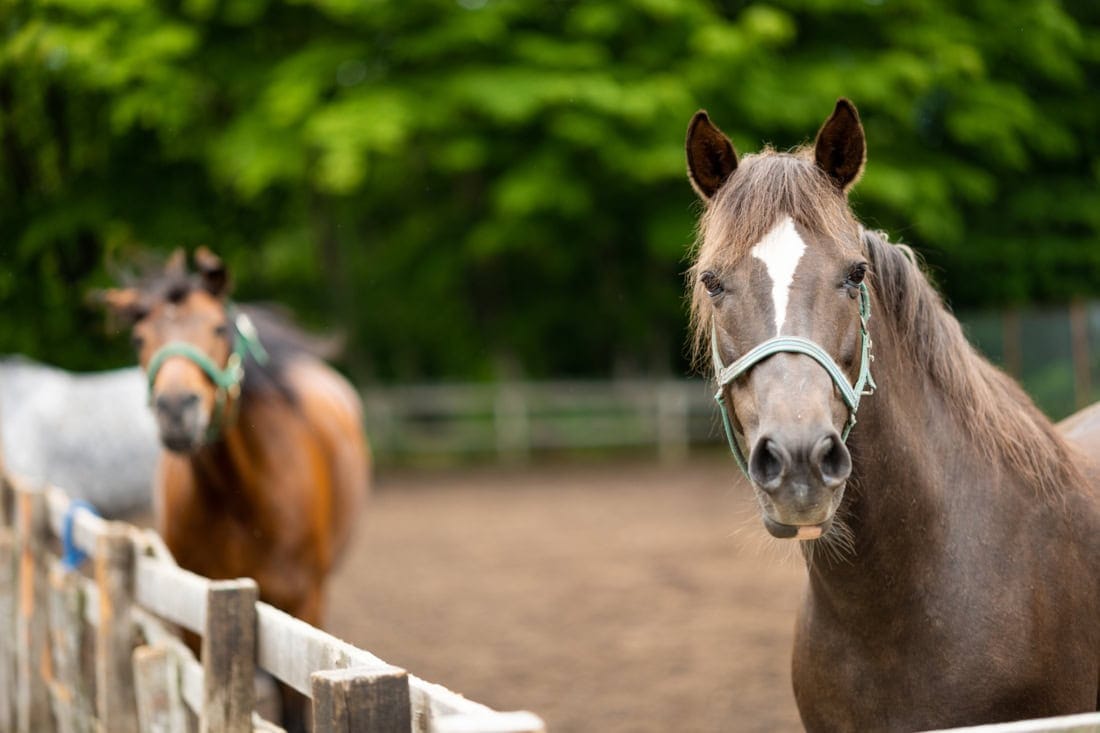
The cranial nerves play a key role in a horse’s neurological function, governing essential sensory and motor activities such as vision, hearing, chewing, swallowing, and facial expressions.
These twelve pairs of nerves emerge directly from the brain rather than the spinal cord, making them critical for communication between the central nervous system and structures of the head and neck.
Diagnosing cranial nerve dysfunction in horses requires a detailed neurological examination, often including observation of facial symmetry, assessment of reflexes, and specialized tests such as endoscopy. Early detection is important, as some conditions affecting the cranial nerves—such as equine protozoal myeloencephalitis (EPM) or guttural pouch infections—can progress rapidly if left untreated.
Read on to learn more about the twelve cranial nerves in horses, their functions, and common related disorders. By gaining a deeper understanding of these important neural structures, equine professionals and horse owners can better recognize early signs of neurological disease, leading to improved diagnosis, treatment, and overall equine health.
Equine Cranial Nerves
The cranial nerves are a special set of nerves that originate directly from the brainstem, rather than the spinal cord. [1] Their main role is providing motor function and sensation to the head and neck. [1] Cranial nerves are vital for basic life functions such as vision, chewing, smelling, and hearing. [1]
Beyond their role in innervating the head and neck, the direct connection that cranial nerves have to the brain can provide veterinarians with important information. During a neurological examination, veterinarians can test the function of each cranial nerve individually.
With these findings, veterinarians can localize (pinpoint) an exact area of injury, including potential injury to the brain itself. [2] Based on this information, they can narrow down the list of possible causes for efficient diagnosis. [2]
There are twelve cranial nerves, each named for their function. The nerves also have a number assigned to them, based on the order they emerge from the brain. [1] For example, Cranial Nerve I emerges from the front of the brain, while Cranial Nerve XII emerges from the back. [1]
The twelve cranial nerves are as follows: [4]
| Cranial Nerve | Name | Function |
|---|---|---|
| I | Olfactory Nerve | Responsible for the sense of smell |
| II | Optic Nerve | Responsible for vision |
| III | Oculomotor Nerve | Involved in eye movement and pupil constriction |
| IV | Trochlear Nerve | Involved in eye movement |
| V | Trigeminal Nerve | Controls chewing muscles and facial skin sensation |
| VI | Abducens Nerve | Controls lateral eye movement |
| VII | Facial Nerve | Controls muscles of facial expression |
| VIII | Vestibulocochlear Nerve | Responsible for hearing and balance |
| IX | Glossopharyngeal Nerve | Sensation in the pharynx during swallowing |
| X | Vagus Nerve | Coordinates muscles involved in swallowing |
| XI | Spinal Accessory Nerve | Activates muscles of the neck and shoulder |
| XII | Hypoglossal Nerve | Controls tongue movement |
Sight & Eye Movement
The two main cranial nerves involved in sight are the optic nerve (Cranial Nerve II) and the oculomotor nerve (Cranial Nerve III). [3] The oculomotor nerve also has roles in eye movement, along with the trochlear nerve (Cranial Nerve IV) and the abducens nerve (Cranial Nerve VI).
Vision
The optic nerve is a sensory nerve responsible for vision. [4] It conveys the electrical signals produced by the retina, the back of the eye, to the occipital lobes of the brain. Once these signals reach the brain, the brain interprets them into a visual image of the surrounding environment. [1]
Damage to the optic nerve results in cortical blindness, a condition where the eye itself is functional, but visual signals do not reach the brain. [1]
Pupil Control
The major role of the oculomotor nerve is controlling the iris, the muscle fibers in the eye that contract or dilate to change the diameter of the pupil. [1] This affects the amount of light allowed into the eye.
The pupils dilate to enhance vision during low light or when the sympathetic nervous system (fight or flight response) is activated. Conversely, the pupils constrict when exposed to bright light to prevent damage to the light-sensitive retina. [1]
Animals with damage to their oculomotor nerve are unable to constrict or dilate their pupils appropriately. [1]
Eye Movement
The oculomotor nerve also innervates the muscles that control eye movement, along with the abducens and trochlear nerves. [3] These muscles allow the eye to move side to side and up and down to better perceive the horse’s environment.
Horses with deficits in these nerves develop strabismus, an abnormal eye position. [5] This abnormality persists even when the horse’s head moves, due to their inability to contract muscles to move the eye into a more appropriate position. [5]
What's your top priority with your horse's health?

Enter your email to receive your store credit
Neurologic Examination
To test the function of the oculomotor and optic nerves, veterinarians perform three main tests as part of their neurologic examination.
Menace Reflex
The first test is the menace reflex, which involves using the hand to make a threatening gesture towards the horse’s eye, without contacting the horse. [5] The horse should close their eyelids to avoid the incoming threat. [5]
Before performing the test, the veterinarian should observe to see if the horse can blink on its own. [5] This ensures that the muscles of the eyelids are functional to prevent a misdiagnosis. [5]
This test requires four structures to be functional for a normal result: [5]
- The eye to produce a visual signal that the threat is coming
- The optic nerve to convey the visual signal
- The occipital lobes of the brain to interpret the visual signal
- The facial nerve (Cranial Nerve VII) to signal the eyelids to close in response to the threat
If any of these structures are affected by a disease or condition, the horse does not blink when the veterinarian’s hand approaches their eye. [5]
Pupillary Light Reflex
If a horse does not have a menace reflex, veterinarians perform the pupillary light reflex test to narrow down which structure is affected. The pupillary light reflex involves shining a bright light into the horse’s eyes, which should cause their pupils to constrict. [5]
This reflex requires the function of the eye, optic nerve, and the oculomotor nerve. [5] It does not require the brain to interpret the signal, unlike the menace response. [6] Therefore, veterinarians can use this test to determine whether an absent menace response is due to a problem within the eye and optic nerve, or within the brain’s occipital lobes. [5]
Eye Movement Test
To test for strabismus, the veterinarian moves the horse’s head around using their halter. [5] Horses with strabismus due to cranial nerve damage do not move their eyes in response to repositioning the head. [5]
Causes
Many conditions can cause neurogenic (nerve- or brain-related) blindness in horses. [5] Potential causes include: [5]
- Traumatic injuries to the head
- Moldy corn poisoning (leukoencephalomalacia)
- Bacterial infections of the brain or meninges (brain covering)
- Eastern and Western equine encephalitis
- Equine protozoal myeloencephalitis
- Thiamine deficiency
- Tumors of the pituitary gland, as in pituitary pars intermedia dysfunction
- Ivermectin toxicosis
Balance & Hearing
The vestibulocochlear nerve (Cranial Nerve VIII) plays important roles in both balance and hearing. [3]
Balance
The vestibular system is responsible for balance and perception of the body in its environment (proprioception). [5] The main sensory organ for the vestibular system is a series of fluid-filled tubes within the inner ear. [5] Fine hairs within these tubes detect changes in fluid motion caused by body movement and produce a signal. [5]
The vestibulocochlear nerve transmits these signals to the cerebellum, the portion of the brain responsible for balance. [5] The cerebellum interprets the signal and stimulates muscle movements that maintain the horse’s balance, based on their head position. [5]
Damage to the vestibulocochlear nerve can cause a horse to lose its sense of balance and spatial orientation, leading to a condition known as vestibular syndrome. [5] Common symptoms include:
- Head tilt
- Abnormal eye movements
- Falling
- Circling
- Ataxia (uncoordinated movement)
- Leaning up against walls
Veterinarians can usually identify vestibulocochlear nerve damage based on the horse’s head tilt. [2] If the horse’s clinical signs are subtle, they may blindfold the horse to remove their ability to compensate visually for their nerve deficit. [2]
Potential causes of vestibulocochlear damage include: [5]
- Traumatic injuries to the head, such as skull fractures
- Temporohyoid osteoarthropathy
- Equine protozoal myeloencephalitis
- Eastern and Western equine encephalomyelitis
- West Nile disease
- Equine herpesvirus myeloencephalopathy
- Ear infections
- Lightning strike
Hearing
The vestibulocochlear nerve is also responsible for transmitting signals from the cochlea, the part of the ear that turns sound into electrical signals. [3] Horses with damage to the cochlear portion of the nerve are deaf. [3]
Deafness due to vestibulocochlear damage is rare in horses. [7] However, some foals with splashed white, frame Overo, or Tovero coat patterns may be born deaf due to abnormalities in the nerve pathways carrying auditory signals. [7]

Chewing & Swallowing
The muscles involved in chewing receive signals from the trigeminal nerve (Cranial Nerve V). [3] These muscles open and close the jaw to allow grinding of feed between the cheek teeth. [5]
Damage to the trigeminal nerve causes atrophy (muscle loss) of the muscles on the sides of the cheeks. In some cases, horses may hold their jaw in unusual positions due to their lack of muscle function. [3] Recent research has also confirmed that irritation or damage to the trigeminal nerve may be responsible for some cases of headshaking in horses. [8]
Swallowing is a more complex action than chewing, as it requires the coordinated movement of the tongue, pharynx, and larynx. [5] The tongue pushes the feed backwards within the mouth, where it interacts with the pharynx, a muscular tube that directs feed towards the esophagus. [5] The glossopharyngeal nerve (Cranial Nerve IX) detects the presence of feed in the pharyngeal region and sends signals to the brain to activate the swallowing reflex. [5]
After the swallowing reflex is activated, the glossopharyngeal, vagus (Cranial Nerve X), spinal accessory (Cranial Nerve XI) and hypoglossal (Cranial Nerve XII) nerves coordinate the movement of the pharynx and closure of the larynx, the structure at the start of the windpipe that prevents food from entering the lungs. [5]
Damage to any of these nerves can cause dysphagia, or difficulty eating. [5]
Neurologic Examination
To evaluate the integrity of these nerves, veterinarians assess the horse’s ability to chew and swallow by feeding them a treat or a handful of grain. [2] If the horse shows signs of dysphagia, they proceed to more specific tests to evaluate which nerve is compromised. [2]
Endoscopic Evaluation
Using an endoscope, a camera attached to a long tube, veterinarians can evaluate the function of the larynx and pharynx. [2] If the larynx and pharynx appear to be functioning correctly, then damage to the glossopharyngeal, accessory, vagal, and hypoglossal nerve can be ruled out. [2]
A deficit in the recurrent laryngeal nerve, a branch of the vagus nerve, is responsible for laryngeal paralysis. This condition, also known as “roaring“, occurs when there is damage to the recurrent laryngeal nerve, preventing it from opening the larynx properly when the horse inhales. [2]
Turbulent airflow through the partially opened larynx produces the characteristic roaring noise. This condition can be diagnosed on endoscopy as part of a cranial nerve evaluation.
Tongue Withdrawal Test
The main role of the hypoglossal nerve is controlling tongue movement. [2] To test for hypoglossal nerve dysfunction, the veterinarian gently pulls the tongue out of the mouth. A horse with hypoglossal nerve deficits either cannot replace the tongue within its mouth at all, or has difficulty doing so. [2]
Causes
Possible causes of nerve damage to the trigeminal, vagus, hypoglossal, or glossopharyngeal nerves include: [5]
- Lightning strike
- Botulism
- Tetanus
- Eastern and Western equine encephalomyelitis
- Rabies
- Equine protozoal myeloencephalitis
- Moldy corn poisoning (leukoencephalomalacia)
- Yellow star thistle toxicosis (chewing disease)
- Guttural pouch mycosis
- Traumatic injuries to the head
Facial Tone
The facial nerve (Cranial Nerve VII) is responsible for facial expression and muscle tone. [3] This nerve sends off fibres to innervate muscles in the ears, eyelids, nose, and lips. [3]
Horses with deficits in this nerve show signs of facial paralysis. In most cases, facial paralysis is unilateral (only affects one side of the head). Owners and veterinarians may see signs such as: [3]
- Drooping of the ear on the affected side
- Drooping of the lips or poor lip tone
- Drooping of the eyelid on the affected side
- Collapsed nostril on the affected side
- Deviation of the muzzle towards the unaffected side
- Drooling from the affected side
- Difficulty chewing and picking up feed
To test for facial paralysis, the veterinarian may lightly touch the horse’s face near the lips, eyes, and ears to evaluate whether the horse can move its facial muscles in response to contact. [5] They may also perform a Schirmer tear test, which evaluates the eye’s ability to produce tears. [5] Since the facial nerve controls tear production, horses with facial nerve deficits have low tear production on this test. [5]
Causes
Injury to the facial nerve usually results from traumatic injuries to the face or head. [5] Usually these injuries occur after a direct blow to the head or if the horse pulls back hard on a tight-fitting halter. [5]
Injury can also occur under general anesthesia, where the horse’s body weight compresses the nerve as they lay flat on their side for a prolonged period. [5]
In some cases, facial nerve injury is related to temporohyoid osteoarthropathy. [5] The hyoid apparatus is a series of bones that hold the tongue and larynx in position within the skull. [9]
Temporohyoid osteoarthropathy results in bone proliferation surrounding the connection of the hyoid apparatus and the skull, in a region very close to the path of the facial nerve. [9] Compression or damage to the facial nerve can result from the bony proliferation or from fracture of the joint due to the disease. [9]
Other potential causes of facial nerve dysfunction include: [5]
- Equine protozoal myeloencephalitis
- Polyneuritis equi
- Ear infections
- Guttural pouch mycosis
Frequently Asked Questions
Horses, like all mammals, have 12 pairs of cranial nerves that emerge directly from the brain and brainstem. These nerves control important functions, including vision, hearing, facial expression, chewing, swallowing and balance.
Cranial nerve tests evaluate the function of one or more of the cranial nerves, to help the veterinarian determine which structures are affected. [2] Example cranial nerve tests include the pupillary light reflex and tongue withdrawal reflex.
Cranial nerve assessment is part of a complete neurologic examination, which evaluates the function of the horse’s brain, spinal cord, and major nerve systems. In particular, the cranial nerve assessment provides the veterinarian clues as to which part of the brain may be affected by a disease. This can help them narrow down their list of differentials, or potential causes of the symptoms the horse shows. [2]
Summary
The cranial nerves are a series of twelve nerves that emerge directly from the horse's brain, rather than from the spinal cord.
- These nerves have critical roles in vision, hearing, chewing, swallowing, and facial expression
- Veterinarians can diagnose deficits in these nerves through a thorough neurological examination
- By identifying specific deficits, veterinarians can narrow down their list of possible causes of the horse's clinical signs
- Many different conditions, ranging from traumatic injuries to infections, can cause deficits in the cranial nerves
References
- Sonne. J. and Lopez-Ojeda. W., Neuroanatomy, Cranial Nerve. StatPearls. StatPearls Publishing, Treasure Island (FL). 2025.
- Reed. S. M. et al., Equine Internal Medicine. 3rd ed. Saunders Elsevier, St. Louis, Mo. 2010.
- MacKay. R. J., Diseases of the Brainstem and Cranial Nerves of the Horse: Relevant Examination Techniques and Illustrative Video Segments. Proceedings of the 57th Annual Convention of the American Association of Equine Practitioners. 2011.
- Dyce. K. M. et al., Textbook of Veterinary Anatomy. 4th ed. Saunders/Elsevier, St. Louis, Mo. 2010.
- Furr. M. and Reed. S. M., Eds., Equine Neurology. Second edition. John Wiley & Sons Inc, Ames, Iowa. 2015.
- Ofri. R., Ophthalmic Examination. It Should Not Be Complicated. It Should Not Be Expensive.. World Small Animal Veterinary Association World Congress Proceedings. 2011.
- Kane. E., Hearing Loss in Veterinary Equine Patients. DVM 360. 2015.
- Young. A., Trigeminal-Mediated Headshaking. University of California Davis. 2021.
- Temporohyoid Osteoarthropathy. American College of Veterinary Surgeons.