English


The horse’s natural diet consists of fiber-rich forages, which are relatively low in fat. However, fat supplementation has become increasingly popular for various types of horses, from athletes needing extra energy to metabolic horses who benefit from low-starch diets.
Adding fat to your horse’s diet can help promote a shiny coat and provide “cool calories” that may reduce reactivity. In addition, fat sources with omega-3 fatty acids have anti-inflammatory effects, which can support joint and respiratory health.
Horses can digest and absorb fairly large amounts of fat when it is incorporated into the diet correctly. However, it is not always clear how to select the best fat sources, determine appropriate inclusion rates, and introduce it to prevent digestive upsets.
This article reviews the role of fat in the equine diet, its benefits, appropriate sources, and how to safely incorporate it into a horse’s feeding program. Read on to learn everything you need to know when considering fat supplementation for your horse.
Fat in the Equine Diet
Fat is an essential macronutrient that is naturally found in forages, grains, and oils. Dietary fat is important in equine diets as it plays many roles in the body, including: [1][2]
- Energy production: Fats are the most concentrated source of energy, providing 9 calories per gram. Cells break down fat for energy, especially when carbohydrates such as glucose are less available.
- Insulation and protection: Fats are stored in many tissues around the body, including subcutaneous (under the skin) adipose tissue, which provides insulation to the horse that helps regulate body temperature. Fats stored around vital organs such as the kidneys also protect against physical damage.
- Hormone production: Steroid hormones such as estrogen and testosterone are made from cholesterol, a type of fat.
- Cell structure: Cell membranes are made up of lipids, so fats are essential for building and maintaining these structures.
- Nutrient absorption: Dietary fat aids in the absorption of fat-soluble vitamins (A, D, E, and K) into the bloodstream.
While fat plays many important roles in the horse’s body, horses do not have a specific nutritional requirement for fat. Forage, which makes up the bulk of the equine diet, is naturally low in fat, typically containing between 2 – 4% fat. This amount is sufficient for most horses.
However, there are cases where adding fat to the diet can be advantageous, such as for performance horses engaged in heavy work, pregnant mares with high energy demands, or horses that need to avoid excess hydrolyzable carbohydrates (HC) in their diet.
Research into fat and oil supplementation for horses also demonstrates a number of functional benefits. Fat supplementation can be used to support weight gain, skin and coat condition, joint health, gut health, exercise performance, respiratory function, reproductive health and temperamental balance.
Most horses tolerate added fat well, provided it is introduced gradually and balanced within the overall diet.
Types of Fat
Before deciding which fat source to add to your horse’s diet, it’s important to understand the different types of fats and fatty acids available and their roles in equine nutrition.
In general, fats (lipids) are made up of fatty acids bound to a backbone molecule. Fatty acids are chains of carbon, hydrogen, and oxygen atoms that differ in length and saturation (hydrogen content).
The fats found in forages and grains are a mix of simple and complex lipids, including: [1]
- Glycolipids: Fatty acids bound to a carbohydrate, such as galactose
- Phospholipids: Important components of the plant cell membrane
- Diglycerides and triglycerides: Two (di-) or three (tri-) fatty acids bound to a glycerol molecule
- Waxes: Fats made up of long-chain fatty acids that are on the outer surface of plant cells
- Sterols: Lipid compounds that are similar to cholesterol
Fat supplements and oils commonly fed to horses are primarily made up of triglycerides, with the specific types of fatty acids varying based on the source. [1]
Fatty Acids
Fatty acids vary in length and hydrogen content, resulting in different classifications that describe their structure.
Fatty acids are further characterized as short-, medium- or long-chain, which refers to their length, and saturated, mono-unsaturated, or poly-unsaturated to indicate their hydrogen content.
This classification helps explain the distinct functions and effects of these fatty acids in the horse’s body.
Short, Medium & Long-chain
Short-chain fatty acids (SCFAs) are fatty acids with fewer than eight carbon atoms. SCFAs that are two to four carbons long are also referred to as volatile fatty acids (VFAs). These are produced primarily through the fermentation of fiber by beneficial bacteria in the horse’s hindgut.
VFAs are easily absorbed and serve as an important energy source for horses, especially those on a forage-based diet.
The three main volatile fatty acids produced by hindgut microbes are:
- Acetate (2 carbons): Serves as an immediate energy source for muscles and other tissues
- Propionate (3 carbons): Converted into glucose by the liver, which helps maintain blood sugar levels and support energy needs
- Butyrate (4 carbons): Provides energy for cells lining the digestive tract, supporting gut health
Short-chain fatty acids are not typically added directly to equine diets, but are produced and absorbed in the hindgut.
Medium-chain fatty acids (MCFAs) are fatty acids with a chain length of 8 to 12 carbon atoms. Unlike longer fatty acids, these can be directly absorbed into the blood without extra processing by the intestinal cells.
This makes them a quick source of energy, as they bypass the usual steps required for fat digestion and go straight to the liver for immediate use.
Coconut oil or palm kernel oil are high in medium-chain fatty acids, sometimes referred to as medium-chain triglycerides (MCTs).
Long-chain fatty acids (LCFAs) are generally 12 to 24 carbon atoms in length. These fatty acids are too large to be directly absorbed from the intestines. Instead, they are processed in intestinal cells, where they are reassembled into triglycerides and packaged into larger structures called chylomicrons, which transport fats throughout the body.
Most plant oils, such as canola oil or sunflower oil, are high in long-chain fatty acids. The omega-3 fatty acids, docosahexaenoic acid (DHA) and eicosapentaenoic acid (EPA), are examples of long-chain fatty acids.
Saturated vs. Unsaturated Fat
Another key distinction in types of fat is whether they are saturated or unsaturated. Fatty acids are classified as saturated or unsaturated by their hydrogen content depending on whether they have double bonds in their fatty acid chains.
Saturated fatty acids have no double bonds, meaning each carbon atom in the molecule’s structure is “saturated” with the maximum possible number of hydrogen atoms.
Unsaturated fatty acids have one or more double bonds in their carbon chain and fewer hydrogen atoms in their structure.
This distinction affects the structure, stability, and function of the fats, with saturated fats generally being solid at room temperature (77°F or 25°C) and unsaturated fats typically being liquid. For example, butter is high in saturated fat, while vegetable oil is high in unsaturated fat.
Most fats supplemented to horses primarily contain unsaturated fatty acids. However, certain oils, like coconut oil and palm oil, are exceptions as they have a high content of saturated fatty acids.
Omega-3 vs. Omega-6 vs. Omega-9
Another important distinction among types of fatty acids lies in the differences between omega-3, omega-6, and omega-9 fatty acids. The omega fatty acids are unsaturated fats, meaning they contain one or more double bonds between carbon atoms in their molecular structure.
The term “omega” signifies where the first double bond appears, counting from the methyl (omega) end of the fatty acid chain:
- Omega-3 fatty acids have their first double bond three carbons from the omega end
- Omega-6 fatty acids have their first double bond six carbons from the omega end
- Omega-9 fatty acids have their first double bond nine carbons from the omega end
The position of the double bond (at the third, sixth, or ninth carbon) affects how the body metabolizes and uses these fats.
Equine Diet
The primary omega-3 fatty acid in a horse’s diet is alpha-linolenic acid (ALA), an 18-carbon fatty acid with three double bonds. Horses also consume omega-6 fatty acids, the most prevalent being linoleic acid (LA), an 18-carbon fatty acid with two double bonds.
Forages, such as grasses and hay, are a good source of omega-3s, providing alpha-linolenic acid, while grains contain higher levels of the omega-6 fatty acid linoleic acid. [1] As a result, horses fed a diet with a high proportion of grains typically consume more omega-6 fatty acids relative to omega-3s compared to those on a primarily forage-based diet.
Functions in the Body
Horses use the omega fatty acids ALA and LA to synthesize longer chain polyunsaturated fatty acids, which are incorporated into cell membranes and influence membrane fluidity and responsiveness. [1]
Fatty acids that are synthesized from the omega-3 alpha-linolenic acid include: [1]
- Eicosapentaenoic acid (EPA)
- Docosahexaenoic acid (DHA)
Fatty acids that are synthesized from the omega-6 linoleic acid include: [1]
- Dihomo-gamma-linolenic acid (DGLA)
- Arachidonic acid (AA)
Inflammatory Response
In addition to their role in cell membrane function, these long-chain derivatives can be oxidized to produce eicosanoids, which are signaling molecules that influence inflammation and the immune response, blood vessel dilation and constriction, and blood clotting. [1]
Eicosanoids derived from arachidonic acid (AA) (an omega-6 fatty acid) tend to promote inflammatory responses, which are essential for the body’s initial reaction to injury or infection. In contrast, eicosanoids derived from eicosapentaenoic acid (EPA) (an omega-3 fatty acid) are involved in resolving inflammation.
This is why omega-3s are considered anti-inflammatory while omega-6s are considered pro-inflammatory. Omega-9 fatty acids are generally neutral, as they don’t directly participate in inflammatory signaling.
Maintaining a balance between pro-inflammatory omega-6s and anti-inflammatory omega-3s is essential for healthy regulation of inflammation, allowing the horse’s body to respond effectively to injuries and infections without leading to chronic inflammation. [1]
Omega-3 Supplementation
Many horse owners recognize the benefits of adding omega-3 fatty acids to their horse’s diet. However, fewer realize that not all omega-3s are created equal.
Different types of omega-3s vary in their structure and function, resulting in varying levels of effectiveness for specific health benefits.
Alpha-linolenic acid (ALA), the omega-3 found in forage, flax oil and camelina oil, serves mainly as a precursor to other omega-3s with higher biological activity. [1] ALA has limited direct effect on inflammatory pathways, as it must be converted into other fatty acids to exert significant effects. However, this conversion is inefficient, with mammals estimated to convert only 8-10% of ALA into EPA. [3]
In contrast, eicosapentaenoic acid (EPA) and docosahexaenoic acid (DHA) are direct precursors to eicosanoids and other signaling molecules that play a role in regulating inflammation. Feeding these omega-3 fatty acids directly is more effective for supporting joint health, respiratory function, reproductive health and other benefits. [3]
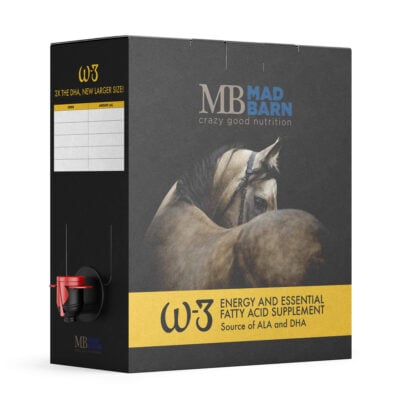
The best sources of DHA and EPA in the equine diet are oils from marine sources, such as fish oil or microalgal oil. Mad Barn’s w-3 Oil is enriched with high levels of microalgal DHA to support healthy homeostatic regulation of inflammation.
Fat Digestion & Absorption
Before increasing the fat content in your horse’s diet, it’s helpful to understand how fats are processed by the horse’s digestive system.
Fat digestion in horses occurs in three phases: [1]
- Mechanical disruption in the mouth and stomach
- Enzymatic digestion in the stomach
- Conversion to a soluble form in the intestines
What's your top priority with your horse's health?

Enter your email to receive your store credit
Mouth & Stomach
Mechanical disruption is the process of breaking down large lipid (fat) droplets into smaller particles so they can be more easily digested. This starts when the horse chews feed in the mouth and continues with the churning of food in the stomach. [1]
Enzymatic digestion begins in the stomach with an enzyme called gastric lipase, which starts breaking down triglycerides into simpler fatty acids. [1]
The presence of free fatty acids liberated by gastric lipase may help to initiate further digestive processes in the small intestine such as: [1]
- Release of gastrointestinal hormones
- Secretion of cholecystokinin
- Cholecystokinin-stimulated bile and pancreatic enzyme release
Small Intestine
Fat arriving in the small intestine from the stomach is neutralized and broken down by bile and pancreatic juice. [1]
Unlike humans and many other species, horses do not have a gall bladder to store bile for release during consumption of high fat meals. Instead, bile is secreted continuously by the horse’s liver. [1]
Bile salts coat lipid droplets and help to increase their surface area to allow for more efficient action of the enzyme lipase. [1]
Pancreatic lipase works to cleave fatty acids from triglycerides, producing two free fatty acids and one monoacylglycerol. [1] The action of lipase is also facilitated by colipase – a protein that helps to anchor lipase to the surface of lipid droplets. [1]
The combined action of these enzymes and cofactors results in mixed micelle formation. These structures are composed of an outer layer containing: [1]
- Bile acids
- Monoacylglycerol
- Lysophospholipids
The inside of mixed micelles contains: [1]
- Nonesterified fatty acids
- Cholesterol
- Fat-soluble vitamins (i.e. A, D, E, and K)
Mixed micelles deliver fatty acids to cells in the lining of the small intestine, where they are absorbed and reassembled into triglycerides and phospholipids that the horse can use. [1]
These triglycerides are then packaged into lipoproteins and released into the bloodstream for distribution to tissues throughout the body, providing a source of energy and supporting various bodily functions.
Fats in the Hindgut
Fat that is not digested and absorbed in the small intestine continues to the hindgut, where it is ultimately excreted in the feces. [1]
Horse manure with a high fat content may have a shiny coating on well-formed fecal balls or appear greasy or grayish. [1] This might be a sign to reduce the fat content of the diet. Consult your veterinarian if your horse’s manure quality changes suddenly.
Excess fat reaching the hindgut can interfere with microbial digestion of fiber, either by coating the fiber and making it inaccessible to microbes or by exerting antimicrobial effects that disrupt the microbial population essential for digestion. [1]
Fat Digestibility
Although horses are not adapted to digest and absorb large amounts of fat, they adjust readily to increased dietary fat if it is introduced gradually. [1]
The digestibility of fat varies based on the source and the amount included in the diet. Estimates of fat digestibility for different types of diets show: [4]
- 55% digestibility for forages
- 81% digestibility for mixed hay and grain diets with added fats
- 95% digestibility for added fats alone
The lower fat digestibility of forages is likely because lipids in plants are contained within plant cell walls, which are primarily broken down in the hindgut. [1]
This means that much of the fat in forages isn’t available for digestion and absorption in the small intestine, where most fat absorption occurs. Instead, it passes to the hindgut and is eventually excreted in manure.
Fat Sources
The fat content in a horse’s diet can vary significantly depending on what they are fed. Forages, such as hay and pasture grasses, generally contain 2 – 4% fat, and cereal grains usually contain between 2 – 5% fat.
In contrast, roasted soybeans contain about 20% fat, flaxseeds contain approximately 40% fat, and oils are nearly 100% fat. Commercial feeds can also contain anywhere from 5 – 14% fat, depending on the specific formulation and intended purpose of the feed. High-performance or weight gain feeds are typically formulated with higher fat content to increase calorie density.
These differences allow for flexibility in diet formulation, enabling horse owners to adjust fat intake based on the specific energy and health needs of their horses.
While there are many ways to raise the fat content of your horse’s diet, most horse owners do so by adding oils or high-fat feeds such as rice bran, flaxseed, or soybean meal.
Oils for Horses
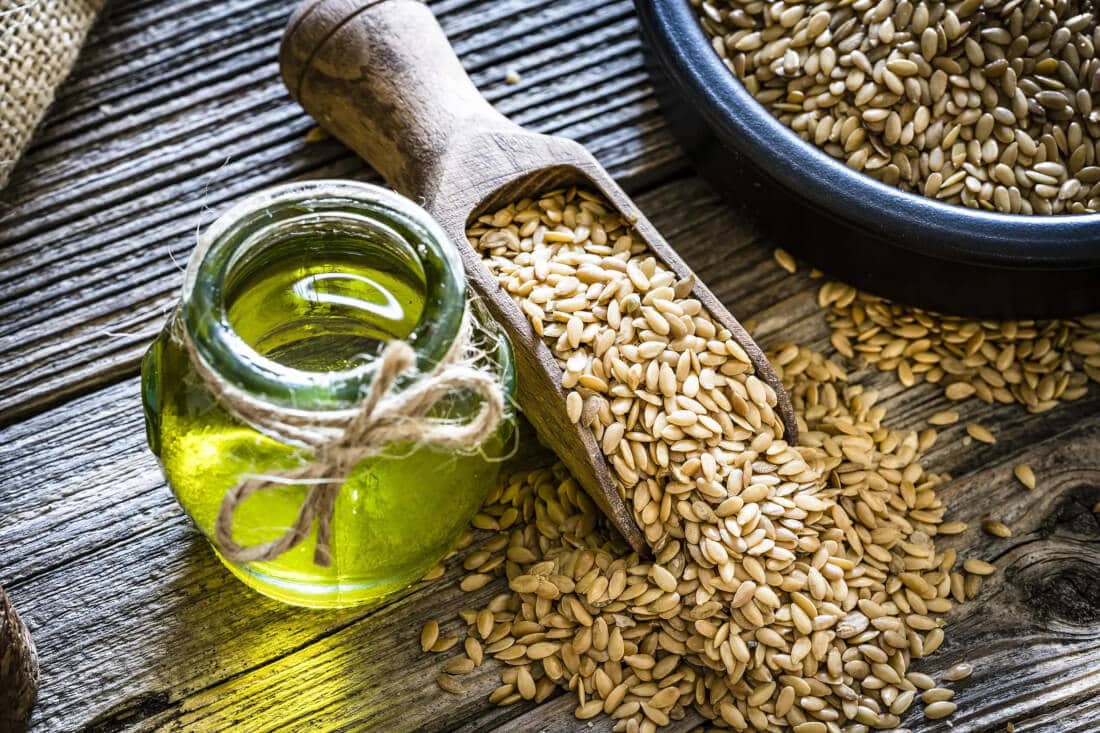
Adding oils to your horse’s diet is one of the easiest ways to increase fat intake. All oils are nearly 100% fat and provide the same calorie content — about 9 calories per gram. However, the types of fatty acids within each oil vary, which influences their specific health benefits for horses.
Common oil supplements used for horses include: [1]
- w-3 Oil
- Camelina oil
- Canola oil
- Coconut oil
- Corn oil
- Cottonseed
- Flax oil
- Fish oil
- Hemp oil
- Olive oil
- Palm oil
- Peanut oil
- Rice bran oil
- Safflower oil
- Sunflower oil
- Soybean oil
- Vegetable oil
For horses that dislike the texture or taste of oils, there are also several dried fat supplements available. These products typically contain 40-100% fat and offer a convenient alternative for adding calories from fat for horses that will not consume oil.
High-Fat Feed Ingredients
In addition to oils, some common commodities also have a high fat content, including: [1]
- Rice bran
- Flax seed
- Whole soybeans
- Sunflower seeds
Some commercial feeds are also balanced to provide a high fat content. These feeds typically range from 5 – 14% crude fat. [1]
Forages
Forages typically have a low fat content, but since they make up the largest portion of most equine diets, they can still contribute a significant percentage of overall fatty acid intake.
To determine the exact fat content of your horse’s forage, you’ll need to submit a hay sample for analysis.
A hay analysis report lists the fat content as ether extract or crude fat. However, this measurement includes waxes and pigments that aren’t true fats, so the actual fat content of dry hay is typically around 80 – 90% of the reported ether extract value.
Requirements & Deficiencies
Horses don’t have a strict dietary requirement for fat. As herbivores, they evolved on a naturally low-fat diet and can obtain enough fat from forages alone.
Because of this, there is no defined daily intake requirement for fat in horses. However, fat is an essential macronutrient, and a diet completely lacking in fat would lead to health issues over time. This is due to the need for essential fatty acids — specific fatty acids that must be provided in the diet because horses cannot synthesize them internally.
Although symptoms of essential fatty acid deficiency have not been observed in horses, even at very low fat intake, other species show signs of deficiency like dry skin and coat, and hair loss. [5]
Currently, the only established essential fatty acid intake for horses is for linoleic acid (an omega-6 fatty acid). The recommended linoleic acid intake is 0.5% of dry matter intake, which equates to about 50 grams (1.8 oz) per day for a typical 1,100 lb (500 kg) horse at maintenance or in light exercise. This requirement is usually met through good-quality forage. [6]
There is no set requirement for the omega-3 fatty acid alpha-linolenic acid (ALA). However, horses grazing on typical grass pastures are expected to consume adequate ALA. [1]
Benefits of Fat in Equine Diets
Research has demonstrated many benefits from moderately increasing fat intake in equine diets.
Fat is a concentrated source of energy, offering more than double the calories per gram compared to carbohydrates. This high energy density makes fat an ideal energy source for horses with elevated calorie requirements. [1]
In addition to its role as an energy source, high-fat diets are associated with various functional health benefits in horses, including improved skin and coat quality, metabolic health, exercise performance, joint support, protection from gastric ulcers, and mood regulation.
Energy Density
Compared to starch-based calorie sources like oats and corn, fat sources provide significantly higher energy density. For example: [7]
- Vegetable oil: 9.2 Mcal/kg
- Corn: 3.9 Mcal/kg
- Oats: 3.3 Mcal/kg
The high energy density of fat makes it easy to significantly increase calorie intake with just a small amount of additional feed. This is especially useful for horses that need to gain weight without increasing overall feed intake.
Additionally, fat is highly digestible and readily absorbed in the gastrointestinal tract, making it an efficient calorie source for horses.
Sugar & Starch Alternative
Traditionally, horses needing extra energy were given additional grain-based feeds to boost calorie intake. These feeds typically provide calories from hydrolyzable carbohydrates, such as sugar and starch.
However, it’s necessary to add calories through sugar and starch with great caution to avoid the metabolic and digestive risks associated with overfeeding these nutrients.
High-starch diets increase the risk of equine gastric ulcer syndrome (EGUS) and can lead to hindgut issues. [8][9] These risks can be reduced by replacing high-starch feeds with calories from fat and fiber. [10]
Replacing sugar- and starch-based feeds with fat and fiber also results in lower glucose and insulin responses to meals, making fat-based diets a good option for horses with metabolic concerns. [11][12]
In this way, fat offers a calorie source that is not only more energy-dense than sugar and starch, but also less likely to contribute to digestive and metabolic issues when introduced gradually.
Reduced Reactivity
Horses fed grain-based diets with high starch content have been shown to demonstrate increased reactivity or “hot” behavior. This may be related to grain-induced changes in the composition of the hindgut microbiome. [13]
By contrast, diets that replace a portion of sugar and starch with fat sources have been shown to reduce stress at rest and reduce the startle response. [14]
In young horses, feeding a high-fat diet instead of a high-sugar and -starch diet has led to positive behavioral responses, including: [15]
- Less frequent cantering
- More time investigating novel objects
- Less time walking away from novel people
- Less time taken to perform handling tests
These findings suggest that high-fat diets may help reduce excitability and promote a calm demeanor in horses.
Exercise Performance
Besides promoting a calm demeanor, there are several other benefits in replacing some of the starch and sugar in performance diets with fat. These include: [14][16][17][18][19]
- Reducing the heat produced during digestion and metabolism, making it easier for horses to dissipate heat generated by exercise
- Sparing glycogen to provide sufficient energy for prolonged exercise
- Improving performance – some studies that noted delayed fatigue, reduced heart and respiratory rate, and faster race times
- Reducing the risk of tying-up in horses with recurrent exertional rhabdomyolysis
Gut Health
There is some evidence that fat supplementation supports gastric health, reducing the incidence and severity of gastric ulcers. This may be due to replacing starch and sugars that are known to promote gastric lesions, by fats coating the stomach lining to protect it from damaging effects of stomach acid, or by beneficial effects of specific fatty acids.
Specifically, corn oil has been shown to be protective against gastric ulcers in one study, but had no effect on ulcers in the squamous region. [20][21]
Benefits of Omega-3 Fatty Acids

While all fat sources provide a dense source of calories, omega-3 fatty acids offer unique benefits beyond those of other dietary fats. Omega-3s play an important role in regulating inflammatory pathways in the horse’s body.
Supplementing with the omega-3 fatty acids DHA and EPA can support homeostatic regulation of inflammation, joint function, respiratory health and coat quality.
Inflammatory Regulation
The omega-3 fatty acids DHA and EPA help the body maintain a healthy, balanced inflammatory response, which can have positive implications for various physiological systems.
Several researchers have investigated the effects of DHA and EPA supplementation on markers of inflammation in horses. These studies typically use fish oil (high in DHA and EPA) and compare it to a plant-based oil like corn oil (which contains ALA) or no added oil.
Since ALA needs to be converted to DHA and EPA to influence the regulation of inflammation, and this process is limited in mammals, DHA and EPA are expected to have more significant effects on anti-inflammatory markers than ALA.
Supplementation with DHA and EPA has been shown to reduce prostaglandin E2 and tumor necrosis factor alpha (TNFa), two signaling molecules that mediate inflammation. This reduction in inflammatory markers has been seen in horses with arthritis and metabolic syndrome. [22][23]
Although some studies show benefit of flaxseed oil (high in ALA) on skin lesions induced by Culcoides extract and endotoxin-induced coagulation, others show no difference between flaxseed oil compared to corn oil (high in LA) on inflammation or lesion areas. [24][25][26]
Overall, these findings suggest that the omega-3’s DHA and EPA are more effective in supporting a balanced inflammatory response compared to ALA.
Joint Health
Studies examining inflammation and joint tissue response to omega-3 fatty acids have shown promising results.
In one study, DHA supplementation improved inflammatory markers in horses with arthritis, although it didn’t impact weight-bearing. However, in a separate study, DHA supplementation was found to improve stride length, indicating possible benefits for joint function and mobility. [22][27]
In another study, horses without joint disease were given either a marine-derived supplement (containing EPA and DHA), flax oil, or no supplement. After 90 days, horses receiving the marine-derived supplement showed a trend toward reduced prostaglandin E2 levels in their synovial fluid — a marker of inflammation — compared to the other groups. [28]
These findings suggest that omega-3 fatty acids, especially those derived from marine sources, may support joint health by reducing inflammation and improving mobility.
Respiratory Health
Omega-3 fatty acid supplementation may also benefit horses with respiratory conditions, such as heaves (a.k.a. Equine Asthma or Recurrent Airway Obstruction), which involve chronic inflammation of the airways.
Studies show that DHA supplementation can support respiratory health by maintaining the regulation of inflammatory pathways. After DHA supplementation, horses showed improved cough scores and lung function, as well as decreased neutrophils — a type of white blood cell that indicates immune system activation.
Coat Quality
Oils and fats help produce sebum, a waxy substance that keeps the coat glossy and acts as a barrier against external irritants. Increasing dietary fat in general will achieve this effect. [29]
However, it is possible that omega-3 supplementation has a greater impact on coat quality. In one study, higher ratio of omega-3 to omega-6 fatty acids was associated with a shinier and smoother coat in horses. [30]
Feeding Considerations
Fat is a rich calorie source and offers additional benefits for equine health. However, there are key factors to keep in mind when adding fat to your horse’s diet.
1. Introduce Fat Slowly
When introducing your horse to an oil or high-fat feed, start gradually. For oils, begin with 30 mL (1 oz) and increase by 15 mL (1/2 oz) every three to four days until you reach the target amount.
For high-fat feeds, start at 25% of the desired feeding rate and increase the amount every three to four days. This gradual approach helps the horse’s digestive system adjust to the added fat.
2. Monitor Manure
When increasing the fat content in your horse’s diet, monitor their fecal output and consistency closely.
Introducing fat too quickly can overwhelm the digestive system, allowing excess fat to reach the hindgut. This may disrupt microbial populations and impair fiber digestion.
If you observe any of the following signs, reduce the amount of oil or fat temporarily, then reintroduce it at a slower rate once fecal consistency returns to normal: [1]
- Well-formed fecal balls with sheen coating
- Greasy or grayish appearance
- Loose or more manure
If changes in manure quality do not improve, consult with your veterinarian.
3. Monitor Body Condition
Fat is very calorie dense, and feeding too much may lead to undesired weight gain. Before introducing fat, make note of your horse’s body condition score and continue to monitor it every few weeks.
If weight gain becomes excessive, consult with an equine nutritionist to adjust the diet accordingly.
4. Work with a Nutritionist
A qualified equine nutritionist can help you determine the right amount and type of fat to feed your horse based on their individual needs, activity level, and health status.
For most horses, fat and fiber are preferred over starch and sugars as energy sources because of their more favorable impacts on digestive function and metabolic health.
However, racehorses and some equine athletes in very heavy work still need grains as a source of starch and sugars to replenish energy stores. [31]
An equine nutritionist can help you find the right balance between energy sources in the diet to optimize your horse’s performance.
Frequently Asked Questions
Here are answers to common questions horse owners ask about feeding fat and oils:
Adding fat to a horse’s diet is a way to increase calorie intake without relying on large amounts of starch and sugar. Fat provides concentrated “cool calories” that can support weight gain, performance energy needs, and metabolic horses that require lower-starch diets. Fat can also support coat shine by increasing natural skin oils. [1]
Yes, horses can digest and absorb dietary fat despite not having a gall bladder. Instead of storing bile, the horse’s liver releases bile continuously into the small intestine, which allows fat digestion to occur effectively. Horses can adapt to higher fat intake over time, but fat must be introduced gradually. Feeding too much fat too quickly can overwhelm digestion, allowing excess fat to reach the hindgut and interfere with fiber fermentation. Changes such as greasy or loose manure can indicate that fat intake is too high. [1]
The best fat source depends on the goal. Oils are nearly 100% fat and are an efficient way to add calories. Common options include canola, soybean, sunflower, flax, or camelina oil. High-fat feeds such as rice bran, flaxseed, and whole soybeans can also increase dietary fat while adding other nutrients. [1]
Omega-3 fats influence inflammatory signaling and can support joint and respiratory health. Plant oils such as flax and camelina provide ALA, which must be converted to EPA and DHA, and this conversion is limited in mammals. Marine-derived oils and microalgal oils provide EPA and/or DHA directly, which are more biologically active for regulating inflammation. [3]
The appropriate amount of oil to feed your horse depends on body weight, workload, and nutritional goals. Oil should always be introduced gradually, starting at about 30 mL (1 oz) per day and increasing every few days while monitoring manure consistency and body condition. For an average 500 kg (1,100 lb) horse that is underweight and needs to gain weight, intake may be increased to as much as 250 mL (8 oz) per day when done gradually and under the guidance of a veterinarian or equine nutritionist. Feeding rates should be adjusted if signs of digestive upset or excessive weight gain occur. [1]
Fats are considered “cool calories” because they provide concentrated energy without causing the rapid increases in blood glucose and insulin associated with high-starch or high-sugar feeds. When fat replaces a portion of grain in the diet, energy is supplied more steadily, which may help reduce excitability or “hot” behavior in some horses. This effect is most apparent when fat and fiber are used instead of starch, rather than simply adding fat on top of an already energy-dense ration. [13][14]
Horses can consume excessive fat if it is added too quickly or fed in amounts that exceed their ability to digest and utilize it. Signs of too much fat include manure with a greasy or gray appearance, fecal balls with an oily sheen, looser manure, and unintended weight gain. These signs indicate that fat digestion is incomplete or that total calorie intake is too high. Reducing the fat level and reintroducing it more gradually, while balancing the overall diet, can help restore normal digestion. [1]
The best way to put weight on a horse is to start with a forage-first approach and then add calories in a controlled, digestible form. Horses should have consistent access to good-quality hay or pasture, as forage supports gut health and allows safe increases in intake. If additional calories are needed, prioritize fat and highly fermentable fiber sources such as oils, beet pulp, or alfalfa rather than large amounts of grain. Fat provides concentrated calories without increasing starch and sugar, reducing the risk of digestive upset. Any dietary changes should be introduced gradually, and body condition should be monitored regularly to ensure weight gain is steady and healthy.
Summary
While horses do not have a specific nutritional requirement for fat, adding fat to the diet can support certain health benefits, including improved coat quality, metabolic health, digestive function, and more. Fat is a dense source of calories and is useful for horses with higher energy requirements or those that need to gain weight.
- Though horses do not naturally consume a high-fat diet, they can adapt to efficiently digest and absorb increased fat intake when introduced gradually
- Forage has relatively low fat content, but it is typically a good source of the essential omega-3 fatty acid alpha-linolenic acid (ALA)
- Replacing a portion of grain-based feeds with fat supplements can help reduce the sugar and starch content of the diet, potentially improving excitability, blood glucose regulation and hindgut health
- Fat can be incorporated into the diet in various forms, including oils, dried fat supplements, and high-fat feeds. Consult a nutritionist to determine the most effective way to add fat while maintaining a balanced diet
- Fat supplements with the omega-3 fatty acids EPA and DHA support additional benefits for joint health, respiratory function and the normal homeostatic regulation of inflammation
References
- Geor, R.J. et al. Chapter 7: Fats and Fatty Acids. Equine Applied and Clinical Nutrition: Health, Welfare and Performance. 2013.
- Ravisankar, P. et al. The Comprehensive Review on Fat Soluble Vitamins. Journal of Pharmacy. 2015.
- Hess, T. and Ross-Jones, T. Omega-3 fatty acid supplementation in horses. R Bras Zootec. 2014.
- Kronfeld, D.S., et. al. Fat digestibility in Equus caballus follows increasing first-order kinetics. Journal of Animal Science. 2004.
- Sallmann, H.P. et al. Metabolic consequences of feeding ponies with marginal amounts of fat. InProc. 12th Equine Nutr. Physiol. Symp. 1991.
- National Research Council Chapter 3: Fats and Fatty Acids. Nutrient Requirements of Horses. 2007.
- National Research Council Chapter 16: Nutrient Requirements, Feedstuff Composition, and Other Tables. Nutrient Requirements of Horses. 2007.
- Luthersson, N., et. al. Risk factors associated with equine gastric ulceration syndrome (EGUS) in 201 horses in Denmark. Equine Veterinary Journal. 2010.
- Colombino, E., et. al. Gut health of horses: effects of high fibre vs high starch diet on histological and morphometrical parameters. BMC Veterinary Research. 2022.
- Böhm, S., et. al. The impact of feeding a high-fibre and high-fat concentrated diet on the recovery of horses suffering from gastric ulcers. Pferdeheilkunde. 2018.
- Williams, C.A., et. al. Plasma glucose and insulin responses of Thoroughbred mares fed a meal high in starch and sugar or fat and fiber. Journal of Animal Science. 2001. View Summary
- Zeyner, A., et. al. Glycaemic and insulinaemic response of quarter horses to concentrates high in fat and low in soluble carbohydrates. Equine Veterinary Journal Supplement. 2006. View Summary
- Bulmer, L.S., et. al. High-starch diets alter equine faecal microbiota and increase behavioural reactivity. Scientific Reports. 2019.
- Redondo, A.J., et. al. Fat diet reduces stress and intensity of startle reaction in horses. Applied Animal Behaviour Science. 2009.
- Nicol, C.J., et. al. The effects of diet and weaning method on the behaviour of young horses. Applied Animal Behaviour Science. 2005.
- Geor, R.J. and Harris, P.A. Nutrition for the equine athlete: above and beyond nutrients alone. In: Equine Sports Medicine & Surgery. Saunders. 2014.
- Pagan, J.D. et al. Effects of fat adaptation on glucose kinetics and substrate oxidation during low-intensity exercise. Equine Vet J. 2010. View Summary
- Mesquita, V.S. et al. Effect of Non-Structural Carbohydrate, Fat and Fiber Intake on Glycogen Repletion Following Intense Exercise. Equine Vet J. 2014.
- Holland, J.L. et al. Behavior of horses is affected by soy lecithin and corn oil in the diet. J Anim Sci. 1996. View Summary
- Cargile, J.L. et al. Effect of Dietary Corn Oil Supplementation on Equine Gastric Fluid Acid, Sodium, and Prostaglandin E2 Content before and during Pentagastrin Infusion. J Vet Intern Med. 2008.
- Frank, N. et al. Effects of dietary oils on the development of gastric ulcers in mares. Am Vet Med Assoc. 2005.
- Manhart, D.R., et. al. Markers of Inflammation in Arthritic Horses Fed Omega-3 Fatty Acids. The Professional Animal Scientist. 2009.
- Elzinga, S.E. et al. Effects of Docosahexaenoic Acid–Rich Microalgae Supplementation on Metabolic and Inflammatory Parameters in Horses With Equine Metabolic Syndrome. J Equine Vet Sci. 2019.
- Henry, M.M., et. al. Influence of an omega-3 fatty acid-enriched ration on in vivo responses of horses to endotoxin. American Journal of Veterinary Research. 1991.
- O'Neill, W., et. al. Flaxseed (Linum usitatissimum) supplementation associated with reduced skin test lesional area in horses with Culicoides hypersensitivity. Canadian Journal of Veterinary Research. 2002. View Summary
- Friberg, L. Treatment of Culicoides hypersensitive horses with high-dose n-3 fatty acids: a double-blinded crossover study. Veterinary Dermatology. 1999.
- Woodward, A.D., et. al. Supplementation of dietary long-chain polyunsaturated omega-3 fatty acids high in docosahexaenoic acid (DHA) increases plasma DHA concentration and may increase trot stride lengths in horses. Equine and Comparative Exercise Physiology. 2007.
- Ross-Jones, T. et al. Effects of Omega-3 Long Chain Polyunsaturated Fatty Acid Supplementation on Equine Synovial Fluid Fatty Acid Composition and Prostaglandin E2. J Equine Vet Sci. 2014.
- Kirby, N.A. et al. Dietary fats and the skin and coat of dogs. Am Vet Med Assoc. 2007.
- Goh, Y. et al. Plasma n-3 and n-6 fatty acid profiles and their correlations to hair coat scores in horses kept under Malaysian conditions. J Vet Malaysia. 2004.
- Valberg, S.J. et al. Novel Expression of GLUT3, GLUT6 and GLUT10 in Equine Gluteal Muscle Following Glycogen-Depleting Exercise: Impact of Dietary Starch and Fat. Metabolites. 2023.