English

Selecting the right hay is one of the most important decisions horse owners make when planning a feeding program. The ideal forage for your horse depends on their activity level, health condition, and specific nutritional needs.
You may see hay labeled as first or second cutting, which refers to when the hay was harvested during the growing season. These terms give a rough idea of how mature the plants were at harvest and how nutritious the hay might be.
First cutting hay is traditionally harvested in the spring and tends to be coarse and high in fiber. This is because the plants are more mature and have a higher concentration of structural carbohydrates. First-cutting hay is a good choice for easy keepers or horses that require lower-calorie diets, though it is often less digestible and palatable.
Second-cutting hay often has a finer texture, with higher energy and leaf content. This makes it softer, more palatable, and better suited to horses with higher nutritional demands, such as performance horses, breeding stock or seniors.
However, the nutritional value of hay varies with plant maturity, harvest timing, and forage species. For this reason, cutting order is not a reliable indicator of hay quality. A hay analysis is needed to determine energy, protein, fiber, and mineral levels to ensure it meets your horse’s nutritional needs.
Read on to learn about the typical nutrient profiles of first- and second-cutting hays, what causes these values to vary, and why testing your hay is important to ensure it meets your horse’s nutritional needs.
Hay Cuttings and Horses
Pasture grass is cut and made into hay to preserve forage so it can be fed to horses year-round, especially when fresh pasture isn’t available.
During the growing season, grasses or legumes are mowed, dried, and baled at specific stages of growth to maintain their nutritional value for future use.
First Cutting
The first cutting represents the initial harvest of the field, and usually occurs in late spring or early summer — depending on regional climate and forage species. At this stage, the plants are nearing maturity and begin to produce seed heads as part of their natural reproductive cycle. [1]
This growth pattern leads to hay with thicker stems and lower leaf-to-stem ratio, contributing to higher fiber content, lower protein content and reduced digestibility.
While it may be less nutrient-dense, this cutting is often more abundant and offers structural fiber that supports gut motility.
Second Cutting
After the first harvest, the plants continue to grow, drawing on stored energy reserves in the roots. A second cutting can generally be taken 6 – 8 weeks later, often in mid to late summer, depending on the weather and regrowth rate.
These later cuttings tend to be leafier, finer-stemmed, and more nutrient-dense, with higher protein content, greater palatability, and improved digestibility.
Additional Cuttings
In many regions, third and even fourth cuttings are possible, especially in areas with long, temperate growing seasons or those with consistent irrigation. However, each successive cutting generally yields less volume and requires careful management to sustain plant health and quality.
What's your top priority with your horse's health?

Enter your email to receive your store credit
Timing of Cutting
The timing of each cutting impacts both forage quality and yield. Cutting too early may limit yield, while delaying harvest risks over-mature plants with declining nutritional value.
Factors that determine optimal cutting times are: [2][3][4][5]
- Plant maturity: The stage of growth at harvest has the greatest effect on hay’s nutrient profile. Younger plants are more tender, digestible, and higher in protein and energy, whereas mature plants become more fibrous and less digestible.
- Moisture content: For safe storage, hay must be dried to 10 – 15% moisture before baling. Cutting when the forage is too wet can result in mold, spoilage, or spontaneous combustion due to microbial activity and heat.
- Weather conditions: Ideally, several consecutive dry, sunny days are needed after cutting to allow proper drying in the field. Rain or excessive humidity during this period can reduce quality, leach nutrients, and increase the risk of spoilage.
- Time of day: Cutting later in the day, after photosynthesis has increased sugar levels in the plants, can slightly improve palatability and energy content compared to hay cut early in the morning. Conversely, hay that is harvested in the morning is better suited to metabolic horses that need lower levels of hydrolysable carbohydrates (HC).
Factors Influencing Nutritional Value
The nutritional value of first and second-cutting hay is influenced by several factors including, but not limited to, plant maturity at harvest, timing of cutting, and forage species.
These factors affect nutrient levels such as protein, fiber, and energy, ultimately determining how suitable a particular hay is for different types of horses.
1) Plant Maturity
The cutting of hay refers not only to the timing of harvest but also to its nutrient composition, which is largely influenced by forage maturity at the time of harvest. As plants progress in the growing season from vegetative stages (early maturity) to reproductive phases (late maturity), they undergo significant changes in nutrient content. [2]
First-cutting hay is often more mature at harvest because it grows during the cooler spring months when growth is slower, and cutting may be delayed to achieve a higher yield.
In late maturity, plants develop more structural components, like lignin and cellulose, in preparation for seed production. This reduces digestibility and protein content, while increasing fiber fractions such as acid and neutral detergent fibers. [3]
By contrast, second-cutting hay grows rapidly under warmer summer conditions. It tends to be less mature, leafier, softer and more nutrient dense compared to first-cutting hay. However, second cuttings are also more susceptible to weather damage, weed encroachment, and inconsistent regrowth depending on soil fertility and moisture. [2]
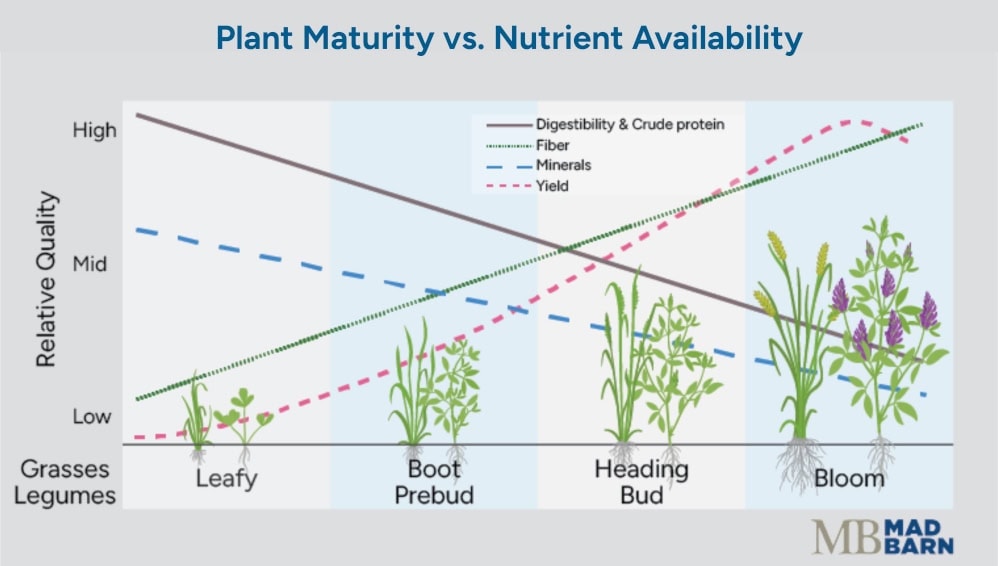 Illustration: Dr. Ana Mesa, PhD
In early maturity, plants are rich in digestible nutrients, particularly non-soluble carbohydrates, soluble proteins, and highly fermentable fibers. They contain more leaves and fewer stems, making them more palatable and digestible for horses.
2) Harvest Timing
The time of day hay is harvested can also affect its nutrient content, particularly the concentration of hydrolyzable carbohydrates (HC; sugar and starch). [6]
During daylight hours, photosynthesis increases HC accumulation in plant tissues with peak levels occurring in the late afternoon. On the other hand, respiration at night causes plants to consume stored sugars, reducing HC concentrations by early morning. [2]
Given this, hay harvested in the afternoon tends to contain greater sugar content than morning-cut hay. This is particularly important to note when producing hay for horses prone to metabolic issues like Equine Metabolic Syndrome (EMS) or Insulin Resistance (IR). [7]
While horse hay is not usually marketed by the time-of-day it is cut, this principle continues to inform strategic feeding decisions, particularly when trying to reduce dietary HC intake. It also highlights the importance of using a nutrient analysis to determine if a particular hay is appropriate for your horse.
3) Forage Species
The main forage types commonly fed to horses include:
These different hays differ considerably in their nutrient profiles.
Legumes tend to have a higher concentration of crude protein and lower fiber content compared to grasses harvested at similar stages of growth. These characteristics make legumes more nutrient dense and easier to digest. However, grasses tend to dry more consistently throughout a batch, making them less prone to mold during hay production.
Immature legumes, or those from second cuttings, can easily exceed the nutritional needs of many horses, potentially contributing to excess body condition or imbalanced mineral intake. [8]
Later-maturity legumes, particularly first-cutting, tend to offer a more moderate nutrient supply while still being more digestible than most grasses. However, when harvested early and managed well, second cutting grass hay can have a similar nutritional profile to that of first cutting alfalfa. [2]
Like pure grass and legume hays, the first cutting of mixed hays tends to be higher in fiber and lower in protein and energy compared to second cuttings. Further, the nutrient profile of mixed hays typically falls between that of grasses and legumes. This balance allows mixed hay to meet a broader range of equine needs without over- or under-supplying nutrients.
Common Forage Nutrient Profiles
Table 1. General differences between mature and immature hays
| Hay Type | Energy | Protein | Fiber | Best For |
|---|---|---|---|---|
| Mature Grass Hay | Lower | Lower | Higher | Easy keepers or horses needing fewer calories |
| Immature Grass Hay | Higher | Higher | Lower | Performance horses or young, growing horses |
| Mature Legume Hay | Moderate | Moderate | Moderate | Horses needing moderate calories and protein |
| Immature Legume Hay | Highest | Highest | Lowest | Horses needing weight gain or high energy (e.g., lactating mares) |
| Mature Mixed Hay | Moderate | Moderate | Higher | Horses needing balanced energy with more fiber |
| Immature Mixed Hay | High | High | Moderate | Active horses needing more calories but still some fiber |
Table 2. Nutrient composition of mature and immature grass, legume and mixed (grass + legume) hays. [9]
| Hay Type | Dry Matter (DM) % as fed | Digestible Energy (DE) Mcal/kg DM | Crude Protein (CP) % DM | Acid Detergent Fiber (ADF) % DM | Neutral Detergent Fiber (NDF) % DM |
|---|---|---|---|---|---|
| Mature Grass Hay | 84.4 | 2.04 | 10.8 | 41.6 | 69.1 |
| Immature Grass Hay | 84.0 | 2.36 | 18.0 | 31.4 | 49.6 |
| Mature Legume Hay | 83.8 | 2.21 | 17.8 | 39.5 | 50.9 |
| Immature Legume Hay | 84.2 | 2.62 | 20.5 | 28.6 | 36.3 |
| Mature Mixed Hay | 89.7 | 2.11 | 18.2 | 40.1 | 56.0 |
| Immature Mixed Hay | 83.1 | 2.46 | 19.7 | 30.8 | 45.4 |
Hay Cutting Selection
Since nutrient profiles differ between cuttings, horses may benefit from different hay cuttings depending on their physiological needs, exercise level, age, and metabolic status.
Benefits of First Cutting Hay
Due to its higher fiber and lower digestibility, first cutting hay is generally more suitable for:
- Easy keepers (horses prone to weight gain on low-calorie diets)
- Minis and ponies
- Horses with existing metabolic issues
- Horses on stall rest with low caloric demands
First cutting hay provides ample fiber to encourage gut motility and satiety without contributing excess calories, making it an appropriate option for those that are prone to weight gain. Its coarse texture may help slow down a horse’s rate of eating, promoting healthy digestion while reducing the risk of overeating and metabolic issues associated with excessive caloric intake.
However, overly mature first cutting hay can be stemmy and less palatable, which may reduce voluntary intake. Some horses are prone to developing a hay belly or bloating on mature forage.
While most horses can manage coarser forage, stalky or overly mature hay can be difficult to chew and digest. This can be problematic for senior horses, as poor breakdown of hay may reduce nutrient absorption and strain the digestive system, leading to difficulty maintaining body condition.
Benefits of Second Cutting Hay
Second cutting hay generally has softer texture, higher digestibility, and a richer protein profile. This makes second cutting hay suitable for horses with elevated nutritional needs such as:
- Horses in moderate to heavy work
- Broodmares
- Growing foals
- Senior horses with dental and/or weight management issues
- Hard keepers needing extra calories
The elevated nutrient content of second cutting hay helps maintain muscle mass, supports tissue repair and recovery, and provides energy to fuel athletic performance and stamina. Additionally, its palatability encourages greater forage intake, which can help performance horses and hard keepers meet their elevated caloric needs without relying solely on concentrates.
It’s important to note that second cutting hay should be fed with caution to metabolically sensitive horses due to its higher caloric density and potentially elevated hydrolyzable carbohydrate (HC) content. Horses with abnormal insulin responses are more susceptible to laminitis and other metabolic complications when consuming energy-rich forages. [10]

The Value of Hay Analysis
While knowing the cutting of hay offers general insights about texture and expected nutrient ranges, it does not guarantee the specific nutritional composition of any given bale.
For example, an early harvested first cutting may contain more protein and digestible energy than a late, over mature second cutting. Because of this variability, cutting alone is not a reliable indicator of hay’s nutritional value.
Regardless of whether hay is first or second cutting, its nutrient profile can only be accurately determined through laboratory testing.
A standard hay analysis typically measures:
- Digestible Energy (DE): Indicates how much energy the horse can extract from the hay, important for weight management and performance.
- Crude Protein (CP): Total protein supplied by the forage; essential for muscle maintenance, tissue repair, and overall growth.
- Acid Detergent Fiber (ADF): Reflects the indigestible portion of the forage; higher ADF means lower digestibility.
- Neutral Detergent Fiber (NDF): Indicates bulkiness and how much the horse can consume; high NDF can limit intake.
- Hydrolyzable Carbohydrates (HC): Includes simple sugars and starch, crucial for horses with metabolic conditions like insulin resistance or laminitis.
- Moisture Content / Dry Matter (DM): Helps calculate nutrient content on a dry-matter basis for accurate ration balancing.
This information is essential for horses with specific dietary needs or restrictions, including easy keepers, performance horses, and those with metabolic conditions.
Finally, all hays — regardless of cutting, maturity, or species — are deficient in essential micronutrients, including vitamins and minerals. Most hays are deficient in vitamins A and E, particularly after extended storage, as these nutrients degrade over time. [11]
Hay also lacks optimal levels of biotin and other B-vitamins, which are essential for hoof health, energy metabolism, coat quality, and mood stability.
Likewise, essential trace minerals such as copper, zinc, and selenium are often present in inadequate or imbalanced amounts. Sodium is also typically low in forage, requiring additional supplementation to meet a horse’s daily needs.
Because hay alone cannot meet all of your horse’s nutrient requirements, a balanced vitamin and mineral supplement is essential for maintaining optimal health, performance, and metabolic function.
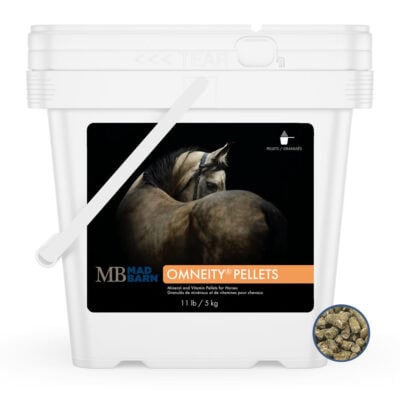
Mad Barn’s Omneity® is specifically formulated to address common deficiencies in the equine diet. Omneity® provides 100% organic trace minerals, B-vitamins (including biotin), amino acids, digestive enzymes, and yeast to support hoof strength, coat quality, energy metabolism, immune function, and gut health — all without unnecessary fillers or added sugars.
Frequently Asked Questions
Here are some frequently asked questions about the differences between feeding first and second cutting of hay to horses:
First‐cutting hay is harvested in spring, is coarser with more stem and higher fiber, making it lower in calories and digestibility. Second‐cutting hay is harvested later, is leafier with finer stems, and contains more protein and energy.
First‐cutting hay is ideal for easy keepers, minis, ponies, metabolic-prone horses, and horses on stall rest that require lower‐calorie diets and steady gut motility without excess energy.
Second‐cutting hay suits performance horses, broodmares, growing foals, senior horses with dental or weight issues, and hard keepers needing higher protein and energy for maintenance and recovery.
Harvest timing determines plant maturity: early cuts yield tender, nutrient-dense forage, while delayed cuts yield fibrous, lower-quality hay. Afternoon harvests often have higher non‐structural carbohydrates than morning harvests due to daily photosynthesis cycles.
Cutting order alone doesn’t guarantee nutrient content. A hay analysis measures digestible energy, crude protein, fiber fractions (ADF/NDF), and carbohydrate levels, ensuring the forage matches each horse’s specific dietary needs.
Legumes (e.g., alfalfa) are higher in protein and lower in fiber, while grasses (e.g., timothy) dry more consistently and have moderate nutrient profiles. Mixed hays offer a balance, with nutrient levels between pure grass and legume hays.
Summary
Hay cuttings refer to the sequential harvests taken from the same field within a growing season. Knowing the cutting of a batch of hay can help owners decide if it is the right choice for their horses.
- First-cutting hay tends to be coarser with higher fiber and lower digestibility, making it suitable for easy keepers and metabolic-prone horses
- Second-cutting hay is leafier, softer, and higher in protein and energy, benefiting performance horses, broodmares, and seniors
- Harvest timing and forage species further influence energy, protein, and fiber levels
- While hay cutting gives some indication of the quality, a hay analysis is the only way to accurately assess the nutrient profile
- In addition to hay, horses require balanced supplementation of key micronutrients, including vitamins and minerals
References
- Development Phases Forage Information System.
- Ball. D. et al., Understanding Forage Quality. American Farm Bureau Federation Publication. 2001.
- Burns. J. C. et al., Changes in Forage Quality, Ingestive Mastication, and Digesta Kinetics Resulting from Switchgrass Maturity. Journal of Animal Science. 1997.
- Martinson. K. et al., The Effect of Harvest Moisture and Bale Wrapping on Forage Quality, Temperature, and Mold in Orchardgrass Hay. Journal of Equine Veterinary Science. 2011.
- Zamudio. D. et al., Factors Affecting Nutrient Losses in Hay Production. Grass and Forage Science. 2024.
- Geor. R. J., Pasture-Associated Laminitis. The Veterinary Clinics of North America. Equine Practice. 2009. View Summary
- Harris. P. A. et al., Review: Feeding Conserved Forage to Horses: Recent Advances and Recommendations. Animal: An International Journal of Animal Bioscience. 2017. View Summary
- Selecting and Storing Hay.
- Nutrient Requirements of Horses: Sixth Revised Edition. National Academies Press, Washington, D.C. 2007. View Summary
- Argo. C. M. et al., Considerations for the Use of Restricted, Soaked Grass Hay Diets to Promote Weight Loss in the Management of Equine Metabolic Syndrome and Obesity. Veterinary Journal (London, England: 1997). 2015. View Summary
- Monroe. C. F. et al., The Loss of Nutrients in Hay and Meadow Crop Silage during Storage. Journal of Dairy Science. 1946.