English


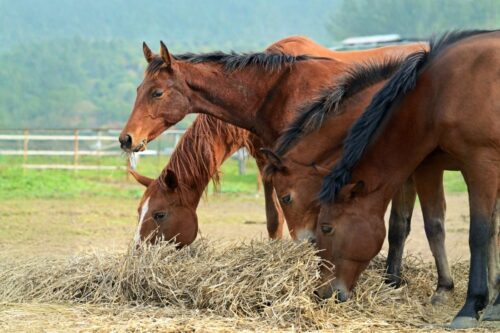
The Norwegian Fjord is one of the world’s oldest horse breeds. The breed is easily recognizable today by its dun colouring and primitive markings that trace back to prehistoric horses. Although they resemble wild Przewalski horses, they are not closely related.
Fjord horses served as Viking war horses and were used for farmwork after their ancestors migrated to western Norway thousands of years ago. Their strength, unique looks, and willing temperaments created widespread interest in the breed.
Modern Fjord horses have a light draft build, but genetic diseases that commonly affect draft horses rarely occur in the breed’s pure bloodlines. However, certain traits that enabled their ancestors to thrive in harsh climates may now contribute to an elevated risk of health issues among modern equines.
This breed profile will discuss the history, characteristics, health problems, and nutritional needs of the Fjord breed. Keep reading to learn more about caring for and feeding Fjord horses.
Fjord Horse History
With a long recorded history of pure breeding, archeological evidence suggests modern Fjords still closely resemble their ancient ancestors. The breed originated in the mountains of western Norway and continues to hold an important place in Norwegian culture today.

Origin
The Fjord’s ancestors first migrated to Norway over 4,000 years ago. Archeological excavations from Viking burial sites suggest these horses have been domesticated and selectively bred for over 2,000 years. [1]
Researchers are still investigating the origin of the Fjord’s ancestors. One study found genetic links between Norwegian Fjords and native breeds from Central Asia, suggesting Eastern horses contributed to founding populations in Northern Europe. [2]
The Fjord has similar colouring and markings to the wild Przewalski horses of Mongolia. However, mitochondrial DNA studies revealed Przewalski horses last shared a common ancestor with domestic breeds over 500,000 years ago. [3]
Viking stone carvings from 1200 BC depict warriors riding stallions identifiable as Fjords into battle. The breed would play an important role in Viking culture until the end of the Viking Age in the 11th century. [1]
Historic Use
The Vikings rode Fjords as war mounts in military operations throughout Europe. Fjords introduced by Viking invaders in Iceland and Scotland significantly influenced the development of the Highland Pony and Icelandic horse.
Archeological digs of Viking burial sites revealed Fjords were often slaughtered and buried alongside deceased warriors throughout the Viking Age. The horse played an important role in Scandinavian society, becoming a central figure of Norse religion and a symbol of fertility. [4]
Following the conclusion of the Viking Age, Fjord horses shifted to serve primarily as agricultural animals in the Middle Ages. These versatile horses were tasked with carrying riders and heavy equipment along narrow roads and laboring in rugged, rocky fields. Occasionally, horses rode in rowboats to traverse the Fjords from which they derived their name.
These conditions required strong horses with quiet temperaments. Thousands of years of selective breeding preserved the primitive type until cross-breeding in the late 1800s threatened the breed. [1]
During this period, breeders crossed Fjord horses with Doles, another native Norwegian breed. Breeders aimed to increase the size and strength of Fjords for farming with bigger and sturdier Doles. But the crosses had poor temperaments and undesirable colouring.
Most modern Fjords can trace their ancestry to Njal 166, a pure Fjord stallion born in 1891 that gained popularity when breeders began efforts to eradicate Dole blood from the breed. [1]
Although the official Fjord studbook was established in the early 1900s, the breed itself stands as a significant emblem of Norwegian history spanning thousands of years.
Fjords initially garnered recognition in North America during the 1950s, and popularity has now spread worldwide, becoming a beloved presence in equine communities around the globe.
Breed Registry
The Norwegian Fjord Horse Registry (NFHR) is the official breed registry for Fjords in North America. In addition to maintaining a registry database, the NFHR promotes the conservation of Fjord horses through educational programs and breed shows.
Only purebred Norwegian Fjords with verifiable parentage are eligible for registration. The NFHR organizes evaluations for registered horses, but participation is voluntary.
| Breed Summary | |
|---|---|
| Breed Name | Norwegian Fjord |
| Breed Type | Light draft |
| Origin | Western Norway |
| Breed Registry | Norwegian Fjord Horse Registry (NFHR) |
| Average Height | 13.2 – 14.2 hh |
| Average Weight | 880 – 1,100 lb (400 – 500 kg) |
| Common Coat Colors | Brown dun, red dun, gray dun, white dun, yellow dun; primitive markings |
| Conformation | Light draft build, medium head, broad forehead, straight or slightly dished face, arched neck, short-coupled back, deep heart girth, strong bone, sturdy hooves |
| Common Uses | Pleasure driving, dressage, western performance, trail riding, mounted games, therapeutic riding, light draft, pack horse |
| Temperament | Intelligent, willing, friendly, gentle |
| Best For | Beginners, timid riders, families, therapeutic riding, versatile pleasure riders |
| Common Health Concerns | Equine metabolic syndrome, obesity, laminitis, skin irritations, pastern dermatitis, tying-up/PSSM, EDM |
What's your top priority with your horse's health?

Enter your email to receive your store credit
Breed Characteristics
Modern Fjords still closely resemble the Bronze Age horses depicted in ancient Viking carvings. The breed is easily recognizable by its unique colouring and manes.
Fjords are also distinguished by their gentle dispositions and strong conformations that allow them to excel in several disciplines.
Conformation
Fjords have similar conformations to other light draft horse breeds. While these horses generally stand between 13.2 and 14.2 hands tall, they weigh significantly more than pony breeds with equal heights. The average body weight for this breed ranges between 400 – 500 kilograms (880 – 1,100 lb).
Although the breed has heavy muscling, their heads and necks should appear elegant. An ideal Fjord has a medium-sized head, a broad forehead, a straight or slightly dished face, large eyes, small ears, and an arched neck.
Their short-coupled backs, deep heart girths, and well-developed muscling help Fjords pull and haul heavy loads for their size. Straight legs with substantial bone and strong hooves contribute to hardiness and soundness.
Colours
All Fjord horses have dun colouring resulting from dilution genes. Brown dun is the most common coat colour in the breed, but other variations include red dun, gray dun, white dun, and yellow dun. [5]
Fjords are one of a few modern horse breeds that display primitive markings associated with dun dilution genes. Common primitive markings include a dorsal stripe and horizontal stripes on the forearms. Some Fjords also have transverse wither stripes. [6]
Pangare traits are also seen in Fjords. These horses have areas of pale hair around the eyes, muzzle, and underside of the body. White markings on the face or legs are undesirable.
The Fjord’s multi-coloured mane is the breed’s most unique colour trait. Lighter hairs line the outer edges of a dark-coloured center. Owners traditionally cut manes short and trim the hairs in a crescent shape to display the dramatic colour contrast.
Temperament
Selective breeding for bravery and cooperation resulted in the intelligent, willing, and friendly temperaments that exemplify the Fjord breed. While their striking looks draw new fans to the breed, most Fjord owners cherish their horses for their charming personalities.
Their gentle natures and non-intimidating size make the breed suitable for beginners and timid riders. However, regardless of breed, every horse needs appropriate training to become a safe partner.
Disciplines
Fjords are strong horses that can easily carry adult and youth riders. The breed has energetic and smooth gaits for their type, making them versatile pleasure mounts. Their powerful build is also suitable for driving disciplines.
These horses are not a specialized breed. Once bred as all-around working horses for Norwegian farms, modern owners can enjoy their Fjords in nearly every equestrian discipline. Some Fjords continue to work as light draft and pack horses today.
Popular disciplines for Fjords include pleasure driving, dressage, western performance, trail riding, and mounted games. Their gentle dispositions also make Fjords ideal horses for therapeutic riding programs.
Fjord Horse Health
Norwegian Fjords are a generally healthy breed with a long life expectancy when cared for properly. Compared to other light draft breeds, they are less prone to common genetic diseases.
However, these horses do have a risk of metabolic disorders and need careful management to prevent potential health issues, including obesity and laminitis.
Genetic Diseases
The Fjord breed developed separately from other breeds for most of their history. Although considered a light draft horse, Norwegian Fjords are not closely related to modern draft breeds and they do not suffer from genetic diseases commonly found in draft horses.
The GYS1 mutation responsible for Type 1 Polysaccharide Storage Myopathy is found in rates up to 87% in draft breeds. However, one study evaluating the prevalence of PSSM1 in different breeds did not identify the mutation in any sampled Norwegian Fjords. [7]
However, muscle biopsy studies revealed Fjords can still suffer from other types of PSSM and tying up.
The GYS1 mutation responsible for Type 1Polysaccharide Storage Myopathy (PSSM) has been found in draft breeds at rates of up to 87%. However, a study examining the prevalence of PSSM1 in various breeds did not detect the mutation in any of the sampled Norwegian Fjords [7].
Nonetheless, muscle biopsy studies have revealed that Fjords can still be susceptible to other forms of PSSM and may experience episodes of tying up, a condition affecting muscle function during exercise [8].
Additionally, Fjord horses are susceptible to congenital disorders similar to those seen in other breeds, such as equine degenerative myeloencephalopathy (EDM), a condition that affects the neurological system. [8]

Health Problems
The robust health of Norwegian Fjord horses can be attributed, in part, to the challenging conditions their ancestors evolved to endure. However, their slow metabolism, which proved advantageous in sparse vegetation, is an adaptation that can elevate the risk of metabolic syndrome in these horses.
Equine metabolic syndrome (EMS) is a health condition characterized by insulin resistance, hyperinsulinemia, and hypertriglyceridemia. Horses with EMS are more susceptible to developing laminitis, a debilitating inflammatory condition that affects the hooves. [9]
The Fjord horse breed also has naturally thick hair and dense winter coats, which can trap debris and sweat against the skin and contribute to a high incidence of skin irritations.
Furthermore, Fjords have light feathering on their lower legs, which can increase the risk of pastern dermatitis. [10]
Care and Management
Proper care is essential for Norwegian Fjord horses to lead long and healthy lives. If you are new to horse ownership, read our beginner’s guide to basic horse care to ensure that you’ve got the basics covered.
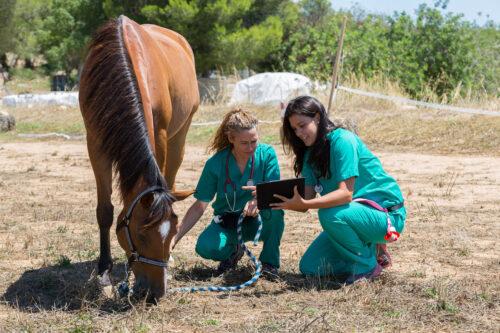
Work closely with your veterinarian to establish a comprehensive preventative wellness program that includes regular scheduled vaccinations, deworming, and dental exams.
Daily grooming is crucial to maintaining the thick coats, manes, and tails of Fjord horses in good condition. Proper grooming can also reduce the risk of certain skin conditions.
While Fjords generally have strong hooves, quality farrier care is necessary to ensure optimal hoof balance and soundness. An experienced farrier can also recognize early warning signs of hoof problems and related health conditions.
Fjords are hardy horses that thrive living outdoors in cold climates, but all horses need adequate shelter from inclement weather. If your Fjord primarily lives inside, regular turnout is imperative to help meet your horse’s mental, physical, and social needs.
Light exercise during turnout also supports bone strength and soft tissue health. However, unrestricted turnout on grass pastures can increase the risk of pasture laminitis in Fjord horses.
Regular training provides enjoyable bonding time and mental stimulation for most Fjords. Still, they do not require intense exercise to manage their energy levels. Draft-type horses with heavy muscling are also susceptible to overheating during training on hot days.
Careful attention to their needs and appropriate management can ensure the well-being of these remarkable horses.
Fjord Horse Nutrition
Nutrition is key in keeping Fjords healthy and managing their risk of metabolic disorders. Owners should work with their veterinarian and a qualified equine nutritionist to formulate the best diet for their Fjord.
Weight Maintenance
Norwegian Fjords are known as easy keepers and they generally maintain their body condition well on a forage-based diet. However, they can quickly gain weight on high-energy diets, requiring careful attention to prevent excessive weight gain.
Obesity is a significant concern for Fjords due to their efficient metabolism and propensity for metabolic disorders. It is crucial to keep your horse at an appropriate weight to reduce their risk of Equine Metabolic Syndrome and laminitis. [9]
Fjord owners can sometimes misinterpret excess body fat as the characteristic heavy muscling associated with the breed’s draft-like build. Learning how to score your horse’s body condition is instrumental in maintaining your Fjord horse at a healthy weight.
Sample Diet
The following sample diet is intended for a mature 450 kg (1000 lb) Fjord horse with normal body condition at maintenance (not exercising).
| Feed | Amount per day |
|---|---|
| Mature Grass Hay (8% crude protein) | Free choice |
| Salt | 30 g (2 tbsps) |
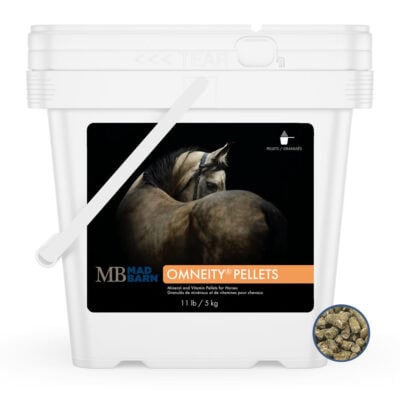
| Omneity® Pellets | 200 g (2 scoops) |
| w-3 oil | 60 ml (2 oz) |
| Diet Analysis* | |
| Digestible Energy (% of Req) | 106% |
| Protein (% of Req) | 126% |
| ESC + starch (% Diet) | 6.9% |
This diet analysis is based on NRC requirements (Req) and an average forage analysis. Submit a hay sample and your horse’s diet for a more precise analysis.
Due to the lower level of omega-3 fatty acids in hay vs pasture, it is beneficial to add a source to hay-based diets. Mad Barn’s w-3 oil is added to provide the omega-3 DHA which supports joint, respiratory and skin health.
In this sample feeding plan, Mad Barn’s Omneity® is supplemented to provide essential vitamins, minerals, and amino acids that are commonly deficient in the equine diet. Feeding Omneity® ensures your horse receives all the key nutrients required to support hoof health, coat quality, metabolic function, and more. [11]
Omneity® is a highly concentrated nutritional supplement designed to balance forage-based diets without adding extra calories unlike commercial feeds or ration balancers. This makes it an ideal choice for easy keeper breeds, such as Fjord horses.
Forage
A forage-based feeding program is the best way to support your horse’s overall health. It is recommended that horses consume approximately 2% of their body weight in forage on a daily basis.
Fjord horses have a similar height to pony breeds, but they tend to weigh more compared to similarly sized ponies. An average-sized 14-hand Fjord weighs around 450 kg (1000 lb).
To meet their daily nutrition needs, an average-sized Fjord would require approximately 20 pounds (9 kilograms) of hay per day. [11]
Ideally, allow your horse unrationed access to forage throughout the day to prevent boredom and reduce periods with an empty stomach. Free-choice forage may help mitigate the risk of gastric ulcers and stereotypic behaviors in horses.
Similar to other easy-keeper breeds, most Fjord horses thrive on average-quality, low-starch and sugar grass hay. Higher-calorie hays should be approached with caution as they may lead to weight gain and an elevated risk of laminitis in Fjords. [12]
To mitigate the risk of weight gain when allowing free-choice access to forage or pasture turnout, you can use a slow feeder or grazing muzzle. These devices help slow down your horse’s forage consumption while still providing continuous access to roughage. [11]
It is especially important to pay attention to intake in breeds with a genetic predisposition to metabolic syndrome, such as Fjords, because they do not regulate intake normally.
If your Fjord horse is showing signs of metabolic dysfunction, it is important to obtain a forage analysis to help you better understand the nutritional composition of your forage. With this information, an equine nutritionist can help you tailor a balanced diet that meets the individual needs of your horse.
Feeding Recommendations
Fjord horses in light work generally do not require commercial concentrates to maintain appropriate body condition. Grain-based complete feeds and ration balancers can contribute to metabolic and digestive problems in this easy-keeper breed. [11]
If you do decide to feed a concentrate, opt for one with low sugar (ESC) and starch content. To minimize the risk of digestive upset and blood sugar spikes, divide the daily ration into several small meals spread throughout the day.
Alternatively, consider replacing high-starch grains with soaked beet pulp or hay pellets to use as a carrier for nutritional supplements. [13]
Fresh water and plain loose salt should always be available to Fjord horses. A salt block alone will not meet sodium requirements, so you should add 1 – 2 ounces of salt to your horse’s daily ration.
Nutritional Supplements
The first priority when designing a feeding plan for your Fjord horse is to ensure a balanced diet, providing sufficient energy and avoiding common nutrient deficiencies. Once your horse’s diet is balanced, you can consider adding functional supplements to support performance goals or unique health needs.
Supplementing with Natural Vitamin E is beneficial for supporting muscle function and neurological health in Fjord horses primarily on a hay-based diet. Their nutritional requirement will be met by feeding Mad Barn’s Omneity® or AminoTrace+. However, Fjords with neurological conditions may benefit from higher levels of supplementation.
MSM is a well-researched equine joint supplement that helps maintain normal homeostatic reactions to inflammation. Fjord horses often benefit from extra joint support, regardless of their workload.
W-3 Oil is an omega-3 fatty acid supplement that can help support healthy joints, hair and skin in Fjords. This fat supplement contains the essential fatty acid DHA, along with high levels of natural Vitamin E. All horses not on generous fresh pasture need omega-3 supplementation.
Consult with an equine nutritionist to develop a balanced nutrition program for your Fjord horse. A nutritionist will provide valuable guidance and tailor the diet to ensure your horse’s overall well-being.
Frequently Asked Questions
Here are some frequently asked questions about Fjord horses:
The Fjord horse is one of the world’s oldest horse breeds, originating in western Norway. Fjord horses are known for their dun coloring, primitive markings, compact light draft build, and willing temperament. They closely resemble ancient Scandinavian horses and played important roles in Viking culture before becoming dependable farm and carriage horses. Today, Fjord horses are valued for their strength and calm, people-oriented nature.
Fjord horses are used for pleasure driving, trail riding, dressage, western performance, therapeutic riding, mounted games, and light draft or pack work. Their sturdy build and steady temperament make them versatile horses for both work and recreation. Historically, Fjord horses served as Viking war mounts and later worked on Norwegian farms hauling loads over difficult terrain. The modern Fjord horse is still appreciated today as a practical all-around horse breed.
Fjord horses are compact, muscular horses with a light draft build, strong legs, short backs, and refined heads. Most Fjord horses have a broad forehead, straight or slightly dished face, large eyes, and an arched neck that gives them a strong yet elegant look. Their dun coats, primitive markings, and upright two-toned mane make them easy to recognize. The breed combines strength, hardiness, and a distinctive primitive appearance.
Fjord horses come in dun-based coat colors, with brown dun being the most common. Other accepted colors in Fjord horses include red dun, gray dun, white dun, and yellow dun. All Fjord horses have primitive markings such as a dorsal stripe, and many also show leg barring or a wither stripe. White facial and leg markings are generally considered undesirable in the breed.
Fjord horses have their manes trimmed in a crescent shape to highlight the breed’s natural two-toned mane. A Fjord horse’s mane has a dark center with lighter hairs on the outside, and trimming it short makes that contrast more visible. The upright crescent shape also emphasizes the breed’s arched neck and distinctive profile. In addition to tradition, the trim helps keep the mane neat for riding and driving.
Fjord horses are known for being intelligent, willing, friendly, and gentle. They were bred for cooperation and reliability, which gives most Fjord horses a calm and people-oriented disposition. Their manageable size and steady nature make them appealing to families, leisure riders, and therapeutic programs. Even so, Fjord horses still need proper handling and training to become safe, dependable partners.
Fjord horses generally stand between 13.2 and 14.2 hands high. Although they are not especially tall, Fjord horses are strongly built and carry more substance than many ponies of similar height. Their compact frame and solid muscling contribute to their reputation as powerful horses for their size. Good nutrition and management during growth help support healthy development.
Fjord horses typically weigh between 880 and 1,100 pounds (400 to 500 kg). A Fjord horse usually weighs more than a pony of similar height because the breed has heavier muscling and stronger bone. Their body weight should be monitored carefully because Fjord horses are often easy keepers, and maintaining a healthy body condition helps reduce the risk of metabolic problems and laminitis.
Fjord horses are generally considered good for beginners when they are well trained and properly managed. Their gentle temperament and friendly nature make many Fjord horses suitable for novice or timid riders. They are also commonly used in family and therapeutic settings for that reason. However, individual temperament and training matter more than breed alone, so not every Fjord horse is automatically beginner-safe.
Fjord horses are generally hardy, but they are more prone to metabolic and skin-related problems than many owners expect. Common health concerns in Fjord horses include obesity, equine metabolic syndrome, laminitis, skin irritations, and pastern dermatitis. They may also be affected by tying-up or other muscle disorders, even though they are not commonly associated with the draft-horse form of PSSM1. Careful feeding, regular grooming, and routine veterinary care help reduce these risks.
Owners can reduce the risk of metabolic syndrome in Fjord horses by controlling calorie intake, limiting sugar and starch, and maintaining regular exercise. Fjord horses usually do best on a forage-based diet with careful management of pasture access. Slow feeders, grazing muzzles, body condition scoring, and hay testing can all help prevent excess weight gain. Because Fjord horses are easy keepers, consistent diet management is one of the most important parts of long-term care.
Summary
The Norwegian Fjord is an ancient light draft breed known for its dun coat, primitive markings, and gentle temperament. Originating in Norway over 4,000 years ago, Fjords were Viking war horses and later valued for their versatility in farm work and riding.
- The Fjord breed has been selectively bred for thousands of years and still closely resembles its ancient ancestors
- Fjords are recognized for their dun coat, dorsal stripe, and distinctive two-toned crescent-trimmed mane
- These calm, strong horses excel in riding, driving, and therapeutic programs while remaining hardy and adaptable
- Fjords are easy keepers with a tendency toward metabolic and skin conditions, benefiting from low-sugar forage and attentive management
References
- Storm, L. Breeding and breed development of the Norwegian Fjord Horse. HuVEtA. 2010.
- Bjornstad, G. et al. Genetic relationship between Mongolian and Norwegian horses?. Anim Genet. 2003. View Summary
- Gaunitz, C. et al. Ancient genomes revisit the ancestry of domestic and Przewalski’s horses. Science. 2018.View Summary
- Sikora, M. Diversity in Viking Age Horse Burial: A Comparative Study of Norway, Iceland, Scotland and Ireland. J Irish Archaeol. 2003.
- Thiruvenkadam, A. et al. Coat colour inheritance in horses. Livestock Sci. 2008.
- Cieslak, J. et al. Genetic Background of the Polish Primitive Horse (Konik) Coat Color Variation—New Insight into Dun Dilution Phenotypic Effect. J Heredity. 2021.
- McCue, M. et al. Estimated prevalence of the Type 1 Polysacharide Storage Myopathy mutation in selected North American and European Breeds. Anim Genet. 2010.
- Stanley, R. et al. Breed susceptibility in equine polysaccharide storage myopathy. Equine Vet Ed. 2007.
- Johnson, P. et al. Laminitis and the Equine Metabolic Syndrome. Vet Clin Equine Pract. 2010. View Summary
- Yu, A. Equine Pastern Dermatitis. Vet Clin Equine Pract. 2013.
- National Research Council. Nutrient Requirements of Horses. National Academies. 2007.
- Watts, K. Forage and pasture management for laminitic horses. Clin Techniq Equine Pract. 2004.
- Metayer, N. et al. Meal size and starch content affect gastric emptying in horses. Equine Vet J. 2010. View Summary