English











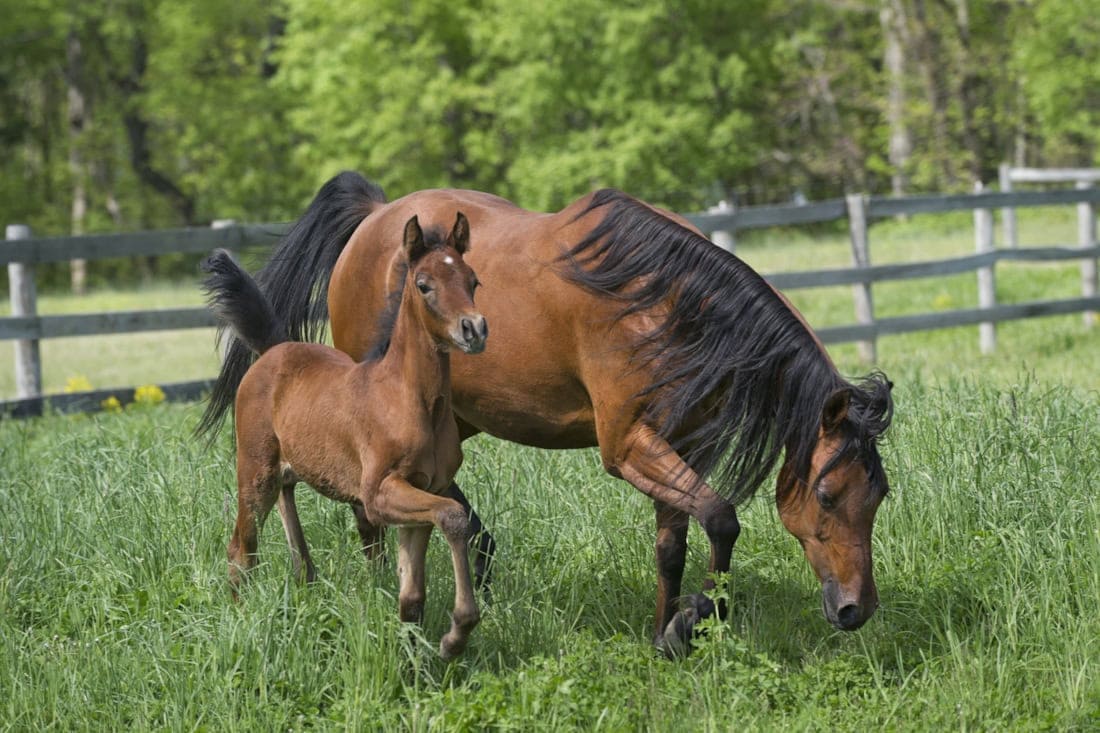
Gestation in horses is the period during which a mare is pregnant and carries a developing foal in her uterus. This journey requires careful attention, knowledge, and preparation to ensure both the dam and foal remain healthy throughout pregnancy and foaling.
From early fetal development to the final stages before birth, each phase of pregnancy has unique developmental milestones and important care considerations.
In the first trimester, the embryo implants and begins forming key structures, laying the foundation for healthy development. The second trimester is characterized by rapid growth, while the third focuses on final preparations, with the foal gaining weight and the mare’s body getting ready for delivery.
Understanding the various stages of pregnancy and being aware of potential risks — such as placental issues, premature labor, or prolonged gestation — allows horse owners to provide the best care for their pregnant mares.
Timely veterinary check-ups, balanced nutrition, and close observation of physical changes can make all the difference in ensuring a successful foaling. Keep reading to learn more about the key aspects of gestation in mares, how to support them through each trimester, and what to watch for as the due date approaches.
Gestation in Mares
Gestation in horses refers to the period during which a mare (female horse) carries a developing foal in her uterus, lasting approximately 340 days or around 11 months. However, there can be significant individual variation in gestational length. [1]
Some mares may carry for as little as 320 days, while others go well beyond the 340-day mark, reaching up to 370 days in some cases. [1]
Interestingly, donkeys have an even longer and more unpredictable gestation period, typically averaging 360 days and sometimes extending up to 435 days. [1]
Like humans, equine gestation is divided into three trimesters: [1]
- First trimester from day 0 to day 114
- Second trimester from day 115 to day 226
- Third trimester from day 227 to day 340
Each trimester is characterized by its own developmental milestones as well as management challenges. Understanding each of these three phases, the potential risks, and appropriate care are cornerstones of ensuring the safe delivery of a healthy foal.
First Trimester
The first trimester, from day 0 to day 114, marks the beginning of the mare’s pregnancy. During this stage, early fetal development occurs. The fertilized egg (embryo) implants itself into the mare’s uterine wall, and the fetus begins to develop its basic structures. [1]
Organs and limbs start forming, though they remain small and underdeveloped at this point. Throughout the first trimester, a mare’s nutritional needs generally remain unchanged, with usual feeding practices maintained unless advised otherwise by a veterinarian or equine nutritionist. [1]
Veterinary Checkpoints
Notable veterinary check-ins during the first trimester include: [1][2]
- Days 14 to 16: A critical milestone in the first trimester is the confirmation of pregnancy via ultrasound. During this check, the veterinarian ensures the mare is pregnant and checks for the presence of twins. Twins are high-risk in horses, as carrying two foals often leads to complications or the loss of one or both. If twins are detected, one embryo is typically terminated at this time.
- Days 25 to 30: A second ultrasound is typically performed at this stage to confirm a viable pregnancy. The veterinarian will check for a fetal heartbeat to ensure the foal’s development is on track.
- Days 60 and 90: Routine ultrasounds at these stages help monitor the fetus’s growth and overall health. By day 60, fetal sexing may be possible, allowing the owner to determine if the foal is male or female.
Key Risks
The first trimester carries the risk of early embryonic loss. This can occur for a variety of reasons, including: [1][2]
- Chromosomal abnormalities
- Hormonal imbalances
- Environmental stress
Monitoring the mare closely during this period and scheduling regular veterinary check-ups can help detect and address potential issues early, improving the chances of a healthy pregnancy.
Second Trimester
As the mare enters the second trimester of pregnancy, between 115 to 226 days, there are few visible changes in her appearance, but the foal inside is rapidly developing.
During this phase, the fetus grows significantly in size. Organs that started forming in the first trimester begin maturing, and the foal’s skeletal structure continues to develop. [1][2]
By the end of this trimester, the mare’s abdomen may start to show more visible signs of pregnancy. The mare’s nutritional needs remain mostly unchanged during this phase, with no significant increases in caloric intake required. Providing a well-balanced diet with high-quality forage is essential for maintaining her overall health.
The mare can also continue with regular work or light exercise, as long as she remains comfortable. [1][2]
Veterinary Checkpoints
During the second trimester, most veterinarians recommend a series of phased equine herpesvirus vaccinations for the pregnant mare. Equine herpesvirus is a known cause of abortion in pregnant mares, particularly in the second trimester.
To prevent this, mares are often vaccinated against herpesvirus at five, seven, and nine months of pregnancy. These vaccinations play a crucial role in preventing viral-induced abortion. [1][2]
Key Risks
Potential complications during the second trimester include fetal death and abortion. Various factors, such as placental abnormalities, infections, or stress, can contribute to fetal loss during this gestational period. [1][2]
Third Trimester
During the third trimester, between 226 to 340 days, fetal growth accelerates significantly, with the foal gaining approximately 1 pound per day. At birth, the foal’s weight will be roughly 9 to 10 percent of the mare’s normal body weight. [1][2]
The mare’s nutritional requirements increase dramatically during this time in order to support the rapidly growing fetus and prepare for lactation. For example, protein requirements increase by 40% to accommodate this demanding life stage.
It’s important for breeding facilities to be prepared for your mare’s changing nutritional needs, such as increasing her energy and protein intake during late pregnancy and throughout lactation, as well as ensuring she’s receiving balanced vitamin and mineral intake.
Veterinary Checkpoints
One of the clearest signs that your mare is approaching foaling is the development of her mammary glands. About two to six weeks prior to foaling, her udder starts to fill with colostrum, the highly nutritious first milk that the foal needs shortly after birth. [1][2]
Monitor your mare closely during this period for signs of premature udder development or precocious lactation (leaking milk before foaling), as these could indicate an underlying issue such as placentitis. [1][2]
Mares with vaginal discharge or early udder development should have their uteroplacental thickness monitored through ultrasound to detect potential signs of placental inflammation. [1][2]
As the due date approaches, the mare’s body undergoes a number of physical changes, including:
- Softening and relaxing of the muscles surrounding her pelvis and perineum
- Distention of the teats
- Waxing on the teat tip
- Elongation and swelling of the vulva (24 hours prior to foaling)
In the final stages of gestation, it is important to have everything needed in place for a safe delivery. The foaling area must be clean and the mare closely monitored to prevent the risk of foal septicemia, a potentially life-threatening condition caused by bacterial infection entering the foal’s bloodstream. [3]
Key Risks
The third trimester is often when complications such as placental insufficiency or dystocia (difficult birth) can arise. Monitoring the mare closely during the final weeks of pregnancy is critical to identify any signs of distress in good time. [4]
What's your top priority with your horse's health?

Enter your email to receive your store credit
Short Gestation
A gestation period of fewer than 320 days is considered premature, indicating that the foal is born before reaching full maturity. Premature foals often have underdeveloped lungs, weak muscles, and may experience difficulty standing or nursing. [5]
Premature birth often requires intensive veterinary care, including oxygen therapy, IV fluids, and nutritional support to help the foal survive.
Prematurity can result from issues such as: [5]
- Placentitis
- Twins
- Nutritional imbalances
- Premature placental separation
Careful monitoring of the mare’s health, particularly during the third trimester, can help detect early signs of potential complications and give you time to plan with your veterinarian. [5]
Complications
Immature foals can present with the following: [6]
- Small size
- Short coat hair
- Domed head shape
- Poor muscle development
- Weakness
- Difficulty standing up
- Reduced suckle reflex
- Seizures
- Floppy ears
- Cold limbs
- Low urine output
- Difficulty breathing
The prognosis for premature foals depends on the severity of their condition and the timeliness of veterinary intervention. [6]
Prolonged Gestation
Some mares experience prolonged gestation, carrying their foals well beyond the typical 340 days. Prolonged pregnancies can lead to dystocia or difficult births, as the foal may grow too large for easy passage through the birthing canal. [5]
Additionally, even with an extended gestational length, foals can still be dysmature, meaning they exhibit signs of underdevelopment, such as poor muscle tone or weak limbs. [5]
If a mare goes beyond 370 days of gestation, it’s important to work closely with your veterinarian to monitor her and the foal for signs of distress. Prolonged gestation can be caused by delayed embryonic development, individual variation in gestational length between mares, or fescue toxicosis. [5]
Complications
Dysmature foals may present with the following characteristics: [6][7]
- Large body but normal weight
- Long tail
- Long coat hair
- Erupted front teeth
- General emaciated appearance
Foaling Calculator
A foaling calculator can help you estimate when your mare will give birth based on her last breeding date. While a calculator cannot guarantee an exact date due to variability in gestation length, it can offer a guideline to help you prepare.
Input your mare’s last breeding date below to receive a predicted foaling window based on average gestation lengths.
Foaling Calculator
Foals born prior to 320 days of gestation are considered premature and may require more intensive veterinary care.
Medical Conditions & Gestation
While the gestation period in horses can vary significantly between individuals, certain medical conditions are directly linked to both shortened and prolonged gestation in mares.
Placentitis
The placenta plays a crucial role in nourishing the developing foal and supporting pregnancy. The placenta is an organ that develops alongside the fetus, providing an oxygen-rich blood supply to the growing embryo. [8][9]
Placentitis occurs when the placenta becomes infected, often due to bacteria entering through the cervix via the vagina. The infection can lead to premature separation of the placenta, causing nutrient and oxygen deprivation for the foal. [8][9]

Placental Insufficiency
In some cases, the placenta may fail to supply adequate nutrients and oxygen, usually due to poor attachment or structural abnormalities. This is referred to as placental insufficiency. [8][9]
Insufficiency can result in a small, weak foal or fetal death. Placentitis and insufficiency can also cause premature birth or prolonged gestation, depending on how it affects the fetus. [8][9]
Systemic Infection of the Mare
Infections in a mare’s body can severely compromise pregnancy. A systemic infection, which spreads throughout the mare’s body, can affect vital organs, including those essential for maintaining a healthy pregnancy. [10]
- Bacterial or viral infections: Illnesses such as equine herpesvirus or other bacterial infections can cross the placenta, leading to abortion or fetal death. These infections can trigger an inflammatory response that affects the foal’s development, often causing premature labor.
- Sepsis: In severe cases, a systemic infection can progress to sepsis, a life-threatening condition where the body’s response to infection causes widespread inflammation, organ damage, and eventual harm to the foal.
Metabolic Disease
Equine Metabolic Syndrome (EMS) and Pituitary Pars Intermedia Dysfunction (PPID, also known as Cushing’s) are both forms of metabolic dysregulation in horses. While the direct impact of these disorders on pregnancy is unclear, research indicates that horses with these conditions often exhibit reduced fertility. [11]
Research shows that healthy broodmares exhibit partial insulin resistance and reduced glucose clearance late in gestation. [12] This implies a possible link between pregnancy and insulin regulation, although the effects on horses with existing metabolic diseases remain uncertain.
If you’re considering breeding a mare with known metabolic issues, consult a veterinarian before proceeding with reproductive options.
Frequently Asked Questions
Here are some frequently asked questions about gestation in horses:
The normal gestation period in horses averages around 340 days or approximately 11 months, but individual mares can carry anywhere from 320 to 370 days.
Signs include udder development, waxing of the teats, softening of the pelvic ligaments, elongation of the vulva, and behavioral changes like restlessness or isolation.
Gestations under 320 days are considered premature, and the foal may be born with underdeveloped organs, muscle weakness, and require intensive veterinary care.
Prolonged gestation can result in a foal that is too large, increasing the risk of dystocia, or a dysmature foal that appears large but has developmental delays.
You can use a foaling calculator that adds approximately 330–340 days to the last breeding date to estimate the due date, though variation between mares is common.
Routine ultrasounds, equine herpesvirus vaccinations at 5, 7, and 9 months, regular body condition checks, and monitoring for signs of placental or metabolic issues are key.
Summary
The gestation period in horses typically lasts around 340 days, though it can vary between 320 and 370 days. Donkeys, on the other hand, have a longer average gestation, often ranging from 360 to 435 days.
- The first trimester (0 to 114 days) is crucial for early fetal development, as the embryo implants and begins to form organs and limbs. Regular ultrasounds are essential to monitor progress and check for twins.
- The second trimester (115 to 226 days) sees rapid fetal growth as muscles and bones mature. While the mare’s nutritional needs remain largely unchanged, vaccination against equine herpesvirus is important during this stage.
- The third trimester (227 to 340 days) involves accelerated fetal growth, with the foal gaining about 1 pound per day. Close monitoring for signs of labor and potential placental issues is critical.
- Complications during pregnancy can include prematurity (gestation under 320 days), prolonged gestation, placental insufficiency, infections, and metabolic diseases, all of which require veterinary attention.
References
- Tibary. A., Pregnancy. Merck Animal Health USA. 2021.
- Brinsko. S. P. and Blanchard. T. L., Eds., Manual of Equine Reproduction. 3rd ed. Mosby/Elsevier, St. Louis, Mo. 2011.
- Foal Septicaemia. MSD Animal Health Republic of Ireland. 2024.
- Tibary, A., Abortion in Horses. Merck Veterinary Manual. 2021.
- Lavoie. J. P. and Hinchcliff. K. W., Blackwell’s Five-Minute Veterinary Consult Equine. Second Edition. Wiley-Blackwell. 2009.
- McKinnon. A. O., Equine Reproduction. Wiley-Blackwell. 2010.
- Lester, G. D., Maturity of the Neonatal Foal. Vet Clin North Am Equine Pract. 2005. View Summary
- Pozor. M., Equine Placenta - A Clinician’s Perspective. Part 2: Abnormalities. Equine Veterinary Education. 2015.
- Mottershead. J. and St. Martin. K., Placentitis - Etiology, Diagnosis and Treatment. Equine-Reproduction.com, LLC.
- Satué. K. et al., Infection and Infertility in Mares. Genital Infections and Infertility. IntechOpen. 2016.
- Cadario, M. et al., Effect of endocrinopathies on fertility in the mare. Part 1: Equine metabolic syndrome. Clinical Theriogenology. 2022.
- Pennington. P. M. et al., Influence of Metabolic Status and Diet on Early Pregnant Equine Histotroph Proteome: Preliminary Findings. Journal of Equine Veterinary Science. 2020.