English





The Gypsy Vanner is one of the most recognizable breeds in the world. Also known as the Gypsy Cob, Irish Cob, and Romani Cob, these horses resemble a smaller version of draft-type breeds and come in many different coat colours.
This breed descended from crosses between draft horses and native ponies in Ireland and Great Britain. Once used to pull the vardoes of nomadic Romanichal Travelers, Gypsy Vanners today serve as pleasure mounts in multiple riding and driving disciplines.
Thanks to their striking appearance and mild-mannered temperaments, Gypsy Vanners quickly gained popularity in North America after crossing the Atlantic in 1996. Unfortunately, the breed is susceptible to several genetic diseases.
This article will review the origin, history, characteristics, health problems, and nutritional needs of the Gypsy Vanner breed. Keep reading to learn more about caring for and feeding Gypsy Vanner horses.
Gypsy Vanner Horse History
Gypsy Vanners have a unique history that traces back to the nomadic Romani societies of Western Europe. However, questions have recently arisen about whether the Gypsy Vanner name is insensitive to the cultures that developed the breed.
Origin
The Romanichal Travelers of Great Britain bred cobs to pull their vardoes, the traditional caravans in which they lived and travelled. These travelers belonged to a subgroup of Romani people – an ethnic group from northern India that entered Europe around the 9th century AD.
Romani people faced persecution and discrimination throughout their history in Europe. While sometimes called Gypsies, the name is often considered offensive and inaccurate.
Records of the Romanichal Travelers in the British Isles date back to the 16th century, but they only began to live in vardoes around 1850. Few written records exist regarding the foundation and pedigrees of their horses. [1]
Some evidence suggests foundational stock of Romani breeding programs included coloured horses disregarded by mainstream society as unfashionable. These included colourful Shires and Clydesdales, adding pulling power and feathering to the Romani cobs.
The native Dales Pony likely contributed the most to the modern Gypsy Vanner type. This British draft pony had the strength, bones, and hair of heavier breeds in a smaller size. [2]
Historic Use
Ancestors of Gypsy Vanners needed robust strength to pull heavy caravans over long distances and hardiness to live off the land while travelling. The horses were closely intertwined in all aspects of Romani society, living alongside family members of all ages.
By the 1950s, these horses had become valuable symbols of social status and cultural heritage. Breeding continued to improve the quality of the cobs, eventually producing a distinct breed with striking looks and movement. [1]
Those attributes attracted the attention of visiting Americans, Dennis and Cindy Thompson, who imported the stallion Cushti Bok in 1996. The couple developed the Gypsy Vanner name and set the breed standard for horses produced in North America.
Breed Registry
The Thompsons founded the Gypsy Vanner Horse Society, which maintains a breed registry for Gypsy Vanner horses in North America. However, several registries exist on both sides of the Atlantic for Gypsy Cobs.
| Breed Summary | |
|---|---|
| Breed Name | Gypsy Vanner |
| Also Known As | Gypsy Cob; Irish Cob; Romani Cob |
| Breed Type | Cob |
| Origin | Ireland and Great Britain |
| Breed Registry | Gypsy Vanner Horse Society; multiple Gypsy Cob registries |
| Average Height | 13.2 – 15.2 hh |
| Average Weight | 1,430 lb (650 kg) |
| Common Coat Colors | Any color; pinto common |
| Conformation | Small draft type; strong bone, heavy muscling, refined head, short-coupled body, deep heart girth, broad chest, muscular hindquarters, full feathering |
| Common Uses | Driving, pleasure riding, trail, therapy, dressage, Western pleasure |
| Temperament | Docile, friendly, calm, intelligent |
| Best For | Families, pleasure riders, heavier riders |
| Common Health Concerns | PSSM1, FIS, MCOA, chronic progressive lymphedema, pasture dermatitis, metabolic syndrome, laminitis |
What's your top priority with your horse's health?

Enter your email to receive your store credit
Breed Characteristics
Modern breed standards for the Gypsy Vanner trace back to the characteristics favoured in caravan horses. The breed’s type is often described as a draft horse in a smaller package, which makes the Gypsy Vanner suitable for many different disciplines.
Conformation
Gypsy Vanners have an average height of 13.2 to 15.2 hands. Although these horses are significantly shorter than the draft breeds they descend from, their conformation gives the impression of a small draft horse.
The breed has good overall substance and bone, with strong muscling throughout their bodies. Their small heads are more refined than draft horses, with a straight profile, broad forehead, generous jaw, and intelligent eyes.
Necks are medium-length with a slightly deeper throat latch than light breeds. Well-rounded withers connect to a short coupled body with a deep heart girth, broad chest, and well-sprung ribs. Muscular hindquarters give these horses their power and draft-like appearance.
The Gypsy Vanner’s full feathering, long manes, and full tails are some of the first characteristics most people notice. Feathering should start below the hocks and knees and extend over the hooves.
Colours
Gypsy Vanners can be any colour, and the prevalence of colourful coat patterns in the breed contributes to their popularity. Pinto coat colours are widespread in Gypsy Vanners. [3]
Temperament
Breeders favoured willing work ethics and docile dispositions in the cobs that pulled caravans through the countryside and lived alongside small children. These characteristics persist in the breed today, and most Gypsy Vanners have friendly and engaging personalities.
Their calm and sweet natures make Gypsy Vanners a popular family horse, while their intelligence makes them easy to train. However, every horse is an individual, and temperaments can vary significantly between members of the same breed.
Disciplines
Gypsy Vanners are popular with equestrians who want to stand out in any arena. The breed is still commonly used to pull carts and carriages in recreational driving, but Gypsy Vanners are also versatile mounts for pleasure riding.
Their substance makes them suitable for heavier riders who prefer smaller mounts. And their calm temperaments make them popular trail and therapy horses. They can excel in both English and Western disciplines, especially dressage and Western pleasure.
Health Problems
Although technically not draft horses, Gypsy Vanners are susceptible to health problems commonly found in drafts. Gypsy Vanner bloodlines also carry genes associated with several inherited diseases.
Because of the Dales pony influence in their heritage, Gypsy Vanners can be prone to developing metabolic syndrome and laminitis.
Genetic Diseases
As with other breeds descended from draft horses, Gypsy Vanners are susceptible to polysaccharide storage myopathy (PSSM). This condition involves abnormal glycogen storage in muscle, which leads to muscle cramping and tying up episodes. [4]
Research has identified the GYS1 gene mutation responsible for PSSM Type 1 in Gypsy Vanner horses. While this genetic condition doesn’t have a cure, proper nutrition can help manage clinical signs. [4]
Foal immunodeficiency syndrome (FIS) is an inherited disease that causes fatal anemia and impaired immune function in affected foals. The genetic mutation responsible for FIS is found primarily in Fell and Dales Ponies and related breeds, including Gypsy Vanners. [5]
Affected foals are clinically normal at birth due to the passive immunity acquired from their dam’s colostrum. However, they cannot produce antibodies and are usually euthanized or die from infection by four months of age. [5]
Some genetic diseases are associated with colour genes found in Gypsy Vanners. Multiple congenital ocular anomalies (MCOA) is an eye disorder associated with the silver dilution gene. This condition is characterized by ocular cysts and other abnormalities that hinder vision. [6]
Health Problems
Chronic progressive lymphedema is a debilitating condition involving impaired lymph flow that is observed in most draft breeds. Gypsy Vanners are also susceptible to this incurable disease. Management can slow progression, but the condition often results in lameness and disfigurement. [7]
CPL is a progressive disease characterized by a build-up of lymph fluid in the lower limbs. Gypsy Vanners with CPL develop skin folds and lesions susceptible to secondary infections as swelling worsens, leading to severe disability and poor quality of life. [7]
Gypsy Vanners also frequently struggle with less severe skin conditions on their lower legs due to their heavy feathering. This extra hair can trap moisture and debris against the skin, leading to pasture dermatitis. [8]
Care and Management
Like all horses, Gypsy Vanners need quality basic care, including regular veterinary check-ups with annual vaccinations, deworming, and routine dental exams.
A thorough daily grooming routine is critical for maintaining the Gypsy Vanner’s long mane and tail and preventing skin irritations on their lower limbs. Their feathers can also trap moisture against their hooves and cause hoof problems, so good farrier care is essential.
Long periods of stall confinement can lead to stocking up and poor circulation in this breed. Limit stall time for horses at risk of CPL and provide plenty of freedom of movement. Daily turnout and exercise can support the physical and mental health of all Gypsy Vanners. [7]
However, unrestricted turnout, particularly on grass that is actively growing, might not be suitable for Gypsy Vanners with PSSM or metabolic dysfunction, which can increase the risk of laminitis. These horses require controlled intake of simple sugars (ESC) and starch to avoid insulin resistance and metabolic problems.
Consider turning these horses out on a dry lot instead or using a grazing muzzle along with good pasture management practices. [9]

Nutrition Program
All Gypsy Vanners need a balanced diet to support optimal health, but nutrition is also critical for managing metabolic syndrome and muscle disorders in the breed. While these horses are naturally heavy for their height, overfeeding can lead to excess weight gain.
Weight Maintenance
Gypsy Vanners are generally easy keepers. Bred to survive on the road, these horses have an efficient metabolism and can quickly gain weight with improper management.
Because they are at risk of developing metabolic syndrome, Gypsy Vanner horses may easily become overweight or obese.
Unfortunately, obesity is often overlooked in draft and cob-type horses. Owners may mistake excess fat for the breed’s characteristic heavy muscling. [10]
Learning how to accurately evaluate your horse’s body condition can help you monitor his weight and make adjustments to his feeding program.
Unexplained weight loss or weight gain on a balanced diet could indicate an underlying medical problem, so consult your veterinarian about any significant changes.
Sample Diet
The following sample diet is intended for a mature 650 kg / 1,430 lb Gypsy Vanner with normal body condition at maintenance.
| Feed | Maintenance Diet |
|---|---|
| (Amount / Day) | |
| Mature Grass Hay (8% crude protein) | Free choice |
| Salt | 45 g (3 tbsps) |
| Omneity® Pellets | 300 g (3 scoops) |
| w-3 oil | 60 ml (2 oz) |
| Diet Analysis* | |
| Digestible Energy (% of Req) | 105% |
| Protein (% of Req) | 125% |
| NSC (% Diet) | 6.9% |
*These values are estimated based on NRC requirements and average forage values. For a more precise assessment, analyze your forage and submit your horse’s diet for evaluation.
A forage-only diet should provide enough energy for Gypsy Vanners in light work. But these diets are often deficient in essential nutrients, including vitamins, minerals and amino acids.
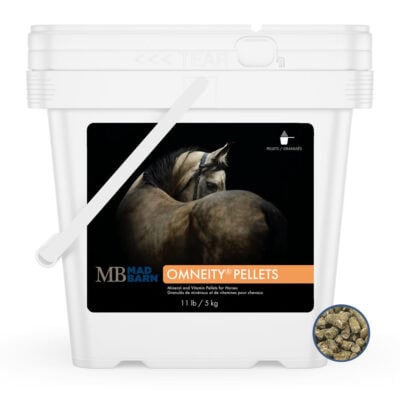
Mad Barn’s Omneity® is a concentrated vitamin and mineral balancer that provides key micronutrients commonly lacking in hay. Omneity® does not contain any grains, fillers or added sugars, making it ideal for Gypsy Vanner horses to maintain a healthy weight.
Omneity® is formulated with 100% organic trace minerals, yeast, digestive enzymes and optimal levels of biotin to support hoof health, skin and coat quality, metabolic function, gut health, and overall well-being.
Clean water and plain loose salt should be available to your Gypsy Vanner at all times. Always add 3 – 4 tablespoons (1.5 – 2 ounces) of plain salt to your horse’s daily ration to ensure they meet their sodium requirement.
Forage Selection
Forage should provide the foundation of your Gypsy Vanner’s diet. The amount of forage your horse needs in their diet is determined by their body weight. Heavier breeds need more hay than lighter breeds of the same height.
The average 1,430 pound (650 kg) Gypsy Vanner should consume about 28 pounds (13 kg) of hay per day. These horses typically do well on average-quality, low-starch grass hay. [11]
While constant roughage intake supports healthy digestive function, Gypsy Vanners may consume too many calories when provided with free-choice forage. Using a slow feeder and grazing muzzle can slow consumption while promoting natural grazing behaviours.
Some forages have high NSC levels that might not be suitable for Gypsy Vanners. Studies show that hay with NSC content of 17% or higher can be detrimental to horses with PSSM. Ideally, get a hay analysis to help you formulate a balanced diet for your horse. [9]
Feeding Recommendations
Grain-based complete feeds and other concentrates typically have high starch content, which can increase the risk of digestive problems, including colic and ulcers.
Splitting grain into multiple small meals throughout the day can reduce these risks, but grains are still not as safe as fat- and fiber-based feeds for adding calories to your Gypsy Vanner’s diet. [12]
If you need a carrier for your horse’s supplements, consider using soaked hay pellets, unmolassed beet pulp or another forage-based alternative instead.
If your Gypsy Vanner is in heavy work and needs additional energy, consider fats and oils as a source of cool calories. Research shows that fat is particularly beneficial for PSSM horses to avoid episodes of tying up. [13] Consider using a fat supplement with omega-3 fatty acids for additional anti-inflammatory benefits.
Nutritional Supplements
When formulating a feeding program for your Gypsy Vanner, the first priority is to ensure you feed a balanced diet with adequate levels of energy, protein, vitamins and minerals. Once your horse’s diet is balanced, you may consider other nutritional supplements to support well-being and athletic function.
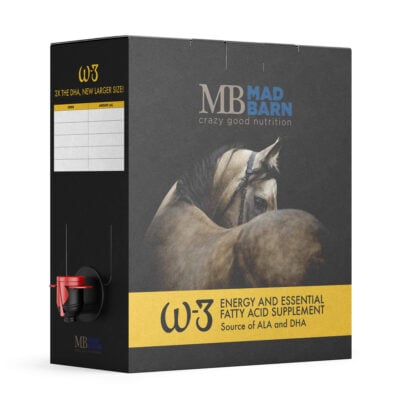
Mad Barn’s W-3 Oil is a fat supplement high in omega-3 fatty acids to support healthy regulation of inflammation in horses. This oil is enriched with DHA and natural Vitamin E to support joint mobility, respiratory health, skin and coat quality, and antioxidant status.
Adding vitamin E to your Gypsy Vanner’s diet can help support muscle function and neurological health. This antioxidant is also beneficial for horses with muscle disorders.
An equine nutritionist can help you formulate the best diet for your Gypsy Vanner based on their individual health needs. Submit your horse’s diet for a free evaluation today.
Frequently Asked Questions
Here are some frequently asked questions about Gypsy Vanner horses:
Gypsy Vanner is a small draft-type horse breed developed in Ireland and Great Britain from crosses between draft horses and native ponies. Gypsy Vanner horses are known for their abundant feathering, compact power, and striking appearance. They were originally bred by Romanichal Travelers to pull traditional caravans, and today they are popular as riding and driving horses. The breed is also known as the Gypsy Cob, Irish Cob, and Romani Cob, though Gypsy Vanner is the primary name used in North America.
Gypsy Vanner horses are currently used for pleasure riding, driving, trail riding, therapy work, dressage, and Western pleasure. Historically, Gypsy Vanner horses were bred to pull vardoes, or traditional caravans, which required strength, soundness, and a willing temperament. Today, their calm nature and sturdy build make them versatile horses for both recreational and family settings, and they are especially popular with owners looking for a dependable, eye-catching horse.
Gypsy Vanner horses have the build of a small draft horse, with strong bone, heavy muscling, and a compact, powerful frame. They typically have a refined head with a straight profile, broad forehead, and kind, intelligent expression. The breed also has a medium-length neck, deep heart girth, broad chest, short-coupled body, and muscular hindquarters. One of the most recognizable features of the Gypsy Vanner is its abundant feathering, along with a long mane and full tail, which gives the breed its distinctive, dramatic appearance and adds to its overall impression of elegance.
Gypsy Vanner horses can be any color, but pinto patterns are especially common in the breed. Their colorful coats are one of the reasons they are so visually distinctive and popular. While patterned horses are especially associated with the breed, solid-colored Gypsy Vanners also occur. Coat color can vary widely, but bold markings are a hallmark of the Gypsy Vanner look.
Gypsy Vanner horses are known for having a calm, friendly, and affectionate temperament. The breed was developed to live and work closely with people, which helped shape its gentle and willing disposition. Gypsy Vanners are typically intelligent, patient, and easy to handle, making them popular for families, therapy programs, and pleasure riding, though as with any breed, individual temperament can vary from horse to horse.
Gypsy Vanner horses typically stand between 13.2 and 15.2 hands high. Their height is smaller than most full-size draft breeds, but their bone, muscling, and feathering give them the appearance of a much heavier horse. This combination of moderate height and substantial build is part of what makes the breed so distinctive. Their size also makes them appealing to riders who want a sturdy horse in a more compact package.
Gypsy Vanner horses typically weigh around 1,430 pounds (650 kg), although actual weight can vary with height, build, and body condition. They are naturally heavier-bodied than many horses of similar height because of their strong bone and draft influence. Owners should pay close attention to body condition, since Gypsy Vanners can gain weight easily. Keeping them at a healthy weight is important for metabolic health and long-term soundness.
Common health problems in Gypsy Vanner horses include equine metabolic syndrome, laminitis, polysaccharide storage myopathy (PSSM1), foal immunodeficiency syndrome (FIS), multiple congenital ocular anomalies (MCOA), chronic progressive lymphedema (CPL), and pasture dermatitis. Some of these conditions are inherited, while others are linked to the breed’s draft heritage, feathering, or easy-keeper metabolism. Gypsy Vanners may also be prone to lower-leg skin issues because heavy feathering can trap moisture and debris. Good management, careful feeding, and regular veterinary care are important for reducing risk.
Gypsy Vanner horses can be affected by several inherited diseases, including polysaccharide storage myopathy type 1 (PSSM1), foal immunodeficiency syndrome (FIS), and multiple congenital ocular anomalies (MCOA). PSSM1 affects muscle metabolism, FIS causes fatal immune and blood-cell problems in foals, and MCOA is an eye disorder associated with the silver dilution gene. Because these conditions can be passed to offspring, genetic testing is an important part of responsible breeding. Careful selection of breeding stock can help reduce the risk of producing affected foals.
Gypsy Vanner horses need regular turnout and consistent exercise to support circulation, metabolic health, and overall soundness. Daily movement helps reduce the risk of swelling and may be especially important for horses prone to chronic progressive lymphedema. Light riding, driving, groundwork, and free movement in turnout can all help keep Gypsy Vanners physically and mentally healthy. As a breed at risk of metabolic issues or laminitis, they may need controlled grazing, a dry lot, or a grazing muzzle instead of unrestricted pasture access.
Summary
Gypsy Vanners trace their roots to the caravan horses bred by Romanichal Travelers in Britain and Ireland. These horses were developed through selective breeding for strength, endurance, and a calm temperament, producing a compact yet powerful horse known for its distinctive feathering and striking color. Imported to North America in 1996, Gypsy Vanners are now admired worldwide for their versatility and gentle nature.
- Originated from Romani-bred caravan horses in 19th-century Britain and Ireland
- Developed from Shire, Clydesdale, and Dales Pony crosses for strength and durability
- Excel in driving, dressage, and recreational riding disciplines
- Prone to conditions such as metabolic syndrome, PSSM, and chronic progressive lymphedema
- Thrive on balanced forage-based diets with close attention to weight and hoof health
References
- Lee, R. Roma in Europe: "Gypsy" Myth and Romani Reality - New Evidence for Romani History. Studies in European Culture and History. 2007.
- Winton, C. et al. Genetic diversity within and between British and Irish breeds: The maternal and paternal history of native ponies. Ecol Evol. 2020.View Summary
- Avila, F. et al. Breed Distribution and Allele Frequencies of Base Coat Color, Dilution, and White Patterning Variants across 28 Horse Breeds. Genes. 2022.View Summary
- Valberg, S. et al. Breeds of Horses Positive for the GYS1 Mutation Associated with Polysaccharide Storage Myopathy. J Equine Vet Sci. 2009.
- Fox-Clipsham, L. et al. Identification of a Mutation Associated with Fatal Foal Immunodeficiency Syndrome in the Fell and Dales Pony. PLoS Genet. 2011. View Summary
- Komaromy, A. et al. Equine Multiple Congenital Ocular Anomalies (MCOA) syndrome in PMEL17 (Silver) mutant ponies: five cases. Vet Ophthalmol. 2011.
- Affolter, V. Chronic Progressive Lymphedema in Draft Horses. Vet Clin Equine Pract. 2013.
- Yu, A. Equine Pastern Dermatitis. Vet Clin Equine Pract. 2013.View Summary
- Borgia, L. et al. Glycaemic and insulinaemic responses to feeding hay with different non-structural carbohydrate content in control and polysaccharide storage myopathy-affected horses. J Anim Physiol Anim Nutrit. 2010.View Summary
- Furtado, T. et al. Exploring horse owners' understanding of obese body condition and weight management in UK leisure horses. Equine Vet J. 2020.View Summary
- National Research Council. Nutrient requirements of horses: 6th ed. The National Academies Press. 2007.
- Metayer, N. et al. Meal size and starch content affect gastric emptying in horses. Equine Vet J. 2010. View Summary
- Ribeiro, W. et al. The Effect of Varying Dietary Starch and Fat Content on Serum Creatine Kinase Activity and Substrate Availability in Equine Polysaccharide Storage Myopathy. J Vet Int Med. 2008. View Summary