English
Proper hay storage is critical for maintaining the quality, safety, and nutritional value of your horse’s forage. Whether you’re managing a large equine facility or a small hobby farm, knowing how to store hay correctly can prevent mold, spoilage, and costly waste.
Without proper ventilation, correct stacking, or moisture control, hay can spoil quickly, leading to mold growth and pest infestations that can compromise its nutritional value and potentially harm your horses.
Horses that consume improperly stored hay are at risk of respiratory allergies, gastrointestinal issues, and even mycotoxin poisoning. Additionally, improper hay storage can increase the risk of barn fires, further threatening your horses’ safety.
In this guide, we review the considerations for indoor and outdoor hay storage, how to protect hay from moisture and pests, and offer our expert tips to keep your feed fresh year-round. By following these hay storage techniques, you can ensure your horses receive clean, high-quality forage while minimizing losses.
Proper Hay Storage for Horses
Hay is a cornerstone of the equine diet, offering vital nutrients such as fiber, protein, vitamins, and minerals. Horses should consume between 1.5 – 2.5% of their body weight in hay and other forages per day.
Given this, poor hay hygiene can significantly impact the overall health and well-being of your horse.
Improper hay storage can result in mold, mildew, and nutrient degradation, which can pose health risks to horses including:
- Respiratory issues
- Colic
- Laminitis
- Toxicosis (poisoning)
Proper storage helps preserve the nutritional integrity of hay while preventing contamination from pests, rodents, and moisture.
Types of Hay Storage
There are various methods for storing hay on horse farms, each with its own advantages and disadvantages. The choice of storage method depends on the size of the farm, available space, and budget.
Indoor Storage
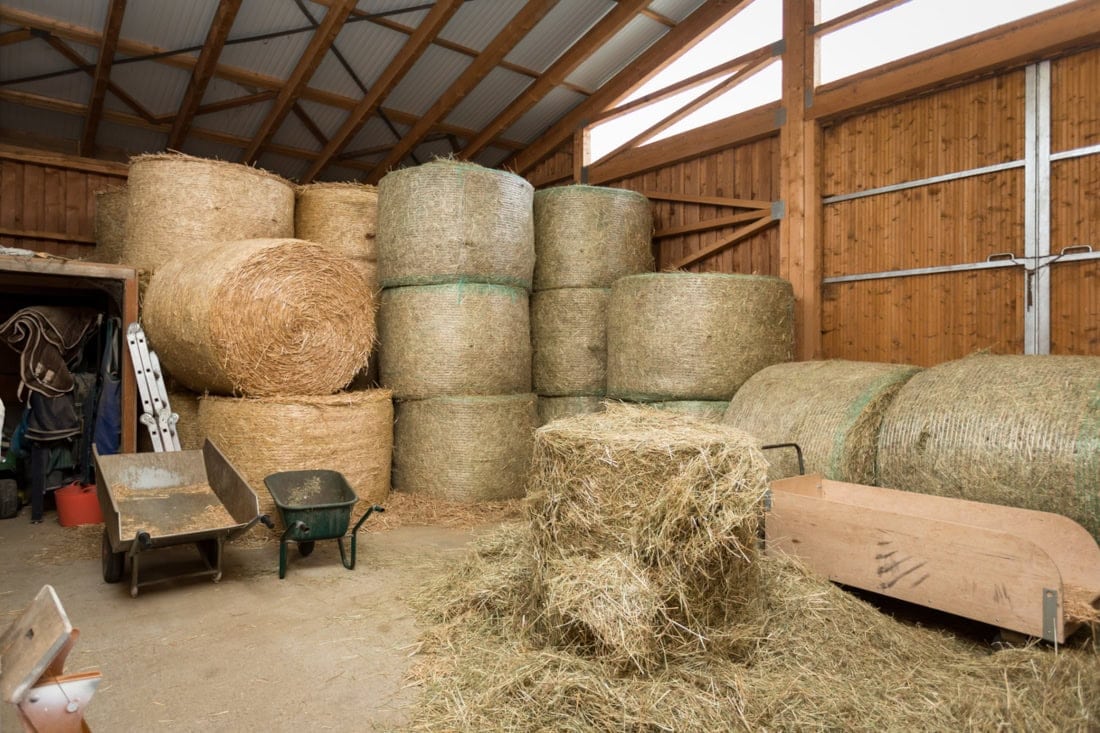
Indoor storage is often considered the best option for keeping hay dry and protected from the elements. When stored in a barn or shed, hay is shielded from rain, snow, and direct sunlight, all of which can cause it to degrade more quickly.
Advantages of indoor storage include: [1][2]
- Provides protection from extreme weather and precipitation
- Improves temperature and humidity control
- Reduces exposure to pests and wildlife
However, indoor storage also has some disadvantages, including: [1][2]
- Requires dedicated space
- Higher construction costs, especially in regions with heavy snow load
To maximize the benefits of indoor storage, certain best practices should be kept in mind, including: [1][2]
- Stacking hay on raised flooring: this prevents contact with the ground and reduces moisture absorption
- Maintaining ventilation: minimizes the risk of mold growth, as fungus thrives in stagnant, humid conditions
- Storing hay in a dry, cool area: helps prevent excessive heat buildup, which can cause spoilage
Outdoor Storage
Outdoor storage options, such as haylofts or hay racks, are common on farms that don’t have a barn or otherwise have limited space. These structures elevate the hay off the ground, promoting ventilation and reducing the risk of moisture accumulation.
The main advantages of outdoor storage include: [1][2]
- Cost-effective, especially for large-scale operations
- Provides easy access
However, outdoor storage exposes hay to the elements, and increases the risk of rodent and other pest infestations.
To optimize outdoor storage, it’s important to keep hay elevated using pallets, wooden beams, or metal frames. Protecting the hay with tarps or covers shields it from rain and humidity, while using rodent-proof containers or racks helps reduce the risk of infestation. [1][2]
What's your top priority with your horse's health?

Enter your email to receive your store credit
Wrapped hay
Wrapped hay, stored in plastic or net wraps, is a long-term outdoor storage solution applicable to farms of various sizes. This method protects hay from moisture and weather-related damage and facilitates handling and transport. [3][4]
For optimal storage, it’s best to keep wrapped hay in a cool, dry location. Research shows that many farmers prefer hay bales with an internal moisture content of 45% to 55%. [4] While this range may be beneficial for operational reasons, it also encourages fermentation.
Fermentation, particularly from Clostridial bacteria, can generate high levels of butyric acid and ammonia, which make hay unsafe for horses. To reduce this risk, consider using hay with less than 42% moisture if you plan to store it wrapped. [4]
When wrapping bales, it’s important to minimize internal air within the bale by tightly compacting the bales and applying sufficient plastic wrap. Current guidelines recommend a total plastic thickness of at least 6 mm to prevent air infiltration after wrapping. [4]
Additionally, bales should be wrapped within 24 hours of bailing to avoid internal heat buildup that can degrade quality. Some studies even indicate that wrapping within 12 hours may be preferable, depending on factors like moisture content and forage type. [3][4]
7 Tips to Optimize Hay Storage
The decision to store hay inside or outdoors depends on many factors, including available space, climate, and number of horses on the farm. Regardless of where the hay is stored, follow these seven tips to maximize your hay use by keeping your horse’s feed fresh and safe all year long.
1) Manage Temperature
Temperature plays a key role in the preservation and quality of hay. Maintaining optimal storage temperatures ensures that hay retains its nutritional value, does not spoil, and poses minimal health risk to horses.
Ideally, hay should be stored at temperatures ranging between 40°F and 60°F (4°C to 15°C). Within this range, the risk of mold growth and nutrient degradation is minimized, and the hay’s fiber and protein content remain stable.
Consistent temperature control also helps prevent moisture buildup, which can lead to fermentation and spoilage.
Risks of Heat
High temperatures can significantly accelerate processes that contribute to nutrient degradation in hay. When hay is stored in excessively warm conditions, the internal temperature can rise, particularly if the hay was baled with residual moisture. Elevated temperatures promote microbial activity and mold growth, leading to a decline in nutritional quality and potential health risks in horses.
Managing the temperature of stored hay not only prevents hay losses, but also reduces the risk of fires. One of the biggest risks in hay storage is spontaneous combustion, primarily caused by storing hay with excessive moisture. [5]
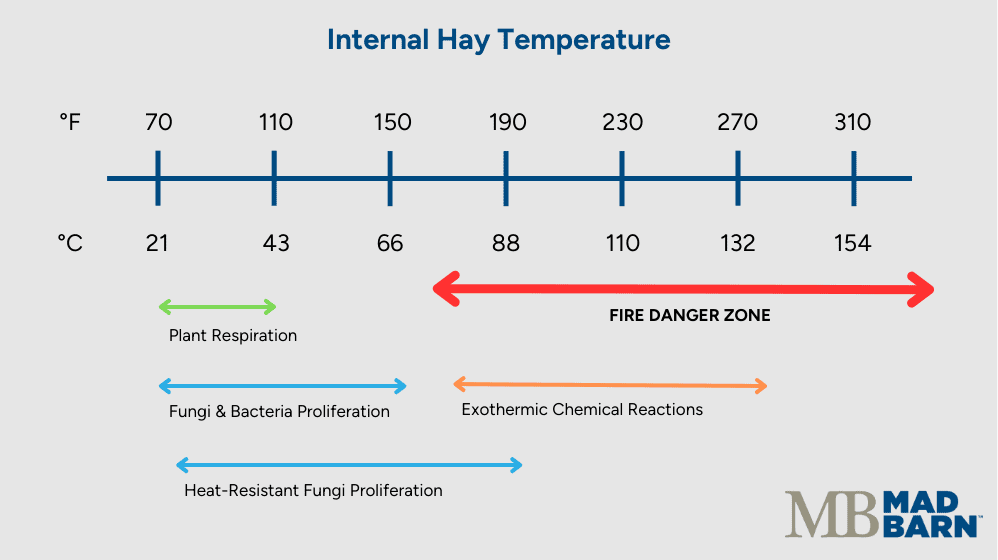
Hay has natural insulating properties, which means internal heat cannot dissipate easily. When hay bales with more than 22% moisture are stored, microbial activity generates heat. If internal hay temperatures exceed 55 °C (131 °F), flammable gases can form, increasing the risk of ignition. Large stacks of hay are particularly vulnerable due to reduced air flow, which limits dissipation of heat and gases. [5]
All baled hay is expected to have a slight rise in temperature immediately after baling due to plant respiration and microbial processes within the bale. [6] Temperature and moisture levels are expected to equilibrate independently of each other within 40 days, which underscores the importance of taking routine measurements once hay is stored. [6]
Most hay fires occur within the first six weeks after baling. During this period, even hay with moisture levels as low as 15% may have rising temperatures. [5]
Figure 1. Baled hay temperatures, internal biological processes, and fire hazards [6]
Implementing the following preventative strategies can significantly reduce the risk of barn fires due to hay storage: [7]
- Thoroughly dry hay before storage and remove it promptly from the field after harvesting.
- Regularly monitor hay stack temperatures using a probe to detect early signs of heat buildup.
- Space hay stacks at least 10 meters apart to minimize the risk of fire spreading.
- Ensure ample clearance between hay stacks and light fixtures.
- Replace hydrogen or halogen lighting with LED alternatives to reduce heat output and lower fire risks.
Risks of Freezing
Freezing temperatures can also impact hay quality. While cold weather does not promote mold growth, it can affect the texture and palatability of hay. Freezing temperatures may also alter the availability of certain nutrients, especially in hay with higher moisture content. [8] Soluble carbohydrates can leach out during thawing, reducing the overall energy content of the hay.
While frozen hay generally remains safe for consumption, its nutritional profile and physical quality may degrade over time. Careful storage and regular quality checks are recommended to ensure hay retains its value through the winter months. [8]
Temperature Management
Effective temperature management is important for maintaining hay quality. Key management strategies include:
- Proper ventilation: hay should be stored in a well-ventilated area to allow for adequate airflow and prevent heat build-up. Proper ventilation is crucial in regulating temperature and reduces the risk of internal heating and moisture accumulation.
- Avoid direct sunlight and heat sources: hay should be stored in shaded areas or enclosed spaces where it is not exposed to direct sunlight. Avoid storing stacks of hay near heat sources such as furnaces, hot water pipes, heat emitting machinery, and incandescent or halogen lighting.
- Frequent monitoring: the internal temperature of hay bales should be checked regularly, especially during the first few weeks after baling. If temperatures exceed safe levels, re-stack the bales to enhance airflow and reduce heat buildup.
- Insulate in extreme weather: in regions with significant temperature fluctuations, hay should be kept in insulated areas to maintain stable conditions. Insulated storage helps prevent rapid temperature changes that could affect hay quality
Table 1. Internal hay temperature risk guidelines [5][7]
| Internal Hay Temp | Guideline |
|---|---|
| < 130 °F < 54 °C |
|
| 130 to 150 °F 54 to 66 °C |
|
| 150 to 175 °F 66 to 79 °C |
|
| 175 to 185 °F 79 to 85 °C |
|
| 212 °F 100 °C |
|
2) Monitor Humidity
Controlling humidity is a crucial factor in preserving hay quality and preventing spoilage. High humidity levels can create a favorable environment for mold, mildew, and bacterial growth, all of which can compromise hay and pose severe health risks to horses.
For optimal hay storage, maintaining internal bale humidity levels around 20% is recommended. When environmental humidity levels rise above this threshold, hay can absorb moisture from the air, which not only promotes microbial growth but can also lead to nutrient loss. [9][10][11]
Additionally, essential vitamins are vulnerable to degradation in high-moisture environments, potentially reducing the hay’s overall nutritional value. [9][10][11]
Strategies to control humidity in hay storage areas include:
- Rotating hay stores to increase air flow
- Elevating hay to improve ventilation
- Moving hay to a drier storage location
- Running a dehumidifier in the storage location
3) Ensure Adequate Ventilation
Proper ventilation is important for maintaining hay quality during storage. Adequate air circulation helps prevent moisture buildup, which is one of the primary causes of mold and mildew growth. When air is stagnant, humidity levels can rise, creating an ideal environment for microbial activity.
Robust ventilation ensures that any moisture released by hay, particularly newly baled or slightly damp hay, can dissipate quickly. This reduces the risk of internal heating, which can lead to spontaneous combustion in tightly packed bales. To provide adequate ventilation, hay storage structures should be equipped with sufficient vents or windows to allow consistent air flow.
Striking a balance between protecting hay from external elements and allowing natural ventilation is key to maintaining hay quality.
4) Perform Routine Maintenance
Maintaining hay storage systems is just as important as the initial setup. Regular inspection, cleaning, and maintenance are essential for ensuring that hay remains safe and nutritious for horses.
Routine maintenance in hay storage areas includes:
- Regular inspections: Frequent inspections of hay storage areas can help identify early signs of mold, pests, or moisture damage. Early detection assures that issues can be addressed promptly to prevent contamination
- Cleaning hay storage areas: Cleanliness helps control dust and debris accumulation over time, which discourages pest infestation and bacterial growth in the storage area
- Equipment maintenance: In indoor storage areas, make sure electrical equipment like lighting or dehumidifiers are well maintained and functional. It’s also important to check any ventilation outlets like ducts and windows to ensure they are clear and allowing appropriate exchange of air
5) Control Mold & Dust
Mold and dust are the two primary irritants commonly found in hay. Mold thrives in damp, poorly ventilated environments where hay is exposed to excess moisture or high humidity. Dust is an unavoidable aspect of feeding hay as the dried fibers break into microscopic particles as the hay is handled and moved around.
Many species of mold produce mycotoxins, which can lead to signs of toxicity when ingested by horses. Signs of mycotoxin poisoning in horses include: [12][13][14]
Dust particles are easily inhaled by the horse while feeding, which may be particularly irritating for horses with pre-existing respiratory conditions like heaves or equine asthma.
Hay storage strategies to minimize mold and dust include:
- Maintaining ventilation: Store hay in a well-ventilated area to promote airflow and prevent moisture buildup. Use fans or open-sided structures to reduce humidity
- Stacking strategically: Arrange hay in a crisscross or pyramid pattern to improve air circulation and prevent heat buildup, which can lead to mold growth
- Elevating hay: Store bales on wooden pallets, rubber mats, or gravel to prevent moisture absorption from the floor
- Controlling humidity: Keep hay storage areas dry by using dehumidifiers, desiccants, or insulation to regulate moisture levels
- Covering hay: Use breathable tarps or hay covers to protect outdoor hay while allowing airflow. Avoid plastic tarps that can trap moisture and lead to sweating
- Performing regular inspections: Check hay frequently for signs of mold, dust buildup, or overheating, and remove any affected bales immediately
- Handling and feeding effectively: Shake out and dampen excessively dusty hay before feeding, or consider soaking hay to reduce airborne dust and improve palatability

6) Control Rodents & Other Pests
Rodents, insects, and other pest infestations can lead to hay damage and contamination. Mice, rats, and squirrels are particularly drawn to hay due to its fibrous texture and potential as a food source. Insects, including ants, beetles, and moths, can infest hay, causing damage to bales and introducing droppings or larvae that further contaminate the hay.
These pests not only degrade hay quality but can also introduce harmful bacteria or parasites that jeopardize horse health. To mitigate these risks, horse owners can implement several strategies, including: [15]
- Set traps: Trapping is the most effective method for controlling rodent populations. Snap traps, live traps, and electronic traps can capture or repel rodents. Traps should be placed around the perimeter of the hay storage area or near points where pests are likely to enter
- Perform regular inspections: Regularly check for signs of pest activity, such as droppings, chewed bales, or visible insects. Early detection of pest problems allows for prompt action, preventing significant damage to the hay
- Maintain cleanliness: Rodents are attracted to clutter and debris, and many insect populations arise on decaying organic matter like spoiled hay. Rotating bales, keeping the storage area clean and tidy, and disposing of any spoilage promptly can all minimize pest infestation
In addition, many farms keep barn cats, which can be an effective deterrent against rodents and other small mammals.
Some owners may consider using rodenticides (bait) to deter pests, but this approach is not safe for feed storage areas. Rodenticides can cause severe and potentially life-threatening toxicosis in both horses and other animals.
Any product with one or a combination of these ingredients is not safe for feed storage areas: [16]
- Anticoagulants
- Bromethalin
- Cholecalciferol
- Phosphides
- Sodium fluoroacetate
These chemicals are highly toxic and can lead to symptoms such as bleeding, organ failure, seizures, and even death if ingested. It’s crucial to avoid using these substances in or around hay storage areas where horses could have access. If rodenticide exposure is suspected, immediate veterinary attention is required. [16]
7) Manage Inventory
Implementing an inventory management system is one of the simplest and most effective ways to prevent hay spoilage and reduce the risk of spontaneous combustion. By regularly rotating your hay bales and following the “first-in, first-out” (FIFO) principle, you ensure that older hay is used before it has a chance to deteriorate.
Prioritizing older inventory not only minimizes waste by using hay before it spoils, but it also helps maintain the nutritional quality of your feed. As hay degrades over time in storage, using it in the order it was received ensures your horses receive the best possible nutrition.
Frequently Asked Questions
Here are some frequently asked questions about hay storage on horse farms:
The best place to store hay is in a well-ventilated, dry, and shaded area to prevent mold and spoilage. A dedicated hay barn or loft with good airflow, away from direct sunlight and moisture, is ideal.
When storing hay outdoors, use sturdy, elevated pallets to keep it off the ground and reduce moisture absorption. Cover the hay stacks with tightly secured, breathable, waterproof tarps to protect against rain while allowing air circulation. Regularly inspect for mold, spoilage, or dampness, particularly after heavy rain, to maintain hay quality.
Improperly stored hay can rot, spoil, and go moldy, making it inedible and unsafe for equine consumption. Hay loss also represents a significant, but avoidable, revenue loss for horse farms. In addition, hay left out in the open may attract pests and other animals who may contaminate your horse's feed and other parts of the farm.
Summary
Proper hay storage in equine facilities is important for preserving the nutritional quality of forage and ensuring the overall health and well-being of horses.
- Indoor hay storage offers the best protection from the elements, but requires additional space that may not be available on all farms
- Outdoor storage requires less space but hay is more exposed to the elements
- Maintaining clean, well-managed hay inventory is key to preventing barn fires and hay spoilage
- Adequate ventilation and frequent monitoring are cornerstones of controlling mold and pest infestation
- Proper hay storage is an investment in both the health of horses and the sustainability of the farm's feeding practices
References
- Špulerová. J. et al., Past, Present and Future of Hay-Making Structures in Europe. Sustainability. Multidisciplinary Digital Publishing Institute. 2019.
- Morgan. S., Hay Storage Options. Georgia State University Extension. 2019.
- Undersander. D. et al., Successful Wrapping and Storage of Square Bales. University of Wisconsin-Extension. 2003.
- Hartman. D., Plastic-Wrapped Hay Bale Research. Pennsylvania State University Extension. 2020.
- Storing Hay Safely. Devon and Somerset Fire and Rescue Service.
- Lemus, R. Hay Storage: Dry Matter Losses and Quality Changes. Mississippi State University Extension. 2023.
- Gay, S. W. et al., Hay Fire Prevention and Control. Virginia Cooperative Extension. 2003.
- Bernardes. T. F. et al., Silage Review: Unique Challenges of Silages Made in Hot and Cold Regions. Journal of Dairy Science. 2018.
- Ogunade. I. M. et al., Silage Review: Mycotoxins in Silage: Occurrence, Effects, Prevention, and Mitigation. Journal of Dairy Science. 2018.
- Collins. M., Moisture--Temperature Management during Alfalfa Hay and Silage Making & Storing.
- Tian. P. et al., Effects of Temperature and Moisture Levels on Vitamin A in Total Mixed Ration Silage. Fermentation. Multidisciplinary Digital Publishing Institute. 2023.
- Buszewska-Forajita, M. Mycotoxins, invisible danger of feedstuff with toxic effect on animals. Toxicon. 2020.
- Shewmaker. G. et al., Moldy Hay. University of Idaho. 2009.
- Martinson, Krishona et al., Don’t Feed Your Horse Moldy Hay. University of Minnesota Extension. 2021.
- Kalandakanond-Thongsong. S. et al., The Efficacy of Pure Natural Repellents on Rat Responses Using Circular Open Field. Thai J. Vet. Med. 2010.
- Hovda. L. R., Blackwell’s Five-Minute Veterinary Consult Clinical Companion Equine Toxicology. Wiley Blackwell. 2022.