English


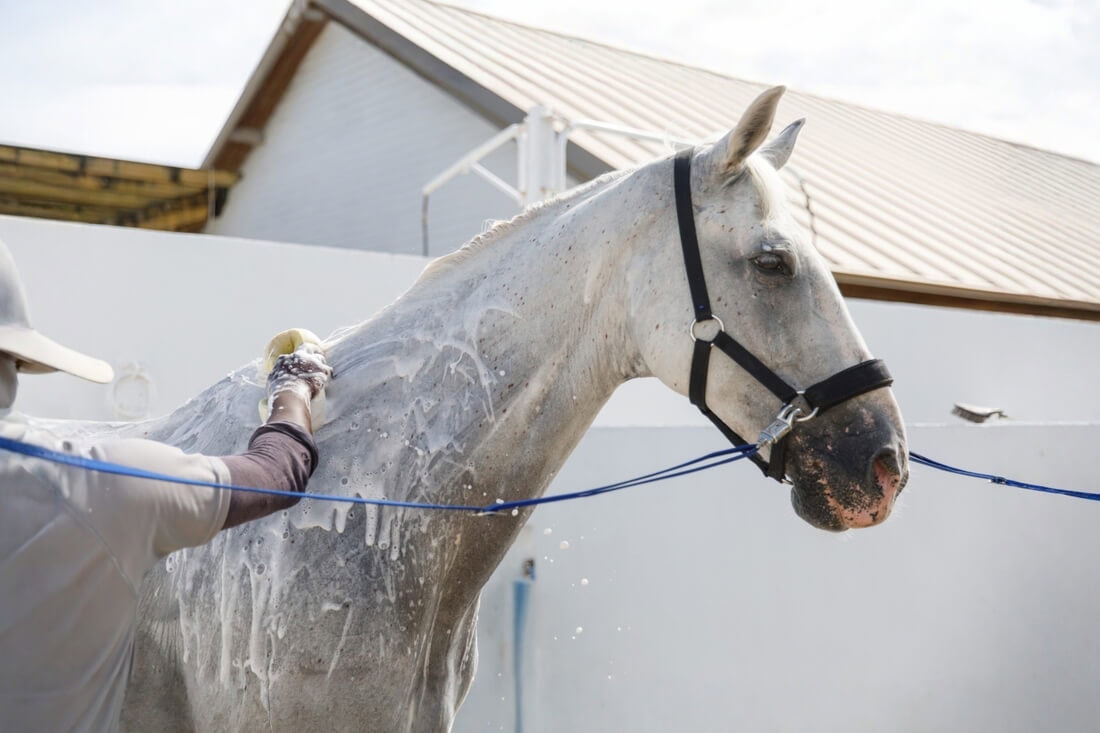
A healthy, glossy coat is more than just cosmetic: it’s a reflection of your horse’s overall health and care. While nutrition and management play major roles, the right grooming routine and products also help keep the skin, mane, and tail in top condition.
Shampoos are a key part of routine bathing for horses. They remove dirt, sweat, and debris while supporting the natural barrier function of the skin. However, with the wide range of products available, choosing a safe and effective formula is not always straightforward.
Because equine skin differs from human skin in pH, oil production, and sensitivity, shampoos must be specifically formulated for horses. Using the wrong product can strip protective oils, disrupt the skin’s microbiome, or worsen existing skin conditions.
This article reviews the best types of shampoos for horses and explains the science behind equine skin and coat health. You will learn about different products, common ingredients, and key safety considerations to guide you in selecting the most effective product for your horse.
Maintaining Skin and Coat Health in Horses
Before selecting a shampoo for your horse, it’s important to understand the unique biology of equine skin and hair. Horse skin is not simply a larger version of human skin; it has distinct structural and functional differences that directly affect which products are safe and effective.
The skin is the horse’s largest organ, accounting for up to 12% of total body weight. It serves as a dynamic barrier between the internal environment and the outside world, providing protection, thermoregulation, and sensory input. [1]
The Epidermis
The outermost layer of the skin, the epidermis, is a stratified squamous epithelium that lacks its own blood supply. Instead, it relies on diffusion from the dermis beneath. In horses, the epidermis is relatively thin compared to many other animal species, which makes it more vulnerable to irritation from harsh products or environmental stressors. [1]
Keratinocytes make up over 95% of the horse’s epidermis. These cells arise from stem cells in the basal layer and gradually migrate outward, changing shape as they mature, which is referred to as desquamation. Along this journey they produce keratin proteins and lipid-rich material that form the waterproof barrier of the skin. [1]
Figure 1. Layers of the equine epidermis and desquamation
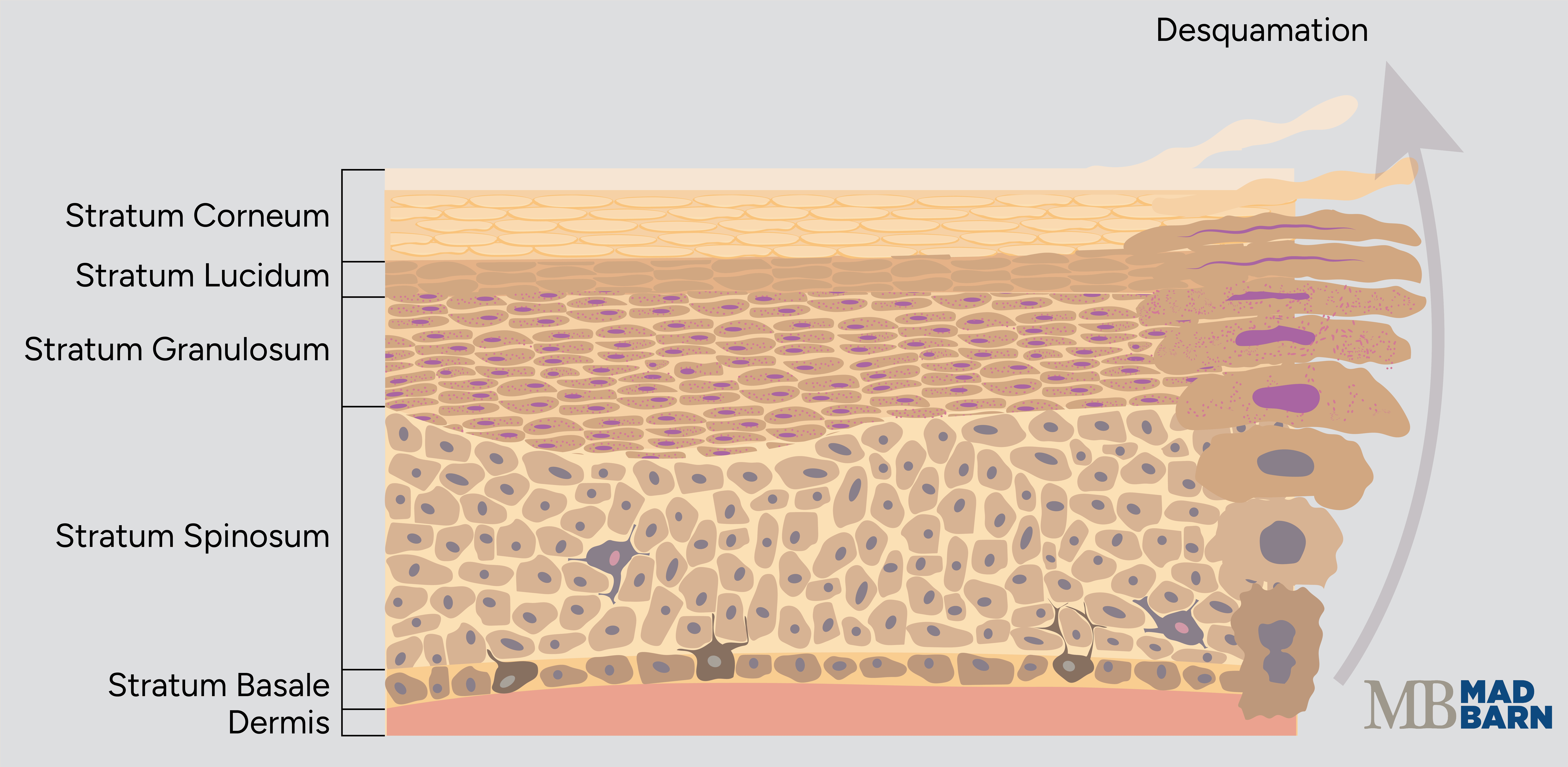 Illustration: Dr. Ana Mesa, PhD
Eventually, keratinocytes die and are shed as dander, a process that occurs continuously in healthy horses. This low-level scaling is normal and not inherently a sign of disease. [1]
The horse’s epidermis also contains several specialized cell types, including: [1]
- Melanocytes: Produce pigment that protects against ultraviolet light and determines coat and skin color
- Langerhans cells: Derived from bone marrow, these act as immune sentinels by capturing and presenting antigens to lymphocytes
- Merkel cells: Found in smaller numbers, these serve as slow-adapting mechanoreceptors, contributing to the horse’s tactile sensitivity
Together, these cells ensure that the epidermis is not only a passive barrier but also an active participant in defense and sensation. [1]
The Dermis
Beneath the epidermis lies the dermis, the vascular and structural core of the skin. It supports hair follicles, sebaceous glands, and sweat glands while providing strength and elasticity through its collagen and elastin framework. [1]
The equine dermis is divided into superficial and deep layers. The superficial dermis contains fine, loosely arranged collagen fibers, while the deeper dermis is more densely packed. Thickness varies by location: the dermis is notably thin on the eyelids and inner thighs, but thicker over the neck, gluteal, and sacral regions where additional collagen and elastic fibers provide durability. [1]
Fibroblasts are the predominant dermal cells, producing collagen, glycosaminoglycans, and other extracellular matrix components. The dermis also contains three interconnected vascular plexuses that supply oxygen and nutrients to the skin while supporting thermoregulation through heat exchange. [1]
A dense network of sensory nerves makes the dermis highly responsive to external stimuli, which helps explain the horse’s finely tuned tactile sensitivity. [1]
The Hypodermis
The deepest layer of equine skin is the hypodermis or subcutis. Composed of fat and loose connective tissue, it serves as both an insulator and a shock absorber, cushioning muscles and deeper structures. [1]
The hypodermis also serves as an energy reserve. Fat deposits that accumulate along the crest of the neck, tail head, and buttocks are key reference points when assessing body condition score. Abnormal fat deposition may indicate metabolic disorders such as EMS or PPID (Cushing’s). [1]
Specialized Structures
Equine skin is not uniform across the body. It contains numerous specialized structures that reflect the species’ adaptation to diverse climates and lifestyles. Sweat glands are particularly well-developed in horses, allowing them to regulate body temperature efficiently during exercise or heat stress. [1]
Sebaceous glands, especially abundant in the mane, tail, and genital regions, secrete sebum that lubricates the hair and skin. Hair follicles vary between the fine body coat and the thicker, continuously growing mane and tail hair. [1]
Tactile hairs (whiskers) around the muzzle and eyes are connected to rich nerve and blood supplies, functioning as precise sensory organs.
White skin, though structurally similar to pigmented skin aside from a lack of melanocytes, is more susceptible to sunburn, melanoma, squamous cell carcinoma, and infectious conditions. [1]
Seasonal shifts in coat growth, driven primarily by shifts in total daily daylight hours, further demonstrate the adaptability of equine skin. Horses living in hot climates typically have shorter coats while those in cold regions grow thick insulating coats for winter. [1]
What's your top priority with your horse's health?

Enter your email to receive your store credit
Skin & Hair Physiology
A horse’s skin and coat work together to protect the body and adapt to seasonal changes. The skin produces natural oils (sebum) that lock in moisture and strengthen the protective barrier. These oils also help keep the coat flexible and resistant to dirt and water.
Horses continually shed and regrow hair in cycles. This process allows the coat to thicken in winter for insulation and to shed out in summer to prevent overheating. Healthy oil production and normal hair growth cycles are essential for maintaining skin integrity, regulating body temperature, and keeping the coat in good condition.
Natural Oils: The Role of Sebum
Horses don’t need shampoo to develop a shiny coat; the glossy sheen comes from the horse’s own physiology, not from bathing products.
Sebaceous glands, located alongside hair follicles, secrete sebum — a lipid-rich substance that forms a protective layer across the skin and hair shafts. Sebum waterproofs the coat, reduces friction between hairs, and keeps the skin supple and flexible. [1]
The distribution of sebaceous glands is uneven across the horse’s body. They are especially large and active in the mane, tail, lips, and genital regions, which is why these areas often appear naturally shinier. [1]
Grooming is essential for supporting the protective role of sebum. Regular currying, the circular use of a rubber or curry comb to loosen dirt and stimulate the skin, not only removes debris but also spreads natural oils through the coat, creating a healthy sheen and reinforcing the skin’s barrier function.
This natural conditioning effect can be disrupted by over-washing. Harsh detergents or excessive bathing can strip oils from the skin faster than they can be replenished, leaving the surface dry and prone to cracking or secondary infections. [1]
Horses with pale coats or those participating in frequent competition are particularly at risk, as they tend to be bathed more often. In these cases, choosing a shampoo formulated with moisturizers such as colloidal oatmeal, glycerin, or fatty acids helps preserve the protective lipid barrier. [1]
Sebum also supports the horse’s immune defense. By coating the skin and hair, it creates a mildly acidic environment that discourages overgrowth of harmful microorganisms. This makes the preservation of natural oils more than a cosmetic concern; it is a fundamental component of maintaining dermatological health. [1]
Hair Growth & Shedding
Hair grows in cycles consisting of anagen (active growth), catagen (transition), and telogen (rest). In horses, these phases are strongly seasonal and governed primarily by daylight length, although temperature, nutrition, and management practices are also influential. [1]
Because of this, horses undergo heavy shedding in spring and autumn. During these times the skin is metabolically active, and mild flaking or scurf is part of the healthy renewal process. This shedding cycle is particularly pronounced in body hair, whereas the mane and tail consist of thicker, permanent hairs that grow continuously.
The seasonal coat cycle highlights the need for flexible grooming routines. In winter, when a dense, insulating coat grows, frequent bathing is unnecessary and risks impairing the skin’s defenses. Conversely, during heavy shedding in spring and autumn, shampoos with light moisturizers can support skin comfort while helping loosen dead hair.

Choosing the Best Shampoo for Your Horse
With so many equine grooming products available, selecting the right shampoo can feel overwhelming. The best choice depends not only on appearance but also on skin health, coat condition, and how often your horse is bathed.
Some horse owners may wonder if they can use human shampoo on their horses because it’s inexpensive and easy to find. However, horses need specialized formulations to protect their skin and coat health.
Horse-specific shampoos and conditioners are formulated to meet the unique requirements of equine skin and coats, including:
- Skin pH
- Coat density and dirt load
- Skin sensitivity
Skin pH
One important reason to use equine-specific shampoos is the difference in skin pH between horses and humans. Human skin is slightly acidic, averaging 4.5 to 5.5 pH, while equine skin is closer to neutral or mildly alkaline, typically 6.5 to 7.5 pH. [2]
This pH balance, maintained by the outermost skin layer, is a key part of the horse’s natural defense system. It helps the skin tolerate environmental extremes and inhibits the growth of harmful bacteria, fungi, and other pathogens. [2]
When human shampoos are used on horses, this protective balance is disrupted. Acidic formulations designed for human use are hydrophilic, pulling moisture from the skin. Over time, this can cause dehydration, flaking, and increased skin irritation in horses. [2]
Conversely, highly alkaline products such as bleaches or strong degreasers are hydrophobic, stripping away the natural oils that keep the coat waterproof and the skin supple. The result is a dry, sensitive surface more prone to infection and discomfort.
To avoid these issues, shampoos and grooming products should be formulated specifically for horses, cleansing effectively without disturbing the skin’s pH. [2]
Coat Density & Dirt Load
Horses spend most of their time outdoors and are constantly exposed to dust, sweat, pollen, mud, and even manure, all of which build up in the coat and mane.
Because of this heavier dirt load and thicker hair compared to humans, equine shampoos are formulated with stronger surfactants to break down and lift away debris. These cleaning agents lower the surface tension of water, allowing it to penetrate the dense coat more effectively, while being balanced with skin-friendly ingredients that help minimize irritation.
Skin Sensitivity
Certain horses, especially those with pink skin, light-colored coats, or pre-existing skin conditions such as sweet itch or rain rot, are more prone to skin irritation and adverse reactions.
To help protect sensitive horses, many equine shampoos include soothing ingredients such as aloe vera, oatmeal, or chamomile.
Table 1. Types of horse shampoo at-a-glance [3]
| Category | Description | Best For | Key Ingredients | Notes |
|---|---|---|---|---|
| General-Purpose | Balanced formulas for routine washing. Clean dirt, sweat, and grease without stripping protective oils | Healthy coats with no skin issues |
|
|
| Whitening / Brightening | Enhance light-colored coats by neutralizing stains. Optical agents create a brighter, cleaner appearance | Light coats (grey, palomino, paint); show preparation |
|
|
| Medicated | Therapeutic shampoos for diagnosed skin conditions such as dermatitis, fungal infections, or dandruff | Horses with diagnosed skin conditions |
|
|
| Conditioning / Moisturizing | Restore moisture, soften hair, and reduce breakage in manes and tails | Dry coats, brittle hair, horses bathed frequently |
|
|
| Natural / Hypoallergenic | Gentle, additive-free formulas using plant-based cleansers. Minimize risk of irritation | Sensitive horses, foals, eco-conscious owners |
|
|
| Waterless / Dry | No-rinse sprays for quick cleaning between baths. Convenient in cold weather or limited facilities | Spot cleaning, stain removal, winter grooming |
|
|
Shampoo Ingredients
Selecting the right shampoo for your horse begins with understanding the label. Each ingredient serves a defined purpose, whether cleansing, conditioning, or soothing, and awareness of these roles helps owners select products that meet their horse’s specific needs while minimizing the risk of irritation.
Commercial shampoos differ in formulation, but common ingredient categories include: [1][3][4][5][6]
- Cleansing agents: Surfactants are the primary cleaning compounds that detach dirt, sweat, and sebum from the hair and skin surface. Sodium lauryl sulfate (SLS) is widely used and highly effective, but it can be irritating with frequent application. Cocamidopropyl betaine, derived from coconut oil, is a milder co-surfactant often blended with stronger agents to reduce irritation potential. Decyl glucoside, a plant-derived surfactant, provides gentle cleansing with minimal disruption of natural oils.
- Conditioning agents: These ingredients reduce the drying effects of surfactants and maintain coat integrity. Silicones such as dimethicone form a thin film on the hair shaft that reduces friction and mechanical damage. Proteins like keratin or silk protein can bind to the hair surface, reinforcing structure. Natural oils such as coconut, jojoba, or argan function as emollients, replacing lipids lost during washing.
- Soothing additives: Designed to support skin barrier function in sensitive horses. Aloe vera provides hydration and has mild anti-inflammatory activity. Oatmeal is a humectant that reduces itching and maintains moisture. Chamomile extract contains flavonoids that exhibit mild anti-inflammatory effects, useful in horses prone to skin reactivity.
- Whitening agents: Shampoos formulated for light-colored coats may include optical brighteners or bluing agents. These compounds alter light reflection and neutralize yellow discoloration, enhancing coat brightness without altering hair pigment.
Some additives present a higher risk of adverse reactions. Artificial dyes and fragrances are common sensitizers associated with contact dermatitis.
Parabens, used as preservatives, may cause irritation in susceptible horses. High concentrations of alcohol can remove protective surface lipids, leading to excessive dryness. [7]
Safety Considerations
The right shampoo can support your horse’s skin and coat health, but safe use is just as important as product choice. A few precautions can help you avoid irritation and keep grooming both effective and gentle:
- Patch test first: Apply a small amount of shampoo to a hidden area, rinse, and check the site after 24 hours. Redness, swelling, or itching suggest sensitivity, and the product should not be used. This step is especially important for horses with pink skin, thin coats, or a history of skin problems.
- Use medicated shampoos under vet guidance: Products with active ingredients such as chlorhexidine or ketoconazole can be effective but also harsh if misused. Horses with chronic or recurring skin conditions should only start or change a medicated shampoo under veterinary direction.
- Avoid over-bathing: Even mild formulas can disrupt the skin barrier if used too frequently. Daily bathing is usually unnecessary except for competition horses or those on a vet-directed treatment plan. For most horses, occasional full baths combined with regular grooming are enough to maintain skin and coat health.
Bathing is more than applying soap and water. An effective wash includes pre-rinsing to loosen dirt, applying shampoo evenly, paying attention to long hair like the mane and tail, rinsing thoroughly to avoid residue, and using conditioner when needed. Following these steps helps protect the skin, support a healthy coat, and keep your horse comfortable.
For a full step-by-step routine, see our complete guide to bathing a horse.
Frequently Asked Questions
Here are some frequently asked questions about horse shampoo:
Human shampoo should not be used on horses. It is formulated for the pH and structure of human skin and hair, which differ significantly from those of horses. Using it can strip away protective natural oils, leaving the horse's coat dry, irritated, and more vulnerable to skin problems.
For horses with sensitive skin, hypoallergenic or natural shampoos containing soothing ingredients such as aloe vera or oatmeal are generally safest. Always patch test before full application and consult a veterinarian for chronic skin issues.
Most horses only need bathing a few times a year or before shows. Excessive bathing can strip natural oils from the coat, so regular grooming is usually better for skin health.
Medicated shampoos should only be used under veterinary guidance. They are formulated to treat specific conditions such as fungal infections, rain rot, or itching, and may cause irritation if used incorrectly.
Summary
Choosing the right shampoo is an important part of equine care. Beyond improving coat appearance, the right product helps protect the skin barrier, maintain natural oils, and support overall comfort. Using a shampoo formulated for horses ensures effective cleansing without unnecessary irritation.
- Select shampoos based on your horse’s skin type, workload, coat color, and any existing skin conditions
- Avoid human shampoos, which are not suitable for equine skin pH
- Check ingredient lists, choose equine-specific formulations, and limit washing frequency to protect skin health
- Remember that skin and coat condition also depend on nutrition, management, and regular grooming
References
- Knottenbelt. D. C. et al. Pascoe's Principles and Practice of Equine Dermatology. 2nd ed. Elsevier Saunders, Edinburgh New York. 2009.
- Let Your Horse Shine Bright. FEI. 2022.
- Shiers. J. Grooming Horses: A Complete Illustrated Guide. Rowman & Littlefield. 2025.
- Jurek. I. and Wojciechowski. K. A Sebum-Mimetic Lipid Monolayer and Its Interaction with (Bio)Surfactants. Colloids and Interfaces. 2022.
- Sodium Lauryl Sulfate (SLS). Chemical Safety Facts. 2022.
- Sodium Lauryl Sulfate: A Complete Overview of Its Application in Personal Care and Cleaning Formulations. Elchemy. 2024.
- Wood. M. Ingredients to Avoid in Horse Shampoos: A Detailed Guide. Of Horse. 2025.