English




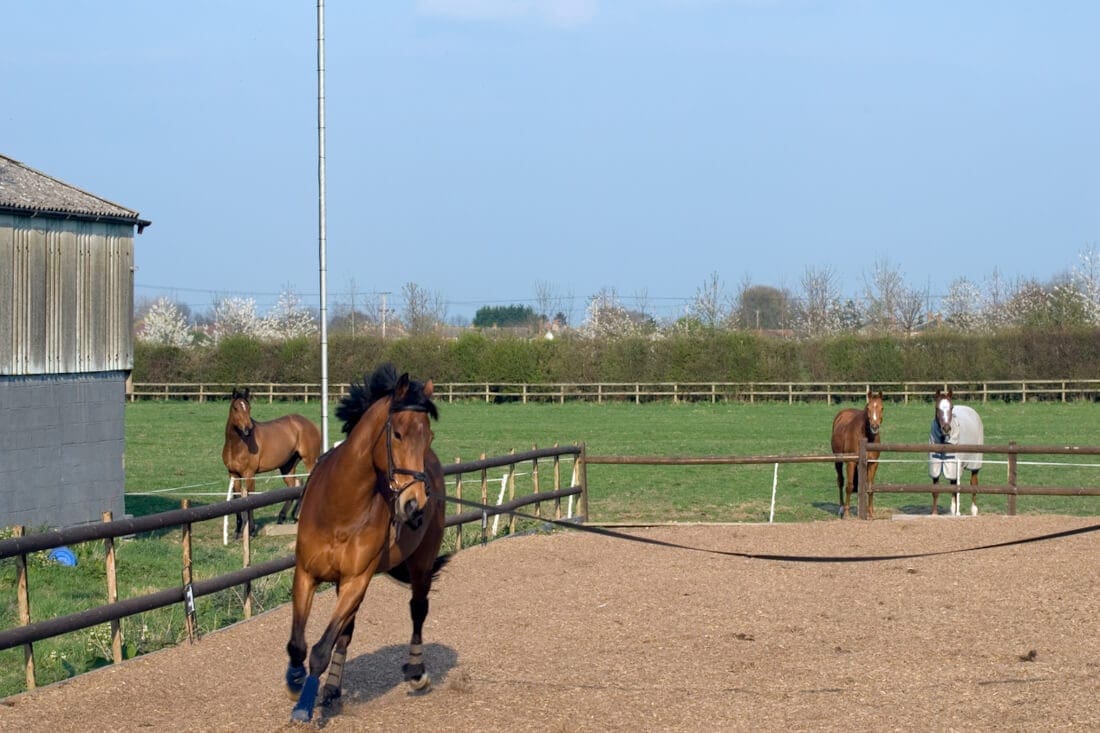
Warming up your horse before riding is essential for optimizing their performance and preventing injury. Just like human athletes, horses benefit from light exercise that prepares their bodies and minds before jumping into the demands of their specific discipline.
A thoughtful warm-up routine improves circulation, enhances flexibility, and primes the horse’s muscles and joints for the work ahead, whether the ride involves a relaxed hack, a dressage test, or a competitive show jumping course.
Warming up also helps your horse tune in to their rider, respond more reliably to aids, and settle into a rhythm that fosters confidence and cooperation. For riders and trainers, warm-ups provide a valuable opportunity to assess the horse’s mood, energy level, and soundness before committing to more intense activity.
Read on to learn why warming up matters, different warm-up strategies, when and how to stretch, and how to adapt routines based on discipline and weather conditions.
Warming Up Your Horse Before Work
A warm-up is a series of light exercises performed before more intense activity, designed to prepare the horse’s body and mind for the work ahead.
Studies on human athletes consistently show improved performance, flexibility, and recovery after proper warm-up. [1]
While research on equine-specific warm-up routines is still growing, some research suggests stretching and warming up before exercise has beneficial effects on heart rate and lactate levels in exercising horses. [2]
For horses, warming up also enhances precision and serves as a mental cue, helping them prepare for their riding discipline. Additionally, warm-ups allow trainers to assess a horse’s soundness and responsiveness before more intense activity. [3]
Warm-up routines vary by trainer and discipline, but most start with low-intensity stretching and suppling exercises like walking, trotting, and slow loping.
Experienced riders emphasize the importance of warm-ups that prepare horses for leg and rein aid responsiveness. Some trainers also use passive techniques, like heat lamps or rubdowns, to aid muscle preparation. [3]
Benefits of Warming Up
Warming up helps horses use oxygen more efficiently and improves metabolic readiness. As movement begins, muscles generate heat and blood vessels expand, increasing circulation and raising tissue temperature to optimal levels. [3]
Cardiovascular function increases during warm-up, which is reflected in your horse’s heart rate.
Warming up also supports better energy metabolism, joint lubrication, and coordination. Overall, warm-ups prepare your horse’s body to work more efficiently and safely. [2]
Warm-up routines also increase oxygen consumption and carbon dioxide production during intense exercise, although peak oxygen consumption isn’t affected by a warm-up’s intensity. Research in horses shows that after warming up, oxygen consumption rises by 30% and carbon dioxide production increases by 23%. [4]
Horses experience less “oxygen debt” after warming up, meaning they rely less on anaerobic energy and recover more quickly. This reduces fatigue and physiological stress. [4]
Evidence
The ideal warm-up depends on the horse’s training level and the demands of their discipline. Research shows the effects of warming up vary depending on the horse’s level of fitness.
For example, one study found temperature increases in the distal limbs occurred sooner and lasted longer with warming up in high performance sport horses compared to leisure horses performing the same warm-up routine. [5]
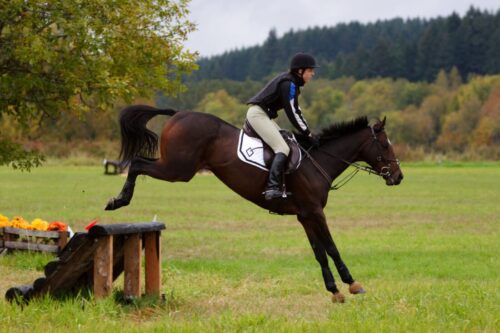
For high-intensity disciplines like show jumping, longer, low-intensity warm-ups are often more effective. This strategy gradually elevates body temperature and improves flexibility while reducing injury risk. [5]
For racehorses, a brief but focused warm-up, such as five minutes of moderate trotting followed by walking, has been shown to boost aerobic energy metabolism. Improved aerobic respiration does not directly improve racing speed, but it can delay fatigue by supporting more efficient use of oxygen. [6]
Another study on Thoroughbreds found that more intense warm-ups led to reaching maximal oxygen use rates faster and reduced lactic acid buildup during sprints.
These higher-intensity warm-ups also led to lower circulating carbon dioxide and improved oxygen use, which means the horses relied less on lactic acid and more on oxygen for energy after completing a high-intensity warm-up. This suggests higher-intensity warm-ups help horses use oxygen more effectively during racing, which improves performance by reducing reliance on lactic acid as a source of energy. [7]
What's your top priority with your horse's health?

Enter your email to receive your store credit
Methods & Exercises
Warm-up techniques for horses fall into two main categories: passive and active. [8]
Passive warm-ups use external methods to raise muscle temperature and prepare the horse’s body for activity without requiring the muscles to work or burn energy. These methods can include heat application, massage, or exposure to warm environments.
This boosts blood flow, which increases oxygen delivery to the muscles. Increased circulation also reduces stiffness and increases joint flexibility. [8]
While passive methods may help with short bursts of strength, they don’t significantly boost endurance. Passive techniques are more commonly used during downtime or rehabilitation, and not directly before competition. [8]
Active warm-up strategies are more common and focus on intensity, duration, and transition time. These exercises help improve performance by engaging muscles more directly. This method can be tailored for different equestrian disciplines like racing, dressage, show jumping, and eventing. [8]
Stretching
Stretching enhances flexibility, coordination, and joint mobility. When used correctly, it helps prevent injuries and supports better performance in equine athletes. [2]
Research suggests that daily stretching may not be ideal for horses. Instead, stretching three times per week strikes a better balance and is less likely to cause discomfort or strain. [9]
You can improve your horse’s proprioception — the body’s ability to sense its position, movement, and coordination in space — by incorporating light stretching that stimulates the central nervous system. Useful exercises include lunging, asking the horse to bend its head around while under saddle, walking, or loping. [10]
Planning Your Horse’s Warm-Up Routine
Before you design your warm-up, keep in mind the four main factors that should guide your approach: intensity, discipline, environment, and context.
It is common across most disciplines for riders to spend 10 – 20 minutes warming up while incorporating technical skills like lateral work and quick transitions. Jumping riders may also include 4 to 10 jumps. Factors such as the horse’s stress level, arena conditions, and time available can affect the warm-up duration and content.
A horse is considered “warmed up” when it feels supple, relaxed, and responsive to aids. [11]
Intensity
Research shows that warm-ups provide similar benefits across all intensities. Even a low-intensity warm-up is enough to produce positive effects, though a horse’s level of training may affect the warm-up’s impact. [8]
Examples of differing warm-up intensities include: [8]
- Low intensity: 5 min walk, 400-meter canter, 5 min walk
- Low intensity: 10 min walk, or 8 min walk and 1 min trot
- High intensity: 5 min trot, canter until venous temperature exceeds 39.5°C, then 5 min trot
- High intensity: 15 min warm-up of pacing, trotting, galloping, and six jumps at 1.00 – 1.40 m
Riders may choose to vary the intensity of the warm-up depending on the specific workout or discipline that follows, ensuring the horse is optimally prepared for the demands ahead.

Discipline
Design your horse’s warm-up routine based on their discipline, competition level, and response to aids. The preferred gait for warm-ups typically differs by discipline, though the walk is the most common gait across all warm-up types.
As competition level increases, the duration and intensity of your horse’s warm-up might also increase, but longer or more intense warm-ups may not impact the final results of a competition. [12]
Research on equestrian warm-up routines has shown that lower-level dressage horses warm up for around 30 minutes, mostly through trotting. Upper-level horses canter more frequently during warm-up. A longer, balanced warm-up often supports improved performance in dressage. [8]
Meanwhile, in jumping, warm-up duration varies from 4 to 63 minutes, averaging 20.5 minutes with most time spent walking. While a longer warm-up is often recommended for more complex events, an overly intense warm-up can actually hurt performance in this discipline. Warming up over significantly more jumps or higher obstacles could reduce performance in competition. [8]
Finally, eventers warm up similarly across dressage and cross-country levels, but intermediate-level horses typically shorten their warm-up before show jumping. [8]
Research is still needed to establish the most effective warm-up methods for each equestrian discipline and level. As this work is ongoing, researchers are looking at factors like intensity, duration, specific movements, and how the transition between warm-up and competition affects performance. [8]
Context
Your horse’s warm-up may differ at home compared to the show arena. Factors like age, temperament, and weather can influence your approach on show day. [8]
In competition, timing a warm-up can be tricky due to waiting periods or delays. Equine studies have yet to establish how these gaps affect performance, though studies of human sports show that very short and very long transitions hurt results. [8]
During long transition periods at competitions, using passive heat maintenance methods or light movements like intermittent walking and trotting could help maintain the beneficial effects of the warm-up. [8]
Environment
Both cold-weather and hot-weather warm-ups follow a basic progression from walking to trotting to cantering. However, the intensity and duration of each phase varies depending on the temperature.
In cold weather, warm-ups are best focused on a slow build-up to raise core temperature and blood flow. A 10 to 20-minute warm-up is crucial in the winter to improve circulation in the muscles before starting work, and a light exercise sheet can be used during the warm-up as well.
A sample winter routine might include: [13]
- 5 min walk on a long rein, stretching the neck and back
- 5 min trotting in large circles
- 5 min trotting in smaller circles with counter-flexing and walk-trot transitions
- Finish with cantering from large to smaller circles in each direction
In hot weather, minimize warm-up duration and limit your horse to light exercise to avoid overheating. A shorter routine with more walk breaks can be effective. Prioritize cooling strategies, such as water misting or providing shade after the warm-up, to prevent a dangerous rise in body temperature.
Research has shown that horses can overheat quickly in hot conditions, making a shorter, focused warm-up essential for their safety. [14]
Frequently Asked Questions
Here are some frequently asked questions about warm-ups for horses:
Warming up prepares your horse both physically and mentally for the demands of riding. It enhances performance, flexibility, and recovery while reducing the risk of injury. It also provides a chance to assess soundness and responsiveness before intense exercise. [2][3]
A proper warm-up raises tissue temperature, improves cardiovascular function, and supports better joint mobility and coordination. It speeds up oxygen consumption and carbon dioxide production during exercise, reducing oxygen debt and lactic acid buildup, leading to less fatigue and improved recovery. [2][3][4]
Warm-ups should be tailored based on discipline, competition level, and your horse's fitness. For instance, dressage horses may focus on trot and canter work, while jumping horses benefit from short, focused sessions that include some jumping. Higher-level horses often require longer or more intense warm-ups, but too much intensity can impair performance, especially in jumping. [8][12]
It depends on your horse and discipline. Longer, low-intensity warm-ups are ideal for high-intensity disciplines like show jumping, promoting flexibility and reducing injury risk. Shorter, more intense warm-ups benefit activities like racing by improving oxygen use and delaying fatigue. However, excessively intense warm-ups may reduce performance in certain disciplines. [5][6][7]
Stretching improves coordination, proprioception, and joint mobility. Effective strategies include lateral movements, walking, and transitions. Stretching three times per week is optimal. Warm-up methods can be passive (heat, massage) or active (movement-based exercises). Most horses benefit from 10–20 minutes of warm-up that includes walking, trotting, and discipline-specific skills. [2][8][9][10][11]
Summary
A proper warm-up prepares your horse both mentally and physically for exercise, improving readiness, and performance while reducing the risk of injury.
- Warm-up routines may include passive methods like heaters and active methods like stretching and movement
- Factors to consider when planning your warm-up include context, environment, intensity, and discipline
- Warming up benefits the horse's performance by preparing their joints, muscles and mind for work
- A thorough warm-up can help raise muscle temperature and improve flexibility before intense exercise
- Use a combination of active movement, occasional stretching, and thoughtful adjustments to create a routine that sets you and your horse up for success
References
- McGowan, C.J., et al. Warm-Up Strategies for Sport and Exercise: Mechanisms and Applications. Sports Medicine. 2015.
- Farinelli. F. et al., Influence of Stretching Exercises, Warm-Up, or Cool-Down on the Physical Performance of Mangalarga Marchador Horses. Journal of Equine Veterinary Science. 2021. View Summary
- Physical Conditioning of Horses. Oklahoma State University. 2017.
- Geor. R. J. et al., Effects of Warm-up Intensity on Kinetics of Oxygen Consumption and Carbon Dioxide Production during High-Intensity Exercise in Horses. American Journal of Veterinary Research. 2000. View Summary
- Janczarek. I. et al., Thermographic Analysis of the Metacarpal and Metatarsal Areas in Jumping Sport Horses and Leisure Horses in Response to Warm-Up Duration. Animals. 2021. View Summary
- Tyler. C. M. et al., Effect of a Warm-up on Energy Supply during High Intensity Exercise in Horses. Equine Veterinary Journal. 1996. View Summary
- Mukai. K. et al., Effects of Three Warm-up Regimens of Equal Distance on VO2 Kinetics during Supramaximal Exercise in Thoroughbred Horses. Equine Veterinary Journal. 2010. View Summary
- Frippiat. T. and Votion. D.-M., Warm-Up Strategies and Effects on Performance in Racing Horses and Sport Horses Competing in Olympic Disciplines. Animals. 2024. View Summary
- Rose. N. S. et al., Effects of a Stretching Regime on Stride Length and Range of Motion in Equine Trot. The Veterinary Journal. 2009. View Summary
- Frick. A., Stretching Exercises for Horses: Are They Effective?. Journal of Equine Veterinary Science. 2010.
- Chatel, M.M. and Williams, J.M. What's in a Warm-up? A Preliminary Investigation of How European Dressage Riders and Show Jumpers Warm-up Their Horses for Training and at Competition. Comparative Exercise Physiology. 2021.
- Frippiat. T. and Votion. D.-M., Warm-Up Strategies and Effects on Performance in Racing Horses and Sport Horses Competing in Olympic Disciplines. Animals. 2024. View Summary
- Riding Your Horse When It's Cold Outside. Purdue University College of Veterinary Medicine.
- RU Beating The Heat?. Rutgers, The State University of New Jersey. 2017.