English

Whether riding recreationally or training for competition, rider posture directly affects balance, communication, and the horse’s way of going. Alignment influences how clearly weight, leg, and rein aids are delivered and how effectively the rider can follow and regulate movement.
Correct posture allows riding cues to be applied independently and consistently, with minimal excess tension. In contrast, poor alignment often results in uneven weight distribution, delayed or conflicting aids, and compensatory tension that interferes with the horse’s movement, balance, and responsiveness.
Effective riding posture is a functional position that supports the horse’s biomechanics. Riders who maintain alignment through the head, torso, pelvis, and leg distribute weight evenly and move in rhythm with each gait. This improves stability, clarity of aids, and overall comfort while reducing unnecessary strain and injury risk for both horse and rider.
This guide outlines the key components of correct riding posture, common alignment faults and their effects, and practical strategies and exercises to improve balance, effectiveness, and consistency in the saddle.
Horse Riding Position
Riding position refers to how a rider aligns and uses their body on a horse while seated in the saddle. Proper riding position allows the rider to remain balanced and secure while applying clear, effective aids that influence the horse’s movement and response.
Rather than a fixed pose, correct position is a dynamic alignment that balances stability with mobility as the horse moves. Each part of the rider’s body contributes to balance, communication, and the ability to follow and regulate the horse’s gaits.
Vertical Alignment in Rider Posture
Safe riding centers on vertical alignment, which describes a straight, balanced posture that allows riders to move with their horse.
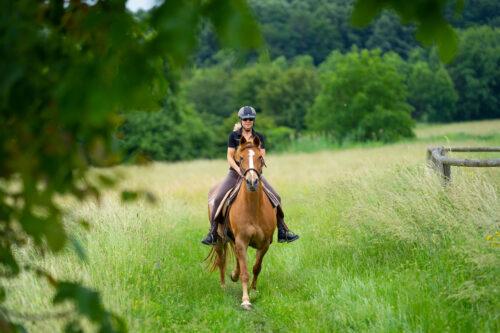
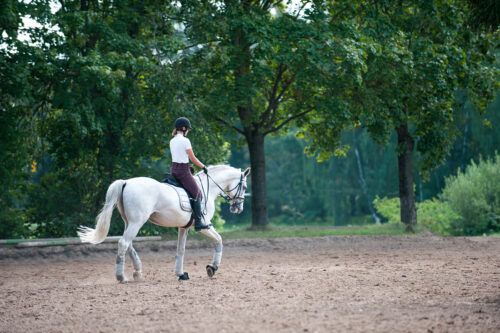
Viewed from the side, riders form an imaginary line that runs from the ear, through the shoulder and hip, down to the heel. This alignment reflects a neutral spine and stable skeletal stacking that support balance, control, and steadiness in the saddle. [1][2][3]
A well-aligned rider sits evenly on both seat bones, with the pelvis in a neutral position and the upper body softly upright. An open chest, relaxed shoulders, and naturally balanced head limit tension through the neck and back. [1][2][3]
Effective rider alignment requires dynamic responsiveness. As the horse moves, the rider’s ankles, knees, hips, and spine flex and adjust to absorb motion, allowing them to stay centered and connected through any gait. [1][2][3]
What's your top priority with your horse's health?

Enter your email to receive your store credit
Pelvis & Seat Position for Balanced Riding
Seat position forms a rider’s primary point of connection with a horse and shapes both stability and communication. This area anchors overall riding posture and influences how clearly movement and cues are shared.
Pelvic alignment supports rider balance. A neutral pelvis avoids tipping too far forward and tucking underneath the trunk. Neutral alignment allows the vertebrae of the spine to stack evenly while both seat bones rest with equal, light contact in the saddle. This supports spinal comfort and allows natural movement.
Proper pelvic alignment lets motion from the horse travel through the hips and lower back instead of creating stiffness or bounce. Tightness in the lower back, gripping through the thighs, or uneven weight through one side of the pelvis reduces elasticity and interferes with the rider’s ability to follow the horse’s movement. [2]
A balanced seat also shapes how aids are delivered. Small changes in weight or pelvic angle influence transitions, rhythm, and half-halts while keeping the rider centered and secure during spooks, stumbles, or gait changes. [4]
Leg Position & Support
Proper leg position supports security and communication, helping riders stay balanced while delivering clear, refined aids.
General guidelines for leg positioning for equestrians include: [5]
- Thighs: Drape softly around the horse’s barrel and maintain steady contact without gripping
- Knees: Keep light and relaxed, avoiding bracing or excess tension
- Calves: Maintain light contact along the horse’s sides to allow clear delivery of cues
- Heels: Let sit slightly lower than the toes through natural weight flow rather than force
Proper leg position helps riders sit more securely in the saddle while delivering aids with greater clarity and less effort.
Arm, Elbow, & Hand Position
Arm, elbow, and hand position shape how rein contact feels to both the horse and the rider. Correct alignment supports balance and cue clarity, allowing movement to remain fluid and responsive.
Arms
Proper arm position begins at the shoulders. The arms should hang naturally from a relaxed shoulder girdle, without excess tension or stiffness.
Avoid a rigid frame; instead, maintain a soft, elastic connection that follows the movement of the horse’s head and neck while preserving a consistent line of communication. [6]
Elbows
Keep the elbows softly bent and close to the body, without clamping or rigidity. A supple elbow allows subtle following motion, helping maintain consistent rein contact as the horse moves. [6]
Elasticity should come from the elbow and shoulder rather than the fingers alone, supporting clearer and more refined communication. [6]
Hands
Hands should be positioned just above and slightly in front of the saddle’s pommel, spacing them a few inches apart based on discipline and rein length. Your thumbs should rest lightly on top of the reins and angle them slightly inward to add stability without creating tension. [6]
Maintain a straight line from elbow through forearm, wrist, and hand to the horse’s mouth so rein aids travel clearly and without interruption. [6]
Keep your wrists straight and aligned with the forearm rather than bending inward, flattening, or twisting. Neutral wrist positioning supports steady contact and helps keep the bit balanced in the horse’s mouth.
Arm tension, bracing at the elbows, or overly active hands can disrupt communication along the rein line. Common issues such as seesawing, backward pulling, or uneven contact often trace back to blocked shoulders or stiff elbows rather than hand position alone. [7]
A soft, following arm with quiet shoulders supports giving, receiving, and adjusting rein aids in harmony with the horse’s movement.
Head Position & Eyeline for Rider Balance
Rider head and eye position affects overall posture, balance, and effectiveness in the saddle.
A forward gaze directed along the line of travel helps maintain balance and coordination, while looking down toward a horse’s neck or the ground often disrupts posture and body control.
Downward focus can result in rounded shoulders, a forward shift in weight, and reduced stability through the seat. [3][8]
Head weight plays a meaningful role in balance, and tipping too far forward or back can pull a rider out of position. A level chin and relaxed neck support a neutral head carriage, allowing the upper body to follow the natural line of the spine and stay balanced. [3][8]
Purposeful vision supports intention, and clear communication that carries through the rider’s entire body. A forward and outward gaze also enhances situational awareness and helps riders prepare for changes in direction, pace, or environment. [3][8]
Common Rider Posture Errors
Poor positioning habits often develop slowly and often go unnoticed without outside feedback. Small changes in posture can disrupt balance, reduce clarity of aids, and affect a horse’s comfort.
Identifying these patterns, understanding underlying causes, and addressing them in a steady way helps riders develop a more stable, effective seat over time.
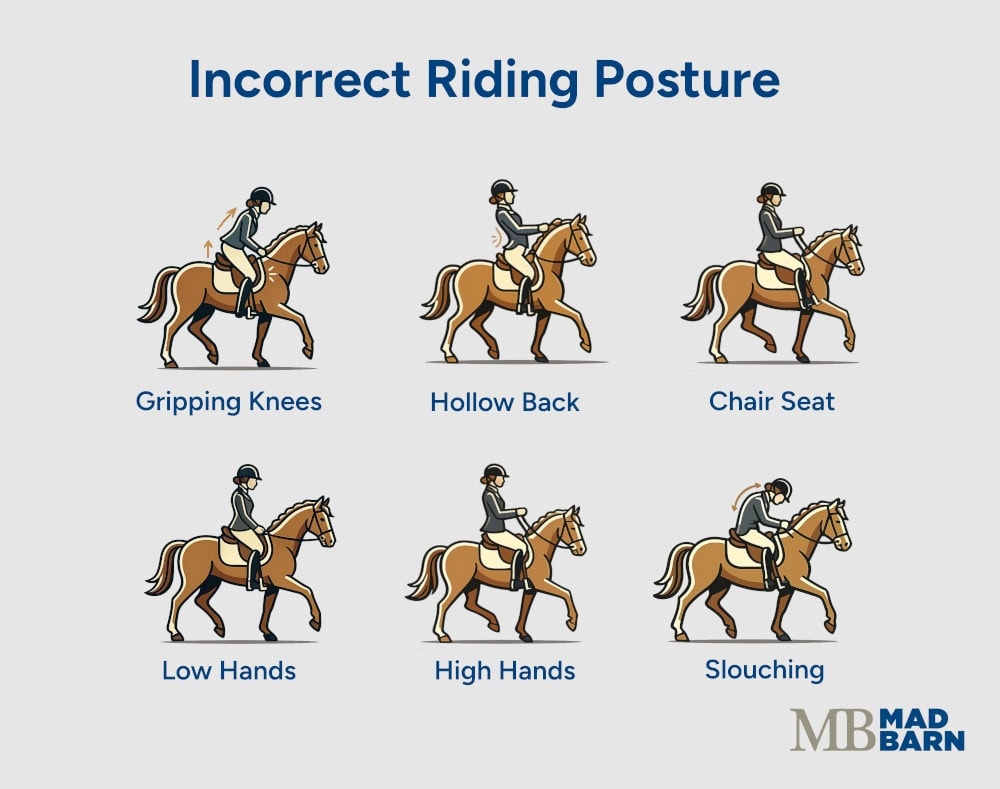
Chair Seat
A chair seat occurs when the rider’s legs drift forward, placing the heels ahead of the hips and often tucking the pelvis underneath the body. This position shifts the rider behind the motion and reduces effective seat contact. [1][9]
It commonly develops when the core is inactive, when stirrup bars are set too far forward, or when riders brace into the stirrups for balance. Bringing the leg back underneath the body, allowing weight to drop through the heel, and engaging the lower abdominals can help restore a more neutral, balanced alignment. [1][9]
Hollow or Arched Back
A hollow or arched back is marked by excessive spinal extension, with the chest lifted upward and the pelvis tipped forward. While it may feel like “sitting tall,” this posture often creates tension in the lower back and interferes with consistent seat contact. It is frequently linked to weak abdominal support or tight hip flexors. [1][9]
Softening through the lower back, activating deep core muscles, and focusing on length through the spine rather than lift through the chest can help reduce lumbar tension and improve stability. [1][9]
Rounding or Slouching
Rounding or slouching occurs when the upper body collapses, the shoulders roll forward, and the head drops. This shifts the rider’s balance and limits effective core engagement. Fatigue, habitual off-horse posture, or limited strength in the upper back are common contributors, and mental tension can worsen the pattern. [1][9]
Gently lifting through the breastbone, widening across the collarbones, and allowing the shoulders to settle back and down can help reorganize posture without stiffness. [1][9]
Gripping with the Knees
Gripping with the knees is a compensatory habit where the knees press tightly into the saddle, often lifting the seat and destabilizing the lower leg. This response typically appears during moments of insecurity, imbalance, or challenging transitions. [1][9]
Encouraging relaxation through the inner thighs, maintaining steady breathing, and developing a more supportive, wrapped leg position can reduce reliance on knee grip and improve overall balance. [1][9]
Hands Too High or Too Low
Hands that are too high or too low disrupt the straight line from the elbow to the bit, leading to inconsistent rein contact and unclear signals. This is often caused by tension in the shoulders or arms, limited elbow mobility, or attempts to follow the horse’s motion by moving the hands instead of allowing the arms to absorb movement. [1][9]
Adjusting the hands to sit just above and in front of the withers, with softly bent elbows and neutral wrists, helps maintain steadier, more effective contact. [1][9]
What Affects Rider Posture While Riding
Understanding correct riding position provides a foundation, but posture in the saddle is influenced by more than technique alone.
Rider fitness, mental focus, and equipment all influence how posture holds up in the saddle and how clearly movement and cues carry through to the horse.
Rider Fitness
Off-the-horse training plays a valuable role in developing and reinforcing correct riding posture. Disciplines such as Pilates, yoga, and functional strength training enhance flexibility, core stability, and postural awareness, all of which directly translate to better balance and coordination in the saddle.
Even a short daily routine of 10 minutes focused on stretching or core activation can yield meaningful improvements in rider control and ease of movement. [10][11]
Core strength & Spinal stability
A well-engaged core supports spinal alignment, absorbs motion from the horse, and allows deeper, more stable sitting without collapse or bracing. [10][11]
Core function extends beyond abdominal muscles to include obliques, the diaphragm, the pelvic floor, and deep spinal stabilizers. These muscle groups work together to maintain posture while allowing controlled movement as the horse travels beneath the rider. [10][11]
To improve core engagement, riders can incorporate exercises such as planks, glute bridges, bird-dogs, and deep diaphragmatic breathing into their off-the-horse conditioning routine.
Hip & Ankle mobility
Tight hips can prevent the rider from sitting deeply, leading to tension in the pelvis and an unstable seat. Restricted ankle movement may cause a rider to brace against the stirrups or lose contact altogether. Greater freedom in these joints supports shock absorption and smoother communication with the horse.
Dynamic stretches to improve hip and ankle mobility include:
- Lunges
- Pigeon pose
- Ankle flexion drills
- Calf stretches
- Foam rolling
Lunge Lessons
Lunge lessons create a focused setting for improving riding position. Riding on a lunge line with an experienced instructor removes steering tasks and allows riders to focus on their balance and body control. This helps identify poor posture, tension, or other long-standing habits that may go unnoticed during regular riding. [12][13]
Sessions often include riding without reins, closing eyes to build body awareness, or using transitions that challenge core control. Guided movements such as arm circles, leg swings, or balance tasks highlight areas of stiffness or weakness.
With time, this work supports better posture, increased confidence, and greater overall effectiveness in the saddle. [12][13]
No-stirrup Work
Riding without stirrups helps deepen the seat and increase core engagement. It challenges riders to rely on their balance rather than the security of stirrup irons, making it easier to detect habits like excess gripping, leaning, or tipping. [14]
Mirrors & Video feedback
Arena mirrors or video recordings give clear feedback on posture that feeling alone might miss. Mirrors help riders notice collapsing hips, uneven shoulders, slouched postures, and hands in the wrong position. With coaching, visual feedback can help riders spot mistakes faster and improve more effectively.

Mindfulness & Body Awareness for Continued Success
Proper riding posture begins with the body, but is maintained through riders’ mindset and focus. Riders who tense, overthink, or strive for perfection often lose softness and fluidity, resulting in rigidity and disconnection.
Developing mental habits that promote relaxation and responsiveness supports an adaptable, effective position.
Tips to improve mindfulness include:
- Breathe deeply to release tension in the torso, supporting relaxed movement
- Focus on feel instead of force, letting the body respond to the horse rather than bracing or holding unnaturally
- Visualize balance and grounding, imagining yourself steady and centered, like a tree’s roots or the flow of water
- Stay present by tuning into the horse’s rhythm, stride, and real-time feedback
The Impact of Equipment on Rider Posture
Even the most disciplined rider cannot maintain proper position if the saddle does not fit properly. Factors like seat shape, twist, depth, and flap configuration affect how the rider sits and how their legs drape around a horse. An ill-fitting saddle disrupts balance and may lead to riding patterns that are hard to correct.
A seat that is too small pushes the rider forward or causes them to grip with their thighs, while seats that are too large may lead to sliding or instability. Flap length and angle should align with the rider’s leg length and femur rotation; if a flap is too short or the knee block too aggressive, riders’ knees and toes may turn outward. [16]
Balance is equally important. A saddle that tilts riders forward encourages a chair seat, while one that tips too far back encourages hollowing. Stirrup bar placement affects leg alignment, either supporting or distorting the vertical ear-shoulder-hip-heel line. [16]
Ensuring proper saddle fit improves comfort, enhances riding performance, and prevents long-term discomfort or injury for horse and rider alike. [16][17] Taking the time to properly adjust saddle fit fosters better connection and communication, creating a more enjoyable and effective ride.
Frequently Asked Questions
Here are some frequently asked questions about correct rider position for horseback riding:
Correct rider position shapes comfort, balance, and communication during horseback riding. Proper alignment supports even weight distribution through the saddle and allows the horse to move more freely through its back. Clear posture also supports consistent riding cues, which reduces mixed signals and tension. Over time, correct rider position supports safer riding and helps protect the horse from unnecessary strain.
Sitting evenly in the saddle shows up through balance and body awareness rather than a single visual marker. Even seat bone contact, a centered feeling over the horse's movement, and symmetry through the shoulders and hips all point toward sitting evenly. Uneven pressure, collapsing through one side, or constant shifting often signals imbalance that can interfere with stability and comfort.
Bouncing in the saddle often relates to tension, stiffness, or reduced shock absorption through the lower body. Fixing bouncing in the saddle starts with a neutral pelvis that allows the rider to follow the horse's motion rather than brace against it. Softer joints in the hips, knees, and ankles support steadier movement, and deeper breathing helps reduce bracing that contributes to bouncing.
External factors that influence posture include fitness, flexibility, mental focus, and equipment. Rider fitness affects core support and mobility, which can change stability even with good instruction. Mental tension or distraction can lead to stiffness that alters posture. Saddle fit and saddle balance can also influence leg alignment and seat position, sometimes creating compensations that are difficult to correct without addressing the equipment.
Summary
Riding position shapes how comfortably and clearly a rider communicates with a horse during every ride. An effective position develops through awareness, adaptability, and consistency rather than rigid form. Building this skill supports safer, more confident riding across disciplines and experience levels.
- Correct alignment relies on an ear-shoulder-hip-heel line that supports balance and stability
- Pelvic position influences seat security, shock absorption, and the ability to follow movement
- Leg placement provides support and aids without gripping or bracing against the saddle
- Arm and hand alignment maintains steady, elastic rein contact through relaxed shoulders and elbows
- Head position and eyeline affect balance, spinal alignment, and overall body organization
- Rider fitness, mindset, and saddle fit all influence posture and ease of movement
References
- Riding Position: How to Correct Your Horse Riding Position and Posture.
- Yastrebova. I. Alignment.
- Goodnight. J. Body Position for Horseback Riding. 2019.
- Goodnight. J. Horseback Riding Basics: Using Your Aids - AQHA. 2018.
- What is the correct leg position when riding a horse?. Horseback Riding Guide. 2026.
- Rider Hand Position - Good and Bad. The Riding Instructor.
- Wofford. J. Training the Three-Day-Event Horse and Rider. Doubleday, New York. 1995.
- Grice. L. Riding Horses with Eyes Up and Ahead. Horse Journals. 2018.
- How to Fix Common Riding Posture Mistakes in 2025. Ophena. 2025.
- Hampson. A. and Randle. H. The Influence of an 8-Week Rider Core Fitness Program on the Equine Back at Sitting Trot. International Journal of Performance Analysis in Sport. Routledge. 2015. doi: 10.1080/24748668.2015.11868858.
- Aegerter. A. M. et al. An Investigation into the Association of the Physical Fitness of Equestrians and Their Riding Performance: A Cross-Sectional Study. Brill. 2020. doi: 10.3920/CEP190052.
- 6 Tips to Improve Your Seat with Lunge Lessons.
- Lunge Lessons. Pony Magazine.
- Thind. D. No Stirrup November: A Month-Long Commitment to Improving Your Seat WITH or WITHOUT Stirrups. Dressage Today. 2021.
- Dyson. S. et al. Saddle Fitting, Recognising an Ill‐fitting Saddle and the Consequences of an Ill‐fitting Saddle to Horse and Rider. Equine Veterinary Education. 2015. doi: 10.1111/eve.12436.
- Higgins. G. How Does the Rider’s Position in the Saddle Affect the Horse’s Musculoskeletal Health?. Horses Inside Out. 2024.