English








The canter is one of the primary gaits used in horseback riding, combining power, balance, and rhythm into a smooth, three-beat motion. Learning how to canter is a significant milestone for riders of all disciplines, whether they ride for leisure, compete in showjumping, or enjoy Western reining.
Mastering the canter requires an understanding of the gait’s mechanics, proper rider positioning, and clear communication with the horse. Each phase demands balance, coordination, and patience. The goal is a controlled, balanced canter that is comfortable for both horse and rider.
Learn to canter with easy-to-follow steps, and explore common challenges and solutions associated with this gait. Whether you are learning your first canter transition or refining advanced movements, this guide provides the knowledge and techniques you need to canter with ease.
Canter & Other Horse Gaits
Horses move through four natural gaits: walk, trot, canter, and gallop. Each gait has a distinct rhythm, speed, and pattern of footfalls. Understanding these gaits helps riders anticipate their horse’s movement and apply aids effectively.
The four gaits are characterized as: [1]
- Walk: A four-beat gait where each hoof hits the ground independently in a steady, even rhythm. The walk is the slowest and most relaxed gait, often used for warm-up and cool-down.
- Trot: A two-beat, diagonal gait where opposite pairs of legs move together, the left hind with the right fore, and the right hind with the left fore. The trot can be slow and controlled or energetic and extended.
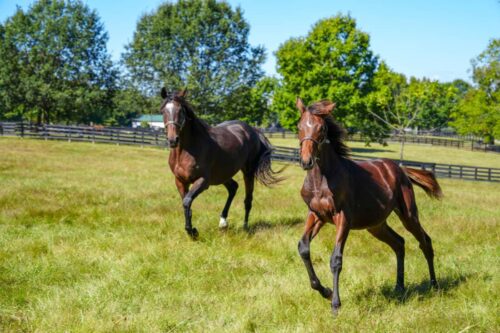
- Canter: A three-beat gait with a moment of suspension when all four hooves leave the ground. The canter is faster than the trot but slower than the gallop, offering a smooth, flowing ride.
- Gallop: The fastest gait, similar to the canter but with four distinct beats due to a slight separation in the diagonal leg movements.
Among these gaits, the canter strikes a balance between speed and control, making it essential for various riding activities, from dressage patterns to trail rides and jumping courses.
Gaits in Gaited Horses
While most horses move through the four standard gaits of walk, trot, canter, and gallop, gaited horses follow a different biomechanical pattern, especially at the intermediate speeds. Instead of trotting, many gaited breeds perform a smooth, four-beat gait that reduces vertical motion and provides a more comfortable ride.
- Tennessee Walking Horse: Performs the running walk, a smooth, four-beat gait with noticeable overstride and a head-nodding motion.
- Icelandic Horse: Known for the tölt, a four-beat, lateral gait with no suspension phase. The tölt can range from slow and collected to fast and extended, remaining exceptionally smooth. Some Icelandics also perform the flying pace, a high-speed lateral gait used for racing.
- Paso Fino: Executes highly refined four-beat gaits, especially the paso fino, paso corto (medium speed), and paso largo (fast and extended). These gaits are evenly timed and very smooth.
- Missouri Fox Trotter: Performs the foxtrot, a broken diagonal gait where the front foot of each diagonal pair lands slightly before the hind. This creates a sliding, smooth movement that eliminates the bounce of a traditional trot.
- Peruvian Paso: Known for the paso llano, a four-beat lateral gait with exceptional smoothness, and the sobreandando, a faster, more extended version. A distinctive feature is the natural termino, an elegant outward rolling of the forelegs.
These gaits vary by breed but share several features:
- They are usually four-beat, meaning each hoof strikes the ground independently
- They eliminate the suspension phase seen in the trot, contributing to a smoother feel
- They often require specific conformation and neuromuscular patterns, making them natural for gaited horses but difficult for non-gaited horses to perform
Although gaited horses can and do walk and gallop like non-gaited horses, their canter can vary in quality depending on the breed and training. Some gaited horses naturally offer a balanced, easy canter, while others may prioritize their intermediate gaits and need additional conditioning to develop a well-rounded canter.
What's your top priority with your horse's health?

Enter your email to receive your store credit
History of the Canter
The term canter can be traced to the Latin word cantherius, which means gelding, a castrated male horse traditionally associated with a steady, calm temperament. [2][3]
Geldings were commonly used for everyday riding due to their reliability and predictable nature. This linguistic connection reflects the qualities of the canter: a smooth, steady gait that provides a comfortable, controlled speed suitable for long journeys or training young riders. [2][3]
The term canter is also linked to the English city of Canterbury. In medieval times, pilgrims traveling to Canterbury often covered long distances on horseback, selecting the canter as their preferred pace. [4]
Historical texts from the Middle Ages sometimes reference the Canterbury gallop, suggesting an early association between the city and the gait. Over time, the term Canterbury gallop likely evolved into the simpler term canter, which remains in use today. [4]
Mechanics of the Canter
The canter is one of the most versatile and widely utilized gaits in equestrian disciplines worldwide. Riders value it for its smooth, rocking-horse motion and adaptability across different activities, from leisurely trail rides to intricate dressage performances.
The canter’s rhythm creates a natural flow that many riders find easier to sit than the jarring motion of the trot. This gait also serves as a foundation for more advanced movements, such as flying changes, pirouettes, and tempo changes in dressage.
The canter is defined as a three-beat gait with a moment of suspension when all four of the horse’s legs are off the ground. Each stride follows a predictable sequence of footfalls, and the pattern depends on whether the horse is on the left or right lead.
The canter is often described as having a rocking-horse motion due to the upward and forward swing created by the horse’s back and hindquarters. Riders who learn to follow this motion with their seat find the canter one of the most comfortable gaits to ride.
To truly master this gait, it helps to understand the exact sequence of movements involved.
The canter sequence proceeds as follows: [1][5][6][7]
- Beat One: The stride begins with grounding the outside hind leg. This leg provides the initial propulsion and balance for the stride. At this stage, the other three legs remain suspended off the ground, and the horse’s weight momentarily rests on this single leg.
- Beat Two: The inside hind leg and the outside foreleg land simultaneously. This diagonal pairing of legs creates the second beat of the stride. During this phase, the horse’s outside hind leg begins to lift off the ground after its initial contact. The horse’s body begins to rise as the hindquarters engage, creating the upward lift characteristic of the canter.
- Beat Three: The inside foreleg strikes the ground, completing the third beat of the gait. At this moment, the outside hind leg has fully left the ground, while the inside hind leg and outside foreleg are still in contact but preparing to lift. The inside foreleg (the lead leg) supports the horse’s forward motion.
- Lift-Off: As the horse continues its stride, the inside hind leg and the outside foreleg lift from the ground. The inside foreleg becomes the final point of contact before also leaving the ground.
- Suspension: In the final stage, all four legs leave the ground simultaneously. This moment of suspension gives the canter its characteristic smoothness and upward energy.
The mechanics of the canter allow for efficient, rhythmic movement. The three-beat pattern creates a sense of cadence, while the moment of suspension adds a feeling of lightness.
Additionally, the canter shares similarities with the gallop, the horse’s fastest gait. While both involve a lead leg and a moment of suspension, the gallop differs as a four-beat gait where the diagonal pair of legs lands separately rather than simultaneously.
This subtle distinction helps horses maintain stability and power when galloping at high speeds, such as during races or cross-country courses.
What's your top priority with your horse's health?
Types of Canter
The canter is a versatile gait that can be adjusted in stride length, rhythm, and frame depending on the horse’s training, the rider’s goals, and the discipline being practiced.
Different types of canter serve specific purposes, from building strength and balance in training sessions, to demonstrating athleticism and precision in competitions. Riders must learn to recognize and influence these variations through seat, leg, and rein aids.
Working Canter
The working canter is the most natural and commonly used variation. It features a balanced, forward rhythm with a moderate stride length. The horse remains relaxed yet responsive, moving with enough impulsion to maintain engagement without rushing. [5]
The working canter serves as a foundation across disciplines, from dressage and jumping to everyday schooling. In dressage, it is typically introduced in the lower-level tests to showcase the horse’s natural balance and willingness to move forward while staying light in the bridle. [1]
Collected Canter
The collected canter is defined by shorter, more controlled strides achieved by increasing engagement from the hindquarters. The horse’s weight shifts slightly backward, and their hind legs step further under the body to provide impulsion. This results in a more elevated forehand, shorter frame, and increased lift within the stride. [5]
Collected canter is essential for upper-level dressage movements like pirouettes and flying changes. It is also useful for show jumping, particularly when navigating tight turns or technical combinations where control and balance are paramount. [5]
Medium Canter
The medium canter is a more ground-covering version of the working canter, requiring the horse to stretch the stride while maintaining balance and engagement. Unlike the working canter, the horse extends the forelegs with increased reach while still demonstrating clear uphill movement. [5]
This type of canter appears in mid-level dressage tests to display the horse’s ability to lengthen its frame while remaining connected through the topline. In show jumping, riders often use a medium canter when approaching fences that require momentum without sacrificing control. [8]
Extended Canter
The extended canter involves the greatest stride length and the most ground coverage of all the canter variations. The horse pushes powerfully from the hindquarters, stretching forward with freedom and elasticity. In this canter, the moment of suspension is longer due to the increased stride length and forward momentum. [5]
Extended canter is a hallmark of higher-level dressage tests, where judges assess the horse’s ability to lengthen the frame while maintaining rhythm and impulsion. Eventers also use an extended canter, particularly between obstacles to cover ground efficiently. [5]
How to Canter
Learning to canter is a significant milestone for riders of all levels. The transition into the canter, maintaining rhythm, and smoothly transitioning back requires balance, coordination, and clear communication with the horse.
The process might feel overwhelming at first, but with preparation and practice, the canter can become one of the most enjoyable and rewarding gaits to ride.
Here is a complete five-step guide to riding the canter with your horse.
1) Warm Up
Both horse and rider need to be physically and mentally prepared for the canter. Proper preparation helps ensure a smooth transition and reduces the risk of the horse becoming rushed or unbalanced.
To ease your horse into cantering:
- Start with a thorough warm-up at the walk, encouraging the horse to stretch its muscles and loosen its joints.
- Gradually increase intensity by moving into an active trot, focusing on rhythm and impulsion. The horse should engage its hindquarters to build the energy necessary for the transition to canter.
- Incorporate transitions between walk and trot, as well as gentle bending exercises, to activate the hindquarters and improve responsiveness.
Riders should check that the tack is correctly fitted, as an ill-fitting saddle can cause discomfort, leading to resistance.
Additionally, riders should be mentally prepared, visualizing the transition, breathing deeply, and remaining calm. Horses are highly perceptive and can sense rider tension, which may lead to nervousness or resistance during the transition.
2) Find Your Position
Maintaining the correct position in the saddle is crucial for clear aids, balance, and comfort during the canter. Positioning errors, such as leaning forward or gripping with the knees, can disrupt the transition and cause the horse to lose rhythm or balance.
For correct positioning, pay attention to your: [1][8][9][10]
- Seat: Sit tall with a neutral pelvis. Your seat should feel deep and secure, with your hips relaxed enough to follow your horse’s motion naturally. Avoid tipping forward or collapsing through the hips.
- Legs: Keep your legs long and relaxed, with heels pointing downwards. Maintain soft, consistent contact with your horse’s sides without gripping or pinching with your knees. The inside leg should remain at the girth to encourage the correct lead, while the outside leg moves slightly behind the girth to signal the transition.
- Hands: Hold the reins with a steady, elastic connection. The reins should not be too tight, but avoid letting them go completely slack. Your elbows should remain soft and bent, allowing your horse to move its neck naturally during the transition.
- Core Engagement: Engage your core muscles to stay balanced. A strong core helps maintain stability during the transition and prevents unintentional leaning or bouncing once the canter begins.
- Eyes and Shoulders: Look ahead in the direction you want to go, not down at your horse’s neck. Keep your shoulders relaxed and squared, avoiding the common tendency to twist or hunch forward.

3) Transition to Canter
Requesting the canter involves a coordinated series of aids that communicate the desired transition to the horse.
Follow these steps to transition into the canter: [1][8][9][10]
- Establish a Balanced Walk or Trot: Begin from a steady, balanced walk or trot. For beginners, starting from a trot is often easier because increased impulsion makes the transition smoother.
- Give Seat Cue: Subtly shift your weight onto your inside seat bone to indicate the direction of the desired lead. The shift should be minimal and just enough to communicate your intention without unbalancing your horse.
- Apply Leg Aids: Move your outside leg slightly behind the girth and apply gentle pressure. The inside leg remains at the girth to encourage forward motion and maintain your horse’s balance.
- Use Rein Aids: Give a light half-halt with the inside rein to prepare your horse for the change in rhythm. This half-halt helps rebalance your horse’s weight onto the hindquarters.
- Follow Your Horse’s Motion: As your horse steps into the canter, allow your hips to move with the new gait. Avoid gripping with your knees or stiffening your shoulders, as this may cause your horse to lose rhythm.
Use vocal cues if your horse is trained to respond to them, such as saying “canter” or “up.” Consistent cues help reinforce the horse’s understanding of what they are being asked to do.
4) Ride
Once your horse is in canter, your role is to maintain the rhythm and provide clear, consistent support. Effective riders can control bouncing and balance without inadvertently slowing the horse down.
To stay effective during the canter, focus on your: [1][8][9][10]
- Seat and Hips: Allow your hips to follow your horse’s motion in a forward-and-upward rocking pattern. The movement should come from the hips, not the shoulders. Imagine your hips acting as shock absorbers, absorbing the upward movement without stiffness.
- Legs: Keep your legs relaxed but in contact with your horse’s sides. Too much tension can cause the horse to speed up or slow down.
- Hands and Reins: Maintain a soft, elastic contact on the bit. The reins should guide the horse’s direction and balance without pulling or restricting the neck’s natural movement.
- Breathing and Relaxation: Stay relaxed and breathe rhythmically. Holding your breath or tensing your body can cause your horse to become tense in response.
- Pace Control: Monitor the canter’s speed, ensuring the horse doesn’t rush. If your horse starts to accelerate, use a gentle half-halt to slow down. If they slow too much, encourage more impulsion with your legs.
5) Transition Out of Canter
Ending the canter with a smooth transition is just as important as the initial transition.
Follow these steps to transition out of a canter: [1][8][9][10]
- Prepare with a Half-halt: Apply a half-halt with both reins to prepare your horse for the change in rhythm. This signals that something new is about to happen and helps shift the weight backward.
- Adjust Seat Cues: Engage your core muscles and sink more deeply into the saddle. Increasing weight through your seat helps your horse rebalance and slow down.
- Use Leg Aids: Apply light pressure with both legs to encourage your horse to stay forward and balanced during the transition. If transitioning to a trot, maintain soft, consistent contact to avoid abrupt changes.
- Rein Aids: Use soft, consistent pressure on the reins to slow your horse. Avoid pulling, which can cause your horse to hollow its back or resist the transition.
Once back in trot or walk, release any excess tension and reward your horse with a gentle pat or verbal praise. Positive reinforcement helps your horse associate the transition with a positive experience.
Common Challenges
Learning to canter is a rewarding experience, but it often comes with challenges that can affect balance, rhythm, and confidence.
Both novice and experienced riders may encounter difficulties during the canter transition or while maintaining the gait. Understanding these common issues and knowing how to address them will help improve your canter skills and create a more comfortable, balanced ride.
Leaning Forward
One of the most common mistakes riders make when asking for the canter is leaning forward. This instinct often comes from anticipating the transition or trying to encourage the horse to move forward.
However, leaning forward shifts the rider’s weight onto the forehand, making it harder for the horse to engage its hindquarters and pick up the correct lead.
To address this habit, focus on sitting tall with your shoulders back and your seat deep in the saddle. Imagine a vertical line running through your ear, shoulder, hip, and heel to help maintain position.
Holding Your Breath
Tension or nervousness can cause riders to hold their breath during the transition or while maintaining the canter. This often leads to stiffness, which disrupts the natural flow of movement and makes it harder to follow the horse’s rhythm.
Riders can use breathing exercises before riding to keep calm. While riding, focus on exhaling during the transition to relax your body.
Gripping with the Knees
Gripping with the knees is a common response to feeling unbalanced or insecure in the saddle. This tension causes the rider to lose contact with the horse’s sides, making it harder to maintain impulsion and rhythm.
You can correct this habit by applying gentle pressure with your calves rather than knees, and pointing your toes outwards while riding.
Rushing into the Transition
A rushed transition can lead to an unbalanced, disorganized canter that is uncomfortable for both horse and rider.
To fix this habit, ensure your horse is balanced and working from their hindquarters before asking for the transition. Practicing trot-canter transitions until transitioning feels smooth and natural for both of you.
Canter Exercises
Riders can improve the canter with several exercises, including: [11]
- Two Poles: Place two poles on the ground and practice cantering over them. Focus on maintaining rhythm before, during, and after the poles.
- Straight Forward and 10 Meter Circle: Alternate between a forward canter on the straight line and a more collected canter on a 10-meter circle. This improves adjustability and balance.
- Figure of Eight Canter: Canter in a figure of eight pattern, changing leads through trot. This exercise helps with balance, lead changes, and responsiveness.
- Lines of Canter Poles: Set a series of poles at equal distances. Canter through the poles, focusing on even strides and rhythm.
- Adjusting Canter Size: Canter in a large circle, then ask for a smaller, collected canter, followed by an extended canter. This can help teach the horse to respond to subtle cues.
- Clock Face Poles: Arrange poles like spokes on a clock face and practice cantering around the circle. This exercise challenges steering, rhythm, and precision.
Frequently Asked Questions
Here are some frequently asked questions about how to train your horse to canter:
Check which foreleg reaches forward more prominently. If the inside foreleg leads, the horse is on the correct lead for that direction. You can also feel the lead through the increased movement of the inside seat bone.
Lack of balance, strength, or clear aids can cause difficulty for horses learning the canter. Improve transitions through groundwork, ensure your position is clear, and build strength with trot-to-canter exercises.
Relax your hips and follow the horse's motion with your seat. Engage your core and avoid gripping with your knees to stay balanced. Practicing on a lunge line can help focus on your seat without worrying about reins or direction.
Summary
The canter is a dynamic horseback riding gait that bridges the gap between the stability of the trot and the speed of the gallop.
- By understanding its mechanics and learning the correct aids, riders can achieve a smooth, balanced canter
- Preparation, correct positioning, and thoughtful transitions form the foundation of success
- While challenges such as leaning forward or gripping with the knees are common, they can be addressed with practice and patience
- Regular exercises with poles, circles, and tempo variations help refine canter skills, building confidence and control
References
- Pilliner. S. et al. The Horse in Motion. Blackwell Science, Oxford. 2002.
- Berenger. R. The History and Art of Horsemanship. T. Davies. 1771.
- Lewis. C. T. An Elementary Latin Dictionary. Creative Media Partners, LLC. 2022.
- Canter. The Oxford Dictionary of Phrase and Fable. Oxford University Press. 2005.
- Basic Paces - Walk, Trot and Canter. British Dressage.
- Laffi. L. et al. The Rhythm of Horse Gaits. Annals of the New York Academy of Sciences. 2025. View Summary
- Back. W. et al. Kinematic Comparison of the Leading and Trailing Fore- and Hindlimbs at the Canter. Equine Veterinary Journal. 1997. View Summary
- Bucklin. G. S. The Gentle Art of Horseback Riding. Human Kinetics, Champaign, IL. 2013.
- Cantering A Horse: How To Train The Canter. Ridely. 2023.
- Kindersley. D. Horse Riding: A Step-by-Step Guide to Mastering Your Skills. Dorling Kindersley Ltd. 2012.
- Baker. S. Exercises to Gain Adjustability In the Canter - Novice. Fédération équestre internationale. 2020.