English





Intussusception in horses describes a condition where a segment of the intestine folds inward on itself, like closing a telescope. Intussusception can lead to severe complications such as intestinal blockage and tissue damage if not promptly addressed.
The exact causes of intussusception are not fully understood. Factors such as intestinal lesions, infections, and changes in diet are commonly associated with the condition.
The characteristic symptom of intussusception is colic. Diagnosis is challenging. Surgery is often required to make an accurate diagnosis and for treatment.
Outcomes for horses with intussusception vary based on the location and extent of the condition. Surgical outcomes are generally more favorable when the condition is diagnosed and treated promptly.
Horse owners and caretakers should familiarize themselves with the risk factors and symptoms of this life-threatening condition. Understanding how intussusception develops and when to call a veterinarian helps to make informed, timely decisions to expedite care.
Intussusception in Horses
Intussusception is a condition in which a portion of the horse’s intestine telescopes into an adjacent portion of the intestine. [1][2][3][4][5]
In severe cases, the intestine becomes blocked and prevents the passage of food and water through the digestive tract. [3][6]
When intussusception occurs, blood flow to the affected part of the intestine is disrupted. As more of the intestine becomes trapped inside itself, blood flow gets restricted further, eventually leading to swelling that prevents the intestine from straightening itself out. [1]
If the disruption to blood flow is not resolved quickly, the intestinal tissues begin to adhere to one another. In the most serious cases, tissue death can occur. [1]
What's your top priority with your horse's health?

Enter your email to receive your store credit
Anatomy and Terminology
To better understand the risks of intussusception in horses, it’s useful for owners to learn the terminology related to this condition. There are two parts to an intussusception: the intussusceptum and the intussuscipiens: [1][7]
- Intussusceptum: the portion of the intestine closer to the mouth which telescopes into an adjacent piece of intestine further down the tract
- Intussuscipiens: the lower portion of the intestine closer to the rectum that the higher, adjacent piece of intestine telescopes into
The telescoping action observed in cases of intussusception is referred to as invagination. [1]
Intussusception can occur in several locations throughout the digestive tract, the most common being the small intestine. Less commonly, the large intestine is involved. [1][3][8]
The small intestine of the horse is comprised of three structures: [1]
- The duodenum
- The jejunum
- The ileum
The large intestine is comprised of three general structures: [1]
- The cecum
- The colon
- The rectum
Sometimes, the intussusceptum and the intussuscipiens are parts of the same structure within the horse’s intestinal tract. [1][3]
For example, Jejunojejunum intussusception occurs when part of the jejunum invaginates another part of the jejunum. Intussusception of the ileum and colon are referred to as Ilioileum intussusception and Colon intussusception, respectively.
Sometimes, the intussusceptum and the intussuscipiens are from different but adjacent structures: [1][3]
- Jejunoilieum intussusception is when part of the jejunum invaginates part of the ilieum
- Cecocolon intussusception is when part of the cecum invaginates the colon
In rare cases, intussusception may occur between the duodenum and the pyloric sphincter or within the duodenum alone. [1][3]
The blood flow that feeds these structures is delivered by the mesentery, a fan-shaped organ that supports and nourishes the digestive tract. When intussusception occurs, part of this organ can become invaginated along with the intestine. [1]
In cases where the mesentery gets stuck, the flow of blood and oxygen to the intussusceptum is interrupted. [1] This can result in adhesion, swelling, and tissue death. [1]

Risk Factors
Intussusception is a relatively uncommon but serious condition in horses. [1][3]
Equines of all ages are at risk of intussusception, though it occurs more often in young horses between three months and six years of age. [1][5][9] Mature horses are less likely to be affected. [4]
Intussusceptions in the small intestine are more likely to occur in foals. [9] Weanlings with tapeworm infections are especially at risk. [9]
In the unusual case that intussusception occurs in a mature horse, it is more likely to affect the large intestine. [8]
In general, risk factors for intussusception in horses include: [1][3][8][9]
- Recent diet changes
- Existing inflammation in the digestive tract
- Heavy parasite load
- History of abdominal surgery
- Existing impaction in the digestive tract
- History of intussusception
- Recent administration of parasympathomimetic drugs or general anesthesia
- Deworming with organophosphates
- Existing ulcers
Causes
The causes of intussusception in horses are not fully understood. [6]
One theory is that intussusception is initiated by a lesion in the intestine that allows the intestine to fold into itself. [6] This lesion could be a mass such as a cyst or diverticula, a load of parasites, or material lodged in the tract such as food or other foreign bodies. [5][6][9]
Another factor in intussusception, particularly of the small intestine, is abnormalities in the contractions of the intestinal wall (i.e. disruption to peristalsis). [1][4] This could be because of the triggering lesion or due to other causes such as inflammation in the digestive tract, diarrhea, or recent anaesthesia. [5]
Intussusception is also associated with rapid changes in the horse’s diet. [1] The risk of intussusception is just one example of why it’s important to make changes to the horse’s diet slowly.
Other conditions associated with intussusception include: [1][6][7][8][9][10][11]
- Inflammation in the digestive tract
- Salmonellosis
- Heavy parasite burdens, particularly tapeworm, strongyles, Eimeria leuckarti, or ascarids
- Vascular injury
- Inflammation of the mesenteric arteries
- Variations in the thickness of the intestinal wall
- History of abdominal surgery
- Presence of masses in the tract such as enteroliths, cysts, diverticula, or granulomas
- Presence of foreign bodies or stuck digesta
- Abscesses in the wall of the cecum or other structures
- Deworming with organophosphates
- Use of intestinal motility-modifying drugs
There is a strong correlation between parasite infection and intussusception, particularly in young horses. [7]
Symptoms
The symptoms of intussusception are variable and nonspecific. [2] This means that no one symptom occurs in all cases of this condition and all of the symptoms point to a variety of possible diagnoses. As a result, intussusception is a challenging condition to diagnose. [8][9]
The main symptom of intussusception is colic. [1] The colic may be acute, chronic, or recurrent. [9]
Signs of colic in horses include: [1][9]
- Lethargy
- Pawing
- Looking at, kicking, or biting at the flanks or abdomen
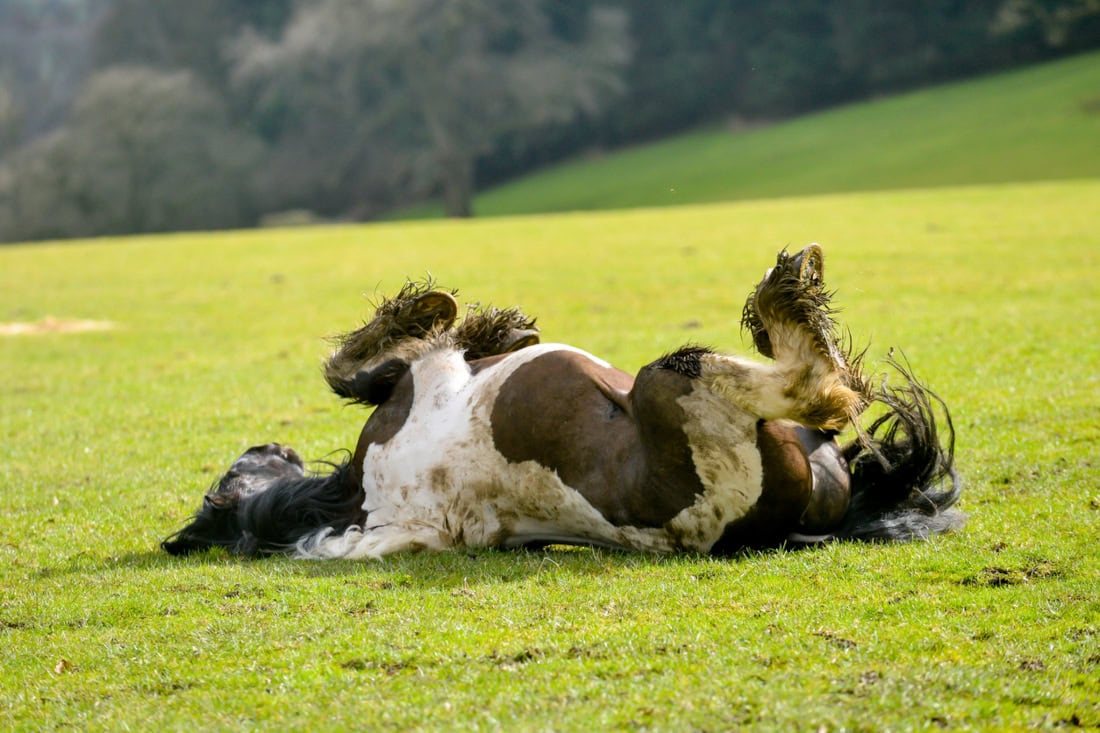
- Lying down
- Curling or lifting the upper lip (Flehmen response)
- Rolling
- Stretching like they need to urinate
- Dog-sitting
- Vocalizing
- Diarrhea or soft feces
- Sweating
- Increased heart rate
- Visibly distended abdomen
- Teeth grinding (particularly in foals)
Other symptoms of intussusception may include: [1][9][11]
- Reduced appetite
- Weight loss
- Lower manure output
- Fever
- Dehydration
- Excessive salivation (particularly in foals)
In cases of small intestine intussusception, the abdominal pain ranges from mild and intermittent to severe. [1] In cases of large intestine intussusception, the abdominal pain is often more severe. [1]
Severity
The severity of intussusception depends on where the invagination occurs, the extent of the intestine that is involved, and how completely the intestine has been blocked. [1]
Intussusceptions are more likely to occur in the small intestine than the large intestine. [1][4]
Some cases of intussusception are asymptomatic. These are considered subacute cases. [9]
Intussusceptions are categorized depending on the severity of the colic as: [6][9]
- Acute: severe colic that starts suddenly, intussusceptions where the blood supply is compromised, and with an intussusceptum of variable length
- Chronic: mild to moderate colic that lasts for long periods, intussusceptions where the blood supply is intact, the intussusceptum is typically shorter than 10 cm, and there is little or no evidence of obstruction
The more intestinal tissue that is trapped, the more severe the condition. [1]
Cases where the intestine becomes completely blocked, where food cannot pass through the digestive system, are considered more serious. [1]
Cases where longer segments of intestine become invaginated are more severe because it is more likely that the blood and oxygen flow to the area will be compromised. [1][6][9]
Diagnosis
Horses with signs of colic require immediate veterinary attention. Some of the causes of colic are fatal. Prompt diagnosis and treatment are critical to increase the likelihood of a good outcome for a horse with intussusception. [1]
Diagnosis of this condition is challenging and often requires exploratory surgery. [2][8] Prior to surgery, other diagnostic tools used to determine the cause of the symptoms include: [1][2][3][6][8][9]
- Physical examination
- Rectal palpation
- Blood work
- Nasogastric intubation
- Ultrasound
- Abdominocentesis
In some cases, a confirmed diagnosis of intussusception is only possible with post-mortem examination (necropsy). [1][8]
Treatment
The treatment for intussusception in horses is surgery to resolve the intestinal obstruction. [1][8][11]
In mild cases, particularly when diagnosis and treatment have been prompt, the surgical intervention may only require manual straightening of the intestine. [1][4]
In cases where the tissues have begun to die, or adhesion or severe oxygen deprivation has occurred, incomplete bypass or removal of the affected portion of intestine is required. [1][4]
Prognosis
The prognosis for a horse with intussusception depends on the location and severity of the condition, what type of surgery is necessary, and whether there are post-operative complications. [1] The horse’s overall health prior to the development of intussusception is also an important factor. [1]
Horses with intussusception of the small intestine have a good prognosis. [6] In long-term studies, it has been found that more than half of horses with intussusception in the small intestine survived and returned to normal function. [1] Horses with ileoileal intussusception had the best outcomes. [1]
Some researchers indicate that intussusception of the large intestine also has a favorable prognosis in cases where surgery is performed. [1] Others suggest that large intestine intussusceptions have a poorer prognosis. [6][9]
Horses with intussusceptions that can be manually straightened without cutting into the intestine have a greater chance of survival, although they have an increased risk of recurrence. [1][9]
Horses that require bypass have a better chance of survival and return to full function than those that require removal of part of the intestine. [1]
Prevention
Since the causes of intussusception are not fully understood, prevention measures are limited. There are some preventive strategies owners can take based on its known risk factors. Strategies include:
- Gradually making dietary changes over a period of weeks
- Following best management practices to prevent ulcer development, particularly by feeding a free-choice, forage-based diet
- Providing sufficient exercise and socialization to reduce stress and associated gut dysfunction
- Monitoring horses carefully after abdominal surgery
- Using appropriate dewormers at a schedule determined with oversight from a qualified veterinarian
Frequently Asked Questions
Here are some frequently asked questions about intussusception in horses:
Horses that are more susceptible to intussusception are usually foals and younger horses up to about six years old. Weanlings with heavy parasite burdens, especially tapeworms, are at particularly high risk. While mature horses are less likely to be affected, when intussusception does occur in adults it is more likely to involve the large intestine.
Intussusception in horses is very serious because a portion of the intestine folds into itself, blocking food passage and potentially cutting off blood supply. This can quickly lead to swelling, tissue death, and life-threatening complications. Left untreated, intussusception in horses often results in death, making rapid veterinary care essential.
Intussusception in horses can progress quickly, sometimes within just a few hours. As the intestine continues folding into itself, swelling and reduced blood flow make the condition worse and harder to resolve. Because intussusception progresses so rapidly once it starts, colic signs usually escalate fast and require urgent veterinary attention.
There are steps you can take to help prevent intussusception in your horse, even though the exact cause isn’t always known. Making dietary changes gradually, keeping a consistent parasite control program, and avoiding sudden stresses on the digestive tract are all important. Prevention of intussusception in horses also involves monitoring carefully after abdominal surgery and working with your veterinarian to minimize risks.
Summary
Intussusception is a condition in which one portion of the horse’s intestine telescopes into an adjacent portion of the intestine. In severe cases, this can lead to a complete blockage of the movement of digesta through the digestive tract as well as interruption to the flow of blood and oxygen to the area.
- Young horses are more at risk than mature horses
- The causes are not yet fully understood but relate to lesions or changes in the intestine’s movements
- Possible factors include inflammation or illness, rapid changes to the diet, parasites, the use of certain drugs and chemicals, and a history of abdominal surgery
- The hallmark symptom is colic; other symptoms are vague and nonspecific
- Diagnosis and treatment typically require surgery
- The prognosis ranges from poor to good depending on several factors including the location of the intussusception, the extent of the intestine involved, and what type of surgery is necessary to resolve the issue
References
- Nelson, B.B. and Brounts, S.H., Intussusception in Horses. Compend Contin Educ Vet. 2012. View Summary
- Paulussen, E. et al., Caecal Intussusception in the Horse: Ultrasonographic Findings and Survival to Hospital Discharge of 60 Cases (2009–2013). Equine Veterinary Education. 2018.
- Mathys, R. et al., Duodenoduodenal Intussusception in a 16‐year‐old German Warmblood Mare. Equine Veterinary Education. 2023.
- Barnes, H. et al., Colon Resection and Anastomosis as Treatment of an Idiopathic Colo‐colic Intussusception in an Adult Horse. BEVA Equine Veterinary Education. 2024.
- Haddad, R. et al., Small Intestinal Intussusception in Horses: Multicentre Retrospective Report on 26 Cases (2009‐2020). Equine Veterinary Education. 2022.
- Reed, S.M. et al., Equine Internal Medicine. 3rd ed. Saunders Elsevier, St. Louis, Mo. 2010.
- Gough, S.L. et al., Caeco-Caecal and Caeco-Colic Intussusception in Two Half-Sibling Standardbred Horses. Equine Veterinary Education. 2019.
- Albanese, V. et al., A Case of a Colocolic Intussusception in a Horse: Colocolic Intussusception in a Horse. Equine Veterinary Education. 2011.
- Blikslager, A.T. et al., Eds., The Equine Acute Abdomen. Third edition. Wiley, Blackwell, Hoboken, NJ. 2017.
- Mair, T.S. et al., Caecocaecal and Caecocolic Intussusceptions Associated with Larval Cyathostomosis in Four Young Horses. Equine Veterinary Journal. 2000. View Summary
- Holcombe, S.J. and Shearer, T.R., Caecocolic Intussusceptions in Horses. Equine Veterinary Education. 2018.