English



Cold-backed behavior in horses is a common yet often misunderstood issue that can significantly affect a horse’s comfort, performance, and overall well-being. Horses showing signs of cold-backed sensitivity may flinch, tense, or hollow their backs when saddled, and some may even react with bucking, stiffness, or resistance once under saddle.
This behavior can stem from a range of physical or mental factors, from ill-fitting tack and muscle soreness to tension, anxiety, or poor equitation. Understanding these underlying causes is key to helping the horse move comfortably and confidently.
In this article, we explore what it means when a horse is cold-backed, the potential reasons behind this behavior, and how thoughtful management can make a lasting difference. With the right approach, many cold-backed horses can regain comfort in their work and continue performing successfully for years to come.
Cold-Backed Horses
Despite its name, the actual temperature of a horse’s back has nothing to do with cold-backed horses. A cold-backed horse shows signs of back discomfort or sensitivity, particularly during saddling or mounting, which often diminish as the horse warms up through movement. [1]
Some of the common behaviors associated with cold-backed horses include: [1]
- Heightened sensitivity to touch: The horse may flinch or respond negatively when their back is touched, even during grooming
- Avoiding the saddle: The horse might hollow or dip their back when the saddle or girth is tightened
- Bucking or rearing: Some horses may buck or rear during warm up or while the rider is mounting
- Irregular gait: The horse may move with an uneven or inconsistent stride, especially at the beginning of an exercise session
- Stiffness: The horse may seem stiff or less supple in the back during warm up
- Tail swishing and pinned ears: These behaviors can signal discomfort or irritation in the horse’s back, especially when under saddle
What's your top priority with your horse's health?

Enter your email to receive your store credit
Causes
Cold-backed behavior can be caused by a wide variety of physical, nutritional, and workload-related factors. It’s important for owners and riders to determine the underlying cause of cold-backed behavior so they can take appropriate steps to address it.
Pain
Cold-backed behavior is most commonly related to pain or discomfort, which can arise from multiple sources.
Signs of back pain in horses are often subtle and inconsistent, making them difficult to recognize. Affected horses may display minor behavioral changes and physical signs like irregular stride, disrupted rhythm, or difficulty maintaining balance, especially on the lunge line.
Because these symptoms can come and go, diagnosing back pain can be particularly challenging. Back pain is likely underdiagnosed in horses due to the vague nature of the signs and the limitations of conventional diagnostic methods. [2][3]
Back pain in horses can be caused by a variety of problems, including: [2][4]
- Joint diseases such as arthritis
- Poor conformation
- Injury
- Overexertion
- Poor equitation
- Kissing spine
- Poor fitting tack
- Time spent immobile
Indicators that may point to back pain as a cause of cold-backed behavior include: [2][3]
- Restricted movement
- Refusing to work
- Stiffness when making tight turns
- Unwillingness to change leads
- Loss of hind limb propulsion
- Sourness with saddling or riding
- Head tossing
- Bucking
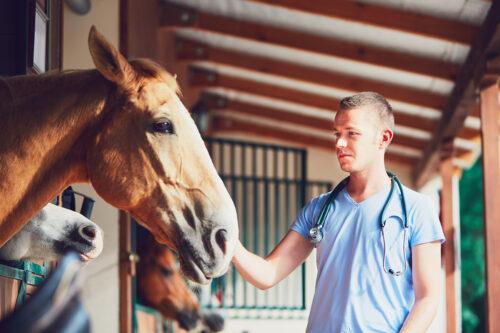
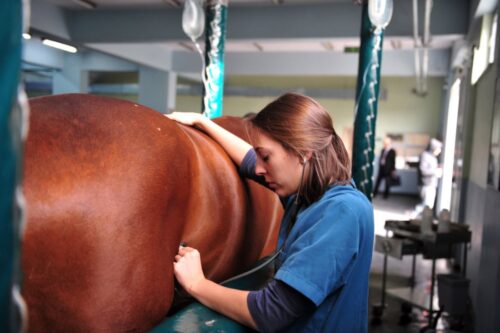
If you suspect your horse is experiencing back discomfort, it’s crucial to consult a veterinarian to help identify the issue and rule out other possible causes.
Pain in other parts of the body, such as hind limb lameness, joint inflammation, or sore feet, can prevent a horse from engaging the back properly, often leading to cold-backed behavior. Additionally, imbalanced or poorly trimmed hooves can create tension through the back and contribute to underdeveloped topline muscles. [5]
Saddle Fit
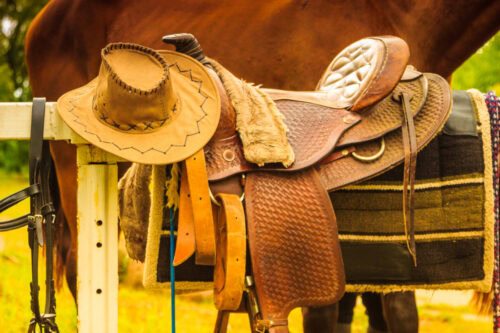
An ill-fitting saddle is often a direct cause of cold-backed behavior. Poor saddle fit can lead to pressure points, concentrating pressure on specific areas of the horse’s back. They can also pinch or rub areas of the horse’s withers or back, causing pain when the horse is in motion.
Additionally, ongoing use of an ill-fitting saddle may result in pain or irritation worsening over time, ultimately leading to cold-backed behavior. The horse may also develop an ongoing aversion to wearing a saddle as a result of prolonged use of tack that doesn’t fit properly.
Infectious Diseases
Equine Protozoal Myeloencephalitis (EPM), Equine Herpesvirus (EHV), and Polysaccharide Storage Myopathy (PSSM) can impede muscle development, leading to weakness, stiffness, and back pain. This may result in reluctance to move and contribute to cold-backed behavior. [6]
These diseases can also cause secondary effects that mimic or worsen cold-backed behavior. Horses recovering from EPM or EHV may experience lingering nerve or muscle sensitivity, while those with metabolic disorders like PSSM often develop chronic muscle stiffness and reluctance to move forward. [7][8][9]
Lack of Conditioning
Horses need consistent, varied exercise to strengthen their topline muscles properly.
Performing the same repetitive workouts without actively engaging the back muscles can limit muscle development under the saddle, potentially contributing to cold-backed behavior due to weak musculature. [1]
Certain workload factors may also lead to fitness issues associated with cold-backed behavior, such as:
- Inadequate warm-up leading to cold, stiff muscles
- Sudden increase in workload
- Inadequate transition time from stall rest to work
Hoof Issues
Proper hoof balance is essential to maintaining healthy biomechanics through the horse’s entire body. When the hooves are unbalanced, overgrown, or poorly trimmed, the resulting changes in posture and movement can transmit stress up the limbs and into the back. [10]
Even minor asymmetries, such as long toes, under-run heels, or uneven mediolateral balance, can alter the horse’s gait and cause compensatory tension through the topline and spinal muscles. [11] Over time, this leads to stiffness, soreness, and resistance consistent with cold-backed responses.
Regular farrier care is critical for preventing these issues. A qualified farrier can assess hoof angles, trim frequency, and shoeing needs to support natural movement and even weight distribution. Corrective trimming or shoeing may be required in some horses to restore proper alignment, relieve back tension, and reduce discomfort under saddle.
Mental Causes
Mental and emotional factors play essential roles in the development and persistence of cold-backed behavior in horses.
Some factors that may contribute to cold-backed behavior include:
- Anxiety linked to past painful or uncomfortable experiences
- Learned aversion resulting from prior trauma or rough handling
- Environmental stressors
While people can overlook or misinterpret subtle signs of discomfort, some of these signs may signal underlying pain or anxiety contributing to cold-backed behavior. Research has shown that horses displaying abnormal actions during tacking-up and mounting, such as head tossing, or tail swishing, often have or had underlying health issues. [12]
These behaviors can arise from the anticipation of pain, where horses link the tacking process to previous discomfort, creating learned aversions. This ongoing cycle of pain and avoidance can reinforce cold-backed responses. [12]
Equitation
Rider-related issues, such as asymmetry and poor posture, may contribute significantly to cold-backed behavior. The rider’s position and balance greatly affect a horse’s confidence during tacking and mounting. [13][14] An unbalanced or crooked rider can increase stress and discomfort, triggering resistant behavior.
Horses in riding school environments tend to exhibit higher incidences of abnormal behaviors during tacking and mounting, likely due to inconsistent handling and the varying skill level of riders. This can increase stress and behavioral resistance associated with cold-backed behavior. [12]
Nutritional Deficiencies
Nutritional deficiencies, particularly in key nutrients like magnesium, vitamin E, and selenium, can also contribute to cold-backed behavior in horses. These deficiencies can impair muscle and neurological function, leading to muscle wasting and weakness that may contribute to altered behavior during activities such as saddling and mounting.
Vitamin E Deficiency
Vitamin E is a powerful antioxidant that helps safeguard muscle cells from oxidative damage. A deficiency can cause muscle stiffness, weakness, and reduced exercise tolerance, which may be seen as cold-backed behavior. [14]
Horses that have limited access to fresh pasture grass and those on hay-based diets are more susceptible to this deficiency. Additionally, insufficient vitamin E can impair nerve function, resulting in coordination problems and heightened sensitivity to touch, which can impact discomfort during tacking and riding. [14]
Selenium Deficiency
Selenium works with vitamin E as an antioxidant, helping protect the body from free radical damage. A selenium deficiency can cause nutritional muscle disorders, such as white muscle disease, which presents as muscle weakness, stiffness, and reluctance to move.
These signs can often be misinterpreted as behavioral problems such as cold-backed behavior. Additionally, selenium deficiency can alter the immune system, impacting the risk of infections and inflammation that may worsen discomfort and contribute to cold-backed behavior. [15]
Magnesium Deficiency
Magnesium is essential for proper muscle and nerve function. A deficiency can cause muscle tremors, increased nervousness, and uncoordinated movements, which might be mistaken for cold-backed behavior.
Additionally, low magnesium levels can affect a horse’s mood and make them more sensitive to touch and pressure, making everyday activities like saddling and mounting uncomfortable. [16]
Management
Cold-backed behavior can arise from many different causes, so management begins with identifying the root cause. By systematically assessing your horse’s health, tack, and training routine, you can pinpoint the source of discomfort and develop an effective plan to restore comfort and confidence under saddle.
The long-term outlook when managing, treating, and working with cold-backed horses is positive. Many cold-backed horses can become comfortable and reliable with consistent care.
Patience and consistency are often needed to diagnose and treat the underlying cause, and while some horses may always have cold-backed tendencies, they can be managed well. Track any progress and adjust your horse’s care as needed.
1) Investigate Underlying Health Issues
Because cold-backed behavior often stems from discomfort or pain, the first step in management is to rule out underlying health problems.
Work closely with your veterinarian to conduct a full physical evaluation and identify any medical or musculoskeletal causes that could be contributing to your horse’s sensitivity.
This may include assessing for back pain, lameness, muscle soreness, or neurological conditions such as EPM. Diagnostic imaging, palpation, and gait assessments may help pinpoint the problem area.
2) Assess Saddle Fit
An ill-fitting saddle is one of the most common causes of cold-backed behavior and can easily go unnoticed without professional evaluation. Even small areas of uneven pressure or poor panel contact can create pain, soreness, or muscle atrophy over time.
Working with a qualified saddle fitter ensures your tack supports proper movement and distributes weight evenly across the back.
During the assessment, the fitter will check the saddle’s balance, gullet width, panel contact, and how it sits on the horse both at rest and in motion. They may also evaluate your girth and pad setup, as these can influence pressure distribution.
Regular rechecks are recommended, especially if your horse’s muscle tone, workload, or body condition changes.
3) Assess Hoof Balance
Proper hoof balance plays a vital role in maintaining healthy movement and spinal alignment. When the hooves are uneven or unbalanced, the horse’s posture and gait can become compromised, placing excess strain on the back and contributing to cold-backed behavior.
Ask your farrier to evaluate your horse’s feet both at rest and in motion, observing how the limbs track and land at different gaits. This assessment can reveal subtle imbalances, long toes, under-run heels, or uneven wear that may affect comfort and performance.
In some cases, corrective trimming, therapeutic shoeing, or a targeted hoof rehabilitation plan may be needed to restore alignment and reduce tension through the topline.
4) Address Nutritional Deficiencies
Balanced nutrition is essential for maintaining strong muscles, healthy nerves, and overall comfort under saddle. Horses that are deficient in key nutrients may develop muscle weakness, stiffness, or sensitivity that can resemble or worsen cold-backed behavior.
Work with a qualified equine nutritionist to evaluate your horse’s diet and ensure it provides adequate energy, protein, vitamins, and minerals for their age, workload, and lifestyle.
Adjusting the forage and concentrate balance, improving overall diet quality, and supplementing where needed can help support muscle recovery, reduce sensitivity, and enhance comfort during work.
5) Work With a Professional
Once medical and physical causes have been ruled out, collaborating with a qualified trainer or equine behaviorist might be required to address learned or conditioned responses associated with cold-backed behavior. Some horses develop anxiety or defensiveness around saddling and mounting due to past discomfort, inconsistent handling, or negative associations.
A professional can help reintroduce these routines gradually, using patient, consistent techniques to rebuild trust and relaxation. This process may involve groundwork, desensitization exercises, and positive reinforcement to encourage calm, willing behavior.
Working with a skilled professional ensures that the horse’s retraining progresses safely, without adding further stress, and helps establish a positive connection between handling, tack, and work.

Training Tips
In addition to consulting with various equine professionals to identify the root causes of cold-back behavior, certain training methods may also be beneficial.
Back & Topline Strengthening Exercises
Adding muscle strengthening exercises to your horse’s routine can improve the primary muscle beneath the saddle, which can benefit cold-backed behavior. A proper and thorough warm-up at the beginning of each ride also helps ensure your horse is in the best condition to start more intense work.
Stretches
Stretching before riding can support overall comfort and enhance range of motion in cold-backed horses. [17]
Useful stretches for horses with back pain include:
- Carrot stretches
- Extension stretches
- Lumbosacral lifts
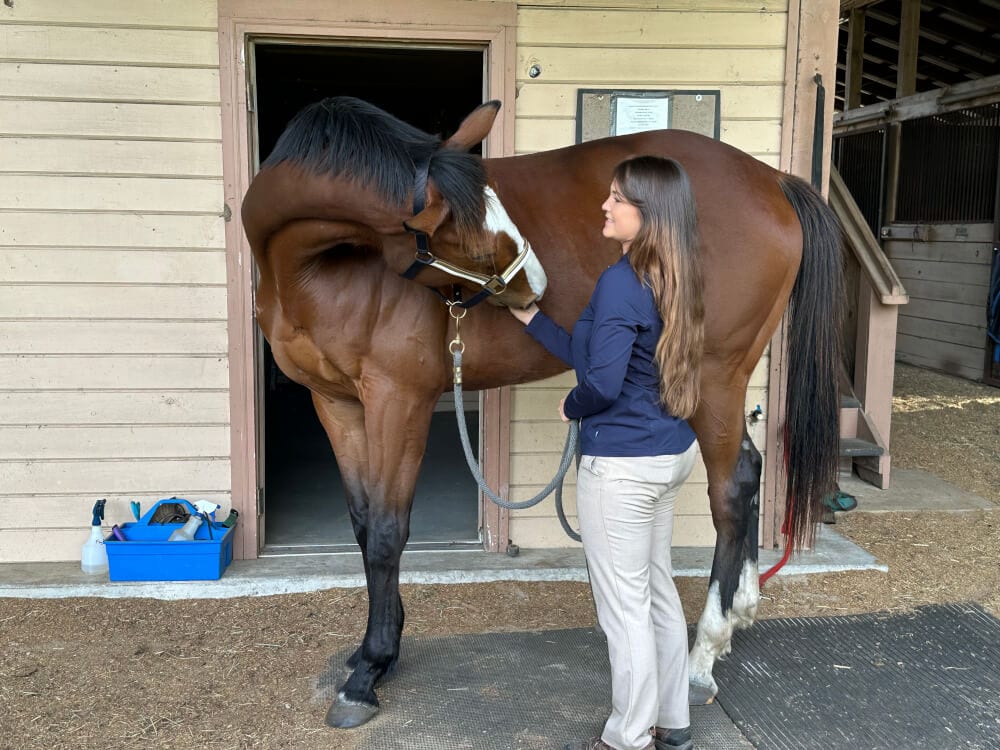
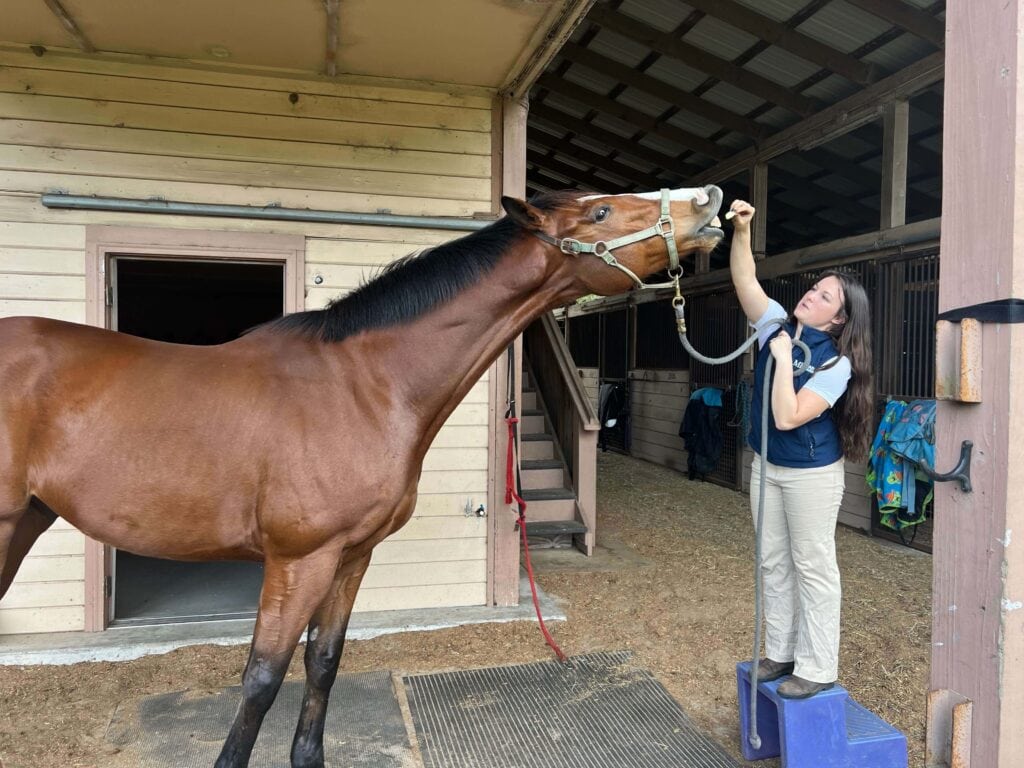

(before)

(after)
Photos by: Jessica Artman, MSc
One study in horses investigated the impact of a 12-week stretching program that included dynamic neck mobilization exercises. The results showed that performing these stretches five days a week over three months led to an increase in the diameter of muscles near the spine. The program also enhanced muscle symmetry, contributing to more balanced development. [18]
Pole Work
Pole work can be incorporated in-hand, under saddle, or on the lunge line. Whether using flat or raised poles, this exercise helps encourage the horse to lift the back, engage the abdominal muscles, and round through the topline. [19]
Hill Work
Hill work, or exercising your horse on slopes, can be done either under saddle or in hand and is an effective way to enhance proprioception and build strength in the hind end.
As the horse moves uphill, they must engage their abdominal muscles, lengthen and lift the topline, and push forward with their hind legs. The most significant benefits are seen at the walk and trot, where the horse relies on muscular effort rather than momentum, helping to develop key back muscles that support the saddle area. [20]
Training aids like resistance bands can also encourage core engagement and help your horse develop the correct muscles to support and strengthen the back and topline. [21]
Rider Mounting & Position
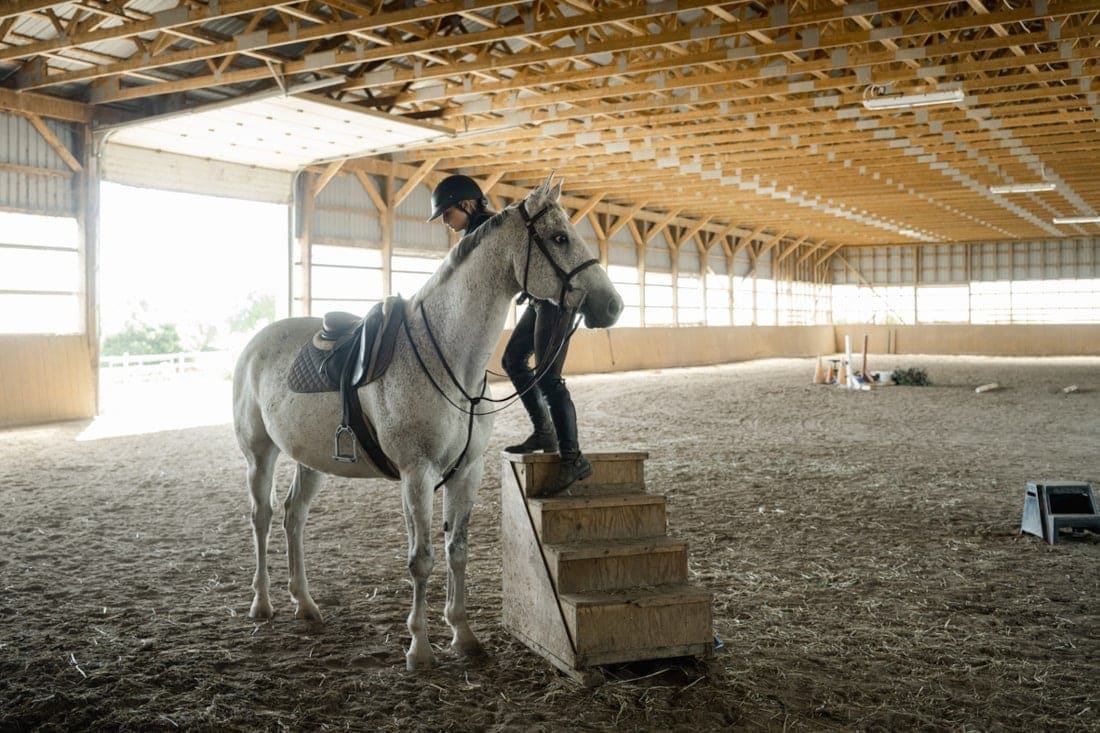
To assist cold-backed horses, riders can use a mounting block to minimize back strain during mounting. Maintaining a light seat when riding and ensuring balanced posture can help minimize back discomfort. A cold-backed horse is typically sensitive to pressure on their back, especially when their muscles are not yet warmed up. [17]
A balanced, attentive rider plays a key role in reducing tension through the horse’s back. Sitting evenly in the saddle, following the horse’s natural movement, and engaging the core without bracing can prevent excessive pressure on sensitive areas.
Sudden shifts in weight, gripping with the knees, or collapsing through one hip can create uneven load and discomfort. Working with a qualified instructor to improve body awareness and stability helps the rider move in harmony with the horse, promoting relaxation and comfort during every ride.
Frequently Asked Questions
Here are some frequently asked questions about cold-backed horses:
The term "cold-backed" refers to a horse that shows discomfort or sensitivity in the back, especially when being saddled or mounted. Signs may include flinching, stiffness, bucking, tail swishing, pinned ears, or reluctance to be groomed over the back. These behaviors typically improve once the horse has warmed up. Cold-backed behavior may stem from underlying pain, poor saddle fit, neurological conditions, or past trauma, not the actual temperature of the back. [1]
Cold-backed behavior can result from a wide range of physical, mental, and nutritional factors. Physically, one of the most common causes is back pain. Conditions such as poor saddle fit, back muscle soreness, or hoof imbalances can also trigger cold-backed responses. Psychological causes often stem from past trauma, learned aversion to tacking, or inconsistent handling. [1][4][6][12]
Diagnosing cold-backed behavior requires observation and professional input. Signs of back pain may include stiffness in turns, resistance under saddle, poor stride rhythm, reluctance to change leads, or bucking. It's essential to work with a veterinarian, saddle fitter, trainer, farrier, and equine nutritionist to rule out pain, poor equipment fit, and nutritional issues. Diagnostic tools such as chiropractic assessments, imaging, or gait analysis may also help. [2][3][5]
Nutritional deficiencies, particularly in vitamin E, selenium, and magnesium, can have a significant impact on a horse's muscle and nerve function, which may lead to behaviors consistent with being cold-backed. Addressing these deficiencies with the help of an equine nutritionist can significantly improve your horse's comfort and behavior under saddle. [14][15][16]
Summary
Managing a cold-backed horse requires a thoughtful, multi-faceted approach.
- Efforts to address this behavior combine veterinary support, proper saddle fit, balanced nutrition, and patient training
- Identifying the causes of cold-backed behavior is essential to treating the horse, as the root of the issue can be physical, nutritional, or psychological
- While some horses may always exhibit mild signs of being cold-backed, consistent care and management can lead to significant improvements in comfort, behavior, and performance
- With patience and professional guidance, cold-backed horses can thrive
References
- Ahern. T. Cold Backed and Girth Shy (Cinchy) Syndromes in Ridden Horses: Could Mechanical Allodynia, a Common Consequence of Spinal Trauma, Be a Contributing Factor. World Journal of Veterinary Science. 2020.
- Searcy. K. Back Pain in Your Horse. University of Minnesota Extension. 2024.
- Harrison. L. M. et al. Equine Back Pain Is a Diagnostic Challenge: A Physiotherapist's Perspective. Journal of Equine Rehabilitation. 2024.
- Young. A. and le Jeune. S. Kissing Spines. UC Davis School of Veterinary Medicine. 2019.
- Findley. J. and Singer. E. Equine Back Disorders 2. Treatment Options. In Practice. 2016.
- Bedenice. D. and Johnson. A. L. Neurologic Conditions in the Sport Horse. Animal Frontiers: The Review Magazine of Animal Agriculture. 2022. View Summary
- Colmer. S. F. Equine Protozoal Myeloencephalitis. Merck Veterinary Manual. 2024.
- Lascola. K. M. and Boone. L. Equine Herpesvirus Infection. Merck Veterinary Manual. 2025.
- Valberg. S. J. Exertional Myopathies in Horses. Merck Veterinary Manual. 2024.
- Wilson. A. et al. Foot Placement of the Equine Forelimb: Relationship between Foot Conformation, Foot Placement and Movement Asymmetry. Equine Veterinary Journal. 2016.
- Davies. H. M. S. et al. Equine Podiatry. W.B. Saunders, Saint Louis. 2007.
- Dyson. S. et al. An Investigation into the Relationship between Equine Behaviour When Tacked‐up and Mounted and Epaxial Muscle Hypertonicity or Pain, Girth Region Hypersensitivity, Saddle‐fit, Rider Position and Balance, and Lameness. BEVA. 2024.
- MacKechnie-Guire. R. et al., The Effect That Induced Rider Asymmetry Has on Equine Locomotion and the Range of Motion of the Thoracolumbar Spine When Ridden in Rising Trot. Journal of Equine Veterinary Science. 2020.
- Clayton. H. M. and Hobbs. S.-J., The Role of Biomechanical Analysis of Horse and Rider in Equitation Science. Applied Animal Behaviour Science. 2017.
- Horse Report. UC Davis Veterinary Medicine. 2019.
- Reed. S. M. et al. Equine Internal Medicine. 4th ed. Elsevier, St. Louis. 2018.
- Young. A. Exercise Therapy. School of Veterinary Medicine: Horse Report. 2022.
- Stubbs. N. C. et al. Dynamic Mobilisation Exercises Increase Cross Sectional Area of Musculus Multifidus. Equine Veterinary Journal. 2011. View Summary
- Shaw. K. et al. The Effect of Ground Poles and Elastic Resistance Bands on Longissimus Dorsi and Rectus Abdominus Muscle Activity During Equine Walk and Trot. Journal of Equine Veterinary Science. 2021.
- Camus. M. et al. Kinetics of the Forelimb in Horses Trotting an Uphill and Downhill Slope. Equine Veterinary Journal. 2014.
- MSc. L. V. Managing the Cold-Backed OTTB. Retired Racehorse Project. 2021.