English
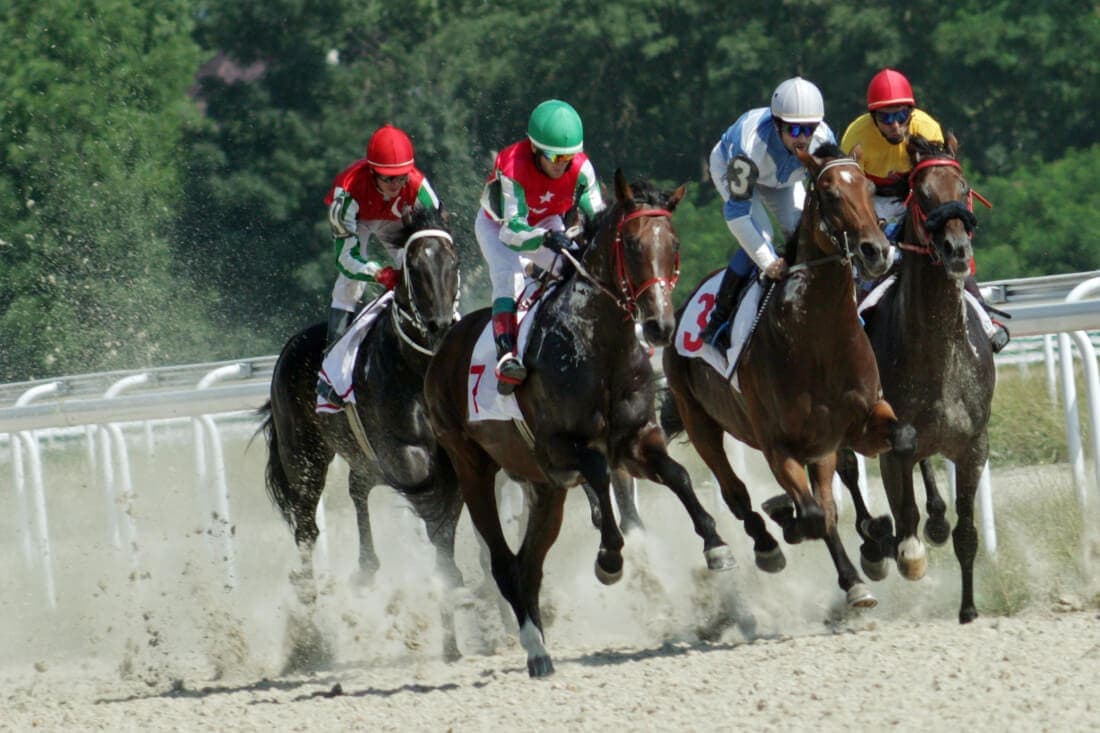
“Milkshaking,” also known as supraphysiologic alkalinization, is a controversial practice in the equestrian world. It involves administering large amounts of sodium bicarbonate or other alkalizing substances to horses with the goal of delaying fatigue and enhancing endurance.
While some view milkshaking as a shortcut to success in competitive racing, it is strictly prohibited under most equine sport regulations. Despite its use in competitive racing, scientific studies remain inconclusive about its actual impact on performance, but there is general consensus in the industry that the practice is performance enhancing.
Beyond ethical concerns, milkshaking poses risks to a horse’s health, including gastrointestinal distress, nasal and throat injuries from intubation, and potentially life-threatening complications if administered incorrectly. Recognizing these risks, regulatory bodies have implemented strict testing protocols to detect excess sodium bicarbonate levels in competition horses.
Read on to learn more about the science behind milkshaking, its effects on equine physiology, the risks involved, and the measures in place to prevent its misuse in equestrian sport.
What is Milkshaking in Horse Racing?
Milkshaking involves administering large doses of sodium bicarbonate (also known as sodium hydrogen carbonate, baking soda, or NaHCO3) to horses. This practice aims to raise the pH level of the blood during periods of intense exercise by introducing alkalizing compounds. [1]
Higher blood alkalinity (lower acidity) is believed to buffer the buildup of free protons and other metabolic byproducts during intense exercise. By limiting this accumulation, the muscles can maintain their ability to contract efficiently for longer periods, thereby delaying fatigue and enhancing endurance. [2][3]
Milkshaking has been a common practice in horse racing since the 1980s. [3] In spite of this, many experts assert that this practice has no positive effect on performance. [2][3][4][5][6][7][8]
Milkshake Components
The “milkshake” is a mixture typically composed of water, an alkalizing compound, and other ingredients such as sugars and electrolytes. [1][6][7]
This mixture is administered through a nasogastric tube, which is inserted through the horse’s nasal passage, down the esophagus, and into the stomach. [2][9]
Historically, sodium bicarbonate has been the most commonly used alkalizing agent in milkshakes. However, more recently, other compounds have been identified that produce similar alkalinizing effects on the body, including: [1]
- Citrate
- Propionate
- Acetate
In addition to alkalizing agents, a variety of other substances may be included in a milkshake to enhance the physiological effect: [6][7][9]
- Glucose (sugar)
- Sodium chloride (salt)
- Potassium chloride
- Vitamins, particularly vitamin E
- Beta-agonists that increase cardiac output and respiratory function
Ethics of Milkshaking
Milkshaking is classified as a performance-enhancing practice when administered shortly before competition. As a result, many regulatory bodies prohibit its use within 24 hours of an event. [2]
Beyond regulatory considerations, milkshaking also raises concerns related to horse welfare. The procedure of administering the mixture via nasogastric tube can cause discomfort and carries a risk of complications, including stress and potential injury to the horse. [2]
What's your top priority with your horse's health?

What's your top priority with your horse's health?
Physiology
To understand the potential performance-enhancing effects of milkshaking in horses, it is important to examine the relationship between blood pH, exercise, and fatigue.
During intense exercise, such as racing or treadmill work, horses rapidly utilize energy, leading to the depletion of adenosine triphosphate (ATP) and creatine phosphate (CP), which are the primary energy sources for muscle contraction.
As ATP is metabolized, hydrogen ions (H⁺) accumulate in muscle tissue. This increase in hydrogen ion concentration lowers the pH of both muscle and blood, creating a more acidic environment. A significant drop in blood pH, known as acidosis, is a contributing factor to the onset of muscle fatigue. [5][8]
During high-intensity activity, the body’s natural buffering capacity may become insufficient to manage the hydrogen ion load, leading to metabolic acidosis. This condition can interfere with various physiological systems and performance outcomes. [5]
One notable consequence of acidosis is impaired calcium regulation in muscle cells. Low pH levels can reduce calcium release from intracellular stores and diminish the sensitivity of muscle fibers to calcium. Since calcium plays a key role in initiating muscle contractions, this impairment can lead to reduced contractile function and earlier onset of fatigue. [5][8]
The administration of large doses of sodium bicarbonate aims to increase the body’s alkalinity, counteracting the drop in pH caused by strenuous exercise. This alkalinization is believed to buffer acid accumulation in muscle tissue, potentially delaying fatigue and enhancing performance capacity. [5]
It may also support the removal hydrogen ions from skeletal muscle, which could improve stamina and recovery. [9]
Sodium Bicarbonate Supplementation vs. Milkshaking
Because sodium bicarbonate is sometimes used as a supplement in equine performance diets, it’s important to distinguish this nutritional practice from milkshaking.
When added to the diet, sodium bicarbonate is provided in controlled amounts as part of a balanced ration and consumed gradually through feed or electrolyte supplements. At these levels, it can help support acid-base balance without significantly altering blood pH, and may be beneficial in some horses by supporting muscle function and digestive health. [10][11][12]
In contrast, milkshaking involves administering very large doses of sodium bicarbonate shortly before a race, often via tubing. The goal is to rapidly raise blood pH to delay fatigue, pushing the horse’s physiology beyond normal limits. This approach is classified as a performance-enhancing practice and is prohibited in competition. [13]
The key difference comes down to dose, timing, and intent. Dietary supplementation supports normal metabolic function over time, while milkshaking is used to acutely alter physiology around competition.
Although both approaches involve sodium bicarbonate, they are not equivalent in their effects or regulatory status. Sodium bicarbonate can be included safely in the diet when managed appropriately, but it must remain within normal feeding practices to avoid crossing into prohibited use.
Effects of Milkshaking
In the 1980s, researchers observed that human athletes who consumed sodium bicarbonate before racing performed better and exhibited reduced fatigue compared to those who did not. [1]
This finding led to speculation that a similar effect could be achieved in horses. As a result, some trainers began administering milkshakes prior to races. [1]
By the early 1990s, equine racing authorities had taken notice of the practice and began implementing regulations to restrict its use. [7]
Evidence
Despite its ongoing use and regulations aimed at curbing the practice, the actual effect of milkshaking on the horse’s performance remains unclear. The scientific literature presents inconsistent findings regarding its impact on stamina or power. [2]
These inconsistencies may stem from either a genuine lack of performance enhancement or limitations in the available research. [1]
Some studies have reported that milkshaking may provide benefits during intense exercise lasting between 2 and 9 minutes. [4] However, no improvements have been observed in activities shorter than 2 minutes. [4]
Research also suggests that the dose of sodium bicarbonate must be relatively high (approximately 1 gram per kilogram of body weight) for any measurable enhancement in performance to occur. [6] Other studies, however, have found no significant differences in blood pH levels within two hours of administration, regardless of dosage. [14]
In a recent review of the available studies, the authors concluded that milkshaking did not improve the horse’s performance during treadmill running or in a simulated race. [2]
Despite the lack of conclusive evidence, milkshaking is still a prohibited practice in the racing industry, as it is widely accepted as performance enhancing. [2] This underscores the need for further research to clarify its effects and better understand the associated risks in order to safeguard equine health and welfare.
Side Effects
The administration of sodium bicarbonate to horses may cause discomfort and carries the potential for adverse effects. [2] The procedure itself can be distressing, particularly when delivered via nasogastric tubing.
Possible side effects of milkshaking racehorses include: [1][2]
- Gastrointestinal upset: May include colic and diarrhea
- Lacerations: Nasogastric intubation can cause trauma to the nasal passages, throat, soft palate, or epiglottis
- Aspiration pneumonia: Accidental entry of the solution into the lungs may lead to infection
- Nutrient imbalances: Alkalinization may alter gastric chemistry, potentially reducing calcium absorption and lowering potassium levels
- Muscle fasciculation: Involuntary muscle twitching, possibly linked to electrolyte disturbances
- Thumps: Synchronous diaphragmatic flutter characterized by flank twitching that aligns with the heartbeat
- Death: Misplacement of the tube into the trachea instead of the esophagus can result in aspiration and fatal complications
Racing Regulations & Performance Enhancement
A wide range of substances known to influence a horse’s physical performance, stamina, or recovery have been prohibited in competitive equestrian sports.
These restrictions are designed to uphold the integrity of the sport, ensuring that outcomes reflect natural ability, effective training, and skilled horsemanship rather than artificial enhancement. [1]
By enforcing these rules, regulatory bodies aim to maintain a level playing field and foster fair competition across all disciplines.
In addition to promoting fairness, such regulations help protect the welfare of the horse. They aim to prevent the misuse of substances that might mask signs of pain, artificially boost endurance, or contribute to long-term physiological harm.
Ensuring ethical standards in sport is essential for preserving both the credibility of competition and the health of the equine athlete.
Milkshaking is classified as a performance-enhancing practice due to its potential to confer an unfair advantage. For this reason, it has been banned by many equestrian authorities, with testing protocols implemented over several decades to monitor and deter its use.
Testing in Competition
With many banned substances, detection is relatively straightforward. The majority of prohibited compounds can be identified through routine blood or urine tests, often administered stall-side during competition.
In contrast, testing for milkshaking is more complex. Sodium bicarbonate is naturally present in all horses at varying concentrations, making it difficult to determine whether it was administered intentionally. Therefore, testing protocols focus on identifying abnormally elevated levels of sodium bicarbonate. [3]
To assess this, horses are tested for Total Plasma Carbon Dioxide (TCO2) concentrations, a reliable indicator of systemic bicarbonate levels. [3][14]
Each regulatory body defines the threshold TCO2 level that marks the upper limit of what is considered physiologically normal. These thresholds form the basis for allowable sodium bicarbonate levels at sanctioned events. [14] I
n some cases, the permissible threshold may vary depending on the presence of other medications. For instance, Illinois race authorities allow a higher TCO2 limit if the horse is also being treated with furosemide (Lasix®). [14]
Several variables can influence TCO2 concentrations in the bloodstream. These factors are considered by regulators when interpreting test results. [15]
These include: [1]
- Extreme environmental temperatures
- Variation in dietary electrolyte intake
- Individual differences in respiratory rate
Timing & Methods
There is ongoing debate over whether testing horses before or after a race yields more efficient and reliable results. [1] Regardless of timing, testing is conducted on the day of competition.
During race day testing, blood is drawn from the horse’s jugular vein for laboratory analysis. [9] This analysis is typically performed using a blood gas analyzer, often referred to as a “black box.” [1]
Among other parameters, the black box measures the following blood components: [1][15]
- Carbon dioxide (CO2)
- Oxygen (O2)
- pH level
- Electrolyte concentrations
Using these values, the device calculates the concentration of TCO2 (Total Plasma Carbon Dioxide) in the horse’s blood. [1]

Consequences of Testing Positive
Any horse with TCO2 levels exceeding the threshold set by race organizers is considered in violation of competition rules. [15] This typically results in disqualification and potential sanctions.
Testing positive for milkshaking can carry serious consequences for the individuals involved — including owners, trainers, and jockeys. While milkshaking is intended to delay fatigue and enhance performance by buffering acid accumulation in the blood, it also poses health risks to the horse and violates the standards of fair competition and animal welfare.
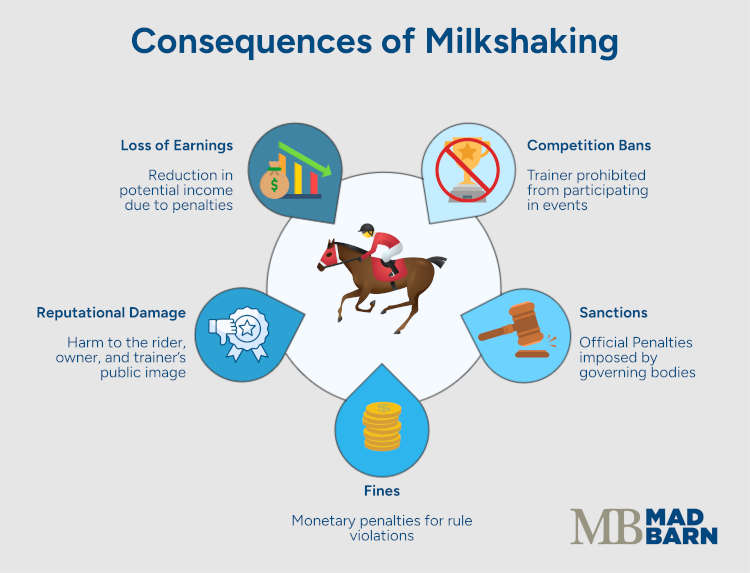
Regulatory bodies prohibit the practice of milkshaking, and a positive test result may lead to a range of disciplinary measures. These can include suspensions, disqualification from events, loss of prize money, monetary fines, and potential impacts on the professional reputation of those involved.
The enforcement of substance regulations is intended to support fair competition and to reduce the risk of practices that may adversely affect equine health and wellbeing.
Frequently Asked Questions
Here are some frequently asked questions about milkshaking in horse racing:
Milkshaking is the practice of administering large doses of sodium bicarbonate or other alkalizing agents to horses before competition. The goal is to raise blood pH and buffer acid buildup during intense exercise. It is considered a form of performance enhancement and is prohibited in racing. [1][2][3]
Scientific evidence on milkshaking is mixed, with many studies showing no consistent improvement in performance. Some research suggests possible benefits during longer, high-intensity efforts, but findings are inconsistent. Overall, there is no clear consensus that milkshaking reliably enhances stamina or speed. [2][4]
Milkshaking is typically performed by administering a mixture containing sodium bicarbonate, water, and other substances through a nasogastric tube. The tube is passed through the nostril into the stomach to deliver the solution quickly. This process can be stressful and carries risks if performed incorrectly. [1][2][9]
Milkshaking is banned because it is considered a performance-enhancing practice that may provide an unfair advantage. It also raises animal welfare concerns due to the risks associated with tubing and high-dose alkalinization. Regulatory bodies prohibit its use to protect both the integrity of competition and horse health.
Milkshaking can cause gastrointestinal upset, electrolyte imbalances, and irritation or injury to the nasal passages and throat. More serious risks include aspiration pneumonia, muscle dysfunction, and, in severe cases, death if the solution is misadministered. These risks contribute to its prohibition in competition. [1][2]
Milkshaking is detected by measuring total plasma carbon dioxide (TCO₂) levels in the horse’s blood. Because bicarbonate occurs naturally, testing focuses on identifying abnormally high concentrations. Blood samples are typically analyzed using specialized equipment on race day. [1][15]
Milkshaking involves administering very large doses of sodium bicarbonate shortly before competition to rapidly alter blood pH. In contrast, dietary supplementation uses controlled amounts included in feed or electrolyte products over time. The key differences are dose, timing, and intent, with supplementation supporting normal physiology and milkshaking classified as prohibited performance enhancement.
Sodium bicarbonate can be included in the diet in appropriate amounts as part of a balanced feeding program. It may help support acid-base balance and digestive function in some horses. However, excessive or poorly timed use can pose risks and may violate competition rules, so guidance from a veterinarian or nutritionist is recommended.
Research suggests that very high doses, often around 1 gram per kilogram of body weight, are required to significantly alter blood pH. These levels are much higher than those used in typical dietary supplementation. Such high doses are associated with increased risk and regulatory violations. [6]
Summary
Milkshaking (also referred to as supraphysiologic alkalinization) is the administration of large doses of sodium bicarbonate or other alkalinizing compounds to horses prior to racing. This practice aims to raise the pH level (i.e. lower the acidity) of the blood to improve performance by reducing muscle fatigue and increasing stamina.
- The milkshake is a mixture of water, sodium bicarbonate or other alkalizing agent, and other ingredients such as glucose, vitamins, and electrolytes
- Milkshaking is administered to horses via nasogastric intubation, a.k.a. "tubing"
- Although milkshaking is a common practice and is banned by many authorities, it has not been conclusively proven to improve a horse's performance
- Potential side effects include gastrointestinal upset, damage to the nostrils, throat or mouth, aspiration pneumonia, and death if the tube is improperly placed
- Testing positive for milkshaking comes with serious consequences including bans, sanctions, and fines
References
- Kline. K. H. "Milkshakes" for the Horse. Journal of Equine Veterinary Science. 2004.
- Denham. J. and Hulme. A. A Systematic Review and Meta-Analysis on Sodium Bicarbonate Administration and Equine Running Performance: Is It Time to Stop Horsing Around With Baking Soda?. Journal of Equine Veterinary Science. 2020. View Summary
- Auer. D. et al. Detection of Bicarbonate Administration (Milkshake) in Standardbred Horses. Australian Veterinary Journal. 1993. View Summary
- Harkins. J. D. and Kamerling. S. G. Effects of Induced Alkalosis on Performance in Thoroughbreds during a 1,600‐m Race. Equine Veterinary Journal. 1992. View Summary
- Schuback. K. et al. Effect of Sodium Bicarbonate Administration on Metabolic Responses to Maximal Exercise. Equine Veterinary Journal. 2002. View Summary
- Lloyd. D. R. et al. Effects of Sodium Bicarbonate on Cardiorespiratory Measurements and Exercise Capacity in Thoroughbred Horses. Equine Veterinary Journal. 1993. View Summary
- Rose. R. J. and Lloyd. D. R. Sodium Bicarbonate: More than Just a ‘Milkshake’?. Equine Veterinary Journal. 1992. View Summary
- Greenhaff. P. L. et al. The Influence of Metabolic Alkalosis upon Exercise Metabolism in the Thoroughbred Horse. European Journal of Applied Physiology and Occupational Physiology. 1991. View Summary
- Lloyd. D. R. and Rose. R. J. Effects of Sodium Bicarbonate on Acid‐base Status and Exercise Capacity. Equine Veterinary Journal. 1995.
- Robb. E. J. and Kronfeld. D. S. Dietary Sodium Bicarbonate as a Treatment for Exertional Rhabdomyolysis in a Horse. Journal of the American Veterinary Medical Association. 1986.
- Denham. J. and Hulme. A. A Systematic Review and Meta-Analysis on Sodium Bicarbonate Administration and Equine Running Performance: Is It Time to Stop Horsing Around With Baking Soda?. Journal of Equine Veterinary Science. 2020.
- Ellis. A. D. et al. The Impact of Nutrition on the Health and Welfare of Horses. 1st ed. Wageningen Academic Publishers, Wageningen. 2011.
- Deuel. N. R. et al. SELECTED PHYSIOLOGICAL EFFECTS RESULTING FROM ADDITION OF SODIUM BICARBONATE TO DIETS FOR YEARLING HORSES. Canadian Journal of Animal Science. 1985.
- Frey. L. P. et al. Effects of Warming‐up, Racing and Sodium Bicarbonate in Standardbred Horses. Equine Veterinary Journal. 1995.
- The Jockey Club Thoroughbred Safety Committee Recommendations. 2008.