English












Ryegrass is a widely used forage for horses, most commonly available in annual and perennial varieties. Known for its high yields and strong nutritional profile, it is suitable for many types of horses.
Although ryegrass is typically rich in nutrients, its overall quality is influenced by how it is grown and harvested. This grass can be fed as pasture, hay, haylage, or silage, each with specific benefits and considerations depending on the horse’s needs.
Ryegrass is valued for its palatability, elevated protein content, and productive growth, but potential concerns include high levels of hydrolyzable carbohydrates (HC; sugar + starch) and the risk of endophyte contamination.
To safely incorporate ryegrass into your horse’s diet, it’s best to conduct a hay analysis and consult with an equine nutritionist. Read on to explore the nutritional value, uses, benefits, and potential drawbacks of ryegrass as a horse forage so you can make an informed decision for your herd.
Ryegrass Hay for Horses
Ryegrass is a widely used forage for horses due to its palatability, high nutritional content, and adaptability to a range of growing conditions. Available in both perennial and annual varieties, ryegrass can be a valuable component of equine diets when managed carefully.
Annual and perennial ryegrass are both cool season grasses, known for their high yields and rich nutrient profiles.
Annual Ryegrass
Annual ryegrass (Lolium multiflorum Lam.), also known as Italian ryegrass, is native to southern Europe and widely grown across the southeastern United States. [1] Although it is an annual plant, annual ryegrass behaves more like a biennial or short-lived perennial plant, living through multiple growing seasons, although not as long as a true perennial plant. [1]
Annual ryegrass grows best at pH levels between 6 – 7, and is tolerant of wet, poorly drained soils. However, it does not thrive during times of water stress. As a cool season grass, it thrives in cool temperatures of around 50 – 75˚F (10 – 24˚C). [1][2]
Perennial Ryegrass
In contrast, perennial ryegrass (Lolium perenne L.) is native to Europe, Asia and North Africa, and is mostly grown in the northeastern and pacific northwest regions of the United States. [1]
Perennial ryegrass is more persistent than annual ryegrass; as the name implies, it lives through multiple seasons. However, it is often less hardy than other cool season grasses. [1]
Like annual ryegrass, perennial ryegrass thrives at pH 6 – 7 and is tolerant of relatively wet soils. It is also adapted to temperatures below 80˚F (27˚C). [3]
Overall, ryegrass is a nutritious forage option for horses, whether provided as hay or pasture. With proper management and attention to growing conditions, both annual and perennial varieties can serve as reliable forages for horses with a range of nutritional needs.
Nutritional Composition of Ryegrass
Ryegrass forage typically has moderate to high levels of digestible energy and crude protein, often exceeding that of many other cool season grasses.
However, it often contains higher levels of hydrolyzable carbohydrates (HC; a subset of NSC), which warrants caution when feeding horses with metabolic sensitivities.
Below is an average nutrient profile for perennial and annual ryegrass pastures: [4][5]
| Nutrient | Average Perennial Ryegrass |
Average Annual Ryegrass |
|---|---|---|
| Digestible Energy | 2.7 Mcal/kg | 2.5 Mcal/kg |
| Crude Protein | 21 % | 20 % |
| ADF | 28 % | 32 % |
| NDF | 54 % | 55 % |
Ryegrass often has higher protein content compared to some other cool season grasses, including: [6]
- Kentucky bluegrass
- Orchardgrass
- Creeping foxtail
- Timothy
Ryegrass also usually has higher hydrolyzable carbohydrates (HC) than: [6]
- Bromegrass
- Orchardgrass
- Reed canarygrass
With that being said, the nutrient profile of ryegrass varies depending on growing and harvesting conditions. Another study comparing ryegrass to other cool season grasses showed it had higher crude protein and digestible energy, but only moderate HC content. [7]
Factors Influencing Hay Quality
Nutrient content in hay and pasture is affected by factors such as fertilization, climate, the maturity of the grass, weather, and how hay is stored.
Being aware of how these elements influence forage quality can guide you in selecting and maintaining the most appropriate and hygienic ryegrass forage for your horse.
Average estimates of energy, protein, and HC content can help guide decisions about the suitability of a type of hay for a particular horse, but testing your hay is the only way to know its nutrient content with certainty.
Fertilization
The nutrient content of forages is significantly influenced by factors such as fertilization and soil conditions.
Nitrogen, a crucial element for protein formation, is commonly applied in forage production due to its vital role in supporting protein synthesis and promoting vigorous plant growth.
As with other grasses, proper nitrogen fertilization in ryegrass enhances both yield and protein content. [8] In addition, adequate phosphorus fertilization can improve yield and crude protein levels when phosphorus is deficient. [9]
Potassium also plays a key role in plant development, and its application — particularly when combined with nitrogen and phosphorus — can improve the persistence and overall performance of ryegrass. [10]
Optimizing fertilization with key nutrients like nitrogen, phosphorus, and potassium is essential for maximizing the yield, quality, and longevity of ryegrass forage. By managing these inputs effectively, producers can enhance the nutritional value of the forage and better support the dietary needs of horses.
Growing Conditions
Healthy, productive plants depend on sufficient sunlight and water, and they grow best in temperature ranges suited to their species. As a result, both water availability and growing temperatures can influence the productivity of the plants.
Understanding how these conditions influence plant growth can help producers manage forage quality more effectively, to produce quality forage under a range of growing conditions.
Drought conditions can affect both the yield and nutritional quality of forages. While water stress, like that caused by drought, reduces plant productivity, it can enhance the nutritive value of ryegrass by increasing protein levels and decreasing fiber content. [11]
High temperatures outside of the optimal growing conditions can also impact the nutritive value of ryegrass. Elevated temperatures lead to: [12]
- Faster rate of depletion of soluble carbohydrates
- Impaired plant health
- Lower yield
Harvesting Conditions
Harvesting conditions — such as the time of day, season, moisture levels at baling, and weather during harvest — can greatly affect the nutrient composition of hay.
During daylight hours, plants perform photosynthesis, producing soluble carbohydrates (sugars and other fast-release carbohydrates) that accumulate in the plant as the day progresses. Overnight, these carbohydrate stores are partially depleted as the plant uses them for metabolic processes, resulting in lower soluble carbohydrate levels by morning.
Like other grasses, the soluble carbohydrate content of ryegrass is higher when it is harvested in the afternoon. Afternoon harvesting has also been linked to higher crude protein levels in ryegrass. [13]
The time of year when ryegrass is harvested can also affect its nutritional value, with later-season harvests generally having lower crude protein content compared to ryegrass cut earlier in the year [14]
Drying is an essential step in producing clean, hygienic hay, but it can also lead to nutrient losses, particularly of hydrolyzable carbohydrates (sugars and starches). The slower the drying process, the greater the loss of these nutrients, making weather factors such as temperature and humidity important influences on the final nutritional quality of the hay. [15]
In addition to humidity, precipitation can significantly affect the nutritional quality of harvested hay. Rainfall during the drying process can leach away valuable nutrients — such as dry matter, protein, carbohydrates, and minerals — resulting in hay with reduced nutritional value. [15]
Spoilage
Proper drying is critical for maintaining the nutritional value of hay and preventing the growth of mold or harmful microorganisms that pose health risks to horses.
High moisture levels in hay create an ideal environment for microbes to thrive in, leading to increased bacterial activity. This activity produces heat that can damage nutrients in hay and even pose a fire hazard. [15] mycotoxin-producing molds in damp hay also pose a risk of poisoning if consumed by horses or other livestock. [15]
Inadequately dried hay can lead to respiratory issues, digestive problems, or reduced feed intake due to spoilage or poor palatability.
Properly drying hay is a simple but important step in ensuring adequate nutrient intake and robust horse health.
What's your top priority with your horse's health?

Enter your email to receive your store credit
Forms of Ryegrass
Ryegrass can be fed to horses in several forms, depending on availability and suitability to a horse’s particular needs. From fresh pasture to hay and ensiled forages, there are plenty of options for implementing ryegrass in your horse’s diet.
Pasture
Pasture is fresh grass that provides both nutrition and the opportunity to express natural grazing habits for horses.
Horses show a preference for perennial ryegrass pastures compared to some other cool season grasses, including: [7]
- Orchardgrass
- Meadow fescue
- Tall fescue
However, this preference may lead to a decline in the presence of ryegrass in pastures over extended periods. [16][17]
While ryegrass is sometimes outcompeted by other cool season grasses in terms of yield, its balance of superior nutritive quality and palatability makes it an appealing option for grazing horses. [7][17]
Free-choice ryegrass pasture may not be suitable for easy keepers or horses with metabolic issues due to its high energy density and potentially high soluble carbohydrate content. For these types of horses, limited intake or avoidance may be necessary to maintain a healthy body condition and avoid issues like laminitis.
On the other hand, ryegrass is an excellent choice for grazing horses with elevated nutritional needs, such as growing, lactating, or heavily exercising horses.
Overall, ryegrass pasture offers a valuable combination of nutrition, taste, and yield that supports healthy grazing for horses. Despite the potential for decline in pastures over time, its palatability and quality make it a strong choice among cool season grasses.
Hay
Ryegrass hay is produced by cutting, drying, and storing ryegrass for future use. Ryegrass hay can be a valuable option for horses that don’t or can’t have access to fresh pasture, such as during the winter or for metabolic horses.
It provides a nutritious and palatable forage option and horses often prefer it over some other cool season hays like fescue and festulolium. [18]
Some research shows that horses prefer alfalfa or alfalfa/ryegrass mixes compared to ryegrass alone or ryegrass/timothy mixtures. This preference also corresponds to higher nutritive value of the mixed and pure alfalfa hay diets studied. [19]
Haylage
Haylage is a type of horse feed made from grass that is cut, partly dried, and then tightly wrapped to keep out air so it can ferment. This process helps preserve the grass at its present nutritional quality, making it a soft, tasty, and nutritious option.
Haylage is commonly produced in areas where fully drying hay isn’t feasible due to climate-related time limitations.
A study of ryegrass hay and haylage found that haylage was consumed by horses in similar amounts, and had similar digestibility to ryegrass hay. Authors concluded that ryegrass haylage was a good feed option for horses. [20]
Silage
Silage is a type of forage made from grass that is harvested and then tightly packed to ferment while still moist, just like haylage. However, it is usually wetter and is more commonly used for cows than horses in North America.
Like haylage, silage is a common forage alternative in areas where drying hay before storing it is not feasible.
However, ryegrass silage may not be an ideal alternative for all classes of horses. Some research suggests that ryegrass silage may influence fat metabolism and markers of insulin regulation, but more studies are needed to confirm these effects in horses. [21]
While silage can be a useful forage option in regions where hay production is limited, it may not be suitable for all horses. For horses predisposed to metabolic issues, silage should be used with care, and metabolic status should be monitored closely.
Straw
Straw refers to the dry stalks left behind after the seeds of cereal crops are harvested. It is sometimes used as a forage source for horses, but compared to hay, haylage, or silage, it provides much lower nutritional value.
Ryegrass straw can be fed as a portion of a horse’s forage intake to provide extra fiber or keep horses busy chewing. However, straw is not recommended for all horses, especially those with dental issues or digestion problems.
Although straw is lower in nutrients than other forage options, it can still play a useful role in certain horse diets. Research suggests that ryegrass straw, in particular, may be a suitable forage for mature horses, offering adequate digestibility and helping maintain body condition. [22]

Pros & Cons of Ryegrass
Ryegrass, whether fed as pasture, hay, or fermented forage, is valued in horse diets for its rapid growth, high palatability, and nutrient density. It is considered a reliable option for meeting the energy requirements of horses at maintenance or in moderate work.
While ryegrass is a popular forage choice for many reasons, it is important to ensure your horse’s overall forage is well-balanced and that rations are adjusted to suit their individual workload, age, and health status.
Benefits of Ryegrass
The combination of palatability, nutritional quality, and crop productivity makes ryegrass an ideal forage for many horses. Compared to many other grass species, ryegrass often stands out as a preferred choice that supports horse health and efficient forage management.
Palatability
Research shows that horses find ryegrass more palatable than many other forages, including: [16][17][23]
- Spring oat
- Spring forage oat
- Winter barley
- Orchardgrass
- Festulolium
- Meadow fescue
- Millet
- Teff
- Sudan grasses
The horse’s preference for ryegrass may lead to higher intakes, making it a good choice for hard keepers and horses that struggle to consume enough forage due to palatability preferences.
Elevated Protein Content
Under similar growing and harvesting conditions, the average protein content of ryegrass is often higher than other forage grasses, including: [6][7]
- Kentucky bluegrass
- Orchardgrass
- Creeping foxtail
- Timothy
This makes ryegrass a strong option for horses that have elevated protein needs, like heavily exercising, lactating, and growing horses.
High Yield
Annual ryegrass often produces a higher yield (the amount of forage grown per acre) compared to other commonly used species such as winter wheat and spring wheat. One study noted that compared to other grasses under review, ryegrass strikes the best balance between horse preference, yield, and nutritional quality. [17]
However, it’s important to note that ryegrass may decline in mixtures faster than other grasses like orchardgrass, tall fescue, and Kentucky bluegrass. [16]
Drawbacks of Ryegrass
While ryegrass provides strong nutritional value, it is important to be aware of some potential risks for certain horses.
The two main concerns are its potentially high hydrolyzable carbohydrate (HC; sugars and starches) content and the risk of endophyte toxicity. Both factors can affect a horse’s health and influence whether this forage is suitable for their diet.
Hydrolyzable Carbohydrates
Horses with metabolic concerns need to have their intake of hydrolyzable carbohydrates (HC, also called non-structural carbohydrates or NSC) kept as low as possible. There is evidence that ryegrass has higher HC levels than some other grasses.
For example, under identical growing and harvesting conditions, ryegrass tends to have higher HC content than: [6]
- Meadow bromegrass
- Orchardgrass
- Reed canarygrass
Practices like harvesting hay earlier in the day may help produce ryegrass hay with lower HC content. A hay analysis is the best way to find out if ryegrass hay you have on site is suitable for your metabolic horse.
Endophyte Toxicity
Endophytes are tiny fungi that live inside certain plants without hurting them. In fact, the symbiotic relationship between endophytes and their host is usually beneficial to the plant, helping it become more resilient and enhancing overall growth.
However, in some cases, such as with certain types of tall fescue or ryegrass, these fungi can produce mycotoxins that are harmful to horses, particularly if they consume large amounts of the infected grass.
Although endophyte toxicity is more commonly associated with fescue hay, ryegrass can also be infected with endophytes that pose a risk to horses and other livestock.
Ryegrass can contain mycotoxins including lolitrem B and ergovaline that cause ryegrass staggers. This condition produces neurological symptoms including tremors, ataxia, limb swelling, heel lesions, and nasal discharge. [24]
The negative effects of endophytes can ultimately lead to reproductive issues in mares, poor growth, weight loss, and reduced performance. [24]
How to Feed Ryegrass Hay
Since many factors influence a forage’s nutrition profile, it’s important to conduct a hay analysis to ensure your ryegrass hay meets your horse’s unique needs.
Selecting the right ryegrass hay and feeding it in the proper amount can help optimize forage intake, maintain a healthy body condition, and promote digestive health in horses.
1) Select the Right Hay
Selecting an appropriate hay for your horse is a critical first step in feeding a forage-first diet. The hay you choose should meet but not exceed your horse’s calorie needs so it can be offered free-choice, encouraging natural grazing behavior.
For easy keepers, a more mature hay is often a better choice because it is less energy-dense. These hays provide plenty of fiber, allowing near-constant access without causing unwanted weight gain.
If your ryegrass hay is too high in calories, you may need to limit hay intake or soak the hay before feeding to help manage your horse’s body condition.
For the average horse at maintenance or in light exercise, free-choice, average-quality ryegrass hay generally provides enough protein and calories, reducing the need for additional energy or protein supplementation.
Horses with higher energy and protein requirements, such as those in moderate to heavy work, often benefit from younger, less mature ryegrass hay because it tends to have higher energy and protein content compared to mid-maturity hay.
If free-choice hay alone does not meet your horse’s calorie and energy needs, additional feeds such as beet pulp, oil, alfalfa, or soybean meal can help meet their nutritional requirements while maintaining a healthy body condition.
2) Feed the Optimal Amount
The goal of a forage-first diet is to meet as much of a horse’s nutritional requirements as possible through hay or pasture, reducing the need for grain or other concentrated feeds. Maximizing hay intake supports digestive health, mental well-being, and overall body condition.
When feeding an appropriate hay, free-choice feeding is often a practical option. Free-choice means that hay is available to your horse at all times, allowing them to eat as much as they want throughout the day, similar to natural grazing behavior.
This approach helps maintain gut health, supports steady energy levels, and encourages natural movement and grazing patterns. However, how much hay a horse eats when offered free-choice depends on their physiological status:
- Average horses at maintenance or in light exercise typically consume around 2% of their body weight per day in dry matter. For a 500 kg (1,100 lb) horse, this equals about 10 kg (22 lb) of hay daily. [15]
- Horses in moderate exercise may consume closer to 2.25% of their body weight. This is roughly 11.25 kg or 25 lb for a 500 kg horse. [15]
- Horses with high energy needs — such as those in heavy exercise, lactating mares, or growing young horses — may eat up to 2.5% of their body weight per day. This is equivalent to 12.5 kg or 27.5 lb for a 500 kg horse. [15]
While free-choice hay has many benefits, it can sometimes exceed a horse’s calorie needs if the hay is too energy-dense for their workload or health status. In these cases, hay intake may need to be limited to 1.5–2% of body weight in dry matter per day.
If you find that hay must be severely restricted to maintain a healthy body condition, it’s best to select a lower-calorie hay that better matches your horse’s needs. This allows for more consistent access to forage, which supports both digestive and behavioral health.
3) Balance the Diet
Ryegrass hay often provides adequate energy, protein, and some microminerals for most horses, but it will still fall short of fully meeting vitamin and trace mineral requirements.
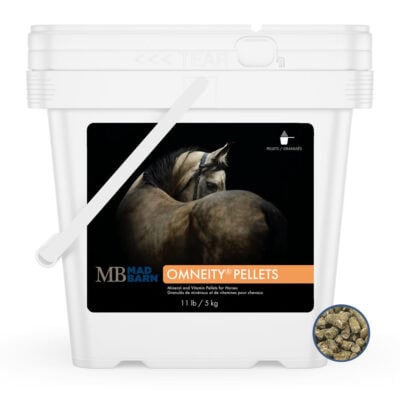
To fill these nutritional gaps in a forage-based diet, consider adding a complete vitamin and mineral formula such as Mad Barn’s Omneity®, an easy-to-feed supplement designed by expert nutritionists.
With ingredients like 100% organic trace minerals, a complete B-vitamin complex, amino acids, digestive enzymes, and yeast, Omneity® offers a convenient way to support horses on a ryegrass-based diet. Feeding Omneity® provides the essential nutrients needed to support healthy hooves, a shiny coat, immune function, and optimal energy metabolism in your horse.
Overall, incorporating ryegrass into your forage-first diet can be an excellent choice for horses when the hay is carefully selected and fed correctly.
To make it complete, add a fortified vitamin and mineral supplement and provide salt to meet sodium requirements. This ensures a balanced diet that supports digestion and overall health.
Example Diet
The table below outlines a sample diet for an 1,100 lb (500 kg) adult horse in light exercise. The ryegrass hay used for this analysis contains a crude protein content of 15% and a neutral detergent fiber (NDF) content of 54%.
Remember that each horse has individual nutritional needs, which can influence how well this diet works for them. To get a customized plan, you can submit your horse’s diet online for a free assessment by a qualified equine nutritionist.
| Feed | Amount per day |
|---|---|
| Mid-Maturity Ryegrass Hay | 25 lb (11.5 kg) |
| Salt | 30 g (2 tbsp) |
| Omneity® Pellets | 200 g (2 scoops) |
| Diet Analysis | |
| Digestible Energy | 100 % of requirement |
| Protein | 144 % of requirement |
| NSC (HC) | 8.8 % of diet |
Frequently Asked Questions
Here are some frequently asked questions about Ryegrass Hay for Horses:
Ryegrass hay is forage made from annual or perennial ryegrass, valued for its palatability and high nutritional content. Annual ryegrass behaves like a short-lived perennial, while perennial ryegrass persists through multiple seasons under cool, moist growing conditions.
Ryegrass hay generally offers moderate to high digestible energy (2.5–2.7 Mcal/kg) and crude protein (20–21 %), with fiber levels (ADF 28–32 %, NDF 54–55 %). However, it can also be higher in non-structural carbohydrates, so testing is recommended.
Benefits of feeding ryegrass to horses include high palatability, elevated protein, and strong yield. Drawbacks include the fact that it may contain elevated NSC levels and the risk of endophyte toxins if the grass is infected.
Summary
Ryegrass is a highly palatable and nutrient-rich forage commonly used in horse diets. Valued for its elevated protein content and strong yield, ryegrass provides a versatile foundation that supports a range of equine nutritional needs.
- Available in both annual and perennial varieties, ryegrass can be fed as pasture, hay, or haylage, making it a flexible option for many feeding programs
- Ryegrass is a cool season grass that thrives in cool, moist climates and soils
- It has an elevated protein content, but its nutrient content depends on environmental and management factors at harvest
- Ryegrass is fed to horses in many forms, including pasture, hay, haylage, and silage
- Testing your ryegrass hay and feeding appropriate amounts are key steps for assembling a balanced, ryegrass-based diet for horses
References
- Undersander. D. and Casler. M. Ryegrass Types for Pasture and Hay. UW Extension. 2014.
- Annual Ryegrass (Lolium Multiflorum). Mississippi State University Extension Service. 2025.
- Ogle. D. PERENNIAL RYEGRASS. USDA. 2008.
- Sun. X. et al. Chemical, Physical, and Degradation Characteristics of Ryegrass Cultivars Grown in Autumn and Winter for Dairy Cows. Animals. 2023.
- Johnston. J. and Bowman. M. Annual Ryegrass for Stored Feed and Pasture. Ontario Ministry of Agriculture. 1998.
- Allen. E. et al. Forage Nutritive Value and Preference of Cool‐season Grasses under Horse Grazing. Agronomy Journal. 2013.
- Catalano. D. N. et al. Yield, Persistence, Forage Nutritive Value, and Preference of Perennial Ryegrass under Grazing. Agronomy Journal. 2020.
- Loaiza. P. et al. Perennial Ryegrass Productivity and Nutritive Quality as Affected by Frequency of Nitrogen Fertilizer Addition. Grassland Science. 2019.
- Butler. T. J. et al. Phosphorus Fertilization of Annual Ryegrass. Better Crops. 2006.
- Ihtisham. M. et al. Optimization of Nitrogen, Phosphorus, and Potassium Fertilization Rates for Overseeded Perennial Ryegrass Turf on Dormant Bermudagrass in a Transitional Climate. Frontiers in Plant Science. 2018.
- Jensen. K. B. et al. Forage Nutritional Characteristics of Orchardgrass and Perennial Ryegrass at Five Irrigation Levels. Agronomy Journal. 2003.
- Sullivan. J. T. and Sprague. V. G. The Effect of Temperature on the Growth and Composition of the Stubble and Roots of Perennial Ryegrass. Plant Physiology. 1949.
- Olszewska. M. Effects of Cultivar, Nitrogen Rate and Harvest Time on the Content of Carbohydrates and Protein in the Biomass of Perennial Ryegrass. Agronomy. 2021.
- Redfearn. D. D. et al. Cultivar and Environment Effects on Annual Ryegrass Forage Yield, Yield Distribution, and Nutritive Value. Crop Science. 2002.
- National Research Council, Nutrient Requirements of Horses: Sixth Revised Edition. The National Academies Press, Washington, DC. View Summary
- Martinson. K. L. et al. Horse Preference, Forage Yield, and Species Persistence of 12 Perennial Cool-Season Grass Mixtures under Horse Grazing. Journal of Equine Veterinary Science. 2016.
- Grev. A. M. et al. Preference, Yield, and Forage Nutritive Value of Annual Grasses under Horse Grazing. Agronomy Journal. 2017.
- Mastellar. S. L. et al. Equine Relative Preferences Regarding Selected Cool-Season Grass Hays. Animal Feed Science and Technology. 2024.
- Mowrey Jr. R. A. A Comparison of the Nutritive Value of Alfalfa, Timothy and Perennial Ryegrass Hay Fed to Equine. The Pennsylvania State University. 1981.
- Bergero. D. et al. Intake and Apparent Digestibility of Perennial Ryegrass Haylages Fed to Ponies Either at Maintenance or at Work. Livestock Production Science. 2002.
- Zhu. Y. et al. The Effect of Ryegrass Silage Feeding on Equine Fecal Microbiota and Blood Metabolite Profile. Frontiers in Microbiology. 2021. View Summary
- Schurg. W. A. et al. Use of Various Quantities and Forms of Ryegrass Straw in Horse Diets. Journal of Animal Science. 1978.
- DeBoer. M. L. et al. Yield, Nutritive Value, and Preference of Annual Warm-Season Grasses Grazed by Horses. Agronomy Journal. 2017.
- Johnstone. L. K. et al. Clinical Expression of Lolitrem B (Perennial Ryegrass) Intoxication in Horses. Equine Veterinary Journal. 2012.