English




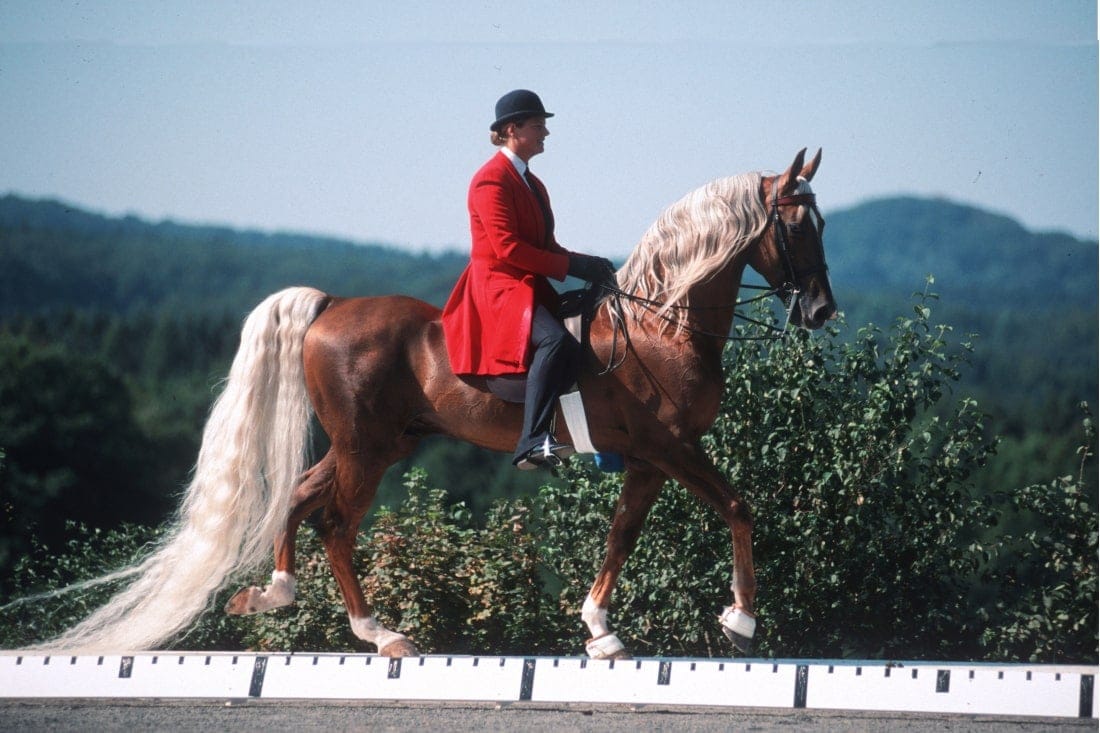
Saddle seat is an elegant English riding discipline designed to showcase the animated gaits and style of high-stepping horse breeds.
This discipline originated in the United States and has become closely associated with breeds such as the American Saddlebred, Morgan, and Arabian. Riders use specialized tack and attire to highlight their horse’s natural movement, creating a visually striking performance.
Today, saddle seat competitions are held across North America and internationally. Classes range from equitation, where the rider’s form and effectiveness are judged, to performance divisions that highlight the horse’s quality of movement and presence.
Keep reading to learn more about the history of saddle seat, competition formats, training methods, and the charismatic horses that shine in the show rings of this discipline.
Saddle Seat Horse Riding
Saddle seat is a style of English riding developed to highlight the beauty and movement of certain horse breeds. The discipline emphasizes dramatic, eye-catching performances, with horses performing high-stepping gaits in the show ring with brilliance and energy.
Unlike other disciplines that focus more on precision, saddle seat prioritizes a horse’s presence and expression. Judges look for a high head carriage, animated knee and hock action, and smooth transitions between gaits. [1]
The saddle seat rider’s position should enhance the horse’s movement. Riders sit farther back in the saddle with a longer stirrup length, allowing the horse’s shoulders and forehand to move freely. This position creates the distinctive, upright silhouette associated with the discipline.
Saddle seat competitions offer a variety of classes. However, all competition formats are designed to showcase the elegance, style, and brilliance of some of the world’s most stunning horse breeds. [1]
History of Saddle Seat
Saddle seat riding traces its origins to the southern United States in the late 19th century.
Wealthy plantation owners bred smooth-gaited horses that were comfortable to ride for long hours in the saddle. These horses, with their natural animation and style, became prized not only for work but also as a status symbol. [2]
Over time, owners began showcasing their horses at fairs and exhibitions, where the most brilliant movers drew the most attention. This tradition evolved into organized competitions designed to highlight elegance, presence, and dramatic movement in the show ring.
By the early 20th century, saddle seat had established itself as a distinct discipline. Today, it remains one of the most popular equestrian disciplines in North America, continuing to preserve the traditions and breeds that gave rise to its unique style.
What's your top priority with your horse's health?

Enter your email to receive your store credit
Sport Organizations
Several organizations oversee saddle seat riding, providing rules, structure, and opportunities for competition at regional, national, and international levels.
Through these organizations, saddle seat maintains strong standards of competition, promotes youth involvement, and celebrates the unique qualities of the horses that define the discipline.
USEF
In the United States, the United States Equestrian Federation (USEF) is the primary governing body for the discipline. The USEF establishes the official rules for saddle seat equitation and performance classes, ensuring consistency in judging and competition standards nationwide.
Saddle seat is one of 18 national disciplines recognized by USEF. Other recognized disciplines include:
- Eventing
- Jumping
- Dressage
- Para Equestrian
- Endurance
- Vaulting
- Driving
- English Pleasure
- Carriage Pleasure Driving
- Hunter
- Hunter/Jumping Seat Equitation
- Parade Horse
- Roadster
- Saddle Seat
- Western
- Western Dressage
ISSEA & USSSA
The International Saddle Seat Equitation Association (ISSEA) was founded to promote saddle seat equitation on a global stage.
Together with the US Saddle Seat Association (USSSA), ISSEA organizes the Saddle Seat World Cup. In this prestigious international event, teams from around the world compete in both three-gaited and five-gaited classes. [3]
Breed Organizations
Breed organizations also play an essential role in promoting the saddle seat discipline.
The American Saddlebred Horse Association (ASHA), American Morgan Horse Association (AMHA), and the Arabian Horse Association (AHA) each support saddle seat classes for their respective breeds. [4]
These groups work to preserve breed traditions while encouraging participation in the sport.
Competition
Saddle seat competitions are designed to showcase both the horse’s brilliance and the rider’s skill. Classes are divided into two main categories: equitation and performance.
Equitation
Equitation classes focus on the rider. Judges evaluate the rider’s form, position, and ability to present the horse. Correct use of aids, balance, and ring etiquette is essential. Riders are expected to maintain poise and control while enhancing the horse’s natural animation. [3]
Performance
Performance classes highlight the horse. These classes are divided by gait, breed, and type of presentation, including the following divisions:
- Three-Gaited
- Five-Gaited
- Park
- Fine Harness
- Pleasure
Judges look for brilliance, energy, rhythm, and a stylish way of going, with particular emphasis on an upright neck, expressive gaits, and smooth transitions. [1]
Events
Competitions are held at local, regional, and national levels, with premier events such as the World’s Championship Horse Show in Louisville, Kentucky, and the Saddle Seat World Cup drawing international attention.
These shows celebrate the elegance and tradition of saddle seat while providing a stage for horses and riders to demonstrate their best performances.
Training
Training in saddle seat focuses on developing a horse’s natural animation, presence, and responsiveness while maintaining soundness and balance.
The goal is to enhance the horse’s natural brilliance without compromising welfare. Once under saddle, training emphasizes balance, impulsion, and a consistent headset. Horses are encouraged to move with elevated knee and hock action while remaining soft and manageable.
Riders play a key role in shaping performance. A correct seat, steady hands, and subtle cues are essential for encouraging expressive movement without restricting the horse. Trainers aim for harmony between horse and rider, so the performance looks effortless in the show ring.
Welfare
While the discipline values brilliance, responsible training practices should always prioritize the horse’s well-being.
Proper conditioning, veterinary care, and attention to soundness ensure saddle seat horses can perform at their peak while enjoying long, successful careers in the arena.
Conditioning is an important part of the program. Horses are worked in a variety of gaits to build stamina, muscle tone, and flexibility. Sessions are typically short but focused, allowing horses to stay fresh and engaged. Cross-training, turnout, and rest days are also incorporated to support overall health.
Training methods and aids that artificially enhance the horse’s movement can increase the risk of lameness in saddle seat horses. Controversial practices that utilize pain to exaggerate movement are prohibited. [5]
Saddle Seat Equipment
Saddle seat uses specialized tack and attire designed to showcase the horse’s natural elegance and movement while maintaining a polished, traditional presentation in the ring. Horses are also turned out to perfection, with manes neatly trimmed and tack clean.
Horse Tack
The most distinctive piece of tack is the cutback saddle, which has a deeper seat set farther back to allow the horse’s shoulders and withers to move freely. This design enhances the upright neck and elevated action that saddle seat horses are known for.
Bridles often include a double bridle, featuring both a snaffle and a curb bit, which provides the rider with refined control and precision. Simpler bridles with single bits may be used in pleasure classes or for younger horses. [1]
Tack is generally lightweight, streamlined, and polished to maintain a sharp appearance in the show ring. In driving divisions, horses are presented in fine harness with a light cart.
Rider Attire
Rider clothing in saddle seat is formal and tailored to complement the horse’s presentation. For daytime classes, riders typically wear a day coat suit with matching jodhpurs, a vest, a tie, a derby hat, and gloves. [1]
In evening or championship classes, the attire becomes more formal, with tuxedo-style coats, top hats, and bow ties. Boots are worn with jodhpurs, and gloves are expected at all levels.
The overall effect of saddle seat attire is polished, elegant, and traditional, designed to highlight the horse and maintain the discipline’s refined appearance in competition.

Horses
Horses used in saddle seat are known for their expressive movement, upright neck carriage, and natural brilliance in the show ring. The breeds most often seen in the discipline have been selectively bred for elegance, stamina, and style.
Saddle Seat Horse Breeds
The American Saddlebred is the foundation breed of the saddle seat discipline. The history of these iconic saddle seat horses is closely intertwined with the discipline. Known for their animated gaits, long necks, and natural charisma, the Saddlebred excels in both three-gaited and five-gaited divisions.
Morgan Horses are another popular saddle seat breed, thanks to their endurance, versatility, and an animated trot that shines in performance classes. Arabians are also popular for their beauty, high head carriage, and smooth, ground-covering gaits. [4]
Other breeds, such as the National Show Horse and the Tennessee Walking Horse, are sometimes used in specific divisions, particularly in pleasure or park classes. All share the qualities of presence, style, and trainability that suit the discipline.
Managing Saddle Seat Horses
Because saddle seat emphasizes animation and brilliance, careful management is essential to keep horses sound and healthy. Conditioning programs should balance training with fitness work and adequate turnout to support mental and physical health.
Like other high-performance horses, saddle seat competitors are prone to stress-related issues, gastrointestinal problems, and musculoskeletal injury if not properly managed. Preventive veterinary care, structured training schedules, and ample rest are key to long-term health and soundness. [6]
Regular farrier care is crucial for maintaining hoof balance and supporting the natural movement typical of these breeds. Farrier care should prioritize soundness, not artificially enhancing the gaits.
Research suggests that improper trimming and shoeing can increase stress on the structures of the lower limb, which may contribute to an increased injury risk. [7]
Feeding Saddle Seat Horses
Saddle seat horses need a diet that supports stamina, muscle tone, and healthy hooves while preventing excess weight gain. Many of the breeds used in this discipline, such as Morgans and Arabians, are considered easy keepers and may gain weight easily if overfed.
A forage-first diet with free-choice access to appropriate hay or pasture should form the basis of feeding programs. Concentrates or grains may be added in small amounts to support horses in intensive training, but energy-dense feeds should be carefully managed to limit digestive disturbances and metabolic risks. [8]
Supplementation can help meet the specific needs of saddle seat horses. Electrolytes support hydration during training and showing, while vitamin and mineral balancers ensure that horses receive all essential nutrients. Joint support supplements are also commonly used to maintain long-term soundness in performance horses.
Feeding plans should be tailored to each individual, balancing energy intake with workload to keep horses in ideal body condition while supporting the athletic demands of the sport.
Submit your saddle seat horse’s diet for a free evaluation for help formulating a balanced diet that will help you shine in the show ring.
Frequently Asked Questions
Here are some frequently asked questions about the saddle seat discipline:
Horses with natural animation, an upright neck, and expressive gaits are ideal. American Saddlebreds, Morgans, Arabians, and National Show Horses are commonly used in saddle seat competitions.
Saddle seat emphasizes high-stepping, animated gaits, and a flashy presentation. Unlike other disciplines, it prioritizes style and presence over forward movement or precision alone.
Classes are divided into equitation (judging the rider) and performance (judging the horse). Performance classes include Three-Gaited, Five-Gaited, Park, Pleasure, and Fine Harness divisions.
Horses wear a cutback saddle and often a double bridle to allow freedom of movement and precise communication. Riders wear tailored day coats, jodhpurs, gloves, and a derby hat for daytime classes, with formal top hats and tuxedo attire for evening sessions.
Training focuses on balance, impulsion, and expressive gaits while maintaining soundness and overall well-being. Horses require a structured conditioning program, proper turnout, preventive veterinary care, and a balanced diet to support their athletic demands.
Summary
Saddle seat is an elegant and expressive English riding discipline that highlights the natural brilliance and animation of specific horse breeds. The sport's emphasis on style, balance, and presence makes it one of the most visually captivating forms of equestrian competition.
- Saddle seat originated in the southern United States, evolving from smooth gaited plantation horses into a refined show discipline emphasizing elegance and power
- The United States Equestrian Federation and international associations maintain rules and judging standards that preserve fairness, consistency, and horse welfare
- Competitions are divided into equitation and performance classes, testing both the rider's precision and the horse's movement, rhythm, and upright carriage
- American Saddlebreds, Morgans, and Arabians dominate the discipline, as they are valued for expressive motion and natural charisma in the ring
- Training programs cultivate impulsion, flexibility, and controlled brilliance through humane, welfare centered techniques that support soundness and longevity
References
- 2025 USEF Rulebook. USEF. 2024.
- Wutke. S. et al. The origin of ambling horses. Current Biology. 2016.
- Chapter Eq Equitation Division. USEF. 2024.
- AHA Equitation Manual Saddle Seat. Arabian Horse Association. 2019.
- AVMA Animal Welfare Forum: Equine Welfare. AVMA. 2000.
- Bartolomé. E. and Cockram. M. S. Potential Effects of Stress on the Performance of Sport Horses. Journal of Equine Veterinary Science. 2016.
- Van Heel. M. C. V. et al. Dynamic Pressure Measurements for the Detailed Study of Hoof Balance: The Effect of Trimming. Equine Veterinary Journal. 2004.
- Cipriano-Salazar. M. et al. The Dietary Components and Feeding Management as Options to Offset Digestive Disturbances in Horses. Journal of Equine Veterinary Science. 2019.