English



Skin allergies in horses encompass a variety of conditions triggered by hypersensitive reactions to environmental factors such as insects, plants, molds, and chemical irritants.
Because the skin serves as a protective barrier against the external environment, these reactions can compromise a horse’s comfort, appearance, and overall health. Symptoms range from itchy rashes and localized dermatitis to more persistent conditions, potentially affecting performance and general well-being.
Recognizing the early signs of skin allergies and understanding their causes is essential for effective management. By identifying common triggers — whether they stem from seasonal sensitivities, bug bites or environmental conditions — horse owners can take proactive steps to prevent flare-ups and maintain optimal skin health.
With appropriate veterinary guidance and timely intervention, most allergic skin conditions can be effectively managed or alleviated, ensuring your horse remains comfortable, itch-free, and maintains a healthy coat year-round.
The Horse’s Skin
The horse’s skin, also known as the epidermis, acts as a barrier between the outside world and the body’s internal systems.
It comes into direct contact with a variety of environmental agents, including viruses, bacteria, toxins, insects, and allergens. The skin also plays a vital role in the body’s immune defenses. [1]
Skin allergies refer to exaggerated immune responses that occur when a horse’s immune system mistakenly identifies otherwise harmless substances as threats. This heightened sensitivity prompts the release of inflammatory compounds in the skin, leading to signs such as itching, redness, swelling, and discomfort.
To understand why skin allergies can occur in horses, it helps to first review the structure and functions of this large external organ. The skin serves two key roles: [2]
- It prevents environmental substances from penetrating the outer (epidermal) and inner (dermal) layers
- It regulates water movement across the skin’s surface, preventing excessive fluid loss or absorption
In horses, the epidermis is 5–7 cell layers thick (excluding the horny layer in areas covered by hair) and is composed primarily of keratinocytes, which make up about 85% of its cells. These cells work together to form a resilient barrier that shields underlying tissues. [2]
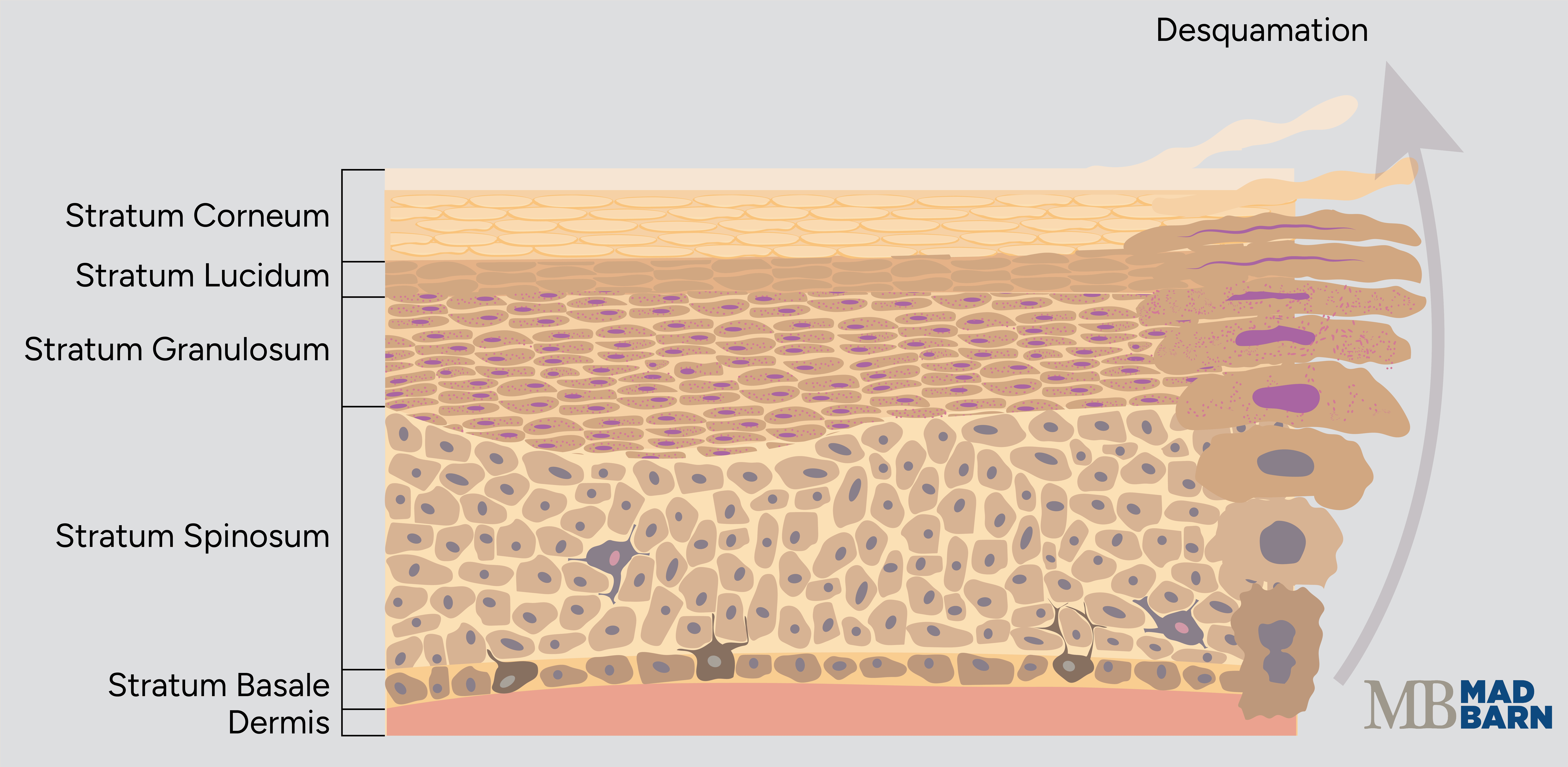 Illustration: Dr. Ana Mesa, PhD
 Beneath the epidermis lies the dermis, a layer rich in connective tissue that provides strength and elasticity to the skin. It is made of an interconnected mesh of elastin and collagen fibers, produced by cells called fibroblasts. [2]
The dermis also supports many other structures that help maintain skin health and homeostasis, such as: [2]
- Blood and lymph vessels
- Hair follicles
- Muscles
- Nerves
- Glands (sweat and sebaceous)
Skin also contains several types of immunocompetent cells in both the epidermis and dermis, which continually monitor for potential threats such as bacteria and viruses. When these cells detect harmful organisms, they release histamine and other inflammatory compounds to help neutralize the pathogens. [2]
However, in an allergic reaction, the horse’s immune system overreacts to a normally harmless substance (allergen). Immunocompetent cells are activated, releasing inflammatory chemicals that trigger increased blood flow, fluid leakage, and nerve stimulation. This results in redness, itching, swelling, and irritation. Persistent exposure can intensify these symptoms, eventually compromising the skin’s integrity.
Common Types of Skin Allergies
Various allergens can trigger allergic reactions in horses, including insect bites, pollen, mold, dust, and certain chemical irritants.
While the visible signs of these reactions are often similar, identifying the specific allergen is important for determining the most effective management and prevention strategies.
Some common types of skin allergies in horses include:
- Insect Hypersensitivity: Sometimes called “sweet itch,” this occurs when horses develop an extreme reaction to the saliva of biting insects like midges, mosquitoes, or horseflies.
- Atopic Dermatitis: Triggered by environmental allergens such as pollen, mold spores, or dust mites, atopic dermatitis can cause chronic itching, hives, and recurring skin infections.
- Contact Dermatitis: Certain chemicals, topical medications, or even certain plants can irritate the horse’s skin when they come into direct contact. The resulting inflammation typically appears as redness, swelling, or small, blister-like lesions on areas of the body that touch the offending substance.
- Food-Related Allergies: Although less common than insect or environmental allergies, some horses may react to particular dietary components. These reactions can manifest as itchy skin, hives, or other dermatological symptoms, sometimes accompanied by gastrointestinal issues.
Of these conditions, insect hypersensitivity and atopic dermatitis are the most frequently diagnosed causes of skin allergies in horses.
Insect Bite Hypersensitivity
Insect bite hypersensitivity (IBH), also known as Sweet Itch, Queensland Itch, Summer Eczema, or Kasen, is the most common allergic skin disease in horses. This allergic response is caused by biting midges from the Culicoides family. [2][3]
While feeding, the Culicoides midges inject salivary gland proteins into the horse’s skin that lead to sensitization and allergy in predisposed individuals. [4]
Other species of insects may be involved in IBH as well. For example, stable flies, mosquitoes, black flies, horn flies, and tabanids have all been linked with this allergy. [2][3]
The prevalence of insect bite hypersensitivity varies based on geographical factors, breed predispositions, and genetic influences, with approximately 10% of horses from all breeds affected. [4]
During the acute stage of IBH, an IgE-mediated hypersensitivity reaction typically occurs. Over time, if exposure continues and the condition persists, this response can evolve into a delayed type IV hypersensitivity reaction, characteristic of the chronic stages of the disease. [2]
Signs of sweet itch in horses are often gradual and recur seasonally, beginning in spring and lasting until autumn. Symptoms of IBH can include: [2][3]
- Severe pruritus (itchiness) in the mane and tail areas, followed by self-trauma to these areas as the horse rubs to relieve the itching
- Secondary changes in skin including crusted papules, lichenification with thickening of the skin, hair loss, and ulcerations
- Secondary bacterial infections
Lesions may also be seen on the horse’s face and ears, the chest or belly, under the shoulder, and around the hips. [2]
The Icelandic horse is often affected by IBH because the Culicoides midges do not exist in Iceland. When these horses are exported to other parts of the world, they become overly sensitized. However, Icelandic horses born outside of Iceland do not appear any more prone to IBH than other breeds. [2]
Horses can develop IBH at a young age, depending on the climate they live in and insect exposure. In warm climates, symptoms may show up in horses as young as two years old. [5]
Symptoms of sweet itch also tend to worsen over time, especially if measures are not taken to reduce exposure to the offending insects. In tropical climates, the horse may be affected all year long. [5]
Aside from exposure to insects, environmental factors may worsen signs of IBH. Some of these factors may include grazing outdoors and sunlight. Clay soils with heather and woody vegetation may also worsen symptoms. [5]
What's your top priority with your horse's health?

What's your top priority with your horse's health?
Atopic Dermatitis
Atopic dermatitis (AD), sometimes referred to as ‘atopy,’ is defined as an abnormal immune response to environmental allergens. This condition is a common cause of pruritis and hives (urticaria) in horses. [5]
Certain breeds, such as Arabians, Finn horses, and Thoroughbreds, appear to be more commonly affected by atopic dermatitis, though any breed can develop the condition. Research also indicates a genetic component, suggesting that hereditary factors may influence a horse’s susceptibility to atopic dermatitis. [5]
Atopic dermatitis (AD) in horses can be seasonal or present year-round, particularly in warmer climates. It may manifest as hives, hives accompanied by pruritis (itchiness), or pruritis without visible hives. Itching commonly affects the face and trunk, prompting horses to rub against objects, roll, or bite at irritated areas. Lesions may also appear on the chest, neck, tail head, and legs. [5]
The timing of AD often provides clues to the underlying allergen. Summer occurrences are frequently associated with pollen or insect allergies, while outbreaks in the autumn or winter are more likely related to mold, barn dust, or dust mites. [5]
AD can begin in young adult horses or in older horses, especially when they move from colder climates to warmer regions. Over time, horses that originally experience seasonal symptoms may develop year-round sensitivity as their immune systems become increasingly reactive to the allergen. [5]
In some cases, AD can lead to chronic hives, although these may not always involve an immune-mediated response. [5]
Identifying and avoiding exposure to the causative allergen is a key step in managing atopic dermatitis in horses.
Pruritis
The most common sign of an equine skin allergy is pruritis, a persistent itching sensation that prompts the horse to rub, scratch, or bite at affected areas. Alongside pruritis, horses may also develop the following symptoms and behaviors as they attempt to alleviate their discomfort: [5]
- Irritable behavior
- Restlessness
- Rubbing against objects
- Biting the skin
- Trying to scratch upper body with hind limbs
- Hair loss, thinning of hair, or broken hair
- Picking at/rubbing lesions, leading to oozing or crusting
- Bruising, swelling, hematoma
- Skin thickening
- Skin scaling
Diagnosis
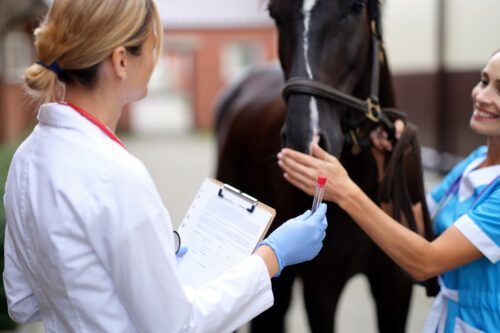
If your horse shows signs of skin allergies or irritations, your veterinarian can perform various tests to identify the underlying cause.
Although specific diagnostic procedures are available, a diagnosis of insect bite hypersensitivity (IBH) is often reached by evaluating clinical signs and ruling out other conditions, such as skin parasites. Your veterinarian will consider the horse’s medical history and look for a positive response to insect avoidance measures, such as using physical barriers or applying insect repellents. [5]
It is also common for horses with IBH to experience environmental allergies. In these cases, identifying allergen-specific IgE through intradermal skin testing or blood (serological) testing may be performed concurrently. [5]
Patient History
The first step in making a skin allergy assessment is taking a detailed history of your horse. Factors to consider include: [6]
- Breed and age
- History of skin problems
- Horse’s use
- Feeding regimen
- Housing conditions
- Routine health care procedures such as vaccination and deworming
- History of current problem
- Horse’s general health
Allergen-Specific IgE Testing
During an allergic skin response, the horse’s immune system produces immunoglobulin E (IgE) antibodies in response to specific allergens. Allergen-specific IgE testing measures the levels of these antibodies in the horse’s bloodstream, providing clues about which substances might be triggering an allergic reaction. [5]
While this testing can help narrow down potential allergens, it has limitations. A positive test result indicates that the horse has been exposed to an allergen and developed IgE antibodies against it, but it does not necessarily mean that this allergen is causing the horse’s current symptoms.
In other words, the presence of allergen-specific IgE does not confirm a direct cause-and-effect relationship. For this reason, the test results should be interpreted alongside the horse’s clinical history, patterns of exposure, and other diagnostic findings. This comprehensive approach ensures that management decisions are based on a well-rounded understanding of the horse’s condition. [5]
Intradermal Skin Testing
For horses with suspected atopic dermatitis (AD), intradermal testing is considered the most reliable diagnostic method for confirming the specific allergens involved.
In this procedure, small amounts of various suspected allergens are carefully injected into the horse’s skin, often on the neck or side of the chest. Each injection site is then monitored for signs of a localized reaction, such as redness, swelling, or the formation of a small welt. [7]
A positive reaction to a particular allergen suggests that the horse’s immune system recognizes and responds to that substance, supporting a diagnosis of AD and guiding targeted management strategies. Unlike blood tests, which measure circulating antibodies, intradermal testing directly assesses the skin’s immediate response, providing more accurate and actionable information for developing an effective treatment plan.
Sample Collection
To further investigate and rule out other conditions, your veterinarian may collect skin or hair samples from affected areas. These samples can help identify bacterial, fungal, or parasitic infections, as well as other underlying issues. [6]
Common sampling methods include:
- Hair plucks
- Skin scrapings
- Tissue cultures
- Surface adhesive tape samples
- Swabs for bacterial or fungal culture
- Needle aspirates (to examine nodules, masses, and enlarged superficial lymph nodes)
- Biopsies of lesions (using excision, punch, or shave techniques)
Managing Equine Skin Allergies
Effective treatment and management of equine skin allergies begin with an accurate diagnosis and, whenever possible, removing or reducing the horse’s exposure to the offending allergen(s).
However, identifying the exact trigger may not always be feasible. In such cases, various treatments and supportive measures can help alleviate symptoms, improve the horse’s comfort, and maintain skin health despite ongoing exposure.
Glucocorticoids
For horses with hives, common treatments include glucocorticoid medications such as prednisolone and dexamethasone. [4]
For horses with AD, glucocorticoids are often given at a higher dose at first. Administration is then gradually tapered off to the lowest effective dose and frequency, usually every other day or less. [5]
It’s important to follow your veterinarian’s instructions closely when starting a course of glucocorticoids. These drugs are effective when used as prescribed, but they carry some risk of side effects, including laminitis.
Horses may also have an increased risk of infection, as well as delayed wound healing. [5]
Antihistamines
In some cases, controlling a horse’s allergic response may involve the use of antihistamines. These medications work by blocking the action of histamine, a compound released by immunocompetent cells during an allergic reaction. By preventing histamine from binding to its receptors, antihistamines can help reduce itching, redness, and swelling associated with skin allergies. [4]
Depending on the severity of the condition and the specific allergen involved, your veterinarian may prescribe an antihistamine such as: [4]
- Hydroxyzine
- Chlorphenamine
- Cetirizine
- Diphenhydramine
- Pentoxifylline (often used for chronic hives)
Hydroxyzine is one of the most commonly used antihistamines for horses, typically administered at a dose of 1–2 mg/kg every 8–12 hours. While generally well-tolerated, sedation is the most frequently reported side effect. [5]
As with glucocorticoids, antihistamines should be used judiciously, especially for competition horses. In many regions, these drugs are prohibited in competition, so it is important to consult local regulations and ensure proper withdrawal times are observed. [5]

Pentoxifylline
Phosphodiesterase (PDE) inhibitors are another class of medications that can help manage atopic dermatitis (AD) in horses by influencing inflammatory processes in the skin.
One commonly referenced PDE inhibitor is pentoxifylline, which has shown benefits in treating various dermatological conditions. When managing AD, pentoxifylline may be used on its own or combined with glucocorticoids to enhance the overall treatment effect. [5]
Topicals
Topical medications are treatments applied directly to the surface of the skin to alleviate itching and irritation. Due to the large size of horses, topical therapy for skin allergies is not always feasible, but may be recommended when the reaction is localized to a specific area of the body. [5]
Topical corticosteroids may help in horses affected by atopic dermatitis (AD). Although options like hydrocortisone aceponate (HCA) are commonly prescribed outside the United States, prolonged use may cause localized thinning of the skin and hair loss. [5]
Other topical options include herbal sprays formulated with ingredients such as camphor, lemongrass, may chang, peppermint, and patchouli. These have been shown to help relieve itching (pruritus) in horses suffering from insect bite hypersensitivity (IBH). [5]
In addition, a topical cream enriched with omega-3 fatty acids was shown to significantly improve skin lesions over the course of 28 days. [5]
Nutritional Supplements
Oral supplementation of essential fatty acids can be beneficial in managing persistent hives and may also support horses affected by insect bite hypersensitivity (IBH). [4][5]
One study showed that prostaglandin E2 synthesis decreased after 14 weeks of fish oil supplementation in horses with skin allergies.
Another study showed a decrease in skin test reactions after 42 days of flaxseed supplementation in atopic horses. [5]
Spirulina is a blue-green algae that may help horses with skin allergies by reducing the release of histamine, thereby decreasing itchiness and irritation triggered by allergens like dust, pollen, or insect bites.
Its active compounds, including phycocyanin, can also support a healthier immune response by increasing protective antibodies (IgA and IgG) and decreasing pro-inflammatory IgE, helping to minimize allergic over-reactions and protect against conditions such as hives or sweet itch. [9][10]
Management Changes
In addition to medical treatments, changes in the horse’s environment and management practices can help support those with skin allergies. For horses affected by insect bite hypersensitivity (IBH), keeping them stabled during daytime hours may reduce their exposure to Culicoides midges. Using protective sheets and installing fans in stalls can also help deter flying insects. [4][5]
Controlling dust mites and storage mites is more challenging, but products like benzyl benzoate may help manage these arachnids. Washing horse blankets in hot water and applying a borate-based miticide before adding new bedding can also reduce mite populations. [5]
For horses sensitive to dust, spending more time at pasture instead of in the barn can lower their exposure to airborne allergens and support overall skin health. [5] Improving ventilation in barns, frequently replacing bedding, and selecting feed products that minimize ammonia accumulation can also help improve air quality and reduce exposure to airborne allergens.
Insect Repellents
Horses with insect bite hypersensitivity benefit from regular use of insect repellents. Permethrin is a common ingredient in many fly sprays, and pour-on topical permethrin can also be used. Cypermethrin is another ingredient in fly sprays that may be helpful. [5]
Insecticidal shampoo applied every week or two may help control pruritis and reduce hives. [6]
Allergen-Specific Immunotherapy
Allergen-specific immunotherapy (ASIT) is a treatment approach designed to gradually decrease a horse’s sensitivity to specific allergens that trigger its allergic response.
It involves administering controlled, gradually increasing doses of the identified allergens, either by injection or orally, until a maintenance level is reached.
By carefully introducing these allergens to the immune system, ASIT helps shift the horse’s immune response away from a hypersensitive state, ultimately reducing allergic reactions and associated skin symptoms.
ASIT is typically considered for managing skin allergies in horses under the following circumstances: [4][5]
- When the exact allergen causing the horse’s allergic skin reaction has been identified.
- If exposure to the allergen cannot be effectively avoided (e.g., prevalent environmental allergens like pollen or dust mites).
- When the horse experiences severe or long-lasting allergic flare-ups each year.
- If other treatments have not adequately controlled the horse’s symptoms or offer only short-term relief.
It can take several months before improvements are noticeable, and ongoing treatment may be needed to maintain the benefits. Although local swelling at the injection site is the most common side effect, ASIT is generally considered cost-effective and successful when using quality allergen extracts. [4][5]
This approach is also being investigated for conditions like insect bite hypersensitivity (IBH), with early studies suggesting it may help prevent symptoms in horses that are prone to this type of allergy. [4][5]
Cytokine Vaccinations
Cytokine vaccines work by blocking immune proteins, like interleukin-5 (IL-5), that contribute to allergic inflammation.
IL-5 helps produce eosinophils, white blood cells involved in allergic reactions. By reducing IL-5 activity, these vaccines can lessen allergy symptoms in horses, including those with insect bite hypersensitivity (IBH). [8]
These vaccines are given in low doses, usually starting with three injections in the first year, followed by a once-a-year booster. This approach shows promise as a long-term therapy to keep allergic flare-ups under control. [8]
Frequently Asked Questions
Here are some frequently asked questions about skin allergies in horses:
The skin serves as a barrier to protect against environmental agents and prevents excessive water loss, while also playing a key role in the horse's immune system by detecting pathogens like bacteria and viruses. [2]
The most common skin allergies in horses are Insect Bite Hypersensitivity (IBH) and Atopic Dermatitis (AD). Both conditions can cause severe itchiness, skin lesions, and discomfort, often triggered by insects or environmental allergens. [3][5]
IBH, also known as Sweet Itch, is an allergic reaction caused by the saliva of biting midges and sometimes other insects. Symptoms include intense itching, hair loss, and skin lesions, which can worsen without intervention. [2][3][4]
Managing AD involves identifying and avoiding allergens, using treatments like antihistamines or corticosteroids, and sometimes implementing elimination diets. Allergen-specific immunotherapy (ASIT) may also be effective for long-term control. [5]
Summary
Insect bite hypersensitivity and atopic dermatitis are the most common equine skin allergies and can significantly impact a horse’s quality of life.
- Skin allergies can stem from a range of allergens, including insects, dust, pollen, mold, chemical irritants, and other environmental exposures
- They cause intense itching (pruritis) and irritation, often prompting horses to rub or scratch the affected areas
- Repeated scratching can damage the skin, allowing pathogens to enter and lead to secondary infections
- Accurate diagnosis can be challenging, but involves careful examination of the horse's clinical signs, environment and management
- Common treatment options include glucocorticoids, antihistamines, topical products, omega-3 supplements, and adjustments to the horse’s environment and care routines.
- For more persistent cases, allergen-specific immunotherapy or cytokine vaccines may provide more effective, long-term relief.
References
- Scott. D. W. and Miller. W. H., Skin Immune System and Allergic Skin Diseases. ScienceDirect. 2011.
- Lindgren. G. et al., Genetics of Skin Disease in Horses. Veterinary Clinics of North America: Equine Practice. 2020.View Summary
- Cox. A. and Stewart. A. J., Insect Bite Hypersensitivity in Horses: Causes, Diagnosis, Scoring and New Therapies. Animals: an open access journal from MDPI. 2023. View Summary
- Jonsdottir. S. et al., New Strategies for Prevention and Treatment of Insect Bite Hypersensitivity in Horses. Current Dermatology Reports. 2019.
- Marsella. R. et al., Equine Allergic Skin Diseases: Clinical Consensus Guidelines of the World Association for Veterinary Dermatology. Veterinary Dermatology. 2023. View Summary
- Littlewood. J. D. et al., Practical Equine Dermatology, 2nd Edition. Wiley. 2021.
- Lo Feudo. C. M. et al., Intradermal Testing Results in Horses Affected by Mild-Moderate and Severe Equine Asthma. Animals. 2021. View Summary
- Fettelschoss‐Gabriel. A. et al., Active Vaccination against Interleukin‐5 as Long‐term Treatment for Insect‐bite Hypersensitivity in Horses. Allergy. 2019. View Summary
- Kellon, Eleanor Use of the Herb Gynostemma Pentaphyllum and the Blue-green Algae Spirulina Platensis in Horses. Equine Congress. 2006.
- Nemoto-Kawamura et al. Phycocyanin enhances secretary IgA antibody response and suppresses allergic IgE antibody response in mice immunized with antigen-entrapped biodegradable microparticles. J Nutri Sci Vitaminol. 2004.