English





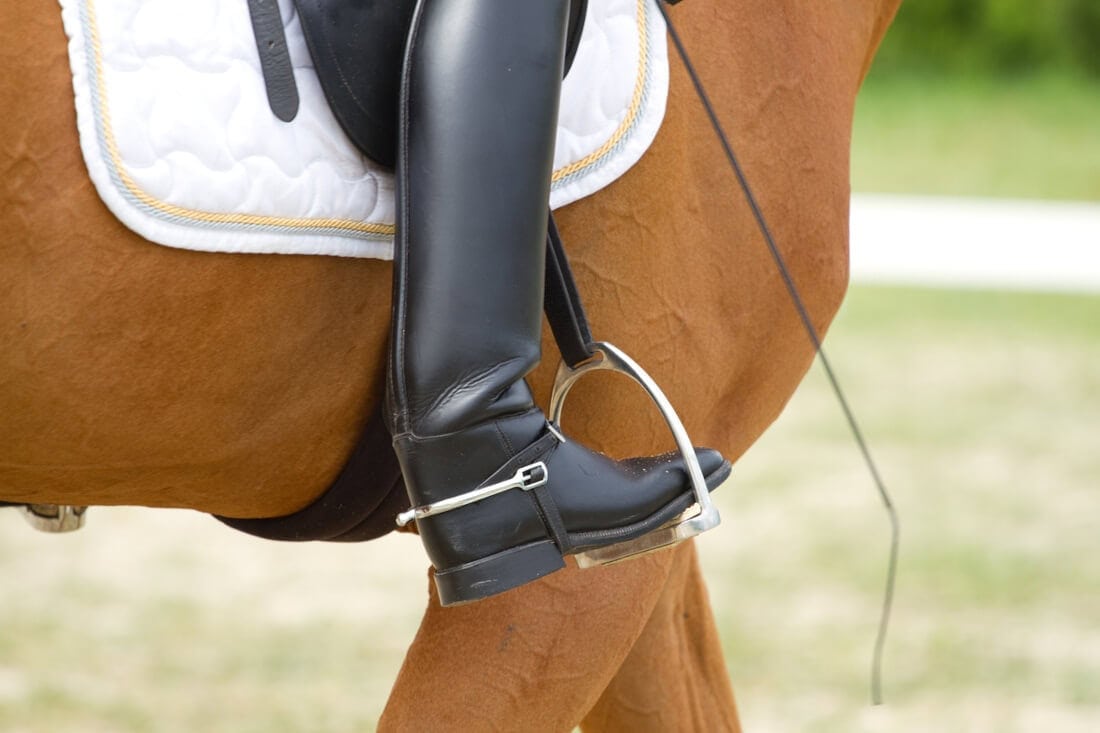
Spurs are one of the oldest and most recognizable tools in horsemanship, designed to help riders communicate precise cues to their horses.
While often associated with riding and competition, using spurs safely and effectively requires skill, sensitivity, and a strong understanding of equine behavior.
When used correctly, spurs can enhance subtle communication between horse and rider, improving performance and responsiveness. However, misuse can cause pain, injury, or behavioral problems, making education and mindful application essential. [1][2]
Keep reading to learn more about spurs and horse training, including types, uses, risks, and best practices for effective, welfare-conscious riding.
Spurs in Horsemanship
Spurs have been used for thousands of years, emerging in ancient civilizations where horseback riding was essential for travel, warfare, and sport. Early spurs were simple, often made from bronze, and helped riders guide their horses while keeping their hands free for other tasks, such as fighting in battle. [3][4][5]
By the medieval period, spurs had taken on symbolic meaning, representing status, skill, and knighthood. Knights’ spurs were often ornate and carefully crafted, reflecting both their rank and mastery of horsemanship.
In the Carolingian era, spurs were sometimes given to young men as part of formal rites, emphasizing their social significance. [6][7][8]
As riding styles and equestrian disciplines evolved, so did spur design. Modern spurs are refined tools that prioritize precision and subtle communication over force.
Today, spur types vary widely, from the rowels commonly used in western riding to the short, straight spurs favored in dressage.
What's your top priority with your horse's health?

Enter your email to receive your store credit
Spur Design: Shapes, Shanks & Rowels
A spur is a small riding aid usually made of metal and worn on the heel of a rider’s boot. Its purpose is to gently touch a horse’s sides, helping the rider give clear, precise cues.
Spurs are not intended to punish the horse. Instead, they are used as a form of negative reinforcement. Spurs are an extension of the rider’s leg, allowing subtle communication that improves responsiveness and overall performance.
Shank Length & Shape
The shank is the part of the spur that extends from the rider’s boot to the horse. Its length, shape, and angle determine leverage and pressure, and may facilitate delivery of subtle cues by the rider.
Types of shanks include: [1][2][9]
- Short: Provide gentle, precise cues for sensitive horses
- Long: Offer more leverage, often used by elite riders to clarify subtle cues
- Curved: Curved shanks follow the natural line of the rider’s leg for smoother contact, while straight shanks give more direct pressure
- Rowel Spurs: Feature a small rotating wheel at the end, common in Western riding disciplines
Function of Spurs
Spurs are selected to match the horse’s sensitivity and the rider’s goals. Training spurs are mild and ideal for refining cues without discomfort, while competition spurs are stiffer for precise communication in dressage, jumping, or other high-level disciplines.
Western spurs often have larger rowels and longer shanks, while English spurs are typically shorter and lack a rowel.
It’s important to note that spurs are not required for successful riding, even at advanced levels. Many skilled riders achieve high-level results without spurs, relying solely on precise leg aids and body position.
Spurs are optional tools designed to enhance communication, not replace fundamental riding skills. [2]
Spur Materials & Construction
The material of a spur affects both durability and comfort for horse and rider.
Material for spurs can include:
- Metal: Stainless steel or aluminum options are durable, reliable, and consistent, often preferred in competition
- Plastic or Synthetic Material: Lightweight and less harsh, with softer edges for sensitive horses
- Leather-Mounted or Padded Material: Provide comfort, reduce slippage, and help secure the spur during riding
Some spurs also feature adjustable shanks or rowels, allowing riders to fine-tune pressure depending on the horse and riding situation.
Choosing the right spur requires balancing the horse’s sensitivity, rider experience, and riding discipline, and consulting a trainer or equestrian professional is strongly recommended.
Choosing the Right Spur for Your Horse
The goal of using spurs is to enhance communication without causing discomfort or relying on force.
The main factors to consider when choosing spurs are:
- Rider skill level: Beginners should start without spurs so they can develop clear, effective leg cues before introducing artificial aids. Spurs are best added only once a rider has independent balance and consistent leg control.
- Horse sensitivity: Sensitive horses may require a very mild spur or none at all, as excessive pressure can cause tension or resistance. Less responsive horses may respond to slightly stronger cues, but spur use should always be gradual and thoughtful.
- Discipline: Some disciplines have specific rules governing spur type and use, while others favor certain styles for traditional or aesthetic reasons. Riders should ensure their spur choice aligns with both competition regulations and discipline norms.
How Spurs Are Used in Horseback Riding
Spurs are tools for communication, extending the rider’s leg to guide the horse’s movement, speed, and responsiveness. They work alongside the rider’s natural aids, such as the seat, legs, hands, and voice, to deliver clear, coordinated signals.
Spurs are not a replacement for natural aids. Rather, they are used to refine and enhance subtle leg cues as horse and rider advance their skills together. [2]
When used, horses feel spur pressure through their sides, usually around the girth region. Like other artificial aids, the goal is to have the horse respond to pressure and placement rather than force.
Timing and subtlety are essential. A light, well-timed touch communicates clearly, while a heavy or poorly timed cue can confuse or irritate the horse. [10]
Spur Fit
Spurs are designed to work with specific boots. Boots that are too narrow or wide can cause spurs to shift, reducing precision and potentially irritating the horse. Correct alignment and secure attachment enhance both rider control and horse comfort.
Proper fit is critical for both horse and rider. Straps should be snug but not tight, and padding can help prevent rubbing against the boot. Ensuring that spurs sit correctly on the heel maintains consistent contact and allows for precise cues without causing discomfort.
Adjustments & Replacement
Many spurs allow adjustments to shank length, rowel rotation, or strap tension. Changes should be made gradually, observing the horse’s response to ensure comfort and clarity of communication.
Over time, spurs may become worn, bent, or sharp. Replacing them promptly ensures safety and prevents accidental injury to the horse or rider.
Types of Spur Cues
Spurs can be used to communicate a variety of cues, depending on the discipline and the horse’s training.
Common spur cues include: [2][11]
- Speed Cues: Encourage the horse to move forward or pick up pace
- Lateral Cues: Guide sideways movement, such as leg-yielding or bending
- Collection and Impulsion: Refine the horse’s balance, engagement, and responsiveness in advanced work
Even in high-level riding, spurs are not required for success. Skilled riders can achieve precise communication using only their seat, legs, and hands. Spurs are optional tools that enhance clarity and subtlety when needed, but fundamental riding aids remain the primary method of guiding the horse.
Equine Welfare & Spur Use
Spurs can be highly effective communication tools, but their use carries important responsibilities around animal welfare.
Horses are sensitive animals, and improper or inconsistent use can cause physical discomfort, stress, and behavioral issues. Understanding a horse’s responses and respecting its sensitivity is essential for ethical riding.
Equine Sensitivity
Not all horses react the same way to spurs. Some are naturally more sensitive to leg pressure, while others may be less reactive. A spur that works well for one horse may be uncomfortable or confusing for another.
Riders should observe their horse carefully and adjust spur type, shank length, or rowel size to suit their horse’s individual needs.
Pain
Horses communicate when they are in pain using body language. Forceful use of spurs can pull or break hairs, cause abrasions, bleeding, or lesions, and the risk of discomfort increases with longer spurs and rotating rowels. [1][2]
Common signs of excessive or inconsistent spur use include: [10][12][13][14]
- Tail swishing
- Pinned ears
- Head tossing
- Sudden changes in pace or direction
- Shifting weight
- Resisting turns
- Moving away from the rider’s leg
- Abrasions caused b excessive spur use
More subtle indicators may include a stiff back, jaw tension, or a hollow topline. [10][12][13][14]
Impact of Spurs on Equine Behavior & Training
Using spurs on a horse that has not mastered basic leg aids can negatively affect learning and confidence.
Repeated misuse of spurs can lead to behavior issues that may be difficult to correct, including: [15][16][17]
- Avoidance behaviors
- Defensive responses
- Anxiety
- Chronic tension in the back, neck, and hindquarters
Monitoring these signals and adjusting spur use ensures horse welfare, clear communication, and maintains trust between horse and rider. [15][16][17]
Ethical spur use prioritizes clarity, consistency, and timing, ensuring the horse understands cues without experiencing unnecessary discomfort. Spurs should always enhance communication rather than replace foundational riding skills. [2]

Spur Use in Equestrian Competition
Spurs are commonly used in competitive riding, but governing bodies carefully regulate their design and use to protect horse welfare and ensure fair competition.
Understanding these rules is essential for any rider participating in sanctioned events. [1]
General Guidelines
Most equestrian organizations set rules for spur length, shank type, rowel size, and tip bluntness. Spurs that are too long, sharp, or heavy are considered unsafe and can result in penalties or disqualification.
Riders must ensure spurs are securely attached to their boots and used according to the specific expectations of their discipline.
For example, British show jumping requires spurs to be smooth, of approved designs, and no longer than 4 cm. Excessively severe spurs are considered an offence. [2]
Historically, spurs were mandatory in FEI dressage competitions due to tradition, but riders are now allowed to compete without them. When spurs are used, they must comply with FEI regulations regarding length, tip bluntness, and appropriate use, ensuring that horse welfare is maintained. [18]
Discipline-Specific Standards
Some disciplines with specific rules regarding spurs include:
- Dressage: Spurs are typically short, straight, and blunt to allow precise, gentle cues. Excessive length or sharp tips are prohibited.
- Jumping & Eventing: Similar to dressage, spurs must be safe, correctly fitted, and cannot cause pain or distress. Some competitions limit rowel rotation.
- Western Riding: Spurs often feature longer shanks and larger rowels, but rules still require smooth, blunt tips and correct fit. Certain associations may limit rowel diameter or restrict rotating rowels.
Spur Care & Maintenance
Proper care and maintenance ensure that spurs remain safe, effective, and comfortable for both horse and rider. Neglecting them can lead to damage, reduced functionality, or injury, so regular inspection and upkeep are essential.
Inspection & Cleaning
Metal spurs, especially those with moving rowels, should be checked frequently for rust, bent shanks, or stuck parts. Dirt and debris can accumulate, particularly in Western spurs with rowels, reducing effectiveness or causing irritation.
Cleaning with mild soap, water, and a soft brush, followed by thorough drying, helps prevent corrosion and keeps spurs in good working condition.
Storage
Spurs should be stored in a dry, secure location where they won’t bend, scratch, or lose components. Organizing spurs separately from other tack prevents accidental damage. Leather straps or padded spurs should be kept away from extreme heat or moisture to avoid cracking or deterioration.
By maintaining spurs properly and checking their fit regularly, riders can ensure their tools remain effective, comfortable, and safe, supporting both performance and the horse’s welfare.
Here are some frequently asked questions about spurs for horses:
No, spurs are not inherently painful. When used correctly, they provide gentle cues to guide the horse. Pain only occurs if a spur is used too harshly, improperly, or on a sensitive horse. Timing, subtlety, and correct placement are key.
No, spurs are legal in most riding disciplines. However, competition rules regulate their design, length, and tip bluntness to protect horses. Misuse or illegal equipment can result in penalties or disqualification.
Avoid spurs on inexperienced horses, horses that have not mastered basic leg aids, or horses who are overly sensitive. Beginners should also start without spurs or use very mild ones. Spurs are optional tools, not a requirement.
Spurs are an artificial riding aid used to enhance communication between rider and horse. They refine leg cues, guide speed, lateral movement, and collection, and help riders achieve subtle, precise control without relying on force.
Summary
Spurs are worn on the heel to extend the rider's leg and provide subtle, precise cues to horses. When used correctly, they improve communication, responsiveness, and performance. Misuse can cause pain, stress, or behavioral issues in horses.
- Types of spurs for horses vary by shank length, shape, and rowel style; short shanks are gentle, longer or curved shanks provide more leverage
- Spurs are optional equipment in equestrian competition, even at high levels of riding
- Spurs can be used by riders alongside natural aids to guide the horse's speed, lateral movement, and collection
- Tail swishing, pinned ears, tension, or avoidance behaviors may signal incorrect or painful spur cues are being used
- Competition rules regulate spur length, shank type, rowel size, and tip bluntness to protect horses
- Proper fit, care, and maintenance ensure spurs remain safe and effective for horse and rider
References
- Lemon. C. et al. An Investigation into Equestrian Spur Use in the United Kingdom. Journal of Veterinary Behavior. 2020.
- Holmes. T. Q. et al. Champing at the Bit for Improvements: A Review of Equine Welfare in Equestrian Sports in the United Kingdom. Animals. 2022.
- History of Spurs. South Dakota State University. 2023.
- Cosma. C. Warriors, Weapons, and Harness from the 5th-10th Centuries in the Carpathian Basin. Mega publishing house, Cluj-Napoca. 2015.
- Dean. B. A Descriptive Label for Spurs. The Metropolitan Museum of Art Bulletin. The Metropolitan Museum of Art. 1916.
- Makowiecki. D. et al. Horses in the Early Medieval (10th–13th c.) Religious Rituals of Slavs in Polish Areas—An Archaeozoological, Archaeological and Historical Overview. Animals. 2022.
- Fathy. B. Change of Tack? The English Eleventh-Century Horse-Tack Explosion in Context. Archaeological Journal. 2025.
- Hosek. L. et al. Tracing Horseback Riding and Transport in the Human Skeleton. American Association for the Advancement of Science. 2024.
- Uldahl. M. and Clayton. H. M., Lesions Associated with the Use of Bits, Nosebands, Spurs and Whips in Danish Competition Horses. Equine Veterinary Journal. 2019.
- Dyson. S. The Ridden Horse Pain Ethogram. Equine Veterinary Education. 2022.
- McKenzie. J. et al. Equine Responses to Acceleration and Deceleration Cues May Reflect Their Exposure to Multiple Riders. Animals. 2020.
- Ladewig. J. et al. A Review of The Ridden Horse Pain Ethogram and Its Potential to Improve Ridden Horse Welfare. Journal of Veterinary Behavior. 2022.
- Hall. C. et al. Assessment of Ridden Horse Behavior. Journal of Veterinary Behavior. 2013.
- Condon. V. M. et al. Associations between Commonly Used Apparatus and Conflict Behaviors Reported in the Ridden Horse in Australia. Journal of Veterinary Behavior. 2022.
- Christensen. J. W. et al. Rider Effects on Horses’ Conflict Behaviour, Rein Tension, Physiological Measures and Rideability Scores. Applied Animal Behaviour Science. 2021.
- Christensen. J. W. et al. Conflict Behaviour in Icelandic Horses during Elite Competition. Applied Animal Behaviour Science. 2024.
- Rørvang. M. V. et al. Sensory Abilities of Horses and Their Importance for Equitation Science. Frontiers in Veterinary Science. 2020.
- PROPOSALS FOR RULES CHANGES OF DRESSAGE RULES 2025. FEI General Assembly. 2025.